




Adenoid hypertrophy (AH) and recurrent or persistent adenoiditis are common pediatric conditions linked to complications such as obstructive sleep apnea (OSA), otitis media (OM), and sinusitis. Adenoidectomy is a standard treatment, potentially effective through mechanical removal of biofilms, which acts as infection reservoirs. This state of the art review systematically assesses the role of adenoidal biofilms in pediatric upper airway diseases.
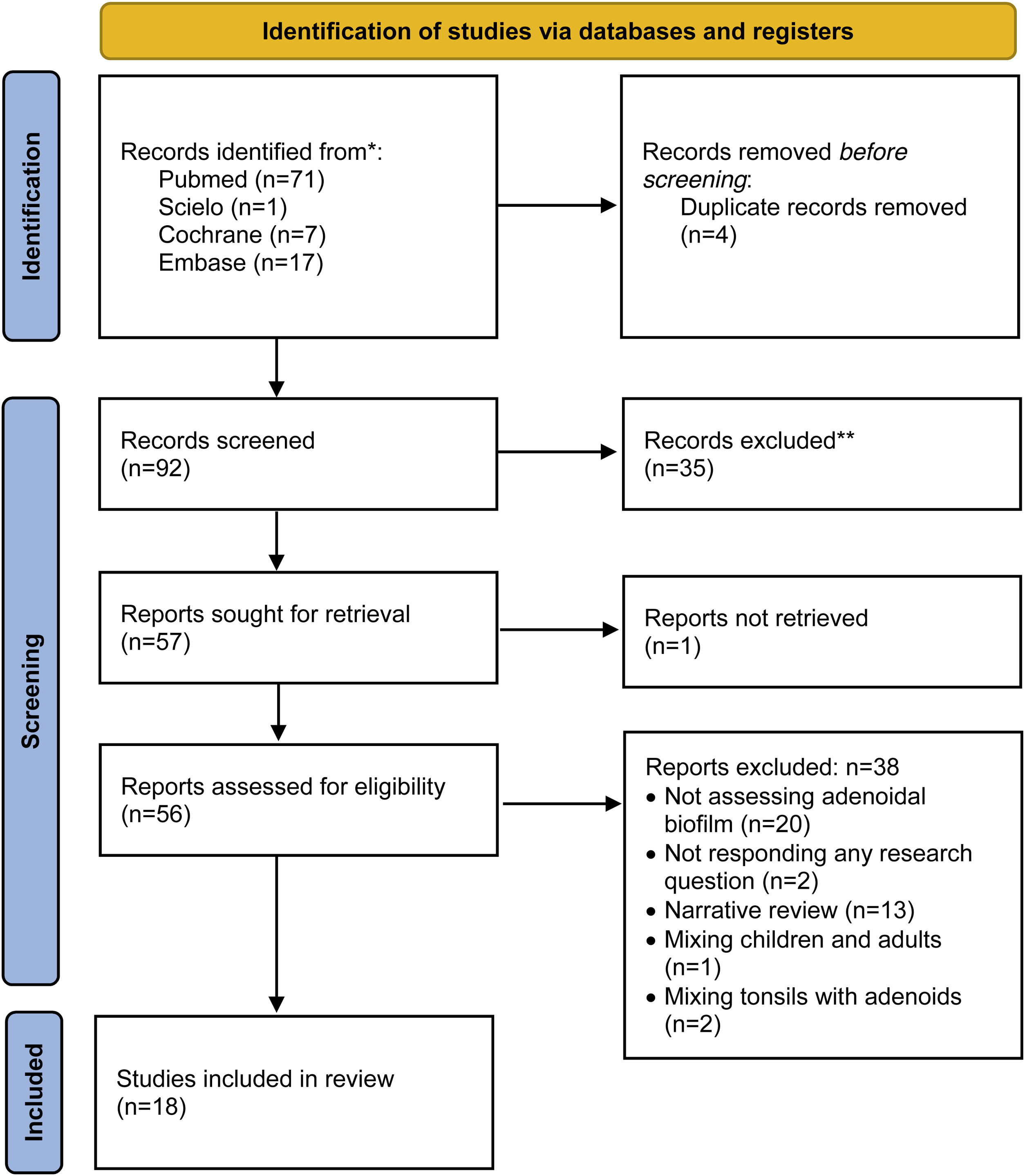
MethodsDatabases searched included PubMed, Cochrane Library, EMBASE, and SciELO. Inclusion criteria encompassed studies on adenoidal biofilms in children (<18 years). Data were summarized in 8 research questions.
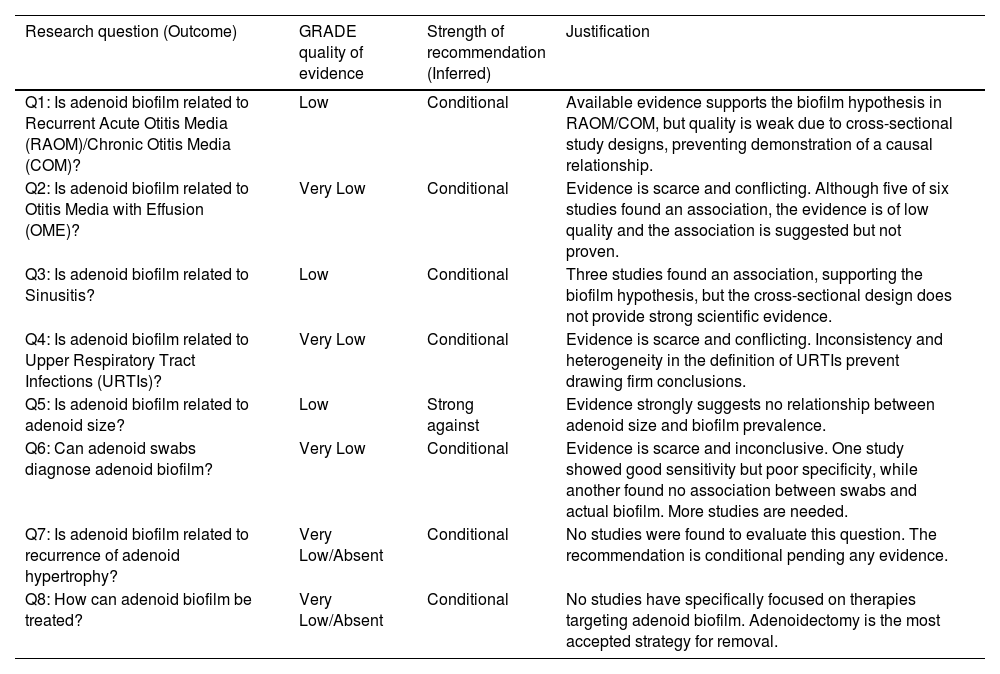
ResultsOf 18 studies (706 patients, 392 controls), evidence suggests a potential role of biofilms in recurrent acute otitis media (RAOM) and chronic otitis media (COM), with some studies indicating associations with otitis media with effusion (OME) and sinusitis. No correlation was found between biofilm presence and adenoid size. Evidence on diagnostic methods (swabs) and non-surgical treatments for biofilm remains inconclusive.
ConclusionBiofilms likely contribute to RAOM and COM, albeit with weak evidence due to cross-sectional study designs. Associations with OME and sinusitis are suggested but unproven, and biofilm relevance to adenoid size is unsupported. Future research should focus on biofilm-targeted diagnostics and therapies to refine clinical management.
La hipertrofia adenoidea (HA) y la adenoiditis recurrente o persistente son afecciones pediátricas comunes vinculadas a complicaciones como la apnea obstructiva del sueño (AOS), la otitis media (OM) y la sinusitis. La adenoidectomía es un tratamiento estándar, potencialmente eficaz mediante la eliminación mecánica de los biofilms, que actúan como reservorios de infección. Esta revisión de vanguardia evalúa sistemáticamente el papel de los biofilms adenoideos en enfermedades de las vías respiratorias superiores pediátricas.
MétodosSe realizaron búsquedas en las bases de datos PubMed, Cochrane Library, EMBASE y SciELO. Los criterios de inclusión abarcaron estudios sobre biofilms adenoideos en niños (<18 años). Los datos se resumieron en 8 preguntas de investigación.
ResultadosDe 18 estudios (706 pacientes, 392 controles), la evidencia sugiere un posible papel de los biofilms en la otitis media aguda recurrente (OMAR) y en la otitis media crónica (OMC), con algunos estudios que indican asociaciones con otitis media con efusión (OME) y sinusitis. No se encontró correlación entre la presencia de biofilm y el tamaño de la adenoides. La evidencia sobre los métodos diagnósticos (hisopos) y los tratamientos no quirúrgicos para el biofilm sigue siendo inconclusa.
ConclusiónLos biofilms probablemente contribuyen a la OMAR y la OMC, aunque con evidencia débil debido al diseño transversal de los estudios. Se sugieren, pero no se prueban, asociaciones con OME y sinusitis, y no se respalda la relevancia del biofilm con respecto al tamaño de la adenoides. Las investigaciones futuras deberían centrarse en diagnósticos y terapias dirigidas a los biofilms para perfeccionar el manejo clínico.
