





La ventilación mecánica invasiva es esencial para niños con insuficiencia respiratoria severa, pero aumenta el riesgo de infecciones debido a la exposición a microrganismos patógenos. Existen principalmente 2tecnologías de humidificación: humidificadores térmicos y los intercambiadores de calor y humedad. Aunque algunos estudios sugieren que los segundos, podrían reducir las infecciones respiratorias, los resultados no son concluyentes, especialmente en niños y lactantes.
ObjetivoEvaluar la exposición bacteriana y el perfil de resistencia antibiótica en pacientes pediátricos con ventilación mecánica utilizando humidificadores térmicos e intercambiadores de calor y humedad.
MétodosEstudio descriptivo de corte transversal entre el 2016 y el 2023, de 1.920 cultivos endotraqueales tomados después de 48 h de intubación en pacientes pediátricos ventilados mecánicamente y clasificados según el tipo de humidificador. Se determinó frecuencia y perfil de resistencia de las bacterias identificadas.
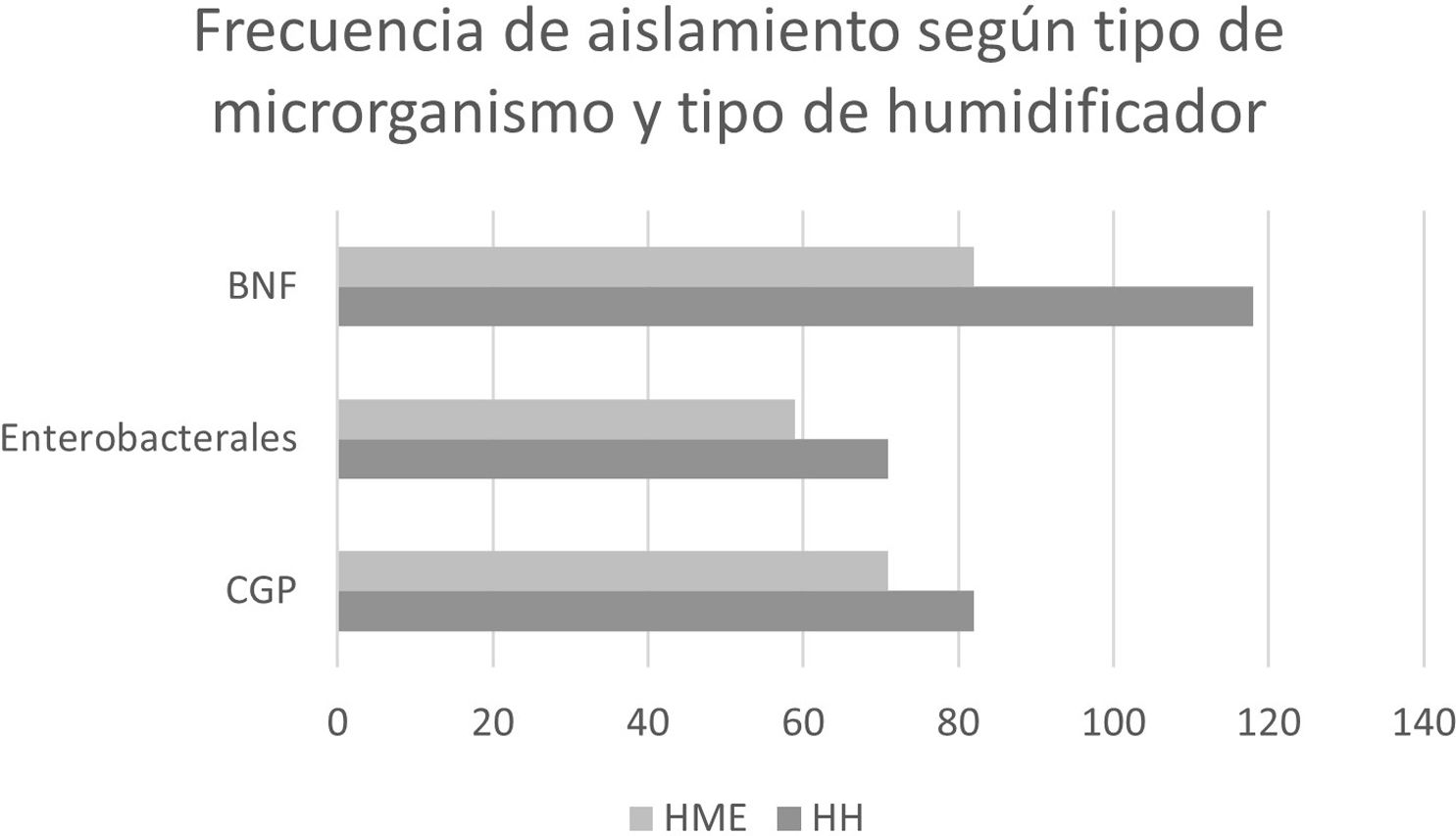
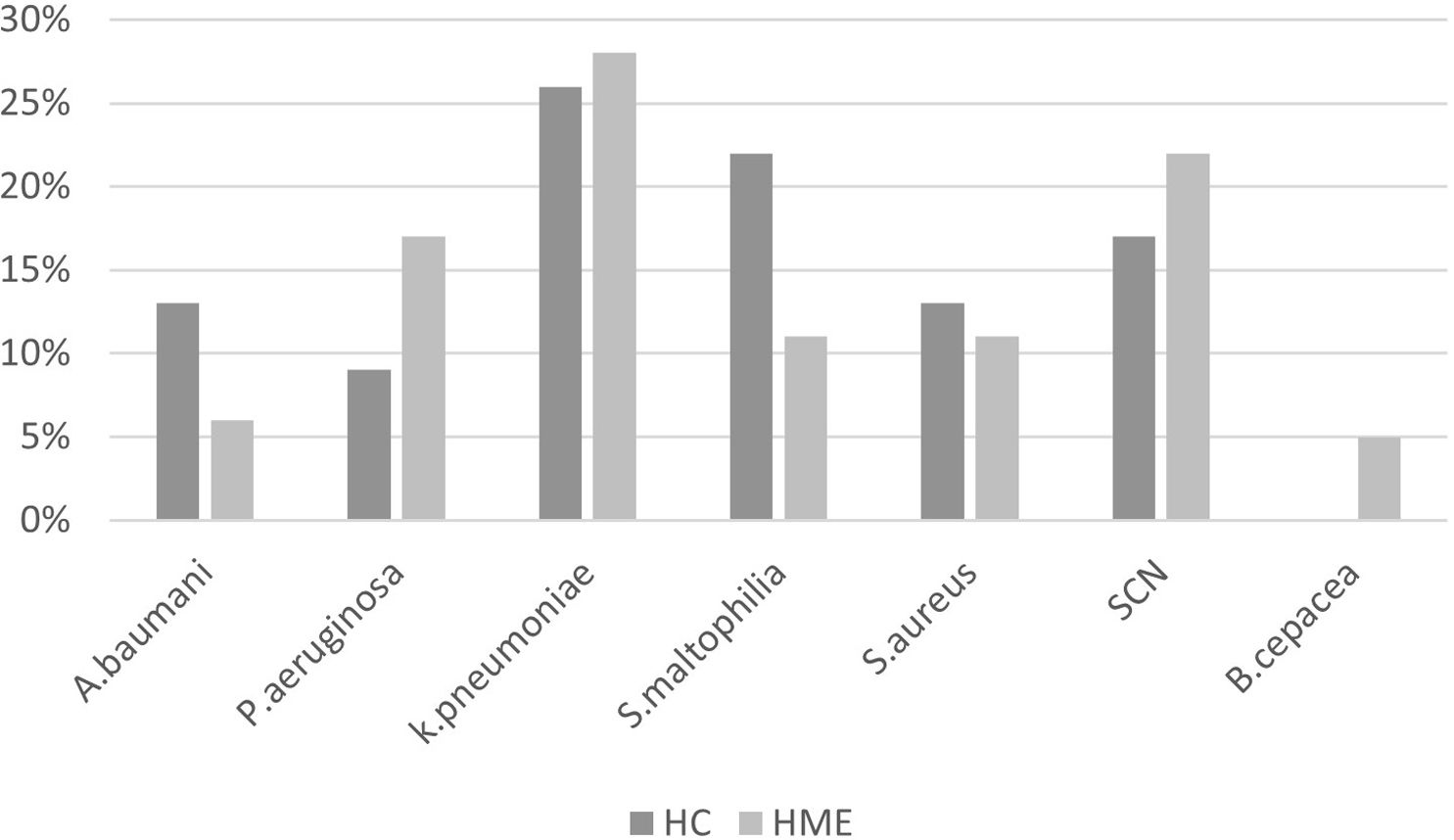
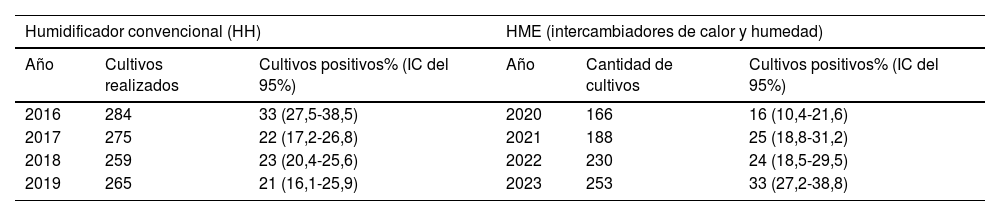
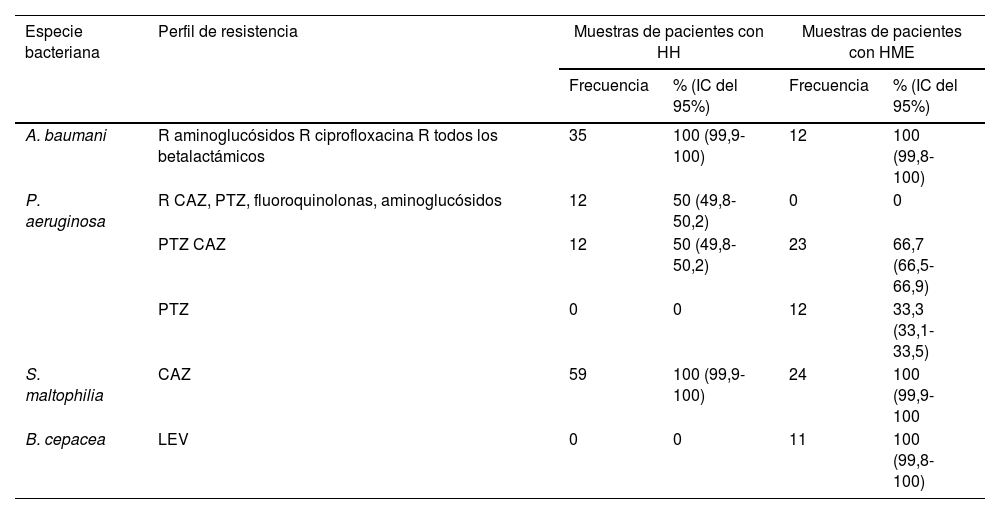
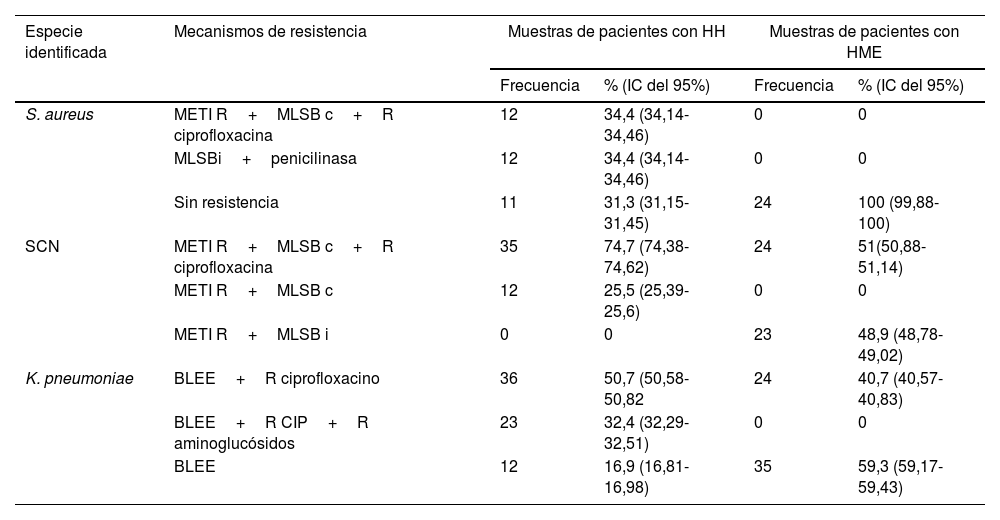
ResultadosEl porcentaje de positividad y la especie bacteriana identificada con mayor frecuencia fueron iguales en ambos grupos. Las cepas provenientes de humidificadores térmicos mostraron mayor resistencia antibiótica, el 56% de ellas presentó solo 1 o 2 opciones terapéuticas, frente al 28% en el grupo de intercambiadores de calor y humedad. Además, el 50% de las cepas de los intercambiadores de calor y humedad, tenían 4 o más opciones terapéuticas, frente al 39% en el grupo de intercambiadores térmicos.
ConclusionesNo se encontraron diferencias significativas en la exposición bacteriana entre ambas tecnologías. Sin embargo, las cepas de humidificadores térmicos mostraron mayor resistencia antibiótica, lo que sugiere un mayor riesgo potencial de infecciones con opciones terapéuticas limitadas.
Invasive mechanical ventilation is essential for children with severe respiratory failure but increases the risk of infections due to exposure to pathogenic microorganisms. There are 2main humidification technologies: heated humidifiers and heat and moisture exchangers. Although some studies suggest that the latter may reduce respiratory infections, the results are inconclusive, especially in children and infants.
ObjectiveTo evaluate bacterial exposure and antibiotic resistance profile in mechanically ventilated pediatric patients using heated humidifiers and heat and moisture exchangers.
MethodsDescriptive cross-sectional study between 2016 to 2023, of 1920 endotracheal cultures taken after 48hours of intubation in mechanically ventilated pediatric patients and classified according to the type of humidifier. The frequency and resistance profile of the identified bacteria were determined.
ResultsThe percentage of positivity and the most frequently identified bacterial species were the same in both groups. The strains from heated humidifiers showed greater antibiotic resistance, 56% of which presented only 1 or 2 therapeutic options, compared to 28% in the group of heat and humidity exchangers. In addition, 50% of the strains in the heat and humidity exchangers had 4 or more therapeutic options, compared to 39% in the heat exchanger group.
ConclusionsNo significant differences in bacterial exposure were found between the 2technologies. However, heated humidifier strains showed higher antibiotic resistance, suggesting a higher potential risk of infections with limited therapeutic options.
Artículo
Socios de la Asociación de Medicina Crítica y Cuidado Intensivo

Para acceder a la revista
Es necesario que lo haga desde la zona privada de la web de la AMCI, clique aquí

