



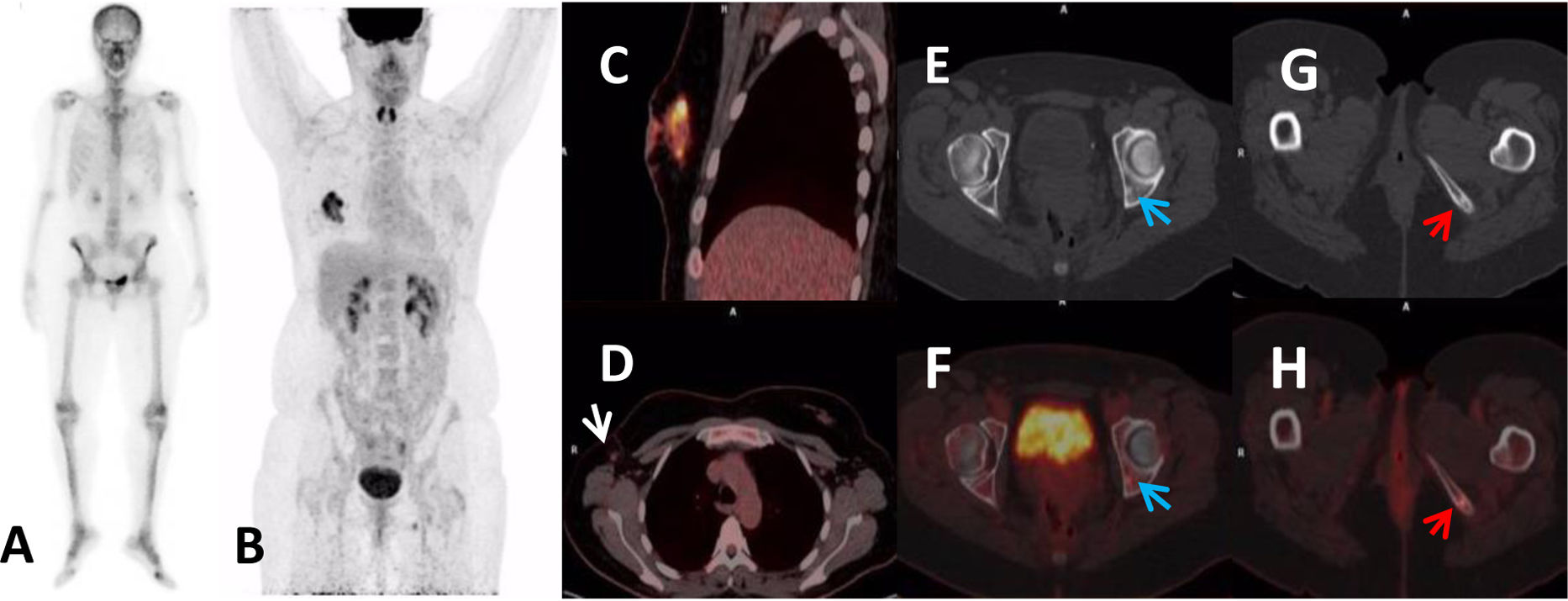


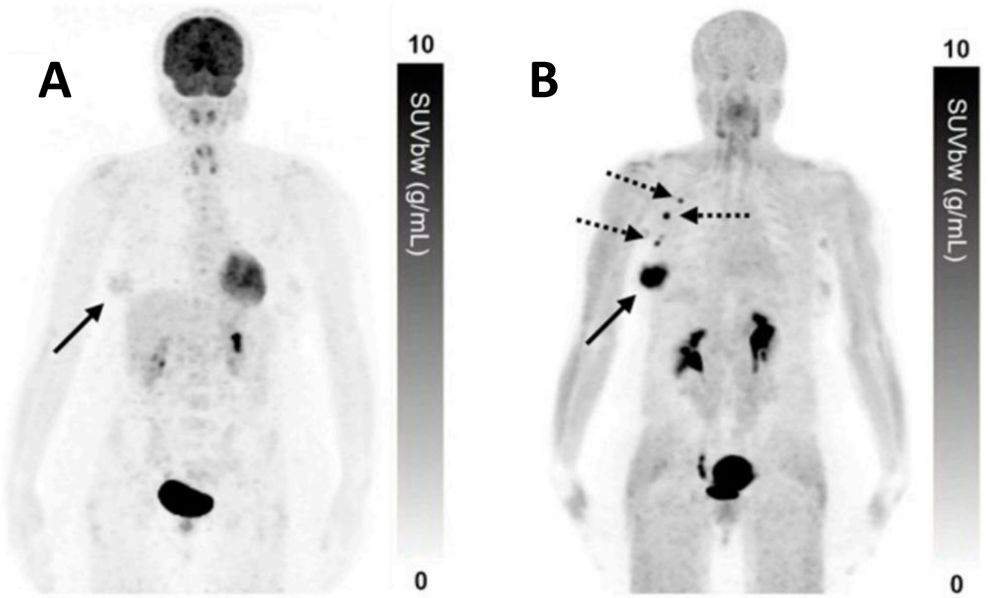


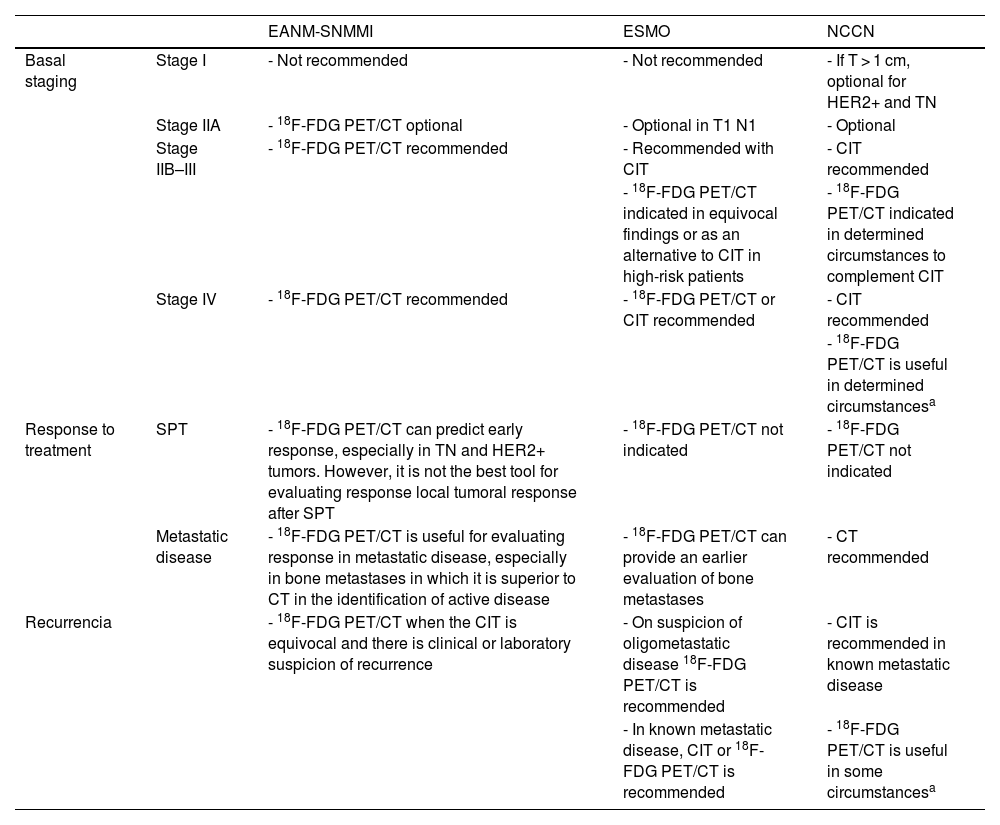

Breast cancer is one of the most prevalent neoplasms worldwide, with molecular subtypes that influence prognosis and therapeutic strategies. PET/CT with different radiopharmaceuticals has revolutionized diagnosis, staging, and treatment monitoring. [18F]-Fluorodeoxyglucose remains the most widely used radiotracer, but it has limitations in certain subtypes, such as invasive lobular carcinoma, where 16α-[18F] fluoro-17β-estradiol and [68Ga]-FAPI (fibroblast activation protein inhibitors) have demonstrated greater utility. Today, HER2-targeted radiopharmaceuticals, such as [89Zr]-trastuzumab, allow for a precise assessment of tumor heterogeneity. PET/CT also plays a key role in detecting bone metastases using [18F]-NaF and in identifying new therapeutic targets, such as PSMA (prostate-specific membrane antigen) and GRPR (gastrin-releasing peptide receptor). These advancements establish molecular imaging as an essential tool for personalizing breast cancer treatment, optimizing clinical decision-making, and improving diagnostic accuracy.
El cáncer de mama es una de las neoplasias más prevalentes en el mundo, con subtipos moleculares que influyen en el pronóstico y las estrategias terapéuticas. La PET/CT con diferentes radiofármacos ha revolucionado el diagnóstico, la estadificación y la monitorización del tratamiento. La [18F]-Fluorodesoxiglucosa sigue siendo el radiofármaco más utilizado, pero presenta limitaciones en subtipos como el carcinoma lobulillar infiltrante, donde el16α-[18F]fluoro-17β-estradiol y el [68Ga]-FAPI (inhibidores de la proteína activadora de fibroblastos) han demostrado mayor utilidad. Hoy en día existen radiofármacos dirigidos a HER2, como el [89Zr]-trastuzumab, que permiten una evaluación precisa de la heterogeneidad tumoral. La PET/CT también desempeña un papel clave en la detección de metástasis óseas mediante [18F]-NaF y en la identificación de nuevas dianas terapéuticas, como PSMA (Antígeno prostático específico de membrana) y GRPR (Receptor del péptido liberador de gastrina). Estos avances consolidan la imagen molecular como una herramienta esencial para la personalización del tratamiento en cáncer de mama, optimizando las decisiones clínicas y mejorando la precisión diagnóstica.
Article
If you experience access problems, you can contact the SEMNIM Technical Secretariat by email at secretaria.tecnica@semnim.es or by phone at +34 619 594 780.
Revista Española de Medicina Nuclear e Imagen Molecular (English Edition)

