



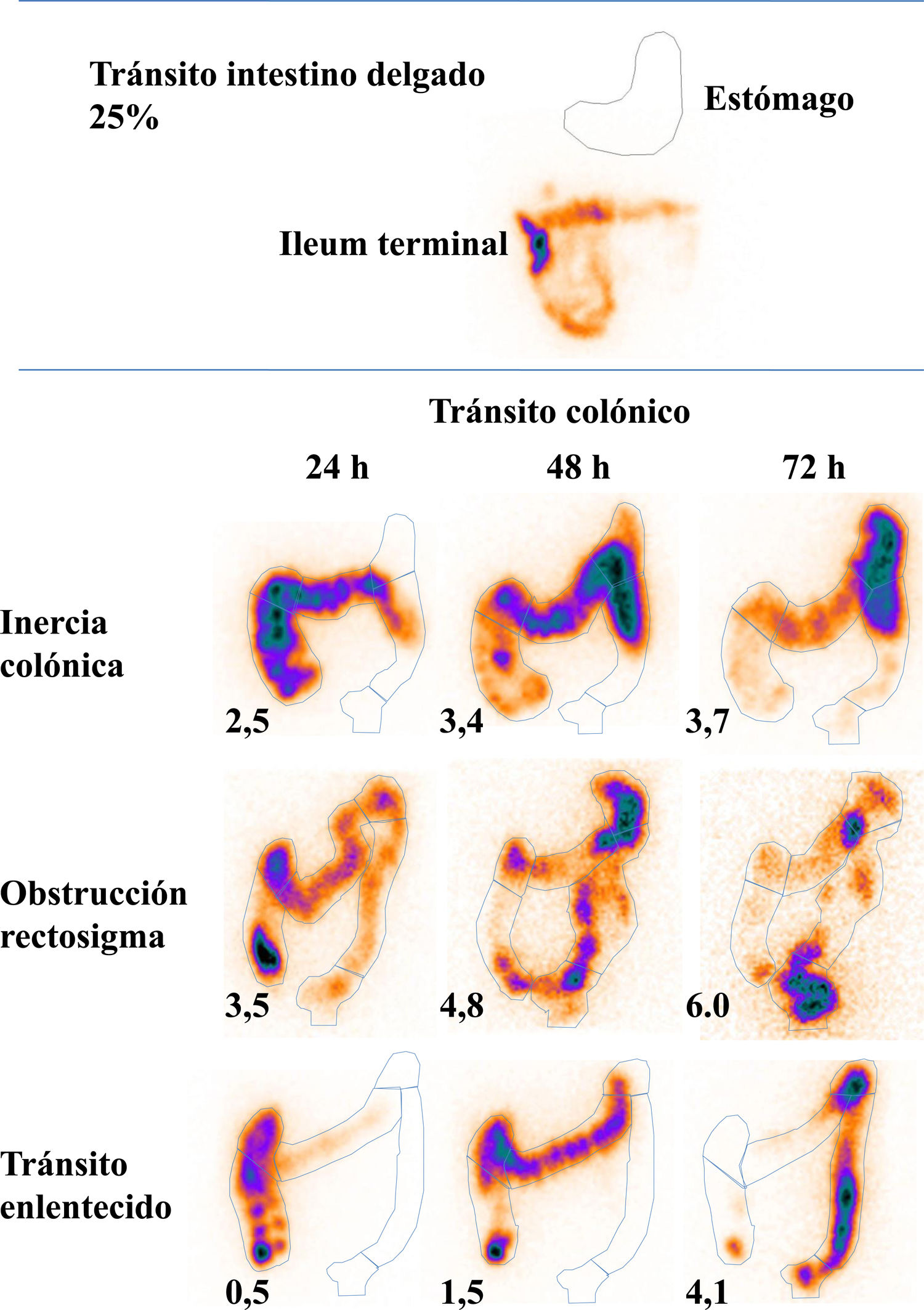
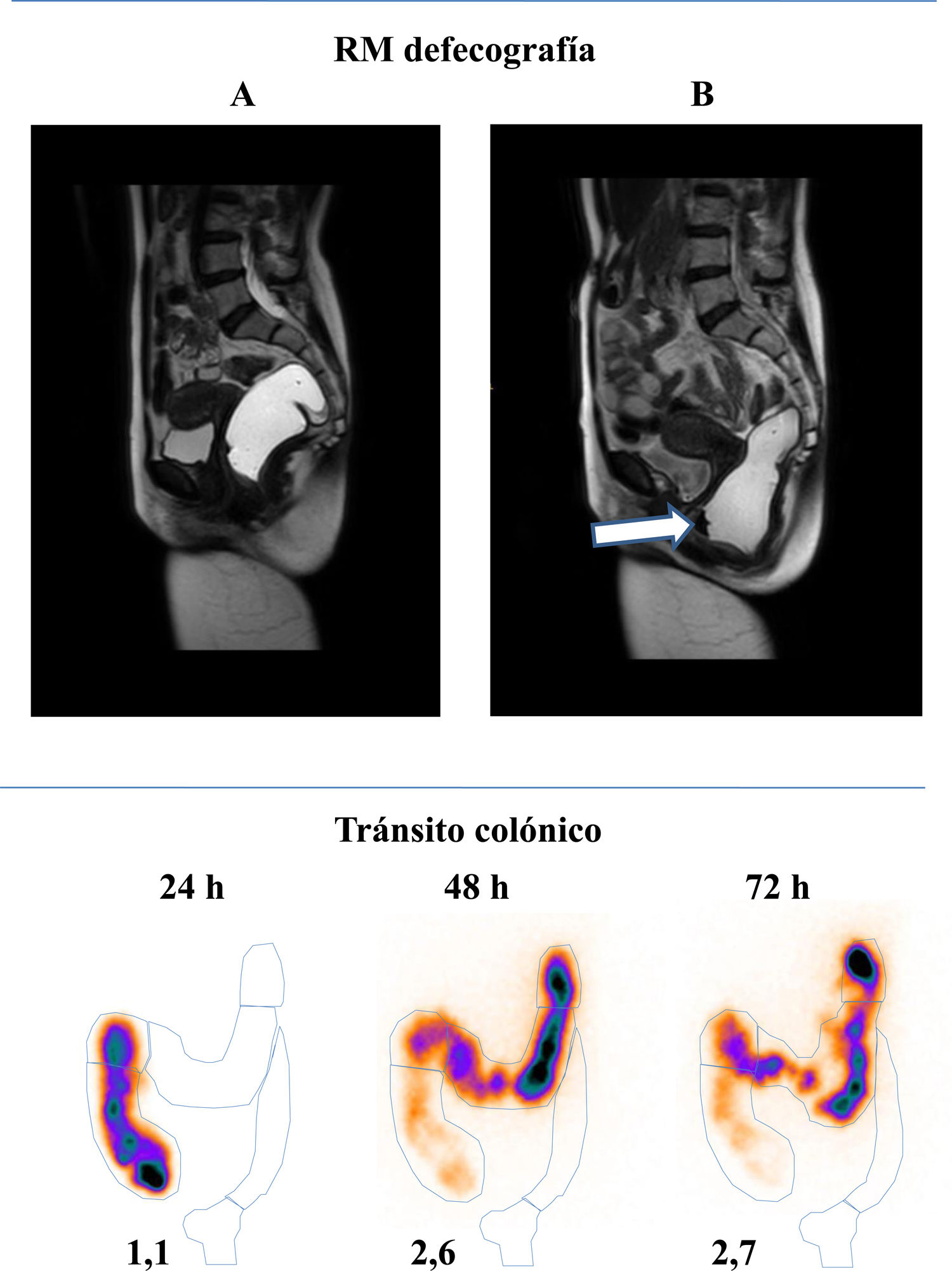
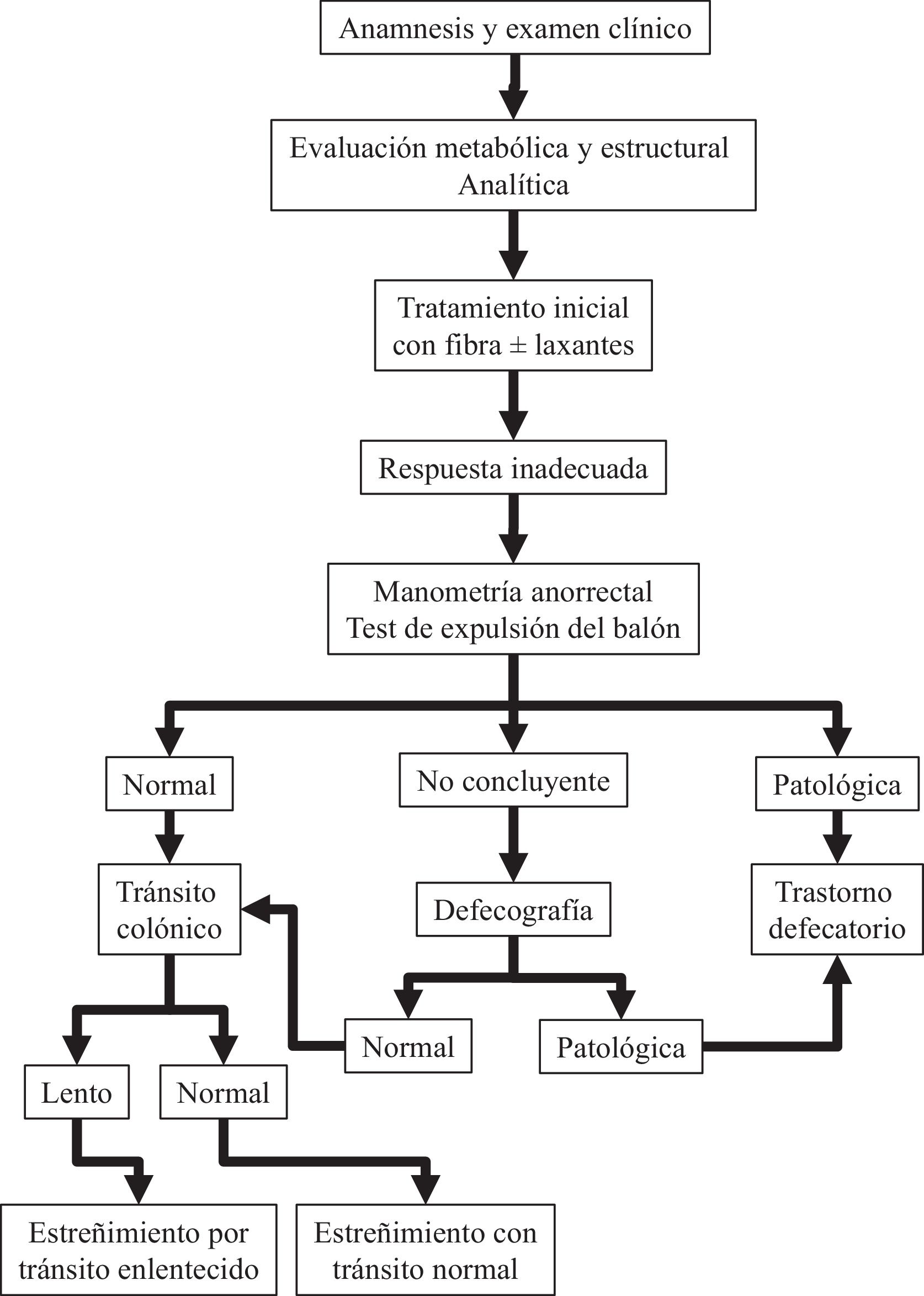

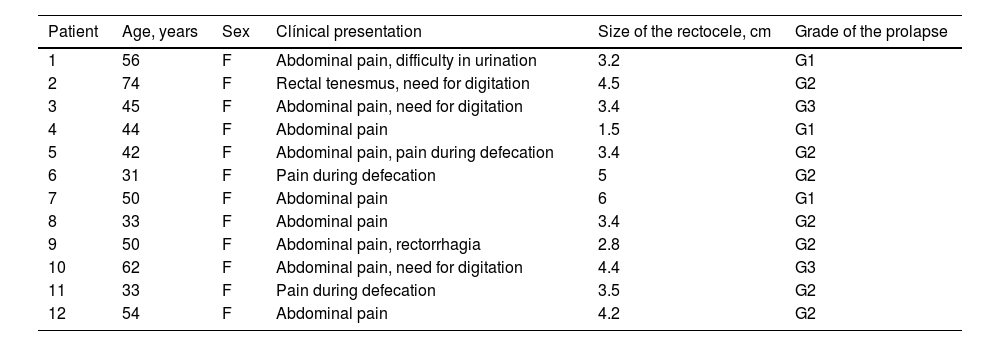
Rectocele can cause chronic constipation and altered quality of life. In the presence of severe symptomatology and lack of response to conservative treatment, gastrointestinal motor function should be assessed. The aim of this study was to assess the utility of gastrointestinal transit scintigraphy in this pathology, analyzing its position in international guidelines.
Material and methodsWe retrospectively evaluated twelve women with rectocele and chronic constipation, range of 31–74 years, referred for scintigraphic study as an assessment prior to prolapse treatment. Defecography was altered in 12 and anorectal manometry in 8. Following international guidelines, a dose of [111In]In-DTPA (37 MBq) was administered together with standardized food to assess liquid gastric emptying and small-bowel and colonic transit. Areas of interest were defined in these locations to calculate the geometric center.
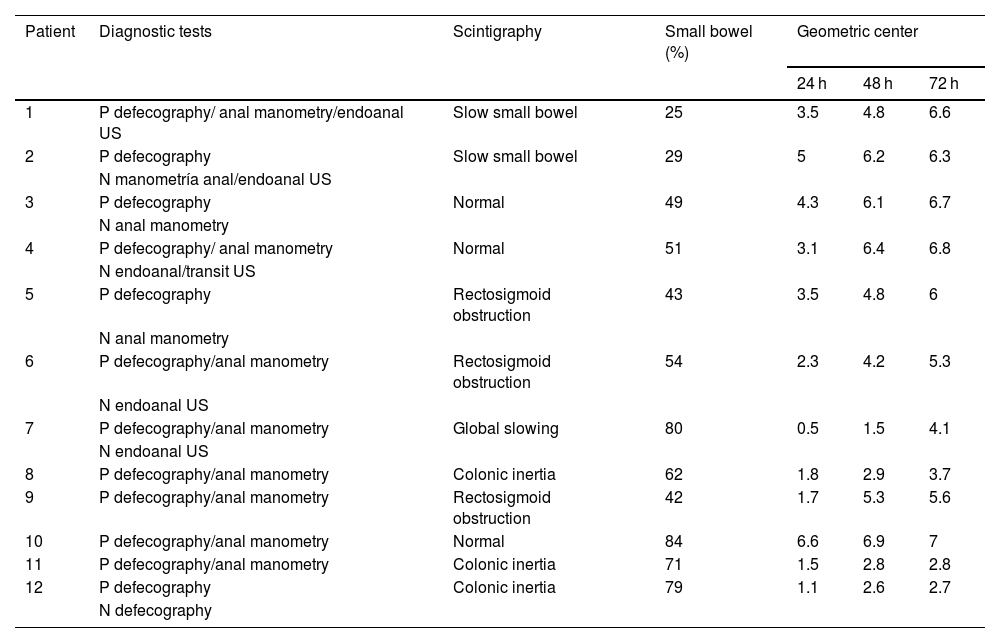
ResultsIn 3 patients the radioisotopic study was normal, 3 showed a pattern of outlet obstruction, 3 colonic inertia, 2 slow small-bowel transit and 1 slow generalized transit. Thus, 50% of patients presented transit alterations not located in the rectosigmoid area.
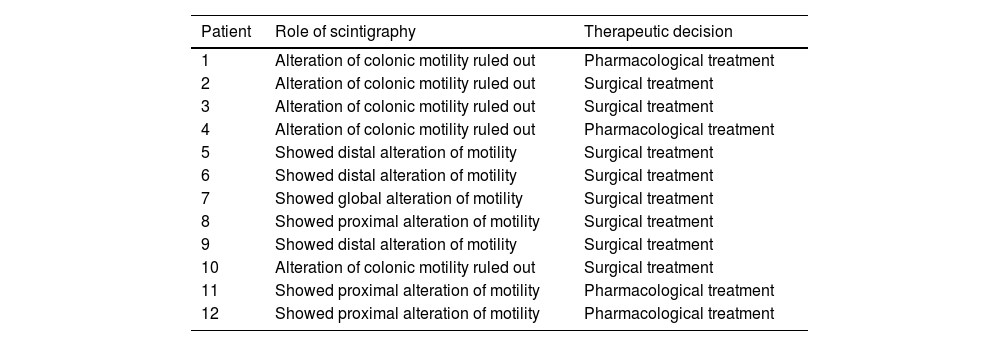
ConclusionScintigraphy study provided useful information for the evaluation of patients with rectocele and constipation, influencing the diagnosis and therapeutic management. It proved to be a physiological method, providing both global and regional quantitative information. Like other authors, it is considered appropriate to use the study at the same level as the tests for the assessment of defecatory dynamics.
El rectocele puede causar estreñimiento crónico y alteración de la calidad de vida. Ante sintomatología grave y falta de respuesta al tratamiento conservador, debe valorarse la función motora gastrointestinal. El objetivo del estudio fue analizar la utilidad de la gammagrafía de tránsito gastrointestinal en esta patología, analizando su posición en las guías internacionales.
Material y métodosSe valoraron retrospectivamente 12 mujeres con rectocele y estreñimiento crónico, con un rango de edad de 31-74 años, remitidas para estudio gammagráfico como valoración previa al tratamiento del prolapso. La defecografía estaba alterada en 12 y en 8 la manometría anorrectal. Siguiendo guías internacionales, se administró una dosis de [111In]In-DTPA (37 m Bq) junto con comida estandarizada para valoración del vaciamiento gástrico de líquidos y tránsito de intestino delgado y grueso. Se definieron áreas de interés en estas localizaciones, calculándose el centro geométrico en colon.
ResultadosEn 3 pacientes el estudio radioisotópico fue normal, en 3 mostró un patrón de obstrucción en rectosigma, en 3 de inercia colónica, 2 enlentecimiento en intestino delgado y 1 tránsito globalmente enlentecido. De esta forma, el 50% de pacientes presentaron alteraciones del tránsito no localizadas en área del rectosigma.
ConclusiónEl estudio gammagráfico proporcionó información útil para la valoración de pacientes con rectocele y estreñimiento, influyendo en el diagnóstico y el manejo terapéutico. Resultó ser un método fisiológico, proporcionando información cuantitativa global y regional. Al igual que otros autores, se considera adecuada la utilización del estudio al mismo nivel que las pruebas para valoración de la dinámica defecatoria.
Article
If you experience access problems, you can contact the SEMNIM Technical Secretariat by email at secretaria.tecnica@semnim.es or by phone at +34 619 594 780.
Revista Española de Medicina Nuclear e Imagen Molecular (English Edition)

