



Fever can affect the identification and efficacy evaluation of tumors on the 18F-FDG PET/CT, and this effect can be reduced by referring to normal tissue metabolism.
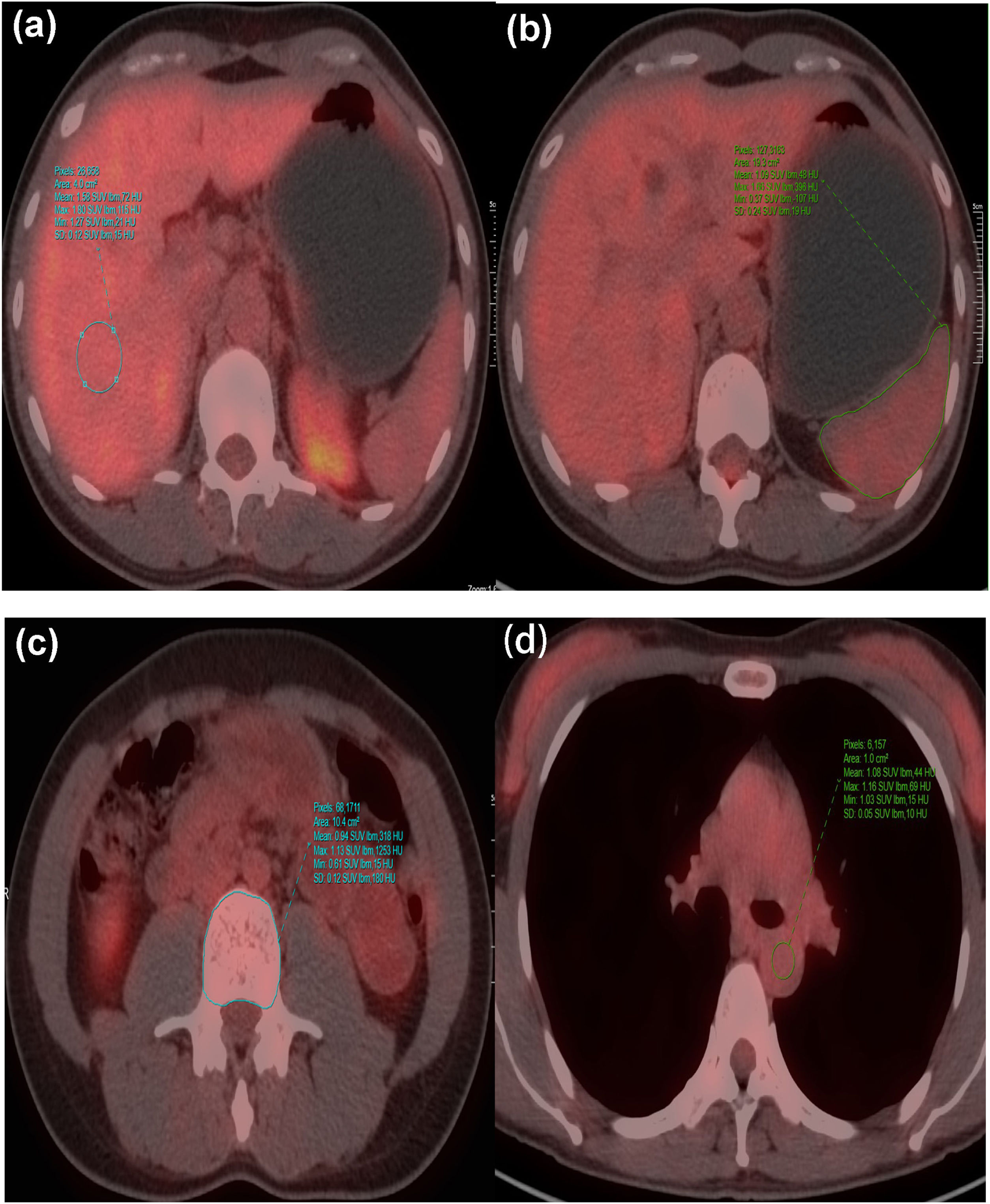
The aim of the study was to analyze the influence of fever on glucose metabolism in the mediastinal blood pool, liver, spleen, and bone marrow utilizing PET/CT quantitative parameter SUV normalized by lean body mass (SUL).
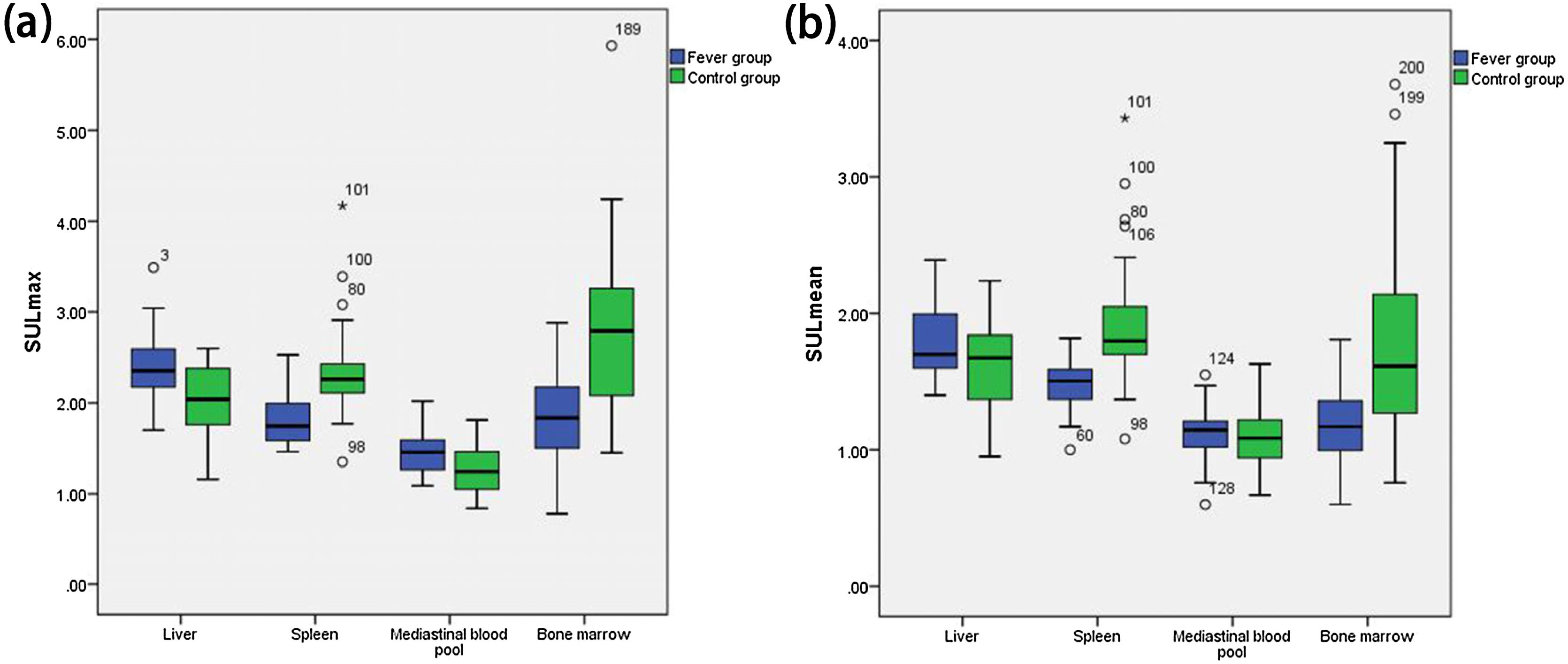
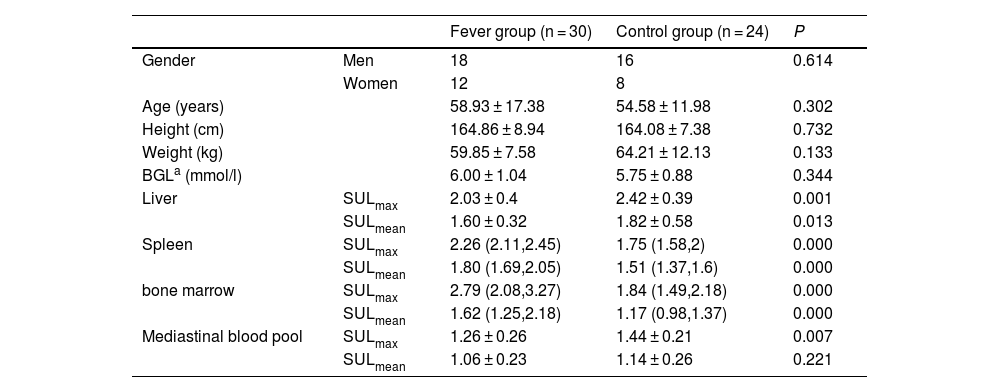
Materials and methods30 patients with fever of unknown origin and 24 patients for tumor screening with normal body temperature within 3 weeks, who underwent 18F-FDG PET/CT in our department, were analyzed retrospectively. The SULmax and SULmean of the mediastinal blood pool, liver, spleen, and bone marrow were respectively measured in the two groups, and the differences between the two groups were compared by independent sample t test or Wilcoxon–Mann–Whitney test.
ResultsThe SULmax and SULmean of the liver in the fever group were lower than those in the control group (p = 0.001, 0.013). The SULmax and SULmean of spleen and bone marrow in the fever group were higher than in the control group (all p < 0.05). The SULmax of the mediastinal blood pool in the fever group was lower than that in the control group (p = 0.007), but there was no significant difference in SULmean of the mediastinal between the fever group and the control group (t = 1.181, p = 0.221).
ConclusionThe fever can affect the glucose metabolism in internal organs. But there was no significant difference in the SULmean of mediastinal blood pool. Perhaps the SULmean of the blood pool can be invoked as a calibration parameter in the evaluation of efficacy in tumor patients with fever.
La fiebre puede afectar la identificación y evaluación de la eficacia de los tumores en la 18F-FDG PET/TC, y este efecto puede ser reducido haciendo referencia al metabolismo tisular normal.
El objetivo del estudio fue analizar la influencia de la fiebre en el metabolismo de la glucosa en la reserva sanguínea mediastínica, hígado, bazo y médula ósea utilizando el parámetro cuantitativo SUV normalizado por la masa corporal magra (SUL) de PET/TC.
Materiales y métodosSe analizaron retrospectivamente 30 pacientes con fiebre de origen desconocido y 24 pacientes para cribado tumoral con temperatura corporal normal en 3 semanas, sometidos a 18F-FDG PET/TC en nuestro servicio. El SULmáx y SULmedio del banco de sangre mediastínico, el hígado, el bazo y la médula ósea se midieron respectivamente en los dos grupos, y las diferencias entre los dos grupos se compararon mediante la prueba t de muestras independiente o la prueba de Wilcoxon–Mann–Whitney.
ResultadosLa SULmáx y SULmedio del hígado en el grupo de fiebre fueron menores que en el grupo control (p = 0,001, 0.013). El SULmáx y SULmedio del bazo y la médula ósea en el grupo de fiebre fueron más altos que en el grupo control (todos con p < 0,05). El SULmáx de la reserva de sangre mediastínica en el grupo de fiebre fue menor que en el grupo control (p = 0,007), pero no hubo diferencia significativa en el SULmedio del mediastínico entre el grupo de fiebre y el grupo control (t = 1,181, p = 0,221).
ConclusiónLa fiebre puede afectar el metabolismo de la glucosa en órganos internos. Pero no hubo diferencia significativa en la reserva de sangre SULmedio del mediastino. Tal vez el SULmedio en mediastino podría ser un parámetro de calibración en la evaluación de la eficacia tumoral en pacientes con fiebre.
Article
If you experience access problems, you can contact the SEMNIM Technical Secretariat by email at secretaria.tecnica@semnim.es or by phone at +34 619 594 780.
Revista Española de Medicina Nuclear e Imagen Molecular (English Edition)

