


Enhancing patient safety in Anaesthesia relies significantly on critical incident reporting and analysis. We did an online web-based survey aiming to evaluate the awareness and practices of our anaesthesiologists on critical incident reporting in India.
Materials and methodsA validated questionnaire was disseminated via online social media platforms to evaluate the awareness and current practices of anaesthesiologists on incident reporting and analysis. Timely reminders were issued to enhance response rates, and data analyzed upon receipt of sufficient responses.
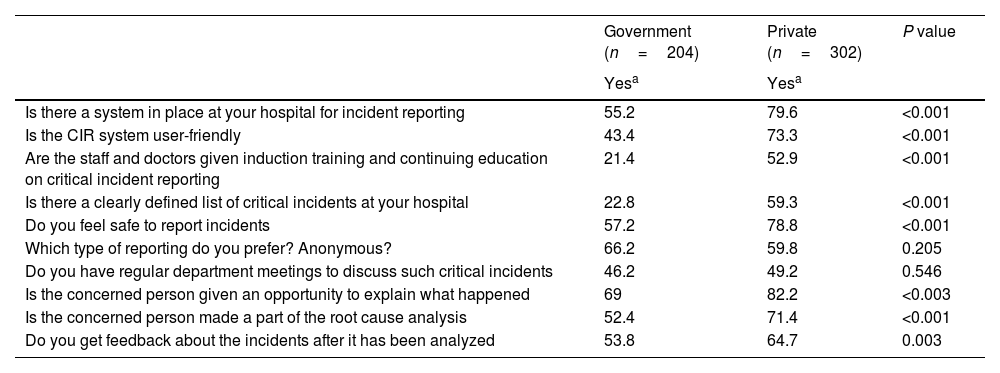
ResultsAmong the 506 responses received, 60% reported having a workplace incident reporting system. Despite high awareness, a significant majority expressed reluctance to report incidents, citing the fear of blame and shame as a deterrent. The most frequently reported incidents included cardiac arrest and drug errors. Identified contributing factors included inadequate staffing, communication gaps, prolonged work hours, a stressful work environment, and the absence of institutional protocols.
ConclusionsDespite a notable level of awareness regarding critical incident reporting among our anaesthesiologists, apprehensions related to blame and finger-pointing hinder the reporting process. As a uniform reporting system is lacking, formulating a national guideline, and establishing a standard reporting system is the need of the hour.
Mejorar la seguridad del paciente en anestesia depende en gran medida de la notificación y el análisis de incidentes críticos. Realizamos una encuesta en línea para evaluar el conocimiento y las prácticas de nuestros anestesiólogos sobre la notificación de incidentes en India.
Materiales y métodosSe distribuyó un cuestionario validado a través de redes sociales para evaluar el conocimiento y las prácticas actuales de los anestesiólogos sobre la notificación y el análisis de incidentes. Se enviaron recordatorios oportunos para mejorar las tasas de respuesta y se analizaron los datos una vez recibidas las respuestas suficientes.
ResultadosDe las 506 respuestas recibidas, el 60% indicó contar con un sistema de notificación de incidentes en el lugar de trabajo. A pesar del alto nivel de conocimiento, una gran mayoría expresó su reticencia a informar incidentes, citando el miedo a la culpa y la vergüenza como factor disuasorio. Los incidentes notificados con mayor frecuencia incluyeron paro cardíaco y errores de medicación. Entre los factores contribuyentes identificados se incluyen la dotación de personal insuficiente, las brechas de comunicación, las jornadas laborales prolongadas, el entorno laboral estresante y la ausencia de protocolos institucionales.
ConclusionesA pesar de la buena concienciación sobre la notificación de incidentes críticos entre nuestros anestesiólogos, la aprensión por culpar a otros y señalar a otros dificulta el proceso de notificación. Ante la falta de un sistema de notificación uniforme, la formulación de directrices nacionales y el establecimiento de un sistema de notificación estándar son una necesidad urgente.