





lorazepam is one of benzodiazepine medication that is usually used for its sedative and anxiolytic effect and has anti-depressant like effects. Turmeric is a plant that contain curcumin as main active compound that exert its antidepressant action inhibit monoamine oxidase and increase levels of dopamine and serotonin in brain.
Aimthe present study investigate the depression effect of curcumin (natural selective serotonin inhibitors) in comparison with acupuncture and lorazepam.
Method32 adult rats weighing (150 g−280 g) were divided equally into 8 groups each group contain 4 rats. The first 3 group of rats were treated with lorazepam, mixture of (curcumin, black pepper and olive oil) and pricked with insulin needle at point gb39, respectively, while second 4 groups of rats were received lorazepam and mixture, lorazepam and acupuncture, mixture and acupuncture, and lorazepam, mixture and acupuncture, separately, and the eighth group is control group don't receive any drugs. After 35 days, forced swimming test was made for all rats.
ResultsLiver parameters: - GOT increased in all group, GPT increased in rat's group that received lorazepam, mixture group and lorazepam+ mixture group, This indicates the existence of problems previously with the liver of the rat used, and what remains is the high levels of GOT and GPT in the control group, while TSB is within the normal range for all groups. Kidney parameters:-blood urea levels increased in all groups and S. creatinine levels within normal range for all groups.
Conclusionthe evaluation of natural SERMs in the forced swimming test showed promising antidepressant-like effects, comparable to lorazepam and acupuncture. Further research is needed to understand the mechanisms and determine optimal dosage and safety. Natural selective serotonin inhibitors hold potential as alternative or complementary treatments for depression.
El lorazepam es uno de los medicamentos benzodiacepínicos que generalmente se utiliza por sus efectos sedantes y ansiolíticos, y también se utiliza para tratar el insomnio y las convulsiones. La cúrcuma es una planta que contiene curcumina como compuesto activo principal, que ejerce su acción antidepresiva al inhibir la monoaminooxidasa y aumentar los niveles de dopamina y serotonina en el cerebro.
ObjetivoEl presente estudio investiga el efecto antidepresivo de la curcumina (SRI natural), en comparación con la acupuntura y el lorazepam.
MétodoSe dividieron 32 ratas adultas con un peso de (150 g-280 g) en 8 grupos, cada grupo con 4 ratas. Los primeros 3 grupos de ratas fueron tratados con lorazepam, una mezcla de (curcumina, pimienta negra y aceite de oliva) y fueron pinchados con una aguja de insulina en el punto gb39, respectivamente. Mientras que los otros 4 grupos de ratas recibieron lorazepam y la mezcla, lorazepam y acupuntura, la mezcla y acupuntura, y lorazepam, mezcla y acupuntura, por separado. El octavo grupo fue el grupo de control que no recibió ningún medicamento. Después de 35 días, se realizó una prueba de natación forzada para todas las ratas.
ResultadosParámetros hepáticos: los niveles de GOT aumentaron en todos los grupos, los niveles de GPT aumentaron en el grupo de ratas que recibieron lorazepam, el grupo de la mezcla y el grupo de lorazepam + mezcla. Esto indica la existencia de problemas previos en el hígado de las ratas utilizadas, y lo que queda es la alta concentración de GOT y GPT en el grupo de control, mientras que los niveles de TSB se encuentran dentro del rango normal para todos los grupos. Parámetros renales: los niveles de urea en sangre aumentaron en todos los grupos y los niveles de creatinina sérica se mantuvieron dentro del rango normal para todos los grupos.
ConclusiónLa evaluación de los SRI naturales en la prueba de natación forzada mostró efectos antidepresivos prometedores, comparables al lorazepam y la acupuntura. Se necesita más investigación para comprender los mecanismos y determinar la dosis óptima y la seguridad. Los SRI naturales tienen potencial como tratamientos alternativos o complementarios para la depresión.
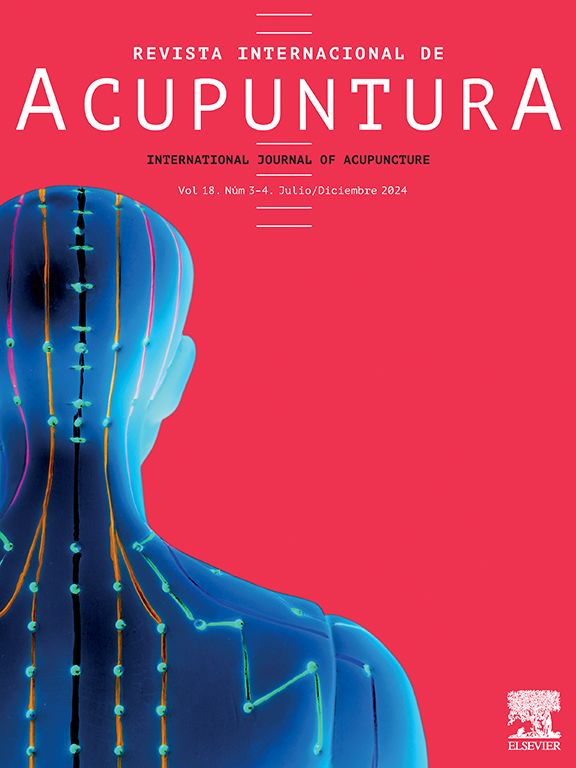
Acupuncture is recommended by the world health organization as promising therapeutic strategy.1 In order to encourage the release of endorphins (known as happy Hermon) and other naturally accruing chemicals, acupuncture stimulates the acupoints in different parts of the body which promote relaxation and rest by increasing level of serotonin and GABA in the brain.2 Acupuncture enhances patients overall mental and physical health by increasing their sleep duration and quality, additionally its decreased the likelihood of depressed insomnia.3 Acupuncture at acupoints GB39 (xuanzhong),which is located at the point where the lateral knee and the lateral malleolus of the tibiofibular4,5 as show in Fig. 1.

Acupoints GB39 location in rat.6
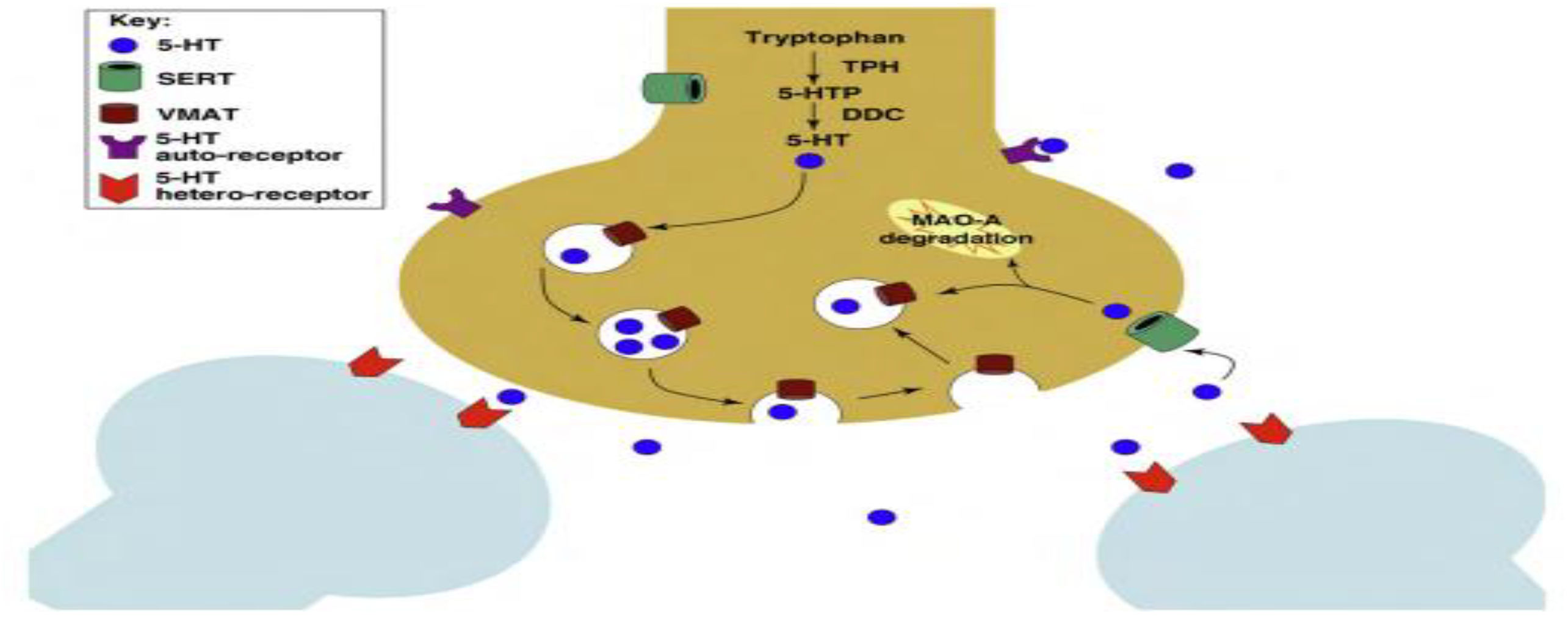
Selective serotonin reuptake inhibiters is considered the most antidepressant used due to their effectiveness in treating numerous of psychiatric diseases such as depression, anxiety and some behavioral disorder include bulimia nervosa, obsessive compulsive disorder and panic disorder.7,8 SSRIs exert their action by interfering with serotonin reuptake transporter that cause influx of serotonin at the neurotransmitter junction.9 As illustrated in Fig. 2.

Selective serotonin reuptake inhibiters mechanism of action.10
Curcumin as a natural material present in turmeric (curcuma longa) may have antidepressant – like effect in rat and mouse model of depression, with results resembling those of traditional antidepressant like impairamine and fluoxetine. According to many preclinical studies indicate the potential use of curcumin for the treatment of depressive illnesses.11–13
This study focused on acupoints Gb39 to evaluate its anti-depressant effect in compression with curcumin and lorazepam in depressed wistar rats' model.
Materials and methodsLab animalsEight groups of four wistar male rats each were formed from 32 total rang of Wight (150–280 kg), with the first group serving as control. The rats in the second and third group received lorazepam and mixture contain curcumin, black pepper and olive oil, respectively, while fourth group received simply acupuncture treatment. The fifth group received lorazepam and mixture, sixth group treated with lorazepam and acupuncture, the seventh group treated with mixture and acupuncture and finally eighth group received lorazepam, mixture and treated with acupuncture at the same time.
All animal experiments comply with the ethical guide line for the use of animals in research given by the national committee for research ethics in science and technology.
Drugs and reagents dosingLorazepam dose was 0.25 ml (1 tab. of lorazepam dissolved in 4 ml of distilled water) administered via oral rout once daily. Mixture of 4 g curcumin, 0.2 g black pepper and 16 ml of olive oil used in dose 1 ml via oral rout once daily.
AcupunctureFor 30 days, there was one acupuncture session every day. The acupuncture was done on Gb 39 acupoints. The concept of traditional Chinese medicine,the rat skeleton atlas and acupoints,and the anatomical location described in previous studies4,6 and were used to estimate the depth and placement of acupuncture. Needles were placed perpendicularly as deep 2–3 mm at Gb39. Moreover, the acupuncture needles were left in for two minutes.5
Forced swimming testA forced swimming test made for all rats in each group after 30 days of treatment by using glass water tanks (20 cm diameters * 30 cm height) with water level 15 cm from bottom and each animal left in water tang for 5–10 min.14
Liver and kidney function monitoringAfter 30 day, blood was drown from heart of all rats included in the study and serum analysis was made to measure the liver enzyme (GOT, GPT, ALP) and kidney enzyme (blood urea and serum creatinine).
ResultsLiver function testTable 1 show the mean ± SD for (AST\GOT), (AST\GOT) and (TSB) which are liver enzyme as markers to discover whether liver was damage or not due to use treatments, as show in the table there were no significant differences between them.
Liver enzyme value in the experimental rats.
| parameters | Aspartate aminotransferase (AST\GOT) | Alanine aminotransferase (AST\GOT) | Total serum bilirubin(TSB) |
|---|---|---|---|
| Groups | |||
| Control | 147 ± 7.095a | 36 ± 1.000a | 0.5 ± 0.1a |
| Lorazepam | 162 ± 24.68a | 46 ± 5.292a | 0.6 ± 0.1a |
| Curcumin | 160 ± 11.37a | 57 ± 22.01a | 0.6 ± 0.3a |
| Acupuncture | 162 ± 21.08a | 39 ± 2517a | 0.5 ± 0.2a |
| Lorazepam and curcumin | 198 ± 10.58a | 40 ± 1.000a | 0.7 ± 0.2a |
| Lorazepam and acupuncture | 192 ± 33.13a | 44 ± 6.557a | 0.6 ± 0.2a |
| Curcumin and acupuncture | 162 ± 48.51a | 48 ± 3.215a | 0.6 ± 0.2a |
| Lorazepam, curcumin and acupuncture | 194 ± 5.000a | 64 ± 7.506a | 0.6 ± 0.1a |
Values were expressed as mean ± SD, different small letters mean significant difference (p ≤ 0.05).
Table 2 show the mean ± SD for (SCr) and (B.U.) which are kidney enzyme as markers to discover whether kidney was damage or not due to use treatments, as show in the table there were no significant differences between them except when used Lorazepam, curcumin and acupuncture together represent the significant difference with all other treatments.
Kidney biomarker in experimental rats.
| parameters | Serum creatinine(SCr) | Blood urea(B.U.) |
|---|---|---|
| Groups | ||
| Control | 0.77 ± 0.061a | 33 ± 1.665a |
| Lorazepam | 0.43 ± 0.225a | 39 ± 1.952a |
| Curcumin | 0.59 ± 0.172a | 28 ± 11.40a |
| Acupuncture | 0.72 ± 0.076a | 31 ± 0.702a |
| Lorazepam and curcumin | 0.54 ± 0.096a | 31 ± 4.729a |
| Lorazepam and acupuncture | 0.71 ± 0.249a | 35 ± 0.751a |
| Curcumin and acupuncture | 0.76 ± 0.100a | 28 ± 1.908a |
| Lorazepam, curcumin and acupuncture | 0.79 ± 0.177a | 64 ± 7.506b |
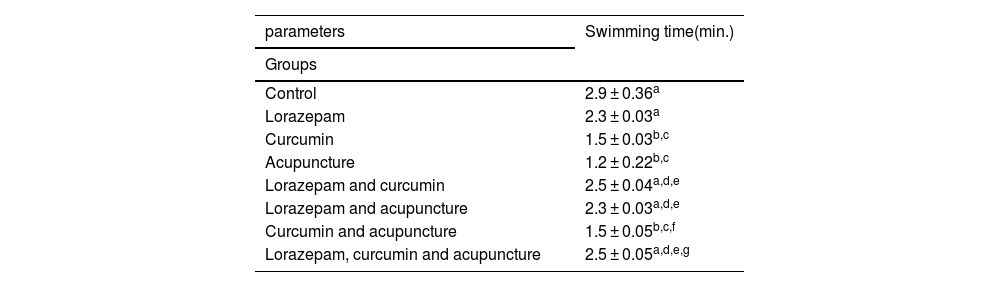
Swimming test made as indicator to antidepressant effect for treatments used in study, and show there were significant difference between treatments depended on time that rats spend in water, as show in Table 3.
Swimming test of experimental rats.
| parameters | Swimming time(min.) |
|---|---|
| Groups | |
| Control | 2.9 ± 0.36a |
| Lorazepam | 2.3 ± 0.03a |
| Curcumin | 1.5 ± 0.03b,c |
| Acupuncture | 1.2 ± 0.22b,c |
| Lorazepam and curcumin | 2.5 ± 0.04a,d,e |
| Lorazepam and acupuncture | 2.3 ± 0.03a,d,e |
| Curcumin and acupuncture | 1.5 ± 0.05b,c,f |
| Lorazepam, curcumin and acupuncture | 2.5 ± 0.05a,d,e,g |
The fundamental mechanisms for acupuncture's substantial effectiveness in TCM are yet unknown. The purpose of acupuncture was examined, and more information needs to be thoroughly evaluated in the future. It is becoming more and more common to use it to treat a variety of illnesses, but the mechanism has not been fully understood because it does not have a specific treatment for all illnesses and because there are too many sites of action.15
In cases of drug-induced liver and renal disease, biomarkers constitute a helpful diagnostic criterion. Biomarkers can be used to assess cell damage, impairment severity, disease prognosis, and harm kind in cases of organ injury.16Increased serum AST and ALT activity are a sign of cellular permeability and loss of the membrane of the liver cell's structural integrity. The degree of hepatotoxicity brought on by drugs is measured by the hepatocyte membrane's release of these intracellular enzymes.17
The liver converts lorazepam to inactive metabolites. The toxic effects of an infrequently formed intermediate metabolite are likely to blame for the liver damage caused by lorazepam. According to several research, preparing curcumin into nanoparticles increases its levels in rat livers and has a hepatoprotective impact on rats18, and other research demonstrated the impact of curcumin/turmeric on patients with non-alcoholic fatty liver disease's liver enzymes. This study indicated a subgroup receiving less than 1000 mg/day of curcumin supplementation had a significant tendency toward lower ALT blood values. AST was significantly reduced in studies after 8 weeks of treatment.19
In our study, As show in Table 1 GOT increased in all groups while GPT increased in the mixture and Lorazepam+ mixed groups, likely as a result of earlier issues such liver inflammation or injury in the rats that were used in the study. Elevated liver values in the control group compared to the other groups are, in my opinion, proof of this. The level of TSB is within the normal range in all groups except for the lorazepam group because curcumin has no impact on bilirubin. There is a minor increase in TSP, but this increase has few adverse effects.
The indicators of renal function that are most frequently examined are creatinine and blood urea nitrogen (BUN). A waste product of muscle metabolism called creatinine is removed from the blood by the kidneys. Increased blood creatinine levels may be a sign of compromised renal function. Urea nitrogen, another waste product that the kidneys typically filter out of the blood, is measured by the BUN. Increased BUN levels may be a sign of renal disease or other health issues.16 Blood urea nitrogen levels are high in all groups and creatinine levels are within the normal range, which points to renal failure or other health issues.
(FST), one of the most used methods for examining depressive-like behavior in rodents. The FST is predicated on the idea that when an animal is placed in a container filled with water, it will first try to escape but eventually show immobility that could be interpreted as a sign of behavioral despair. Due to the fact that this test involves subjecting the animals to stress, which has been demonstrated to play a part in the likelihood for serious depression, it has been widely employed.20 The antidepressant effects of lorazepam caused the group that got it to resist treatment within 4 min of reaching the despair phase. Within 4 min, the group receiving curcumin experienced dejection, and the cause of this Curcuma's antidepressant impact is resistant. Within two minutes of being poked with insulin needles, the group experienced hopelessness. Perhaps this is due to the fact that pricking's antidepressant effects are unclear.
ConclusionLorazepam has no significant effect on the kidneys and liver at normal doses, and curcumin acts as a hepatoprotector and improves liver and kidney parameters, but in our research, some liver and kidney parameters were increased. This indicates pre-existing problems in the liver and kidneys of the rats used.
