



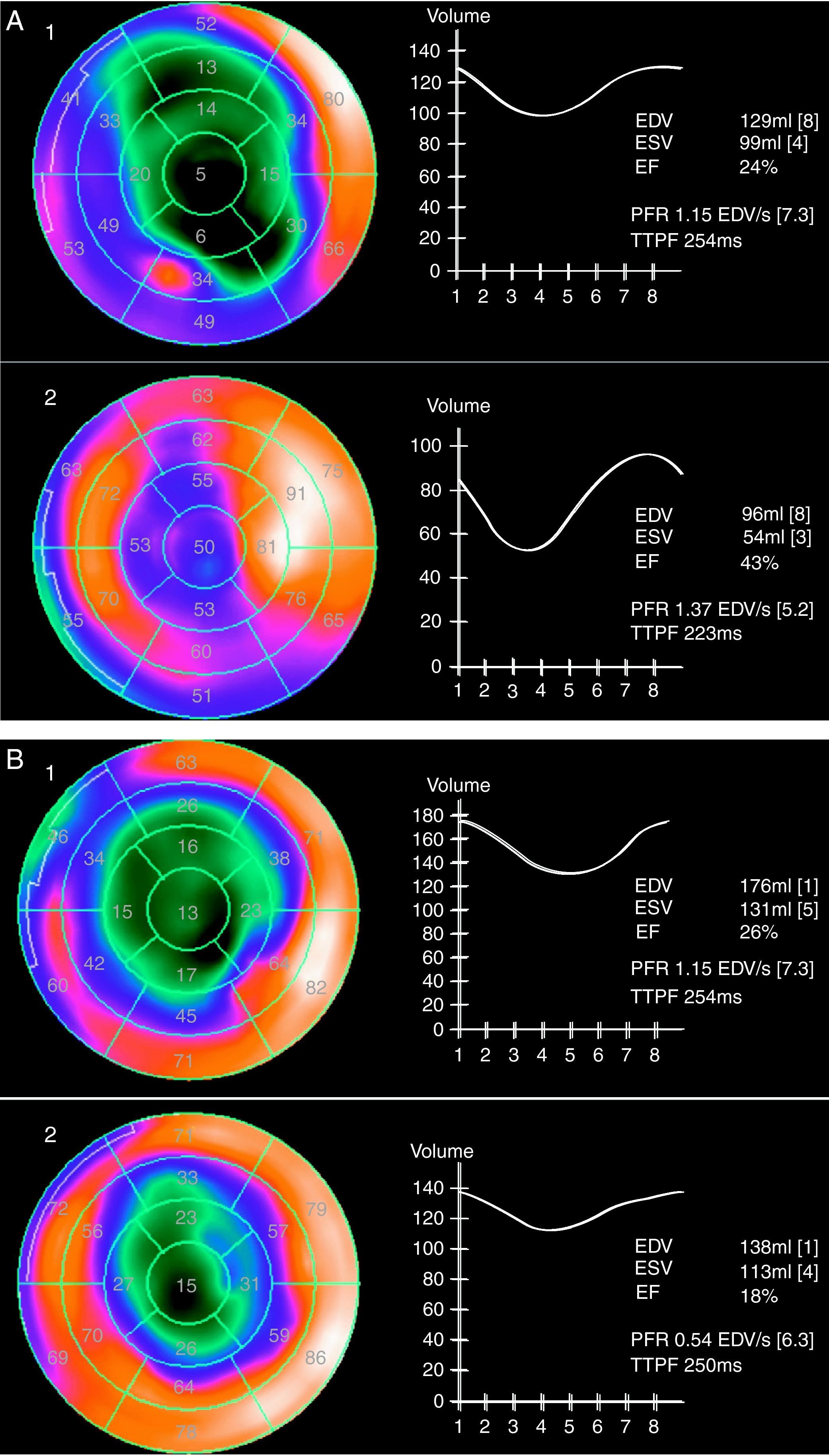
To evaluate the evolutive changes in diastolic function after percutaneous coronary revascularization (PCR) in acute myocardial infarction (AMI), using myocardial perfusion gated SPECT.
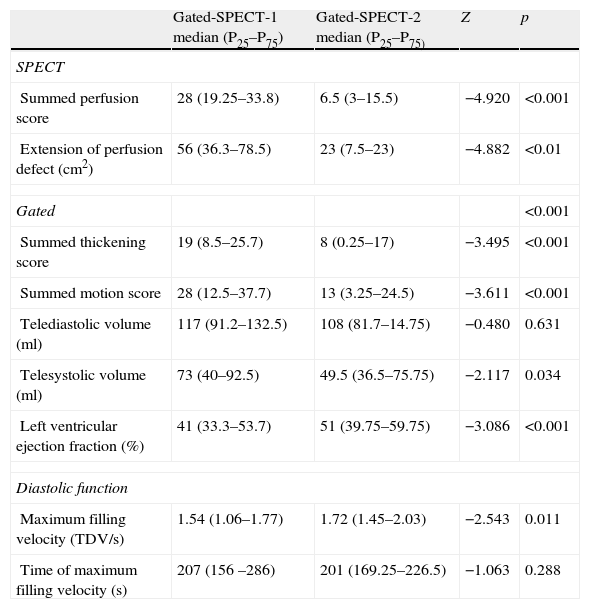
MethodsThirty-two patients (mean 61.9±9.7 years, 7 women) were studied by two at rest gated SPECT: the first gated-SPECT-1 was performed with an injection of a dose of 99mTc-tetrofosmin prior to PCR and the second gated-SPECT-2 between the fourth and fifth weeks after AMI. Changes of peak filling rate (PFR) and the time to peak filling rate (TTPF) were assessed between both studies, and were related to the extent of salvaged myocardium (SM), end-diastolic (EDV) and end-systolic (ESV) volumes, and left ventricular ejection fraction (LVEF) changes.
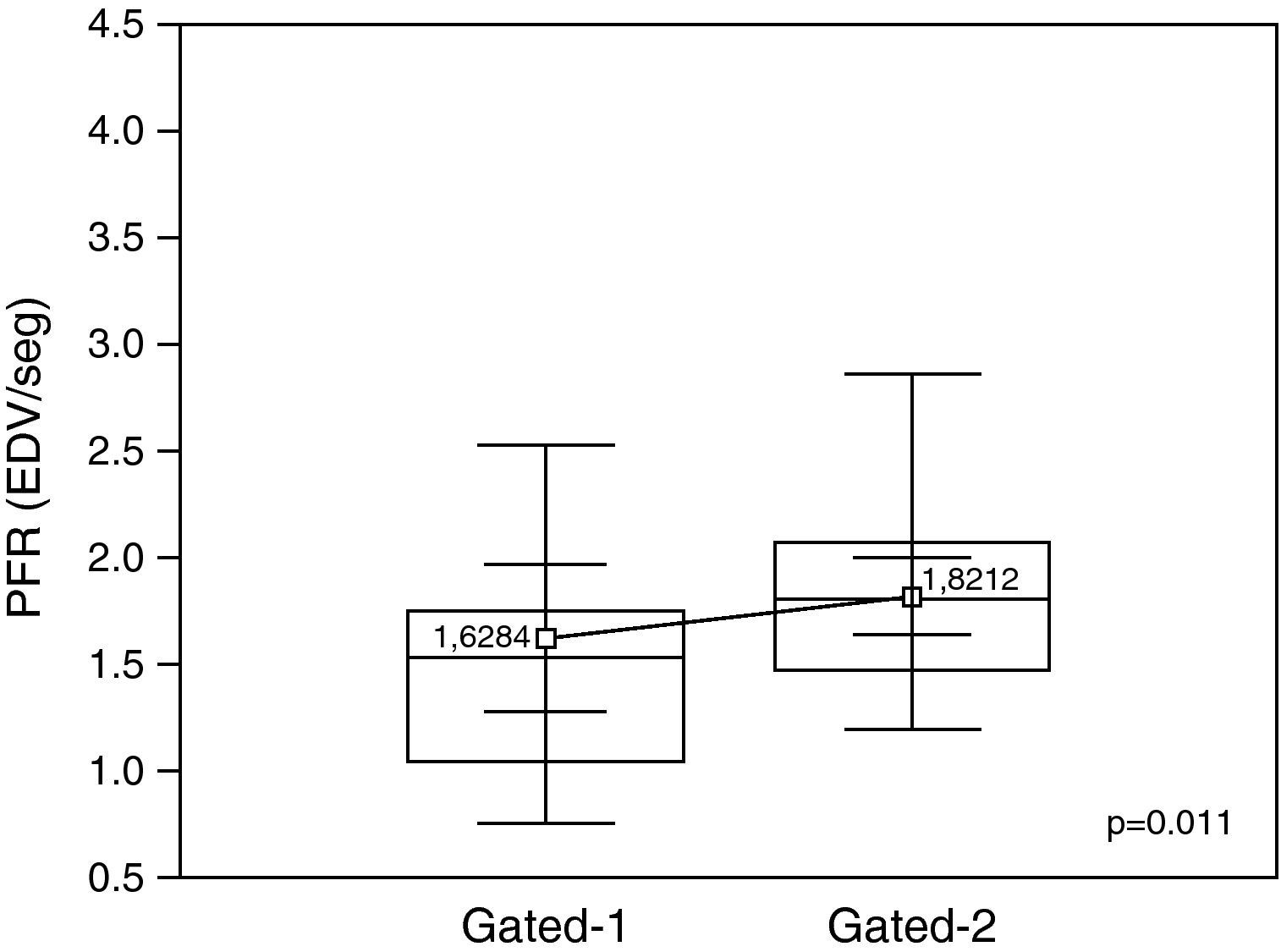
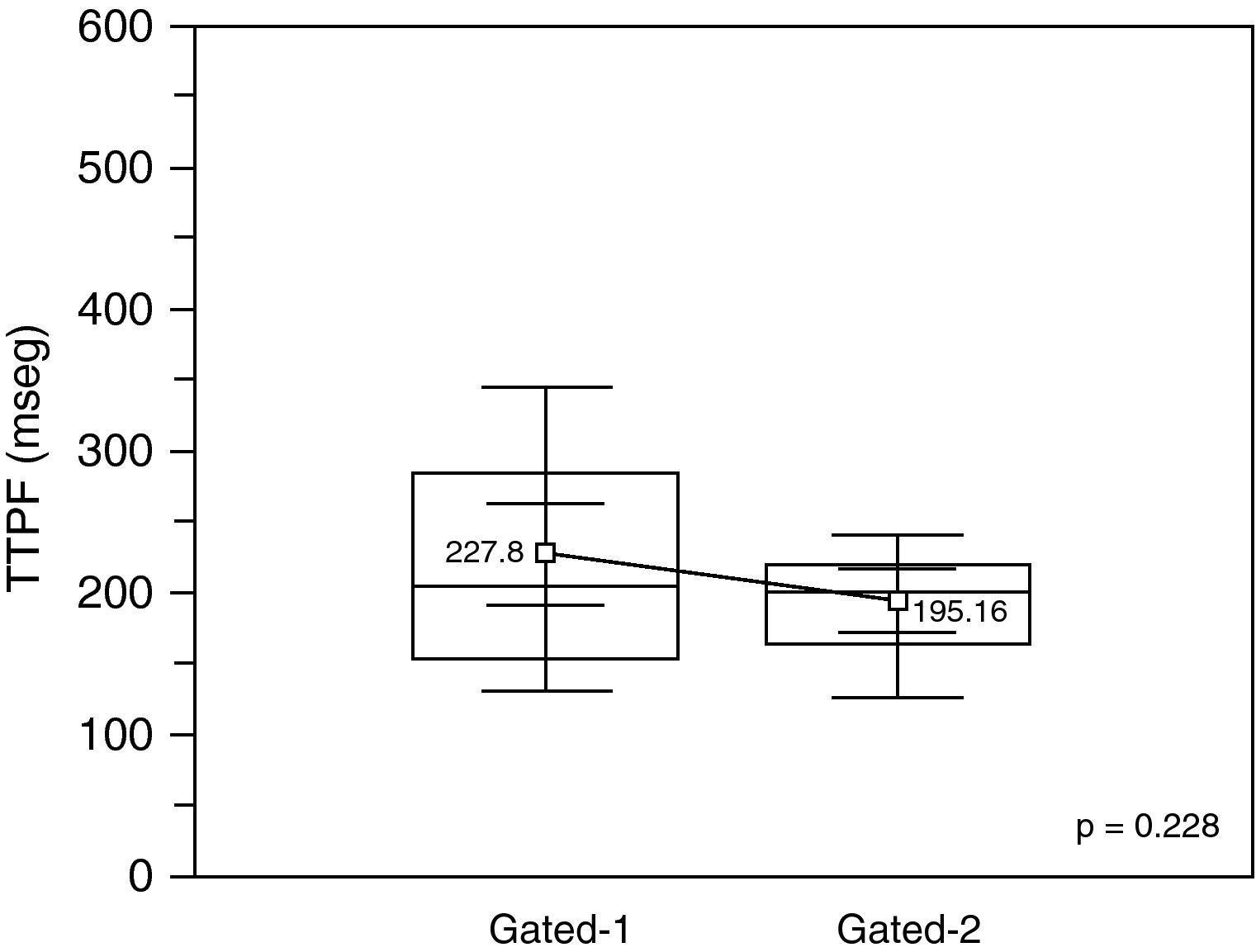
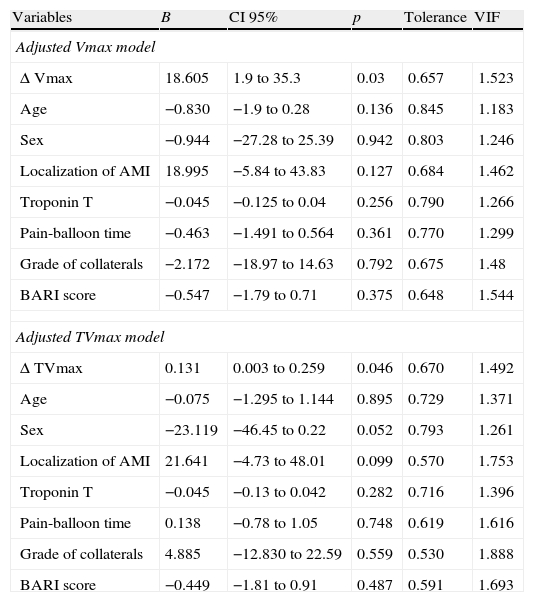
ResultsAn improvement was observed in diastolic function parameters gated-SPECT-2: PFR increased significantly (p=0.011) while the TTPF decreased without reaching statistical significance (p=0.288). In multivariate analysis, adjusted by clinical and coronary variables, improvement of PFR was significantly associated with percentage of SM (p=0.030), increase in LVEF (p=0.004) and with ESV volume reduction (p=0.005). Improvement of TTPF was only related significantly to the percentage of SM (p=0.046). PFR increased by 0.01EDV/s. and TTPF decreased by 1.14ms for each cm2 increase of the area of SM.
ConclusionsAfter PCR in AMI, the myocardial perfusion gated SPECT makes it possible to assess the significant improvement in diastolic function mainly related to the amount of MS.
Valorar mediante gated-SPECT de perfusión miocárdica los cambios evolutivos de la función diastólica después de la revascularización coronaria percutánea (RCP) de un infarto agudo de miocardio (IAM).
Material y métodosSe estudiaron consecutivamente 32 pacientes (media 61,9±9,7 años; 7 mujeres) mediante dos gated-SPECT de perfusión miocárdica en reposo: la primera gated-SPECT-1 con inyección de una dosis de 99mTc-tetrofosmina previa a la RCP y la segunda gated-SPECT-2 entre la cuarta y quinta semana después del IAM. Se valoraron los cambios de la velocidad máxima de llenado (Vmáx) y del tiempo a la velocidad máxima de llenado (TVmáx) entre ambos estudios, relacionándolos con la extensión del miocardio salvado (MS) y con los cambios observados en los volúmenes telediastólico (VTD) y telesistólico (VTS) y en la fracción de eyección del ventrículo izquierdo (FEVI).
ResultadosEn la gated-SPECT-2 se observó una mejoría de los parámetros de la función diastólica: la Vmáx aumentó significativamente (p=0,011) mientras que el TVmáx disminuyó sin alcanzar significación estadística (p=0,288). En el análisis multivariante, ajustado por variables clínicas y coronariográfias, el aumento de la Vmáx se relacionó significativamente con el porcentaje de MS (p=0,030), el aumento de la FEVI (p=0,004) y la reducción del VTS (p=0,005). La mejoría del TVmáx sólo se relacionó significativamente con el porcentaje de MS (p=0,046). Por cada cm2 de aumento del área del miocardio salvado la Vmáx aumentó 0,01 VTD/seg y la TVmáx disminuyó 1,14 mseg.
ConclusionesTras la RCP en el IAM, la gated-SPECT de perfusión miocárdica permite valorar la mejoría significativa de la función diastólica que se relaciona fundamentalmente con la cantidad de MS.
Article
If you experience access problems, you can contact the SEMNIM Technical Secretariat by email at secretaria.tecnica@semnim.es or by phone at +34 619 594 780.
Revista Española de Medicina Nuclear e Imagen Molecular (English Edition)

