



The metabolic behavior of plasmacytoma at 18F-FDG PET/CT is not yet clear.
ObjectiveThe aim of this systematic review was to analyze published data about the role of 18F-FDG PET or PET/CT in patients affected by plasmacytoma.
MethodsA comprehensive computer literature search of the Scopus, PubMed/MEDLINE, Embase and Cochrane library databases was conducted including articles up to July 2019 to find relevant published papers about the performance of 18F-FDG PET and PET/CT in plasmacytoma.
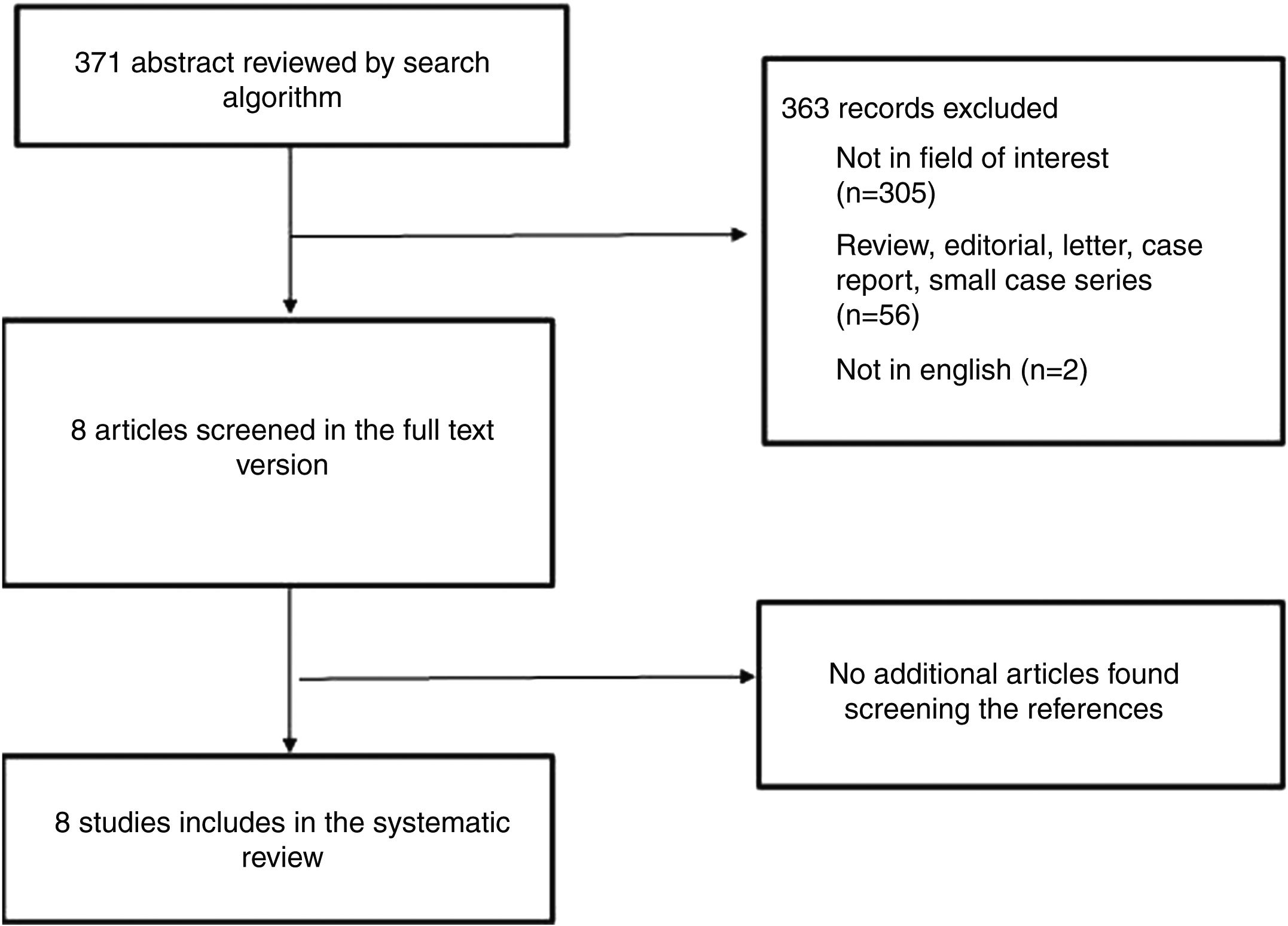
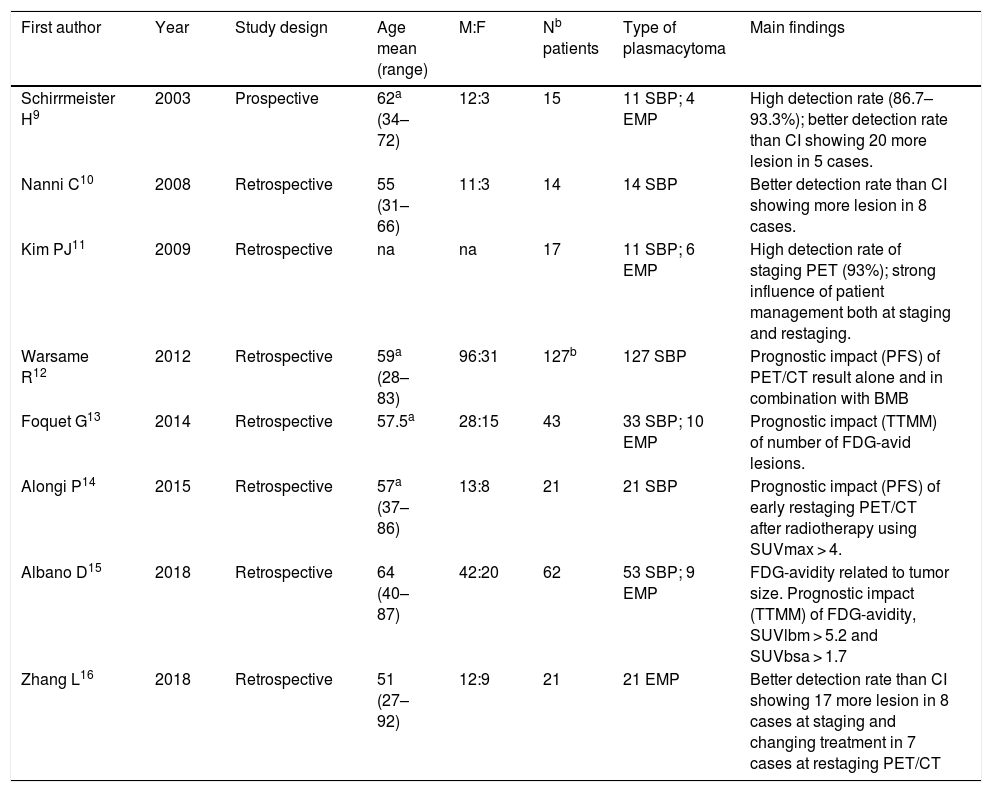
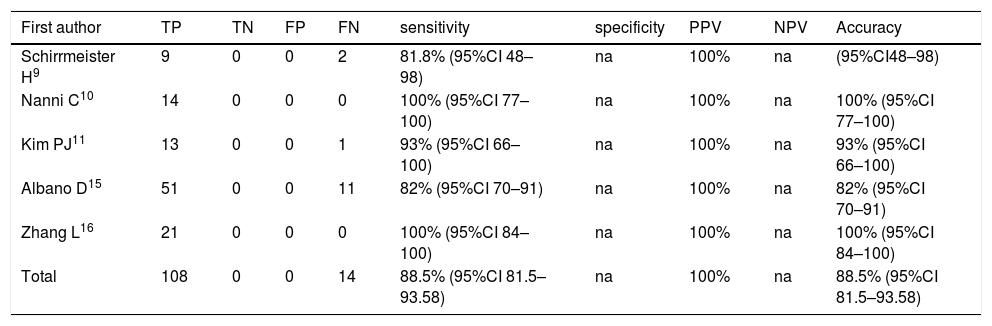
ResultsThe comprehensive computer literature search revealed 371 articles. On reviewing the titles and abstracts, 363 articles were excluded because the reported data were not within the field of interest of this review. Eight articles were selected and retrieved in full-text version. From the analyses of the selected studies, the following main findings have been founded: 1) plasmacytoma generally is a 18F-FDG-avid tumor and PET/CT had good diagnostic performance with high sensitivity; 2) 18F-FDG PET/CT influenced patient management in most cases avoiding useless therapies and choosing the best therapeutic approach; 3) prognostic value of PET/CT qualitative and semiquantitative parameters is only suggested with controversial reports.
ConclusionDespite several limitations affect this analysis, especially related to the low number of articles and patients studied, plasmacytoma looks to be an 18F-FDG-avid tumor in most of the cases; 18F-FDG PET or PET/CT had good diagnostic performance and had a significant clinical impact in change of therapeutic approach. Moreover, a possible prognostic role of PET/CT features is described.
El comportamiento metabólico del plasmocitoma en la PET/TC con 18F-FDG no está claro.
ObjetivoRealizar una revisión sistemática sobre la utilidad diagnóstica de la PET o PET/TC con 18F-FDG en pacientes afectos de plasmocitoma.
MetodosSe ha realizado una búsqueda exhaustiva bibliográfica de artículos relevantes en las bases de datos de Scopus, PubMed/MEDLINE, Embase y Cochrane desde julio 2019.
ResultadosLa búsqueda exhaustiva bibliográfica ha revelado 371 artículos; al revisar los títulos y los resúmenes, se excluyeron 363 artículos porque los datos que aportaban no estaban dentro del campo de interés de esta revisión. En total, en esta revisión sistemática se incluyeron 8 artículos. Los principales hallazgos del análisis de los artículos seleccionados han sido: 1) El plasmocitoma generalmente es un tumor ávido de 18F-FDG y la PET/TC muestra un buen rendimiento diagnóstico, con alta sensibilidad; 2) En la mayoría de los casos la PET/TC con 18F-FDG ha influido en el manejo de los pacientes, permitiendo seleccionar el tratamiento y evitando terapias ineficaces; 3) El valor pronóstico de los parámetros cualitativos y semicuantitativos de la PET/TC con 18F-FDG sigue mostrando un carácter controvertido con los resultados obtenidos.
ConclusionA pesar de las limitaciones de estos hallazgos, dado el reducido número de trabajos y pacientes estudiados, el plasmacitoma parece ser un tumor ávido de 18F-FDG en la mayoría de los casos. La PET o PET/TC con 18F-FDG muestra un buen rendimiento diagnóstico, con impacto clínico significativo en el cambio de enfoque terapéutico. Finalmente, parece existir un probable valor pronóstico de la PET/TC con 18F-FDG.
Article
If you experience access problems, you can contact the SEMNIM Technical Secretariat by email at secretaria.tecnica@semnim.es or by phone at +34 619 594 780.
Revista Española de Medicina Nuclear e Imagen Molecular (English Edition)

