



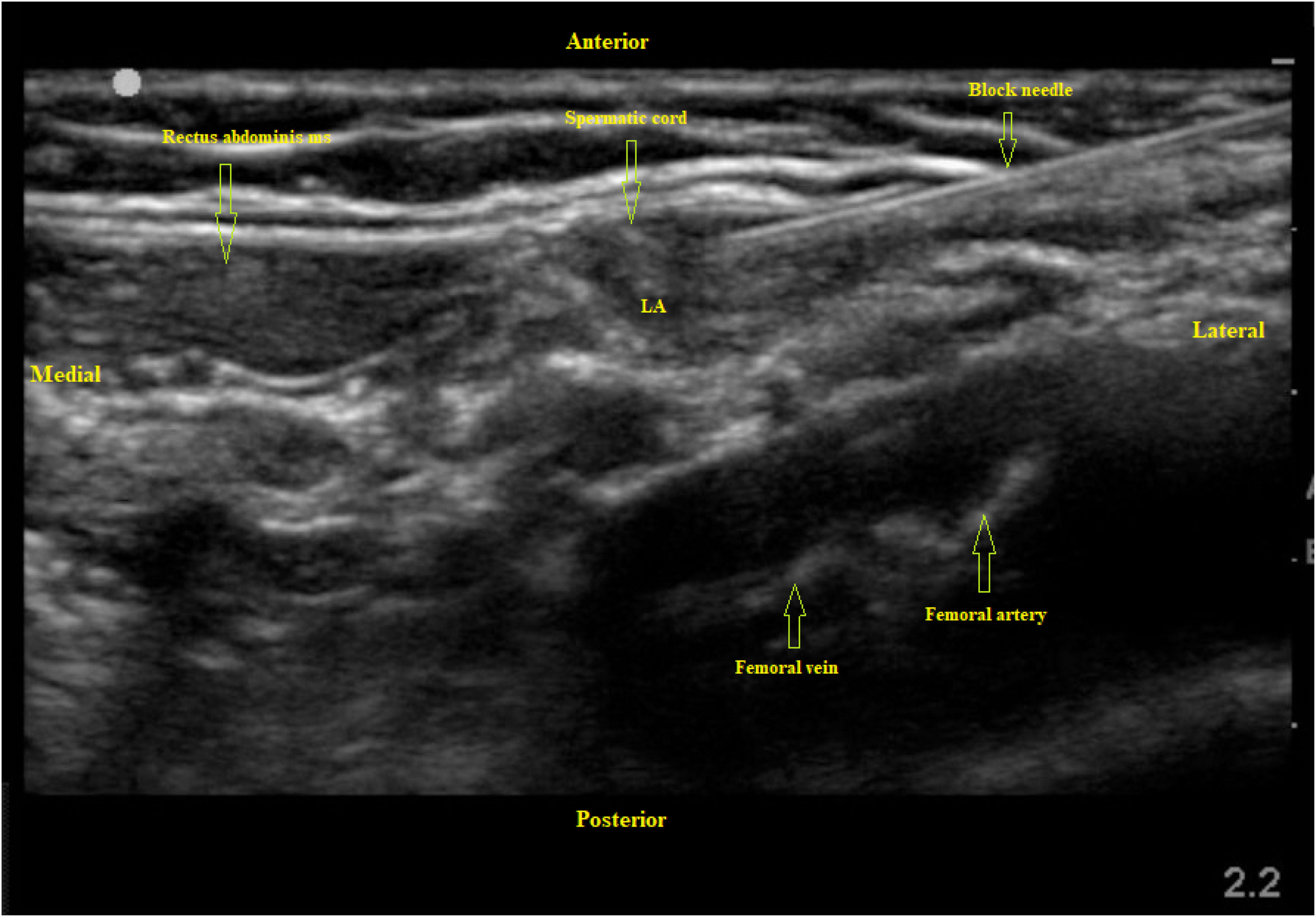


US-guided ilioinguinal nerve block (IINB) is a common analgesic regional technique in pediatric inguinal herniotomy, However, alone it could not provide complete analgesia for such surgery due to spare of the genital branch of the genitofemoral nerve (GFN) and some sympathetic fibers. Spermatic cord block (SCB) can block both of them. This study aimed to assess the analgesic effects of combining US-guided spermatic SCB and IINB in pediatric patients subjected to elective open inguinal herniotomies.
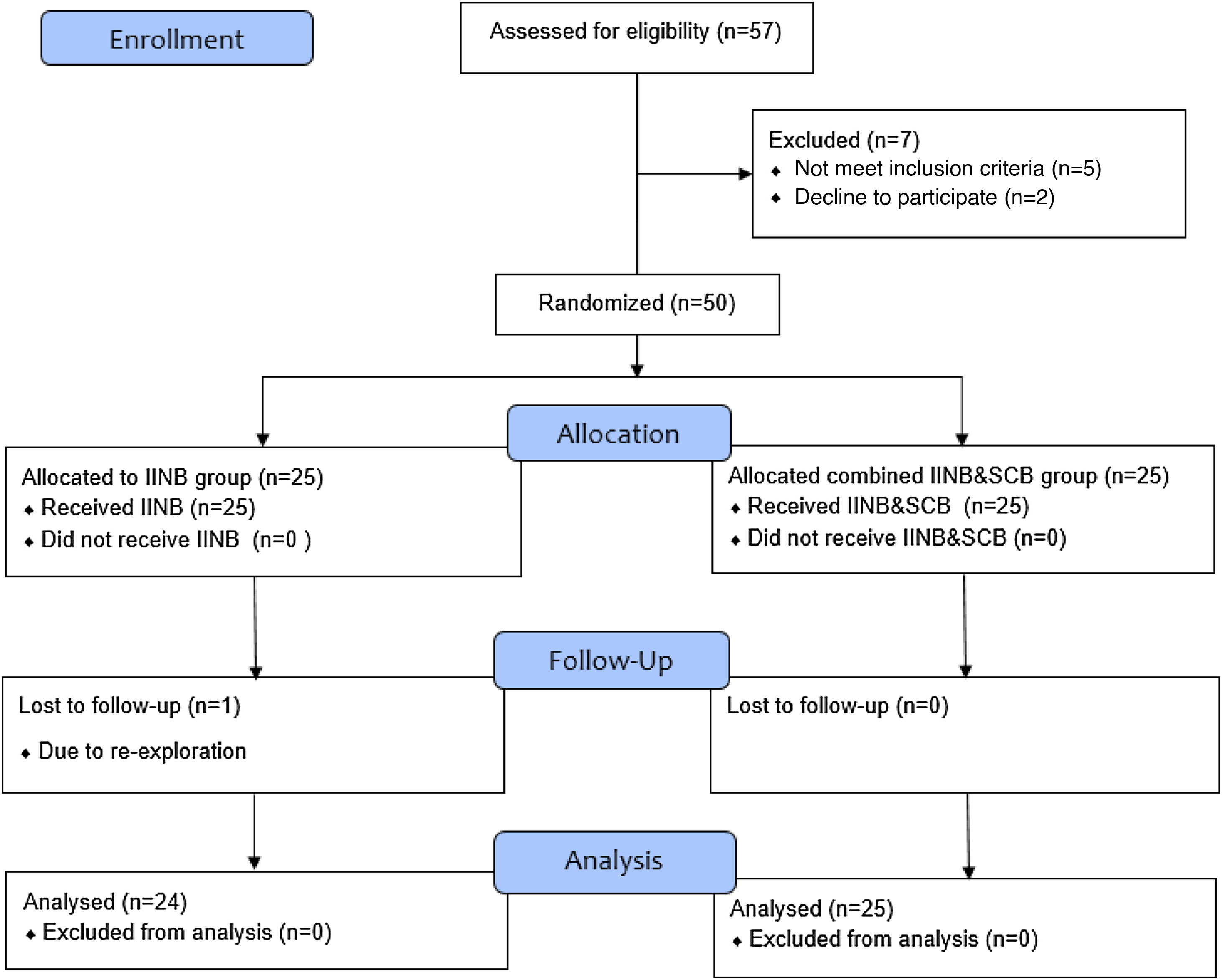
Patients and methodsA total of 50 male pediatric patients who underwent inguinal herniotomy were included in the current prospective, randomized, controlled study. Patients were randomly allocated to two groups: one group received IINB and the other received combined IINB and SCB. The number of patients who required rescue analgesia after surgery was the primary outcome parameter, whereas assessment of the intraoperative hemodynamic parameters (MAP: mean arterial pressure; HR: heart rate), total consumption of paracetamol, postoperative pain score, and occurrence of adverse events were the secondary outcome measures.
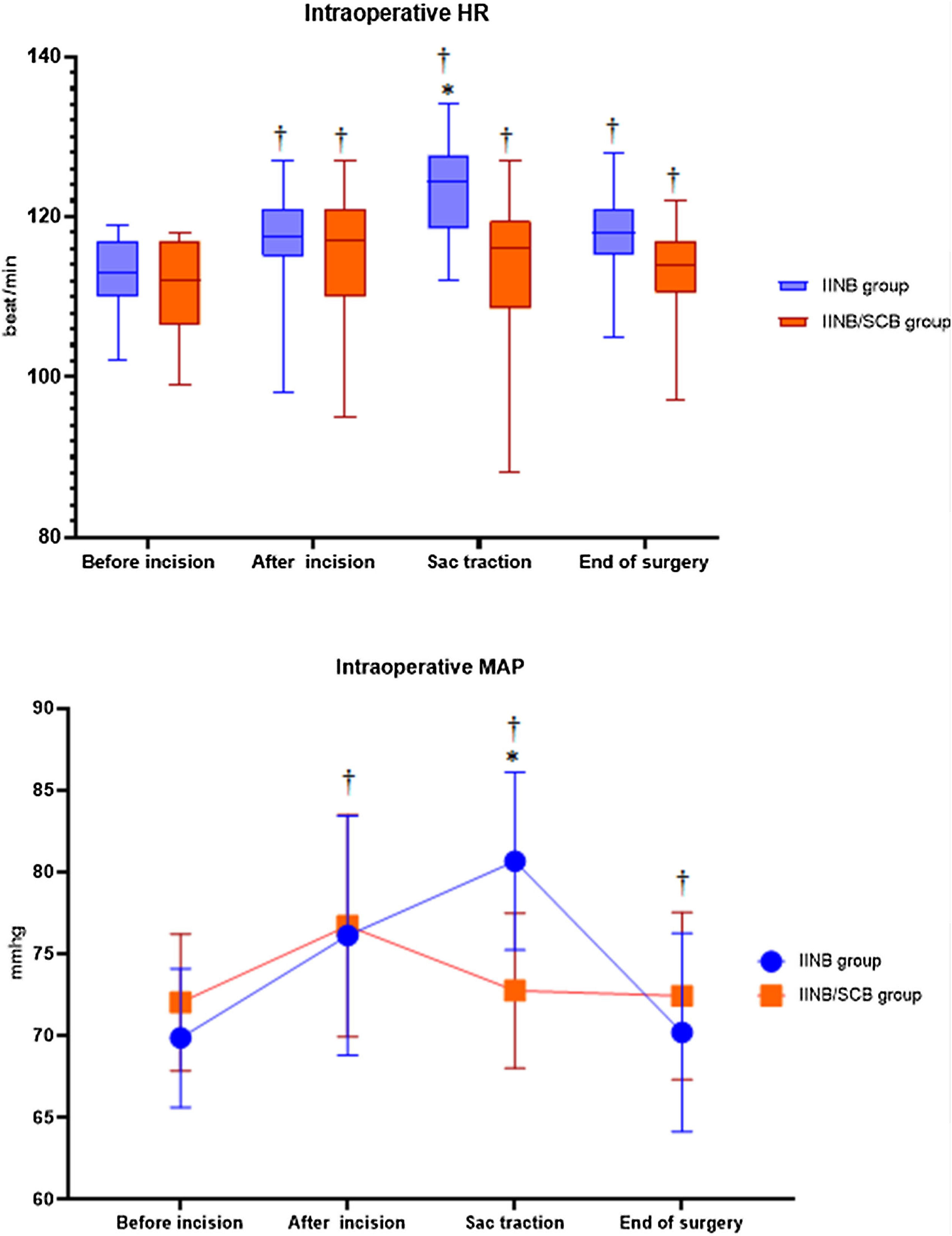
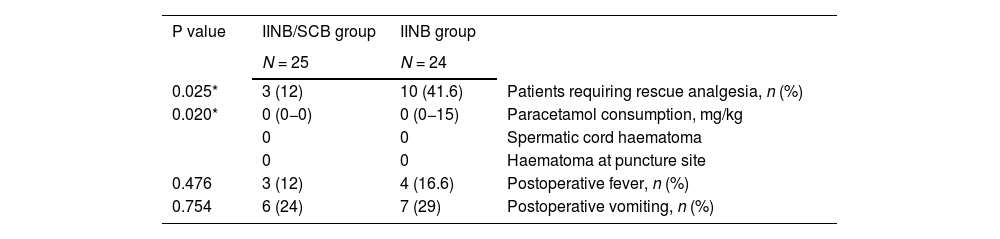
ResultsThe number of patients who needed rescue analgesia was significantly lower in IINB/SCB group (12%), than IINB group (41 %), P = 0.025. The median (interquartile range) total dose of paracetamol consumption was significantly lower in the IINB/SCB group [0 (0–0)] mg/kg than in the IINB group [0 (0–10)], P = 0.020. Pain score was significantly (P < 0.05) lower in the IINB/SCB group than in the IINB group at all-time points. Both MAP and HR were significantly higher in the IINB group than in the IINB/SCB group during traction on hernial sac, P < 0.05. Occurrence of adverse events was comparable in both groups.
ConclusionsAdding SCB to IINB can provide better quality of postoperative analgesia and more stable intraoperative hemodynamics in pediatric patients undergoing inguinal hernia repair.
El bloqueo ecoguiado del nervio ilioinguinal (IINB) es una técnica regional analgésica común para herniotomía inguinal pediátrica. Sin embargo, en solitario, no podría aportar analgesia completa para dicha cirugía, dado que evita la rama genital del nervio genitofemoral (GFN) y algunas fibras simpáticas. El bloqueo del cordón espermático (SCB) puede bloquear ambas. El objetivo de este estudio es evaluar los efectos analgésicos de la combinación de SCB e IINB ecoguiados en pacientes pediátricos, sujetos a herniotomías inguinales abiertas electivas.
Pacientes y métodosEn este estudio prospectivo, aleatorizado y controlado se incluyó a un total de 50 pacientes pediátricos sometidos a herniotomía inguinal, que fueron asignados aleatoriamente a dos grupos: uno de ellos recibió IINB, y el otro una combinación de IINB y SCB. El número de pacientes que requirió analgesia de rescate tras la cirugía fue el parámetro del resultado primario, mientras que la evaluación de los parámetros hemodinámicos intraoperatorios (PAM: presión arterial media; FC: frecuencia cardiaca), consumo total de paracetamol, puntuación del dolor postoperatorio e incidencia de episodios adversos fueron las medidas del resultado secundario.
ResultadosEl número de pacientes que necesitaron analgesia de rescate fue significativamente menor en el grupo IINB/SCB (12%), que en el grupo IINB (41 %), P = 0,025. La dosis media (rango intercuartílico) del consumo de paracetamol fue considerablemente menor en el grupo IINB/SCB [0 (0–0)] mg/kg que en el grupo IINB [0 (0–10)], P = 0,020. La puntuación del dolor fue significativamente menor (P < 0,05) en el grupo IINB/SCB que en el grupo IINB en todos los puntos temporales. Tanto PAM como FC fueron significativamente mayores en el grupo IINB que en el grupo IINB/SCB durante la tracción del saco herniario, P < 0,05. La incidencia de episodios adversos fue comparable en ambos grupos.
ConclusionesAñadir SCB a IINB puede aportar una mejor calidad de la analgesia postoperatoria, así como una hemodinámica intraoperatoria más estable en los pacientes pediátricos sometidos a reparación de hernia inguinal.

