




Determinar la eficacia de las intervenciones basadas en internet para la funcionalidad de los pacientes con enfermedad de Alzheimer (EA) y disminuir la carga del cuidador.
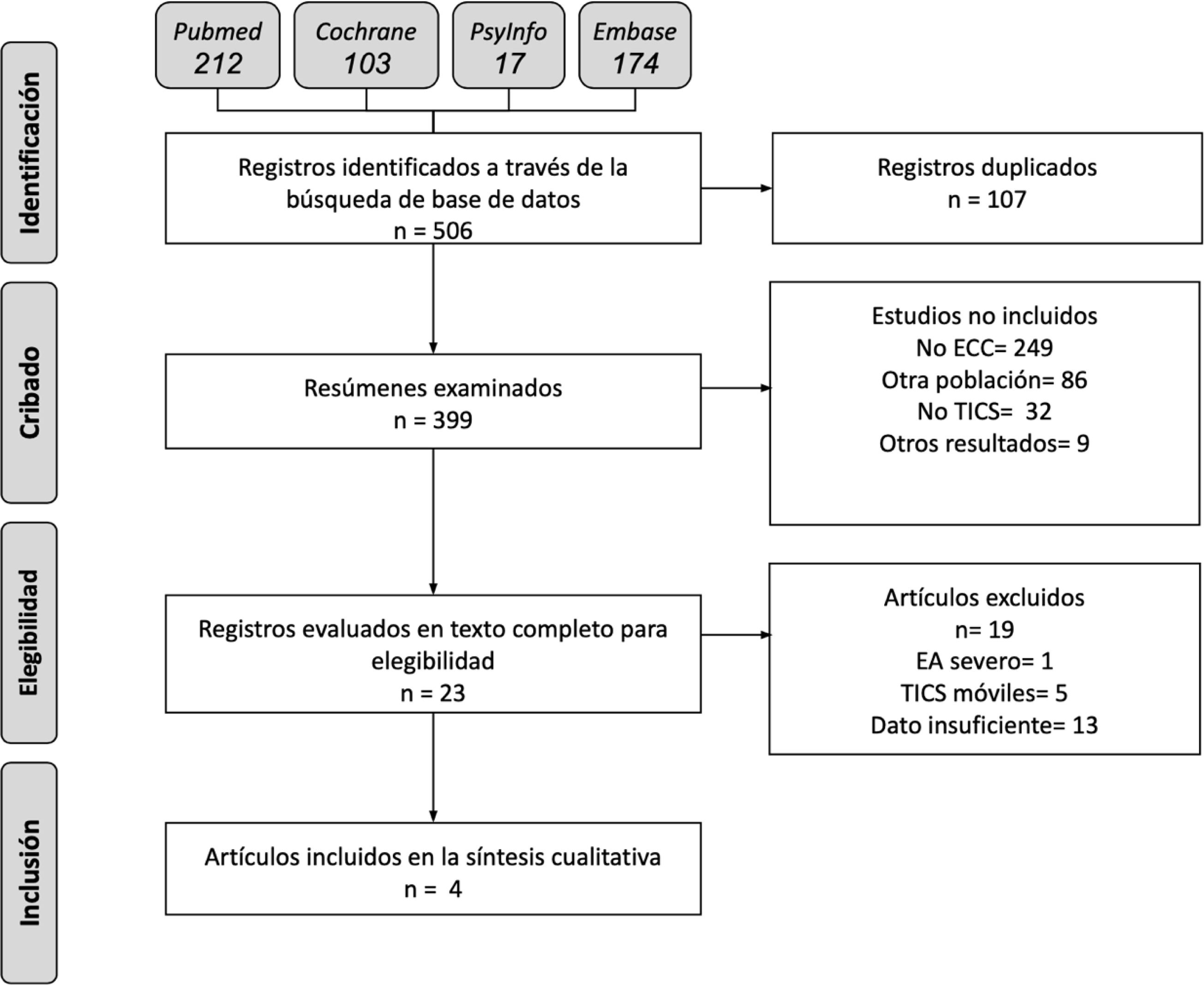
Materiales y métodosSe realizó una revisión sistemática que incluyó ensayos controlados aleatorizados Se excluyeron estudios sobre EA avanzada o terminal y los centrados en aplicaciones móviles. La búsqueda empleó las bases de datos PubMed, Cochrane y EMBASE entre 2003 y 2024.
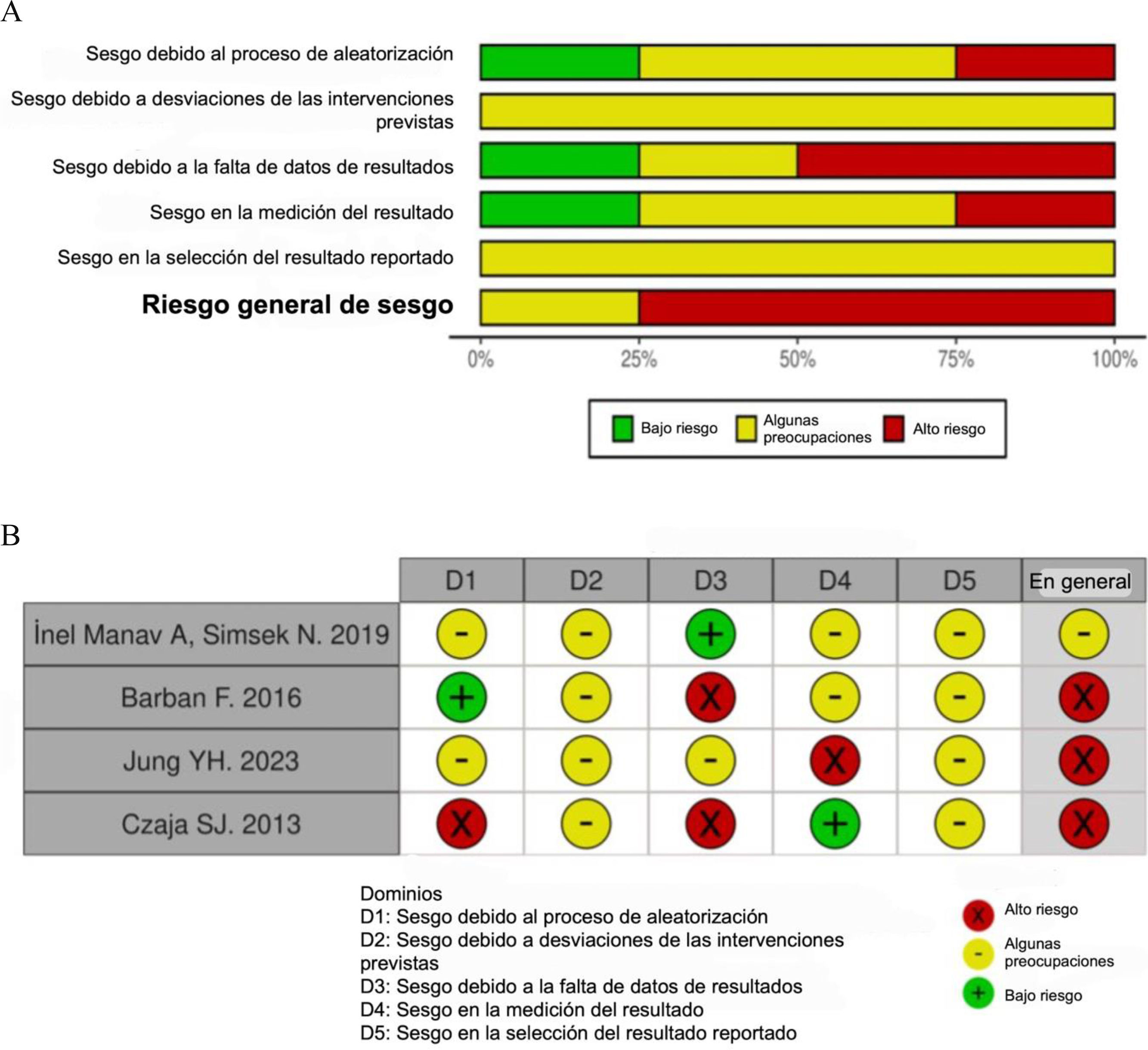
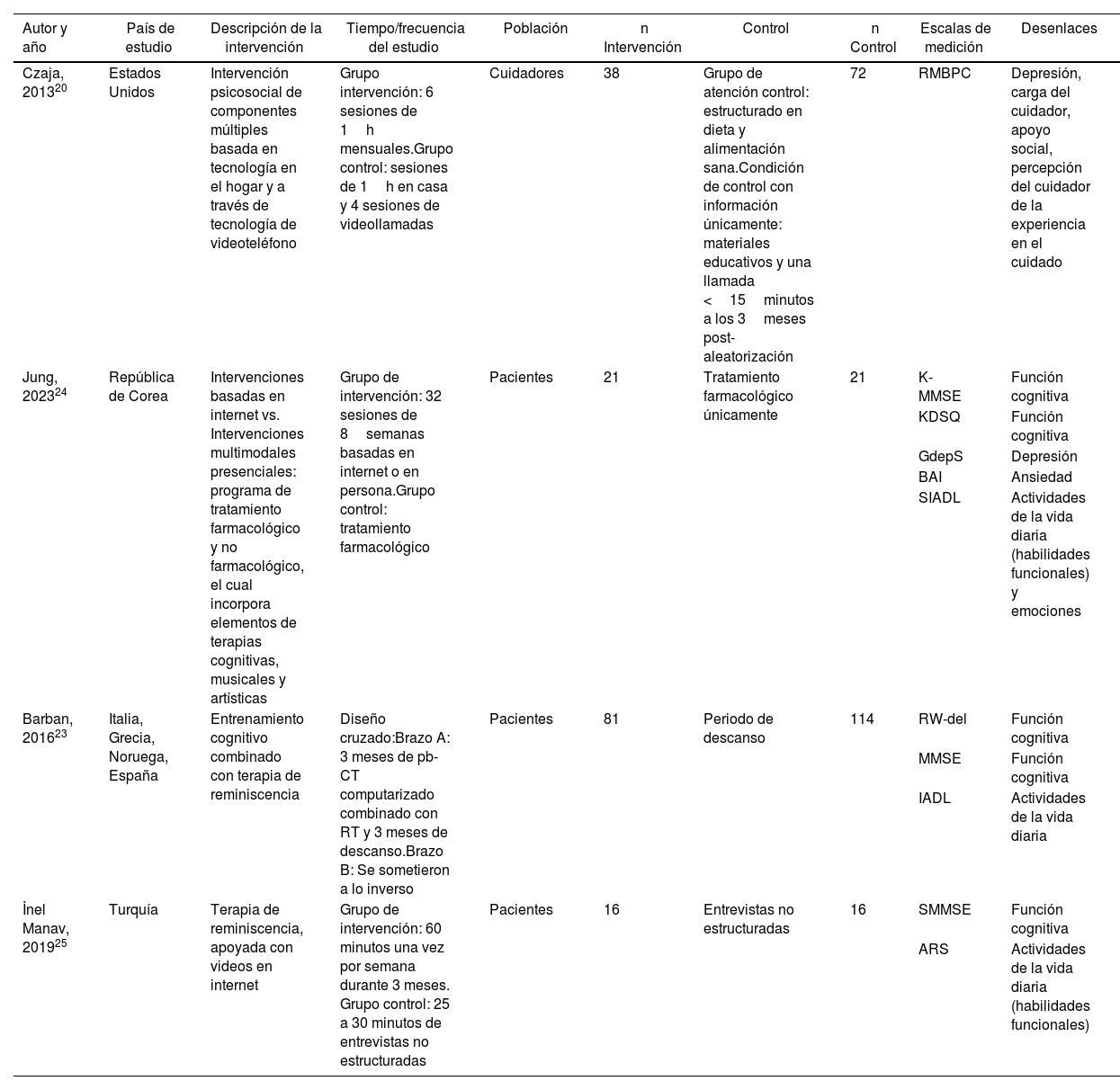
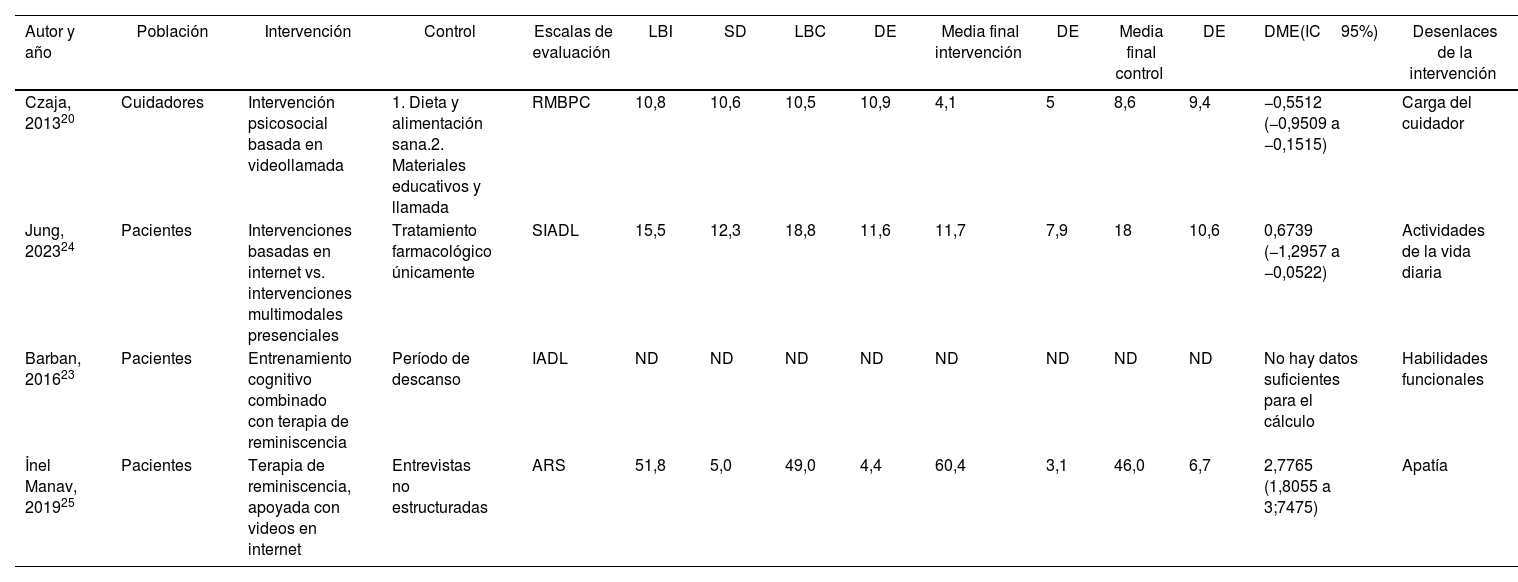
ResultadosSe incluyeron cuatro estudios. Uno de ellos comparó una intervención en línea con terapias presenciales multimodales, observando mejoras en las actividades de la vida diaria; otro evaluó la terapia de reminiscencia apoyada con videos en internet, encontrando una reducción en la apatía, y en el tercero se estudió el entrenamiento cognitivo combinado con terapia de reminiscencia, sin encontrar diferencias en la funcionalidad de los pacientes. Un estudio analizó una intervención basada en videollamadas y encontró reducción en la carga cuidador. La heterogeneidad entre los estudios fue alta y la calidad de la evidencia fue baja.
ConclusionesLas intervenciones basadas en internet representan una estrategia prometedora para mejorar la funcionalidad de los pacientes con EA y reducir la carga de los cuidadores. Sin embargo, la heterogeneidad y el riesgo de sesgo afectan la certeza de la evidencia y su aplicabilidad clínica. Se requieren ensayos controlados aleatorizados en distintos contextos clínicos y socioculturales.
Alzheimer's disease (AD) is a neurodegenerative disorder that affects millions of people worldwide. In its mild to moderate stages, patients require continuous support, increasing the physical and emotional burden on caregivers. Online, platform-based interventions have emerged as a tool to enhance patient functionality and alleviate caregiver burden.
Materials and methodsA systematic review was conducted following PRISMA guidelines, including randomized controlled trials evaluating non-pharmacological web-based interventions. Studies involving interventions that addressed patient functionality in mild to moderate AD and caregiver burden were included. Studies on advanced or terminal AD, as well as those focusing on mobile applications without direct intervention, were excluded. The search was conducted in databases such as PubMed, Cochrane, and EMBASE, covering the period from 2003 to 2024.
ResultsFour studies were included. One of them compared an online intervention with multimodal face-to-face therapies, observing improvements in daily living activities; another evaluated reminiscence therapy supported by online videos, finding a reduction in apathy; the third study examined cognitive training combined with reminiscence therapy, without finding differences in patient functionality. One study analyzed an intervention based on video calls and found a reduction in caregiver burden. The heterogeneity among the studies was high, and the quality of the evidence was low.
ConclusionsOnline, platform-based interventions represent a promising strategy for improving patient functionality in AD and reducing caregiver burden. However, methodological heterogeneity and bias risks affect the certainty of the evidence and its clinical applicability. Further randomized controlled trials are needed to assess their effectiveness and sustainability across diverse clinical and sociocultural settings.


