


La esclerosis múltiple (EM) es una enfermedad neurológica crónica y degenerativa que afecta en mayor grado a mujeres y principalmente en edades tempranas. La enfermedad no afecta a la fertilidad de estas mujeres, aunque los cambios hormonales influyen en la manifestación de brotes. Además, muchos de los tratamientos son teratógenos, por ello el embarazo se suele desaconsejar por los riesgos que puede conllevar.
ObjetivosEl objetivo ha sido explorar la experiencia del embarazo y la maternidad de una mujer con EM, identificando las barreras y los facilitadores que influyen en este proceso.
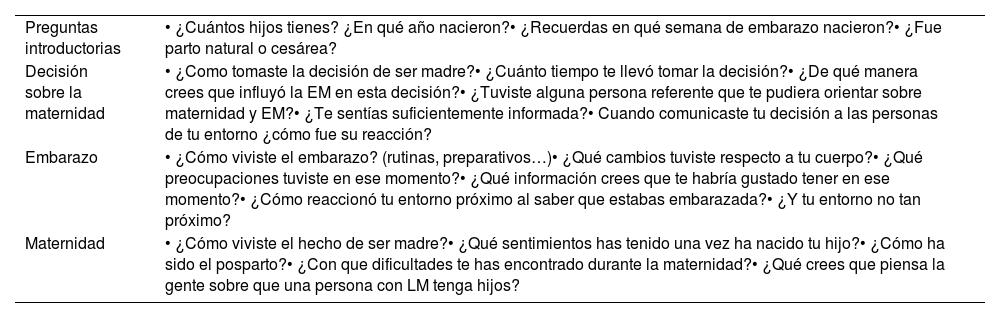
MétodoMediante metodología cualitativa, se realiza entrevista semiestructurada a una mujer con EM que tuvo un hijo en 2014. La entrevista se realiza en el Institut Guttmann en 2022. Se utiliza un guion previamente elaborado con preguntas sobre aspectos del embarazo y maternidad. Se realiza transcripción con programa TrinT y análisis con ayuda del programa Atlas.ti.
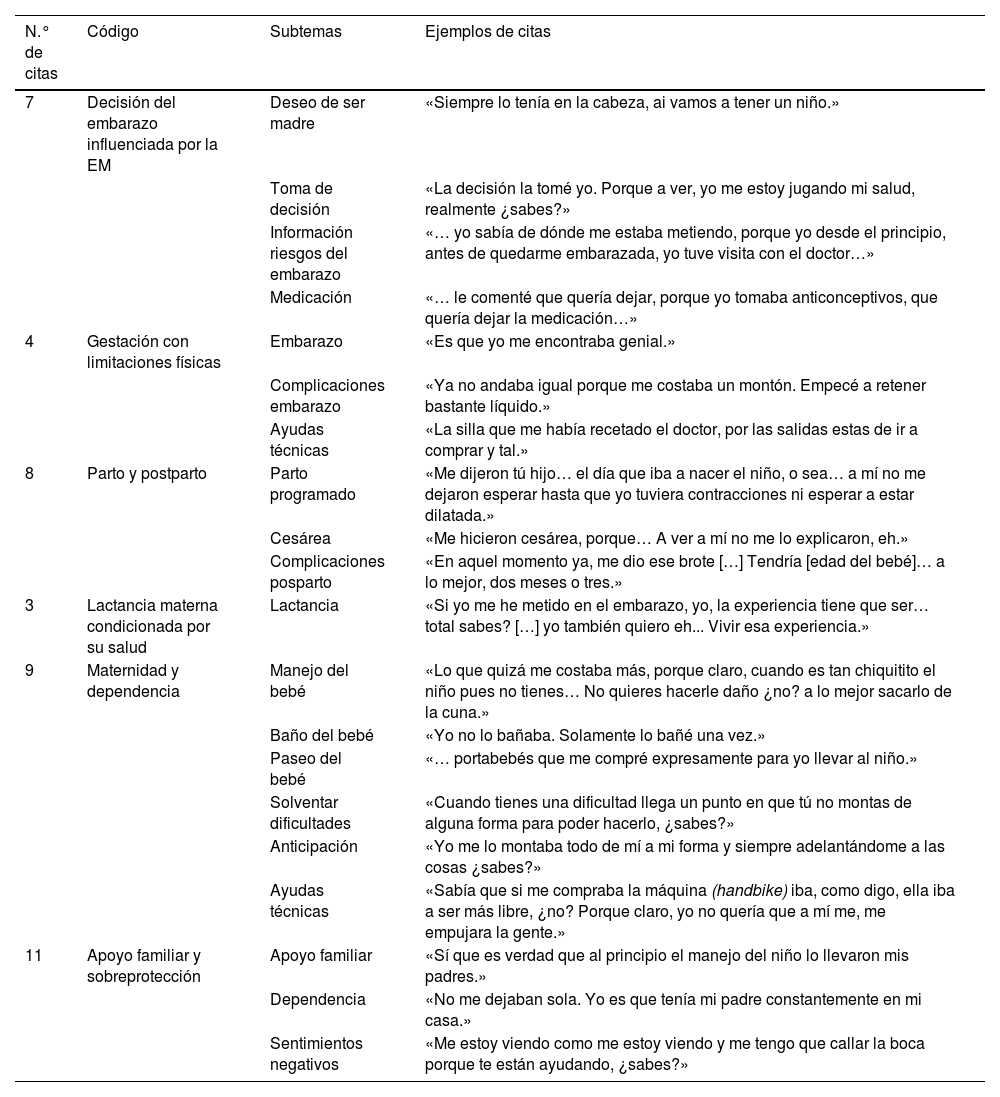
ResultadosDecisión sobre su maternidad libre y consecuente, a pesar de la posibilidad de nuevo brote, que sufre tras el primer mes de maternidad. Embarazo sin complicaciones importantes, únicamente aumento de peso y dificultad en la movilidad. Parto programado y cesárea bajo anestesia general. Lactancia con normalidad y sin dificultades hasta que se produce brote, obligándole a finalizarla. Recibe ayuda familiar llegando a suplir actividades que ella puede realizar. Percibe la sensación de que se ha perdido su maternidad. El uso de adaptaciones en el hogar, la planificación previa de las actividades y uso de dispositivos eléctricos adaptables a la silla de ruedas (handibike), son facilitadores durante la maternidad.
Discusión y conclusionesPadecer una EM tiene importantes implicaciones sobre el deseo de formar una familia, además con la posibilidad de exacerbación de la enfermedad. Se observan barreras importantes durante la realización de los cuidados del bebé, considerándose como facilitadores productos de apoyo, adaptación del entorno, soporte de familiares y planificación previa de las acciones a realizar.
Multiple sclerosis (MS) is a chronic and degenerative neurological disease that primarily affects women, especially at an early age. The disease does not affect fertility in these women, although hormonal changes influence the onset of flares. Furthermore, many treatments are teratogenic, so pregnancy is often discouraged due to the risks it may entail.
ObjectivesThe objective was to explore the experience of pregnancy and motherhood in a woman with MS, identifying the barriers and facilitators that influence this process.
MethodUsing qualitative methodology, a semi-structured interview was conducted with a woman with MS who had a child in 2014. The interview was conducted at the Institut Guttmann in 2022. A previously prepared script was used with questions about aspects of pregnancy and motherhood. Transcription was performed using TrinT and analysis was performed using Atlas.ti.
ResultsShe made a free and consistent decision about her motherhood, despite the possibility of a new flare, which she experienced after the first month of pregnancy. The pregnancy was uncomplicated, with only weight gain and mobility difficulties. A planned delivery followed by a cesarean section under general anesthesia. She breastfed normally and without difficulty until the flare, which forced her to terminate the pregnancy. She received family support, even replacing activities she could do herself. She felt that she had missed out on motherhood. The use of home adaptations, prior planning of activities, and the use of wheelchair-adaptable electric devices (a handbike) were facilitators during motherhood.
Discussion and conclusionsSuffering from MS has significant implications for the desire to start a family, and also raises the possibility of disease exacerbation. Significant barriers were observed during baby care, with assistive devices, environmental adaptation, family support, and prior planning of the actions to be taken being considered facilitators.
Artículo
Diríjase al área privada de socios de la web de la SEDENE, (https://sedene.com/revista-de-sedene/ ) y autentifíquese.
