

metricas
Revista Científica de la Sociedad Española de Enfermería Neurológica An expert patient programme to improve empowerment and quality of life of people...
Información de la revista
Cita
Cita
Compartir
Descargar PDF
Más opciones de artículo
Visitas
256
Original article
Acceso a texto completo
Disponible online el 23 de mayo de 2025

An expert patient programme to improve empowerment and quality of life of people with multiple sclerosis: A feasibility study

Un programa de pacientes expertos para mejorar el empoderamiento y la calidad de vida de las personas con esclerosis múltiple: un estudio de viabilidad
Visitas
256
Miguel Ángel Robles-Sancheza,b,c,
Autor para correspondencia
marobles@cem-cat.org

Corresponding author.
, Paloma Amil-Bujand, Cristina Bosch-Farreb, Clàudia Coll-Martineze,f, María Jesús Arevaloa, Elisenda Anglada-Clofenta, Rebeca Menéndez-Díaza, Montserrat Aroca-Alsinaa,c, Miguel Merchan-Ruize,f, Santiago Pérez-Hoyosg,h, Ángel Guillermo Arévalo-Bernabéi,j, Xavier Montalbana, Jaume Sastre-Garrigaa, Lluís Ramió-Torrentàe,f,k, Carme Bertran-Noguerb
a Neurology Department, Centre d’Esclerosi Múltiple de Catalunya (Cemcat), Vall d’Hebron Barcelona Hospital Campus, Barcelona, Spain
b Nursing Department, Health and Health Care Research Group, University of Girona, Girona, Spain
c Grup d’Investigació Multidisciplinari d’Infermeria, Vall d’Hebron Institut de Recerca (VHIR), Hospital Universitari Vall d’Hebron, Vall d’Hebron Barcelona Hospital Campus, Barcelona, Spain
d Coordinator of the Expert Patient Programme Catalonia, Expert Patient Programme Catalonia, Integrated Care Strategy, General Directorate for Health Planning, Department of Health, Generalitat de Catalunya, Barcelona, Spain
e Girona Neuroimmumology and Multiple Sclerosis Unit, Neurology Department, Dr. Josep Trueta University Hospital and Santa Caterina Hospital, Girona, Spain
f Neurodegeneration and Neuroinflammation Research Group, Girona Biomedical Research Institute (IDIBGI), Salt, Spain
g Chief of the Statistics and Bioinformatics Unit, Statistics and Bioinformatics Unit (UEB), Vall d’Hebron Recerca Institute (VHIR), Vall d’Hebron Barcelona Hospital Campus, Barcelona, Spain
h Department of Genetics, Microbiology and Statistics, University of Barcelona, Barcelona, Spain
i Pharmacy Department, Vall d’Hebron University Hospital, Barcelona, Spain
j Basic, Translational and Clinical Pharmacy Research Group, Vall d’Hebron Institute of Research (VHIR), Barcelona, Spain
k Department of Medical Sciences, University of Girona, Girona, Spain
Ver más
Este artículo ha recibido
Información del artículo
Resumen
Texto completo
Bibliografía
Descargar PDF
Estadísticas
Figuras (4)
fig0005
fig0010
fig0015
fig0020
Tablas (1)
Table 1. Evolution of patients’ answers to the 18-question knowledge test (only questions with statistically significant differences are shown), N (%).
Tablas
Material adicional (1)
Abstract
Background

This study evaluated the feasibility and the impact of implementing the Expert Patient Programme of Catalonia™ (EPPC) for people with multiple sclerosis (MS) to improve disease-related knowledge and key health indicators.

Methods

This feasibility pre–post interventional study was conducted in two MS units in Catalonia (Spain) between June 2020 and September 2022. Participants were included in two parallel groups with relapsing and two with progressive MS. An expert patient (EP), remotely trained and supported by a nurse, led nine virtual sessions of 90min. After a theoretical 30-min presentation by the EP to introduce the session topic, the EP encouraged interaction between participants to share knowledge and express doubts, questions, and experiences. Questionnaires assessing disease-related knowledge, quality of life (QoL), anxiety and depression, lifestyle habits, and disability were delivered after certain sessions and at 6 and 12 months using an online platform; healthcare services utilization was also assessed.

Results

Thirty-nine patients (20 with relapsing and 19 with progressive multiple sclerosis) received the intervention, and most attended all sessions. Answers to six of 18 knowledge questions changed significantly. Health indicators did not change significantly, except for exercise and diet, with a general trend towards stability in the relapsing group and towards worsening in the progressive group.

Conclusion

This nurse-led study demonstrated the feasibility of a remotely delivered expert patient programme for people with MS. The intervention was safe, and disease-related knowledge improved, supporting this programme's implementation throughout Catalonia to analyze its impact on QoL, empowerment, and other key health indicators.

Keywords:
Multiple sclerosis
Nursing research
Patient participation
Healthy lifestyle
Feasibility study
Resumen
Antecedentes

Este estudio evaluó la viabilidad de un Programa Paciente Experto Cataluña™ (PPEC) para personas con esclerosis múltiple (EM) y su impacto para mejorar los conocimientos de la enfermedad y los indicadores de salud.

Métodos

Estudio de factibilidad pre-post intervención desarrollado en dos unidades de EM en Cataluña (España) entre junio de 2020 y septiembre de 2022. Los participantes se incluyeron en dos grupos paralelos (2 con EM recidivante y 2 con EM progresiva). Un paciente experto (PE), entrenado remotamente y apoyado por enfermería, dirigió 9sesiones virtuales de 90minutos. Después de una presentación teórica (30minutos) para centrar el tema de la sesión, se fomentó la interacción entre los participantes para compartir conocimientos, dudas, preguntas y experiencias. Se evaluó: conocimiento de la EM, calidad de vida, ansiedad y depresión, hábitos de vida y la discapacidad después de ciertas sesiones y a los 6 y 12meses utilizando una plataforma en línea; también se evaluó la utilización de los servicios sanitarios.

Resultados

Treinta y nueve pacientes (20 remitentes y 19 progresivos) recibieron la intervención, y la mayoría asistió a todas las sesiones. Mejoró significativamente el conocimiento de la EM. Los indicadores de salud no cambiaron significativamente, excepto el ejercicio y la dieta, con una tendencia hacia la estabilidad en el grupo remitente y el empeoramiento en el progresivo.

Conclusión

Este estudio dirigido por enfermeras demostró la viabilidad del programa. La intervención no causó daños y el conocimiento relacionado con la enfermedad mejoró, lo que respaldó la implementación territorial.

Palabras clave:
Esclerosis múltiple
Investigación en enfermería
Participación del paciente
Estilo de vida saludable
Estudios de factibilidad
Texto completo
Introduction

Multiple sclerosis (MS) is a chronic degenerative disease of the central nervous system with an autoimmune basis characterized by variable symptoms and progressive disability.1,2 Identifying and solving the needs and demands of patients with MS is directly related with self-perceived well-being and quality of life (QoL).3 In addition, health systems oriented towards solving these needs are more effective, cost less, and improve health literacy and patient participation.4

In this sense, nurse-led peer support represents an effective approach to promote individual self-management, encouraging patients to acquire more knowledge about the factors that affect their illness. In this environment, peer support or expert patient or programmes (EPPs) have been implemented to improve the understanding of chronic diseases through knowledge transfer and sharing,5 empowering people to cope more effectively with their long-term disease.6 EPPs are peer-learning sessions based on the self-efficacy theory, developed in small groups of adult participants with the same chronic condition, and are led by an expert patient (EP), a non-healthcare professional also suffering from the same pathology, who has usually received training from the nursing personnel. The aim of these programmes is to increase participants’ self-efficacy and self-management, and to improve their confidence and resourcefulness.7 The Expert Patient Programme of Catalonia™ (EPPC) has been developed in Spain5,8 and applied in some chronic diseases8,9 in a face-to-face format, but it has yet to be developed in MS.

Therefore, a focus group study was carried out to delve into the needs and demands of people regarding the contents of interest and the design of a specific EPPC for people with MS (EPPC-MS),10 identifying the main topics to be discussed in the sessions, the ideal profile of participants and the EP, and the essential characteristics of the programme and its potential benefits. Based on its findings, we designed a nurse-led study to evaluate the feasibility of the remotely delivered EPPC-MS and its effects on disease-related knowledge and the key MS-related health indicators.

This study was the first to adapt and evaluate the EPPC specifically for people with MS, integrating disease-specific knowledge, peer-led support, and remote intervention strategies. Grounded in the theoretical framework of patient empowerment and Bandura's self-efficacy model,11 the programme seeks to enhance individuals’ confidence in managing their health, fostering autonomy, and improving quality of life. This tailored approach addresses the distinct and unmet needs of the MS population, positioning the study as a significant contribution to the field of chronic disease self-management and digital health interventions.

The aims of this study were, first, to assess the feasibility of a virtual EPPC-MS and to evaluate its impact on the disease-related knowledge of people with MS. Secondary objectives included assessing the effects of the EPPC-MS on QoL, anxiety and depression, lifestyle habits, and disability status.

MethodsStudy design and setting

This was a pre–post interventional multicentre feasibility study carried out at [Blinded for peer review] between June 2020 and September 2022. All sessions were conducted remotely via the Microsoft Teams platform to avoid face-to-face meetings during the COVID-19 pandemic. This feasibility study consisted of four groups of patients, two parallel groups with relapsing MS and two with progressive MS from [Blinded for peer review]. The Clinical Research Ethics Committee of [Blinded for peer review] approved the study protocol, and written informed consent was obtained from all participants. The study complied with the Declaration of Helsinki, ethical standards for clinical research, and Spain's data protection law (Organic Law 3/2018) on personal data and digital rights.

Selection criteria and recruitment

We included all patients with MS who could attend all intervention sessions and with a clear need for support to exercise effective self-management or with knowledge gaps regarding the disease. This was assessed by the nursing personnel at [Blinded for peer review] involved in patients’ routine care during their visits at the hospital or outpatient care, who provided them with study information to evaluate their interest in participating. We excluded all patients who could not speak nor write in Spanish or Catalan and those with disorders precluding interaction with the group (Supplementary methods).

The two EPs (one with relapsing and one with progressive MS) selected by the research team had to be diagnosed before 2018 and able to attend all intervention sessions. MS unit nurses identified EPs based on clinical judgement, selecting patients with effective self-management skills, a positive perception of their disease, and sufficient MS-related knowledge from long-term experience. Digital and communication skills were also considered, assessed through regular interactions with healthcare professionals and during selection. Each team proposed three candidates, interviewed remotely by the PI and EPPC managers to assess their knowledge, communication and leadership skills, and ability to use the virtual platform. Disease knowledge was evaluated using structured questions from the study's assessment tools. After role-playing-based training, EP readiness was confirmed, with the option to reconsider selection if needed (details in Supplementary materials). Nurses involved received specific online training from the PI and EPPC members.

Given the remote nature of the intervention, continuous telematic support was provided to prevent dropouts due to access issues or difficulties completing questionnaires. Adherence was reinforced through regular reminders, check-ins, personalized follow-ups, and technical support.

Study intervention

The intervention consisted of nine weekly virtual sessions covering different aspects of the disease (Supplementary methods). Each session began with a theoretical presentation carried out by the EP (approximately 30min), the starting point to share knowledge and experiences among participants. The EP encouraged interaction, facilitating the expression of doubts, questions, or experiences about the contents of the session. The knowledge acquired was based on the information provided by the EP and on the life experiences of all participants. A nurse specialized in MS acted as an observer, providing help and support to the EP, if necessary, and carrying out a joint assessment with him/her at the end of the session. Participants completed questionnaires according to the study schedule. The study's Principal Investigator (PI), a nurse, coordinated and provided support to the participating MS units and monitored the process.

Variables

We assessed all variables at screening visit or on-line during the first session and 6 and 12 months after the ninth and last session (Table S1).

A panel of experts developed a specific questionnaire on knowledge of the disease10,12 consisting of 18 questions to evaluate the acquisition of essential knowledge on MS (Supplementary materials and Table S2). In addition, the coordinating panel of the EPPC-MS developed a specific questionnaire to assess habits and lifestyles, which was already used in other variants of the programme,13–15 demonstrating its usefulness to evaluate such programmes.

We used validated questionnaires to assess other study variables. The validated Spanish version of the Multiple Sclerosis Quality of Life-54 items (MSQoL-54)16 to assess QoL. It is a self-administered questionnaire, taking about 15min to complete. Two composite scores for mental and physical health are provided. The validated Catalan version of the HADS questionnaire17 useful to assess the emotional impact measures anxiety and depression levels over the past seven days. Consists of two subscales, scores ≥11 classify cases as diagnosable anxiety or depression. The Spanish-validated version of the Expanded Disability Status Scale (EDSS)18 to evaluate neurological impairment and disability. It scores eight functional systems to determine the patient's level of disability. The scale ranges from 0 to 10, in 0.5 increments, with 0 indicating no impairment and 10 representing the most severe disability.19 The details of these instruments are summarized in the Supplementary materials.

We carried out several satisfaction surveys after the ninth session and at the 6- and 12-month follow-up (Supplementary materials). We also evaluated the use of different healthcare services during the past year after the first session and at the 12-month follow-up.

Statistical analysis

Considering that this was a feasibility study, we aimed at including ten participants per, taking into account potential losses to achieve at least seven participants in each group during the whole analyzed period. We described categorical variables as absolute frequencies and percentages and continuous variables as median and interquartile ranges (Q1–Q3). We compared categorical variables using the Chi-square test or Fisher's exact test, and continuous variables using the non-parametric Mann–Whitney U test for independent samples and the Wilcoxon signed-rank test for paired data, due to the small sample size and potential non-normal distribution of data. These non-parametric tests were chosen to ensure appropriate analysis without relying on normality assumptions. We analyzed changes over time using the Skillings–Mack test, which accommodates repeated measures with missing values, commonly encountered in feasibility studies. We used Stata v.15.1 to analyze data and set the statistical significance level at p<0.05.

ResultsCharacteristics of participants

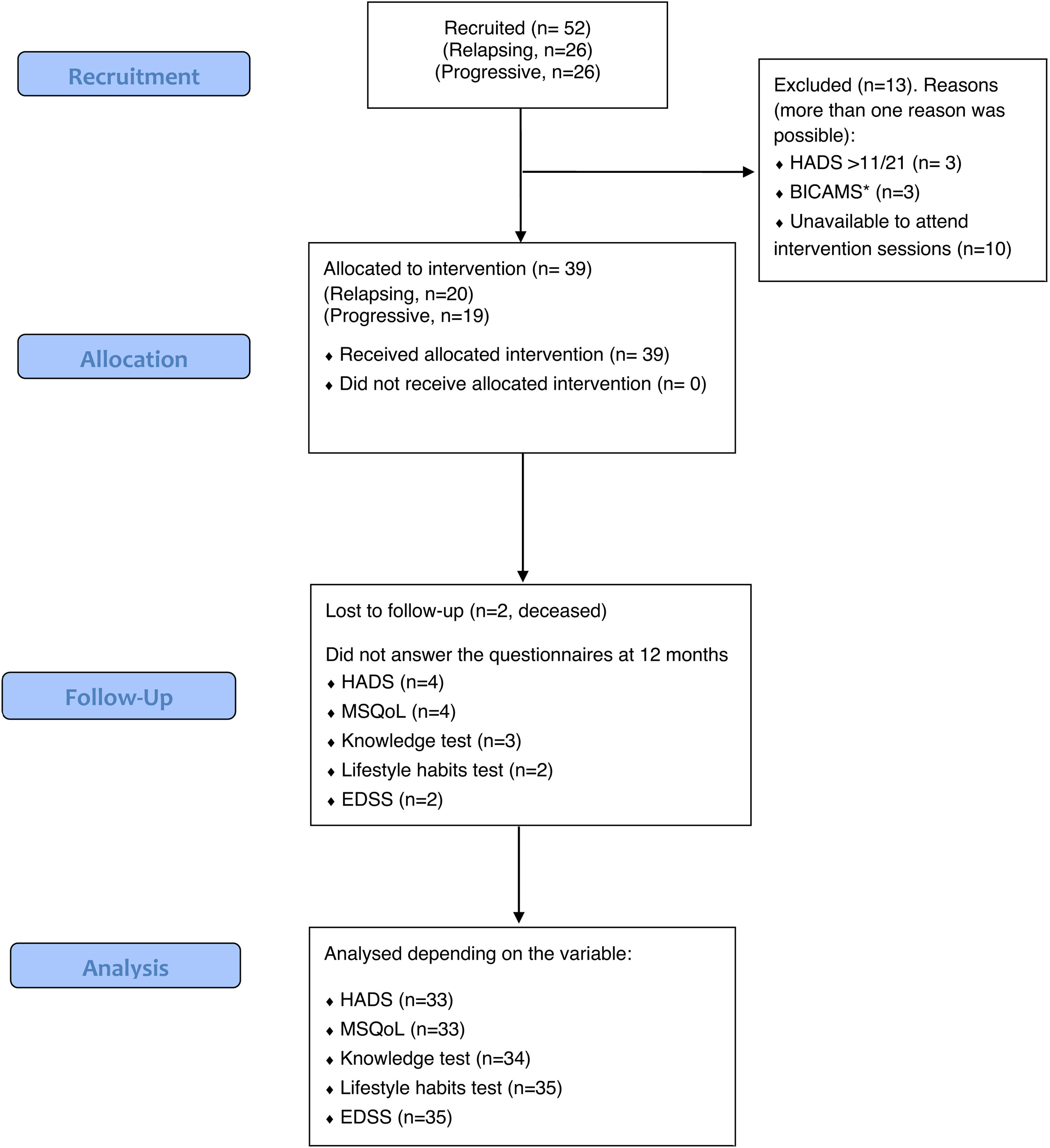
Of 52 participants initially recruited, 26 with relapsing MS and 26 with progressive MS, 13 were excluded and 39 received the intervention (20 with relapsing MS and 19 with progressive MS). The final number of analyzed participants varied for each variable and ranged from 33 to 35, depending on the number of patients attending the sessions and returning the questionnaires (Fig. 1). There were no significant differences between the relapsing and progressive MS groups at baseline except for EDSS (p<0.001), MS treatment administration (p<0.001), and HADS depression score (p=0.026) (Table S3). Treatments for MS are summarized in Table S3.

Figure 1.

Flow chart of patient recruitment. *A score of −1.5 standard deviations from the population mean in one of the three BICAMS subtests was an exclusion criterion. BICAMS, Brief International Cognitive Assessment for Multiple Sclerosis; EDSS, Expanded Disability Status Scale; HADS, Hospital Anxiety and Depression Scale; MSQoL, multiple sclerosis quality of life.

A total of 22 (56.4%) participants (12, 63.2% with relapsing MS, and 10, 50.0% with progressive MS) attended all nine sessions, and the median number of attended sessions was 9 (IQR: 8–9) overall (9, [IQR: 8–9] in the relapsing group and 8.5 [IQR: 7.5–9] in the progressive group).

Evaluation of disease-related knowledge

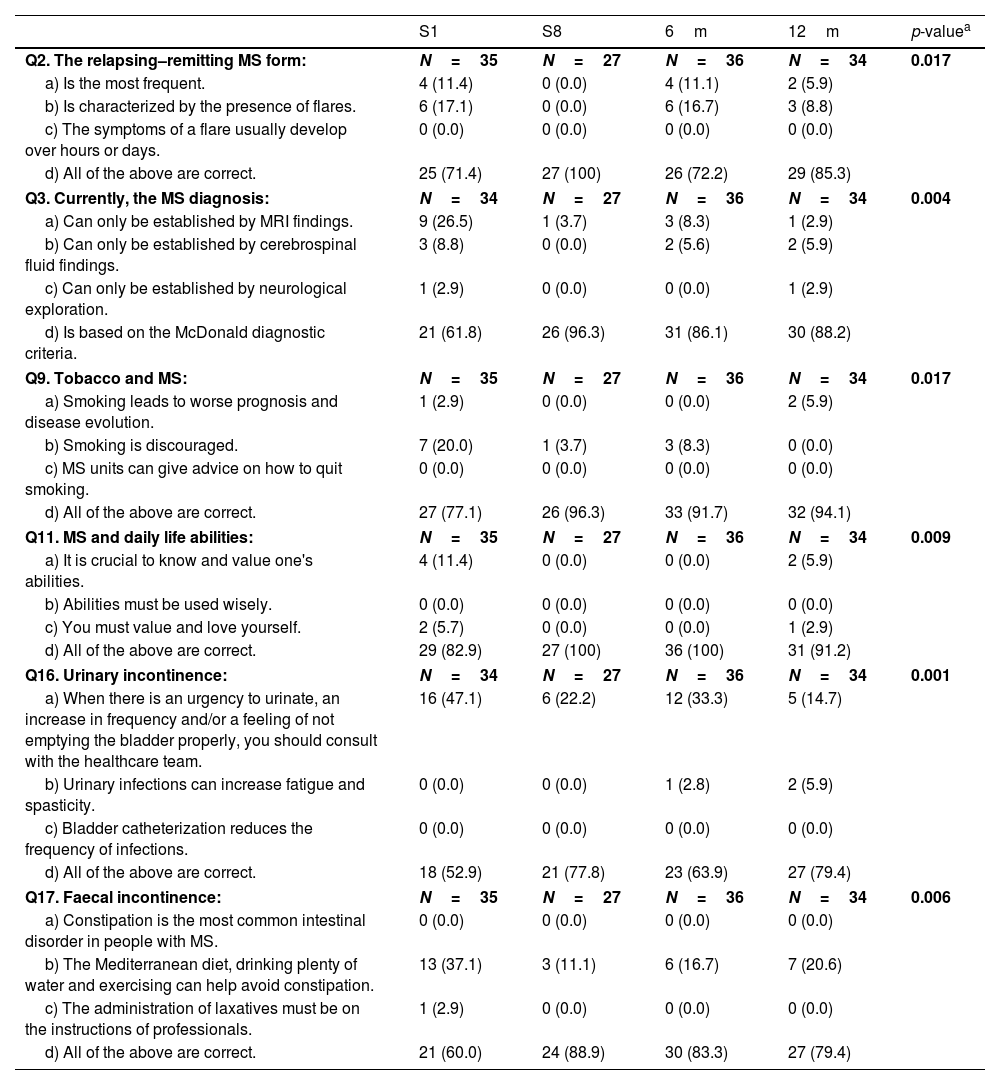
Out of the 18 questions, the change in the answers of six questions was found to be statistically significant (Table 1). These were related to the characteristics of the relapsing–remitting MS, the MS diagnosis, smoking, MS and daily life activities, and urinary and faecal incontinence. These questions showed the lowest degree of knowledge at baseline, i.e., the first programme session. Contrarily, the 12 remaining questions with no statistically significant changes in their answers were those on which participants exhibited the highest degree of knowledge at baseline (Table S4).

Table 1.

Evolution of patients’ answers to the 18-question knowledge test (only questions with statistically significant differences are shown), N (%).

  S1  S8  612p-valuea 
Q2. The relapsing–remitting MS form:  N=35  N=27  N=36  N=34  0.017 
a) Is the most frequent.  4 (11.4)  0 (0.0)  4 (11.1)  2 (5.9)   
b) Is characterized by the presence of flares.  6 (17.1)  0 (0.0)  6 (16.7)  3 (8.8)   
c) The symptoms of a flare usually develop over hours or days.  0 (0.0)  0 (0.0)  0 (0.0)  0 (0.0)   
d) All of the above are correct.  25 (71.4)  27 (100)  26 (72.2)  29 (85.3)   
Q3. Currently, the MS diagnosis:  N=34  N=27  N=36  N=34  0.004 
a) Can only be established by MRI findings.  9 (26.5)  1 (3.7)  3 (8.3)  1 (2.9)   
b) Can only be established by cerebrospinal fluid findings.  3 (8.8)  0 (0.0)  2 (5.6)  2 (5.9)   
c) Can only be established by neurological exploration.  1 (2.9)  0 (0.0)  0 (0.0)  1 (2.9)   
d) Is based on the McDonald diagnostic criteria.  21 (61.8)  26 (96.3)  31 (86.1)  30 (88.2)   
Q9. Tobacco and MS:  N=35  N=27  N=36  N=34  0.017 
a) Smoking leads to worse prognosis and disease evolution.  1 (2.9)  0 (0.0)  0 (0.0)  2 (5.9)   
b) Smoking is discouraged.  7 (20.0)  1 (3.7)  3 (8.3)  0 (0.0)   
c) MS units can give advice on how to quit smoking.  0 (0.0)  0 (0.0)  0 (0.0)  0 (0.0)   
d) All of the above are correct.  27 (77.1)  26 (96.3)  33 (91.7)  32 (94.1)   
Q11. MS and daily life abilities:  N=35  N=27  N=36  N=34  0.009 
a) It is crucial to know and value one's abilities.  4 (11.4)  0 (0.0)  0 (0.0)  2 (5.9)   
b) Abilities must be used wisely.  0 (0.0)  0 (0.0)  0 (0.0)  0 (0.0)   
c) You must value and love yourself.  2 (5.7)  0 (0.0)  0 (0.0)  1 (2.9)   
d) All of the above are correct.  29 (82.9)  27 (100)  36 (100)  31 (91.2)   
Q16. Urinary incontinence:  N=34  N=27  N=36  N=34  0.001 
a) When there is an urgency to urinate, an increase in frequency and/or a feeling of not emptying the bladder properly, you should consult with the healthcare team.  16 (47.1)  6 (22.2)  12 (33.3)  5 (14.7)   
b) Urinary infections can increase fatigue and spasticity.  0 (0.0)  0 (0.0)  1 (2.8)  2 (5.9)   
c) Bladder catheterization reduces the frequency of infections.  0 (0.0)  0 (0.0)  0 (0.0)  0 (0.0)   
d) All of the above are correct.  18 (52.9)  21 (77.8)  23 (63.9)  27 (79.4)   
Q17. Faecal incontinence:  N=35  N=27  N=36  N=34  0.006 
a) Constipation is the most common intestinal disorder in people with MS.  0 (0.0)  0 (0.0)  0 (0.0)  0 (0.0)   
b) The Mediterranean diet, drinking plenty of water and exercising can help avoid constipation.  13 (37.1)  3 (11.1)  6 (16.7)  7 (20.6)   
c) The administration of laxatives must be on the instructions of professionals.  1 (2.9)  0 (0.0)  0 (0.0)  0 (0.0)   
d) All of the above are correct.  21 (60.0)  24 (88.9)  30 (83.3)  27 (79.4)   
a

p-values were calculated using the Skillings–Mack test.

MRI, magnetic resonance imaging; MS, multiple sclerosis.

Health indicators

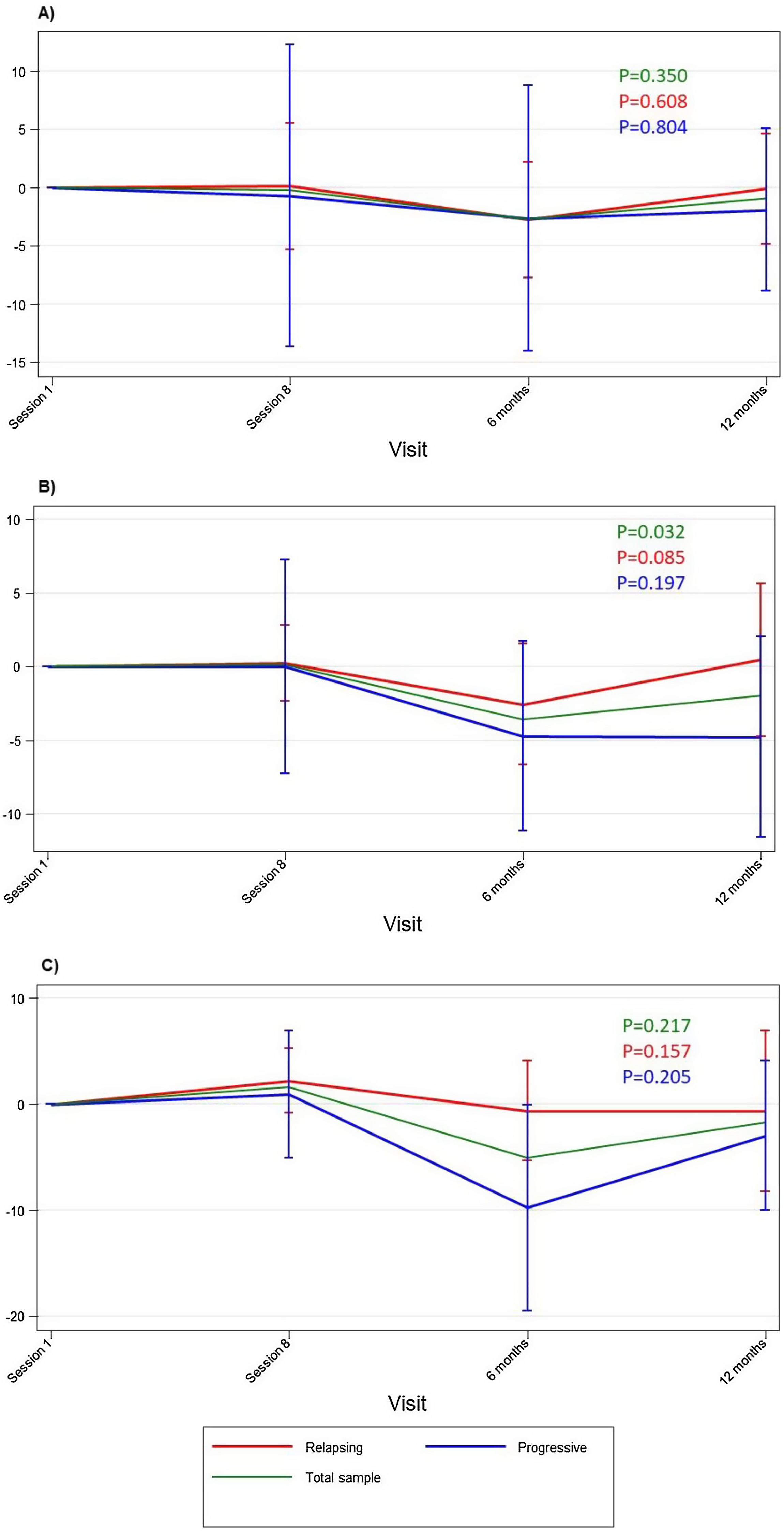
The mean overall QoL did not vary significantly in the global, the relapsing, or the progressive groups after the intervention sessions. The mean physical health composite worsened significantly (p=0.032) in the global group but not in the subgroups. Scores for overall QoL and physical health composite seemed to remain stable in the relapsing group and to worsen in the progressive group. The mean mental composite did not vary significantly for any group and, although the tendency was to worsen in both subgroups, the mental composite appeared to be worse in the progressive than in the relapsing group (Fig. 2).

Figure 2.

Mean MSQoL-54 variation of (A) overall quality of life, (B) physical health composite, and (C) mental health composite from the first session until the 12-month follow-up. The vertical lines represent the 95% confidence interval. P-values were calculated using repeated ANOVA measures. MSQoL-54, Multiple Sclerosis Quality of Life-54 items.

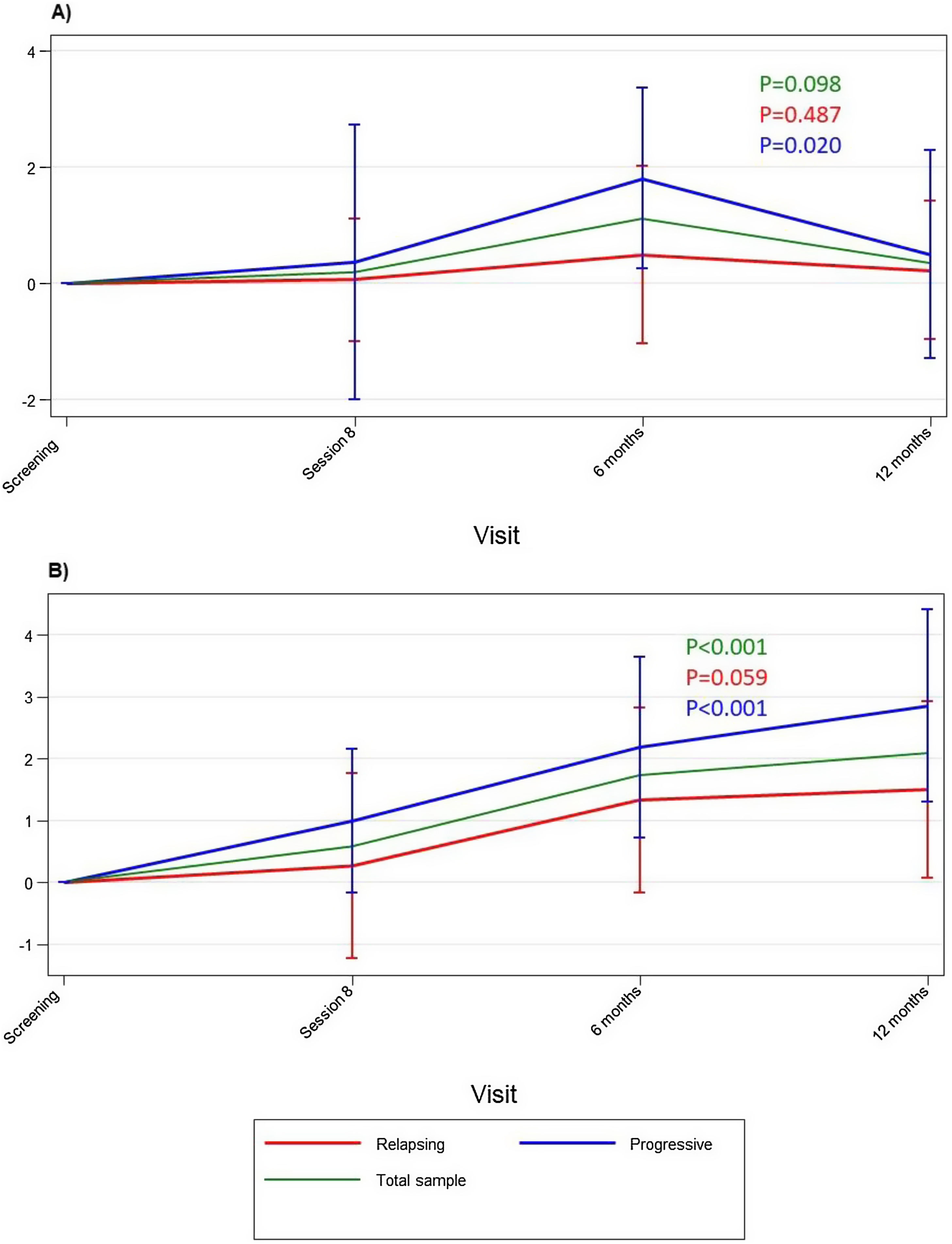
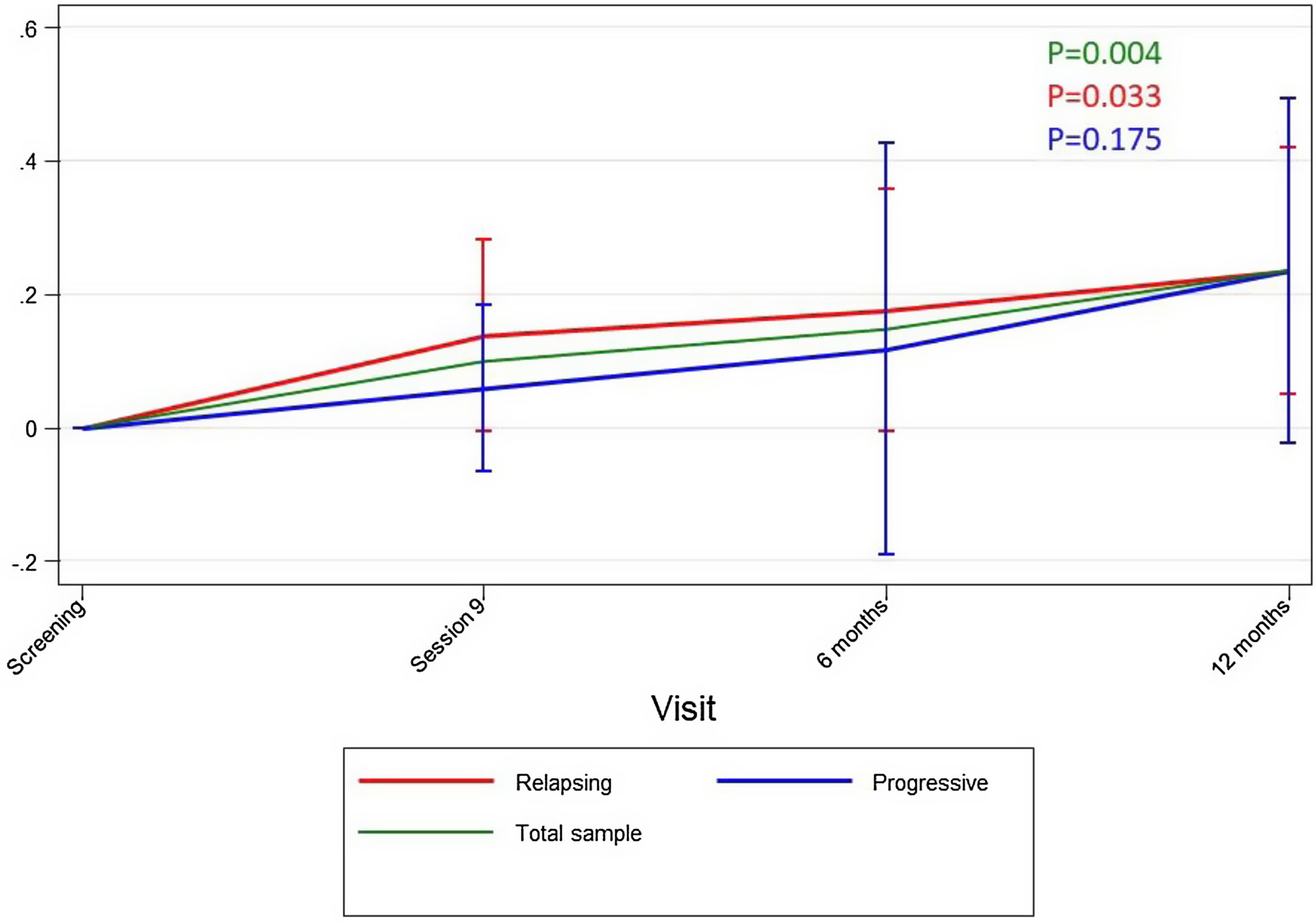
Anxiety, measured using the HADS questionnaire, only varied significantly in the progressive group (p=0.020), worsening between the screening visit and the 12-month follow-up. In addition, the global HADS depression score (p<0.001) and that of the progressive MS group (p<0.001) increased significantly during the same period (Fig. 3). Most participants’ lifestyle habits did not vary significantly between the first session and the last follow-up, except for physical activity (p=0.037) and diet habits (p=0.023) (Table S5). Regarding disability, global EDSS (p=0.004) and that of the relapsing MS group (p=0.033) increased significantly between the screening visit and the last follow-up, but not in the progressive group (Fig. 4).

Figure 3.

Mean HADS variation of (A) anxiety score and (B) depression score from the screening visit until the 12-month follow-up. The vertical lines represent the 95% confidence interval. p-Values were calculated using repeated ANOVA measures. HADS, Hospital Anxiety and Depression Scale.

Figure 4.

Mean EDSS variation from the screening visit until the 12-month follow-up. p-Values were calculated using repeated ANOVA measures. EDSS, Expanded Disability Status Scale.

The evolution of satisfaction surveys showed a significant improvement on patients’ self-care ability after the EPPC-MS (p=0.041). Although the overall satisfaction with the programme was high, changes over time were not statistically significant for any other statement (Table S6). The use of most healthcare services remained stable or did not increase significantly, except for the number of visits to the primary care physician for relapsing MS cases (p=0.047) and visits to the primary care nurse for all MS cases (p<0.001) and relapsing MS cases (p=0.004) (Table S7).

Discussion

In this nurse-led study, we assessed the feasibility of implementing the EPPC in people with MS through remotely delivered sessions and evaluated its impact. Most participants attended all sessions, and the intervention did not cause them any harm. Disease-related knowledge improved in certain areas. Although only small changes were observed in health indicators, the global trend was towards stability for these variables in the relapsing group and towards worsening in the progressive group, except for EDSS.

Specific EPPs for people with MS have not been assessed, despite their proven effectiveness in patients with bronchiectasis,20 chronic kidney disease,21 diabetes, asthma, and arthritis,22 Chagas disease,14 and permanent colostomy.23 A systematic review pointed out that EPP benefits were limited to self-efficacy (confidence to manage the condition), self-rated health, cognitive symptom management, and frequency of exercise, but psychological health, symptoms or health-related QoL, and healthcare use did not improve.24 Our results aligned with these findings since the EPPC-MS significantly improved participants’ frequency of exercise and diet.

Disease-related knowledge improved in areas where baseline knowledge was the lowest, whereas answers to questions with an already high baseline knowledge remained unchanged. This is understandable considering the chronic nature of MS, meaning several years of MS evolution before taking the questionnaire, and the questionnaire's design focussed on essential disease-related knowledge. Health education interventions aim at increasing the knowledge of participants, which has been associated with higher health literacy (i.e., the ability to obtain, process, and understand health information to interpret symptoms, manage self-care, and make decisions25). Increased health literacy may improve patients’ self-management, diet, and lifestyle,26 as reported for several chronic diseases.26 Therefore, knowledge and health literacy could be essential to change patients’ behaviour in chronic disease self-management.26

The satisfaction surveys showed an improvement restricted to the self-care ability, likely due to the small sample size of our feasibility study. Including more patients in a larger study27 may allow us to extract stronger conclusions about the impact of EPPC-MS on participants’ daily lives. Regarding the use of healthcare services, our results showed an increase in some visits, which could be attributed to the chronic, resource-consuming nature of MS and the COVID-19 pandemic context of our study (requiring vaccinations at primary care centres and consultations at MS units). Therefore, despite the expected reduction in the use of healthcare services according to previous reports,5,28 the increase observed in our study could not be attributed to EPPC-MS. However, we could ascertain that the intervention did not harm the participants.

Peer support programmes and health literacy interventions have been shown to increase empowerment (i.e., the patient's autonomy to make daily decisions related to self-care, acknowledging the importance of shared responsibility between the patient and healthcare professionals).25 Although empowerment was not measured in this feasibility study, the implementation of the EPPC-MS in a larger population will evaluate patient engagement using the patient activation measure and fatigue and symptom management using specific questionnaires.27

The improvement in knowledge should be reflected in some health indicators,26 but the small sample size limited the statistical power to detect significant differences. Nevertheless, the results regarding attendance, impact on health literacy, and questionnaire completion are encouraging and warrant larger studies. In this regard, the improved health literacy encouraged us to apply the EPPC-MS in larger populations to evaluate the impact of these changes on health indicators with more precision.27 Nonetheless, some tendencies were observed, mostly towards stability in the relapsing group and towards worsening in the progressive group for most health indicators. This could be explained by the known differences in baseline symptoms between the two MS types, which are typically worse in progressive MS and tend to deteriorate gradually over time, consistent with the expected disease course described in the literature.29 Notably, EDSS was the only variable showing the opposite trend (i.e., worse in the relapsing–remitting group than in the progressive group), likely due to the study's small sample size. Additionally, external factors such as the impact of the COVID-19 pandemic on access to care, physical activity, and mental health may have contributed to the observed trends.29

Overall, our study proved the feasibility of EPPC-MS. Particularly, this remote intervention respected social determinants of health since it enabled a population with reduced mobility, a high degree of handicap, and difficulties in family-work conciliation (because of the higher incidence of MS in women) to access the study. Additionally, the response rate was very high, with only a few participants lost to follow-up. Importantly, the success of the EPPC-MS could be attributed to a great extent to the EP training by the expert nurse personnel and their constant support. Also, the intervention respected risk mitigation procedures in the COVID-19 pandemic context and considered the vulnerable group of participants.

This feasibility study, which evaluated the first remotely delivered EPP in Spain, aimed to improve health literacy and validate EPPC-MS questionnaires. While it lacked a control group, its pre–post design was adequate for this purpose. The intervention will now be expanded to all specialized MS units in Catalonia, offering participation to individuals seeking to enhance disease-related knowledge.

Judging by the high attendance rate, the EPPC-MS was well received. The programme led to an improvement in disease-related knowledge and, since its feasibility was proven, we could consider its implementation in the MS reference units of Catalonia, like other EPPCs.8 Regarding non-significant results in QoL and anxiety, although trends were observed, statistical significance was not reached, likely due to the limited sample size, typical of feasibility studies, and the short follow-up period relative to the complexity of MS-related outcomes. In fact, EPPC-MS is currently being implemented throughout Catalonia in a study with a larger population,27 allowing us to analyze the impact on QoL, empowerment, and other important health indicators for people with MS.

Conclusion

In this feasibility study evaluating the impact of EPPC-MS, disease-related knowledge improved in those aspects less known by participants. This success could be attributed to the continuous involvement of the nursing personnel in the EP training and support. However, the positive effect on knowledge was only translated in certain lifestyle habits (exercise and diet), with no impact on participants’ QoL, anxiety and depression, or disability status. Nonetheless, the improvement in health literacy and the high response rate would indicate the potential greater benefits of this remotely delivered programme when applied in larger population settings.

Authors’ contributions

All authors have agreed on the final version and made substantial contributions to the design of this study and the interpretation of data. Furthermore, all authors have revised the article critically to ensure intellectual content.

Ethic approval

The Medicines Research Ethics Committees (Comité de Ética de Investigación con Medicamentos, CEIm) of Vall d’Hebron University Hospital, with code PR(AG)431-2020, and University Hospital of Girona Doctor Josep Trueta, with code 2020.228, approved the study protocol.

Patient consent

All participants signed a written informed consent.

Declaration of generative AI and AI-assisted technologies in the writing process

During the preparation of this work, the authors utilized ChatGPT and Mendeley Reference Manager to facilitate the review of grammar, spelling, references, and appropriate language in English. After using these tools/services, the authors thoroughly reviewed and edited the content as needed, thereby assuming full responsibility for the content of the publication.

Funding information

This study was promoted by the MS unit at Vall d’Hebron Hospital and had no external sponsor. The PhD candidate/first author was supported through the Strategic Plan for Research and Innovation in Health 2016–2020 (PERIS) (ref. BDNS 542793) funded by the Health Department of Catalonia. This study had been partially funded by the Official College of Nurses of Barcelona (www.coib.cat) as part of the Nurse Research Project Grants (PRN-475/2021). None of the funders was involved in the design of the study, manuscript writing or data collection, and will not be involved in data analysis or interpretation and manuscript writing in the future. The only requirement for funders is that any publications associated with this study must be open access and kept in an institutional repository.

Conflicts of interest

MARS received speaking or consulting honoraria, participated in scientific activities organized by Merck, Teva, Biogen, Viatris, Sandoz, Novartis, Sanofi-Genzyme, Celgene, EXCEMED, Roche, Janssen, and Bristol Myers Squibb, and was awarded the ECTRIMS MS Nurse Training Fellowship Programme and the Strategic Plan for Research and Innovation in Health 2016–2020 (PERIS).

PAB is the coordinator of the Expert Patient Program Catalunya.

CCM has received support for attending congresses from Sanofi, Merck, Teva, and Novartis and is funded by a fellowship from the Departament de Salut de la Generalitat de Catalunya [SLT017/20/000115, 2021].

MJA received speaking or consulting honoraria and participated in scientific activities in the last two years organized by Bristol-Myers Squibb/Celgene.

MAA received speaking or consulting honoraria, and participated in scientific activities in the last two years organized by Janssen, Bristol-Myers Squibb, Novartis, and Merck.

XM received speaking honoraria and travel expenses for participation in scientific meetings, has been a steering committee member of clinical trials or participated in advisory boards of clinical trials in the past years with Abbvie, Actelion, Alexion, Biogen, Bristol-Myers Squibb/Celgene, EMD Serono, Genzyme, Hoffmann-La Roche, Immunic, Janssen Pharmaceuticals, Medday, Merck, Mylan, Nervgen, Novartis, Sandoz, Sanofi-Genzyme, Teva Pharmaceutical, TG Therapeutics, Excemed, MSIF, and NMSS.

JSG received speaking or consulting honoraria and attended scientific activities in the last two years organized by Merck, Teva, Bial, EXCEMED, Biogen, Celgene, Novartis, Sanofi-Genzyme, and Roche; he is also the director of the “Revista de Neurología” (Neurology Journal) and an editorial board member of the Multiple Sclerosis Journal. LRT has received speaking or consulting honoraria, attended scientific activities organized by Merck, Teva, Biogen, Novartis, Sanofi, Roche, Bristol-Myers-Squibb, Almirall, and Mylan, and participated in advisory boards organized by Sanofi, Merck, Roche, Biogen, Novartis, Bristol-Myers-Squibb, and Almirall.

CBF, EAC, RMD, MMR, SPH, AGAB, and CBN declare no conflict of interest.

Data availability statement

The data that support the findings of this study are available from the corresponding author upon reasonable request.

Acknowledgements

The authors would like to thank Matías Rey-Carrizo, PhD, and Sara Cervantes, PhD, for their medical writing support.

Appendix A
Supplementary data

The followings are the supplementary data to this article:

Icono mmc1.doc

References
[1]
E. Kamma, W. Lasisi, C. Libner, H.S. Ng, J.R. Plemel.
Central nervous system macrophages in progressive multiple sclerosis: relationship to neurodegeneration and therapeutics.
J Neuroinflammation, 19 (2022), pp. 1-27
[2]
S.L. Hauser, B.A.C. Cree.
Treatment of multiple sclerosis: a review.
Am J Med, 133 (2020), pp. 1380-1390
[3]
K. MacLurg, P. Reilly, S. Hawkins, O. Gray, E. Evason, D. Whittington.
A primary care-based needs assessment of people with multiple sclerosis.
Br J Gener Pract, 55 (2005), pp. 385-390
[4]
WHO (World Health Organization).
Framework on Integrated, People-Centred Health Services.
(2016),
[5]
A. González Mestre.
Autonomy of the patient with chronic diseases: from passive patient to active patient.
Enferm Clin, 24 (2014), pp. 67-73
[6]
C. Plews.
Expert Patient Programme: managing patients with long-term conditions.
Br J Nurs, 14 (2005), pp. 1086-1089
[7]
UK Department of Health.
The expert patient: a new approach to chronic disease management for the 21st century.
(September 14 2001),
[8]
Generalitat de Catalunya. “Programa Pacient Expert Catalunya®: Una Estratègia per Potenciar l’autorresponsabilitat Del Pacient i El Foment de l’autocura” (Patient Expert Program Catalonia: A Strategy to Enhance Patient Self-Responsibility and the Promotion of Self-Care). https://canalsalut.gencat.cat/ca/sistema-salut/rol-ciutadania/participacio/programa-pacient-expert-catalunya/index.html#googtrans.(ca|en) [accessed 26.3.24].
[9]
A.J. Jovell, M.D. Navarro Rubio, L. Fernández Maldonado, S. Blancafort.
Involvement of the patient: the new role of patients in the health system.
Aten Prim, 38 (2006), pp. 234-237
[10]
M.A. Robles-Sanchez, V. Cruz-Díaz, P. Amil-Bujan, J. Sastre-Garriga, L. Ramió-Torrentà, C. Bertran-Noguer.
An expert patient program as a tool to empower people with multiple sclerosis.
J Neurosci Nurs, 52 (2020), pp. 166-171
[11]
A. Bandura.
Health promotion by social cognitive means.
Health Educ Behav, 31 (2004), pp. 143-164
[12]
M.A. Robles-Sanchez, M. Moharra, C. Bosch-Farré, M.J. Hernández-Leal, X. Montalban, J. Sastre-Garriga, et al.
Views of multiple sclerosis patients about key elements for a decision aid: a qualitative study.
J Neurosci Nurs, 55 (2023), pp. 164-170
[13]
P. Amil, C. Boix, A. González-Mestre, N. Sala, M.D. Álamo, P. Roura-Poch.
Allocation strategy for a controlled clinical trial to assess the Expert Patient Program Catalonia™ clinical effectiveness on diabetes.
Int J Integr Care, 15 (2015),
[14]
I. Claveria Guiu, J. Caro Mendivelso, H. Ouaarab Essadek, M.A. González Mestre, P. Albajar-Viñas, J. Gómez i Prat.
The Catalonian Expert Patient Programme for Chagas disease: an approach to comprehensive care involving affected individuals.
J Immigr Minor Health, 19 (2017), pp. 80-90
[15]
A. González Mestre, P. Amil Bujan, E. Gil Sánchez, M.J. Rodríguez Pérez, S. Santaeugenia González, J.C. Contel Segura.
Results of the Patient Expert Catalunya® Program (PPE-CAT®) in Heart failure (HF) and chronic obstructive pulmonary disease (COPD): 10 years of evolution of a community activity of peer learning.
XPA & Health Commun, (2018), pp. 1
[16]
M. Aymerich, I. Guillamón, H. Perkal, C. Nos, J. Porcel, S. Berra, et al.
Spanish adaptation of the disease-specific questionnaire MSQOL-54 in multiple sclerosis patients.
Neurologia, 21 (2006), pp. 181-187
[17]
J. Soto, M.E. Gras, M. Planes.
Internal consistency and factorial structure of the Catalan version of HADS Preliminary study with a sample of family and close friends of cancer patients.
Rev Col legi Ofi Psicòl Catal, 207 (2008), pp. 29-33
[18]
N. Solà-Valls, M. Vicente-Pascual, Y. Blanco, E. Solana, S. Llufriu, E. Martínez-Heras, et al.
Spanish validation of the telephone assessed Expanded Disability Status Scale and Patient Determined Disease Steps in people with multiple sclerosis.
Mult Scler Relat Disord, 27 (2019), pp. 333-339
[19]
J.F. Kurtzke.
Rating neurologic impairment in multiple sclerosis: an expanded disability status scale (EDSS).
Neurology, 33 (1983), pp. 1444-1452
[20]
K.A. Lavery, B. O’Neill, M. Parker, J.S. Elborn, J.M. Bradley.
Expert patient self-management program versus usual care in bronchiectasis: a randomized controlled trial.
Arch Phys Med Rehabil, 92 (2011), pp. 1194-1201
[21]
Y. Wu, L. Zhang, X. Hu, X. Liu.
Management of chronic kidney disease in china calls for the implementation of expert patient program with traditional Chinese medical interventions.
Chin J Integr Med, 20 (2014), pp. 796-800
[22]
C. Griffiths, J. Motlib, A. Azad, J. Ramsay, S. Eldridge, G. Feder, et al.
Randomised controlled trial of a lay-led self-management programme for Bangladeshi patients with chronic disease.
Br J Gener Pract., 55 (2005), pp. 831-837
[23]
F. Cheng, Q. Xu, X. Dai, dong, L.li. Yang.
Evaluation of the expert patient program in a Chinese population with permanent colostomy.
Cancer Nurs, 35 (2012), pp. E27-E33
[24]
G. Foster, S. Taylor, S. Eldridge, J. Ramsay, C. Griffiths.
Self-management education programmes by lay leaders for people with chronic conditions.
Cochrane Database Syst Rev, (2007), pp. CD005108
[25]
H. Cardoso Barbosa, J. de Queiroz Oliveira, J. Moreira da Costa, R. de Melo Santos, L. Gonçalves Miranda, H. de Carvalho Torres, et al.
Empowerment-oriented strategies to identify behavior change in patients with chronic diseases: an integrative review of the literature.
Patient Educ Couns, 104 (2021), pp. 689-702
[26]
B. Bressing, I. van der Mei, B.V. Taylor, C.A. Honan, L. Blizzard, S.B. Claflin.
Evaluating the impact of the Understanding Multiple Sclerosis online course on participant MS knowledge, health literacy, resilience, self-efficacy, quality of life, and MS symptom severity.
Mult Scler Relat Disord, 60 (2022), pp. 103717
[27]
M.A. Robles-Sanchez, P. Amil-Bujan, C. Bosch-Farré, C. Coll-Martínez, M. Jesús Arévalo, E. Anglada-Clofent, et al.
An expert patient program to improve the empowerment and quality of life of people with multiple sclerosis: protocol for a multicenter pre–post intervention study.
Front Neurol, 14 (2023), pp. 1172640
[28]
K.R. Lorig, P.L. Ritter, A. Dost, K. Plant, D.D. Laurent, I. Mcneil.
The expert patients programme online, a 1-year study of an Internet-based self-management programme for people with long-term conditions.
Chronic Illn, 4 (2008), pp. 247-256
[29]
A.J. Thompson, S.E. Baranzini, J. Geurts, B. Hemmer, O. Ciccarelli.
Multiple sclerosis.
Lancet, 391 (2018), pp. 1622-1636
Copyright © 2025. Sociedad Española de Enfermería Neurológica
asdasdasd
Opciones de artículo
Herramientas
Material suplementario
