






La esclerosis sistémica (SSc) es una enfermedad autoinmune que causa dolor crónico, fatiga y pérdida de funcionalidad. La rehabilitación busca mejorar las funciones motoras, aliviar el dolor y promover la independencia funcional en los pacientes con SSc. Sin embargo, la evidencia sobre la efectividad de las diversas modalidades de atención en rehabilitación aún puede beneficiarse de mayor descripción en la literatura.
MétodosEsta revisión de alcance describe la efectividad de la rehabilitación y telerrehabilitación en el dolor, fatiga, función y fuerza en la región oral, manos y miembros superiores. Se realizó una revisión de alcance (scoping review) siguiendo la guía PRISMA-ScR, buscando estudios en las bases de datos PubMed®, Scopus® y Embase® desde 2010 hasta 2024.
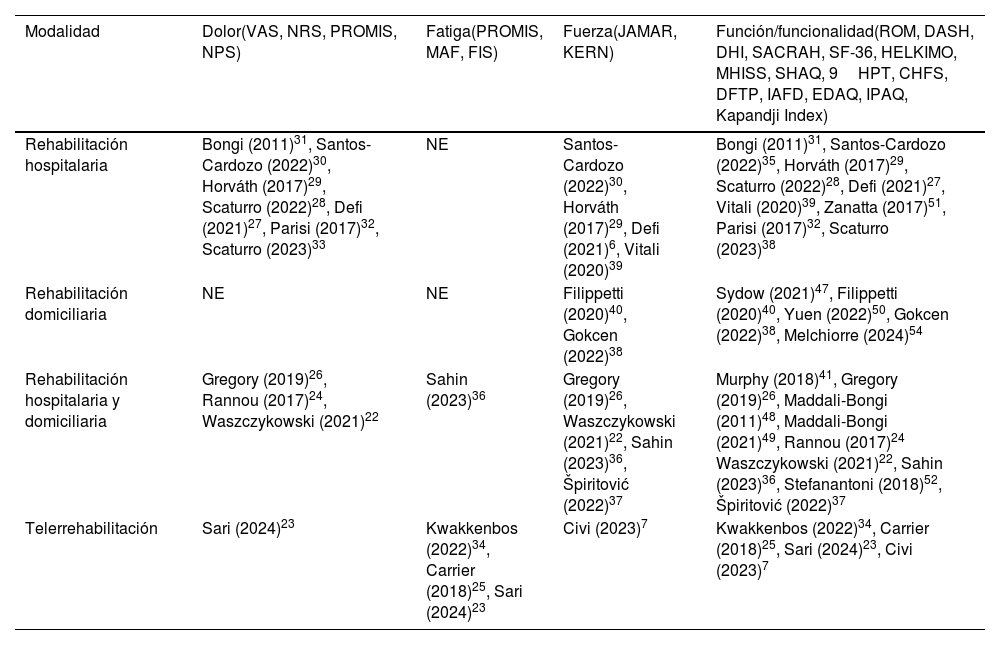
ResultadosSe incluyeron 29 artículos, principalmente de Europa (55%) y Asia (24%). La mayoría fueron ensayos clínicos (69%) con una media de 58 participantes. Las modalidades más frecuentes fueron la rehabilitación hospitalaria y combinada. Las intervenciones mostraron efectos positivos en los desenlaces evaluados: mejoría en dolor (41%), fatiga (14%), fuerza (41%) y funcionalidad (97%).
ConclusiónLa rehabilitación, incluyendo la telerrehabilitación, es efectiva para mejorar síntomas clave en los pacientes con SSc. La telerrehabilitación es una alternativa efectiva y prometedora, especialmente en la reducción del dolor y la fatiga en los pacientes con SSc.
Systemic sclerosis (SSc) is an autoimmune condition affecting mainly the skin and musculoskeletal system. Clinically, SSc translates to chronic pain, fatigue and loss of functionality. Rehabilitation interventions aim to improve motor functions, relieve pain, maintain work capacity, and promote functional independence in patients with SSc. However, the effectiveness of different rehabilitation modalities, including telerehabilitation, remains insufficiently described in the literature.
MethodsThis review aimed to describe the effectiveness of rehabilitation and telerehabilitation focused on pain, fatigue, function/functionality, and strength in the oral region, hand, and upper limbs. A Scoping Review was carried out following the PRISMA-ScR recommendations. We searched PubMed®, Scopus®, and Embase® for studies from 2010 to 2024, including those that evaluated the effectiveness of rehabilitation and telerehabilitation interventions in SSc.
ResultsOur review included 29 articles, mainly from Europe (n=16, 55%) and Asia (n=7, 24%). Most were clinical trials (69%) with an average sample size of 58 participants. Hospital-based and combined rehabilitation modalities were the most common. Interventions showed positive effects across outcomes: improvement in pain (41%), fatigue (14%), strength (41%), and function (97%).
ConclusionsRehabilitation, including telerehabilitation, is effective in improving key symptoms in patients with SSc.Telerehabilitation is an effective and promising alternative for patients with SSc, for the reduction of pain and fatigue.

