




Diagnosis of neurological involvement in Lyme disease is based on two-step serological testing and cerebrospinal fluid pleocytosis. In Spain its incidence is much lower than in other European countries, being Asturias the region with the highest incidence. We tried to analyse the clinical and epidemiological aspects in the main hospital in Asturias.
Material and methodsRetrospective observational study of patients admitted for Lyme disease in our centre over 14 years (2009–2022). Clinical, analytical and evolutionary variables were analyzed after one year. Active neuroborreliosis was diagnosed after registering pleocytosis and positive serologies at the cerebrospinal fluid.
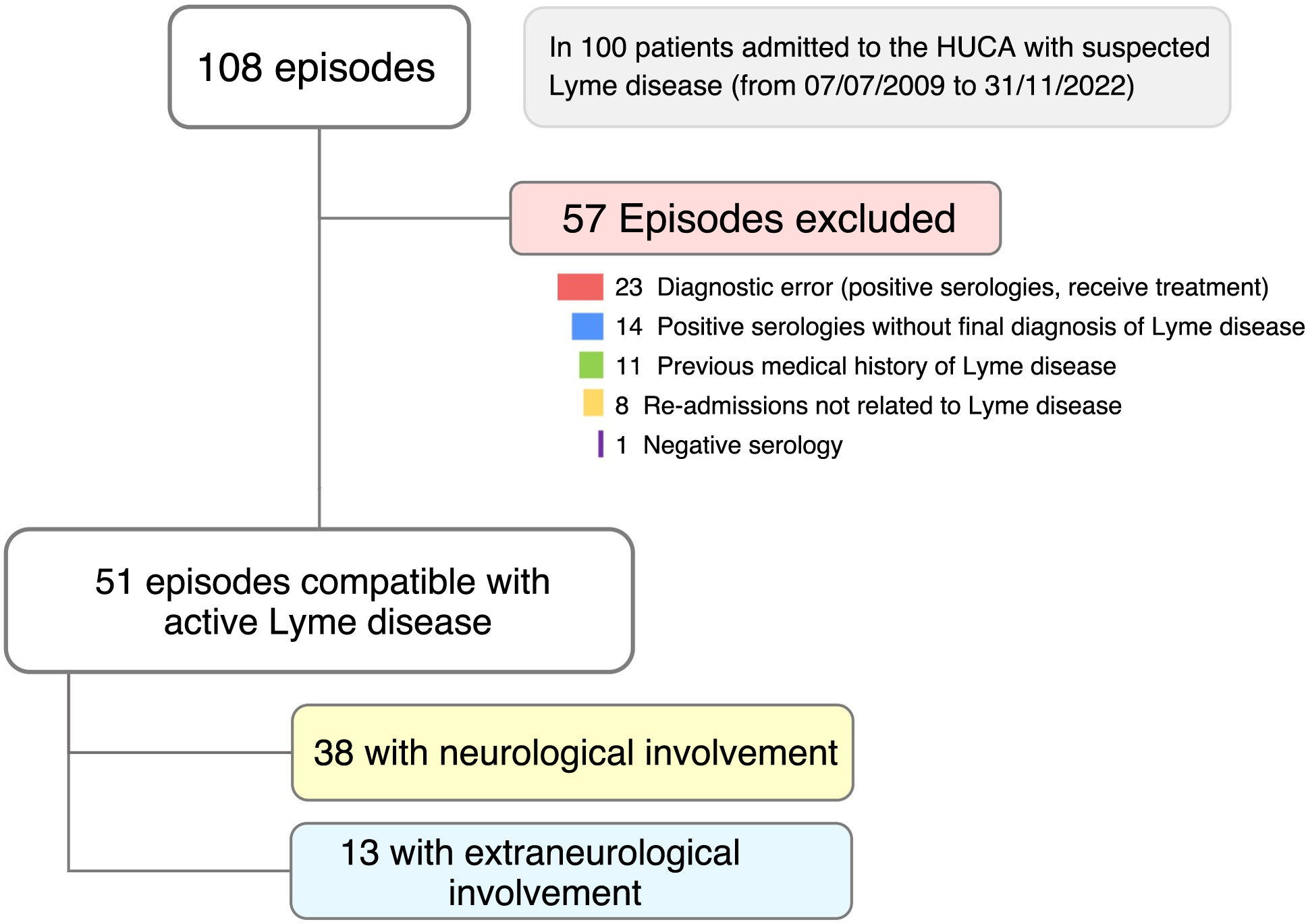
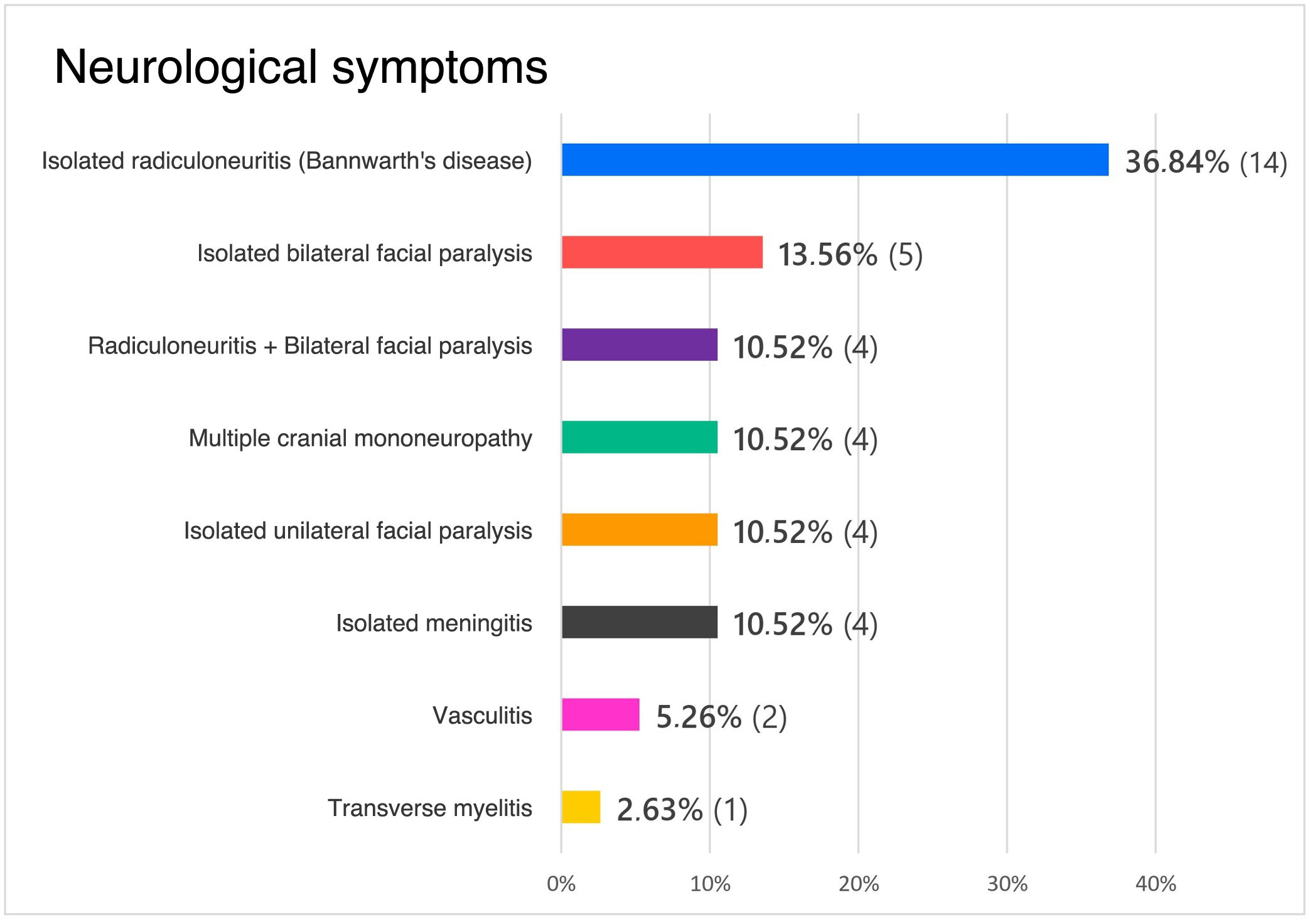
Results108 episodes were analyzed, corresponding to 100 patients coded at discharge as Lyme disease. 58 episodes are discarded due to diagnostic or coding error. 51 episodes were considered active disease, being 38 diagnosed of neuroborreliosis. Tick bite recall and erythema were reported in 55.3% and 31.6% of patients. The most frequent neurological syndromes were radiculoneuritis (36.84%), bilateral facial palsy (13.56%), radiculoneuritis and bilateral facial palsy (10.52%), multiple cranial mononeuropathy (10.52%) among others. 78.9% achieved a complete recovery, and 15.79% developed post-treatment Lyme disease syndrome.
DiscussionDespite the high incidence of Lyme disease in Asturias, the cases based on hospital admission that can be classified as active disease are lower than those published based on hospital coding. The main source of diagnostic error is positive serological results, without other clinical context, especially in patients studied for cognitive impairment or encephalopathy.
El diagnóstico de afectación neurológica en la enfermedad de Lyme se basa en pruebas serológicas en dos pasos y pleocitosis en líquido cefalorraquídeo. En España su incidencia es mucho menor que otros países europeos, siendo Asturias la región de mayor incidencia del país. Se analiza la realidad clínica y epidemiológica en el principal hospital de Asturias.
Material y métodosEstudio observacional retrospectivo de pacientes ingresados por enfermedad de Lyme en nuestro centro durante 14 años (2009–2022). Se analizan variables clínicas, analíticas y evolutivas al año, considerándose neuroborreliosis activa las que tengan pleocitosis y serologías positivas en el líquido cefalorraquídeo.
ResultadosSe analizaron 108 episodios, que corresponden a 100 pacientes, codificados al alta como enfermedad de Lyme. 58 episodios son descartados por error diagnóstico o de codificación. De los 51 episodios considerados como enfermedad activa, 38 son pacientes que han sufrido una neuroborreliosis. Se notifica recuerdo de picadura de garrapata y eritema en el 55,3% y 31,6% de los pacientes. Los síndromes neurológicos más frecuentes fueron radiculoneuritis (36,84%), parálisis facial bilateral (13,56%), radiculoneuritis y parálisis facial bilateral (10,52%), mononeuropatía craneal múltiple (10,52%) entre otros. El 78,9% alcanzaron una recuperación completa, y un 15,79% desarrollaron síndrome de enfermedad de Lyme post-tratamiento.
DiscusiónPese a la alta incidencia de enfermedad de Lyme en Asturias, los episodios de ingreso hospitalario catalogables como enfermedad activa son menores a los publicados basados en codificación hospitalaria. El principal factor de error diagnóstico se basa en resultados serológicos positivos, sin otros datos clínico analíticos, especialmente en pacientes estudiados por deterioro cognitivo y encefalopatía.

