



This study analysed long-term trends in interstitial lung diseases (ILDs) incidence in Spain from 1992 to 2021, focusing on age, sex and temporal patterns.
MethodsWe conducted an ecological trend study using data from the Global Burden of Disease (GBD) Study 2021. Age-standardized incidence rates (ASIRs) were calculated, and joinpoint regression was applied to evaluate temporal trends. An age-period-cohort (A-P-C) analysis was performed to assess the influence of age, calendar periods, and birth cohorts on incidence patterns.
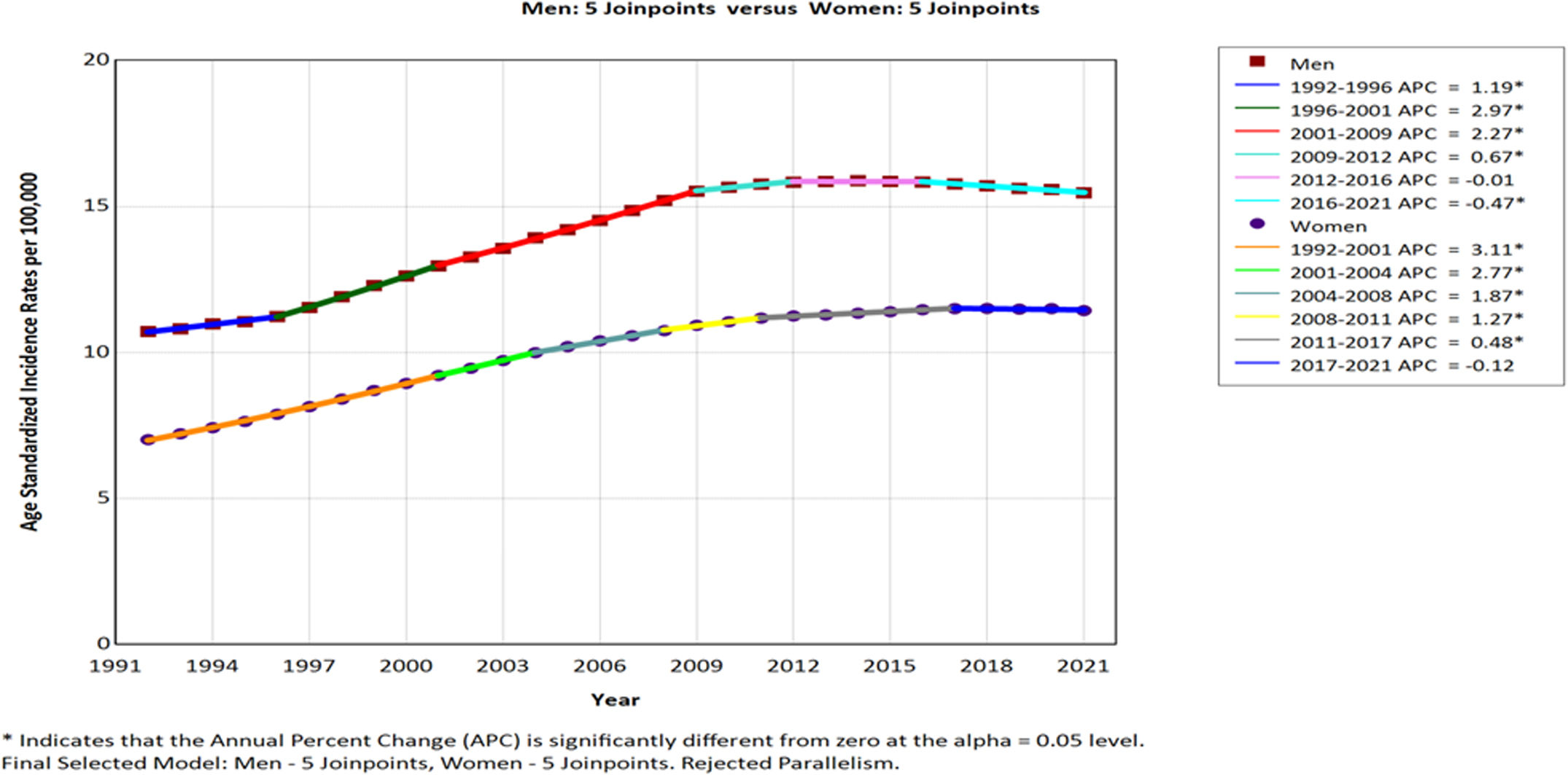
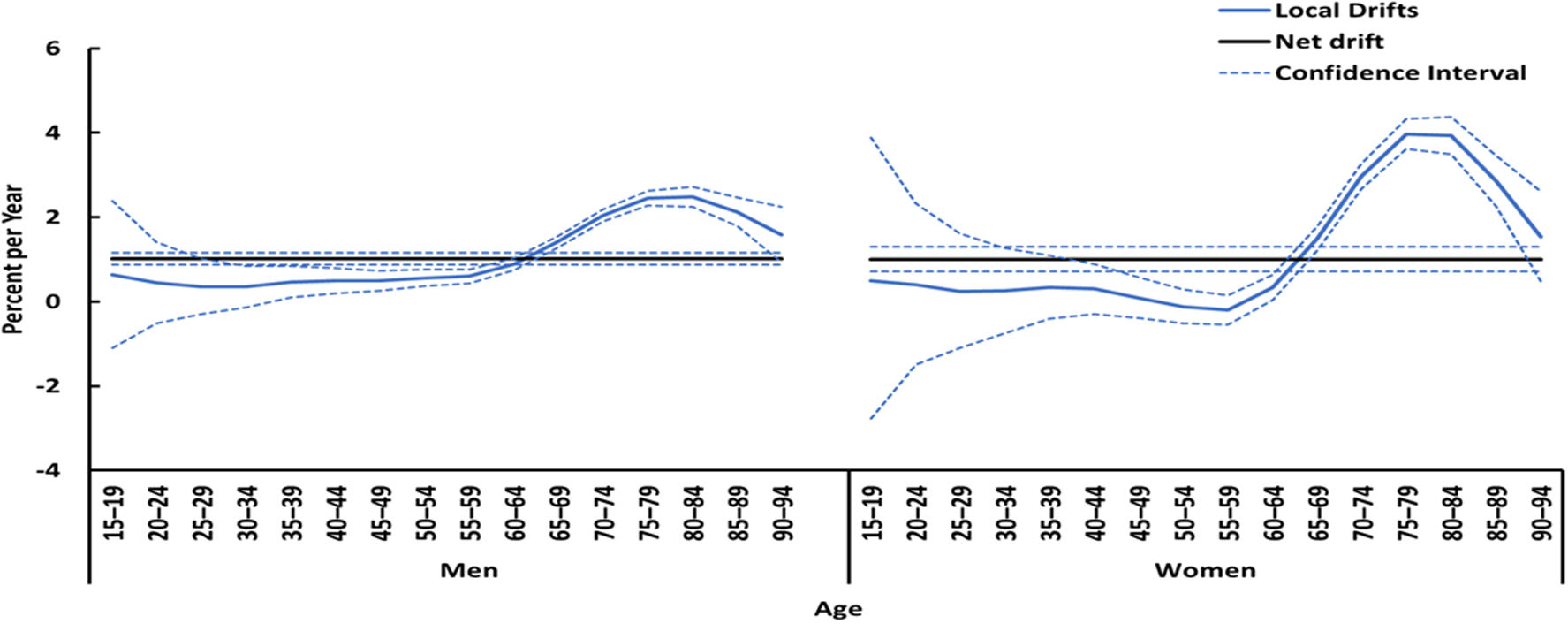
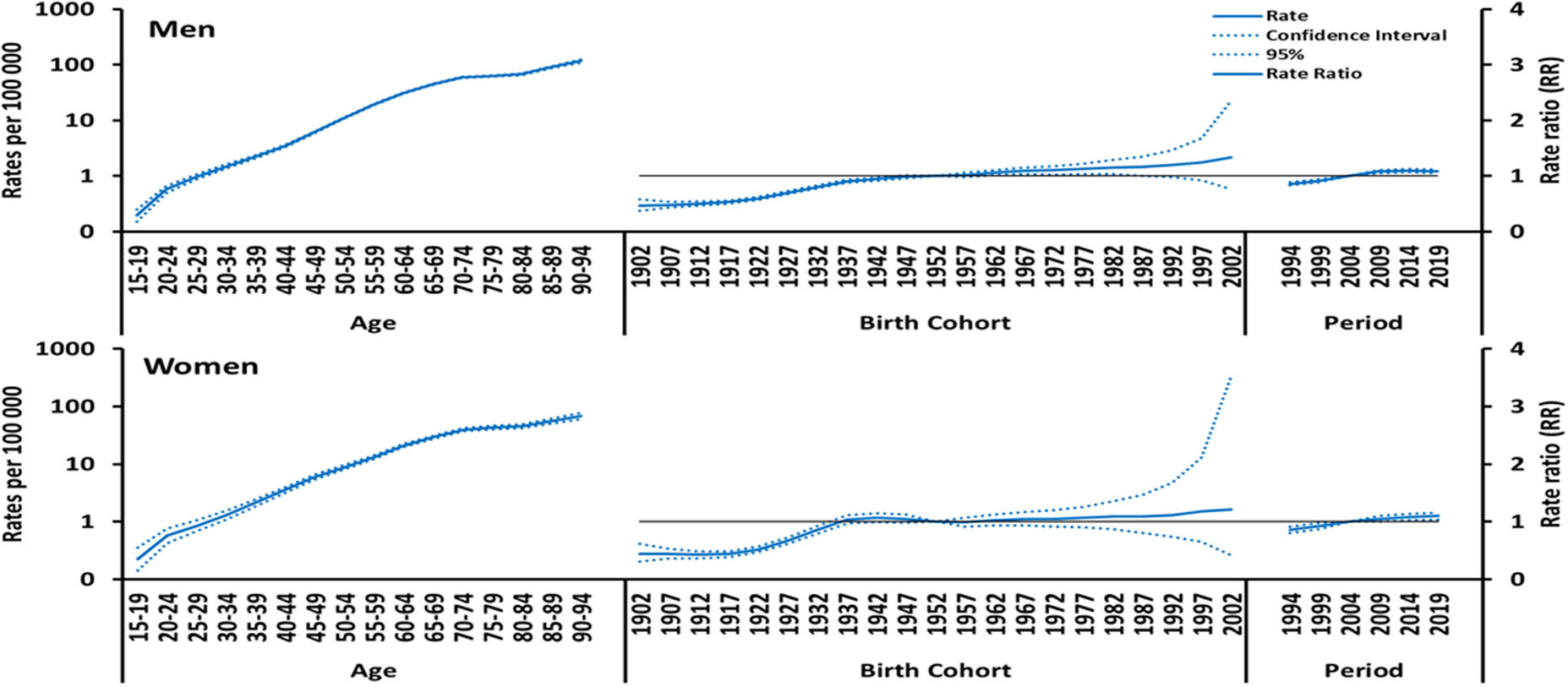
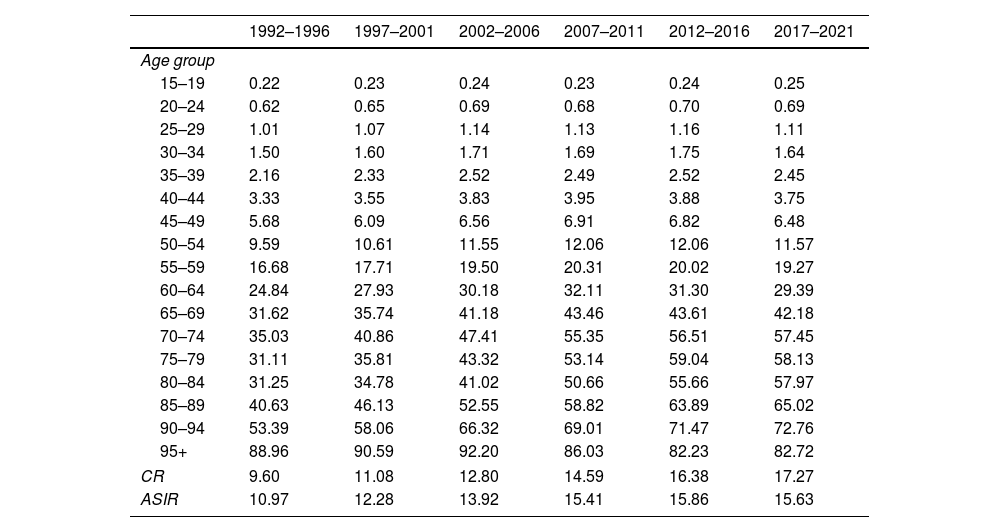
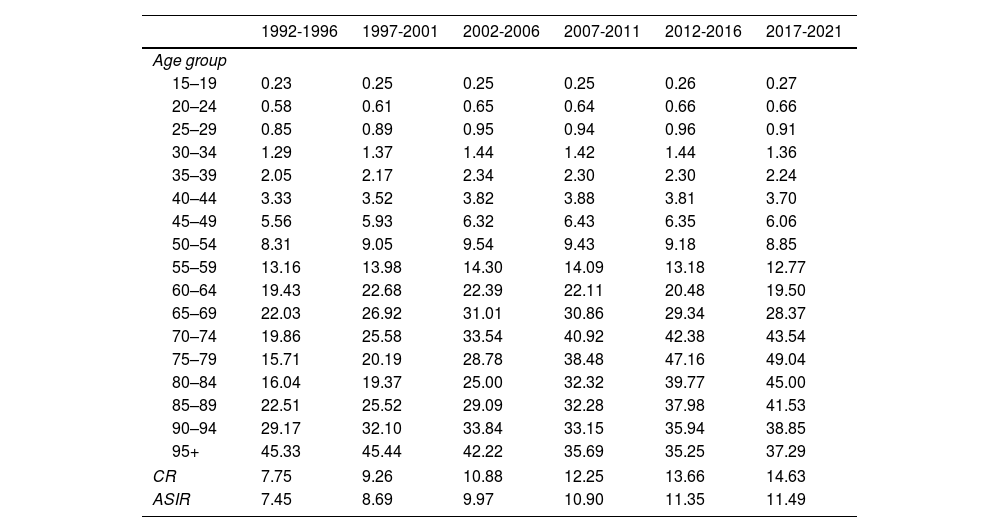
ResultsFrom 1992 to 2021, 141,141 incident cases of ILDs were estimated in Spain, with a slight male predominance (53.2%). ASIRs increased over the study period, with an average annual percentage change (AAPC) of 1.3% for men and 1.7% for women. Incidence rates rose with age, peaking in the 70–79 age group for both sexes. A-P-C analysis identified cohort effects, with later-born cohorts showing higher risks of ILDs. Period effects indicated a steady increase in incidence. Men consistently exhibited higher incidence rates than women, although the gap narrowed slightly over time.
ConclusionsThe increasing incidence of ILDs in Spain underscores a growing public health challenge. Early diagnosis, targeted interventions, and ongoing research are vital to mitigate this rising burden.
Este estudio analizó las tendencias a largo plazo en la incidencia de las enfermedades pulmonares intersticiales (EPI) en España entre 1992 y 2021, centrándose en la edad, el sexo y los patrones temporales.
MétodosSe llevó a cabo un estudio ecológico de tendencias usando datos del Global Burden of Disease (GBD) 2021. Se calcularon las tasas de incidencia ajustadas por edad (TIAT), y se aplicó regresión joinpoint para evaluar cambios temporales. Además, se realizó un análisis edad-período-cohorte (A-P-C) para determinar la influencia de la edad, los periodos calendáricos y las cohortes de nacimiento sobre los patrones de incidencia.
ResultadosEntre 1992 y 2021 se estimaron 141.141 casos incidentes de EPI en España, con predominio masculino leve (53,2%). Las TIAT aumentaron de forma significativa durante el periodo (cambio porcentual anual medio [CPAM] del 1,3% en varones y del 1,7% en mujeres). Las tasas de incidencia crecieron con la edad, alcanzando su máximo en el grupo de 70-79 años en ambos sexos. El análisis A-P-C identificó efectos de cohorte significativos, con mayor riesgo en las cohortes más recientes, y efectos de periodo que reflejaron un incremento sostenido de la incidencia. Aunque los varones mantuvieron tasas superiores, la brecha con las mujeres se redujo ligeramente con el tiempo.
ConclusionesEl incremento de la incidencia de las EPI en España evidencia un desafío creciente para la salud pública. Son imprescindibles el diagnóstico precoz, intervenciones dirigidas e investigación continua para atenuar esta carga en aumento.

