
Patients with atrial fibrillation (AF) attending Spanish Internal Medicine outpatient clinics (SIMOs) are frequently older, and DOACs are underused.
ObjectiveTo assess how anticoagulation and DOACs (direct oral anticoagulants) are applied in patients with AF in the SIMOs.
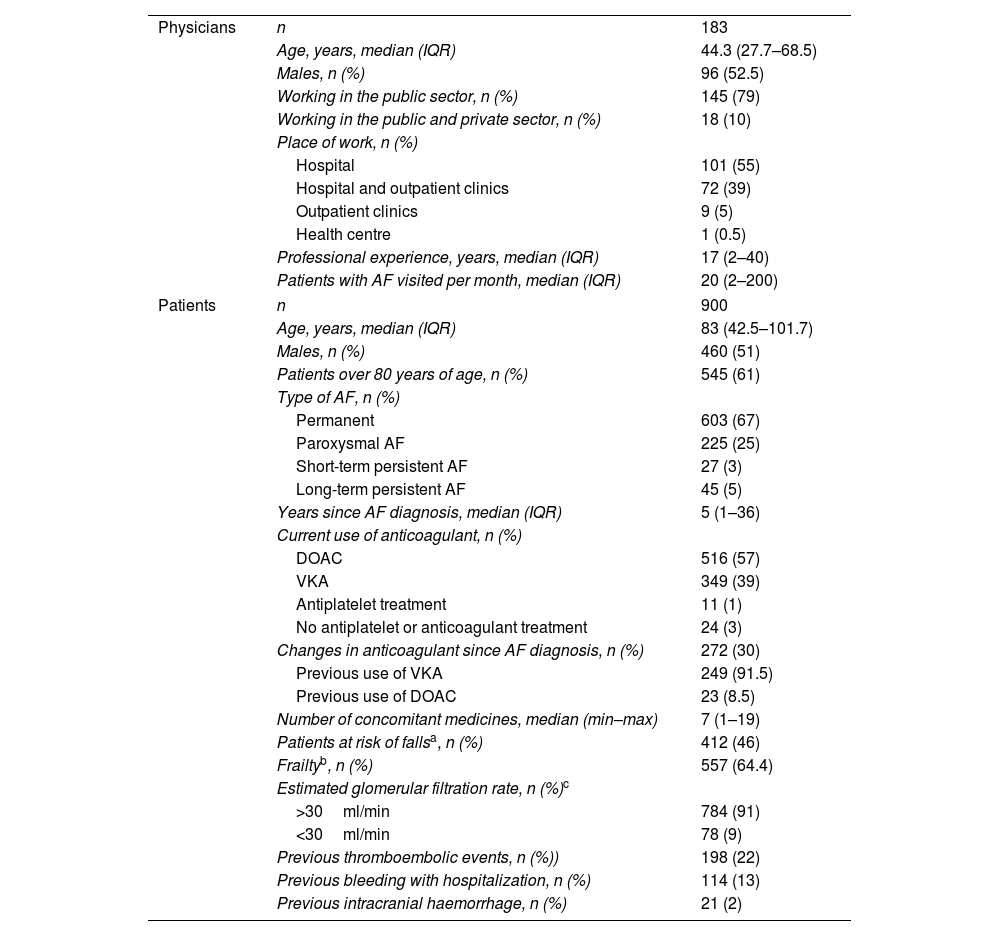
MethodsAnalysis of the use and opinions about anticoagulants in patients with AF attending the SIMOs in a multicenter, nationwide, retrospective study including 900 patients and 183 physicians.
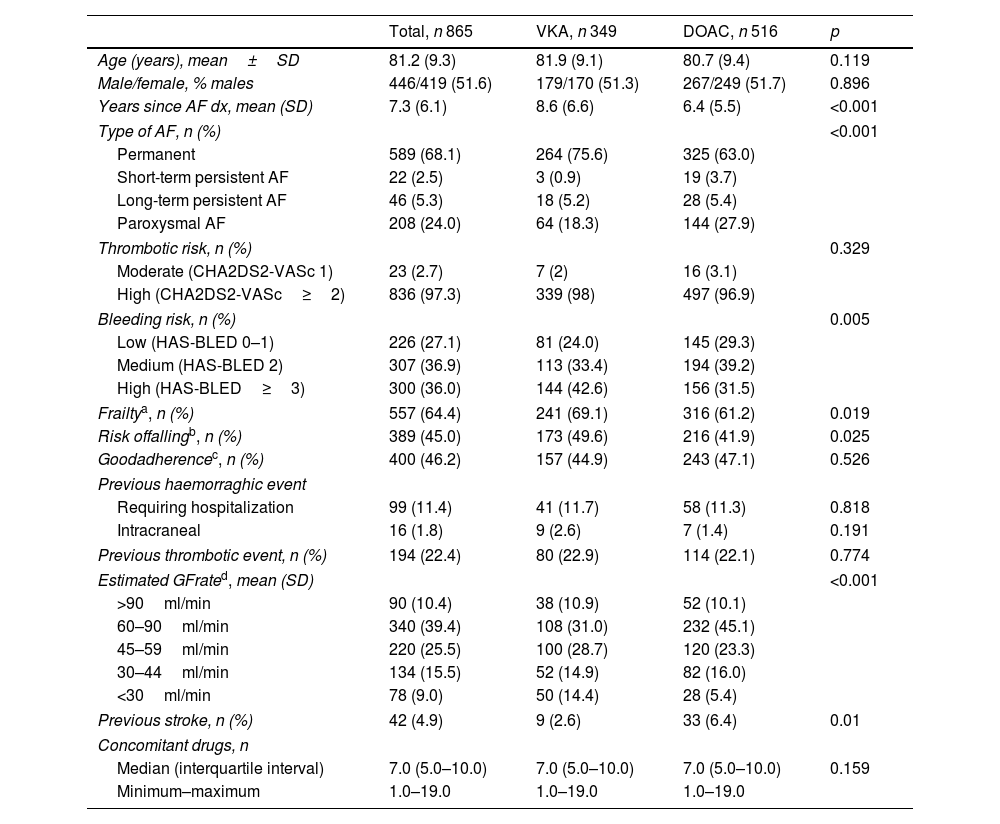
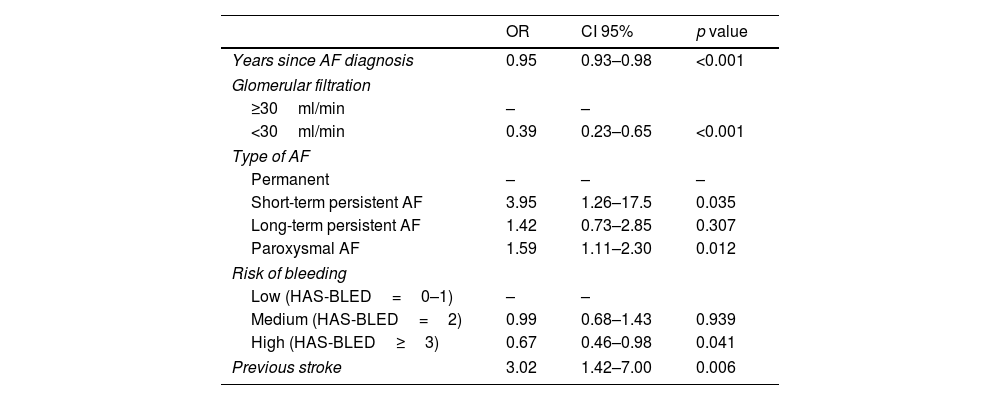
Results96.1% of the patients were anticoagulated, 55% with DOACs. One-third on vitamin K antagonists (VKA) were not within the therapeutic range. DOAC use was higher in patients with shorter duration of AF (p<0.001), better kidney function (p<0.001), and short-term persistent (p=0.035) or paroxysmal AF (p=0.012). DOAC switch indication was met by 32.1% of those on VKA (72% because of out of control range). Although “administrative barriers” (38%), “frailty” (21%); “polypharmacy” (19%) and “very advanced age” (18%) were the main limitations to DOAC prescription in opinion of the physicians, validated scales were seldom used to assess basal functional status.
ConclusionsMore than one-third of patients with AF on VKA treated in the SIMOs should be switched to DOACs. Administrative limitations and poor functional status are the main difficulties for it. Validated scales are rarely used to measure functional basal status.
Los pacientes con fibrilación auricular (FA) que acuden a las consultas externas de Medicina Interna (CEMI) españolas suelen ser de edad avanzada, y generalmente se piensa que los ACODs (anticoagulantes orales directos) se utilizan de forma insuficiente.
ObjetivoEvaluar el uso de la anticoagulación y los ACODs en pacientes con FA en las CEMI.
MétodosAnálisis del uso y las opiniones sobre anticoagulantes en pacientes con FA atendidos en las CEMI en un estudio multicéntrico, nacional y retrospectivo que incluyó a 900 pacientes y 183 médicos.
ResultadosEl 96,1% de los pacientes recibían anticoagulación, el 55% con ACODs. Un tercio de los que tomaban antagonistas de la vitamina K (AVK) no se encontraban dentro del rango terapéutico. El uso de ACODs fue mayor en pacientes con menor duración de la FA (p<0,001), mejor función renal (p<0,001) y FA persistente a corto plazo (p=0,035) o paroxística (p=0,012). El 32,1% de los pacientes con AVK cumplían los criterios para cambiar a ACODs (el 72% debido a que estaban fuera del rango terapéutico). Aunque las «barreras administrativas» (38%), la «fragilidad» (21%), la «polifarmacia» (19%) y la «edad muy avanzada» (18%) fueron las principales limitaciones para la prescripción de ACODs en opinión de los médicos, rara vez se utilizaron escalas validadas para evaluar el estado funcional basal.
ConclusionesMás de un tercio de los pacientes con FA tratados con AVK en los CEMI deberían cambiar a ACODs. Las limitaciones administrativas y el mal estado funcional son las principales dificultades para ello. Rara vez se utilizan escalas validadas para medir el estado funcional basal.