
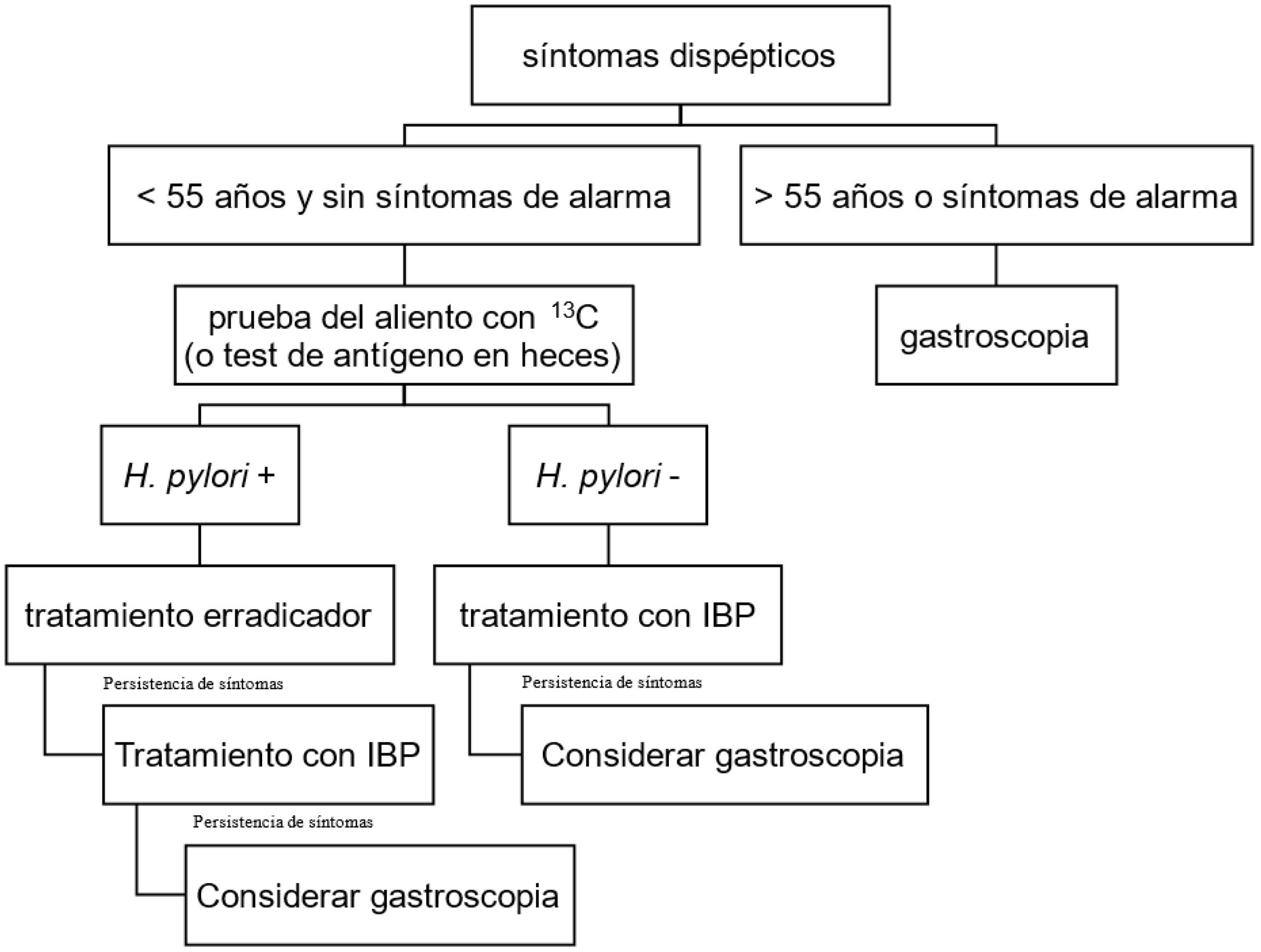

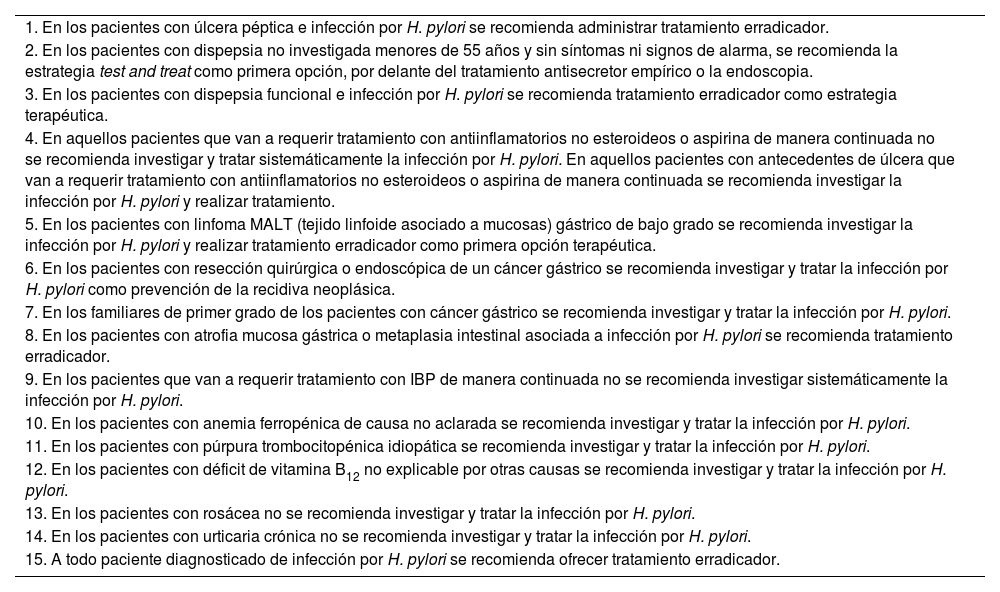
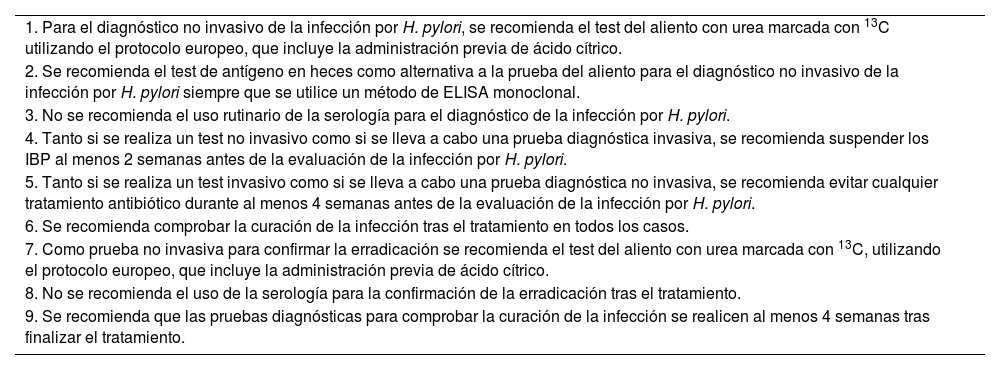
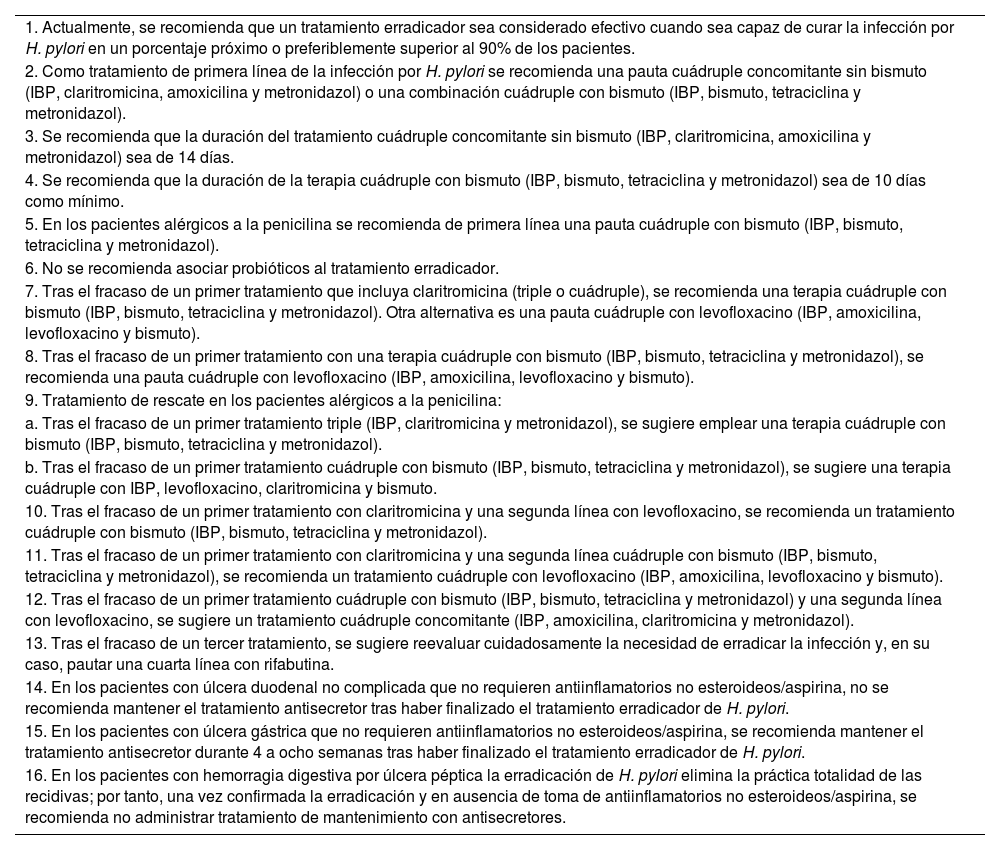
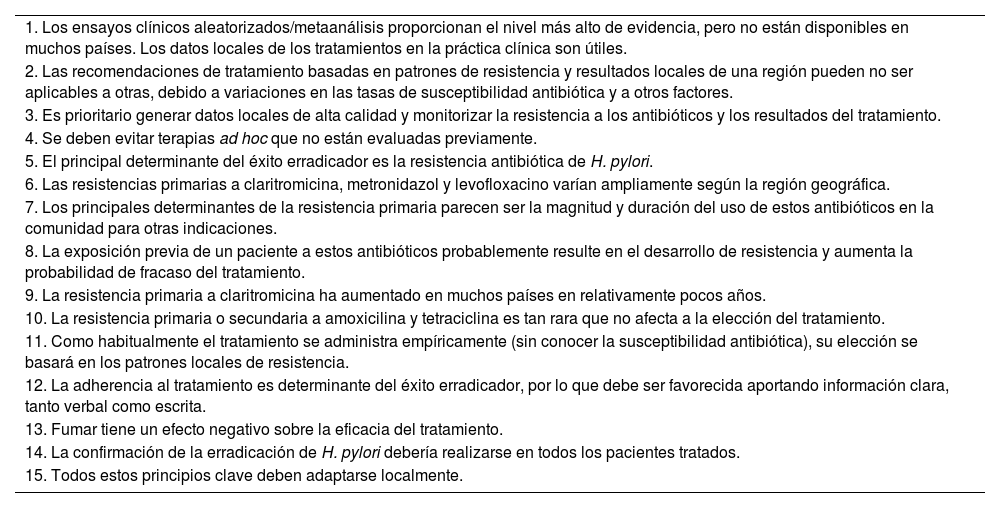
La infección por Helicobacter pylori es la más frecuente del planeta, afectando a la mitad de la población mundial. Se transmite habitualmente durante la infancia, y persiste de por vida si no se trata. Es la causa principal de gastritis crónica, úlcera péptica y cáncer gástrico. En los pacientes dispépticos jóvenes y sin síntomas de alarma, la estrategia «test-and-treat» (detección de H. pylori mediante una prueba no invasiva y su consiguiente erradicación) es de elección. El papel causal de la infección en el desarrollo del adenocarcinoma gástrico ofrece la oportunidad de implementar estrategias preventivas. La infección se puede diagnosticar mediante métodos invasivos (que requieren endoscopia, como el test rápido de la ureasa o la histología) y no invasivos (como la prueba del aliento o el test de antígeno en heces). El tratamiento de H. pylori combina un inhibidor de la bomba de protones junto con varios antibióticos o sales de bismuto.
The infection caused by Helicobacter pylori is the most common on the planet, affecting half of the global population. It is usually transmitted during childhood and persists for life if untreated. It is the primary cause of chronic gastritis, peptic ulcer, and gastric cancer. In young dyspeptic patients without alarm symptoms, the test-and-treat strategy (detection of H. pylori through a non-invasive test and subsequent eradication) is the preferred approach. The causal role of the infection in the development of gastric adenocarcinoma provides an opportunity to implement preventive strategies. The infection can be diagnosed through invasive methods (requiring endoscopy, such as the rapid urease test or histology) and non-invasive methods (such as the breath test or stool antigen test). The treatment for H. pylori combines a proton pump inhibitor with several antibiotics or bismuth salts.