





This study examines the role of digital literacy, digital accessibility, and human capital in fostering entrepreneurial resilience among entrepreneurs in Qatar and the United Arab Emirates (UAE). These countries serve as exemplary models in digital transformation, particularly in navigating crises such as the COVID-19 pandemic. Grounded in the resource-based view and the theory of dynamic capabilities, this research investigates how these factors contribute to entrepreneurial resilience. This study employs structural equation modeling to analyze survey data from 317 individuals with entrepreneurial experience. According to the findings, digital literacy, accessibility, and human capital significantly enhance innovation, strengthening entrepreneurial resilience. Agility is identified as a key moderator, amplifying the positive impact of these competencies on resilience. Although the success of entrepreneurial ecosystems has often been attributed to entrepreneurial actors, resource providers, connectors, or entrepreneurial intentions, this study underscores the importance of fostering digital competencies and agility to build resilient entrepreneurial ecosystems. It offers policymakers and business leaders insights into the mechanisms that enhance resilience in dynamic and crisis-affected environments where the digital landscape is rapidly evolving.
In today’s rapidly evolving global economy, digital entrepreneurship is a critical driver of innovation, economic growth, and resilience (Al-Hakimi et al., 2021; Staniewski et al., 2025). Integrating digital technologies into business practices has fundamentally transformed entrepreneurs’ operations, enabling them to reach new markets, improve efficiencies, and develop innovative products and services (Dowin Kennedy, 2021; Yin et al., 2023; Silva et al., 2025). This shift toward digital entrepreneurship is particularly relevant in a context of increasing global uncertainty, where the ability to adapt quickly to changing conditions has become essential for business survival (Knox et al., 2021; Lam et al., 2024). The COVID-19 pandemic, geopolitical tensions, and economic disruptions further underscore the importance of digital tools and strategies in sustaining businesses during crises.
Several global challenges have already contributed to this situation. It is further exacerbated by the volatile state of the Middle East, a region characterized by diverse economies and rapidly growing populations (Sharma et al., 2021). Additionally, ongoing political tensions, resulting in conflicts and economic sanctions, have created an atmosphere of uncertainty, making it increasingly difficult for small businesses to operate. However, these challenges have also underscored the importance of resilience and adaptability among Middle Eastern entrepreneurs, who must use digital technology to navigate the uncertainty that surrounds them (Zhang et al., 2021). In this ever-changing and often unpredictable business environment, entrepreneurial resilience is defined by the ability to respond to both internal and external disruptions either by innovating through technology or by seizing emerging opportunities.
Qatar and the United Arab Emirates (UAE) have earned a special place in the digital transformation horizons of Middle Eastern countries. Both countries have invested heavily in digital infrastructure, education, and technology to diversify their economies and rely less on oil and gas (Abubakre et al., 2021; Li et al., 2023). Yet these achievements have not changed the fact that firms in Qatar and the UAE are still struggling to find a solid footing in such periods of global or regional crises. Moreover, the COVID-19 pandemic revealed significant vulnerabilities in global supply chains, underscoring the urgent need for adaptive strategies. As Qatar and the UAE navigate a rapidly evolving geopolitical landscape, fostering digital entrepreneurship has become a critical way to build resilience.
The research problem addressed in this paper is how to understand the way in which digital literacy, digital accessibility, and human capital contribute to entrepreneurial resilience in rapidly developing economies such as Qatar and the UAE. Both Qatar’s National Vision 2030 and the UAE’s Vision 2021 prioritize digital innovation as a key driver of economic diversification and sustainability. However, the extent to which these digital initiatives translate into tangible entrepreneurial resilience remains underexplored. While both countries have made strides in fostering digital entrepreneurship, there is still a gap in understanding the specific factors that drive resilience in the face of crises, especially because most studies on entrepreneurial resilience have examined Western contexts.
This research aims to address this gap in the literature by examining how digital resources and adaptive capabilities enable entrepreneurs to navigate challenges and thrive in volatile economic contexts through their entrepreneurial resilience. Therefore, the primary objective of this study is to explore the mechanisms underlying entrepreneurial resilience in challenging environments such as Qatar and the UAE. Specifically, this research seeks to (1) examine the direct effects of digital literacy, digital accessibility, and human capital on entrepreneurial resilience; (2) investigate the indirect effects of these factors through the mediating role of innovation, which serves as a bridge between digital resources and resilience; and (3) analyze how the moderating role of agility (i.e., the ability to adapt quickly and effectively to changing market conditions) amplifies the benefits of digital literacy, digital accessibility, and human capital in fostering resilience in such contexts.
By addressing these objectives, this study provides a comprehensive understanding of how digital resources, innovation, and agility collectively contribute to building entrepreneurial resilience in dynamic and uncertain economic landscapes through the theoretical lenses of the resource-based view and the theory of dynamic capabilities. In doing so, it advances the broader discussion around digital entrepreneurship by offering a nuanced perspective on the interplay between digital resources, innovation, agility, and resilient entrepreneurial ecosystems in the unique context of the Middle East. The findings of this study are expected to have valuable implications for policymakers, business leaders, and entrepreneurs in Qatar, the UAE, and beyond, as they navigate the challenges of an increasingly digital and unpredictable world.
Section 2 of this study introduces the underlying theoretical framework, followed by an extensive review of the literature and hypothesis development. Section 3 explains the methodology. Section 4 presents the findings. Sections 5 and 6 discuss the findings and outline the theoretical and practical implications. Sections 7, 8, and 9 then present the conclusions, limitations, and ideas for future lines of research.
Theoretical frameworkThe resource-based view posits that a firm’s resources and capabilities are critical for achieving sustainable competitive advantage and resilience (Méndez-Picazo et al., 2021). According to the resource-based view, a firm’s resilience is primarily determined by its unique resources, such as digital literacy, digital accessibility, and human capital, which differentiate it from other companies (Ajili & Ben Slimene, 2021). The resource-based view emphasizes leveraging internal strengths to navigate external challenges and capitalize on opportunities, aligned with the focus on digital technologies and their role in fostering resilience (Chauhan et al., 2022). As an essential resource, digital literacy enables entrepreneurs to adapt swiftly to market changes, navigate complex digital landscapes, and leverage technology to offer innovative solutions (Skare et al., 2023). High levels of digital accessibility ensure that entrepreneurs can access information and networks, which are critical for maintaining business operations and continuity, especially during crises (Soluk et al., 2021). Investments in professional development to acquire skills, knowledge, and expertise underscore the importance of human capital in building resilient entrepreneurial ecosystems (Sjödin et al., 2021).
The theory of dynamic capabilities centers on a firm’s ability to integrate, build, and reconfigure internal and external competencies to address rapidly changing environments (Caputo et al., 2021; Matarazzo et al., 2021). This theory is particularly pertinent for understanding how digital literacy, accessibility, and human capital enable firms to adapt and thrive amid market disruptions and technological advancements (Saarikko et al., 2020). Drawing on the theory of dynamic capabilities, this research examines how entrepreneurs leverage their digital resources and capabilities to create innovative solutions, rapidly address market changes, and build resilience. Innovation enables entrepreneurs to create new products, services, and business models, allowing them to adapt effectively to shifting market demands (Krishnamurthy, 2020). Simultaneously, agility empowers entrepreneurs to reconfigure resources and strategies swiftly in response to emerging challenges, thereby ensuring sustained competitiveness in volatile environments (Priyono et al., 2020).
Entrepreneurial resilience in a tech-driven worldXia et al. (2024) argue that the disruptive nature and broad-ranging effects of digital technologies make them viable instruments for facilitating organizational transformation. Digital technologies have the potential to stimulate innovative ideas and drive worldwide growth (Al-Omoush et al., 2023; Buck et al., 2023). These technologies also play a role in shaping ecosystems and creating new business models and strategic positions. However, to achieve these transformative changes, certain specific requirements must be met. According to Al-Omoush et al. (2023), successful digital transformation requires a blend of technology-focused elements that connect technology capabilities and integration, along with a team of skilled executives and employees capable of strategically planning and effectively implementing the required changes (Gavrila & De Lucas Ancillo, 2022).
During the COVID-19 crisis, entrepreneurs expanded their efforts beyond new internet technologies (Sulastri et al., 2023). They devised innovative go-to-market strategies in a virtual environment, improved the public perception of technology as a tool for fostering community, and streamlined online transactions (Antai & Eze, 2023; Santos et al., 2023). Various platforms and software packages were developed in response to specific commercial operations (Xiao et al., 2024). However, their deployment often required major investments in human and financial resources (Santos et al., 2023; Sedera et al., 2022). Implementing digital technology within an organization may be challenging due to the rapidly evolving digital landscape. Thus, entrepreneurs require advanced digital literacy and technological expertise to effectively navigate emerging challenges (Sumbal et al., 2024). Additionally, a firm’s organizational and managerial capabilities, as well as its work environment, play a critical role in determining how effectively digital technology can be leveraged to build resilience (Shatila et al., 2025). These factors underscore the importance of digital literacy as a vital factor for successful digital transformation, leading to the formulation of the first hypothesis:
H1 There is a positive relationship between digital literacy and entrepreneurial resilience.
Improving business resilience is a critical management approach that relies heavily on digital accessibility. Digital accessibility refers to the availability and usability of technological infrastructure, tools, and resources that enable businesses to operate efficiently. According to Kreuzer et al. (2022) and Oh et al. (2022), businesses must enhance their digital capabilities and accessibility to adapt to changing circumstances and allocate resources more efficiently. Small and medium-sized enterprises (SMEs) with digital accessibility can better respond to changing market conditions and customer demands, increasing their resilience in the face of external shocks (Roncancio-Marin et al., 2022; Steininger et al., 2022; Sonmez Cakir et al., 2024; Khodor et al., 2024). In addition, businesses must use digital capabilities to gain new resources, particularly data resources, to expand into new markets and achieve sustainable development when confronted with market crises (Satalkina & Steiner, 2020). In addition, prior research has shown that digital strategy, digital platform capacity, and digital technology are crucial factors that influence a firm’s resilience. Therefore, the second hypothesis is proposed:
H2 There is a positive relationship between digital accessibility and entrepreneurial resilience.
According to the resource-based view, entrepreneurial resilience is largely shaped by a firm’s unique and diverse resources (Alvarez & Busenitz, 2001), with human capital playing a pivotal role. Human capital, which is defined as the collective skills, knowledge, and experience of entrepreneurs and their teams, serves as a critical driver of competitive advantage (Priyono et al., 2020; Chen et al., 2024). Access to diverse information enables firms to challenge conventional assumptions, develop innovative frameworks, and strengthen their resilience in the face of market volatility (Bouncken et al., 2021). Gavrila and De Lucas Ancillo (2022) also noted that firms gain advantages by overcoming knowledge barriers and promptly adapting to market changes. Knowledge search, in particular, allows organizations to gather critical market data such as customer demand, industry trends, and regulatory developments, thereby enhancing their ability to deal with challenges (Alhothali & Al-Dajani, 2022; Nigam & Shatila, 2024). Through these knowledge-building activities, businesses develop the human capital they need to bolster their resilience, mitigate vulnerabilities, and compete effectively during crises. By leveraging complementary information and maintaining flexibility in resource allocation, firms can recover more swiftly from disruptions. This argument leads to the formulation of the third hypothesis:
H3 There is a positive relationship between human capital and entrepreneurial resilience.
Organizations that recognize the importance of innovation often allocate resources to staff training in digital platform technologies (Sulastri et al., 2023) or actively recruit individuals with high digital literacy to drive innovation (Al-Omoush et al., 2023). A key aspect of digital literacy is the attitude toward adopting digital technologies, which reflects a person’s openness to experiment with new digital tools and solutions. Entrepreneurs with advanced technological proficiency are more likely to demonstrate innovativeness and adaptability, enabling them to thrive in the ever-changing contemporary work environment (Mulki & Lassk, 2019). This link highlights the connection between an entrepreneur’s capacity for creativity and willingness to acquire and apply digital knowledge for innovation. Therefore, the fourth hypothesis is proposed:
H4 There is a positive relationship between digital literacy and innovation.
Proficiency in digital platforms provides several advantages, including greater productivity, improved staff efficiency, streamlined workflows, faster task updates, time and effort savings, and the ability to keep up with technological advancements (Ushakov et al., 2023). Digital platform literacy and digital transformation play a pivotal role in enhancing innovation levels across different industries (Sedera et al., 2022). Firms with greater financial resources are more inclined to invest in acquiring advanced platform technologies and providing comprehensive training to ensure their effective use, thereby fostering innovation (Al-Omoush et al., 2023). Recognizing the value of digital skills, entrepreneurs actively seek employees with advanced digital platform literacy because such skills can boost creativity and accelerate the achievement of organizational goals (Sulastri et al., 2023).
Digital accessibility to platform technologies enhances an entrepreneur’s capacity to engage with and leverage technology for business innovation (Gavrila & De Lucas Ancillo, 2022; Ushakov et al., 2023). Entrepreneurs with access to these platforms must combine creativity with technological proficiency to thrive in today’s dynamic work environment. Such accessibility is critical for fostering innovation (Soga et al., 2024), benefiting both organizations and individuals by enabling creative problem-solving and facilitating professional growth. This line of argument leads to the following hypothesis:
H5 There is a positive relationship between digital accessibility and innovation.
Unger et al. (2011) conducted a meta-analysis covering 30 years of research on human capital in entrepreneurship. Their findings confirm the critical role of human capital in creating entrepreneurial value, particularly for innovation. Competencies such as knowledge, creativity, problem-solving, leadership, and personal commitment are essential assets for navigating uncertain environments and achieving organizational goals. Accordingly, human capital is widely regarded as a key determinant of organizational competitiveness (Gavrila & De Lucas Ancillo, 2022), with entrepreneurs’ educational attainment constituting a significant predictor of financial success in both developed and developing nations (Oh et al., 2022).
Van Uden et al. (2017) examined the relationship between human capital endowments (e.g., employee education levels) and innovative output in Sub-Saharan countries, which generally have lower human capital levels than developed nations. They found that internal mechanisms fostering human capital are essential for driving innovation in this context. However, certain combinations of human capital elements may have adverse effects, particularly in manufacturing firms that provide employees with slack time. Based on this line of argument, the sixth hypothesis of this study is proposed:
H6 There is a positive relationship between human capital and innovation.
According to Teece (2010), innovation is not just about new technologies and research and development (R&D). Innovation, corporate strategy, technology management, and entrepreneurial alliances may all lead to new entrepreneurial models. When corporations leverage digital technology to expand their range of responses to a shifting business environment, they are essentially innovating their business model (Steininger et al., 2022). Digital technologies act as catalysts for the introduction of ground-breaking products and services to the market, even in times of crisis. Furthermore, embracing digital technology in traditionally low-tech industries may drive innovation and enhance competitive advantage (Roncancio-Marin et al., 2022).
Digital innovation plays a crucial role in driving business success, particularly in challenging business environments (Shamsrizi et al., 2021; Kemal & Shah, 2024; Sharma et al., 2024). The emergence of digital technologies has enabled businesses to enhance their competitiveness through process innovation and digital transformation (Karimi & Walter, 2021). However, in complex ecosystems, ensuring seamless integration and collaboration remain a challenge, necessitating a strategic approach to innovation (von Briel et al., 2021; Zahra, 2021). Paying closer attention to an entrepreneur’s business model might lead to a complete understanding of the factors that help or hinder emerging transformations as entrepreneurs innovate and achieve resilience (Muafi et al., 2021). The following hypothesis is thus posited:
H7 There is a positive relationship between innovation and entrepreneurial resilience.
In their analysis of the COVID-19 pandemic, Zahoor et al. (2022) highlighted the pivotal role of business-to-business (B2B) high-tech SMEs in terms of their strategic agility and dynamic skills. According to their findings, the main ways to cope with the disruptions caused by the COVID-19 pandemic were to adapt quickly and use new opportunities. The results of the aforementioned study show that SMEs used their sensing and seizing skills to cope with the pandemic’s influence on their companies and actively engaged in opportunity detection and discovery. Further findings reveal that B2B SMEs adopted a survival mindset during the COVID-19 pandemic in response to extreme market instability. Their heightened market awareness enabled them to identify potential risks and opportunities, allowing for strategic adaptation.
Moreover, Isensee et al. (2023) examined the influence of agility on the relationship between innovation and resilience using panel data analysis. Their longitudinal study provides a deeper understanding of how the interactive correlation between agility and innovation affects resilience over an extended time (Sulastri et al., 2023). The findings suggest that fostering adaptability within organizations amplifies the positive effects of innovation on resilience, particularly in highly volatile and competitive industries. Thus, the eighth hypothesis is proposed:
H8 Agility moderates the relationship between innovation and entrepreneurial resilience.
According to Kumar et al. (2023), SMEs play a major role in creating jobs, expanding horizons, and boosting exports in national economies. Using the Delphi method and fuzzy interpretive structural modeling (F-ISM), they found that management competencies, knowledge management, monitoring and controlling, marketing investments, product development, new partnership formation, and entrepreneurship can turn adversity into opportunity. Strategic nimbleness, financial backing, and partnerships with academic institutions make anti-fragile behavior possible (Corvello et al., 2022). However, digital marketing, technological advancements, and disruptions in the supply chain can pose severe challenges to SMEs’ ability to adapt and thrive in an increasingly digital economy (Hossain et al., 2022). Han and Trimi (2022) outlined a roadmap for leveraging large data sets to extract vital information from SMEs’ adoption of digital technologies in Industry 4.0, helping them deal with these challenges. Similarly, Costa and Castro (2021) reported that a smooth digital transition is essential for revitalizing business ecosystems and driving economic growth.
Although much of the research on entrepreneurial resilience during crises has focused on businesses’ ability to withstand or adapt to disruptions (Kuckertz et al., 2020), few studies have explored the resilience of entrepreneurship itself. Some scholars argue that startups are inherently more crisis-ready than other businesses, making it essential to reorganize their innovation ecosystems based on lessons learned from crises and the impact of their response strategies on operational performance (Cowling et al., 2020; Janssen & van der Voort, 2020; Mota et al., 2022). This perspective suggests that startups’ ability to recover from adversity shapes their crisis response strategies, ultimately mitigating negative effects on short-term financial performance. Based on these insights, the final hypothesis is proposed:
H9 Agility moderates the relationships of (a) digital literacy, (b) digital accessibility, and (c) human capital with entrepreneurial resilience.
These hypotheses are visually represented in Fig. 1.
Methodology
This study is based on a quantitative research design. Specifically, structural equation modeling (SEM) was used to examine complex relationships between multiple variables simultaneously and thus provide a comprehensive understanding of the direct and indirect effects at play. SEM was particularly suitable for this study because it enabled analysis of latent constructs that were not directly observable but that could be inferred from multiple indicators. Data were collected using convenience sampling, a nonprobability sampling technique in which participants are selected based on their availability and willingness to participate. This method is suitable for exploratory research in specific populations such as entrepreneurs in Qatar and the UAE.
The data collection process started by conducting an online survey via Google Forms. The survey questionnaire was structured into multiple sections. Each was designed to assess key constructs relevant to digital literacy, digital accessibility, human capital, innovation, agility, and entrepreneurial resilience. The first section of the questionnaire collected demographic data, including respondents’ age group, gender, and industry. The second section measured human capital using five items that assessed respondents’ self-reported knowledge, skills, confidence in problem-solving, and engagement in continuous learning. It was adapted from the study by Dahiya and Raghuvanshi (2022). The third section evaluated digital literacy through five items focusing on respondents’ ability to solve technological problems, learn new digital tools, and understand cybersecurity issues. It was adapted from the study by Avinç and Doğan (2024). The fourth section addressed digital accessibility, capturing respondents’ access to high-speed internet, digital resources, and compatibility of digital tools with their devices. It was adapted from the study by Conde-Jiménez (2018). The fifth section assessed innovation through five items related to idea generation, collaboration, and efforts to improve efficiency. It was adapted from the study by Lukes and Stephan (2017). The sixth section measured agility using five items examining respondents’ ability to adapt to technological changes, adjust strategies, and maintain high performance under uncertainty. It was adapted from the study by Gravett and Caldwell (2016). Finally, the seventh section focused on entrepreneurial resilience, with five items evaluating respondents’ ability to recover from setbacks, manage stress, and persist in their entrepreneurial pursuits. It was adapted from the study by Ayala and Manzano (2014). All items were measured using a five-point Likert scale, ranging from 1 (strongly disagree) to 5 (strongly agree).
The survey was shared through various channels, including social media platforms, email lists, and professional networks, to target entrepreneurs in Qatar and the UAE. Initially, 410 respondents completed the survey. However, after data cleaning, where responses with missing data or inconsistencies were removed, the final sample consisted of 317 respondents.
Participants were selected based on their active engagement in entrepreneurship within Qatar and the UAE, with emphasis on industries undergoing major digital transformation. The inclusion criteria were designed to ensure the relevance of the sample to the study’s aims, requiring participants to demonstrate a minimum of two years of entrepreneurial experience, direct involvement in adopting or implementing digital tools and infrastructure, and evidence of agility or innovation in their business practices. These criteria were designed to capture a cohort with sufficient exposure to digital competencies and the capacity to exhibit resilience in the face of challenges. Conversely, exclusion criteria were established to maintain the integrity of the sample by filtering out participants who lacked adequate access to digital infrastructure, possessed insufficient digital literacy, or were involved in businesses that had not been operational for a sufficient period to reflect patterns of resilience or agility. Additionally, entrepreneurs operating in industries with minimal reliance on digital technologies were excluded to ensure the study’s focus remained on those most aligned with the research objectives.
The sample size was considered acceptable for SEM analysis, which typically requires a minimum of 200 cases to ensure stable and reliable results. Data were analyzed using AMOS, a software package for SEM analysis. AMOS was used to assess the measurement model by ensuring that the constructs were valid and reliable and to test the hypothesized relationships between the variables. The use of SEM in AMOS allowed for a rigorous examination of the proposed research model, providing insights into how digital literacy, digital accessibility, and human capital contribute to entrepreneurial resilience in the context of Qatar and the UAE.
FindingsTable 1 presents the demographic profile of the study sample of 317 participants. The distribution across age groups shows that the majority of participants were aged 25 to 34 years (30 %), followed by 35 to 44 years (25 %), 18 to 24 years (18 %), 45 to 54 years (15 %), and 55 years or more (12 %). Thus, the sample primarily consisted of individuals in their early-to-mid career stages, reflecting a workforce actively engaged in entrepreneurial or professional activities. The gender distribution showed a predominance of male participants (60 %) over women (40 %), which would seem to align with gender participation trends in entrepreneurial ecosystems in the region. In terms of industry representation, the sample was largely drawn from the technology industry (30 %), followed by retail (25 %), healthcare (20 %), education (15 %), and other industries (10 %). This distribution reflects the diversity of industries undergoing major digital transformation and innovation.
Sample profile.
Source: Authors.
The principal component analysis results are presented in Table 2, which shows the factor loadings for each item within its respective construct. The factor loadings indicate the degree to which each item was associated with its underlying construct, providing insight into the validity and reliability of the measurement model. For the human capital construct, four items (HC1, HC2, HC3, and HC5) had acceptable factor loadings of 0.879, 0.856, 0.588, and 0.533, respectively. HC4 had a factor loading of 0.480, which fell below the generally accepted threshold of 0.5. Hence, HC4 was excluded from the research to maintain the integrity and reliability of the human capital construct. Within the digital accessibility construct, the factor loadings for the items were DA1 (0.484), DA2 (0.856), DA3 (0.619), DA4 (0.668), and DA5 (0.717). DA1 had a loading of 0.484, so it did not meet the threshold of 0.5. It was therefore excluded from the study. The innovation construct had factor loadings ranging from 0.643 to 0.806. All items (INN1 to INN5) surpassed the threshold of 0.5. Similarly, for the digital literacy construct, all items (DL1 to DL5) had satisfactory factor loadings, ranging from 0.612 to 0.701. Hence, each item effectively represented the digital literacy construct. The agility construct also had strong factor loadings across its items. AG1 (0.860), AG2 (0.701), AG3 (0.666), AG4 (0.684), and AG5 (0.674) all surpassed the 0.5 threshold. Finally, the resilience construct had high factor loadings for its items. RES1 (0.878), RES2 (0.722), RES3 (0.890), RES4 (0.668), and RES5 (0.690) all had strong associations with the underlying construct.
Principal component matrix.
Source: Authors.
Notes: HC = human capital; DA = digital accessibility; INN = innovation; DL = digital literacy; AG = agility; RES = resilience.
The robustness tests conducted for the constructs in the study revealed promising results, as presented inTable 3.
Robustness tests.
| Cronbach Alpha | CR | AVE | SQRT AVE | KMO | |
|---|---|---|---|---|---|
| HC | .727 | 0.813 | 0.533 | 0.730 | 0.861 |
| DA | .802 | 0.809 | 0.519 | 0.720 | |
| INN | .847 | 0.833 | 0.502 | 0.708 | |
| DL | .844 | 0.851 | 0.536 | 0.732 | |
| AG | .775 | 0.842 | 0.519 | 0.720 | |
| RES | .719 | 0.881 | 0.501 | 0.707 |
Source: Authors.
Notes: HC = human capital; DA = digital accessibility; INN = innovation; DL = digital literacy; AG = agility; RES = resilience; AVE = average variance extracted; CR = composite reliability; Cronbach’s alpha > 0.7, CR > 0.7, AVE > 0.5, KMO > 0.6 (Hair, Ringle, & Sarstedt, 2011).
These tests included the evaluation of Cronbach’s alpha, composite reliability (CR), average variance extracted (AVE), and the square root of AVE (SQRT AVE) for the six constructs: human capital, digital accessibility, innovation, digital literacy, agility, and resilience. Cronbach’s alpha values for all constructs ranged from 0.719 to 0.847, indicating acceptable internal consistency reliability. Specifically, human capital (α = 0.727), digital accessibility (α = 0.802), innovation (α = 0.847), digital literacy (α = 0.844), agility (α = 0.775), and resilience (α = 0.719) all surpassed the generally accepted threshold of 0.7, suggesting that the items within each construct reliably measured the same underlying concept. CR values provided a more comprehensive measure of reliability than Cronbach’s alpha. They also reflected strong reliability for each construct. CR values for human capital (0.813), digital accessibility (0.809), innovation (0.833), digital literacy (0.851), agility (0.842), and resilience (0.881) were all above the recommended threshold of 0.7, indicating high reliability. AVE values were calculated to assess the amount of variance captured by the construct in relation to the amount of variance due to measurement error. The AVE values for human capital (0.533), digital accessibility (0.519), innovation (0.502), digital literacy (0.536), agility (0.519), and resilience (0.501) were all above the recommended threshold of 0.5, indicating that the constructs’ indicators explained more than 50 % of the variance. The SQRT AVE was also computed to evaluate discriminant validity. The SQRT AVE values for human capital (0.730), digital accessibility (0.720), innovation (0.708), digital literacy (0.732), agility (0.720), and resilience (0.707) were all greater than the correlations between the constructs and any other construct, indicating that each construct was distinct from the others. The discriminant validity of the constructs was evaluated using correlation analysis, as shown in Table 4.
Discriminant validity.
| HC | DA | INN | DL | AG | RES | |
|---|---|---|---|---|---|---|
| HC | 1 | |||||
| DA | .219 | 1 | ||||
| INN | .223 | .638⁎⁎ | 1 | |||
| DL | .218 | .703⁎⁎ | .628⁎⁎ | 1 | ||
| AG | .345 | .696⁎⁎ | .701⁎⁎ | .691⁎⁎ | 1 | |
| RES | .317 | .684⁎⁎ | .619⁎⁎ | .698⁎⁎ | .685⁎⁎ | 1 |
Source: Authors.
Notes: HC = human capital; DA = digital accessibility; INN = innovation; DL = digital literacy; AG = agility; RES = resilience.
Table 4 presents the varying correlations among the six constructs. Human capital had the lowest correlations with other constructs, ranging from 0.218 to 0.345. Specifically, human capital correlated with digital accessibility (r = 0.219), innovation (r = 0.223), digital literacy (r = 0.218), agility (r = 0.345), and resilience (r = 0.317). Digital accessibility had moderate correlations with the other constructs, particularly with innovation (r = 0.638**), digital literacy (r = 0.703**), agility (r = 0.696**), and resilience (r = 0.684**), indicating significant relationships at the 0.01 level. Innovation also had significant correlations with digital literacy (r = 0.628**), agility (r = 0.701**), and resilience (r = 0.619**), further highlighting the interconnectedness of these constructs. Similarly, digital literacy had significant correlations with agility (r = 0.691**) and resilience (r = 0.698**). Agility and resilience were correlated (r = 0.685**), suggesting a strong relationship between these two constructs. Importantly, all the correlation coefficients among the constructs were lower than the square root of the AVE values reported in Table 3.
Table 5 provides several key indices to assess the overall goodness-of-fit of the default model. These indices are the number of parameters (NPAR), chi-square statistic (CMIN), degrees of freedom (df), probability (p), chi-square to degrees of freedom ratio (CMIN/df), normed fit index (NFI), relative fit index (RFI), incremental fit index (IFI), Tucker-Lewis index (TLI), and comparative fit index (CFI).
Model fit.
| Model | NPAR | CMIN | df | P | CMIN/df | NFI | RFI | IFI | TLI | CFI |
|---|---|---|---|---|---|---|---|---|---|---|
| Default model | 85 | 605.872 | 265 | .000 | 2.286 | 0.861 | 0.830 | 0.917 | 0.896 | 0.916 |
Source: Authors.
Notes: NPAR = number of parameters; CMIN = chi-square statistic; NFI = normed fit index; RFI = relative fit index; IFI = incremental fit index; TLI = Tucker-Lewis index; CFI = comparative fit index; CMIN < 3, NFI > 0.80, RFI > 0.80, IFI > 0.90, TLI > 0.80, CFI > 0.90.
The default model comprised 85 parameters, with a CMIN of 605.872 and 265 degrees of freedom. The resulting p value was less than 0.001, indicating that the model’s fit to the data was statistically significant. The CMIN/df ratio was 2.286, which is acceptable, suggesting a reasonable fit between the model and the data. Further examination of the fit indices reveals that the NFI was 0.861, indicating a good fit relative to the null model. Despite being slightly lower, the RFI was 0.830, which still reflects a reasonable fit. The IFI was 0.917, and the CFI was 0.916, both above the recommended threshold of 0.90, suggesting a good fit of the model to the data. The TLI was 0.896, close to the acceptable level of 0.90, indicating a relatively good fit.
Table 6 presents the results of path analysis of the relationships among the key variables of digital literacy, digital accessibility, human capital, innovation, and resilience. This analysis highlights how these factors influence one another, particularly in fostering resilience and innovation. Key indicators, such as estimates, standard errors, critical ratios, and significance levels (p values), provide insights into the strength and statistical significance of these relationships.
Path analysis.
Source: Authors.
Notes: HC = human capital; DA = digital accessibility; INN = innovation; DL = digital literacy; AG = agility; RES = resilience.
Table 6 reveals that digital literacy had a significant positive impact on RES, with an estimate of 0.328, a critical ratio of 3.932, and a highly significant p value (p < 0.001). This finding underscores the importance of adequate digital literacy in strengthening resilience by providing strategic direction and enhancing decision-making processes during periods of crisis. Similarly, digital accessibility had a significant positive effect on resilience, with an estimate of 0.383, a critical ratio of 2.034, and a p value of 0.042. Accessibility to digital resources contributes to resilience by fostering trust in institutions and ensuring the efficient allocation of resources. Human capital also strengthens resilience, as reflected by its significant positive effect, with an estimate of 0.388, a critical ratio of 2.844, and a p value of 0.015. This finding highlights investment’s crucial role in education, skills development, and workforce readiness to enhance the economy’s ability to adapt and recover from crises. Additionally, innovation significantly influenced resilience, with an estimate of 0.324, a critical ratio of 2.467, and a p value of 0.014. Innovation emerges as a crucial enabler of resilience, fostering adaptability, efficiency, and the ability to address emerging challenges through new solutions.
The path analysis also highlighted the factors driving innovation. Human capital had the largest direct effect on innovation, with an estimate of 0.827, a critical ratio of 3.132, and a highly significant p value (p < 0.001). This finding emphasizes the importance of a skilled and knowledgeable workforce in fostering creativity, technological advancement, and problem-solving capabilities. Digital literacy also significantly influenced innovation, with an estimate of 0.374, a critical ratio of 2.337, and a p value of less than 0.001, highlighting the role of digital literacy in promoting an environment conducive to innovation. Similarly, digital accessibility had a strong effect on innovation, with an estimate of 0.799, a critical ratio of 2.708, and a highly significant p value of less than 0.001.
Fig. 2 presents a diagram of the path analysis model and illustrates the relationships between digital literacy, digital accessibility, human capital, innovation, agility, and entrepreneurial resilience. The relationships between these variables are captured in the study hypotheses (H1 to H9). The corresponding path coefficients and p values indicate the statistical significance of each relationship. The model explored the direct effects of digital and human capital factors on entrepreneurial resilience, as well as the indirect effects, with innovation and agility acting as mediating and moderating variables, respectively.
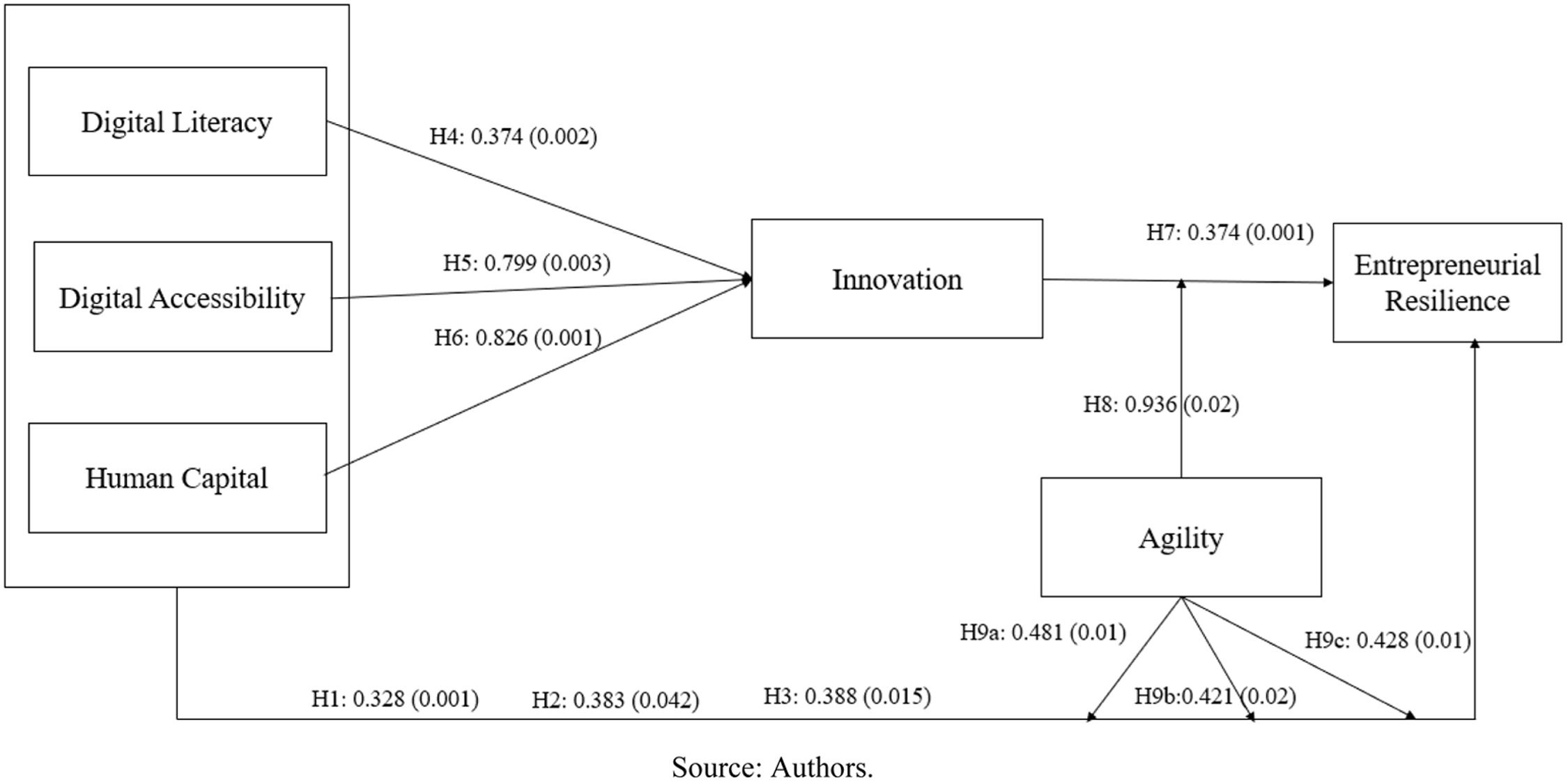
Fig. 2 shows the results for the relationship captured by H1 (0.328, p = 0.001), establishing a significant positive relationship between digital literacy and entrepreneurial resilience. This result suggests that individuals and businesses with higher levels of digital literacy are better equipped to navigate uncertain market conditions, adapt to technological advancements, and sustain operations during crises. A similar effect was observed for H2 (0.383, p = 0.042), where digital accessibility was also found to play a crucial role in fostering resilience. This finding highlights the importance of equitable access to digital tools, resources, and infrastructure in strengthening the ability of entrepreneurs to withstand economic shocks and remain competitive. Furthermore, the results for H3 (0.388, p = 0.015) imply that human capital contributes significantly to entrepreneurial resilience, reinforcing the idea that education, skills development, and workforce capabilities are fundamental for sustaining business success and adaptability.
Beyond these direct relationships, the model explored innovation as a mediator. The results for the relationship between digital literacy and innovation captured by H4 (0.374, p = 0.002) confirmed the prediction that digital competencies enable individuals to develop new ideas, adopt emerging technologies, and drive business growth through creative solutions. Similarly, digital accessibility (H5; 0.799, p = 0.003) and human capital (H6; 0.826, p = 0.001) had strong positive effects on innovation, further reinforcing the assertion that these resources are important in fostering an innovative and forward-thinking business environment.
The impact of innovation on entrepreneurial resilience was captured in H7 (0.374, p = 0.001), indicating that businesses and individuals actively engaging in innovation are significantly more resilient. This greater resilience is probably because of their ability to pivot, experiment with new business models, and remain competitive despite market uncertainties.
The strongest relationship in the model was the one captured in H8 (0.936, p = 0.02), with agility serving as a moderator of the relationship between innovation and entrepreneurial resilience. Agility significantly enhanced the effects of these factors. Specifically, the results for H9a (0.481, p = 0.01), where agility was predicted to moderate the relationship between digital literacy and entrepreneurial resilience, suggest that individuals who are digitally literate and agile in their decision-making and strategic responses are more resilient in the face of challenges. Similarly, the results for H9b (0.421, p = 0.02) imply that agility strengthens the link between digital accessibility and entrepreneurial resilience, indicating that accessible digital tools are most beneficial when entrepreneurs quickly adapt and integrate these tools effectively. Finally, the results for H9c (0.428, p = 0.01) imply that agility also enhances the positive effect of human capital on entrepreneurial resilience, meaning that well-trained and highly skilled individuals who demonstrate adaptability and quick decision-making are significantly more resilient.
The path analysis confirms that digital literacy, digital accessibility, and human capital all play crucial roles in enhancing entrepreneurial resilience, both directly and indirectly, through innovation and agility. These results confirm the importance of digital skills, equitable access to technology, and a well-trained workforce in fostering innovation, adaptability, and business survival. Moreover, the moderation effects of agility imply that resilient businesses are innovative and capable of quickly responding to disruptions and market changes.
DiscussionHypotheses H1, H2, and H3 predicted positive relationships between digital literacy, digital accessibility, human capital, and entrepreneurial resilience. These relationships are strongly reflected in the entrepreneurial landscapes of both Qatar and the UAE, where strategic emphasis on digital transformation is a key driver of success. Digital literacy enables entrepreneurs to adapt to market changes quickly, maneuver through rugged digital terrains, and turn technology into a business opportunity. Quickly evolving markets in Qatar and the UAE mean that technological advancement always outstrips regulatory development. In both cases, the government has poured millions of dollars into digital education and training programs to improve the general level of digital skills that form the basis of an entrepreneurial mindset. This study also shows that digital accessibility fosters entrepreneurial resilience in Qatar and the UAE. Crises often highlight the importance of high digital accessibility. It enables entrepreneurs to easily access resources, information, and networks, which are essential for sustaining a business during challenging times. Entrepreneurs can capitalize on the robust digital infrastructure in both countries to conduct e-commerce, digital marketing, and remote work, which leads to business continuity during disruptions. The significant investments in education, professional development, and talent acquisition in Qatar and the UAE highlight the critical role of human capital in creating solid entrepreneurial ecosystems. These investments have created a deep pool of talented individuals who can lead innovation and respond well to disruption. The positive influence of digital literacy, digital accessibility, and human capital on entrepreneurial resilience has also been found in previous studies such as those of Al-Omoush et al. (2023), Gavrila and De Lucas Ancillo (2022), Isensee et al. (2023), and Xia et al. (2024). However, it disagrees with the findings of Shen et al. (2023) and Sulastri et al. (2023).
Hypotheses H4, H5, and H6 predicted positive relationships between digital literacy, digital accessibility, human capital, and innovation. These relationships are particularly relevant in Qatar and the UAE. Initiatives to enhance digital literacy among entrepreneurs and the workforce have increased the capacity for innovative thinking and problem-solving in these regions. These countries have launched national digital education programs and have created platforms for technology hubs and innovation centers to encourage the development of a tech-ready culture. Consequently, new products and services have been created along with the corresponding business models, enabling economic growth and competitiveness.
In addition, digital accessibility to platforms is crucial to encourage innovation. In Qatar and the UAE, robust digital infrastructures offer entrepreneurs access to a wide range of digital platforms, unlocking a key advantage and facilitating beneficial collaborations among stakeholders, knowledge sharing, and market expansion. These platforms not only provide essential resources for entrepreneurs but also connect them with a dynamic network of stakeholders, fostering innovation. Streamlining access to these platforms accelerates the innovation cycle, enabling companies to quickly prototype, test, and bring new ideas to market.
Additionally, both countries have invested heavily in education and training, cultivating a highly skilled workforce. By prioritizing human capital, they have empowered entrepreneurs to compete with top talent globally. The findings regarding the effects of digital literacy, digital accessibility, and human capital on innovation are aligned with research by Al-Omoush et al. (2023), Gavrila and De Lucas Ancillo (2022), Isensee et al. (2023), and Xia et al. (2024), although they contrast with the conclusions of Shen et al. (2023) and Sulastri et al. (2023).
H7 posited that innovation positively affects entrepreneurial resilience. With the rapidly evolving business landscapes of Qatar and the UAE, innovation plays a crucial role in strengthening entrepreneurial resilience. Innovation enables entrepreneurs to pivot to react to shifts in market winds, create new products and services, and address emerging challenges creatively. Governments in Qatar and the UAE have played a direct role in promoting innovation through policies and initiatives, including setting up incubators, funding R&D projects, and fostering academia–industry collaborative models. These initiatives have created an enabling environment for entrepreneurs to thrive, adapt, and remain resilient amid economic downturns and global crises. In addition, many startups and established companies from Qatar and the UAE have success stories where innovation correlates with entrepreneurial resilience. The findings reveal that SMEs that focus on innovation are more agile and flexible, allowing them to swiftly adjust their strategies and operations in times of turbulence. In these countries during the COVID-19 crisis, many businesses embraced digital solutions, allowing them to adapt and survive during this period amid mass lockdowns and social distancing measures. Consequently, the emphasis on innovation as a driver of entrepreneurial resilience underscores the pivotal role of a culture of creativity and continuous improvement in strengthening the business ecosystems of Qatar and the UAE.
The research confirms H8, which posited that agility moderates the relationship between innovation and entrepreneurial resilience. This finding implies that although innovation contributes to resilience, the extent of this effect is significantly influenced by firms’ agility. More agile businesses can maximize the benefits of innovation to enhance their resilience, particularly in dynamic and uncertain economic environments. In regional contexts, where businesses face financial instability, regulatory challenges, and technological disruptions, agility ensures that firms can quickly adapt, refine innovative solutions, and respond effectively to unexpected market shifts. Agility enhances the impact of innovation by enabling firms to rapidly test, validate, and iterate new ideas in response to evolving economic and market conditions. Agile businesses can pivot strategies, reconfigure business models, and optimize resources to sustain long-term growth and stability. This ability is particularly crucial in volatile markets where external shocks such as economic downturns or industry disruptions demand continuous adaptation and reinvention. By leveraging agile methodologies, businesses can shorten product development cycles, improve customer responsiveness, and integrate feedback-driven improvements, ultimately strengthening their resilience. These results are in line with those of Alhothali and Al-Dajani (2022), Oh et al. (2022), and Santos et al. (2023), although they disagree with the findings of Shen et al. (2023) and Sulastri et al. (2023).
The research validates H9, confirming that agility significantly moderates the relationships linking digital literacy, digital accessibility, and human capital with entrepreneurial resilience. Agility enables businesses to swiftly adopt new digital capabilities, helping them maintain or gain a competitive edge by enhancing entrepreneurs’ ability to quickly learn and apply emerging digital skills. Examples include leveraging advanced digital marketing techniques, integrating sophisticated data analytics, and implementing cutting-edge technologies to optimize processes and customer interactions, thereby enhancing overall resilience. Agility also moderates the link between digital accessibility and entrepreneurial resilience. In Qatar and the UAE, a digitally literate population provides a strong foundation for innovation. However, the true value of digital assets depends on how quickly businesses can utilize them effectively. Agile enterprises seamlessly integrate digital capabilities, rapidly adapt to new technologies, and leverage shared platforms to form partnerships or enter new markets, thereby ensuring that they remain competitive in an evolving digital landscape. In times of market disruption, agile businesses can swiftly transition from traditional retail to e-commerce, implement remote work solutions to maintain operations during physical office closures, and drive customer engagement through digital platforms. Additionally, agility strengthens the relationship between human capital and entrepreneurial resilience by enabling businesses to maximize workforce potential. In Qatar and the UAE, agile SMEs foster a culture of continuous learning and adaptability. This culture allows them to quickly retrain employees, encourage cross-functional collaboration, and implement flexible work arrangements, thereby enhancing their ability to navigate challenges and drive innovation. These findings are aligned with the research of Alhothali and Al-Dajani (2022), Oh et al. (2022), and Santos et al. (2023) but contrast with the findings of Shen et al. (2023) and Sulastri et al. (2023).
Theoretical and practical implicationsThis study contributes to the theoretical understanding of entrepreneurial resilience by integrating the resource-based view with the theory of dynamic capabilities. From a resource-based view perspective, the study explores how firm-specific resources (e.g., digital literacy) and organizational capabilities (e.g., human capital) shape resilience in challenging environments. This study extends the resource-based view by emphasizing that valuable and inimitable firm attributes are not static assets; rather, they evolve into dynamic capabilities that drive innovation and adaptability in response to external adversities.
Building on the theory of dynamic capabilities, the current findings imply that digital literacy, digital accessibility, and human capital are not only valuable resources but also essential components of a firm’s ability to innovate and adapt. This study further elaborates on the connection between digital competency and entrepreneurial resilience, offering a conceptual framework for future research in various contexts. The survey models, in which innovation acts as a mediating variable and agility acts as a moderating variable, provide a comprehensive understanding of how digital capabilities enhance resilience.
Beyond these theoretical insights, this study reinforces the evidence of the interdependence of digital resources, innovation, agility, and resilience, bridging gaps in the existing literature by offering a region-specific perspective on digital entrepreneurship. By examining Qatar and the UAE, it highlights the role of government policies, education systems, and business ecosystems in shaping entrepreneurial resilience in emerging economies. Moreover, the study underscores the importance of digital upskilling, infrastructure development, and agile management practices for policymakers and business leaders seeking to foster sustainable economic growth.
From a practical perspective, this study offers valuable insights for entrepreneurs, business leaders, and policymakers seeking to drive digital transformation in countries such as Qatar and the UAE. The findings highlight key areas where investments in digital skills and accessibility are essential to foster innovation and resilience. For entrepreneurs, this study underscores the need to cultivate a continuous learning culture and embrace adaptability, ensuring that businesses remain agile in an evolving technological landscape. The study also emphasizes the importance of agility in organizations, encouraging business leaders to adopt adaptive practices such as diversified resource utilization, cross-functional collaboration, and rapid strategic adjustments.
For policymakers, these insights provide a foundation for designing initiatives that promote digital skills development, a critical factor for modern workforces. Governments can strengthen business resilience by investing in digital infrastructure, offering incentives for digital innovation, and implementing training programs to enhance workforce competencies (Shayganmehr et al., 2023). Additionally, policies that support flexible work arrangements and encourage SMEs to adopt agile methodologies can further bolster economic sustainability.
Beyond individual businesses, the study underscores the broader need for prioritizing digital upskilling, infrastructure development, and agile management practices to drive long-term economic growth. Companies that foster continuous digital learning, innovation, and agile business models will be better positioned to withstand economic downturns and technological disruptions. Moreover, supportive regulatory frameworks and government-led initiatives that facilitate seamless digital adoption can enhance the overall resilience of the business sector.
ConclusionsThis study provides a comprehensive analysis of how digital literacy, digital accessibility, and human capital contribute to fostering entrepreneurial resilience in the rapidly evolving digital economies of Qatar and the UAE. Grounded in the resource-based view and the theory of dynamic capabilities, the study offers a nuanced understanding of how these digital and human capital resources interact with innovation and agility to enhance business resilience in the face of market disruptions and crises. The findings validate the proposed hypotheses, confirming that digital literacy, accessibility, and human capital are positively associated with entrepreneurial resilience and that these relationships are mediated by innovation and moderated by agility. The study extends the theoretical framework of the resource-based view and the theory of dynamic capabilities by demonstrating how digital and human resources function as dynamic capabilities that enable firms to navigate complex and uncertain market environments.
In particular, the findings confirm that digital literacy plays a crucial role in equipping entrepreneurs with the skills they need to leverage technological tools and platforms effectively. Entrepreneurs with higher digital literacy demonstrate a greater capacity to adapt to technological changes, implement new business models, and navigate market uncertainties. This finding aligns with existing research that highlights the strategic value of digital literacy in sustaining business operations and driving competitive advantage in the digital era.
Digital accessibility emerges as a significant driver of resilience, reflecting the importance of equitable access to technological infrastructure, platforms, and information. Entrepreneurs with enhanced access to digital tools and networks are better positioned to respond quickly to market shifts, optimize resource allocation, and sustain business operations during periods of instability. This finding reinforces the value of the growing recognition of digital infrastructure as a core component of modern business ecosystems.
The study further highlights the pivotal role of human capital in enhancing entrepreneurial resilience. Entrepreneurs with higher levels of education, professional experience, and problem-solving capabilities are more adept at leveraging digital resources to drive innovation and adapt to changing market conditions. Human capital serves as a critical enabler of strategic decision-making and operational flexibility, contributing to long-term business success and stability.
A key contribution of this study lies in identifying innovation as a critical mediator in the relationship between digital resources and entrepreneurial resilience. The findings reveal that digital literacy and accessibility enhance the capacity for innovation, enabling entrepreneurs to develop new products, services, and business models in response to market demands. Innovation emerges as a powerful mechanism for strengthening business resilience because businesses that continuously innovate are better able to pivot, adjust strategies, and seize new market opportunities in dynamic environments.
The study also shows that agility is a significant moderator that amplifies the effects of digital resources and innovation on resilience. More agile entrepreneurs are more effective in responding to market disruptions and capitalizing on emerging opportunities. Agility enables entrepreneurs to rapidly reconfigure resources, adapt business models, and implement strategic adjustments, thereby enhancing the resilience of their business operations.
From a theoretical perspective, this study contributes to the growing body of literature on digital entrepreneurship and resilience by integrating the resource-based view with the theory of dynamic capabilities. It advances the understanding of how digital resources and human capital drive innovation and resilience, offering a novel conceptual framework for analyzing business adaptability in the digital economy. The identification of agility as a key moderator provides a new perspective on the strategic mechanisms that enhance the impact of digital resources on business resilience.
From a practical perspective, the study offers valuable insights for entrepreneurs, business leaders, and policymakers in Qatar and the UAE. The findings underscore the importance of investing in digital skills development, expanding access to digital infrastructure, and fostering a culture of innovation and adaptability. Policymakers can leverage these insights to design targeted initiatives that enhance digital competencies, support technological infrastructure development, and promote agile business practices. Business leaders can apply these insights to develop strategic frameworks that enhance resilience, foster innovation, and drive long-term growth in competitive markets.
The study also provides a foundation for future research on digital entrepreneurship and resilience. Longitudinal studies could further explore the evolving relationship between digital resources, innovation, and resilience over time. Comparative studies across different regions and industries could enhance the generalizability of the findings and provide deeper insights into the contextual factors that shape entrepreneurial resilience in the digital economy.
LimitationsThis study has several limitations that should be considered when interpreting the findings and that can guide future research endeavors. First, although the quantitative method of SEM is robust and is widely recognized as useful for assessing complex relationships between variables, it imposes certain constraints. SEM is predicated on the assumption of linear relationships, which may oversimplify the complex, dynamic, and potentially nonlinear interactions that characterize entrepreneurial resilience and digital competencies. For instance, the evolving nature of digital technologies and market conditions might introduce feedback loops and thresholds that linear models do not adequately capture.
The study also failed to explore the long-term sustainability of the observed relationships. Entrepreneurial resilience and the effectiveness of digital competencies and resources could evolve as technologies advance and market conditions shift. Longitudinal studies are necessary to track these dynamics over time and provide insights into how sustainable these relationships are under different economic cycles or technological disruptions.
Finally, while the sample size of 317 participants met the statistical requirements for SEM, it may not fully represent the broader population of entrepreneurs, particularly in diverse contexts beyond Qatar and the UAE. The homogeneity of the sample in terms of geographic location, industry focus, or business size could introduce bias, limiting the generalizability of the findings. Additionally, the study’s regional focus presents another limitation because both Qatar and the UAE benefit from strong government support for digital transformation and innovation, which may not be as prevalent in other economies. Differences in socioeconomic conditions, technological advancement, and cultural attitudes toward entrepreneurship could lead to varying challenges and opportunities for entrepreneurs in other regions. Therefore, while this study provides valuable insights, caution is needed when applying its findings to broader global contexts.
Future researchFuture research could address the limitations of this study by adopting a mixed-methods approach to capture the qualitative aspects of digital entrepreneurship and resilience. Although quantitative methods such as SEM provide valuable insights into the relationships between variables, qualitative methods can offer a deeper understanding of the underlying mechanisms and contextual factors that influence these relationships. Longitudinal studies could also be conducted to examine the sustainability of the observed relationships over time. Because entrepreneurial resilience is a dynamic process that evolves as technologies advance and market conditions change, longitudinal research would enable scholars to track the development of digital competencies, innovation, and resilience over extended periods, offering insights into how these factors interact during different phases of economic cycles or technological disruptions.
Expanding the study to include a more diverse sample from different regions, industries, and business sizes would enhance the generalizability of the findings. Future research could explore how digital literacy, accessibility, and human capital influence resilience in contexts with varying levels of digital maturity, economic development, and cultural attitudes toward entrepreneurship. Additionally, future research could explore the role of other moderating factors such as organizational culture, leadership styles, or external support systems in influencing the relationship between digital competencies and resilience. Finally, investigating the impact of emerging digital technologies could provide new insights into the evolving landscape of digital entrepreneurship. These technologies have the potential to significantly alter how businesses operate, innovate, and respond to disruptions.
CRediT authorship contribution statementKhodor Shatila: Writing – review & editing, Writing – original draft, Methodology, Formal analysis, Data curation, Conceptualization. Alba Yela Aránega: Writing – review & editing, Formal analysis, Data curation, Conceptualization. Lebene Richmond Soga: Writing – review & editing, Formal analysis, Data curation, Conceptualization. Ana Beatriz Hernández-Lara: Writing – review & editing, Supervision, Formal analysis, Data curation, Conceptualization.
This research takes part of the Grant PID2021–122575NB-I00 funded by MCIN/AEI/ 10.13039/501100011033/ by “ERDF A way of making Europe”.
