







The objective of this study is to obtain deeper knowledge during the decision-making process in the business field, establishing the emotional and cognitive differences between novice and experienced entrepreneurs. This work looks at how emotional responses vary in key situations, such as personnel hiring, salary remuneration, and the definition of financial and distribution strategies, through the innovative discipline of neuroentrepreneurship. To carry out this study, neuro-technologies were used to perform a neuro-qualitative study using galvanic skin response (GSR) and electroencephalogram (EEG) to evaluate brain performance metrics such as emotional intensity, stress, and engagement, in two groups of entrepreneurs with different levels of experience. The responses were analyzed based on specific questions that covered different aspects of entrepreneurship, allowing a detailed comparison between both groups. The results revealed significant differences in emotional and cognitive responses between novice and experienced entrepreneurs. Novice entrepreneurs showed greater emotional intensity in planning and distribution topics, while experienced entrepreneurs exhibited higher levels of stress in critical aspects such as remuneration and layoffs. However, experienced entrepreneurs also demonstrated a greater capacity for relaxation in areas where they had consolidated experience, highlighting the influence of experience in emotional management. This study provides an innovative vision of the field of entrepreneurship, by combining neuro-technologies to analyze emotional and cognitive responses in business contexts. The use of GSR and EEG provides a deep understanding of how experience influences decision-making and stress management, offering a basis for developing specific support and training programs for entrepreneurs at different stages of business evolution. These findings open new opportunities for future research that explore the impact of additional factors and develop effective interventions to improve the performance and well-being of entrepreneurs.
Decision-making in entrepreneurs is a crucial research area in the field of entrepreneurship, given the context of high uncertainty and time pressure in which they operate. This process is influenced by various factors, including cognitive styles, risk perceptions, and the business environment (Xu et al., 2024). Entrepreneurs tend to use both intuitive and rational decision-making styles, and although they show a strong inclination towards intuition, they also dedicate time to reflecting on their decisions, suggesting a balance between intuition and rational analysis (Koudstaal et al., 2018). Furthermore, the decision-making style can significantly influence the financial performance of small and medium-sized enterprises (SMEs), mediated by factors such as regional business culture and institutional support (Weerasekara & Bhanugopan, 2023).
The predictive decision-making style, shared among entrepreneurs, angel investors, and venture capitalists, can drive strong business growth. In contrast, a purely control-oriented approach can limit growth unless entrepreneurs dynamically adapt their decision-making style (Cohen & Wirtz, 2021). The ability of entrepreneurs to align their decision-making style with that of their investors is crucial for successful business growth. A scientific approach to decision-making, which includes hypothesis formulation and rigorous testing, can improve the accuracy of business decisions. This approach reduces the probability of pursuing projects with false positive returns and increases the probability of identifying opportunities with false negative returns (Conference & Gambardella, 2017). Entrepreneurs who adopt this approach tend to perform better and are more likely to pivot towards new ideas when necessary.
The perception of risk plays a crucial role in the decisions of entrepreneurs when considering new business opportunities. They tend to avoid projects with high variability in outcomes but are willing to accept a considerable degree of risk if the potential gains are significant (Forlani & Mullins, 2000). Differences in the choices of new ventures are also influenced by individual risk perceptions. Consequently, decision-making in entrepreneurs is a complex process influenced by cognitive styles, risk perceptions, and the business environment, while a balanced approach between intuition and rational analysis, along with the adoption of scientific methods, can improve the effectiveness of business decisions, the alignment of decision-making style with that of investors and a clear understanding of risk perceptions are essential for business success.
The research questions addressed by this study are as follows:
RQ1: Will there be significant differences in the emotional responses of novice and experienced entrepreneurs during the decision-making process in personnel management, financial decisions, and marketing decisions?
RQ2: Will novice entrepreneurs experience more intense emotional levels and high levels of stress due to their inexperience, especially in team supervision and financial planning, while experienced entrepreneurs will show more balanced emotions but with greater emotional connection and attention reflecting their experience?
RQ3: In marketing decisions, will novice entrepreneurs present high excitement and stress due to uncertainty, while experienced ones will show attention and relaxation, indicating confidence in their strategies?
The main objective of this work is to acquire a greater knowledge of which brain performance metrics stand out in decision-making, using an innovative neuroentrepreneurship procedure, in key actions such as personnel management, marketing and financial decisions, in both novice and experienced entrepreneurs.
The specific objectives are focused on identifying what type of decisions produce a higher and lower level of emotional intensity in novice and experienced entrepreneurs; analyzing key emotions such as engagement, attention, stress or interest, which could influence the decision-making process in different areas. This work compares the responses of emotional intensity between novice and experienced entrepreneurs when facing situations in each of the decision-making areas in the company; and examining patterns and trends in the decisions made by novice and experienced entrepreneurs in relation to their recorded emotional intensity and their emotions recorded through brain waves.
The paper is structured as follows: The next section describes the theoretical background. The methodology is then explained. The following section examines the findings from the experimental GSR and EEG study. A discussion follows. The final sections of the article discuss the implications, conclusions, limitations, and further research directions.
Literature reviewEntrepreneurshipEntrepreneurship is a phenomenon that has captured growing interest worldwide, both in the governmental, corporate, and academic spheres. This interest is due to its potential to drive economic growth, innovation, and job creation (Manolopoulos et al., 2024). Entrepreneurship plays a crucial role in the economy by generating employment, fostering innovation, and contributing to productivity growth, as entrepreneurs are responsible for creating a significant number of jobs and commercializing high-quality innovations (Kusa et al., 2024). Furthermore, entrepreneurial companies produce spillover effects that can positively influence long-term regional employment growth (Van Praag & Versloot, 2007). Entrepreneurship can be considered to be a career option, similar to professions such as teaching or management. This perspective allows for the expansion of the study of entrepreneurship and offers valuable insights into entrepreneurial practice, training, and public policies (Burton et al., 2016; Janssens et al., 2024).
Entrepreneurial ecosystems are fundamental for the development of entrepreneurship, as they provide the necessary resources, institutions, and networks to support entrepreneurs. These ecosystems are often located in specific regions and evolve over time, influenced by factors such as universities acting as innovation hubs (Malecki, 2018). Entrepreneurship faces challenges related to local institutional and environmental conditions, which can affect the ease and incentives to undertake, being in developed countries where entrepreneurs have more facilities to formally incorporate, which allows them to access financing and employment contracts more easily (Acs et al., 2008). In addition, other entrepreneurs in a region can serve as a role models, reinforcing entrepreneurial activity (Minniti, 2005). Entrepreneurship programs in universities have proliferated, but their impact on entrepreneurial activity is varied. Although these programs may not directly increase the number of entrepreneurs, they help students to better identify their potential as entrepreneurs and to improve the quality of their initiatives (Lee & Eesley, 2020).
Success in entrepreneurship is influenced by a variety of interrelated factors ranging from personal characteristics to economic and social conditions (Núñez-Cansado et al., 2024). The entrepreneur's training, experience, and confidence are fundamental to business performance. Resilience is crucial for success, with differences observed between genders regarding its influence (Teruel‐Sánchez et al., 2021). Age, gender, education level, and entrepreneurial skills all have a significant impact on entrepreneurial success (Pérez-Macías et al., 2021; Rubilar-Torrealba et al., 2022).
However, there are also economic and market factors that can influence the success of entrepreneurship. Innovation and the ability to recognize opportunities are more relevant during periods of economic recession than in times of prosperity (Cervelló‐Royo et al., 2020; Devece et al., 2016), while access to financial resources and effective management of these are critical for opportunity recognition and business performance(Cabrera & Mauricio, 2017; Song et al., 2007). Social and cultural variables, such as cultural context and informal institutions, influence entrepreneurial intention and opportunity perception (Castaño et al., 2015; Silesky-Gonzalez et al., 2024), with networking and mentoring being essential for business success, providing support and guidance (Kiran Suraj, 2023). Institutional environment and environmental sustainability also play a role in entrepreneurial success, especially in specific sectors such as tourism (Teruel‐Sánchez et al., 2021). Therefore, understanding and leveraging these factors are important to help create an environment that fosters entrepreneurial success and promotes economic growth and innovation.
Decision-making in entrepreneurshipDecision-making in the field of entrepreneurship is a complex and multifaceted process that involves the evaluation of opportunities, market entry and exit, and the exploitation of opportunities under conditions of uncertainty and time pressure (Caputo et al., 2024). This process is crucial for the success of entrepreneurs and has been the subject of study regarding the factors that influence decision-making. Effectiveness in entrepreneurial decision-making is related to the entrepreneur's cognitive style, because if it is rational, it implies adequate gathering information and can significantly mediate the effectiveness of decisions, while intuition does not always play a determining role. Entrepreneurs use both rational and intuitive processes, and the identification of subtle cues (emotions, thoughts, perceptions) can influence decision-making, even in unstable environments (Nandram et al., 2018).
The integration of metacognitive models with recognition-primed decision theory offers a conceptual framework that helps entrepreneurs navigate uncertain business environments (De Winnaar & Scholtz, 2019). Cause and effect theories have been fundamental in understanding entrepreneurial decision-making. However, a new process called "execution" has been proposed that recognizes the ill-defined structure of entrepreneurial environments and is based on future predictions (Rapp & Olbrich, 2020). Rationality in decision-making positively moderates the relationship between entrepreneurial orientation and the international performance of companies, suggesting that analytical processes can improve business performance (Deligianni et al., 2016; Tarazona-Montoya et al., 2024). There are opportunities for multilevel research that explore how entrepreneurial decisions are influenced by individual differences and specific contexts, which could enrich the understanding of decision policies (Shepherd, 2011).
The special interests of decision-makers can significantly influence the formation of entrepreneurship policies, even in countries with evidence of high entrepreneurial performance (Bager et al., 2015; Kouravand, 2024), so entrepreneurship is a dynamic field that requires the integration of multiple theoretical and practical perspectives to improve the effectiveness and performance of entrepreneurs in complex and changing environments.
NeuroentrepreneurshipNeuroentrepreneurship is an emerging field that integrates neuroscience with entrepreneurship to better understand the cognitive and emotional processes that underline entrepreneurial activity (Juarez-Varon et al., 2024). This approach seeks to unravel how neural processes influence the identification and exploitation of business opportunities, presenting itself as a new paradigm in management sciences, which combines entrepreneurship theories with cognitive neuroscience techniques to analyze how thought processes affect an entrepreneur's ability to recognize and seize business opportunities (Korpysa, 2020; Liu et al., 2022).
This field of study is relatively new, and a theoretical framework is being developed to describe the connection between neuroscience and entrepreneurship. The use of neuro-imaging techniques, such as resting-state functional magnetic resonance imaging (rs-fMRI), has been introduced to study brain connectivity in entrepreneurs, revealing significant differences in functional connectivity between entrepreneurs and managers, which could facilitate more flexible behavior (Ooms et al., 2023). In addition, techniques such as electroencephalography (EEG) have been used to compare the brain activity of entrepreneurs and non-entrepreneurs during creative thinking and opportunity recognition. These have shown differences in neural networks (Aydin et al., 2023). Neuroentrepreneurship offers a new perspective to understand the internal motivators that affect the perception of risk and reward in entrepreneurs, which can influence the calculation of the internal rate of return (Day & Boardman, 2017). However, limitations are also recognized in this field, such as the need for more empirical studies to validate proposed theories and models (Guillory et al., 2017), which will have the potential to transform our understanding of entrepreneurial activity.
Neuroscience influences entrepreneurship by providing a deeper understanding of the brain processes related to entrepreneurial activities (Serna-Zuluaga et al., 2024) . This interdisciplinary approach, known as neuroentrepreneurship, is emerging as a promising research field that seeks to integrate knowledge from neuroscience with the study of entrepreneurship, helping us to understand how entrepreneurs recognize opportunities and make decisions under risk conditions. It has been observed that entrepreneurs show different patterns of brain activity compared to non-entrepreneurs during opportunity recognition and creative thinking (Aydin et al., 2023; Sharma et al., 2021). Behavioral and cognitive neuroscience provide insights into how entrepreneurs evaluate risks and opportunities, which directly impact their behavior and business decisions (Massaro et al., 2020).
Neuroscience is transforming business decision-making by providing a deeper understanding of how brain processes affect behavior and decisions in the business sphere. This intersection between neuroscience and business is influencing areas such as business ethics, marketing, project management, and leadership, revealing that affective states play a crucial role in cognition during managerial decision-making. The brain's reflective and reflexive systems work together, suggesting that emotions can guide cognition rather than being in conflict with them (Cristofaro et al., 2022). Understanding how the brain's reward system works and how decision options are evaluated can improve reward management systems and project planning in companies (Baumann et al., 2013). Neuroscience is exploring how emotions and cognitive processes influence leadership, suggesting that decisions should be based on data and not just emotions (Yousaf & Rehman, 2017).
Materials and methodsQualitative research, which traditionally relied on in-depth interviews, has evolved into a more sophisticated method called neuro-qualitative interviews. This new form of research combines qualitative techniques with the measurement of physiological responses, specifically Galvanic Skin Response (GSR), to obtain a deeper understanding of the phenomena studied. This can be complemented by the measurement of brain performance metrics, using electroencephalography (EEG). A 14-channel/electrode device was used, whose names are in accordance with the international 10–20 system agreement (von Ellenrieder et al., 2009), the names of their locations/brain waves analyzed are AF3, F7, F3, FC5, T7, P7, O1, O2, P8, T8, FC6, F4, F8, AF4 (AF - prefrontal cortex electrodes, F – frontal cortex electrodes, T – temporal cortex electrodes, P – parietal cortex electrodes, O, occipital cortex electrodes). The biometric responses were correlated with aspects of the user experience based on the identification of notable peaks of emotional arousal (GSR) and interpreted with the performance metrics generated by electro-encephalography (EEG). These somatic markers were subsequently contrasted with the users themselves to establish the reasons for positive and negative emotions.
Unlike conventional qualitative interviews, which depend on participants' words to explore their experiences, perceptions, and emotions, neuroqualitative interviews incorporate GSR technology, recording changes in skin electrical conductivity, which provides a measure of emotional and physiological responses. The combined use of these with EEG, during neuroqualitative interviews, offers additional and objective data on participants' emotional reactions along with their brain activity metrics. These changes are related to the activation of the autonomic nervous system, which reflects emotions such as anxiety, excitement, or stress.
Qualitative research, traditionally based on in-depth interviews, has evolved into a more sophisticated method called neuro-qualitative interviews (Juárez-Varón & Juárez-Varón, 2024). This new form of research combines qualitative techniques with the measurement of physiological responses, specifically the Galvanic Skin Response (GSR), to gain a deeper understanding of the phenomena studied. This can be complemented by the measurement of brain activity metrics using electro-encephalography (EEG). Unlike conventional qualitative interviews, which rely on participants' words to explore their experiences, perceptions, and emotions, neuroqualitative interviews incorporate GSR technology, recording changes in the electrical conductivity of the skin, providing a measure of emotional and physiological responses. The combined use of GSR with EEG during neuroqualitative interviews offers additional, objective data on participants' emotional reactions and brain performance metrics. These changes are related to the activation of the autonomic nervous system, reflecting emotions such as anxiety, arousal, or stress.
In this research approach, a combination of in-depth interviews with skin conductance measurement was carried out. The interviews were developed as open and detailed conversations between the researcher and the participants, designed to obtain a deep understanding of their experiences, opinions, and knowledge on the subject in question. To capture the experiences and perspectives of the participants, the conversations were audio-recorded for subsequent analysis. In addition, GSR and EEG were used as measurement tools as these are technologies that measure the electrical conductivity of the skin and brain activity. By placing 2 electrodes on the fingers and 14 electrodes on clearly defined parts of the head as shown in the literature, the electrical activity of the skin and brain waves were recorded. These vary when a stimulus, such as a question, elicits an emotional response.
Galvanic Skin Response (GSR) recordings facilitate the assessment of participants' emotional activation levels during the session, providing information about the degree of sympathetic activation during the emotional experience. This signal is synchronized with the data provided by electroencephalography (EEG), which records brain activity and interprets the most relevant emotions experienced based on the information obtained from brain activity. The synchronization of GSR with EEG allows for the interpretation of emotional arousal peaks and the assignment of the most prominent brain performance metrics to these activations during the measurement phase. These performance metrics enable a better understanding of the human brain and have been refined through machine learning algorithms, advanced artificial intelligence, and a large dataset of EEGs, which allow for the real-time identification of brain states.
The values obtained were normalized to facilitate comparison between participants, allowing them to identify which questions generated the most intense emotional responses. These findings were compared with the results of quantitative research, providing a comprehensive view of the subject studied.
Methodological designThis study was developed in two phases, involving two groups of entrepreneurs with different levels of experience. In the first phase, novice entrepreneurs from the IDEAS Institute of the Polytechnic University of Valencia participated. These were in the early stages of consolidating their ideas and had not yet established consolidated companies. The second phase focused on experienced entrepreneurs and was carried out at Lanzadera, with startups in advanced stages and more than two years of development.
This study was conducted in two stages, addressing two groups of entrepreneurs with different levels of experience. The first stage involved novice entrepreneurs identified in the business ecosystem of Universitat Politècnica de València, called Ideas UPV, who were in the early stages of consolidating their ideas and had not yet established consolidated businesses. The second stage focused on experienced entrepreneurs and was conducted in the startup acceleration program Lanzadera, located in the city of Valencia (Spain), where startups in advanced stages with over 2 years of development were found.
First Stage: Novice Entrepreneurs
For each participant in this group, an in-depth interview was conducted individually. Initially, the Galvanic Skin Response (GSR) equipment and the electroencephalography equipment were connected, and a detailed explanation was provided about the purpose and procedure of the interview. Then, 8 questions were presented, divided into the topics that concern us for this study:
Area 01: Personnel Management
1. You need a person to fill a key position for your new business. It is the first person you are going to hire for this business. What are you going to demand in general terms and how much are you willing to pay them?
2. Do you have a clear idea of the minimum amount of remuneration that corresponds to them?
3. Are you looking for a junior or senior profile? Why?
4. You have to evaluate the performance of a worker, and the result is negative. You have decided to fire them. How do you convey it?
Area 02: Financial Decisions
5. Do you set an annual budget? If the answer is yes, what sections do you include?
6. Have you considered what your financial strategy will be for the growth of your business?
Area 03: Marketing Decisions
7. What is the basis for establishing the prices of your products or services?
8. What distribution channels have you considered and why?
After answering these questions, the GSR and EEG equipment were disconnected.
Second Stage: Experienced Entrepreneurs
The second stage followed the same procedure as the first, but was carried out with experienced entrepreneurs who were participating in the LANZADERA program. Through individual in-depth interviews, the same 8 questions were explored with the help of GSR and EEG technology.
Ethical Considerations:
Informed consent was obtained from each participant before their participation in the study. Additionally, confidentiality and anonymity of the collected data were ensured.
Data collectionDuring the realization of this study, specialized equipment was used to carry out the in-depth interviews and measure the emotional responses of the participants.
Galvanic Skin Response (GSR), from the Shimmer brand, was used to measure the emotional responses of entrepreneurs during the interviews. GSR is a technology that measures variations in the electrical conductivity of the skin in response to emotional and psychological changes. The choice of the Shimmer brand equipment was based on its precision and ability to reliably record the emotional responses of the participants. The software used for recording skin galvanic activity was Consensys v1.6.0 Pro.
Electro-encephalography (EEG) from the Emotiv brand: This electro-encephalography equipment is used to measure 6 basic emotions through the Emotiv Pro software which, through the performance metrics, translates the brain waves captured by the equipment into a series of values from 0 to 100 of the following emotions: Emotional connection (engagement), Focus or attention (focus), Emotional intensity (excitement), Interest (interest), Stress (Stress), Relaxation (relaxation). The software used for recording electro encephalography was EmotivPRO v4.2.4.
Voice Recorder: A digital voice recorder was used to record the verbal responses provided by the participants during the in-depth interviews. This recorder allowed to capture the detailed responses and explanations provided by the entrepreneurs in relation to the questions raised in the interview.
These 3 pieces of equipment were selected with the objective of obtaining precise and reliable data, both in terms of emotional and verbal responses. The GSR technology of the Shimmer brand allowed us to measure the emotional reactions of the participants in real time, while the EEG allowed us to identify exactly which emotion had a positive or negative variation in each of the questions, and similarly, the voice recorder facilitated the complete capture of verbal responses and explanations, thus ensuring a comprehensive understanding of the entrepreneurs' perspectives.
Sample size and participant preparationThe sample size used in this research comprised a total of 40 individuals, with ages between 20 and 35 years, distributed in two distinct groups. The sample size (20 men and 20 women) was suitable for a neuromarketing study (Juárez-Varón et al., 2023). The first group consisted of 20 novice entrepreneurs, those who had started their business <5 months ago. The second group was composed of 20 entrepreneurs with consolidated experience of >2 years in the entrepreneurial process. Recruitment was carried out voluntarily and took place in two different locations: the first group was interviewed at the facilities of the Universitat Politècnica de València, while the second group was interviewed at the Lanzadera offices in Valencia.
The selection of participants was based on specific criteria of duration of entrepreneurial experience. Participants were invited to participate in the study and were asked for their informed consent to ensure their conscious and voluntary participation.
ResultsTo analyze the biometric results of galvanic skin response (GSR) and electroencephalography (EEG), we averaged the data provided by each group of participants in each of the questions and also in each of the categories of questions, always comparing the emotional intensity of the novice entrepreneurs group vs. the expert entrepreneurs group.
Area 01: Personnel Management
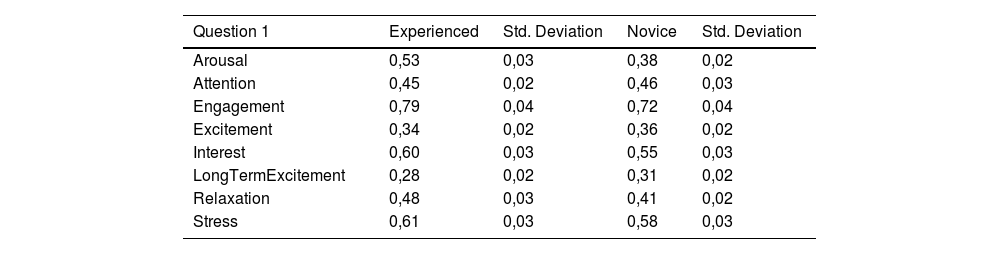
Question # 1: You need a person to fill a key position for your business. It is the first person you are going to hire for this venture. What are you going to demand in general terms and how much are you willing to pay them?
Experienced entrepreneurs show greater emotional intensity compared to novices (Table 1 and Fig. 1).
Arousal (GSR) and performance metrics (EEG) for question 1: Staff recruitment.
Source: Prepared by the authors.

For experienced entrepreneurs, assuming a 95 % confidence interval for the population, the average is approximately 0,51 (range 0,50 - 0,52). For novice entrepreneurs, assuming a 95 % confidence interval for the population, the average is approximately 0,47 (range 0,46 - 0,48). This means that, with 95 % confidence, we can say that the true value of the population average lies within this range.
This difference is due to the fact that more experienced entrepreneurs are recalling their own current or recent hiring needs, as well as evaluating the critical impact of such decisions on the success of their ventures. They are weighing factors such as specific skills, cultural adaptability, and real salary budgets. On the other hand, novice entrepreneurs, generally operating alone or in small teams, tend to visualize this situation hypothetically and in the future. Their emotional response is less intense due to their lack of direct experience in the hiring process and because they have not yet faced the urgent need to incorporate key personnel. This analysis suggests that previous experience in human resources management significantly influences entrepreneurs' emotional response when considering hiring decisions.
In this question, the EEG data shows that expert entrepreneurs experience higher levels of stress, reflecting greater brain activity, as they must carefully evaluate what type of position they need to fill at that moment. However, these entrepreneurs also present higher levels of relaxation when answering about remuneration, which indicates a recovery from stress, given that they are clear about the amount they are willing to pay. In contrast, novice entrepreneurs have less stress when identifying the profile they need, generally a junior and versatile profile, but experience an increase in mental activity when they have to determine how much they are willing to pay them, which indicates a greater cognitive load in this part of the process.
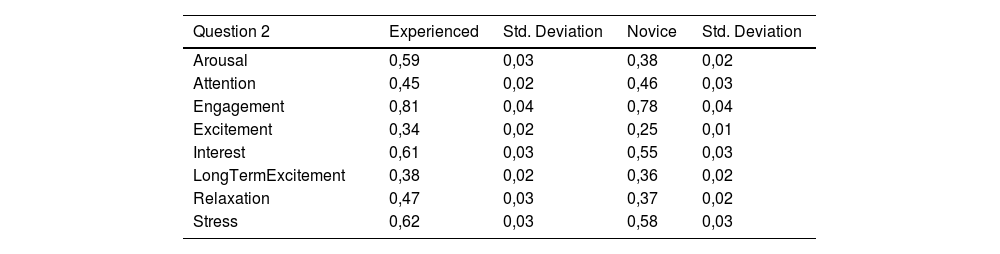
Question # 2: Do you have a clear idea of the minimum amount of remuneration that corresponds to them?
In this question, experienced entrepreneurs presented a significantly higher emotional intensity than novices (Table 2 and Fig. 1).
Arousal (GSR) and performance metrics (EEG) for question 1: Staff remuneration.
Source: Prepared by the authors.
For experienced entrepreneurs, assuming a 95 % confidence interval for the population, the average is approximately 0,53 (range 0,52 - 0,54). For novice entrepreneurs, assuming a 95 % confidence interval for the population, the average is approximately 0,47 (range 0,46 - 0,48). This means that, with 95 % confidence, we can say that the true value of the population average lies within this range.
This notable difference is due to the fact that more experienced entrepreneurs consider complex legal aspects and financial strategies when determining the minimum remuneration. They are thinking about complying with labor regulations, optimizing costs through subsidies and practices, and ensuring that remuneration is competitive and fair to attract quality talent. In contrast, novice entrepreneurs tend to simplify the response, based on what they could currently pay or the legal minimum wage, without considering the broader legal and strategic implications. This analysis underscores how experience influences the depth of financial and legal considerations that entrepreneurs consider, which is reflected in their emotional response.
In this question, when analyzing the EEG results, it is observed that stress is activated similarly in both groups. However, the level of relaxation is significantly lower in novice entrepreneurs. This can be explained by the fact that this group has less clarity about the remuneration corresponding to a possible employee, since they have not yet seriously considered a possible hiring. As a result, novice entrepreneurs are less relaxed when thinking about this possible payment, reflecting greater uncertainty and lack of preparation in this area.
Question # 3: Are you looking for a junior or senior profile? Why?
In this question, a significant difference in emotional intensity is observed between the two groups, with a greater emotional response from experienced entrepreneurs (Table 3 and Fig. 2).
Arousal (GSR) and performance metrics (EEG) for question 3: Junior or senior profile.
Source: Prepared by the authors.

For experienced entrepreneurs, assuming a 95 % confidence interval for the population, the average is approximately 0,55 (range 0,54 - 0,56). For novice entrepreneurs, assuming a 95 % confidence interval for the population, the average is approximately 0,47 (range 0,46 - 0,48). This means that, with 95 % confidence, we can say that the true value of the population average lies within this range.
Experienced entrepreneurs, when reflecting on their responses, revealed that, although they would prefer to hire senior profiles due to their experience and advanced skills, they are forced to opt for junior profiles due to budget constraints. This dissonance between need and ability to pay generates a greater emotional burden. In contrast, novice entrepreneurs showed lower emotional intensity, indicating a clear and simple preference for junior profiles, without seriously considering the possibility of hiring senior profiles. Their less complex and more direct approach to personnel selection reflects an early phase in business development, where budget constraints and strategic needs are not as pressing.
In turn, in this question we see that novice entrepreneurs present a much lower activation of all brain performance metrics, this is because the responses of this group were very concise, since they were very clear that they could not pay for a senior profile, while experienced entrepreneurs did think much more about hiring a senior profile even though they finally opted for a junior profile.
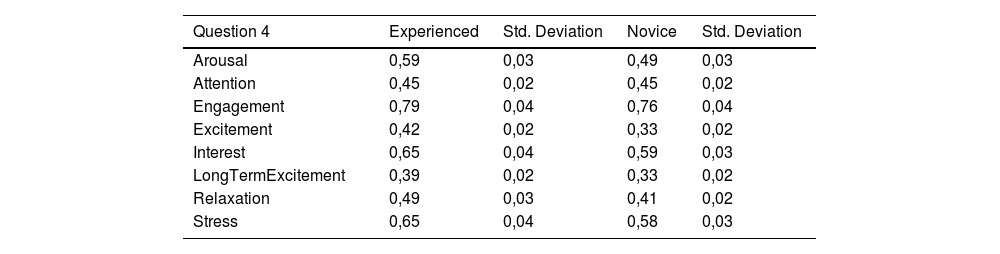
Question #4: You have to evaluate an employee's performance, and the result is negative. You've decided to fire them. How do you communicate this?
Experienced entrepreneurs showed significantly higher emotional intensity compared to novice entrepreneurs (Table 4 and Fig. 2).
Arousal (GSR) and performance metrics (EEG) for question 4: Decision to dismiss a worker.
Source: Prepared by the authors.
For experienced entrepreneurs, assuming a 95 % confidence interval for the population, the average is approximately 0,55 (range 0,54 - 0,56). For novice entrepreneurs, assuming a 95 % confidence interval for the population, the average is approximately 0,49 (range 0,48 - 0,50). This means that, with 95 % confidence, we can say that the true value of the population average lies within this range.
This difference is due to the fact that more experienced entrepreneurs often recall past situations in which they had to fire employees, which leads them to be very analytical and detailed in their response. They consider multiple criteria and legal aspects to justify the dismissal, ensuring that communication is clear and professional to minimize conflicts and maintain team morale. On the other hand, novice entrepreneurs tend to focus more on the emotional aspect of the situation, prioritizing that the dismissed employee does not feel bad, but without considering in depth the procedures and justifications necessary for a proper dismissal.
It can be observed, for the results offered by the EEG, that expert entrepreneurs experienced higher levels in all emotions, except in attention, engagement and interest, where both groups showed similar values.
The emotion with the greatest difference compared to novice entrepreneurs was emotional intensity or excitement. This is because experienced entrepreneurs, when recalling past layoff experiences, experienced significantly greater emotional activation.
Area 02: Financial Decisions
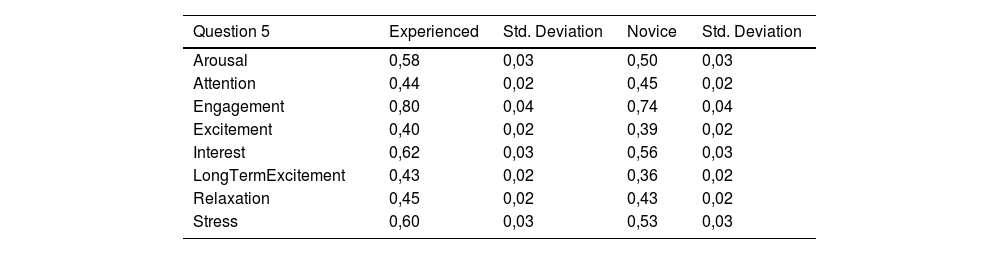
Question #5: Do you make an annual budget? If yes, what does it include?
In this question, the gap in emotional intensity (GSR) between the two groups begins to narrow, but experienced entrepreneurs still show greater emotional intensity (Table 5 and Fig. 3).
Arousal (GSR) and performance metrics (EEG) for question 5: Annual budget.
Source: Prepared by the authors.

For experienced entrepreneurs, assuming a 95 % confidence interval for the population, the average is approximately 0,54 (range 0,53 - 0,55). For novice entrepreneurs, assuming a 95 % confidence interval for the population, the average is approximately 0,49 (range 0,48 - 0,50). This means that, with 95 % confidence, we can say that the true value of the population average lies within this range.
Experienced entrepreneurs recall their previous experiences when preparing annual budgets, considering details of when they make them, and how they make them, which elevates their emotional response. Novice entrepreneurs, on the other hand, show an increase in emotional intensity, though not as high as the other group, due to the surprise and uncertainty that this question causes. Many of them have not considered or have given very little thought to the need for an annual budget, which generates a mixture of confusion and recognition of a new area of crucial learning for their entrepreneurship.
In this question, the values of each brain performance metric (EEG) in both groups are very similar, since both responded about what they would include in an annual budget.
However, the experienced entrepreneurs provided much more detailed answers and had to recall what they had included in previous budgets. This is reflected in greater stress activation due to the need to elaborate on their answers.
Question 6: Have you considered your financial strategy for the growth of your business?
The emotional difference (GSR) between the two groups is less pronounced in this question, as both groups objectively considered their financing options (Table 6 and Fig. 3).
Arousal (GSR) and performance metrics (EEG) for question 6: Financial strategy.
Source: Prepared by the authors.
For experienced entrepreneurs, assuming a 95 % confidence interval for the population, the average is approximately 0,53 (range 0,52 - 0,54). For novice entrepreneurs, assuming a 95 % confidence interval for the population, the average is approximately 0,50 (range 0,49 - 0,51). This means that, with 95 % confidence, we can say that the true value of the population average lies within this range.
The emotional intensity of expert entrepreneurs is slightly higher because they have a clearer and more concrete vision of income sources and financial strategies necessary for growth. They have explored various options, such as external investment, grants, and strategic alliances. In contrast, novice entrepreneurs tend to think about more basic and limited strategies.
In this question we can observe that, for the first time, a metric is significantly stronger in the novice group, specifically excitement or emotional intensity.
Although the responses of novice entrepreneurs were limited, mainly regarding organic growth and sales, the growth of their businesses is a topic that generates greater uncertainty for them. This uncertainty translates into greater emotional intensity, reflecting the importance and anxiety associated with growth strategies in this early stage of their ventures.
Area 03: Marketing Decisions
Question # 7: The establishment of the prices of your products or services - on what have they been based?
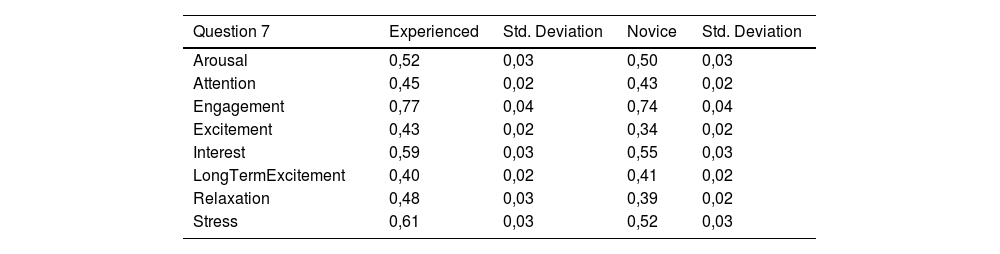
In this question, the emotional intensity (GSR) varies considerably among novice entrepreneurs (Table 7 and Fig. 4).
Arousal (GSR) and performance metrics (EEG) for question 7: Pricing Policy.
Source: Prepared by the authors.

For experienced entrepreneurs, assuming a 95 % confidence interval for the population, the average is approximately 0,53 (range 0,52 - 0,54). For novice entrepreneurs, assuming a 95 % confidence interval for the population, the average is approximately 0,49 (range 0,48 - 0,50). This means that, with 95 % confidence, we can say that the true value of the population average lies within this range.
Some are in the initial process of setting prices, while others already have a clearer idea, but all tend to rely primarily on a competition analysis. In contrast, expert entrepreneurs perform a much more extensive analysis, considering not only the competition, but also multiple environmental variables, as well as supply and demand factors. This greater complexity and depth in price analysis is reflected in a higher average emotional intensity among expert entrepreneurs. This suggests that, when responding, experienced entrepreneurs are recalling their own detailed and multifaceted pricing processes, which increases their emotional response.
The results show that excitement or emotional intensity (EEG) was higher in the group of novice entrepreneurs.
This can be explained by the fact that novices are in a discovery and learning phase, where price setting is a new and uncertain task, which generates greater emotional excitement. The need to explore and experiment with different pricing strategies can be exciting for them, but it can also reflect a lack of experience and clarity in how to set prices effectively.
On the other hand, the group of expert entrepreneurs showed a significantly higher level of stress. This increase in stress can be attributed to the complexity and multiple variables that experts consider when setting prices. Unlike novices, experienced entrepreneurs not only analyze the competition, but also take into account factors such as operating costs, market demand, profit margins, and positioning strategies.
Question # 8: What distribution channels have you considered and why?
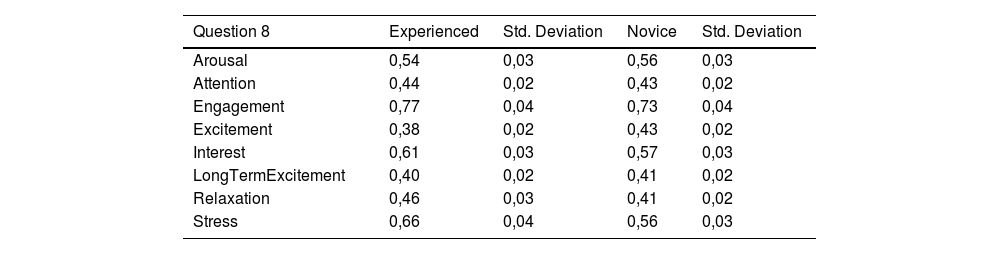
In this question, expert entrepreneurs showed a lower emotional intensity (GSR) than novice entrepreneurs (Table 8 and Fig. 4).
Arousal (GSR) and performance metrics (EEG) for question 8: Distribution channels.
Source: Prepared by the authors.
For experienced entrepreneurs, assuming a 95 % confidence interval for the population, the average is approximately 0,53 (range 0,52 - 0,54). For novice entrepreneurs, assuming a 95 % confidence interval for the population, the average is approximately 0,53 (range 0,50 - 0,52). This means that, with 95 % confidence, we can say that the true value of the population average lies within this range.
Expert entrepreneurs gave simple and concise answers, indicating that they are already clear about the distribution channels they regularly use and have established effective strategies for their business. In contrast, novice entrepreneurs experienced greater emotional intensity due to uncertainty and lack of clarity about which distribution channels would be most effective for them. They mentioned several possible channels, but do not have the experience or confidence to know which will work best.
The brain performance metrics (EEG) in both groups were very similar, although some key differences are observed.
The group of novice entrepreneurs showed a higher level of excitement or emotional intensity. This greater emotional intensity may be due to the exploration and uncertainty they face when deciding which distribution channels to use. For novices, this is a new and crucial stage in which they must consider multiple options and their effectiveness, which can be exciting and, at the same time, overwhelming. The emotion reflected in their excitement is associated with the anticipation and possibility of success through different distribution channels.
On the other hand, the group of expert entrepreneurs presented a higher level of stress. This increase in stress can be attributed to their more detailed and strategic approach to the choice of distribution channels. Experienced entrepreneurs must evaluate not only the feasibility of the channels, but also how these align with their business objectives, operating costs, and market strategies. In addition, experts have to consider their previous experience and adjust their strategies based on past results, which adds an additional layer of complexity and responsibility.
Comparative Analysis Experienced - Novice
In the following graph (Fig. 5), the variations in the emotional intensity of the two groups can be observed, allowing us to analyze which questions generated greater emotional intensity and corresponding positive and negative variations for each group.

We can observe that question 3 generated the greatest emotional intensity in the group of expert entrepreneurs. This is because, although they need employees with specific knowledge but they cannot afford to hire senior profiles, which causes a considerable emotional burden. On the other hand, the question that caused the least emotional intensity among expert entrepreneurs was 8, since they are very clear about their distribution channels, responding concisely and confidently. In the case of novice entrepreneurs, question 8 was the one that generated the most emotional intensity. The uncertainty about which distribution channels would work best and the doubts about which would be the preferred channel caused a great emotional burden. In addition, question 4 also provoked high emotional intensity among novices, since the issue of layoffs is new to them and, although they try to handle it carefully, it is an emotionally challenging issue. However, question 3, which caused the greatest emotional intensity in experts, turned out to be the one that generated the least intensity among novices. This is because novice entrepreneurs are clear that they do not need or are able to afford a senior profile, which simplifies their response and reduces their emotional burden.
In the following graph (Figs. 6 and 7), the variations in the performance metrics of the two groups can be observed, allowing us to analyze which questions generated greater emotional intensity and corresponding positive and negative variations for each group.


Regarding brain performance metrics, in both groups, the level of Engagement was quite high throughout all questions, which indicates that both novice and experienced entrepreneurs felt very involved in the response process. However, question 2, related to salary remuneration, generated the highest level of engagement in both groups. This strong emotional connection may be due to several factors. Firstly, the issue of remuneration is intrinsically personal and relevant, since it affects both entrepreneurs and their employees. When considering remuneration, entrepreneurs probably recalled their own past experiences with salaries, both in previous roles and when establishing compensation for their teams. These personal experiences tend to evoke more intense emotional responses and a higher level of engagement. For novice entrepreneurs, the issue of remuneration can be especially relevant and stressful, since they are establishing their salary policies for the first time and face uncertainty. This situation can increase their emotional connection by trying to imagine and structure a critical component of their future company.
Regarding interest, in all questions expert entrepreneurs showed a significantly higher level of interest compared to novice entrepreneurs. However, in both groups a notable variation in interest was observed in question 4, which addressed how to fire a person who is not performing adequately. The high level of interest in question 4 can be attributed to the delicate and emotionally charged nature of the issue of layoffs. For both groups, whether imagined in the case of novices or recalled from previous experiences in the case of experts, the situation of having to fire an employee generates greater concentration and interest. This process involves legal, ethical, and emotional considerations that require careful attention. For novice entrepreneurs, the elevated interest may reflect anxiety and uncertainty about how they would handle such a delicate situation for the first time. Firing someone is a new and potentially stressful experience for them, which increases their interest in understanding how they would approach this difficult task and the possible repercussions.
Regarding the stress metric, in both groups, a fairly high stress activation is observed, understanding stress as the saturation of mental processes. This phenomenon is especially notable in questions 4 and 8. Question 4, which addresses how to fire a person who is not performing adequately, generated a significant increase in stress in both groups. This is due to the complexity and emotional burden of the issue of layoffs. For novice entrepreneurs, the idea of firing an employee is new and full of uncertainty, which causes high mental saturation when trying to imagine and plan how they would handle this situation. On the other hand, expert entrepreneurs, although more familiar with the process, face stress derived from remembering past experiences and considering the legal, ethical and team implications of a layoff. The need to manage these multiple facets significantly increases their stress level. Question 8, which deals with the distribution channels they use or want to use, also showed a notable increase in stress in both groups. For novice entrepreneurs, the decision about distribution channels is crucial and often uncertain, as they are exploring different options and trying to identify the most effective ones. This situation requires considerable mental effort, which raises their stress level. Expert entrepreneurs, although more confident in their decisions, still face the stress of continuously evaluating the effectiveness of their current channels and considering strategic adjustments based on market conditions and competition. Mental saturation in this question reflects the critical importance of distribution in the success of their business.
Discussion and conclusionsThe objective of this study is to gain a better understanding of enterepreneurs during the decision-making process in the business field, establishing the emotional and cognitive differences between novice and experienced entrepreneurs. It seeks to understand how emotional responses vary in key situations, such as personnel hiring, salary remuneration, and the definition of financial and distribution strategies, through the innovative discipline of neuroentrepreneurship. This study reveals significant differences in the emotional and cognitive responses between novice and experienced entrepreneurs during the decision-making process in critical areas for entrepreneurship and highlights the degree of knowledge achieved by using neurotechnologies as an element of innovation in market research. Using neuro-qualitative measures, such as galvanic skin response (GSR) and brain performance metrics through the electroencephalogram (EEG), we have been able to identify variations in emotional intensity, stress, engagement, and other key emotions in different business contexts.
The main findings focus on excitement, regarding personnel management decisions (question 3 - hiring profiles), with a higher value in expert entrepreneurs, reflecting the difficulty of hiring senior profiles due to budget limitations. The same can be said of the questions regarding distribution channels, since the emotional intensity was higher in novice entrepreneurs, who showed uncertainty and various options without a clear strategy. Another relevant aspect is the brain metric stress, with high values in relation to personnel management decisions (question 4 - layoffs), since both novices and experts showed high levels of stress, although experts recalled previous experiences that increased their cognitive load. This also had the same effect in marketing decisions (question 8 - Distribution Channels), where stress was notable in both groups, with novices facing the uncertainty of choice and experts continuously evaluating the effectiveness of their current strategies.
Regarding engagement, highlight the value recorded in personnel management decisions (question 2 - Salary Remuneration), since both groups showed high levels of engagement, probably due to the personal and professional relevance of the topic. Regarding interest, it also highlights the value recorded in this area (question 4 - Layoffs), since interest was high in both groups, reflecting the importance and emotional complexity of handling layoffs.
Novice entrepreneurs tend to show greater emotional intensity and excitement in planning and distribution issues, possibly due to the novelty and lack of knowledge in these areas. Expert entrepreneurs, although more stressed in specific issues such as layoffs and remuneration, showed greater ability to relax when answering questions about which they already had consolidated experience. These findings provide us with a deep vision of how experience affects emotional and cognitive responses in the business field. Novice entrepreneurs face a high level of uncertainty and novelty, which translates into higher levels of emotional intensity and excitement in various areas. This reactivity may be linked to the lack of experience and the need to make decisions based on hypotheses rather than data and previous experiences.
On the other hand, experienced entrepreneurs, although they show high levels of stress in critical issues, such as remuneration and layoffs, also exhibit a greater degree of relaxation in aspects that they have already handled before. This suggests that experience provides not only skills and knowledge, but also a greater ability to manage pressure and recover calm after moments of high tension. The variation in engagement and interest also underscores the importance of relevance and previous experience in business decision-making. Decisions about salary remuneration and layoffs are emotionally intense due to their direct impact on people and organizational dynamics, which keep entrepreneurs highly involved.
This study provides deeper and more innovative insights into the field of entrepreneurship by combining neurotechnologies to analyze emotional and cognitive responses in entrepreneurial contexts. This opens up new opportunities for future research exploring the impact of other factors and developing effective interventions to improve entrepreneurs' performance and well-being.
Regarding the study's limitations, the small sample size, while conforming to the requirements of the biometrics used, could be expanded to explore potential variability in the triangulation of the research with the qualitative investigation. Moreover, another possible limitation is the lack of control over external factors that influence emotional responses or the potential influence of interviewer bias in neuroqualitative settings.
In future research, it is proposed to conduct longitudinal studies, integrating additional biometric tools (heart rate variability, for example), or expanding the sample to entrepreneurs from diverse sectors or cultural contexts.
Funding statementFunding for open access charge: Universitat Politècnica de València.
Ethics statementThis study (involving human participants) was reviewed and approved by the Research Ethics Committee. All participants gave their written informed consent, in accordance with the national legislation and the institutional requirements. Subjects were informed of their voluntary participation and anonymous contribution, as well as the possibility of withdrawing from the study at any time without reason.
Written, informed consent was obtained from the individual and brands for the publication of any potentially identifiable images or data included in this article.
Availability of data and materialData and materials are available for consulting.
CRediT authorship contribution statementJuan Camilo Serna Zuluaga: Writing – original draft, Software, Investigation, Formal analysis, Data curation. David Juárez-Varón: Writing – review & editing, Validation, Supervision, Formal analysis, Data curation, Conceptualization. Ana Mengual-Recuerda: Validation, Software, Investigation, Funding acquisition. Vincenzo Corvello: Writing – review & editing, Supervision, Formal analysis, Conceptualization.
The authors declare no conflict of interest.
