





This paper investigates how Artificial Intelligence (AI) goes beyond traditional technological roles to drive transformation across industries, organisations, and society. By analysing 2188 academic papers from the arXiv platform (from 2018 until 2025), the study highlights the unexpectedly widespread adoption of AI and its increasing specialisation in tasks and organisational functions. The findings reveal AI’s potential to foster innovation, enhance productivity, and address complex challenges. While the focus on academic sources and the exclusion of regional contexts present certain limitations, this research provides critical insights into AI’s evolving role and its implications for businesses, employees, and the conduct of government.
Purpose/aims of the paperThis study explores how AI has evolved from technical applications to become a key driver of innovation and knowledge creation. It investigates AI’s penetration across industries, organisational areas, and tasks, focusing on its ability to solve complex challenges, reshape business workflows, and enable strategic decision-making in diverse contexts.
Research methodologyThe research employed secondary data analysis of 2188 full-text academic papers sourced from the arXiv platform. Structured keyword extraction, conducted using Large Language Models, identified patterns and relationships between industries, organisational areas, and tasks. Additionally, trends in AI adoption, specialisation, and integration were examined to uncover its transformative impact on organisations and knowledge systems.
Findings/conclusionsThe findings reveal AI’s significant penetration into industries and its increasing specialisation in organisational areas and tasks. Beyond automation, AI fosters task-specific solutions and innovation, addressing organisational challenges and improving productivity. These findings underscore AI’s transformative potential to redefine business practices, enhance collaboration, and drive societal progress by pushing the boundaries of innovation and knowledge creation.
DiscussionAI’s influence has expanded far beyond technical functions, establishing itself as a strategic tool for innovation, cross-disciplinary problem-solving, and knowledge generation. Its integration into diverse sectors reflects its capacity to foster collaboration and address societal and organisational challenges. Adapting to AI’s rapid evolution is crucial for businesses, employees, and governments navigating this dynamic landscape.
Research limitationsThis study relied on 2188 academic papers from the arXiv platform, centring its findings on academic contexts. Moreover, regional and cultural differences in AI adoption were not addressed. Future research should incorporate broader datasets and interdisciplinary approaches to provide a more comprehensive understanding of AI’s global impact and socio-economic implications.
Practical implications/applications to practiceOrganisations can leverage AI to drive productivity, optimise processes, and create innovative solutions across industries. Strategic AI adoption requires investment in workforce reskilling and the ethical implementation of AI systems. Decision-makers must prioritise long-term planning to achieve AI’s full potential while ensuring it supports both organisational competitiveness and sustainable development.
Social implications/impact on society and/or policyAI’s rapid expansion highlights its potential to address societal challenges, from reducing inequities to fostering global development. However, pressing issues such as ethical use, algorithmic fairness, and data privacy demand urgent attention. Governments must establish equitable frameworks to ensure that AI supports inclusive progress and mitigates potential negative consequences, fostering sustainable societal progress.
Originality/what is new about your research?This study uniquely combines large-scale empirical evidence with theoretical perspectives to analyse AI adoption trends. It highlights AI’s penetration into industries, organisational areas, and tasks, emphasising its progression beyond traditional applications to drive task-specific specialisation, reshape innovation processes, and expand the boundaries of knowledge creation.
Artificial intelligence (AI) has evolved from theoretical ideas into a powerful tool that is transforming industries, society, and the limits of innovation. Until recently, businesses were limited to automating repetitive and rule-based tasks with technologies such as Robotic Process Automation (RPA) and Enterprise Systems. These tools were mainly focused on reducing errors, improving workflows, and increasing efficiency in structured environments (Ivančić et al., 2019).
Over time, improvements in computational power, automation, and user-friendly tools have significantly increased AI’s capabilities and applications. Today, AI goes beyond traditional uses, tackling complex problems, creating innovative solutions, and opening new possibilities for knowledge and progress (Shamsuddoha et al., 2025; Talaat et al., 2023). The integration of AI into various industries underscores its transformative potential in solving unprecedented challenges and driving cross-sector innovation. Recent studies further highlight AI's ability to enhance resilience and flexibility, especially in dynamic global contexts (Ivančić et al., 2019).
The increasing use of AI in different sectors shows its ability to change processes, adjust to new challenges, and support innovation in new and impressive ways. However, while there are many relevant studies in understanding AI’s technical features, there is still a lack of detailed research about how AI is used across industries, organisational roles, and specific tasks. Many studies focus on narrow examples or particular situations, which leaves gaps in understanding how AI is changing business workflows, aspects of decision-making, and large-scale innovation (Elahi et al., 2023; Serrano et al., 2024; Wu et al., 2024).
Despite this progress, the literature still lacks clear, cross-sector and task-level evidence. Adoption is often treated as a binary outcome, and the coverage and depth of tasks are not measured. Studies also tend to look at single industries or specific technologies and often rely on metadata or abstracts that give only a static view (Ioannidis et al., 2023; Secundo et al., 2024; Xie et al., 2024). These limitations make it difficult to compare where AI is replacing, supporting, or reorganising human work across roles and sectors.
Building on earlier studies that describe AI’s evolution from basic automation to a key driver of competitiveness (Fortes et al., 2022; Gera & Kumar, 2023; Iniesta & López, 2025), this research examines how AI is integrated into organisational processes and tasks. The findings offer valuable insights for businesses, governments, and employees, highlighting how AI can transform productivity and provide a competitive advantage and social progress.
In order to explore this, the study examines the use of AI across industries, roles, and tasks by analysing 2188 academic papers from the arXiv platform, a widely known database for technological research, including cutting-edge AI areas. Using secondary data analysis, keywords were extracted to identify patterns and trends, showing how AI is driving changes in both expected and emerging areas. With advanced tools like Large Language Models (LLMs), the study explores relationships between industries, functions, and tasks, tracking year-by-year developments that highlight AI’s growing sophistication and specialisation. Unlike studies that only analyse metadata or abstracts, this research looks at full papers, offering a more complete view of how AI is being adopted and how it impacts innovation and knowledge creation.
The paper is organised as follows: The Introduction sets the context for AI’s development and purpose in this research. The Theoretical Framework reviews and explains the evolution from rule-based systems to generative and autonomous AI. The Methodology section explains the analysis of 2188 full academic papers, focusing on trends in AI adoption. The Analysis and Results section presents cross-industry functions and task patterns. Finally, the Discussion section covers the implications of the findings, the limitations of the paper, and suggestions for future research.
Theoretical frameworkWhat is known: Artificial intelligence (AI) has advanced from early automation systems, such as RPA (Robotic Process Automation) and ERP (Enterprise Resource Planning), to more complex applications that support integrated business processes and reduce errors. This evolution was accelerated by stronger computational power, Graphics Processing Units (GPUs) and Tensor Processing Units (TPUs), and by Cloud-based services that opened access to all types of organisations. As a result, AI is no longer limited to routine automation but is applied in high-value activities, including forecasting, market analysis, and supply chain optimisation. Emerging technologies like generative AI and reasoning AI represent the next stage, supporting innovation and enabling strategic transformation.
What is New: Building on this foundation, the framework adopted here emphasises the transition of AI from general automation to specialised, task-oriented systems able to address unstructured and complex problems. In contrast with previous research, mainly focused on efficiency, current evidence shows wider adoption across industries and organisational areas. Generative AI and reasoning AI push the boundaries beyond R&D, emerging as new strategic drivers for change and innovation.
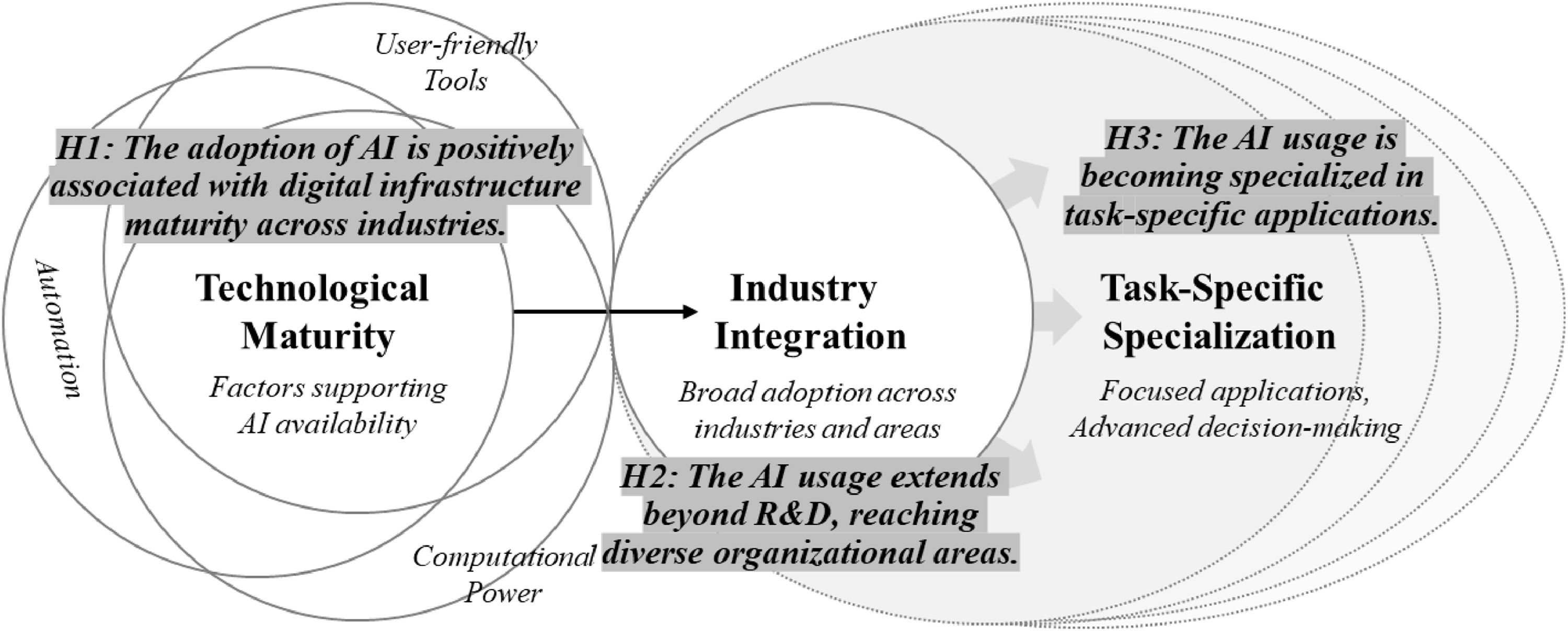
The literature reviewed shows three consistent gaps: (1) limited cross-sector coverage; (2) weak task-level measures that treat adoption as binary and provide limited evidence on depth of use; and (3) static views based on metadata or abstracts. This study addresses these gaps by linking AI adoption to organisational functions and tasks and by applying comparable indicators of scale (breadth across sectors and functions) and intensity (depth within tasks). The following hypotheses are proposed (Fig. 1):
- (1)
H1 (scale indicator): The adoption of AI is positively associated with digital infrastructure maturity across industries;
- (2)
H2 (scale and intensity indicators): The AI usage extends beyond R&D, reaching diverse organisational areas; and
- (3)
H3 (intensity indicator): The AI usage is increasingly specialised in task-specific applications.

Evolution of Automation and Artificial Intelligence: The history of automation can be traced back to systems designed to handle repetitive and rules-based tasks, well before AI emerged as a transformative technology. Early automation efforts, such as RPA and Enterprise Systems, focused on structured, routine processes that were time-consuming and prone to human error. RPA tools allowed businesses to replicate human actions like data entry, form processing, and simple decision-making workflows (Gandia et al., 2024; Gómez Gandía et al., 2025). These systems had a significant impact in industries like banking, where high transaction volumes and regulatory requirements demanded standardised operations (Ivančić et al., 2019). The implementation of such automation solutions also required significant changes in workforce capabilities, highlighting the role of digital training and leadership in achieving adoption (del Val Núñez et al., 2024; Obreja et al., 2024).
Enterprise Systems, including ERP software, became key automation tools during the late 20th century. These systems integrated essential business functions such as supply chain management, accounting, and human resources, enabling companies to streamline operations and make data-driven decisions. Technologies like SAP R/3, introduced in the 1990s, represented a major advance because they allowed businesses to automate processes on a global scale (Khaparde, 2012). By automating repetitive tasks and creating centralised data repositories, these tools served as precursors to modern AI-driven automation. Emerging research suggests that the effectiveness of such systems during periods of disruption, like the COVID-19 pandemic, further solidified their value as critical components of resilience (Climent et al., 2024; de Lucas Ancillo et al., 2021, 2023).
As organisations adopted these technologies, they began to identify the limitations of rule-based automation. While effective for structured tasks, these systems lacked the flexibility to handle dynamic or unstructured challenges. These data repositories generated by everyday business activity are also known as data lakes, which can contain any type of information, and in any format. This recognition paved the way for the integration of AI, enabling systems to learn from data, adapt to new situations, and perform complex analyses. The emergence of AI-based solutions marked a shift toward more intelligent and autonomous automation. This trend has been increasingly supported by advances in digital ecosystems and AI-as-a-service Cloud platforms, which enable organisations to experiment with complex AI solutions at reduced costs (Secundo et al., 2024).
Advances in Computation: A critical factor driving the evolution of AI has been the availability of greater computational power and enhanced IT infrastructure. The introduction of GPUs optimised for parallel processing revolutionised AI by enabling faster and more efficient training of machine learning models (Jouppi et al., 2017). AI-specific hardware, such as TPUs, has further enhanced computational capabilities, particularly for large-scale applications like deep learning.
In addition to hardware improvements, the rise of Cloud-based platforms has made AI technologies even more accessible. Services like Microsoft Azure, Amazon Web Services and Google Cloud AI offer scalable, subscription-based solutions, reducing barriers to entry for small and medium enterprises (SMEs) (Kasemsap, 2015; Mhaskey, 2024). A robust computational infrastructure was essential for achieving digital transformation maturity, as was the role of Cloud platforms in promoting AI adoption (Mungoli, 2023). Studies have also shown that automation combined with AI has a measurable impact on customer satisfaction, reducing service inefficiencies while increasing personalisation (Gavrila et al., 2023).
The decreasing costs of AI tools have further supported widespread adoption, particularly among SMEs, where investment in IT is somewhat limited. These businesses and their employees now have access to advanced technologies that were once accessible only by larger companies (Samuel Omokhafe Toluwalase Vanessa Iyelolu et al., 2024; Yusuf et al., 2024). By leveraging these advancements, organisations can improve their operational capabilities, scale efficiently, and foster innovation at a fraction of the cost that dedicated employees and experts would require. Emerging research highlights the role of edge computing in complementing Cloud platforms, especially in sectors requiring low-latency AI applications such as healthcare, transportation and finance (Ali et al., 2025; Gill et al., 2025).
Transition to Commercially Accessible Tools: AI’s evolution from academic research to consumer-facing applications has been marked by the introduction of tools that are user-friendly and widely accessible. Technologies like ChatGPT, Google Gemini, and DALL-E are examples of AI’s ability to transform workflows for both professional and personal users (Wiggins & Tejani, 2022).
The adoption of commercial AI tools has driven significant changes across industries. For instance, AI-powered chatbots have become essential in customer service, while recommendation systems used by platforms like Netflix or Spotify enhance personalisation and user engagement (Necula & Păvăloaia, 2023; Zhang et al., 2021). Recent research further explores how smart cities are utilising AI to improve urban governance, streamline public services, and achieve sustainability objectives (Bosco et al., 2024; Kumar et al., 2024). These trends align with findings that emphasise the post-pandemic shift to flexible, hybrid work models that require seamless digital integration.
Creation of New Jobs: The rapid expansion of AI technologies has also created new roles within the workforce. One notable example is the demand for Data Scientists, who analyse complex datasets to provide actionable insights, and it is reported that Data Science and Machine Learning roles are among the fastest-growing job categories (LinkedIn, 2024).
Additionally, new professions like Prompt Engineers have emerged to optimise instructions and the outputs of generative AI models. Prompt Engineers are key players in designing effective interactions with AI systems, ensuring that these tools meet user needs (Sikha, 2023). These new roles reflect the evolving relationship between AI technologies and the skills required to maximise their potential. Research has also highlighted the importance of workplace strategies, such as reimagined physical spaces and employee engagement policies, in fostering adaptation to AI-driven work environments (de Lucas Ancillo et al., 2021, 2023; del Val Núñez et al., 2024).
New AI Services and Products: Generative AI, a significant milestone in AI’s development, is reshaping industries like design, media, and content creation. These systems allow users to produce high-quality outputs, such as text, images, and videos, based on natural language instructions. Research highlights how such tools enhance creativity, improve productivity, and drive innovation in areas such as marketing and media production (Wiggins & Tejani, 2022). Generative AI also supports language translation and summarisation, broadening its applications across various fields (Sengar et al., 2024).
Moreover, AI platforms are becoming increasingly specialised, focusing on specific functions within industries. For example, autonomous systems in manufacturing integrate real-time monitoring with predictive maintenance, reducing downtime and improving efficiency (Elahi et al., 2023). In education, AI-powered platforms adapt learning materials to the needs of individual students, promoting personalised learning and better academic outcomes (Hardaker & Glenn, 2025). These innovations demonstrate how AI extends beyond traditional automation, delivering domain-specific solutions that were previously unachievable. Recent advances in generative AI for legal and financial services, such as automated compliance checks and risk modelling, further underscore its role in high-value, knowledge-intensive domains (Ioannidis et al., 2023).
Based on these developments, the following hypothesis is proposed:
H1 The adoption of AI is positively associated with digital infrastructure maturity across industries.
From General Automation to Strategic AI Adoption: Historically, the primary aim of automation has been mainly to reduce costs by optimising tasks (Xiao et al., 2024). Technologies such as RPA were implemented to manage high-volume, low-value activities, including data entry, compliance checks, and invoice processing (Gandia et al., 2024; Gómez Gandía et al., 2024; Ivančić et al., 2019). In manufacturing, robots were introduced to assembly lines to improve scalability and efficiency. Moreover, Internet of Things (IoT) sensors added a new dimension by enabling real-time data collection and monitoring, which facilitated predictive maintenance and efficient resource management. Enterprise Systems, such as ERP or Customer Relationship Management (CRM) platforms, also became mandatory tools for integrating and automating core business processes across organisations (Abazi Chaushi & Chaushi, 2025; Elahi et al., 2023; Jawad & Balázs, 2024).
In recent years, however, the limitations of traditional automation systems have become apparent. The Volatile, Uncertain, Complex, and Ambiguous (VUCA) nature of today’s environment, characterised by rapid technological advances, economic instability, and changing consumer expectations, has made dynamic and intelligent solutions essential. Consequently, businesses have turned to AI systems capable of adapting to uncertainty and creating strategic value based on the knowledge they are trained with (Lin et al., 2025). For example, AI-driven platforms are now widely used for demand forecasting, market analysis, and supply chain optimisation, allowing companies to anticipate disruptions and take proactive measures (Shamsuddoha et al., 2025). Similarly, in the energy sector, AI has been employed to integrate renewable energy sources into grids, enabling real-time optimisation of energy distribution (Talaat et al., 2023). Recent studies emphasise the potential of AI-enabled predictive analytics in resource-intensive industries, such as agriculture and manufacturing, to increase resilience and sustainability (Al-Daradkah et al., 2024; Zong & Guan, 2024).
Moreover, AI is playing a crucial role in product innovation (Ayinaddis, 2025). By analysing large datasets, AI helps companies identify emerging consumer trends and accelerate product prototyping, which enables them to respond more effectively to fast-changing markets (Gera & Kumar, 2023; Iniesta & López, 2025). These advances clearly show that AI has evolved beyond traditional task automation and is now recognised as a strategic enabler of innovation and competitive advantage. Recent findings highlight AI’s contribution to accelerating post-pandemic recovery efforts by enabling faster digital transformation in product design and supply chain management (Ivančić et al., 2019).
Overcoming Workforce Challenges: However, one of the main drivers behind the rapid adoption of AI is the growing challenge of labour shortage. In general, across the world, businesses struggle to attract and retain skilled professionals, especially in fields like data science, engineering, and AI development. Rising competition among employers and higher salary offers from competitors have made it increasingly challenging to secure loyal and reliable employees (WEF, 2023, 2025). Furthermore, economic pressures, such as inflation, have heightened worker dissatisfaction, leading to increased turnover rates.
AI has proved to be a valuable solution for addressing workforce challenges by automating repetitive and knowledge-intensive tasks, augmenting human capabilities, at a fraction of the cost. For instance, AI-powered recruitment platforms streamline hiring by analysing resumes, predicting candidate suitability, and even conducting preliminary interviews. These systems help businesses identify and recruit talent more quickly, reducing time-to-hire while improving employee retention rates (Gómez Gandía & Gavrila, 2024). Similarly, in industries like healthcare and logistics, where labour shortages are particularly acute, AI supports workforce productivity by scheduling tasks, monitoring workflows, and providing real-time performance analytics (Abazi Chaushi & Chaushi, 2025; Jawad & Balázs, 2024; Kudrenko, 2024; Piffari et al., 2024).
By allowing employees to focus on higher-value activities, AI not only enhances job satisfaction but also reduces turnover (Gómez Gandía et al., 2024). As a result, businesses can create more sustainable and productive work environments. Emerging research also suggests that AI-enabled tools improve workplace inclusivity by reducing bias in hiring and evaluation processes, thereby fostering diversity (Shams et al., 2023; Zowghi & Bano, 2024).
Based on these developments, the following hypothesis is proposed:
H2 The AI usage extends beyond R&D, reaching diverse organisational areas.
From General Automation: The evolution of artificial intelligence (AI) reflects a significant transition from general automation to highly specialised, task-specific applications. Recent research highlights how AI has increasingly evolved to address more complex and specialised functions across a variety of industries (Talaat et al., 2023).
For example, in manufacturing, AI systems combined with IoT sensors now enable predictive maintenance, ensuring optimal production schedules while minimising downtime. In healthcare, AI is used for precision diagnostics and treatment recommendations, enhancing patient care and streamlining operational workflows. Similarly, in logistics, AI facilitates supply chain management by predicting disruptions and optimising resource allocation. These examples illustrate how AI has progressed from generalised automation to offering strategic, high-value solutions tailored to the specific challenges of individual industries (Elahi et al., 2023). Emerging research has also shown how AI-enabled IoT platforms have helped increase energy efficiency and resource utilisation, especially in manufacturing environments (Kumar et al., 2023).
This trend toward specialisation indicates a growing over-reliance on AI systems, which are beginning to be tailored to meet industry-specific demands. Rather than simply automating routine tasks, AI is now deeply integrated into strategic operations, fostering innovation and improving competitiveness. By enabling organisations to respond effectively to complex challenges in dynamic environments, AI serves as both a transformative and adaptive tool for industries.
The Rise of Generative Multimodal AI: Generative AI marks a milestone achievement in the specialisation of Artificial Intelligence, offering tailored solutions for a wide range of tasks. These systems, powered by large-scale datasets and sophisticated algorithms, have transformed industries by generating human-like text and, more recently, expanding into multimodal capabilities such as image, video, and audio creation (Albashrawi, 2025; Chen et al., 2024; Dong et al., 2025).
Initially, generative AI was designed to support areas such as customer service, education, and content creation. However, it now enables specialised outputs tailored to specific industry needs. For example, in marketing and entertainment, AI generates synthetic visuals, lifelike avatars, and customised voiceovers, revolutionising how organisations interact with their audiences. Furthermore, generative AI enhances training programmes by delivering adaptive, personalised learning experiences across various sectors (Batsaikhan & Correia, 2024). Recent studies emphasise how generative AI tools, including multimodal applications, are being deployed in medicine to accelerate drug discovery and clinical trial simulations (Serrano et al., 2024; Wu et al., 2024).
This evolution demonstrates AI’s ability to interpret complex user prompts and provide outputs tailored to highly specialised tasks or requirements. By integrating generative AI into workflows, businesses can enhance productivity, creativity, and engagement while addressing increasingly complex and specific operational challenges, all at a very attractive cost.
Advancing Cognitive Specialisation: Reasoning and autonomous AI represent a critical step toward enabling systems to solve complex, unstructured problems that require logical analysis and contextual understanding. Unlike traditional task-specific AI, reasoning AI integrates advanced natural language processing (NLP) with symbolic reasoning, allowing it to analyse relationships, interpret data, and draw meaningful conclusions. These capabilities enable AI to perform cognitive tasks that have historically required human expertise, further enhancing operational efficiency and decision-making (Bikkasani, 2024; Gandía et al., 2025).
These advances are particularly relevant in fields such as law, finance, and strategic planning, where nuanced decision-making and adaptability are essential. For example, reasoning AI can evaluate intricate legal arguments, perform risk assessments in finance, and support organisations in creating robust strategic frameworks (Fortes et al., 2022). Recent advances in autonomous AI have further demonstrated their effectiveness in complex fields, such as climate modelling and urban planning, offering data-driven strategies for long-term solutions (Sanchez et al., 2023, 2024).
Based on these developments, the following hypothesis is proposed:
H3 The AI usage is becoming specialised in task-specific applications.
Traditional research methods, while valuable, often reveal limitations when applied to a rapidly evolving field like AI. For instance, surveys and interviews frequently depend on self-reported data, which can be biased by selective reporting or exaggerated claims regarding AI’s benefits (Ferrara, 2023). Similarly, case studies, although effective in providing deep contextual insights, tend to focus on specific companies or industries, making it difficult to generalise their findings to broader social trends (Birhane, 2022). Furthermore, while empirical experiments are robust in isolating individual technological applications, they often fail to account for the holistic and multiple nature of AI’s integration across diverse sectors. These limitations highlight the need for a research methodology that captures the complexity and dynamism of AI adoption in real-world contexts.
To overcome these challenges, this study adopts a secondary data analysis approach using complete research papers sourced exclusively from the arXiv platform, a widely used repository for scientific research, including cutting-edge AI areas. Unlike commercially driven consultancy reports, which often prioritise specific narratives, arXiv papers provide detailed and transparent accounts of AI advancements, implementation processes, and associated challenges (Glickman & Zhang, 2024; Toney-Wails et al., 2024; Xiaochen et al., 2024). Recent studies also highlight arXiv’s utility in documenting emerging AI applications, from autonomous systems to multimodal AI frameworks, offering researchers a robust foundation for analysing real-world trends (Xie et al., 2024). By analysing these technical documents, the study achieves a more objective and comprehensive understanding of AI’s impact.
This approach bridges the gap between theoretical innovation and practical application, aligning with the study’s goal of exploring AI’s transformative role in business and society. Moreover, by focusing on full papers rather than limiting the analysis to metadata or abstracts, this methodology captures nuanced insights into the progression of AI technologies, enabling a deeper exploration of their adoption across industries. Additionally, evaluating complete documents reduces the risk of abstract-driven overgeneralisations and enhances the study’s capacity to consider the multidisciplinary nature of AI.
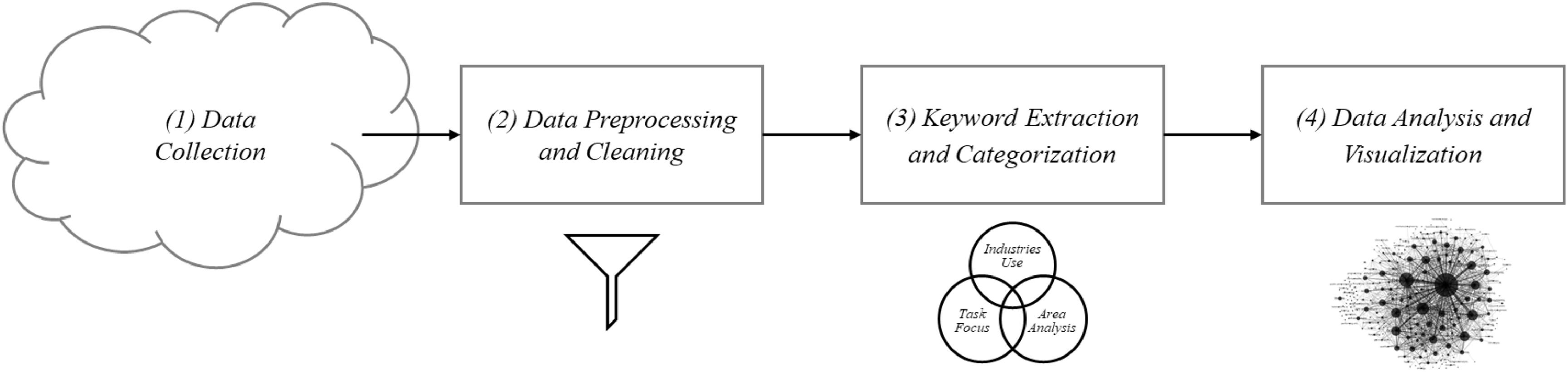
Step-by-step processThis section provides the details of the methodology followed in this study to analyse the rapid adoption of AI across businesses and society. Fig. 2 provides a summary of the steps followed.
(1) Data Collection: The dataset for this study was assembled by retrieving 2332 complete papers from arXiv.org using a combination of targeted search queries and keyword filters. Search terms such as “artificial intelligence in business,” “AI and jobs,” “AI in industries,” and “AI applications in tasks” were used to identify relevant literature. Queries were executed on documents published between 2018 and 2025; only English-language PDFs were included; records without full text were excluded. Retrieval logs (query strings, dates, and counts) were stored for replication. Subject overlap and preprint duplicates were controlled by title/DOI matching (case-insensitive).
(2) Data Preprocessing and Cleaning: After the initial data collection, the dataset underwent preprocessing to ensure consistency and accuracy, after which 2188 papers remained. This process included:
- •
Removing duplicate entries to avoid redundancy.
- •
Excluding papers that lacked sufficient discussion of practical AI applications.
- •
Ensuring that only complete papers, rather than abstracts or summaries, were included in the analysis.
- •

Next, PDFs were converted to text; references, acknowledgements, and appendices were stripped for analysis.
(3) Keyword Extraction and Categorisation: Structured keyword analysis was undertaken on the 2188 papers using advanced Large Language Models (LLMs), specifically OpenAI’s GPT-4o. This step aims to identify how AI is applied across industries, areas, and specific tasks. The analysis involved three main aspects:
- •
Industry Categorisation: Identifying industries where AI is implemented, such as healthcare, manufacturing, and retail. When applicable, multiple industries were assigned to papers to reflect cross-sector applications.
- •
Area Analysis: Extracting references to organisational areas (e.g., HR, R&D) associated with AI-driven applications.
- •
Task Focus: Highlighting specific tasks of implementation, such as recruitment, production optimisation, or customer service.
- •
Each paper was analysed to identify as many relationships as possible between these categories, ensuring a thorough understanding of AI’s penetration into various sectors and organisational functions. LLM prompts provided CSV (comma-separated values) outputs for the evidence found in the paper text.
(4) Data Analysis and Visualisation: The final step involved analysing the extracted data to uncover trends and patterns in AI adoption. Visualisation tools, such as graphs and tables, were utilised to present the relationships between AI applications and the collected industries, areas, and tasks. Furthermore, year-on-year comparisons were conducted to highlight growth areas and emerging trends in AI usage. These visualisations provided a comprehensive view of how AI adoption has evolved over time and across different domains.
The dataset for this study comprises 2332 academic papers sourced from the arXiv.org platform, a widely recognised repository for advanced computer science and AI research. Papers were selected based on their relevance to AI applications in business, workplace dynamics, and social impact. However, to ensure the study reflects current trends, only publications from 2018 to 2025 were included, providing up-to-date insights into AI adoption.
The inclusion criteria focused on papers that offered practical discussions of AI implementations across industries, organisational areas, and specific tasks. On the other hand, papers that lacked direct relevance or concentrated solely on theoretical aspects were excluded to maintain the dataset’s applicability to real-world contexts. As a result, the final dataset encompasses a diverse range of applications, from sector-specific use cases to cross-functional adoption patterns.
This structured dataset serves as a robust foundation for analysing AI’s penetration into various aspects of business and society. It offers valuable insights into both emerging trends and established practices, ensuring a comprehensive understanding of AI’s role in shaping modern industries and organisational dynamics.
Limitations and robustness checksHowever, a note of caution is needed because the arXiv.org source comes with some limitations. Not all preprints are peer-reviewed, publication practices may favour technical fields (though this is useful for the purposes of this study), multiple versions and duplicate submissions can introduce noise, and the focus on English-language papers may limit generalisation. To mitigate these risks, this study applied a time-bounded selection (2018–2025), systematic deduplication by title/DOI, exclusion of records without full text, and manual review of low-confidence labels.
Analysis and resultsAnalysisThis section examines the evolution of artificial intelligence (AI) adoption by applying the methodology outlined above. Through structured keyword extraction from the dataset, the analysis explores three key dimensions: industries where AI is implemented, organisational areas impacted by AI, and specific tasks enhanced through AI applications.
The subsections that follow provide detailed insights into these dimensions, highlighting growth patterns and key metrics observed, along with their corresponding tables and figures.
Industries evolutionThis section focuses on the evolution of industries enhanced by AI, based on keywords extracted from the dataset. Using structured keyword analysis, the presence of AI across industries is tracked and analysed from 2018 to 2025. The analysis highlights yearly growth trends to assess how AI adoption has progressed at the industry level. The results of this analysis, which include 118 unique industry-related results, are summarised in Table 1.
Industries enhanced by AI & yearly growth (118 results).
Reading note: AI adoption spans a wide set of industries, with established sectors leading growth and a long ‘tail’ of emerging domains.
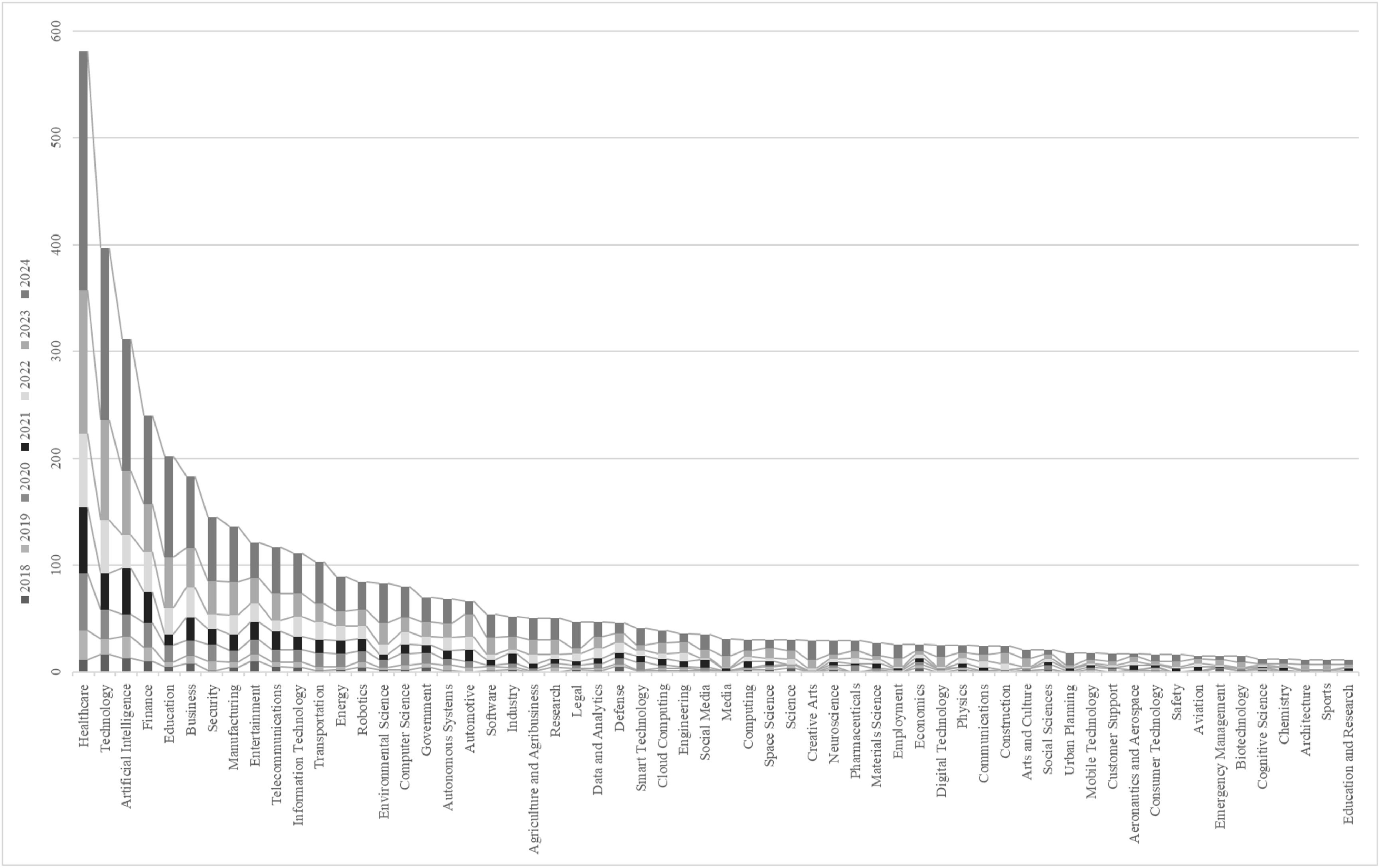
Fig. 3 provides a visual representation of the industries enhanced by AI and its year-on-year progress evolution (years colour code), drawing the growing trends (lines).

Reading note: lines emphasise trend direction rather than causal effects; changes should be interpreted as descriptive penetration.
Evolution across areasThis section investigates the evolution of organisational areas where AI has been applied, utilising keywords extracted from the dataset. The study includes two perspectives: the overall yearly growth of 520 extracted results (Table 2) and the total number of areas associated with industries (Table 3), amounting to 10,129 non-unique matches.
Areas enhanced by AI & yearly growth (50 of 520 results).
Areas per industry (not unique) & yearly growth (10,129 matches).
The non-unique nature of these matches reflects the complexity of the operation; for simplicity, the total number of areas is considered without removing duplicates across years. Additionally, the study calculates the average number of areas per industry where AI has been applied (AVG_AREASxIND=14.58), providing a measure of AI’s distribution within industries.
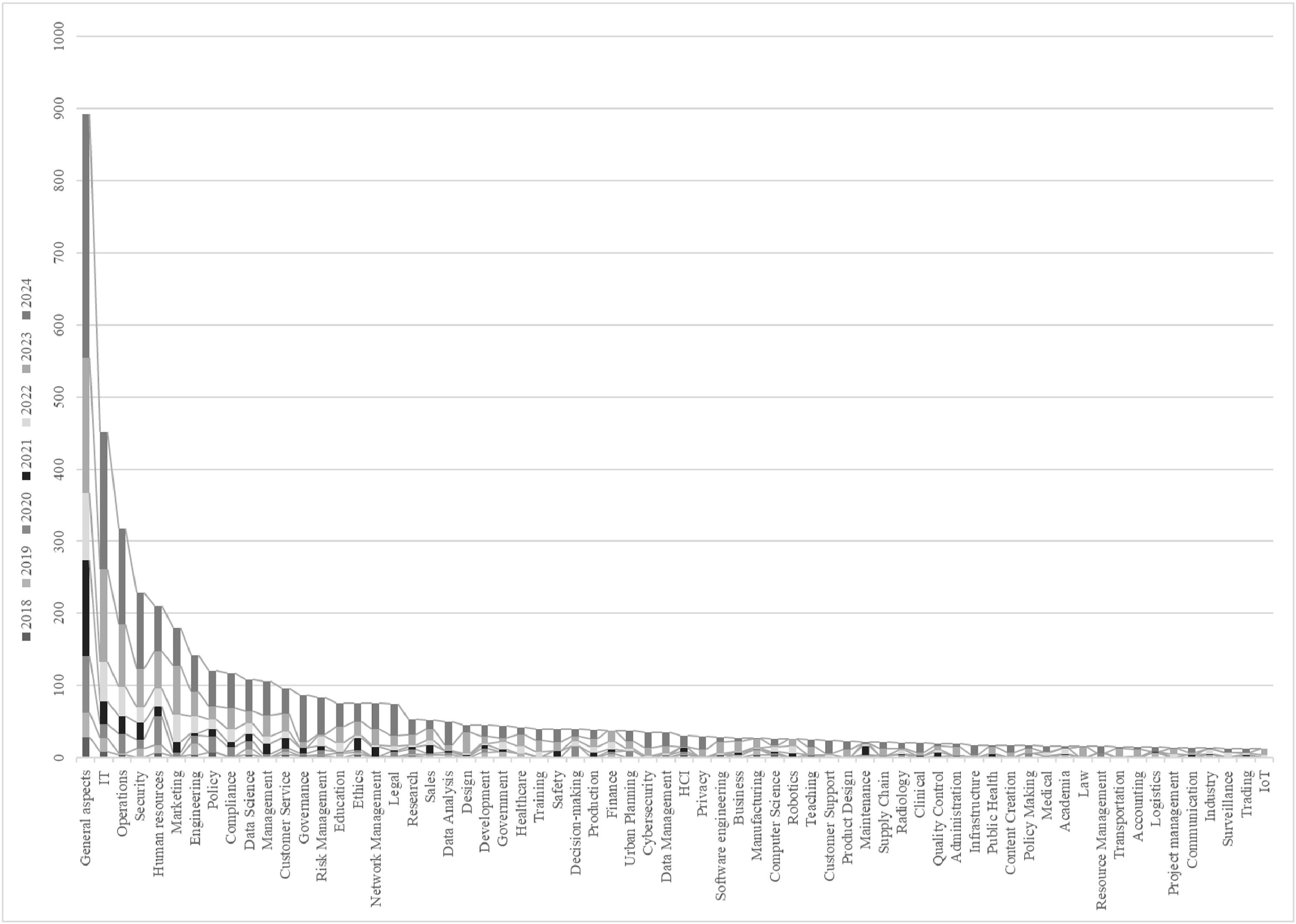
Reading note: The count and diversity of areas indicate that AI is commonly applied outside R&D.
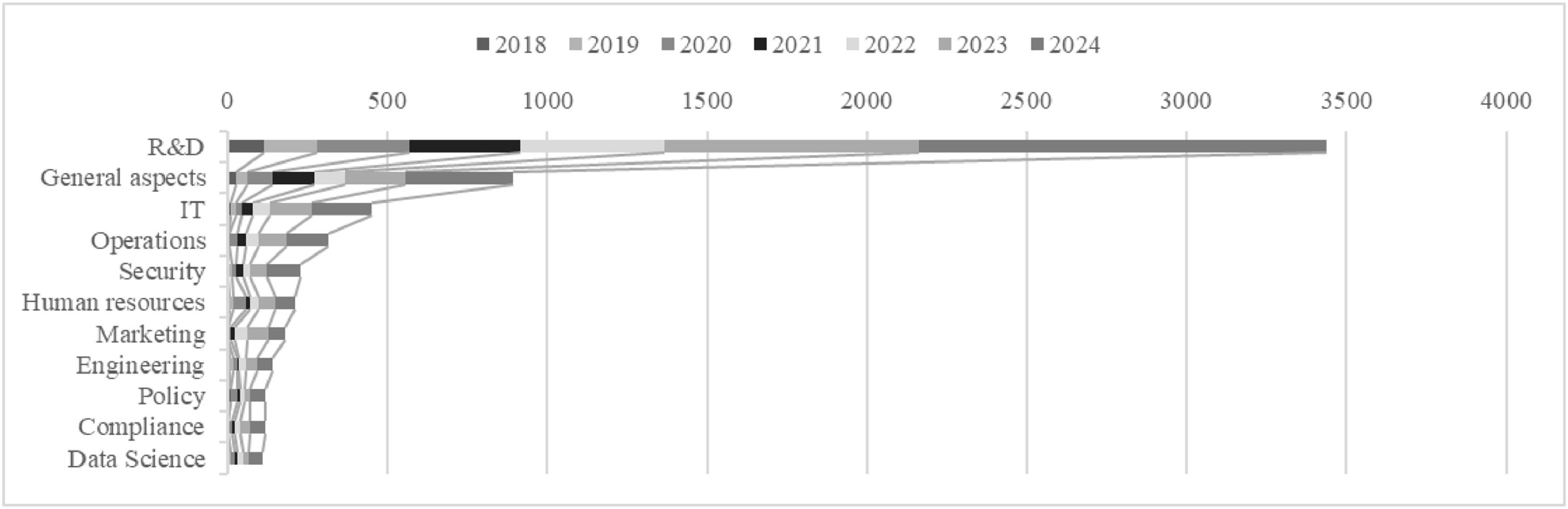
Fig. 4 provides a visual presentation of their evolution in each area, year on year, with and without R&D magnitude (Fig. 5) to better understand their variations.


Reading note: contrasting panels with and without R&D highlight redistribution toward non-R&D functions over time.
Functions evolutionThis section explores the evolution of specific tasks enhanced by AI, as derived from keywords extracted from the dataset. The analysis focuses on tasks associated with areas and industries, summarised in Table 4, which includes 93,757 non-unique matches. Similarly to the areas analysis, the total count of tasks/areas is considered without deduplication between years to simplify the process.
Functions per areas per industries (not unique) & yearly growth (93,757 matches).
To further contextualise AI’s evolution at the task level, the average number of tasks per area per industry (AVG_TASKSxAREASxIND=161.00) is calculated, quantifying AI’s applications.
Reading note: The high average number of tasks per area and industry suggests growing task-level specialisation rather than generic use.
ResultsThis section interprets the findings with reference to the study’s hypotheses and constructs. In line with the observational design and corpus-based measures, results are presented as descriptive patterns with robustness checks.
To assess whether the adoption of AI, the H1 hypothesis was stated as follows: “The adoption of AI is positively associated with digital infrastructure maturity across industries”. The null hypothesis (Hnull) assumes that the total number of extracted keywords related to AI industries is zero (∑Kindustries = 0), meaning that it is limited to its own area of application. The alternative hypothesis (H1) proposes that the total number of extracted keywords is different from zero (∑Kindustries ≠ 0), meaning that its growth goes beyond its own area of application.
The results revealed that the total number of extracted keywords related to AI industries was ∑Kindustries = 118. Since ∑Kindustries ≠ 0, the null hypothesis (Hnull) is rejected, supporting the alternative hypothesis (H1). These findings confirm that AI usage is indeed spreading within society, as evidenced by its significant penetration within a wide range of industries.
The results, summarised in Table 1, illustrate the critical role AI has played in enhancing industries between 2020 and 2024. The analysis highlights a wide range of industries adopting AI, including traditional sectors like Healthcare and Technology and emerging areas such as Education, Security, and Environmental Science. For instance, Healthcare achieved an average annual growth rate of 72 %, reaching a total of 581 enhancements in 2024, showcasing its dominant position in AI adoption. Similarly, Technology and Artificial Intelligence demonstrated cumulative growth rates of 51 % and 56 %, respectively, highlighting a strong integration of AI solutions.
While certain industries, such as Healthcare and Technology, showed consistent growth, others, including Security and Education, experienced sharp increases. Security recorded 94 % growth in 2024, and Education demonstrated an average annual growth of 97 % over the period analysed. Emerging sectors like Environmental Science, Transportation, and Energy also showed strong average growth rates, with Energy achieving 83 % and Transportation reaching 115 %. This diversity of adoption underscores AI’s transformative impact across established and emerging industries.
To evaluate whether AI usage within those industries is restricted solely to R&D purposes, the H2 hypothesis was defined as: “AI usage extends beyond R&D, reaching diverse organisational areas.” The null hypothesis (Hnull) assumes that AI is applied only within R&D, meaning the total number of unique areas where AI is used would be ∑Kareas = 1. On the other hand, the alternative hypothesis (H2) suggests that AI goes beyond R&D areas, meaning the total number of unique areas where AI is used is ∑Kareas > 1.
The results showed that within the analysed industries, the total number of unique areas where AI is used was ∑Kareas = 520, which is significantly greater than 1. As ∑Kareas > 1, the null hypothesis (Hnull) is rejected. These findings confirm that AI usage is not confined to R&D alone but is applied across many diverse areas, highlighting its integration into a wide range of industries.
The analysis of AI-enhanced areas reveals both growth and diversity in applications across industries, as illustrated in Tables 2 and 3. The results demonstrate that AI adoption has expanded consistently over time, with a total of 10,129 non-unique matches across areas and industries by 2024. This reflects the increasing incorporation of AI into various organisational domains. Furthermore, the average number of areas per industry (AVG_AREASxIND = 14.58) indicates that industries are deploying AI across multiple functional areas rather than limiting its applications to a few specific domains.
Table 2 highlights growth trends for specific areas, such as R&D, which recorded a cumulative growth of 305 % over the period analysed. Similarly, other areas such as IT, Operations, and Security exhibited significant average growth rates of 76 %, 170 %, and 55 %, respectively, underscoring the diversity of organisational functions impacted by AI. In addition, Table 3 reveals how core industries, including Healthcare and Technology, are utilising AI across multiple areas. For example, Healthcare achieved an average of 184.71 areas per year, while Technology reached 103 areas, emphasising the substantial adoption of AI within these sectors.
These results highlight the growing versatility of AI, demonstrating its capacity to address a wide variety of organisational challenges and drive innovation across both core and emerging industries.
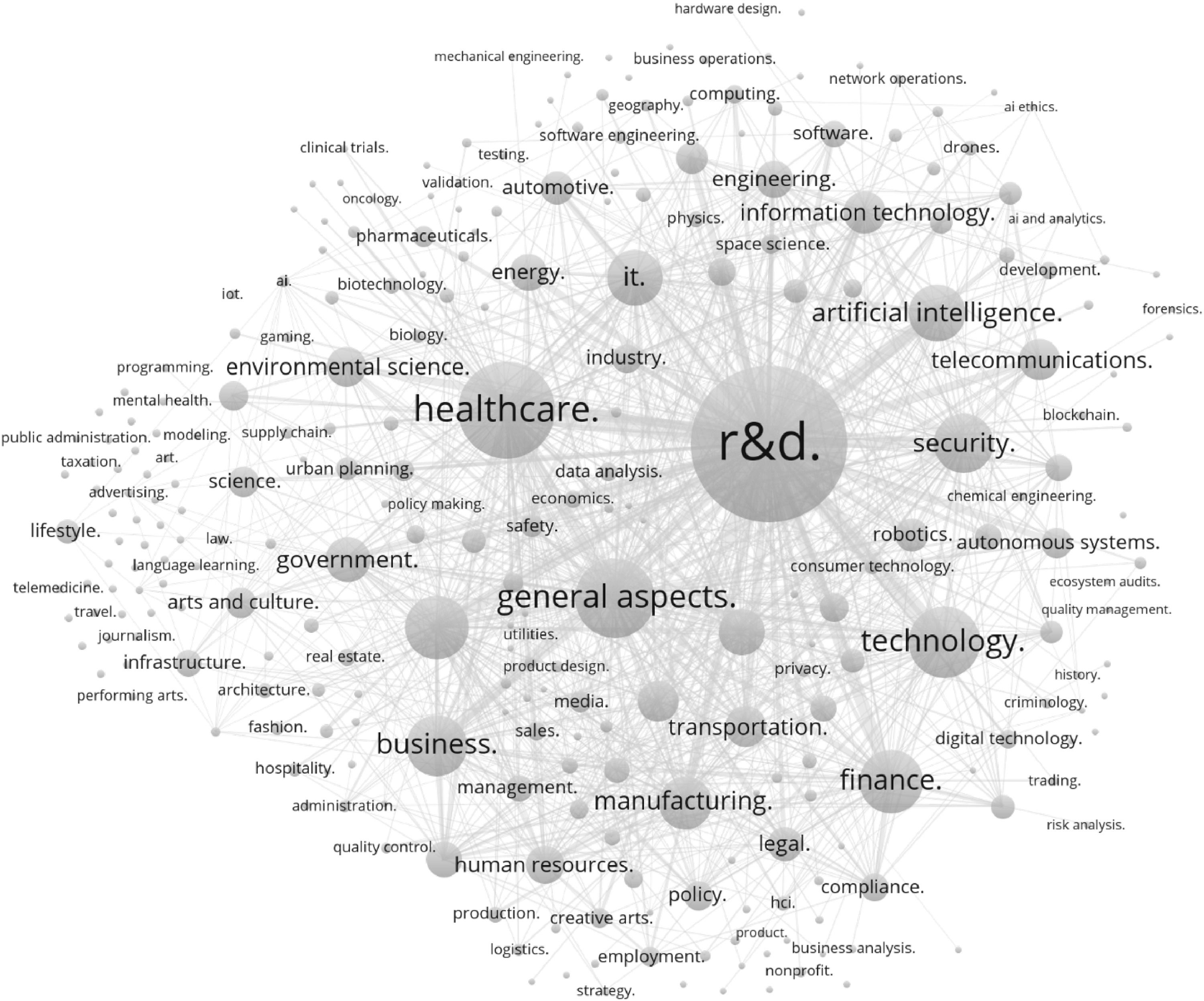
In addition to the data presented in the tables, Fig. 6 provides a visual representation of the relationships between industries and areas. The size of each circle corresponds to the number of areas associated with a given industry, while the width of the connecting lines reflects the shared areas between industries. This visualisation highlights the interconnected nature of AI adoption across sectors and emphasises the significant overlap in AI applications, particularly in key industries such as Healthcare, Technology, and Finance.

Taken together, these findings demonstrate how AI continues to expand its influence across diverse organisational areas and industries, showcasing its growing integration and versatility in addressing cross-sectoral challenges.
To evaluate whether industries are moving toward more specialised AI applications, the H3 hypothesis was stated as: “The AI usage is becoming specialised in task-specific applications”. The null hypothesis (Hnull) assumes that AI usage is generic and not specialised. In this case, the average number of tasks per area per industry would be close to 1 (AVG_TASKSxAREASxIND ≈ 1). The alternative hypothesis (H3) suggests that industries are demanding advanced, task-specific AI applications, where the average number of tasks per area per industry would be significantly higher than 1 (AVG_TASKSxAREASxIND > 1).
The analysis revealed that the average number of tasks per area per industry was AVG_TASKSxAREASxIND = 161, demonstrating a high level of specialisation in functions within each area and industry. Since AVG_TASKSxAREASxIND > 1, the null hypothesis (Hnull) is rejected. These findings support the alternative hypothesis (H3), proving that industries are increasingly demanding advanced AI applications designed for specific tasks, with notable differences in task complexity and focus across areas and industries.
The analysis of AI-enhanced functions, as summarised in Table 4, highlights the wide variety and broad distribution of tasks supported by AI across industries. By 2024, the dataset included 93,757 non-unique matches, reflecting the extensive application of AI in a diverse range of functional areas. It is important to note that the term “non-unique” indicates that tasks are counted multiple times when they occur across different years or industries, which underscores the breadth of AI’s recurring and expanding applications.
The calculated average of AVG_TASKSxAREASxIND = 161 further emphasises the widespread adoption and specialisation of AI. This result demonstrates that industries are increasingly integrating AI into multiple functional aspects rather than restricting its use to a few isolated tasks.
The data also highlights industries such as Healthcare, Education, Business, and Technology as significant adopters of AI for task-specific applications. These sectors not only exhibit high task counts but also show a strong diversity of functions, ranging from administrative processes to specialised technical operations. This diversity underscores AI’s versatility in addressing industry-specific needs while simultaneously driving operational improvements across multiple sectors.
Moreover, the analysis reveals the dynamic distribution of AI applications across industries. Emerging areas like Robotics, Smart Technology, and Environmental Science are steadily adopting AI to manage an increasing number of tasks. The broad spectrum of functional enhancements, from traditional sectors like Healthcare to newer domains like Smart Technology, demonstrates AI’s adaptability and its ability to improve an ever-growing variety of tasks.
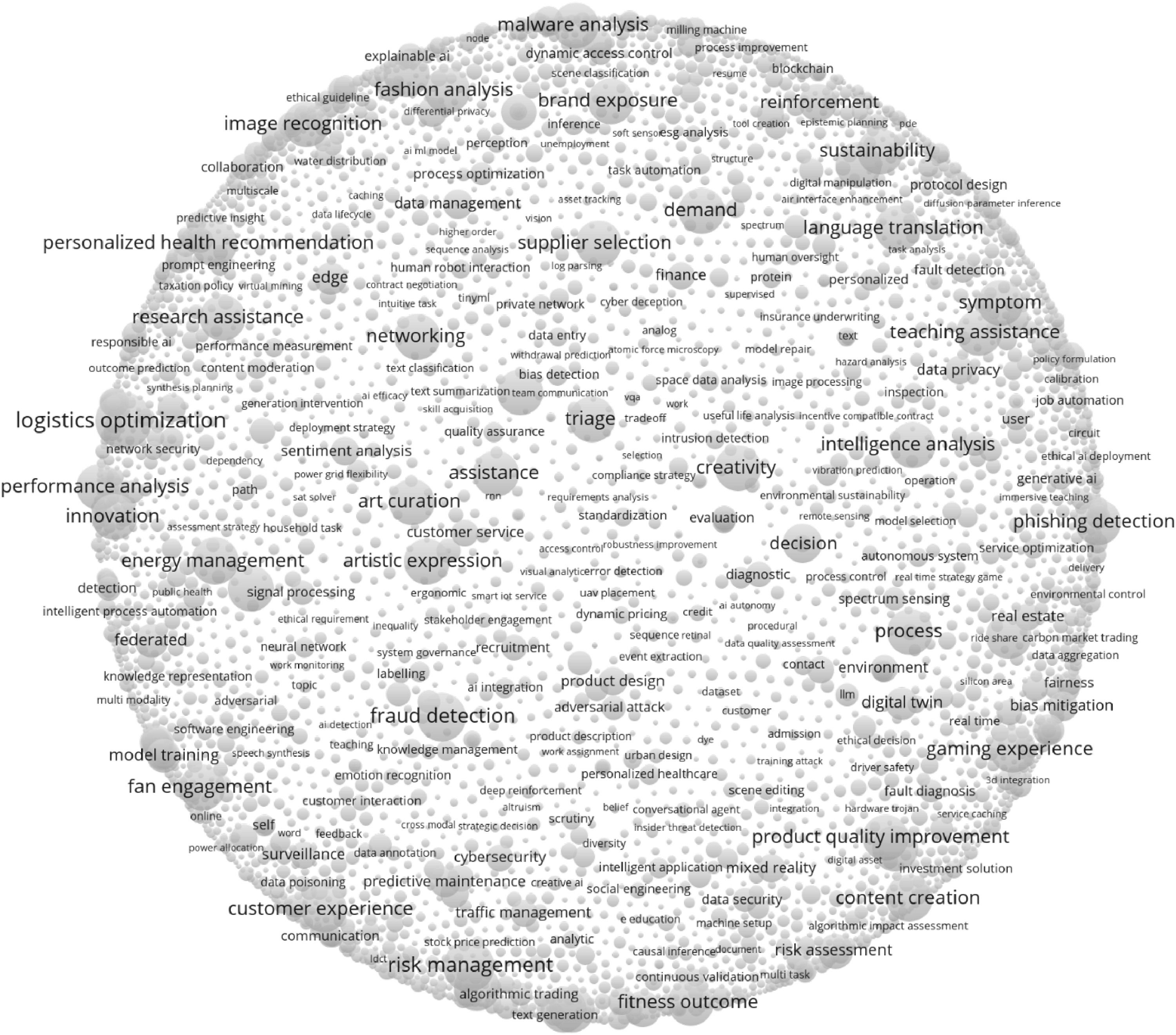
Fig. 7 provides a network visualisation of task keywords to illustrate further the distribution and relationships between tasks. In this graph, the size of each circle represents the number of occurrences of a given task keyword. This visualisation focuses solely on task-level keywords, offering a detailed perspective on how AI is applied across different industries and areas.
DiscussionsConclusions
The results confirm that the hypotheses were confirmed, providing clear evidence that AI is expanding and becoming increasingly integrated into many areas of society and industries. Whereas empirical studies rely on abstracts or self-reported surveys, the full-text approach used here offers a fuller, deeper analysis that enables task-level mapping and cross-function comparisons, and explains the broader penetration (scale) and deeper specialisation (intensity) observed.
These findings validate H1: The adoption of AI is positively associated with digital infrastructure maturity across industries, as the adoption of AI continues to grow across both traditional and emerging sectors. This demonstrates that AI is no longer confined to specific industries but is becoming a key enabler of growth and innovation across diverse fields.
The results also support H2: AI usage extends beyond R&D, reaching diverse organisational areas. AI is applied in numerous organisational functions beyond Research and Development, showcasing its versatility in improving operations and addressing challenges in various domains. This highlights how industries are using AI to enhance productivity and efficiency across a wide range of activities, further demonstrating its role as a transformative technology.
Finally, the findings confirm H3: AI usage is becoming specialised in task-specific applications. There is strong evidence that industries increasingly seek specialised AI solutions tailored to specific tasks, which underscores the progression of AI technologies toward becoming more advanced and better aligned with the unique needs of each industry, enabling businesses to tackle particular challenges and enhance their overall performance.
Therefore, the results show that AI is a powerful driver of innovation and growth. It is being used in many industries, for a variety of functions, and in highly specialised ways. In addition, these findings reinforce earlier empirical studies that highlight AI’s expansion across functions (Elahi et al., 2023; Eloundou et al., 2023), while also extending them by offering more evidence on scale and intensity.
However, as AI continues to grow rapidly, its ethical and social implications must be carefully considered. Issues such as algorithmic bias, data privacy, and employment shifts represent important dilemmas that future research and policy need to address responsibly.
Theoretical Implications: The results align with existing literature, which describes AI’s evolution from automating repetitive tasks to becoming a key driver of innovation and strategic decision-making across industries (Ivančić et al., 2019; Shamsuddoha et al., 2025). This alignment indicates that the theoretical basis of this study was both reliable and well-grounded, reflecting AI's growth as a result of advances in automation technologies, computational capabilities, and user-friendly tools.
One significant contribution of this research is the number and wide variety of industries, areas, and tasks influenced by AI. While earlier studies have acknowledged AI’s expansion (Chui et al., 2023; Eloundou et al., 2023; Sengar et al., 2024; Talaat et al., 2023), this study provides new insights into the scale and diversity of its integration. For example, while the analysis highlights AI’s prominent role in traditional sectors such as Healthcare, Technology, and Manufacturing, it also illuminates its growing presence in newer fields, including Environmental Science, Education, and Security. This reinforces AI’s ability to penetrate almost any kind of industry.
Furthermore, the findings confirm the literature’s view that industries are evolving towards more task-specific AI applications (Bhuyan et al., 2025; Gera & Kumar, 2023; Iniesta & López, 2025). The results also provide evidence on the level of specialisation within these applications, showing tailored solutions for specific functions such as predictive maintenance in Manufacturing, precision diagnostics in Healthcare, and real-time optimisation in Supply Chain Management. These examples demonstrate that AI has transitioned from a general automation tool to a provider of highly customised solutions, supporting theories on cognitive specialisation and the transformative role of generative AI in innovation (Chen et al., 2024; Dong et al., 2025; Fortes et al., 2022).
While previous studies have discussed AI’s ability to improve workflows and efficiency (Elahi et al., 2023; Shamsuddoha et al., 2025), the results of this study emphasise the magnitude of these contributions, where AI supports an average of 14.58 functional areas per industry and enhances over 161 specialised tasks per area. These findings expand the theoretical understanding of AI, revealing that its penetration is far broader and deeper than previously reported.
Practical Implications: The findings of this study reveal significant practical implications for society, businesses, and employees, highlighting the transformative role of AI across a broad range of industries, areas, and tasks.
From the point of view of society, the importance of the growing adoption of AI lies especially in its ability to address complex, large-scale challenges, enabling advances in infrastructure, governance, and public services. For example, AI’s integration into sectors such as public health, education, and environmental management demonstrates its potential to improve societal outcomes. Moreover, AI’s scalability, lower costs and adaptability ensure that its benefits are not confined to developed economies but extend to emerging markets, where it can provide innovative solutions to bridge gaps in resources and infrastructure. However, this expansion also raises vital social concerns, such as data privacy, ethical usage, and equitable access. These issues require careful governance to ensure that the benefits of AI are distributed fairly and responsibly.
On the other hand, for businesses, AI is more than a tool for operational improvement; it is a driver of strategic transformation. The results demonstrate that AI’s penetration across industries enables companies to rethink their business models, create new revenue streams, and respond more quickly to market changes. Its ability to analyse vast amounts of data, predict trends, and optimise performance empowers businesses to make faster and more informed decisions. AI also facilitates personalisation in services, enabling companies to meet customer needs better and thus improve satisfaction. However, as AI adoption continues to expand, businesses must address challenges such as integrating AI with legacy systems and managing the costs of implementation, as well as supporting existing employees. Successful AI adoption seems to require leadership that balances immediate operational goals with long-term strategic planning.
For employees, AI is reshaping workplaces in unprecedented ways. By automating repetitive tasks, AI reduces manual workloads, allowing employees to focus on creative, strategic, and value-adding activities. Furthermore, as AI systems become increasingly specialised, new roles are emerging, such as AI system trainers, data strategists, and task-specific application specialists. This evolution demands not only technical skills but also soft skills, such as adaptability, critical thinking, and problem-solving, which are essential for effectively collaborating with AI systems. Therefore, organisations must foster a culture of continuous learning by offering tailored training programmes and career development opportunities to prepare employees for the future of work. In addition, AI must be implemented inclusively in order to minimise displacement and ensure that workers in all sectors can benefit from its adoption.
Moreover, the penetration of AI into such a wide range of industries and tasks highlights its role in fostering cross-sector collaboration. Businesses and governments can leverage AI to address shared challenges, such as climate change, cybersecurity, and global supply chain disruptions. The ability of AI to integrate and process data from multiple domains makes it a powerful tool for designing novel collaborative solutions.
Beyond technology, practical implications also concern workforce reskilling, ethical regulation, and long-term governance models. These steps will be crucial in guaranteeing not only efficiency but also the responsible and sustainable adoption of AI, making for a very interesting future research line for academia.
Looking forward, it seems the future of AI lies in the continuous development of autonomous and reasoning AI systems, which represent the next frontier of artificial intelligence. Autonomous AI has the potential to operate with minimal human intervention, managing complex tasks and real-time decision-making. Meanwhile, Reasoning AI takes this further by integrating natural language processing and symbolic reasoning, enabling it to analyse relationships, interpret unstructured data, and solve problems requiring logical and contextual understanding. These advances could revolutionise industries that depend on nuanced decision-making, such as law, finance, and strategic planning.
LimitationsDespite the comprehensive nature of this study, several limitations must be acknowledged to provide context for the findings and to guide future research efforts:
- (1)
Processing and Analytical Constraints: The study analysed 2188 academic papers, but the methodology required significant time and computational resources for keyword extraction, data preprocessing, and trend analysis. While this dataset offers robust insights, analysing a larger dataset could provide even more comprehensive results. However, such an expansion would require greater processing power and more advanced analytical tools to handle the increased complexity effectively. A trade-off judgement had to be made.
- (2)
Diversity of Sources: While this study benefits from the accessibility and depth of the arXiv platform as a source for academic papers, the reliance on a single repository may limit the diversity of perspectives leading to a new possible future research line. Access is often restricted to other sources, such as industry case studies, proprietary research reports, or peer-reviewed journals, and they are in various ways more challenging to include in large-scale analyses. However, a key strength of this research lies in its comprehensive analysis of full-text documents rather than relying solely on metadata or abstracts, providing deeper insights into AI applications and trends than studies constrained by limited data formats.
- (3)
Scope of the Research Focus: The research primarily focused on the penetration of AI into businesses and society from a technical and organisational perspective. As a result, broader contextual factors, such as social resistance to AI adoption, ethical concerns, and regional variations in AI integration, were not fully explored. Incorporating these aspects in future research could provide a more holistic understanding of AI’s impact and address critical questions regarding its adoption and use.
Building on the findings of this study, the following research directions are proposed, as ways of deepening our understanding of AI’s role in business, workplace and society:
- (1)
Exploring Drivers and Barriers to AI Adoption: Future research could investigate the key enablers and obstacles influencing AI adoption across industries. This includes examining organisational factors, such as leadership buy-in, workforce readiness, and regulatory frameworks, alongside external factors, such as market competition and economic conditions. Understanding these dynamics could offer actionable insights for businesses seeking to adopt AI more effectively and efficiently.
- (2)
Assessing AI’s Return on Investment and Satisfaction Rates: A critical follow-up study would involve evaluating the tangible outcomes of AI adoption, such as financial performance, operational efficiency, and employee satisfaction. Metrics like return on investment (ROI) and user satisfaction rates could serve as valuable benchmarks for organisations considering AI implementation, providing a clearer understanding of its practical benefits and limitations.
- (3)
Exploring AI’s Ethical and Social Implications: Future research could also focus on the ethical and social impacts of AI adoption, including concerns about privacy, algorithmic bias, and its influence on employment. Moreover, examining regional variations in AI adoption, such as the differences between developing and developed economies, could yield important insights into the global reach of AI and the unique challenges faced in different contexts.
- (4)
Expanding Theoretical Perspectives: Future research could incorporate established approaches such as the Technology-Organization-Environment (TOE) framework, Diffusion of Innovations (DOI), or Sociotechnical Systems Theory. These perspectives may provide interesting complementary ways to analyse AI adoption and help position future findings within broader constructs.
During the preparation of this work, the authors used OpenAI-LLM in order to process all papers and extract the relevant keywords, and to improve language and readability. After using this tool/service, the authors reviewed and edited the content as needed and take full responsibility for the content of the publication.
CRediT authorship contribution statementSorin Gavrila Gavrila: Writing – review & editing, Writing – original draft, Software, Methodology, Formal analysis, Data curation, Conceptualization. Ana Paloma de Lucas López: Writing – review & editing, Writing – original draft, Resources, Methodology, Formal analysis, Data curation, Conceptualization. Carolina Verdugo Molano: Writing – review & editing, Writing – original draft, Software, Methodology, Formal analysis, Data curation, Conceptualization.
