
To translate, culturally adapt, and validate the Inflammatory Bowel Disease Knowledge questionnaire in adult Spanish-speaking patients with IBD.
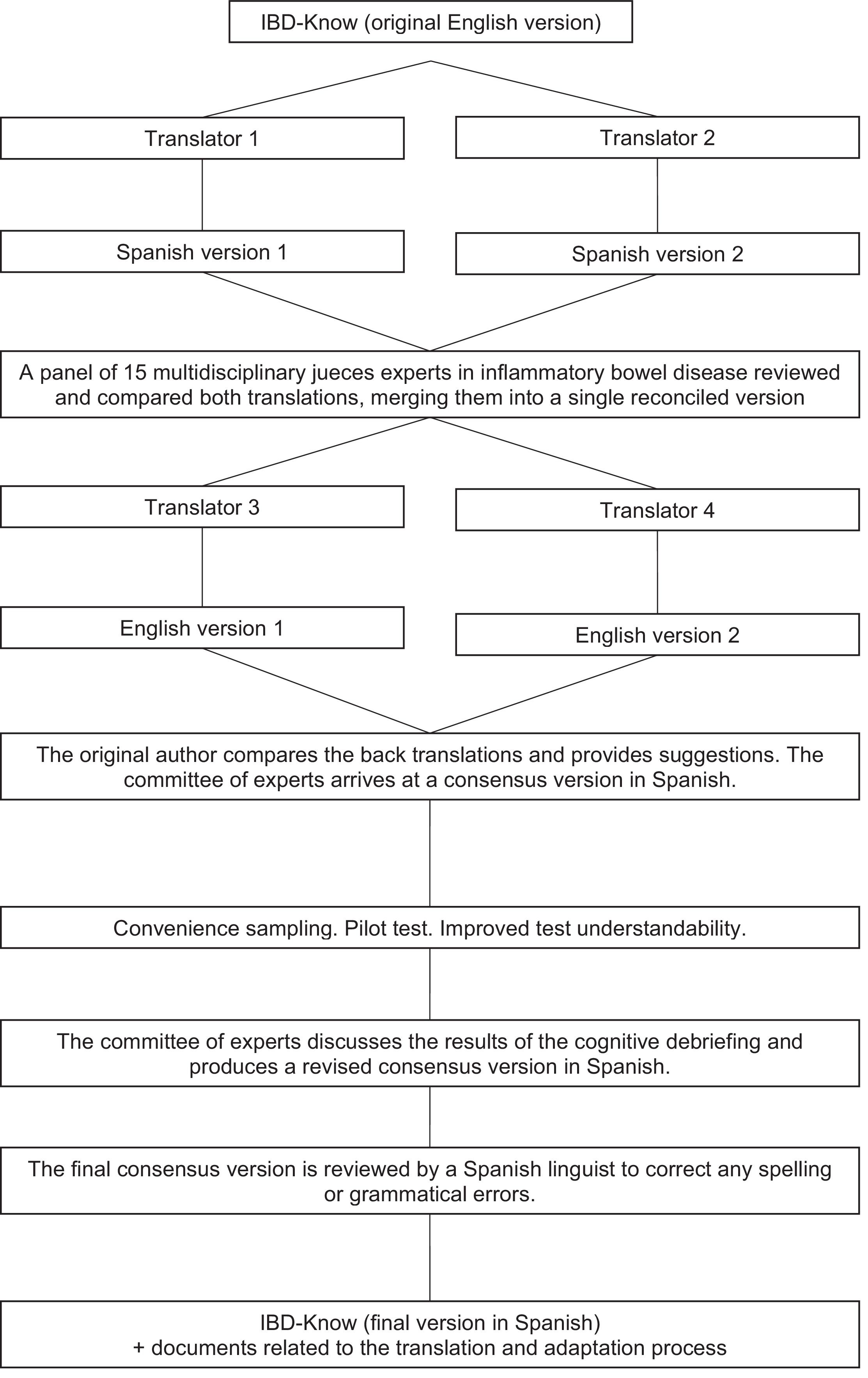
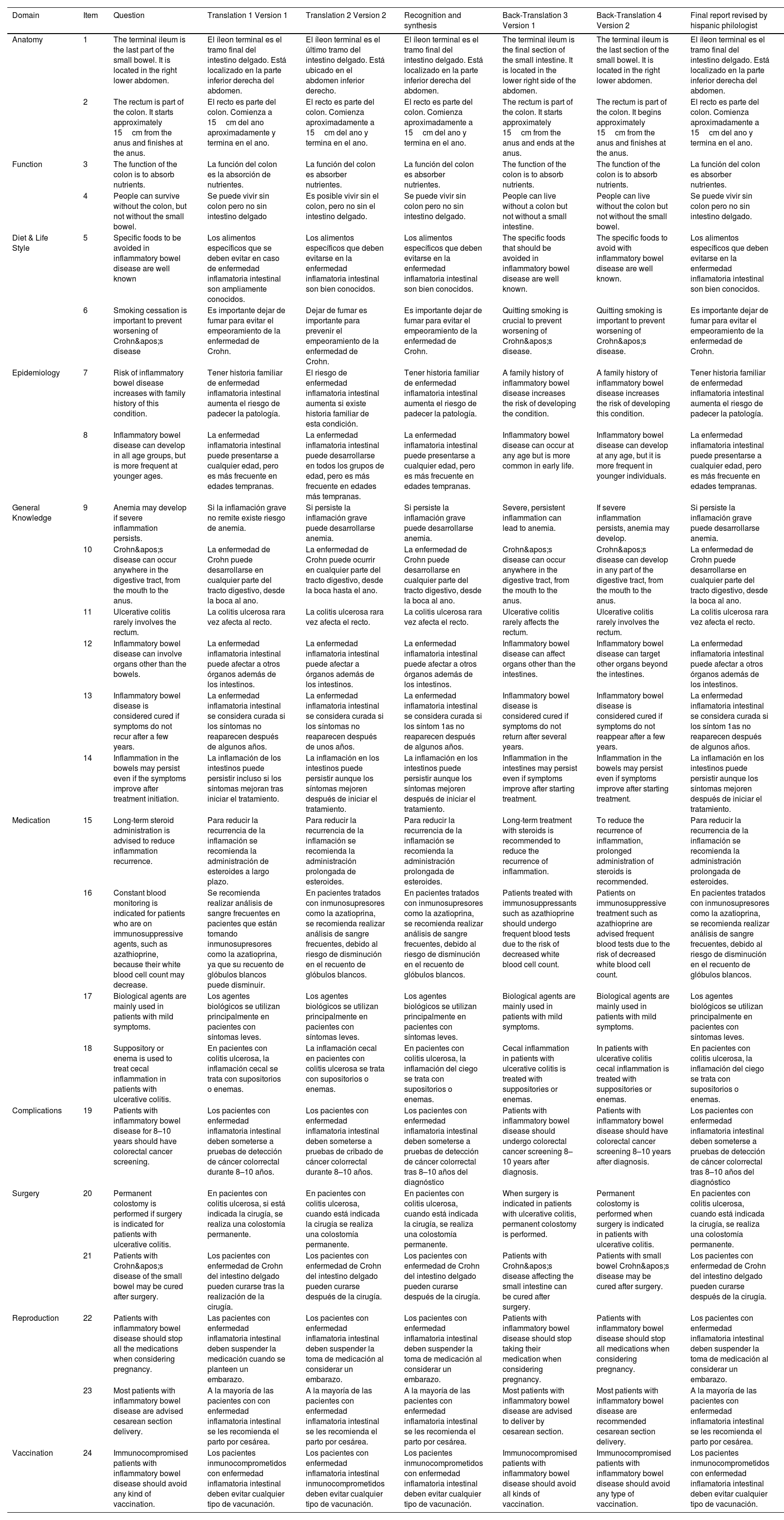
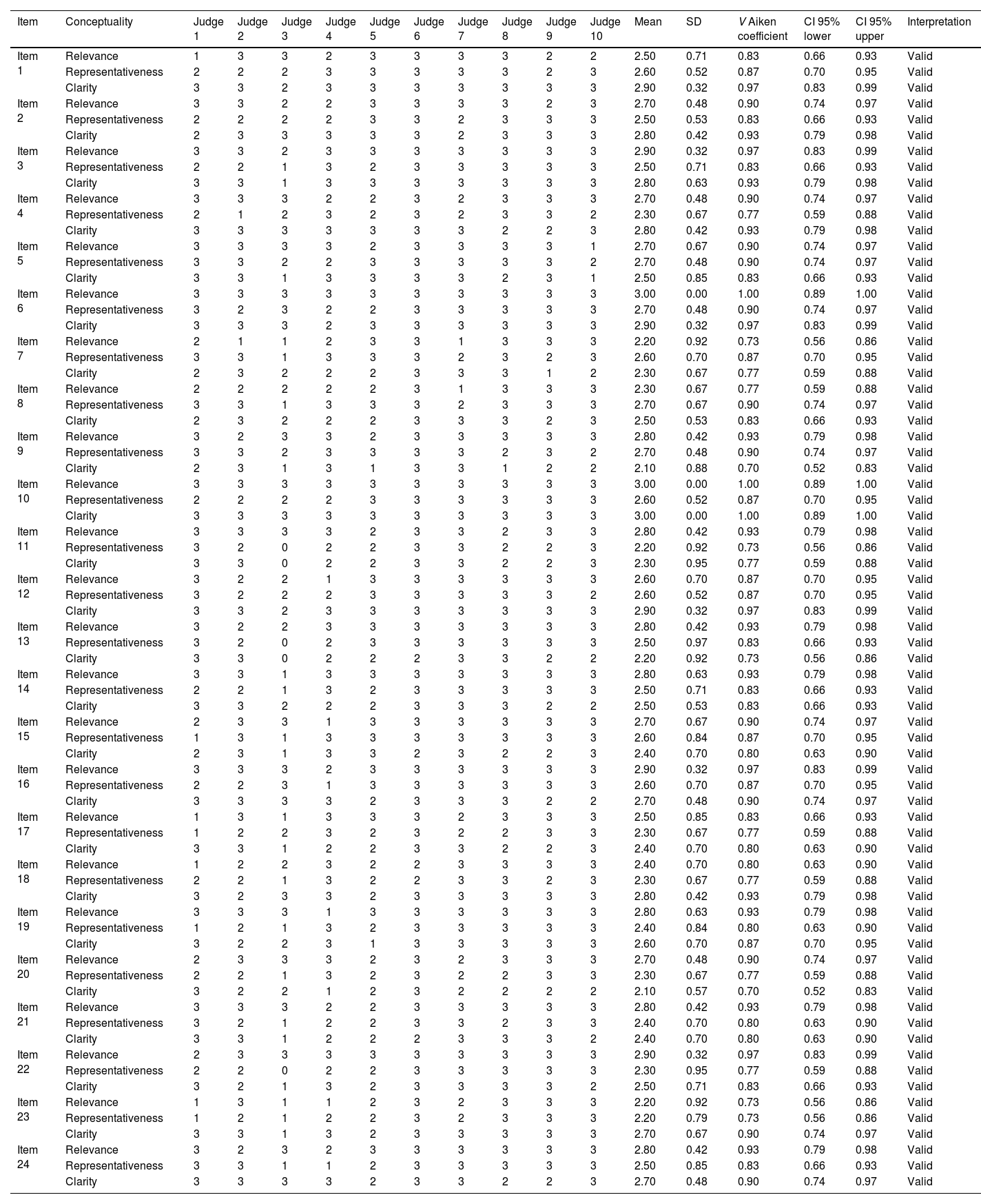
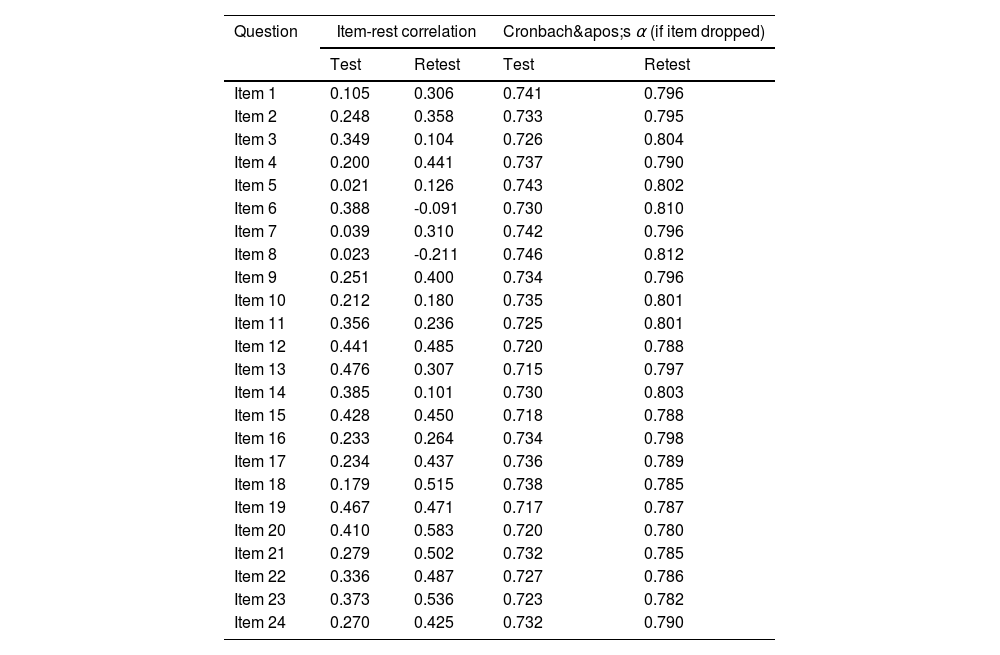
Patients and methodsA cross-sectional translation and linguistic validation study was conducted with 30 participants aged>18 years with Inflammatory Bowel Disease at the Miguel Servet University Hospital (Zaragoza, Spain). The IBD-KNOW questionnaire was translated and culturally adapted following ISPOR guidelines. Content validity was assessed by a panel of experts using Aiken's V coefficient. Internal consistency was evaluated using Cronbach's alpha, and test–retest reliability was assessed with the intraclass correlation coefficient (ICC). Descriptive analyses and bivariate tests were used to evaluate sociodemographic and clinical variables, as well as associations with IBD knowledge.
ResultsThe study assessed 30 adults (50% female) with an average age of 44.21±15.05 years; mean age at diagnosis 29.24±11.42 years and mean disease duration 14.97±8.70 years. The Spanish version of the IBD-KNOW demonstrated good internal consistency (Cronbach's α=0.74) and strong test–retest reliability (ICC=0.80; 95% CI: 0.62–0.89). No statistically significant differences were found between the test and retest scores (p=0.39) or completion times (p=0.736). The mean questionnaire score was 5.87±1.53 out of 10.
ConclusionsThe Spanish version of the IBD-KNOW questionnaire is a valid, reliable, and culturally appropriate instrument for assessing disease-related knowledge in Spanish-speaking IBD patients. Its use in clinical settings can support the identification of educational needs and the design of targeted interventions aimed at improving patient engagement and health outcomes.
Traducir, adaptar culturalmente y validar el cuestionario Inflammatory Bowel Disease Knowledge (IBD-KNOW) en pacientes adultos hispanohablantes con enfermedad inflamatoria intestinal (EII).
Pacientes y métodosSe realizó un estudio transversal de traducción y validación lingüística con 30 participantes mayores de 18 años con EII en el Hospital Universitario Miguel Servet (Zaragoza, España). El cuestionario IBD-KNOW fue traducido y adaptado culturalmente siguiendo las directrices de la ISPOR. La validez de contenido se evaluó mediante un panel de expertos utilizando el coeficiente V de Aiken. La consistencia interna se determinó con el alfa de Cronbach, y la fiabilidad test-retest se analizó mediante el coeficiente de correlación intraclase (CCI). Se realizaron análisis descriptivos y pruebas bivariadas para evaluar variables sociodemográficas y clínicas, así como su asociación con el nivel de conocimiento sobre la EII.
ResultadosSe evaluaron 30 adultos (50% mujeres) con una edad media de 44,21±15,05 años; edad media al diagnóstico de 29,24±11,42 años y una duración media de la enfermedad de 14,97±8,70 años. La versión en español del IBD-KNOW mostró buena consistencia interna (α de Cronbach=0,74) y alta fiabilidad test-retest (CCI=0,80; IC 95%: 0,62-0,89). No se encontraron diferencias estadísticamente significativas entre las puntuaciones del test y retest (p=0,39) ni en los tiempos de cumplimentación (p=0,736). La puntuación media del cuestionario fue de 5,87±1,53 sobre un máximo de 10.
ConclusionesLa versión en español del cuestionario IBD-KNOW es un instrumento válido, fiable y culturalmente adecuado para evaluar el conocimiento sobre la enfermedad en pacientes hispanohablantes con EII. Su uso en la práctica clínica puede facilitar la identificación de necesidades educativas y contribuir al diseño de intervenciones dirigidas a mejorar la implicación del paciente y los resultados en salud.