




Intussusception is a rare cause of intestinal obstruction in adults, with up to 90% of cases being secondary to underlying lesions.1
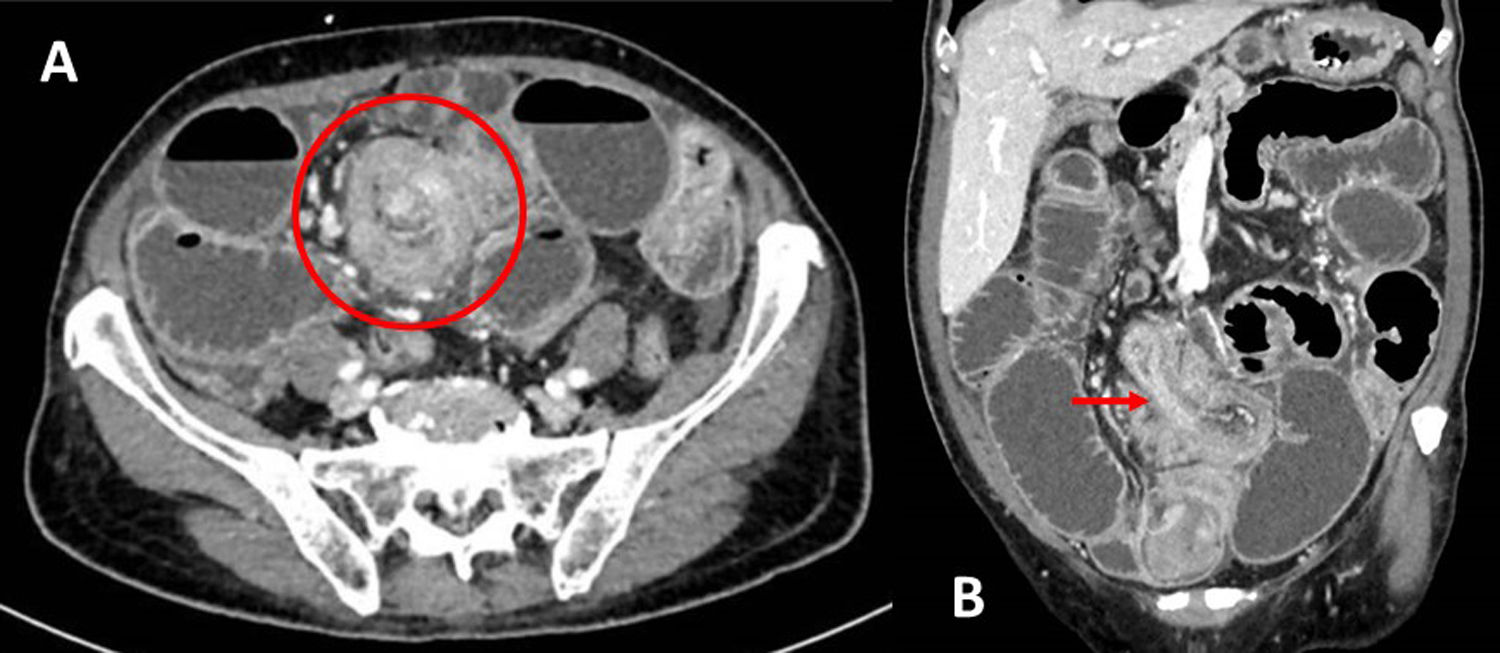
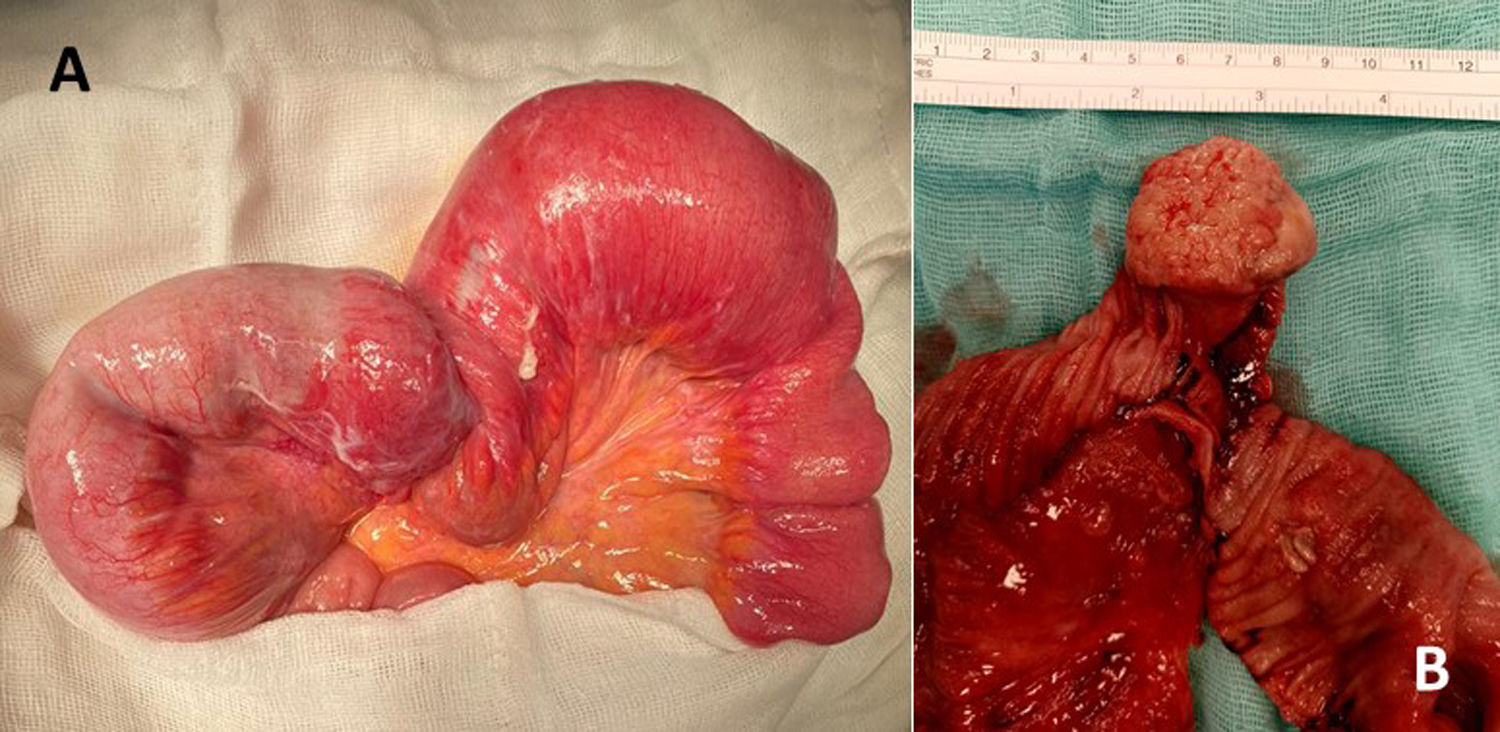
We present the case of a 70-year-old woman, with no relevant medical history or previous abdominal surgery, who was admitted due to intestinal obstruction. The CT scan revealed an ileo-ileal intussusception, probably secondary to an underlying lesion, with the characteristic "doughnut" or "target" sign (Fig. 1). An emergency explorative laparotomy was performed. The intraoperative findings are shown in Fig. 2.


After performing a bowel resection of the affected segment, the surgical specimen was sectioned, identifying an intraluminal polypoid lesion as the cause of the intussusception.
Histopathological examination of the specimen was consistent with an inflammatory fibroid polyp (IFP), or Vanek's tumour.
IFP is an extremely rare benign mesenchymal lesion of submucosal origin, most commonly found at the gastric antrum (66–75%), followed by the small intestine (18–20%) and colon/rectum (4–7%). Symptoms depend on the location and size; gastric IFPs are usually asymptomatic, while those in the bowel may cause anaemia, abdominal pain and, very rarely, obstruction due to intussusception.2
FundingThis study received no specific funding from public, private or non-profit organisations.
Conflicts of interestThe authors declare that they have no conflicts of interest.
