This study aimed to describe national and regional trends in infective endocarditis (IE) mortality in Spain.
MethodsThis ecological study analyzed IE mortality trends in Spain from 1999 to 2023 using data from the Spanish National Institute of Statistics. Age-standardized mortality rates (ASMRs) were calculated using direct standardization to the 2013 European Standard Population. Joinpoint regression analysis identified significant shifts in trend trajectories, calculating Annual Percentage Change (APC) and Average Annual Percent Change (AAPC). Regional disparities were assessed using Standardized Mortality Ratios (SMRs) for 2023.
ResultsBetween 1999 and 2023, 29,766 IE deaths occurred in Spain; 58.0% were women, and 89.0% were aged ≥65 years. Men's ASMR increased from 2.46 to 2.95 per 100,000 (AAPC: +1.2%), showing significant rise from 1999 to 2010 (APC: +2.1%) followed by stabilization. Conversely, women's ASMR declined from 2.60 to 2.00 per 100,000 (AAPC: −0.5%), with initial increase (1999–2017, APC: +0.9%) followed by marked decline (2017–2023, APC: −4.9%).
Regional variations were notable. Among men, Galicia (AAPC: +3.7%) and Asturias (+3.4%) showed steepest increases, while Castile and León declined (−3.0%). In 2023, Navarre (SMR: 2.01) and Galicia (SMR: 1.93) had nearly double national IE mortality risk. For women, Galicia had most pronounced increase (AAPC: 4.1%), while significant declines occurred in Castile and León (AAPC: −4.1%). In 2023, Navarre (SMR: 2.46) and Galicia (SMR: 2.00) exhibited significantly elevated mortality.
ConclusionsIE mortality in Spain exhibits complex sex-specific trends and persistent regional disparities, underscoring the need for targeted, equitable public health interventions.
Este estudio tuvo como objetivo describir las tendencias nacionales y regionales de mortalidad por endocarditis infecciosa (EI) en España.
MétodosSe realizó un estudio ecológico utilizando datos de defunciones del Instituto Nacional de Estadística entre 1999 y 2023. Se calcularon tasas de mortalidad ajustadas por edad (TMAE) mediante estandarización directa con la Población Estándar Europea de 2013. Se aplicó regresión de Joinpoint para identificar cambios significativos en las tendencias, estimando el cambio porcentual anual (CPA) y el cambio porcentual anual promedio (CPAP). Las disparidades regionales se evaluaron mediante razones de mortalidad estandarizadas (RME) para 2023.
ResultadosEntre 1999 y 2023 ocurrieron 29.766 muertes por EI; el 58,0% fueron mujeres y el 89,0% personas ≥65 años. En hombres, la TMAE subió de 2,46 a 2,95 por 100.000 (CPAP: +1,2%), con aumento hasta 2010 (CPA: +2,1%) y posterior estabilización. En mujeres, bajó de 2,60 a 2,00 (CPAP: -0,5%), con aumento inicial (1999–2017, CPA: +0,9%) seguido de descenso (2017–2023, CPA: -4,9%). Se observaron diferencias regionales. En hombres, Galicia (+3,7%) y Asturias (+3,4%) mostraron mayores aumentos, y Castilla y León bajó (-3,0%). En 2023, Navarra (RME 2,01) y Galicia (RME 1,93) duplicaron el riesgo nacional. En mujeres, Galicia aumentó más (+4,1%), mientras en Castilla y León descendió (-4,1%). Navarra (RME 2,46) y Galicia (RME 2,00) mostraron las tasas más altas.
ConclusionesLa mortalidad por EI en España presenta tendencias complejas según sexo y diferencias regionales persistentes, requiriendo estrategias de salud pública específicas y equitativas.
Infective endocarditis (IE) remains a major global health concern, with high mortality despite advances in diagnosis and treatment.1,2 Up to 25% of patients die within three months of diagnosis, and five-year survival is comparable to—or worse than—many common cancers.3 Between 1990 and 2021, global IE deaths more than doubled, from 36,883 to 77,844, largely due to population growth and ageing.1 However, age-standardized mortality rates (ASMRs) have remained relatively stable, reflecting improvements in early diagnosis, targeted antimicrobial therapy, and access to cardiac surgery.1
Despite these advances, in-hospital mortality remains substantial, ranging globally from 11.3% to 14.5%.4,5 In Spain, rates can reach 28.8%, depending on patient characteristics and study methods.6,7 However, in-hospital figures may only partially reflect the true burden. Post-discharge deaths further contribute to the burden: a Finnish registry study reported 8.2% mortality within 30 days of discharge.5 Furthermore, while IE remains a significant cause of death in official statistics, post-discharge mortality frequently reflects a combined effect of IE complications plus pre-existing health status,3,8,9 a limitation also seen in Spanish epidemiological studies focused on hospitalized populations.6,7,10,11
IE incidence in Spain has steadily increased over the past three decades, particularly among older adults. From 1992 to 2021, age-standardized incidence rates rose from 17.5 to 30.8 per 100,000 men and from 16.8 to 22.9 per 100,000 women.2 These trends mirror other high-income countries and are likely driven by ageing, rising chronic comorbidities, increased use of intravascular devices, and changing patterns of intravenous drug use. Shifts in microbiology, including rising Enterococcus and coagulase-negative staphylococci, further complicate treatment and may worsen outcomes.2,6–8,10–14
While recent studies have examined national IE mortality trends in Spain, regional differences remain unexplored.15 This represents a significant gap, particularly given Spain's decentralized healthcare system. Variations in access to care, resource allocation, and service quality across autonomous communities (ACs) could influence both management and outcomes.11 Furthermore, sex-specific trends and regional disparities in IE mortality remain largely unexplored in the literature.
To address these gaps, this study provides the first comprehensive analysis of IE-related mortality in Spain from 1999 to 2023, stratified by sex and AC. By examining temporal and regional patterns, our findings aim to inform targeted public health strategies and support equitable healthcare resource allocation.
MethodsStudy design and data sourceThis ecological study analyzed trends in IE mortality in Spain from 1999 to 2023. Mortality data were stratified by sex and autonomous community (AC) of residence. Annual death counts and population estimates were obtained from the Spanish National Institute of Statistics (INE).
IE deaths were identified using the International Classification of Diseases, 10th Revision (ICD-10) codes: B37.6 (Candidal endocarditis), I33.0 (Acute and subacute IE), I33.9 (IE, unspecified), and I38 (Endocarditis, valve unspecified). These codes are commonly employed in epidemiological studies to capture both specific and broader diagnostic categories of IE.2,9,15,16
Statistical analysisAge-standardized mortality rates (ASMRs) were calculated using the direct method, standardized to the 2013 European Standard Population. ASMRs were expressed per 100,000 person-years and computed annually for each sex and AC.
To assess changes over time, we conducted joinpoint regression analysis, which identifies statistically significant shifts in trend trajectories (“joinpoints”). For each time segment between joinpoints, the Annual Percentage Change (APC) was estimated along with its 95% confidence interval (CI). The Average Annual Percent Change (AAPC) was calculated as a weighted average of all APCs over the full study period (1999–2023), accounting for segment length.
We allowed a maximum of four joinpoints per model. Trends were categorized as increasing, decreasing, or stable based on the direction and statistical significance (p<0.05) of the APC or AAPC. Analyses were performed using the Joinpoint Regression Program, version 5.4.0.0 (US National Cancer Institute).
To assess regional variation in IE mortality for the year 2023, we calculated Standardized Mortality Ratios (SMRs) for each AC using indirect standardization. National age- and sex-specific IE mortality rates served as the reference to estimate expected deaths based on each AC's population structure.
SMRs were computed as the ratio of observed to expected deaths and interpreted as relative indicators of mortality burden. Ninety-five percent confidence intervals for SMRs were calculated using Byar's approximation. This approach allows identification of ACs with significantly higher or lower mortality than the national average, accounting for differences in demographic composition.
ResultsBetween 1999 and 2023, 29,766 deaths in Spain were attributed to infective endocarditis (IE), with women accounting for 17,272 (58.0%) and men 12,494 (42.0%). Most deaths (89.0%) occurred in individuals aged ≥65 years, while deaths in those <35 years were rare (0.6%).
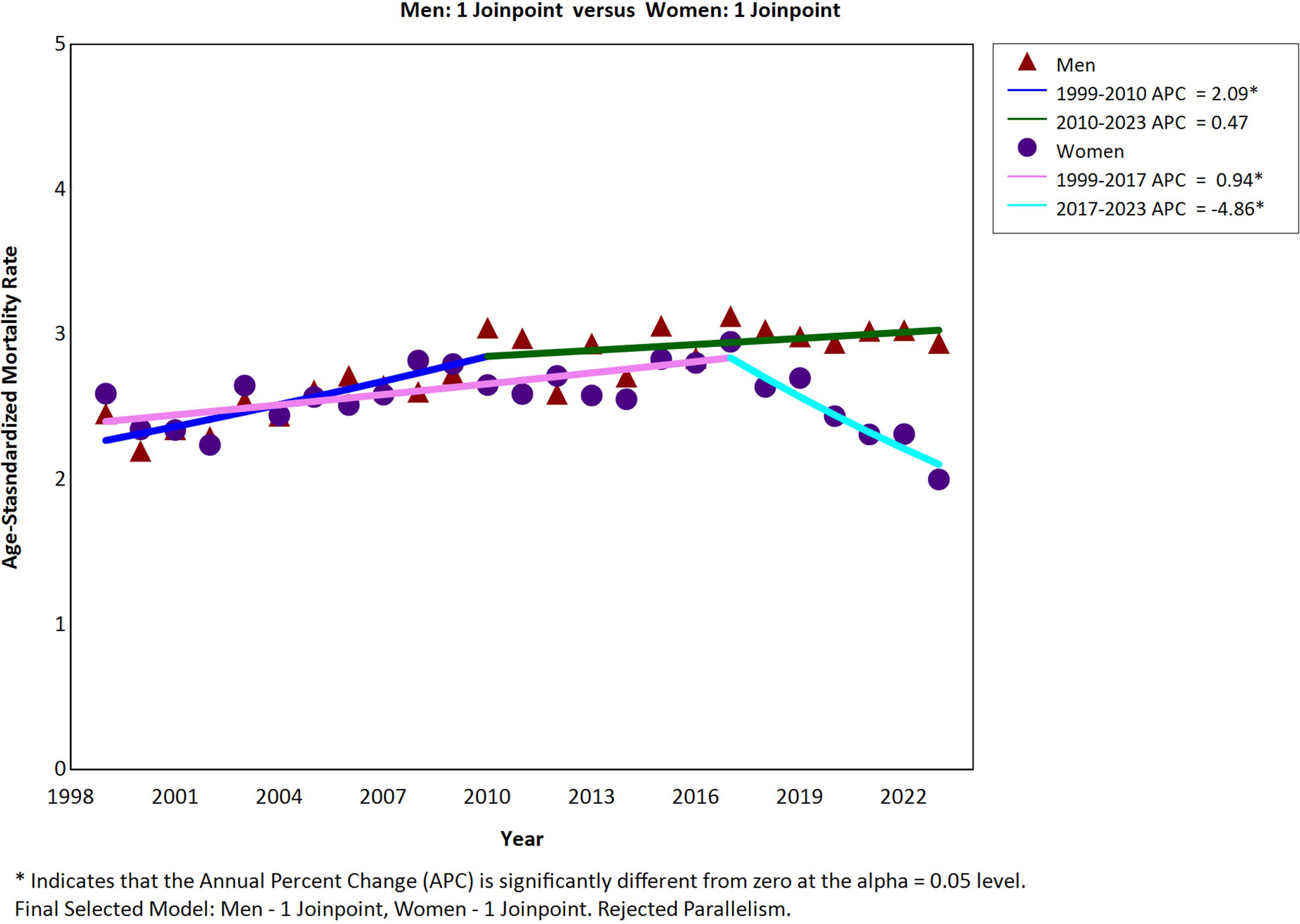
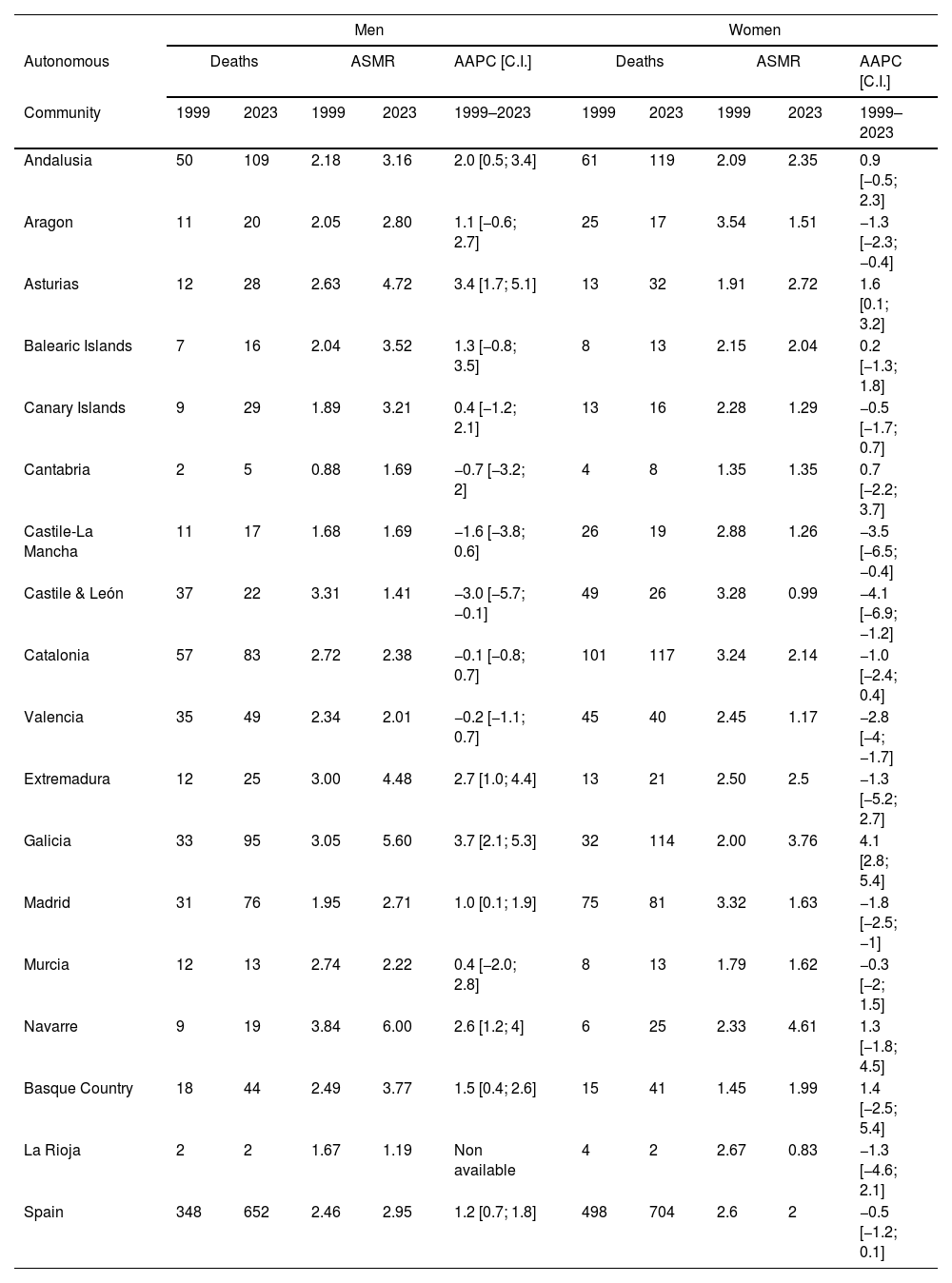
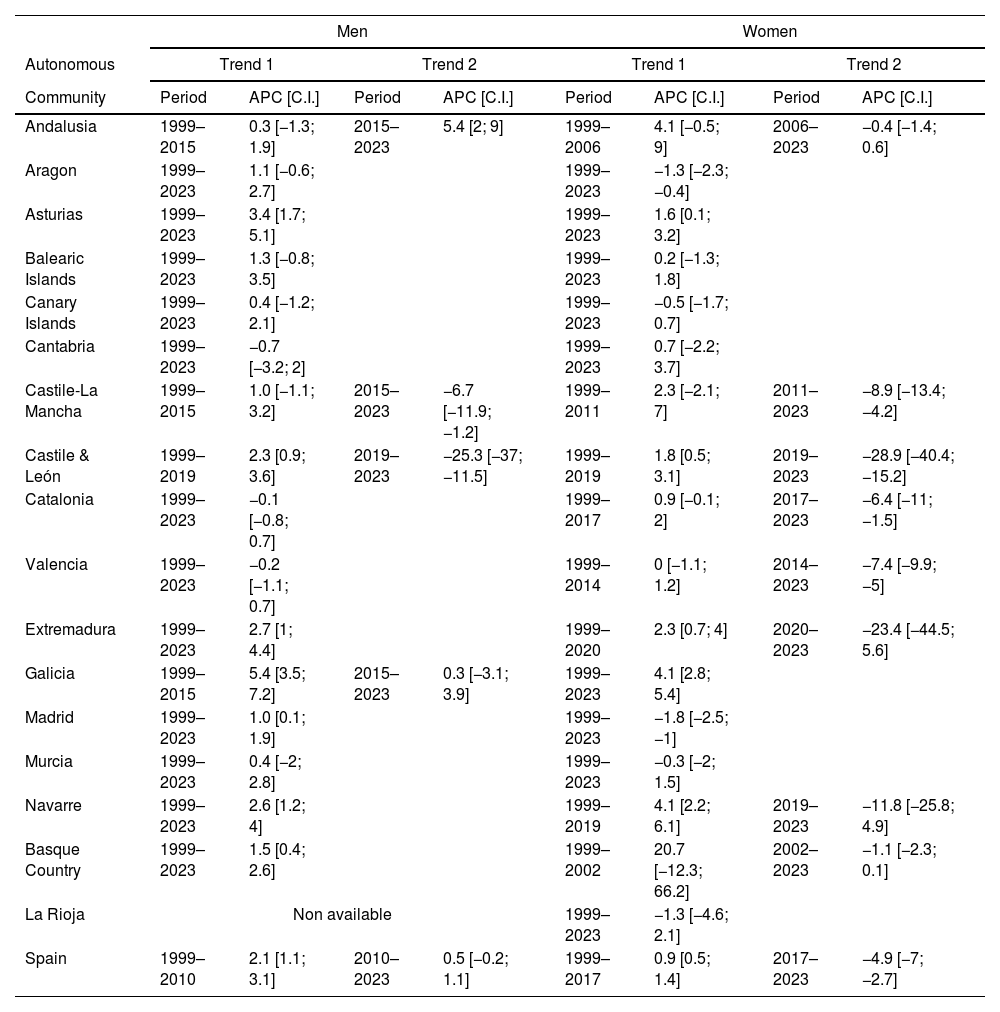
National ASMRs showed diverging trends between men and women over the study period (Tables 1 and 2 and Fig. 1). Among men, ASMR increased from 2.46 to 2.95 per 100,000 (AAPC: 1.2%; 95% CI: 0.7–1.8). Joinpoint analysis revealed a significant rise from 1999 to 2010 (APC: 2.1%; 95% CI: 1.1–3.1), followed by relative stability (2010–2023: APC 0.5%; 95% CI: −0.2 to 1.1). In contrast, women experienced an overall decline from 2.60 to 2.00 per 100,000 (AAPC: −0.5%; 95% CI: −1.2 to 0.1), with a two-phase pattern: a gradual increase from 1999 to 2017 (APC: 0.9%; 95% CI: 0.5–1.4) and a sharp decline from 2017–2023 (APC: −4.9%; 95% CI: −7.0 to −2.7).
Infective endocarditis mortality in Spain and its Autonomous Communities: Number of deaths in 1999 and 2023, age-standardized mortality rates (ASMR) in 1999 and 2023 and the average annual percentage change (AAPC) for the period 1999–2023 by sex.
| Men | Women | |||||||||
|---|---|---|---|---|---|---|---|---|---|---|
| Autonomous | Deaths | ASMR | AAPC [C.I.] | Deaths | ASMR | AAPC [C.I.] | ||||
| Community | 1999 | 2023 | 1999 | 2023 | 1999–2023 | 1999 | 2023 | 1999 | 2023 | 1999–2023 |
| Andalusia | 50 | 109 | 2.18 | 3.16 | 2.0 [0.5; 3.4] | 61 | 119 | 2.09 | 2.35 | 0.9 [−0.5; 2.3] |
| Aragon | 11 | 20 | 2.05 | 2.80 | 1.1 [−0.6; 2.7] | 25 | 17 | 3.54 | 1.51 | −1.3 [−2.3; −0.4] |
| Asturias | 12 | 28 | 2.63 | 4.72 | 3.4 [1.7; 5.1] | 13 | 32 | 1.91 | 2.72 | 1.6 [0.1; 3.2] |
| Balearic Islands | 7 | 16 | 2.04 | 3.52 | 1.3 [−0.8; 3.5] | 8 | 13 | 2.15 | 2.04 | 0.2 [−1.3; 1.8] |
| Canary Islands | 9 | 29 | 1.89 | 3.21 | 0.4 [−1.2; 2.1] | 13 | 16 | 2.28 | 1.29 | −0.5 [−1.7; 0.7] |
| Cantabria | 2 | 5 | 0.88 | 1.69 | −0.7 [−3.2; 2] | 4 | 8 | 1.35 | 1.35 | 0.7 [−2.2; 3.7] |
| Castile-La Mancha | 11 | 17 | 1.68 | 1.69 | −1.6 [−3.8; 0.6] | 26 | 19 | 2.88 | 1.26 | −3.5 [−6.5; −0.4] |
| Castile & León | 37 | 22 | 3.31 | 1.41 | −3.0 [−5.7; −0.1] | 49 | 26 | 3.28 | 0.99 | −4.1 [−6.9; −1.2] |
| Catalonia | 57 | 83 | 2.72 | 2.38 | −0.1 [−0.8; 0.7] | 101 | 117 | 3.24 | 2.14 | −1.0 [−2.4; 0.4] |
| Valencia | 35 | 49 | 2.34 | 2.01 | −0.2 [−1.1; 0.7] | 45 | 40 | 2.45 | 1.17 | −2.8 [−4; −1.7] |
| Extremadura | 12 | 25 | 3.00 | 4.48 | 2.7 [1.0; 4.4] | 13 | 21 | 2.50 | 2.5 | −1.3 [−5.2; 2.7] |
| Galicia | 33 | 95 | 3.05 | 5.60 | 3.7 [2.1; 5.3] | 32 | 114 | 2.00 | 3.76 | 4.1 [2.8; 5.4] |
| Madrid | 31 | 76 | 1.95 | 2.71 | 1.0 [0.1; 1.9] | 75 | 81 | 3.32 | 1.63 | −1.8 [−2.5; −1] |
| Murcia | 12 | 13 | 2.74 | 2.22 | 0.4 [−2.0; 2.8] | 8 | 13 | 1.79 | 1.62 | −0.3 [−2; 1.5] |
| Navarre | 9 | 19 | 3.84 | 6.00 | 2.6 [1.2; 4] | 6 | 25 | 2.33 | 4.61 | 1.3 [−1.8; 4.5] |
| Basque Country | 18 | 44 | 2.49 | 3.77 | 1.5 [0.4; 2.6] | 15 | 41 | 1.45 | 1.99 | 1.4 [−2.5; 5.4] |
| La Rioja | 2 | 2 | 1.67 | 1.19 | Non available | 4 | 2 | 2.67 | 0.83 | −1.3 [−4.6; 2.1] |
| Spain | 348 | 652 | 2.46 | 2.95 | 1.2 [0.7; 1.8] | 498 | 704 | 2.6 | 2 | −0.5 [−1.2; 0.1] |
C.I.: confidence interval 95%.
Infective endocarditis mortality in Spain and its Autonomous Communities (1999–2023): results of joinpoint regression analysis by sex.
| Men | Women | |||||||
|---|---|---|---|---|---|---|---|---|
| Autonomous | Trend 1 | Trend 2 | Trend 1 | Trend 2 | ||||
| Community | Period | APC [C.I.] | Period | APC [C.I.] | Period | APC [C.I.] | Period | APC [C.I.] |
| Andalusia | 1999–2015 | 0.3 [−1.3; 1.9] | 2015–2023 | 5.4 [2; 9] | 1999–2006 | 4.1 [−0.5; 9] | 2006–2023 | −0.4 [−1.4; 0.6] |
| Aragon | 1999–2023 | 1.1 [−0.6; 2.7] | 1999–2023 | −1.3 [−2.3; −0.4] | ||||
| Asturias | 1999–2023 | 3.4 [1.7; 5.1] | 1999–2023 | 1.6 [0.1; 3.2] | ||||
| Balearic Islands | 1999–2023 | 1.3 [−0.8; 3.5] | 1999–2023 | 0.2 [−1.3; 1.8] | ||||
| Canary Islands | 1999–2023 | 0.4 [−1.2; 2.1] | 1999–2023 | −0.5 [−1.7; 0.7] | ||||
| Cantabria | 1999–2023 | −0.7 [−3.2; 2] | 1999–2023 | 0.7 [−2.2; 3.7] | ||||
| Castile-La Mancha | 1999–2015 | 1.0 [−1.1; 3.2] | 2015–2023 | −6.7 [−11.9; −1.2] | 1999–2011 | 2.3 [−2.1; 7] | 2011–2023 | −8.9 [−13.4; −4.2] |
| Castile & León | 1999–2019 | 2.3 [0.9; 3.6] | 2019–2023 | −25.3 [−37; −11.5] | 1999–2019 | 1.8 [0.5; 3.1] | 2019–2023 | −28.9 [−40.4; −15.2] |
| Catalonia | 1999–2023 | −0.1 [−0.8; 0.7] | 1999–2017 | 0.9 [−0.1; 2] | 2017–2023 | −6.4 [−11; −1.5] | ||
| Valencia | 1999–2023 | −0.2 [−1.1; 0.7] | 1999–2014 | 0 [−1.1; 1.2] | 2014–2023 | −7.4 [−9.9; −5] | ||
| Extremadura | 1999–2023 | 2.7 [1; 4.4] | 1999–2020 | 2.3 [0.7; 4] | 2020–2023 | −23.4 [−44.5; 5.6] | ||
| Galicia | 1999–2015 | 5.4 [3.5; 7.2] | 2015–2023 | 0.3 [−3.1; 3.9] | 1999–2023 | 4.1 [2.8; 5.4] | ||
| Madrid | 1999–2023 | 1.0 [0.1; 1.9] | 1999–2023 | −1.8 [−2.5; −1] | ||||
| Murcia | 1999–2023 | 0.4 [−2; 2.8] | 1999–2023 | −0.3 [−2; 1.5] | ||||
| Navarre | 1999–2023 | 2.6 [1.2; 4] | 1999–2019 | 4.1 [2.2; 6.1] | 2019–2023 | −11.8 [−25.8; 4.9] | ||
| Basque Country | 1999–2023 | 1.5 [0.4; 2.6] | 1999–2002 | 20.7 [−12.3; 66.2] | 2002–2023 | −1.1 [−2.3; 0.1] | ||
| La Rioja | Non available | 1999–2023 | −1.3 [−4.6; 2.1] | |||||
| Spain | 1999–2010 | 2.1 [1.1; 3.1] | 2010–2023 | 0.5 [−0.2; 1.1] | 1999–2017 | 0.9 [0.5; 1.4] | 2017–2023 | −4.9 [−7; −2.7] |
APC: Annual Percentage Change; C.I.: confidence interval 95%.

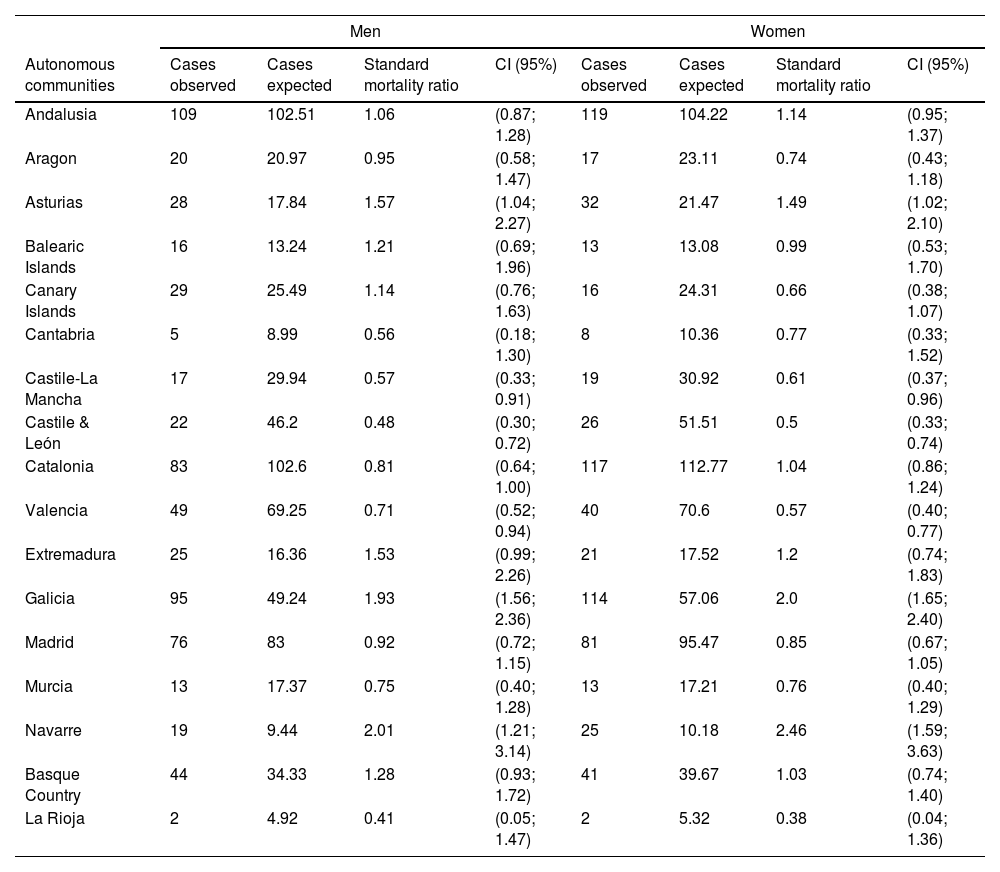
Considerable regional variation was observed across Spain's autonomous communities (ACs) (Tables 1 and 2). Among men, Galicia (AAPC: 3.7%; 95% CI: 2.1–5.3), Asturias (3.4%; 95% CI: 1.7–5.1), and Extremadura (2.7%; 95% CI: 1.0–4.4) showed the largest long-term increases, while Castile and León (−3.0%; 95% CI: −5.7 to −0.1) and Castile-La Mancha (−1.6%; 95% CI: −3.8 to 0.6) declined. Notable trend reversals occurred in Galicia after 2015 (APC 0.3%) and Castile and León after 2019 (APC −25.3%). Corresponding 2023 SMRs (Table 3) were highest in Navarre (2.01) and Galicia (1.93) and lowest in La Rioja (0.41) and Castile and León (0.48). Male ASMRs were highest in Navarre (6.00 per 100,000) and Galicia (5.60), and lowest in La Rioja (1.19) and Castile and León (1.41).
Infective Endocarditis Mortality in Spain (2023): sex-disaggregated data by autonomous community.
| Men | Women | |||||||
|---|---|---|---|---|---|---|---|---|
| Autonomous communities | Cases observed | Cases expected | Standard mortality ratio | CI (95%) | Cases observed | Cases expected | Standard mortality ratio | CI (95%) |
| Andalusia | 109 | 102.51 | 1.06 | (0.87; 1.28) | 119 | 104.22 | 1.14 | (0.95; 1.37) |
| Aragon | 20 | 20.97 | 0.95 | (0.58; 1.47) | 17 | 23.11 | 0.74 | (0.43; 1.18) |
| Asturias | 28 | 17.84 | 1.57 | (1.04; 2.27) | 32 | 21.47 | 1.49 | (1.02; 2.10) |
| Balearic Islands | 16 | 13.24 | 1.21 | (0.69; 1.96) | 13 | 13.08 | 0.99 | (0.53; 1.70) |
| Canary Islands | 29 | 25.49 | 1.14 | (0.76; 1.63) | 16 | 24.31 | 0.66 | (0.38; 1.07) |
| Cantabria | 5 | 8.99 | 0.56 | (0.18; 1.30) | 8 | 10.36 | 0.77 | (0.33; 1.52) |
| Castile-La Mancha | 17 | 29.94 | 0.57 | (0.33; 0.91) | 19 | 30.92 | 0.61 | (0.37; 0.96) |
| Castile & León | 22 | 46.2 | 0.48 | (0.30; 0.72) | 26 | 51.51 | 0.5 | (0.33; 0.74) |
| Catalonia | 83 | 102.6 | 0.81 | (0.64; 1.00) | 117 | 112.77 | 1.04 | (0.86; 1.24) |
| Valencia | 49 | 69.25 | 0.71 | (0.52; 0.94) | 40 | 70.6 | 0.57 | (0.40; 0.77) |
| Extremadura | 25 | 16.36 | 1.53 | (0.99; 2.26) | 21 | 17.52 | 1.2 | (0.74; 1.83) |
| Galicia | 95 | 49.24 | 1.93 | (1.56; 2.36) | 114 | 57.06 | 2.0 | (1.65; 2.40) |
| Madrid | 76 | 83 | 0.92 | (0.72; 1.15) | 81 | 95.47 | 0.85 | (0.67; 1.05) |
| Murcia | 13 | 17.37 | 0.75 | (0.40; 1.28) | 13 | 17.21 | 0.76 | (0.40; 1.29) |
| Navarre | 19 | 9.44 | 2.01 | (1.21; 3.14) | 25 | 10.18 | 2.46 | (1.59; 3.63) |
| Basque Country | 44 | 34.33 | 1.28 | (0.93; 1.72) | 41 | 39.67 | 1.03 | (0.74; 1.40) |
| La Rioja | 2 | 4.92 | 0.41 | (0.05; 1.47) | 2 | 5.32 | 0.38 | (0.04; 1.36) |
C.I.: confidence interval 95%.
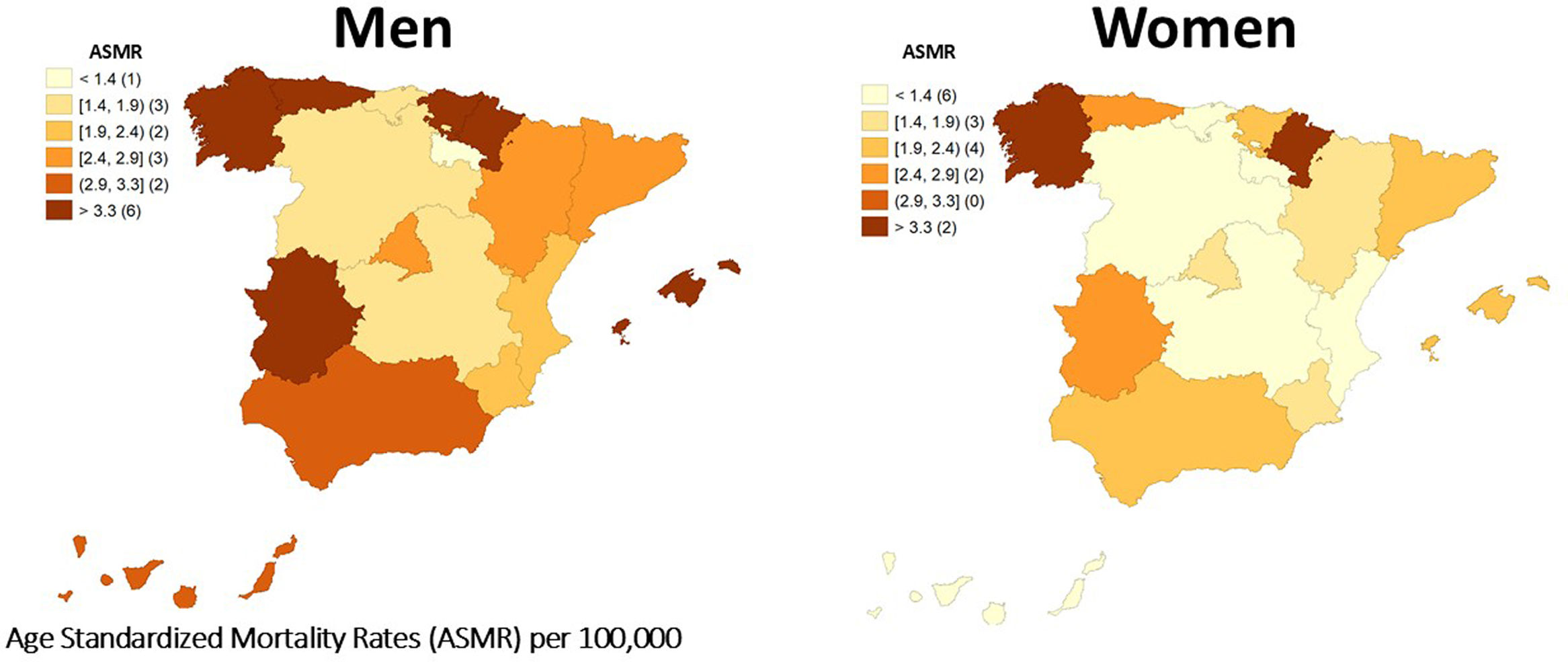
Among women, Galicia (AAPC: 4.1%; 95% CI: 2.8–5.4) and Asturias (1.6%; 95% CI: 0.1–3.2) showed the greatest long-term increases, while Castile and León (−4.1%; 95% CI: −6.9 to −1.2), Castile-La Mancha (−3.5%; 95% CI: −6.5 to −0.4), and the Valencian Community (−2.8%; 95% CI: −4.0 to −1.7) declined. Trend reversals were also seen, e.g., Navarre increased until 2019 (APC 4.1%) then declined (2019–2023: APC −11.8%). Female SMRs (Table 3) in 2023 were highest in Navarre (2.46) and Galicia (2.00) and lowest in Castile and León (0.50) and the Valencian Community (0.57). Corresponding ASMRs were highest in Navarre (4.61 per 100,000) and Galicia (3.76) and lowest in Castile and León (0.99) and La Rioja (0.83) (Fig. 2).
Discussion
This nationwide study provides the first comprehensive analysis of long-term trends in IE mortality across Spain's autonomous communities, revealing marked regional disparities and significant differences in mortality trends between men and women over the 25-year study period. Our findings indicate that IE remains a significant cause of death, with substantial geographic and demographic inequalities in outcomes within Spain's healthcare system. By extending previous national analyses with detailed sex- and region-specific data, this study highlights the complex patterns underlying IE mortality trends and underscores the need for targeted interventions to address persistent disparities across Spanish regions.15 We recorded over 29,000 IE-related deaths during the study period, with the age distribution showing that nearly 90% occurred in individuals aged 65 or older, reflecting the changing epidemiological landscape of this condition in Spain.
Globally, while the total number of IE deaths has risen due to ageing populations, age-standardized mortality rates (ASMRs) have generally stabilized or slightly decreased. This likely reflects progress in diagnosis, antimicrobial treatments, and surgical care.1,4 The evolution of international guidelines (ESC 2015, AHA 2005, updated ESC 2023) and their increasing implementation likely contributed to the observed mortality stabilization after 2010, enhancing early detection and clinical decision-making across Spanish healthcare centres. Our study aligns with this global pattern but highlights important variations specific to sex and region within Spain.
We recorded over 29,000 IE-related deaths during the study period, with nearly 90% occurring in individuals aged 65 or older. This suggests the growing impact of IE on older adults, often linked to degenerative valve disease, prosthetic valves, cardiac implantable electronic devices, and weakened immune systems.1,2,4,15,17 The changing epidemiological profile of IE, with shifting risk factors over the past 15–20 years, may contribute to these patterns. Improved communication between medical and surgical teams, along with broader surgical consideration for appropriate elderly candidates, could potentially improve outcomes, though current surgical rates remain suboptimal in many regions.18
We observed different ASMR trends by sex: an increase followed by stability in men, and an increase followed by a decline in women. These patterns differ from the relatively stable global trends reported elsewhere,1,4,17 likely due to changes in IE risk factors, differences in healthcare access, and sex-specific behaviours related to health-seeking and care delivery in Spain.6,8,11,13,19
Sex-specific trends reveal differences in IE risk factors and care delivery. The rise in male mortality up to 2010 may be associated with an increase in invasive medical procedures and devices, such as central venous catheters and cardiac implantable electronic devices, which are established risk factors for healthcare-associated IE (HAIE) in both men and women.20 These procedures, while essential, elevate infection risk, particularly in older individuals with comorbidities,21,22 and are often linked to aggressive pathogens like Staphylococcus aureus and Enterococcus spp., which carry high fatality rates.23–25 The stabilization of male age-standardized mortality rates (ASMRs) after 2010 may reflect improvements in infection control, earlier diagnosis, and targeted antimicrobial therapies, alongside greater attention to modifiable risk factors such as poor oral hygiene.26
Conversely, the decline in female ASMRs since 2017 is a positive trend that may indicate overall improvements in IE care for women. Increased clinical awareness of IE in older women, who have historically been under-recognized in cardiovascular care, has likely led to earlier diagnosis and quicker interventions. The wider adoption of multidisciplinary endocarditis teams, advancements in imaging and microbiologic diagnostics, and more equitable surgical decision-making have likely improved outcomes for women.7,12,26 Notably, prosthetic valve IE, which affects women disproportionly,27 may now be more effectively prevented or managed due to potential improvements in prosthesis design, while advances in perioperative care and infection surveillance are primarily associated with reduced incidence of IE, particularly S. aureus, rather than directly with mortality. Furthermore, growing awareness of sex differences in cardiovascular disease may have contributed to the recent improvement in women's outcomes.
Broader epidemiological changes have influenced IE mortality trends. The decline in intravenous drug use in Spain between 2003 and 2014 reduced the incidence of IE in people who inject drugs, a group often at high risk of early mortality due to delayed care or polymicrobial infection.6,14 As this risk factor decreased, the proportion of severe IE cases may have declined. However, this has been partially offset by a rise in healthcare-associated IE among older adults with frailty and limited physiological reserve, who are inherently at higher risk of poor outcomes. Surgical management is often not offered to people who inject drugs due to comorbidities and social challenges; however, integrated approaches—including addiction-focused therapy, comprehensive medical care, and harm-reduction programmes—could improve prognosis and reduce mortality in this vulnerable population.
Key advances in IE diagnostics have also shaped mortality trends. Transoesophageal echocardiography and PET/CT are now considered essential, particularly for prosthetic valve endocarditis, while improvements in blood culture systems—achieved decades ago—allow detection of fastidious organisms such as HACEK. More recently, increasing clinical awareness—through vigilance in high-risk patients, evaluation of fever of unknown origin, and attention to gram-positive bacteraemia—has improved timely diagnosis and management. While these advances may appear to affect incidence, their main contribution is likely to clinical decision-making and outcomes rather than true disease occurrence.28
Our findings also confirm ongoing regional disparities in IE incidence, treatment, and mortality. Mortality remains disproportionately high in regions like Navarre, Galicia, and Asturias, even after adjusting for demographics. This suggests potential inequalities within Spain's national health system and aligns with previous studies reporting variations in IE epidemiology, microbiology, clinical features, and outcomes across regions.6,7,10,11
Several factors likely contribute to higher mortality in certain regions. Advanced age, comorbidities (e.g., diabetes, chronic kidney disease), and the presence of prosthetic heart valves—all increasing mortality risk11,14 —are more prevalent in some ACs. Additionally, regions with higher rates of healthcare-associated IE, often linked to frailty and complex health needs, tend to experience worse outcomes.24 A key factor driving these disparities is unequal access to specialized cardiac surgery, which is crucial for IE management.29 Although Spain has a universal health system, surgical capacity varies significantly between regions. Regional surgical capacity limitations critically impact outcomes. Navarre's lack of in-region cardiac surgery facilities necessitates inter-regional transfers, directly contributing to elevated mortality ratios. Formal referral networks and shared surgical services could mitigate these access barriers.
Patients who do not undergo surgery for IE face significantly higher mortality. However, this association is often confounded by comorbidities and contraindications that independently worsen prognosis. More directly, delays in performing indicated surgery may critically increase mortality risk. Concentrating IE surgery in specialized reference centres could improve outcomes by consolidating expertise, provided that efficient referral pathways and redistribution of other surgical workloads minimize waiting times for these high-risk patients.
Inconsistent implementation of multidisciplinary Endocarditis Teams contributes to regional disparities in outcomes.11 These teams improve diagnostic accuracy, streamline treatment, and increase surgical referrals. While their presence across Spain remains uneven, their adoption represents an important opportunity to reduce mortality and improve equity of care.30 Their deployment in regions with limited access to cardiac surgery could particularly help mitigate regional disparities, although nationwide data on team distribution are not yet available.
Social and economic disparities further worsen these differences. Individuals from lower-income backgrounds often experience delays in diagnosis and treatment due to limited health literacy, language or cultural barriers, and poor access to primary or emergency care. Vulnerable groups, such as people experiencing homelessness, social exclusion, or substance use disorders, are particularly at risk for poor outcomes and frequent readmissions.31
Other regional factors, such as hospital experience, surgical volume, and the efficiency of patient transfer systems, also influence outcomes. While interregional transfers might skew hospital-based mortality figures, our use of residence-based INE data minimizes this bias.11
Lastly, geographic distribution plays a role. Densely populated autonomous communities like Madrid, Cantabria, and Murcia report higher surgical rates, likely due to better proximity to specialized centres and more efficient care pathways. In contrast, rural regions like Aragon and Castile-La Mancha face logistical barriers that hinder timely access to advanced care.11
This study has several key strengths. It uses a nationwide mortality database covering 25 years (1999–2023), offering a clear picture of long-term trends in infective endocarditis (IE) deaths across Spain. Consistent ICD-10 coding improves the accuracy of cause-of-death data and supports comparisons over time and between regions. Joinpoint regression strengthens the analysis by identifying real changes in trends without relying on fixed time periods.
Despite its strengths, the study has limitations Mortality data rely on death certificates coded by trained INE personnel, but misclassification may occur. Non-infective forms of endocarditis or deaths primarily driven by comorbidities (e.g., acute heart failure, sepsis, or stroke) might be misclassified as IE, potentially inflating mortality estimates. Because of its ecological design, the study cannot determine individual-level causes of death. We lacked detailed clinical data such as comorbidities, infection type, or treatment, which are important for understanding why people die from IE. Regional differences in diagnosis, reporting, or healthcare access may also explain some of the mortality variation, not just true differences in disease patterns.
Because of its ecological design, the study cannot determine individual-level causes of death, and we lacked detailed clinical data such as comorbidities, infection type, or treatment, which are essential for understanding why patients die from IE. Additionally, regional differences in diagnosis, reporting, or healthcare access may contribute to observed mortality variation, not solely true differences in disease patterns. Therefore, while IE was recorded as the underlying cause of death, some deaths may reflect the combined impact of IE and pre-existing conditions rather than IE alone.
This study highlights the need for region-specific strategies to reduce infective endocarditis (IE) mortality in Spain. Key priorities include promoting earlier diagnosis, optimizing referral pathways, ensuring timely access to cardiac surgery, and reinforcing antimicrobial stewardship—particularly in high-mortality regions such as Navarre, Galicia, and Asturias. These interventions are essential to improving outcomes and reducing preventable deaths.
The observed sex-specific mortality trends suggest potential disparities in diagnosis, treatment, or access to care that merit further investigation. A gender-sensitive approach to IE management, supported by equitable access to diagnostics and interventions, may help address underlying differences in outcomes between men and women.
Persistent geographic and socioeconomic inequalities in IE mortality point to deeper structural barriers within the healthcare system. Targeted investments in underserved regions, improved diagnostic capacity, and outreach to vulnerable populations will be critical to mitigating these disparities. Policymakers should prioritize resource allocation strategies that enhance care delivery in high-burden areas, with an emphasis on early detection, multidisciplinary management, and coordinated post-discharge care.
Ultimately, a comprehensive, equity-focused national strategy—grounded in surveillance data, regional analysis, and evidence-based interventions—is essential to reducing the burden of IE and improving health outcomes across Spain.
ConclusionIE mortality in Spain exhibits complex sex-specific trends and persistent regional disparities, underscoring the need for targeted, equitable public health interventions.
- •
Infective endocarditis (IE) remains a serious global health challenge, with high mortality rates despite stabilization of age-standardised rates in many countries.
- •
In Spain, IE primarily affects older adults, and in-hospital mortality is substantial, although post-discharge deaths are often not captured.
- •
Risk factors for IE, including degenerative valve disease, prosthetic valves, and cardiac implantable devices, have shifted over recent decades, influencing outcomes.
- •
This is the first nationwide, long-term (1999–2023) analysis of IE mortality in Spain, stratified by sex and autonomous community.
- •
It reveals divergent trends: men's mortality rates initially increased then stabilized, while women's rates show an initial rise followed by a recent significant decline.
- •
Persistent geographic disparities are identified, with regions such as Navarre and Galicia showing consistently higher mortality for both sexes.
L. Cayuela: conceptualization of the topic, methodology, analysis of data and results, review and editing of the manuscript and writing the original draft. P. del Valle Loarte: methodology, analysis of data and results, and review and editing of the manuscript. B. Valle Borrego: methodology, analysis of data and results, and review and editing of the manuscript. A. Cayuela: preparation of the databases, conceptualization of the topic, writing the original draft, methodology, analysis of results, review and editing of the manuscript, and supervision of the manuscript.
Ethical considerationsThis study used anonymized, publicly available data from the Spanish National Institute of Statistics. As no personal identifiers were accessed, informed consent and ethics committee approval were not required. Following national and international guidelines, including Spanish Organic Law 14/2007 on Biomedical Research, which exempts studies using only aggregated, anonymized data from formal ethical review, we ensured compliance with ethical standards. We followed STROBE and GATHER guidelines to promote transparency and accuracy in reporting.
Statement on the use of artificial intelligenceThis manuscript did not use artificial intelligence tools for data generation or analysis.
FundingThis research received no specific funding from public, commercial or not-for-profit organizations.
Conflicts of interestThe authors declare no conflicts of interest related to this manuscript.