


The epIdeMiology landscape PAtient Care paThways of Obesity (IMPACT-O) study was a multi-country, retrospective cohort study that utilised healthcare databases to determine the landscape/impact of overweight and obesity. Here we describe the sociodemographic, clinical and treatment characteristics of adults with a first record of overweight/obesity or obesity in Spain between 2018 and 2022.
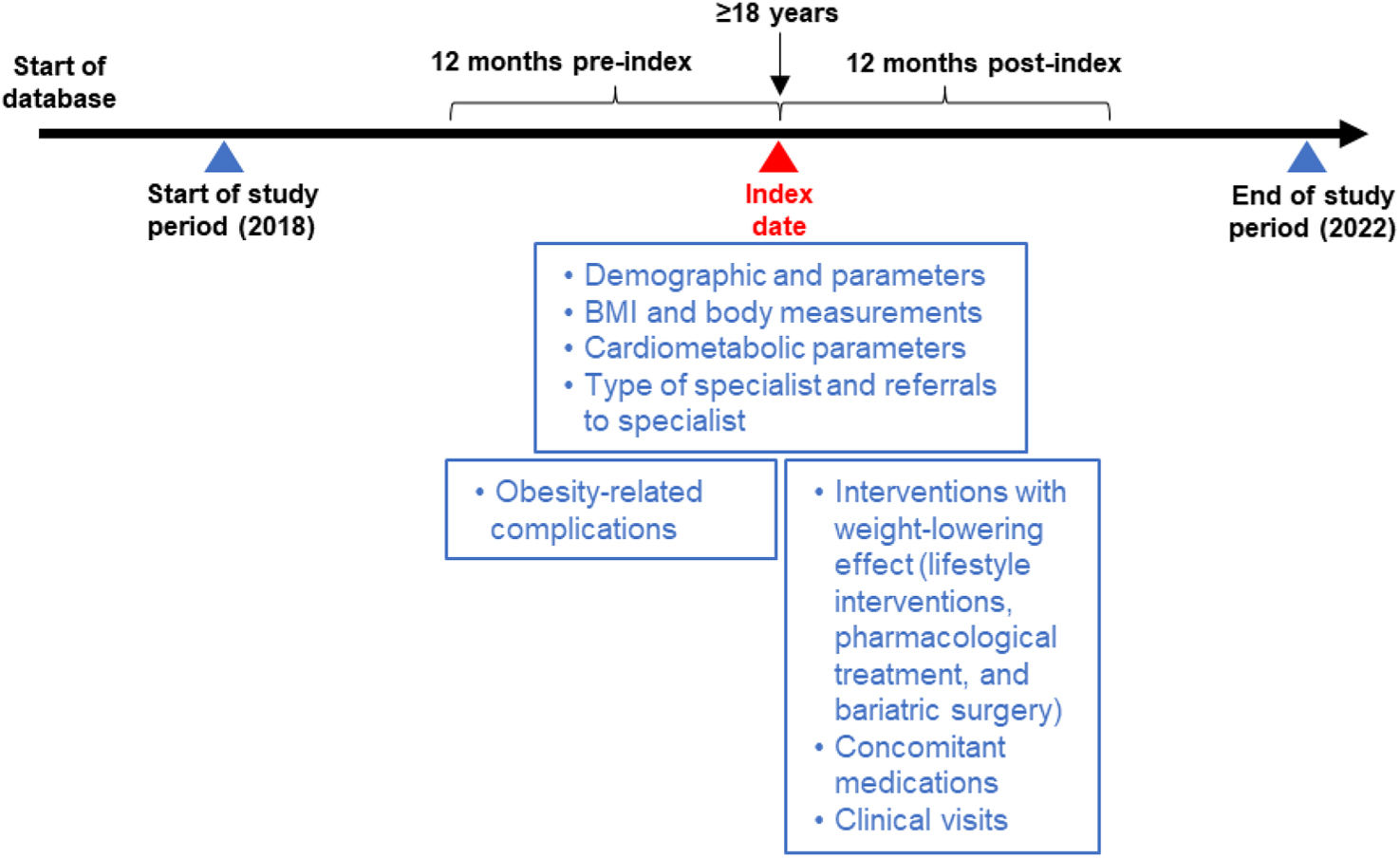
Materials and methodsThe IQVIA longitudinal patient database in Spain was used to identify individuals with a first record of overweight/obesity, as determined by diagnosis codes and/or body mass index (BMI) measurements (overweight/obesity cohort: BMI ≥25kg/m2; obesity cohort: BMI ≥30kg/m2), in the years 2018–2022. Demographic and clinical parameters, including obesity-related complications (ORCs), as recorded by primary care providers and specialists contributing to the database, were described.
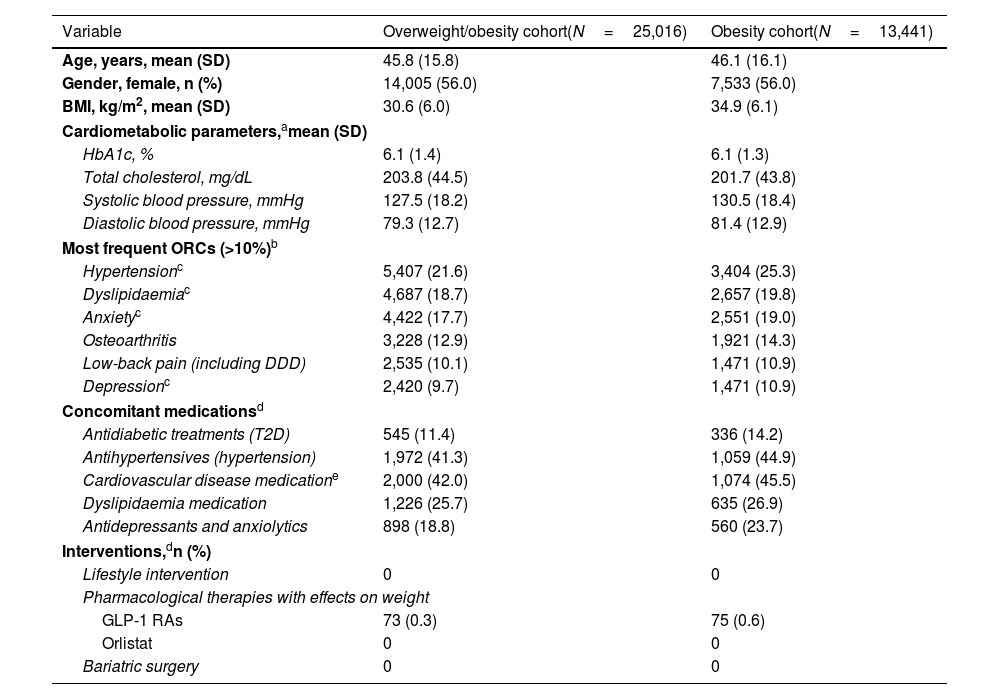
ResultsThe overweight/obesity cohort included 25,016 individuals, and the obesity cohort 13,441 individuals. Most individuals with overweight/obesity (60.1%) and obesity (63.6%) presented with ≥1 ORCs. The most frequent ORCs among people with obesity were hypertension (25.3%), dyslipidaemia (19.8%), anxiety (19.0%), osteoarthritis (14.3%), low-back pain (10.9%) and depression (10.9%). The proportion of individuals receiving pharmacological therapies with an effect on weight was <1%. There were no records of lifestyle interventions or bariatric surgery in the database for this population.
ConclusionsThis study highlights the high ORC burden at first documented diagnosis of overweight/obesity. Very few individuals with obesity in Spain receive pharmacological treatment with an effect on weight. Patient management could be improved by systematically recording all interventions in this population.
El estudio IMPACT-O (epIdeMiology landscape Patient Care paThways of Obesity) es un estudio de cohortes retrospectivo y multinacional que utilizó bases de datos de historias clínicas para determinar la situación e impacto del sobrepeso y la obesidad. Aquí se describen las características y el tratamiento de adultos con un primer registro de sobrepeso/obesidad en España entre 2018 y 2022.
Materiales y métodosSe utilizó la base de datos longitudinal de pacientes de IQVIA en España para identificar a personas con un primer registro de sobrepeso/obesidad, determinado por códigos de diagnóstico y/o mediciones del índice de masa corporal (IMC) (sobrepeso/obesidad: IMC ≥25kg/m2; obesidad: IMC ≥30kg/m2). Se describieron los parámetros demográficos y clínicos, y las complicaciones asociadas a la obesidad.
ResultadosLa cohorte de sobrepeso/obesidad incluyó 25.016 personas y la cohorte de obesidad 13.441 personas. La mayoría de las personas con sobrepeso/obesidad (60,1%) y obesidad (63,6%) presentaron ≥1 complicación asociada a la obesidad, siendo hipertensión (25,3%), dislipidemia (19,8%), ansiedad (19,0%), osteoartritis (14,3%), dolor lumbar (10,9%) y depresión (10,9%) las más frecuentes. Menos del 1% recibieron terapias farmacológicas con efecto sobre el peso. No hubo registros de intervenciones en el estilo de vida o cirugía bariátrica en la base de datos para esta población.
ConclusionesEste estudio destaca la alta carga de complicaciones asociadas a la obesidad en el primer diagnóstico de sobrepeso/obesidad. En España, pocas personas con obesidad reciben tratamiento farmacológico con efecto sobre el peso. El manejo de los pacientes podría mejorar con un registro sistemático de intervenciones.