
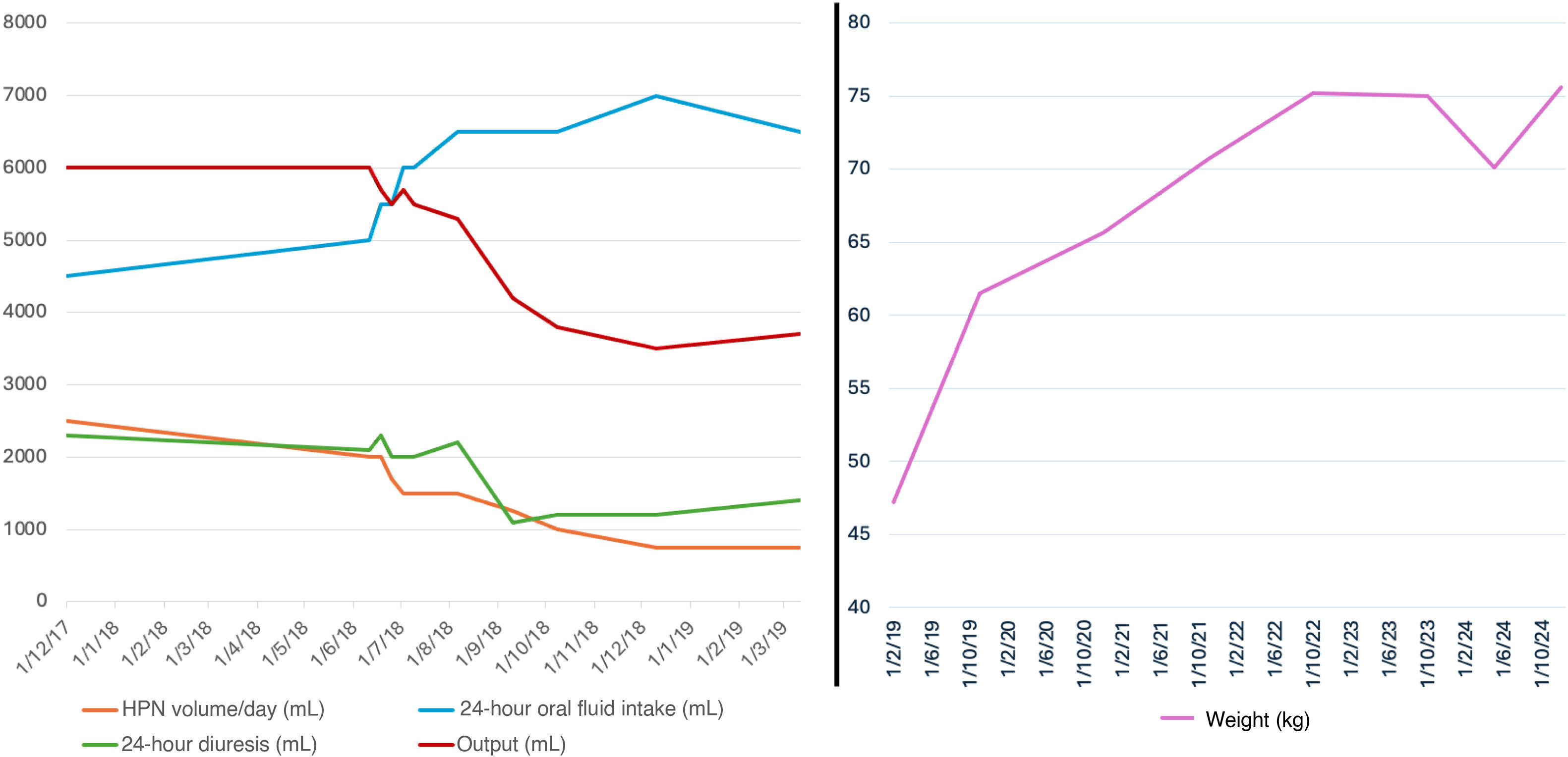
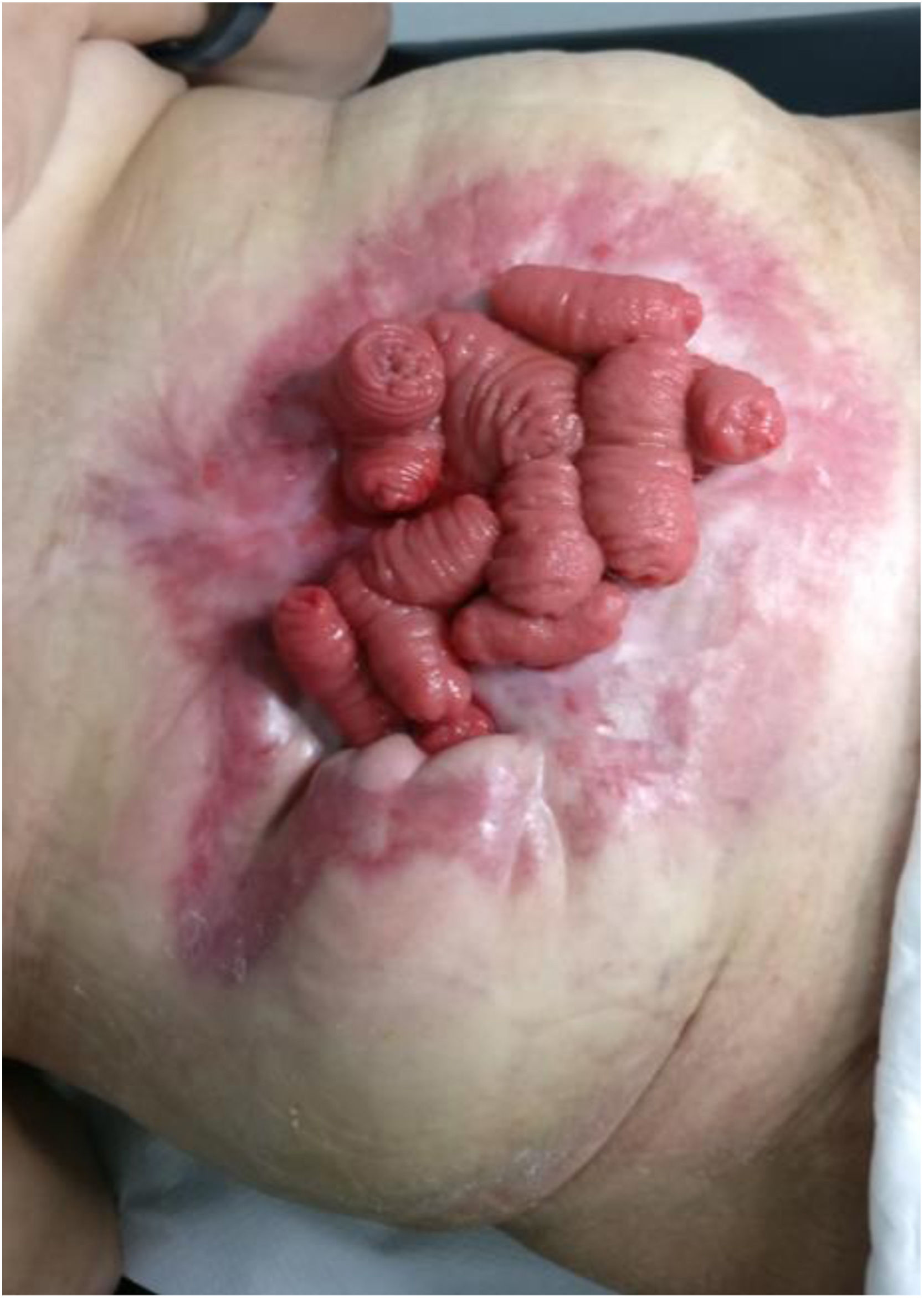
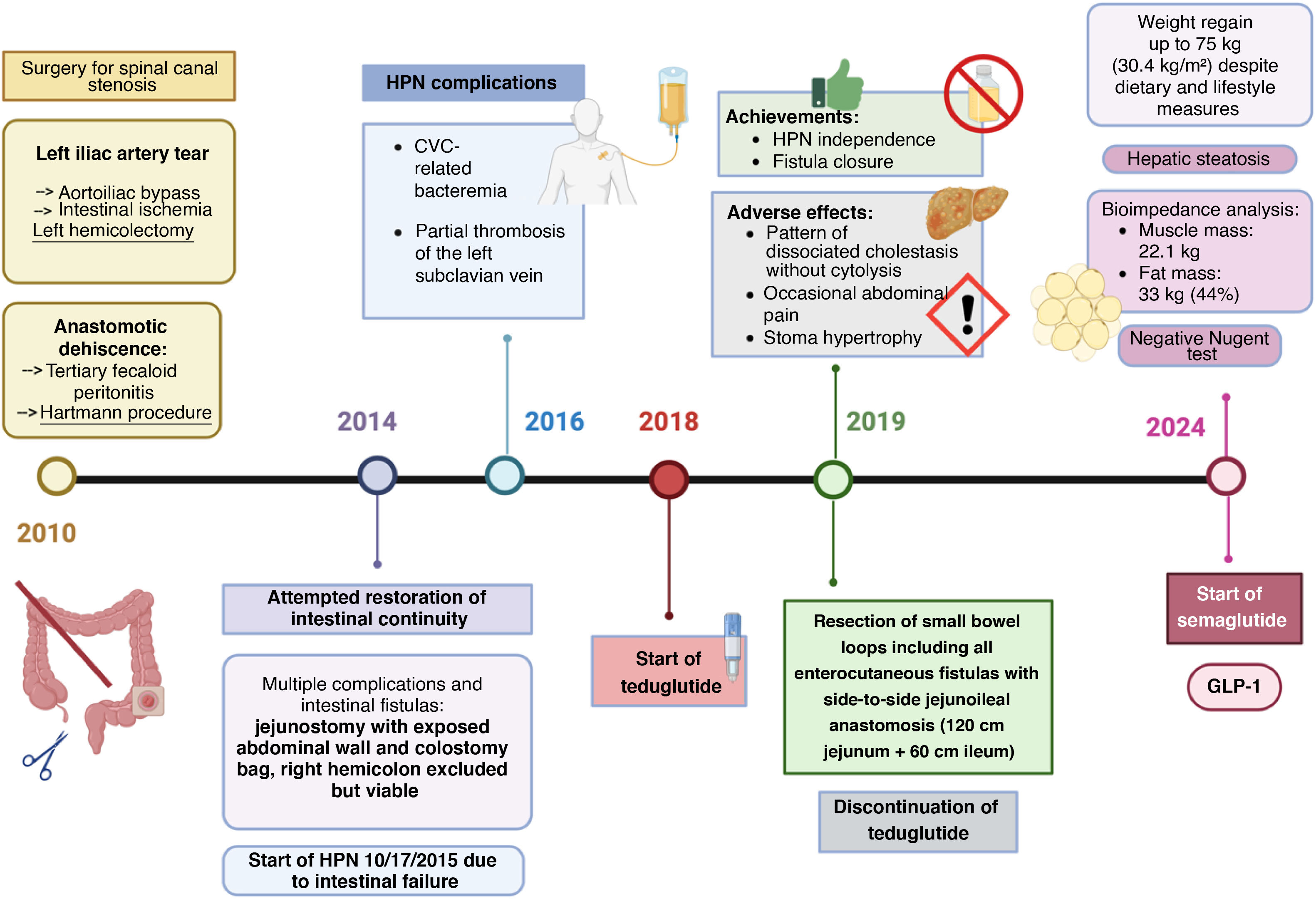
Short bowel syndrome (SBS) represents one of the central conditions in clinical nutrition, with a complex and challenging management. Teduglutide, an analog of human glucagon-like peptide-2 (GLP-2), is the first approved long-term, non-symptomatic treatment for SBS. We present the case of a 62-year-old woman with SBS who required prolonged home parenteral nutrition (HPN). Following clinical stabilization, teduglutide was initiated, leading to significant clinical and nutritional improvement, including spontaneous closure of enterocutaneous fistulas and a 70% reduction in parenteral nutrition requirements. This allowed for a surgical reconstruction, after which she achieved full enteral autonomy, later developing grade 1 obesity. This case highlights the therapeutic potential of teduglutide as a bridging therapy and the remaining uncertainties regarding its long-term management.
El síndrome de intestino corto (SIC) representa una de las patologías centrales de la nutrición, con un manejo desafiante. La teduglutida, un análogo del péptido similar al glucagón tipo 2 (GLP-2) humano, es el primer tratamiento aprobado a largo plazo y no sintomático para el SIC. Presentamos el caso de una mujer de 62 años con SIC que requirió nutrición parenteral domiciliaria prolongada. Tras la estabilización clínica, se inició teduglutida, con una mejoría clínica y nutricional significativa, incluyendo el cierre espontáneo de fístulas enterocutáneas y una reducción del 70% en los requerimientos de nutrición parenteral. Esto permitió abordar una reconstrucción quirúrgica, logrando tras la misma autonomía enteral completa y llegando a presentar posteriormente obesidad grado 1. Este caso resalta el potencial terapéutico de la teduglutida como terapia puente y las incertidumbres que todavía existen acerca de su manejo.