



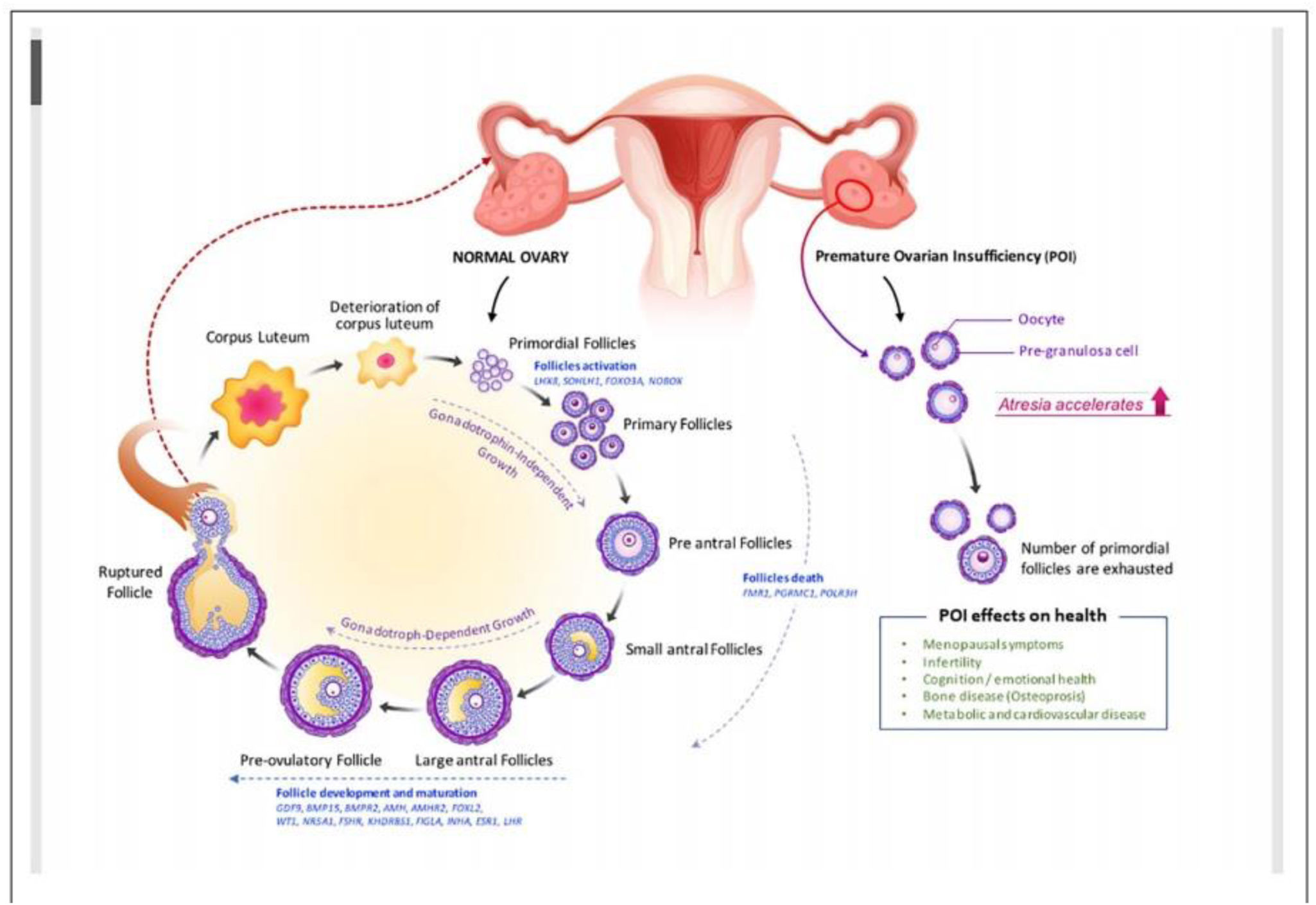
Premature ovarian insufficiency is defined as the loss of ovarian function before the age of 40. It is linked to hypoestrogenism and the loss of remaining follicles, which causes irregular menstruation, infertility, and a decline in health-related quality of life. This article goal is to highlight and analyse the various contemporary strategies for the diagnosis and treatment of the disease with reference to the most recent and evidence-based interventions in this context. A comprehensive review of the literature was conducted using database searches in EMBASE, Science Direct, Google Scholar, Scopus, and PubMed to obtain the objectives and aim of the study. The results of the search found that menopause affects about 5% of women between the ages of 40 and 45, while it affects about 1% of women before the age of 40. Under the age of 30, the disease affects about 1 in 1000 women, sometimes as early as adolescence. Our study concluded that: premature ovarian insufficiency is a condition of oestrogen deficiency that has both immediate and long-term effects on health and mental well-being. The physical, psychological, and emotional difficulties brought on by the disease's diagnosis must be handled, and the short- and long-term wellness of these young women must be safeguarded, by healthcare professionals managing these complicated entities successfully.
La insuficiencia ovárica prematura se define como la pérdida de la función ovárica antes de los 40 años. Está ligada al hipoestrogenismo y a la pérdida de los folículos restantes, lo que provoca menstruaciones irregulares, infertilidad y descenso en la calidad de vida relacionada con la salud. El objetivo de este artículo es resaltar y analizar las diversas estrategias contemporáneas para el diagnóstico y tratamiento de la enfermedad con referencia a las intervenciones más recientes y basadas en evidencia en este contexto. Se realizó una revisión exhaustiva de la literatura. Se realizó mediante búsquedas en bases de datos en Embase, ScienceDirect, Google Scholar, Scopus y PubMed, para obtener los objetivos y finalidad del estudio. Los resultados de la búsqueda encontraron que la menopausia afecta alrededor del 5% de las mujeres entre 40 y 45 años, mientras que afecta aproximadamente al 1% de las mujeres antes de los 40 años. Antes de los 30 años, la enfermedad afecta aproximadamente a una de cada 1.000 mujeres, a veces incluso en la adolescencia. Nuestro estudio concluyó que: La insuficiencia ovárica prematura es una condición de deficiencia de estrógenos que tiene efectos tanto inmediatos como a largo plazo sobre la salud y el bienestar mental. Los profesionales de la salud deben manejar con éxito las dificultades físicas, psicológicas y emocionales provocadas por el diagnóstico de la enfermedad y salvaguardar el bienestar a corto y largo plazo de estas mujeres jóvenes.

