



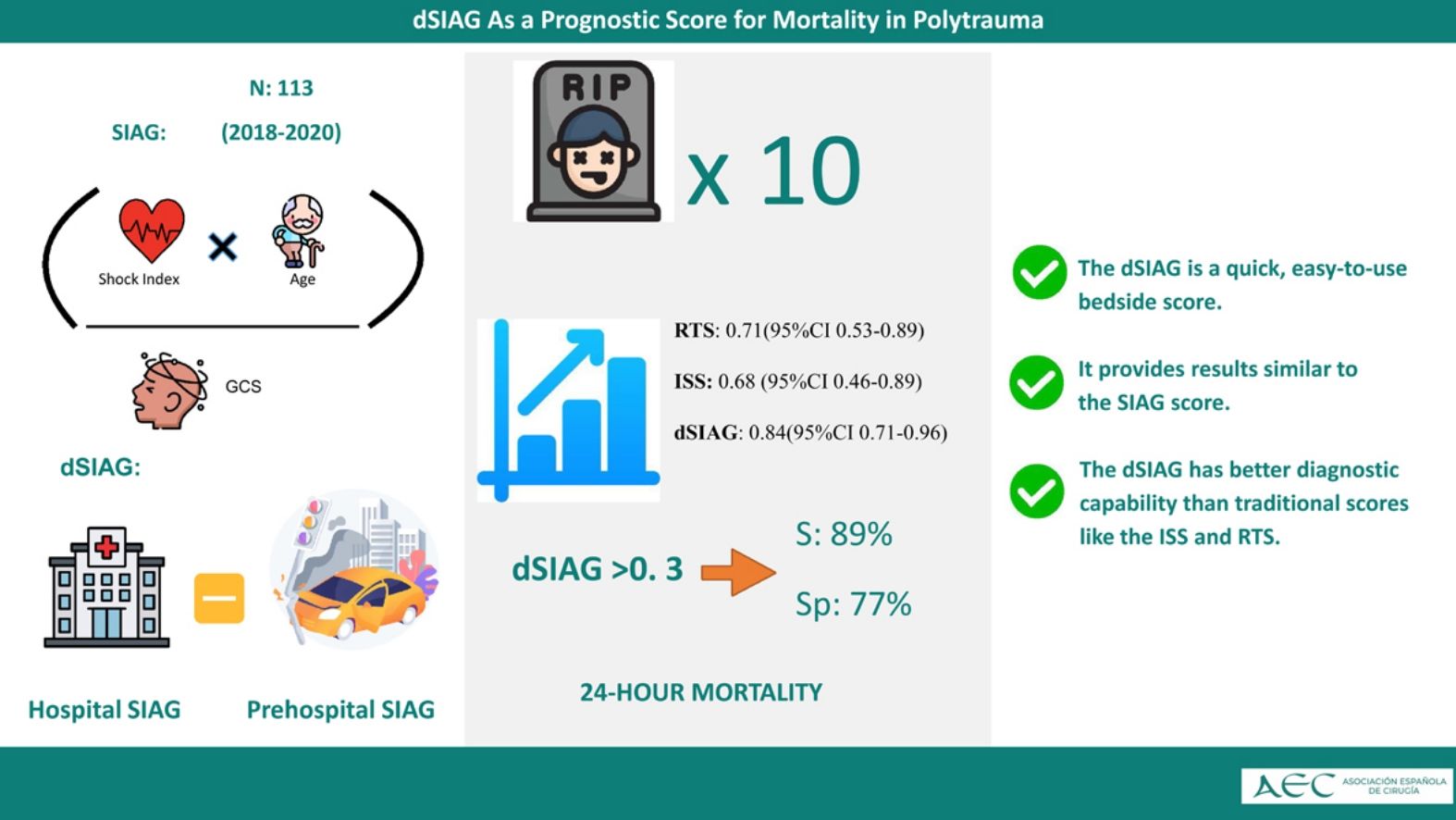
This study aims to analyze differences between the prognostic scales in the initial assessment of severe trauma, SIAG ((Shock Index × Age)/Glasgow Coma Scale) upon arrival at the hospital and at the scene of the trauma (dSIAG). It has been compared with other prognostic scales, including the Shock Index (SI), RTS (Revised Trauma Score) and ISS (Injury Severity Score), given that these scales may underestimate the risk of mortality in some polytrauma patients.
MethodsWe have conducted a retrospective, observational study with a cohort of patients admitted to the Critical Care Unit of a tertiary center with a diagnosis of trauma from 2018−2020. The SI, dSI, SIAG, dSIAG, RTS and ISS scales were calculated. The AUC-ROC (area under the receiver operating characteristic curve) of each one was compared for M24 (mortality in the first 24 h) and HM (hospital mortality).
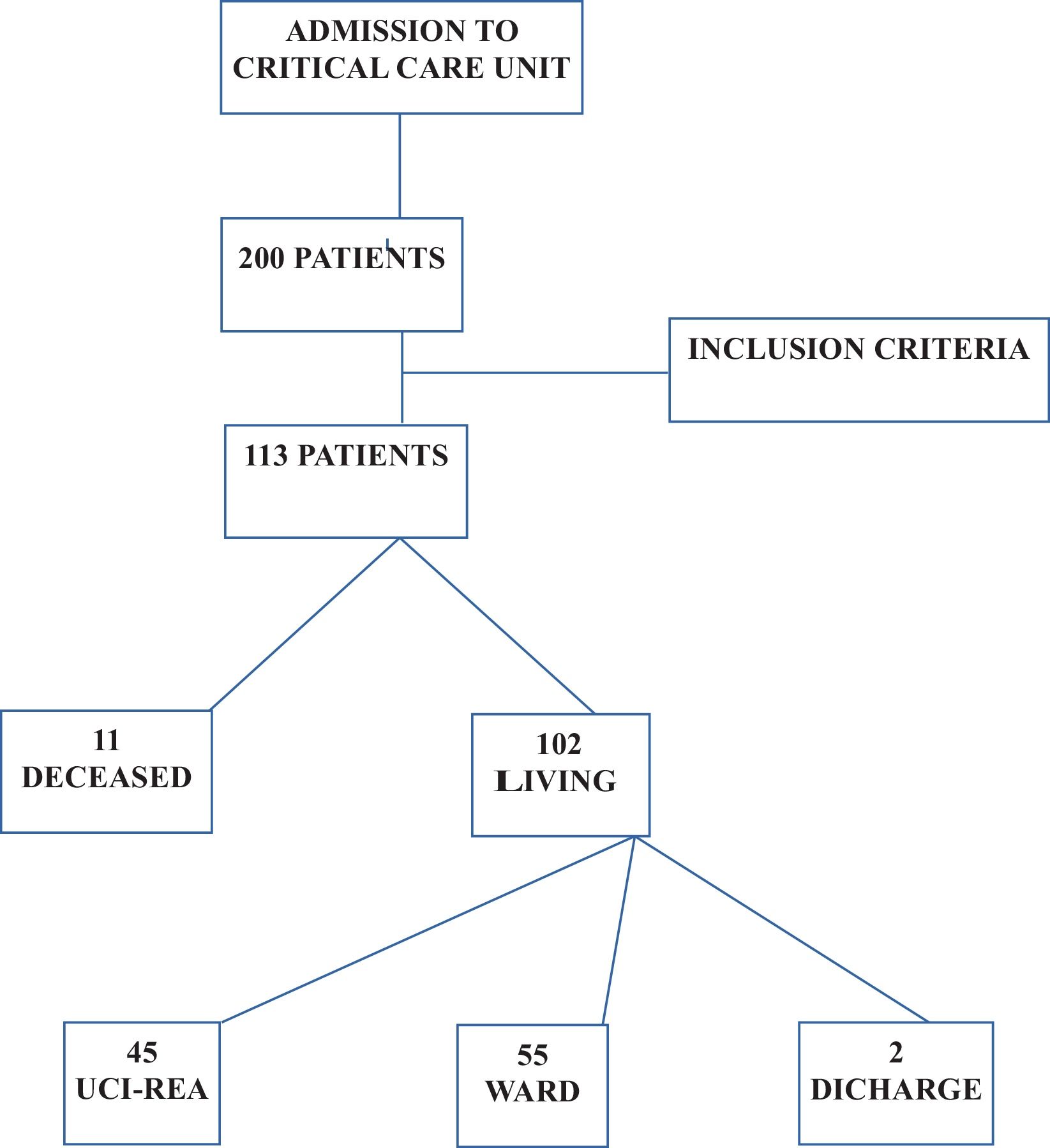
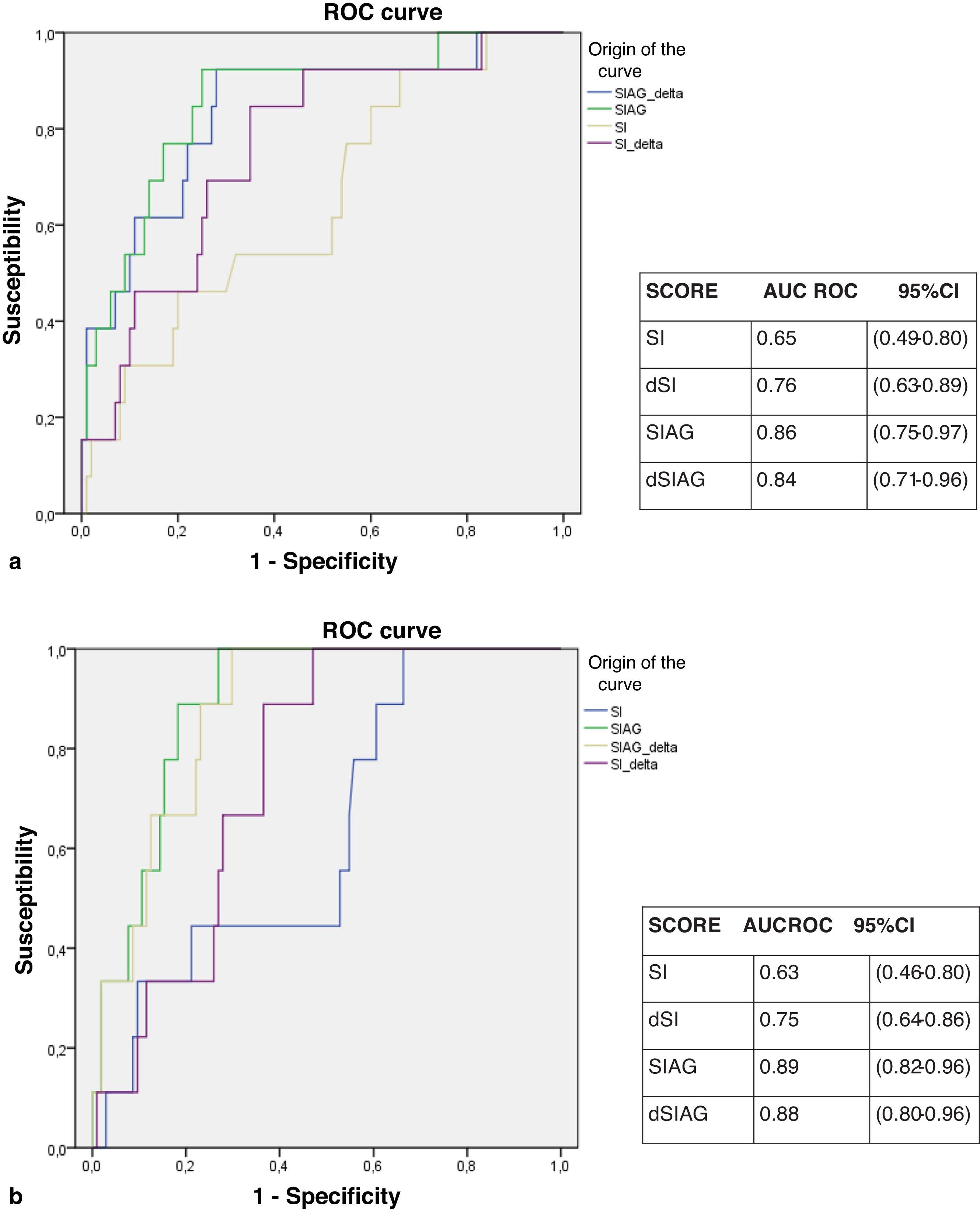
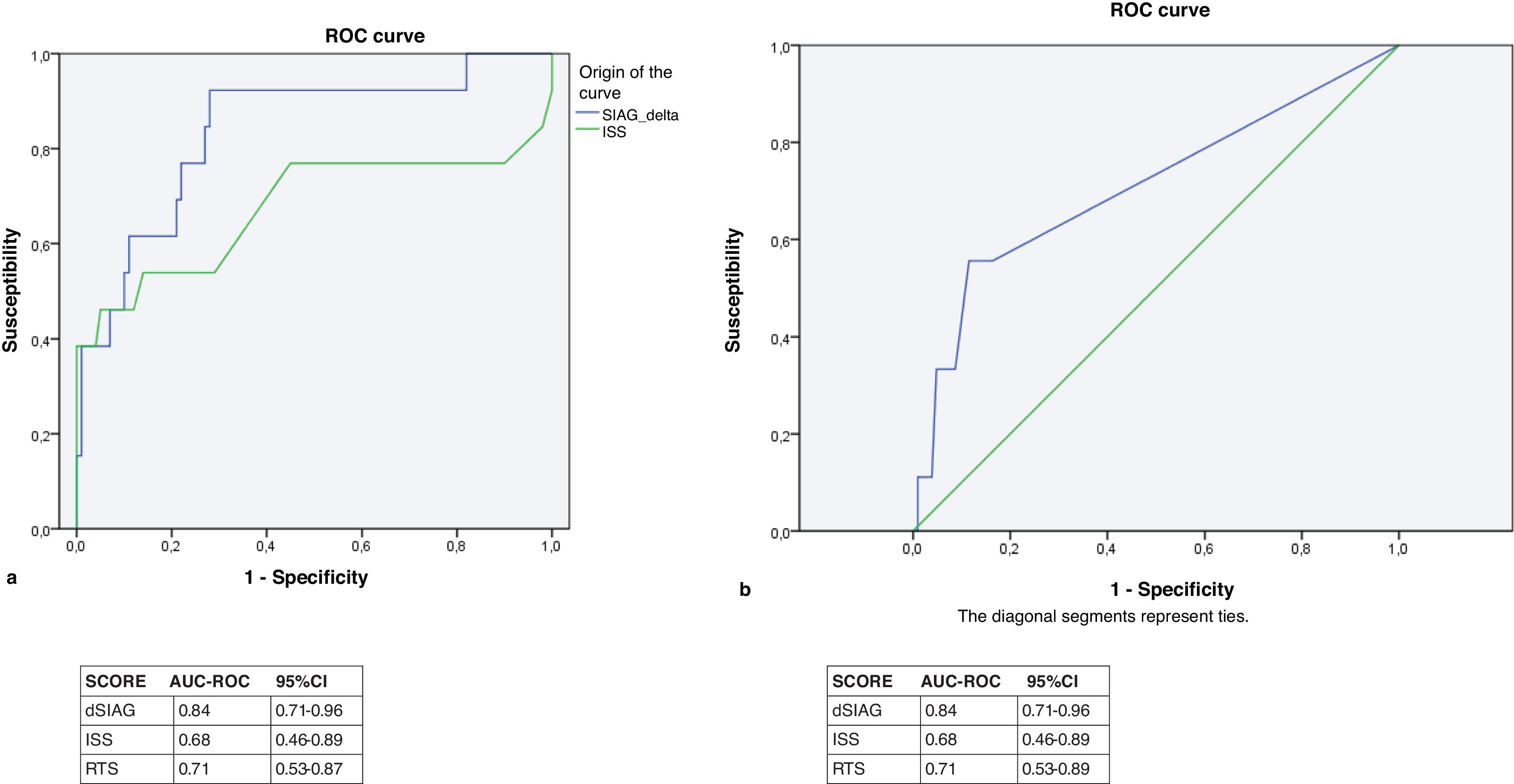
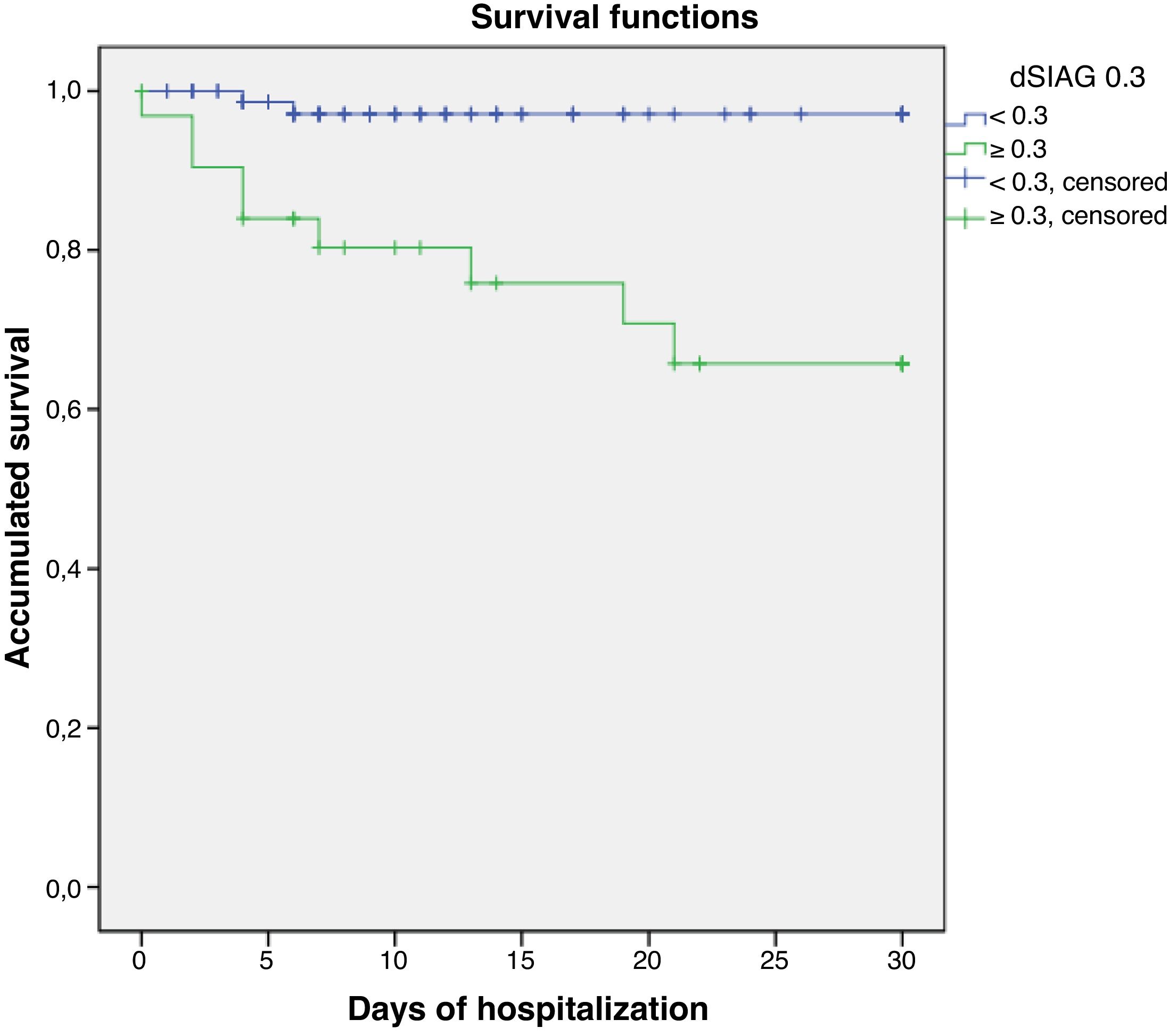
ResultsOut of the 113 patients included, 11 died (9.7%), 9 in the first 24 h (8%). All scores were related to mortality. The dSIAG had the best AUC-ROC for M24 (0.88; 95%CI 0.80−0.96) and MH (0.84; 95%CI 0.71−0.96), although the results between dSIAG and SIAG were similar. The dSIAG value of 0.3 points showed a sensitivity of 77% and specificity of 78% for HM and 89% and 77% for M24. The AUC-ROC of the dSIAG for HM was higher than the classic RTS and ISS scores.
ConclusionThe dSIAG is similar to the SIAG and higher than the classic ISS and RTS scores as a predictor of HM in the initial assessment of polytrauma patients.
Este estudio tiene como objetivo analizar la diferencia entre las escalas pronósticas en la valoración inicial del trauma grave, SIAG (Shock Index x Edad)/Glasgow Coma Scale) a la llegada al Hospital y en el lugar del traumatismo (dSIAG). Se ha comparado con las escalas pronósticas Shock Index (SI), RTS (Revised Trauma Score) e ISS (Injury Severity Score) dado que dichas escalas pueden infraestimar el riesgo de mortalidad de algunos pacientes politramatizados.
MétodosEstudio observacional retrospectivo sobre una cohorte de pacientes ingresados en la Unidad de Críticos de un centro de tercer nivel con diagnostico de trauma entre 2018−2020. Se calcularon las escalas SI, dSI, SIAG, dSIAG, RTS y ISS. Se comparó el ABC COR (área bajo la curva de la característica operativa del receptor), de cada una para la M24 (mortalidad en las primeras 24 horas) y la MH (mortalidad intrahospitalaria).
ResultadosSe incluyeron 113 pacientes, fallecieron 11 (9,7%), 9 en las primeras 24 horas(8%). Todas las escalas se relacionaron con la mortalidad. El dSIAG presentó mejor ABC COR para M24 0,88(IC 0,80−0,96)y MH 0,84 (IC 0,71−0,96) aunque los resultados entre dSIAG y SIAG fueron similares. El valor de dSIAG de 0,3 puntos mostró una sensibilidad del 77% y especificidad del 78% para MH y del 89% y 77%, para M24. El ABC COR del dSIAG para la MH fue superior a las de las escalas clásicas RTS e ISS.
ConclusiónEl dSIAG es similar al SIAG y superior a las escalas clásicas ISS y RTS como predictor de MH en la valoración inicial del paciente politraumatizado.


