



I am pleased to be able to write to you about this case: “Relationship between hepatic subcapsular hematoma, peliosis and anabolic steroid use”. This letter has been written in relation to the article published in 2014 by Veguillas Redondo et al., “Ruptured Liver Caused by Peliosis Hepatis”, which we have read with great interest.
As described, hepatic peliosis is an uncommon vascular condition of the liver that may affect 0.13% of the population.1 It is characterized by a proliferation of sinusoidal hepatic capillaries that gives rise to randomly distributed cystic cavities filled with blood. It can affect other organs of the reticuloendothelial system. Its etiopathogenesis is not well defined, and the clinical presentation is variable. In addition, it is related to immune disorders, drugs (anabolic steroids, oral contraceptives, chemotherapy) and infections.2
Regarding the aforementioned publication, we would like to present the case of a 38-year-old male patient with no relevant medical history except for the regular usage of anabolic steroids for several years. He came to the emergency room with sudden abdominal pain located in the right hypochondrium. Abdominal CT scan revealed a large subcapsular hematoma in the right hepatic lobe, but an underlying lesion could not be ruled out. The study was completed with arteriography, which showed no active bleeding. Given these findings and the patient’s hemodynamic stability, we initially opted for nonoperative management and close monitoring in the ICU.3
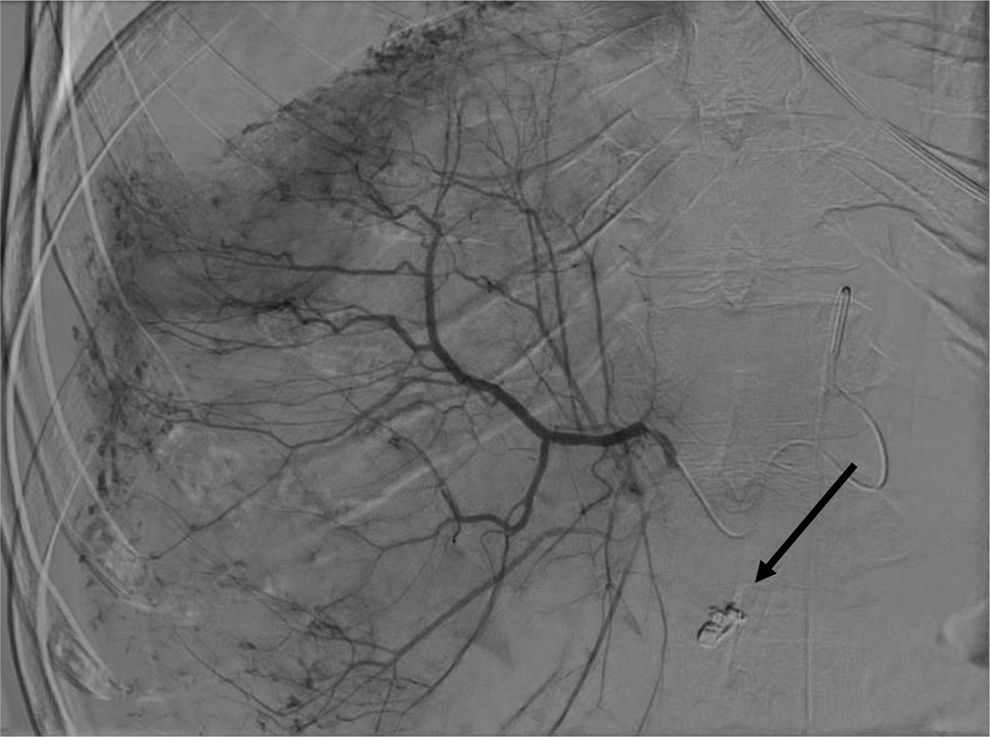
After 24 h, the patient's analytical and clinical condition worsened. A second arteriography revealed 2 points of contrast extravasation, both dependent on an accessory right branch. An attempt to control the bleeding by embolization was unsuccessful. The follow-up arteriography showed innumerable foci of subcapsular bleeding (Fig. 1). Urgent surgery was indicated, which revealed hemoperitoneum and decapsulation of the right hepatic lobe. Several revision surgeries were required to control bleeding.

The postoperative CT scan demonstrated a lesion in liver segment VII, which could have been an adenoma causing the subcapsular hematoma.4 However, months later, MRI confirmed that it was a nodule compatible with peliosis hepatis, which showed a significant decrease in size after discontinuing the use of anabolic steroids.1
We believe it is interesting to bring this case report to the attention of the scientific community. It is important to highlight the relationship of this rare condition with the use of anabolic steroids,5 and it is important to consider its differential diagnosis with other liver lesions. Regression of these lesions has been described after treatment of associated diseases or withdrawal of the causative drugs.
Ethical considerationsThe authors declare that they have followed protocols and treatment guidelines in accordance with the ethics criteria of their institution. In addition, the corresponding approvals have also been obtained.
Patient consentThe authors have obtained patient consent for the publication of this article.
FundingThis study has received no funding.

