



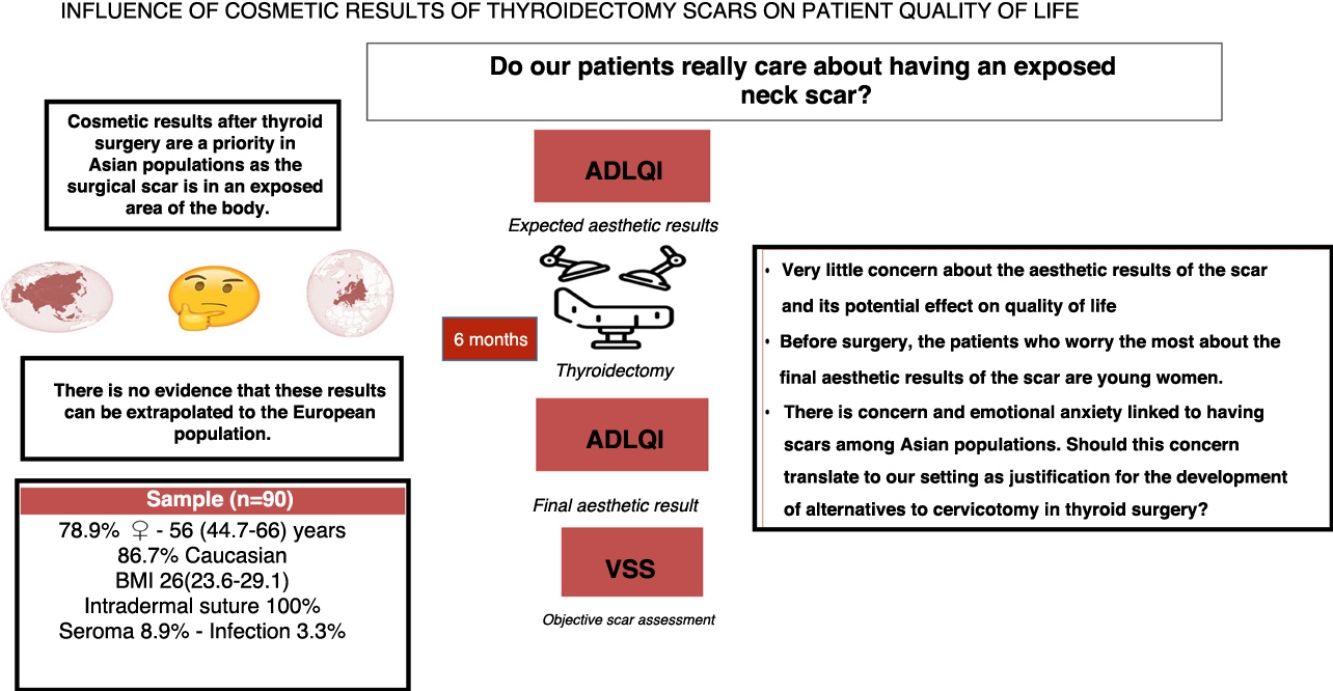
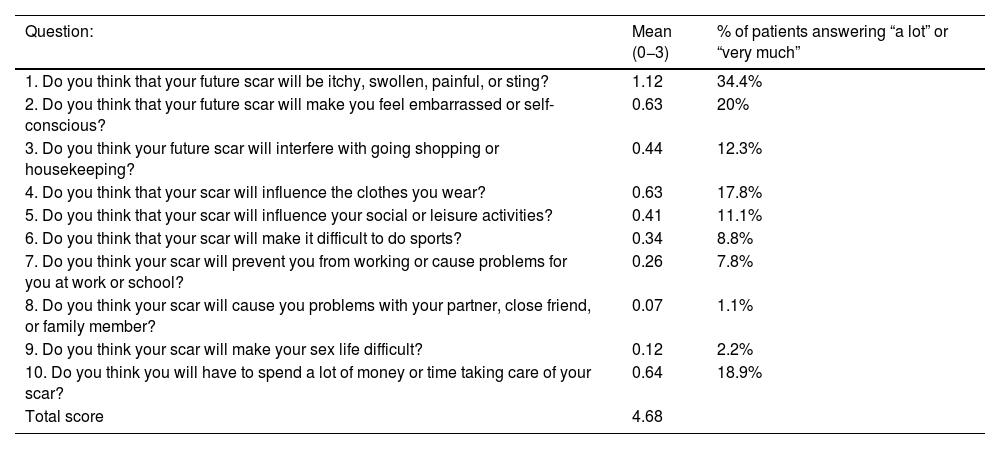
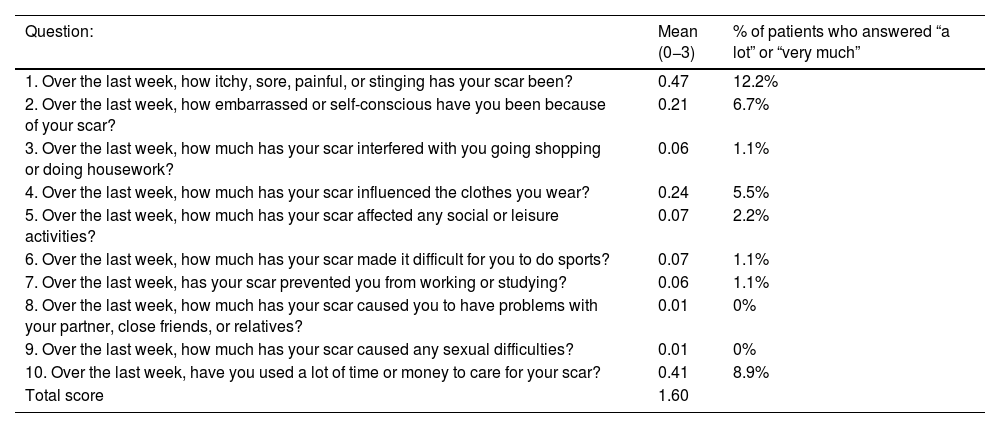
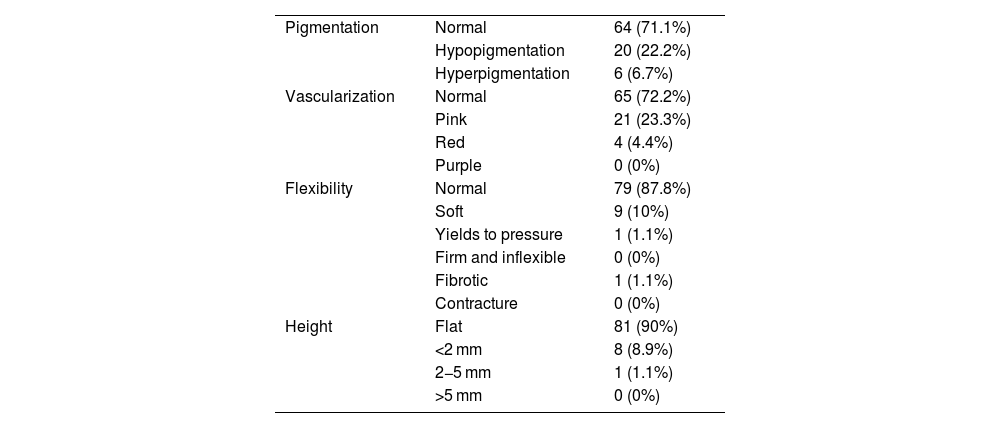
This study in a Spanish population evaluates patient concerns about an anterior cervicotomy scar due to thyroid surgery, both before and after surgery.
MethodsThis prospective, observational study included consecutive patients proposed for thyroidectomy who completed, prior to surgery, an adapted Dermatology Life Quality Index (DLQI) questionnaire regarding the expected results in relation to their scar. Six months after surgery, they completed the questionnaire again, with an additional evaluation of the scar using the Vancouver Scar Scale (VSS). Changes in the score were analyzed, as well as the possible influence of demographic and surgical factors on the results obtained.
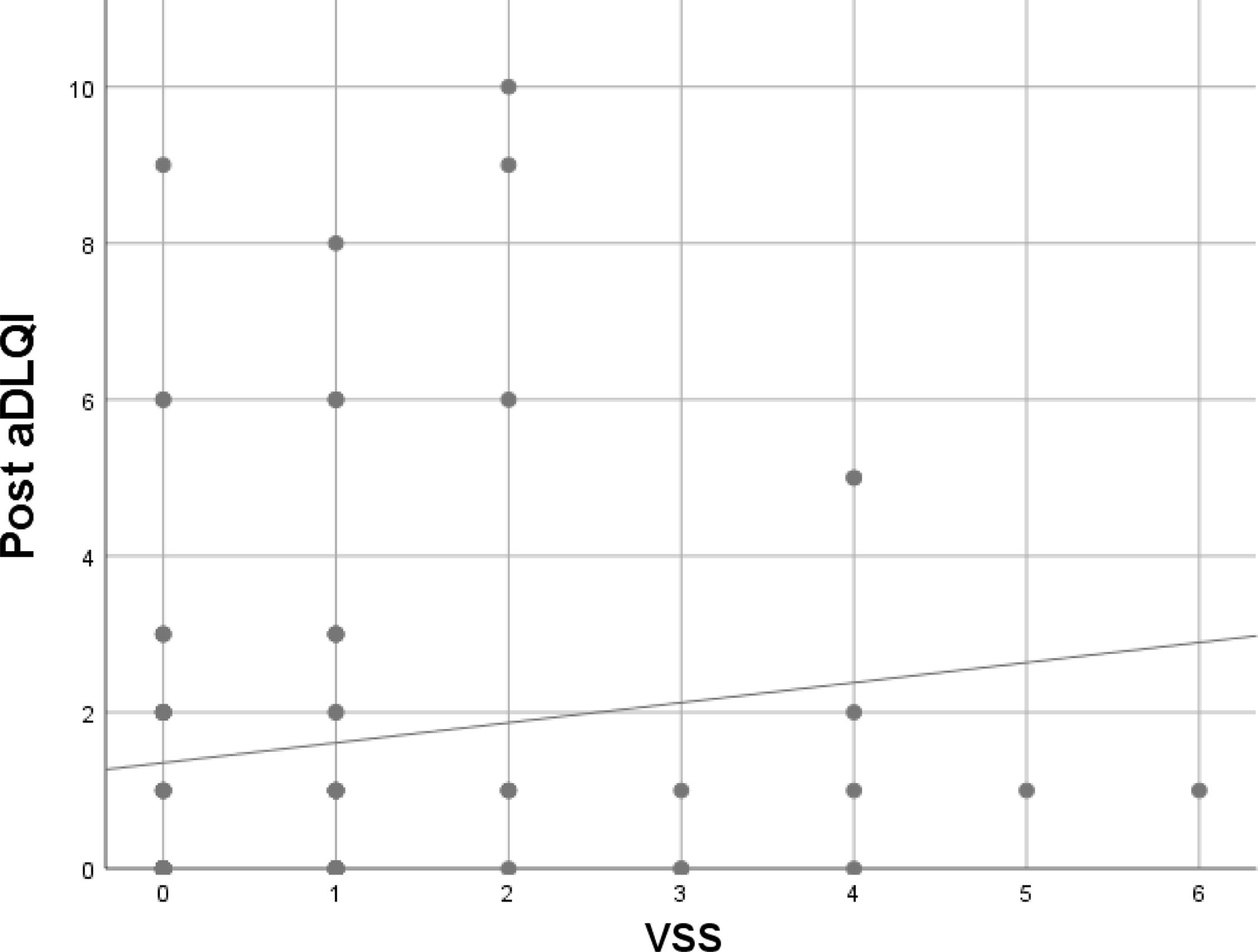
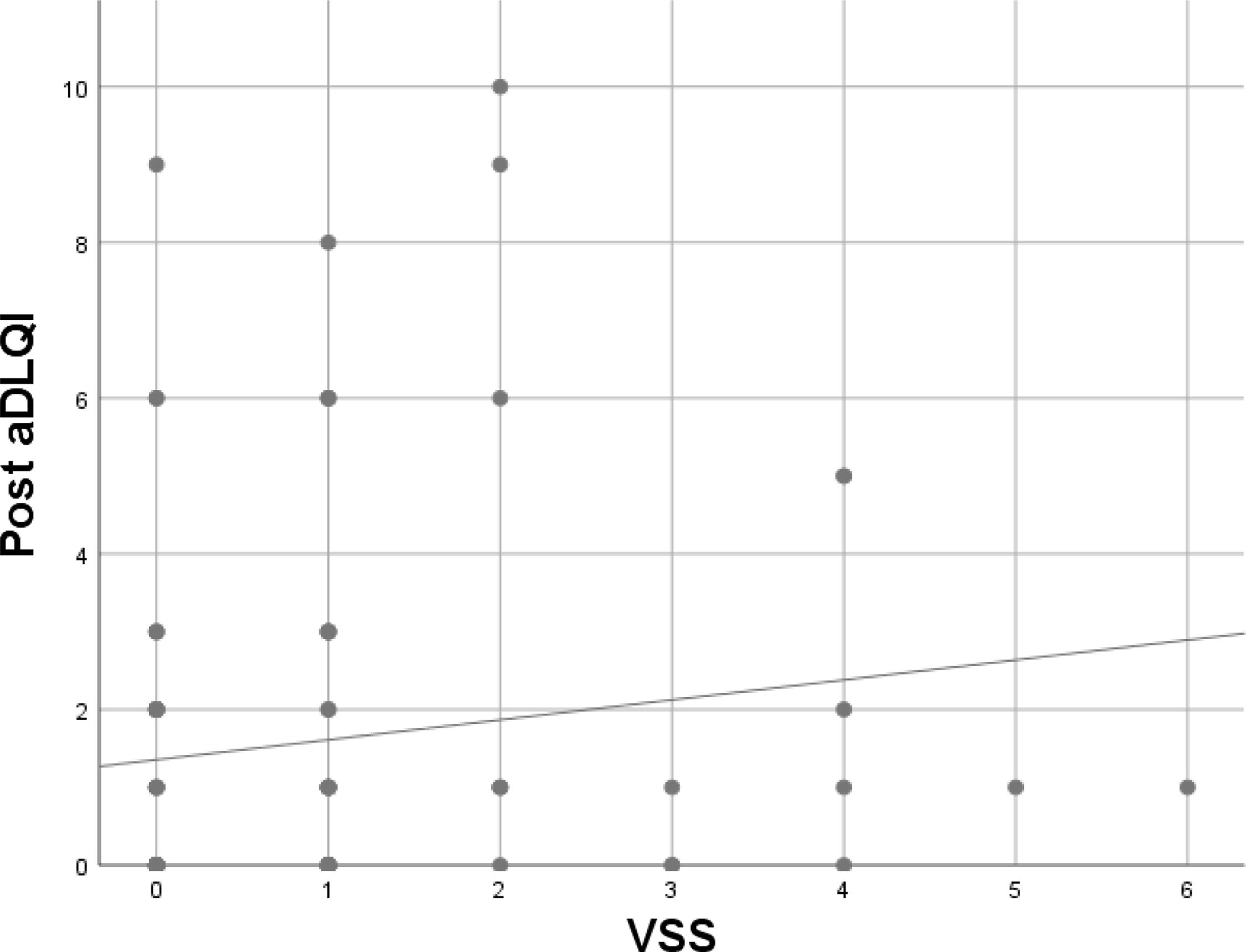
Results90 patients were included (78.9% women). Preoperative concern was generally low (DLQI 4.68), although the score for moderate preoperative concern was 16.7%. Female sex was associated with greater preoperative concern regarding the future outcome of the scar, and age had an inverse correlation with the DLQI score. After surgery, no patient had a significant impact. Age was inversely related to the impact of the scar on quality of life 6 months after surgery.
ConclusionPatients who are scheduled to undergo conventional thyroid surgery show limited concern about the aesthetic result of their scar. The most concerned patients are young women. The aesthetic distress due to scars in Asian populations does not seem to transfer to our environment.
Estudio en población española que evalúa las preocupaciones que una cicatriz de cervicotomia anterior, por cirugía tiroidea, supone a los pacientes, antes y después de la misma.
Material y métodoEstudio observacional prospectivo. Incluye pacientes consecutivos propuestos para tiroidectomía que cumplimentaron previamente a la cirugía una adaptación del Índice de Calidad de Vida Dermatológica (DLQI) con respecto a los resultados esperados en relación a su cicatriz. Seis meses después de la cirugía realizaron nuevamente el cuestionario añadiendo una evaluación de la cicatriz con la Escala de Cicatriz de Vancouver (VSS). Se analizaron los cambios en la puntuación, así como la posible influencia de aspectos demográficos y quirúrgicos sobre los resultados obtenidos.
ResultadosSe incluyeron 90 pacientes (78,9% mujeres). La preocupación previa a la intervención fue en general baja (DLQI 4,68). Un 16,7% alcanzó una puntuación valorable como preocupación moderada preoperatoriamente. El sexo femenino se asoció a una mayor preocupación preoperatoria respecto al resultado futuro de la cicatriz, y la edad presentó una correlación inversa con la puntuación del DLQI. Tras la cirugía, ningún paciente presentaba una repercusión significativa. La edad se relacionó, de forma inversa, con la repercusión en la calidad de vida de la cicatriz a los 6 meses de la cirugía.
ConclusiónLos pacientes, que van a sufrir una cirugía tiroidea convencional, muestran una limitada preocupación sobre el resultado estético de su cicatriz. Los pacientes más preocupados son mujeres jóvenes. La angustia estética por las cicatrices en poblaciones asiáticas, no parece trasladarse a nuestro medio.


