

Necrotizing fasciitis (NF) is a severe bacterial soft tissue infection that primarily affects muscle fascia and subcutaneous tissue.1 In Europe, it has an annual incidence of 3–5 cases per 100 000, with mortality rates of 10%–15% (reaching 38%–45% in septic shock).2 Risk factors include hypertension, immunosuppression, diabetes, obesity and trauma.1,3,4 NF commonly occurs in the extremities or perineal region (Fournier gangrene), but the thorax is a very rare location, which could delay diagnosis and result in the consequences of serious infections.1 In monomicrobial cases, Streptococcus pyogenes is most frequently identified. The clinical presentation is nonspecific.1,3,4
Clinical criteria (diagnostic criteria for type II necrotizing fasciitis) and laboratory criteria (LRINEC score) are often used as diagnostic tools.1 CT scan can be used in stable patients as an additional tool for surgical planning, but it is not essential for diagnosis.5
Treatment involves multidisciplinary management with hemodynamic control, intravenous antibiotics, early surgical debridement, and participation of the infectious disease team, ICU, surgical teams, Medical Emergency Unit, anesthesiologists, radiologists, nursing, orderlies, etc.7,8 Negative pressure therapy is currently widely used, as it improves short-term results and prepares the surgical site to receive the graft.6 Prognosis relies on swift diagnosis and early surgical intervention.
We present a case-report of 3 thoracic NF.
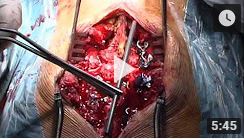
Case 1: A 67-year-old woman with cardiovascular comorbidities (Table 1) presented to the emergency room with right shoulder pain after a fall. The initial diagnosis was a fractured clavicle. She returned 24 h later with decreased consciousness, dyspnea, and ecchymotic plaques, suggestive of septic shock. CT scan (thickening of the pectoral fascia and subcutaneous tissue trabeculation) and LRINEC (6 points) indicated NF, which was confirmed during urgent debridement. Progression required a second surgery, including right mastectomy. S. pyogenes (Table 2) was identified, and antibiotics were adjusted according to the antibiogram. Negative pressure wound therapy was used, followed by skin grafting on day 40. She was discharged after 50 days.
General characteristics.
| Sex | Age | Comorbidities | Days of Symptoms | Hours to Surgery | Days of admission | |
|---|---|---|---|---|---|---|
| Case 1 | Female | 67 | BPH*, DM*, AF*, IHD*, Obesity | 2 | 10 | 50 |
| Case 2 | Male | 38 | No comorbidities | 3 | 11 | 60 |
| Case 3 | Male | 45 | CKD* on dialysis, IHD, BPH*, HCV* | 4 | 37 | 71 |
*BPH: benign prostatic hyperplasia, DM: Diabetes mellitus, AF: atrial fibrillation, IHD: ischemic heart disease.
Microbiological reports.
| Blood cultures | Possible gateway | Resected tissue culture | |
|---|---|---|---|
| Patient 1 | Negative | S. aureus | S. pyogenes |
| Patient 2 | S. pyogenes | S. pyogenes | S. pyogenes |
| Patient 3 | S. pyogenes | S. pyogenes, S. aureus (possible contamination) | S. pyogenes |
*The table summarizes the microbiological findings in 3 cases of necrotizing fasciitis. Blood cultures indicate systemic spread of pathogens, while the possible gateway suggests the initial point of infection. Cultures of resected tissue identify the microorganisms present in the affected area, which guides antibiotic treatment. The combined interpretation of these results helps distinguish between monomicrobial and polymicrobial infections, guides empirical treatment, and assesses prognosis.
Case 2: A 38-year-old healthy man (Table 1) presented to the emergency room with fever, right chest pain and a wooden splinter in his right hand. He showed signs of septic shock and erythema over the right pectoral region, with an LRINEC score of 8. Chest CT indicated NF of the right pectoralis major fascia. Extensive debridement of right hemithorax and inside right arm, mastectomy, and axillary lymphadenectomy were performed. S. pyogenes was identified (Table 2), and antibiotics were adjusted according to the antibiogram. Negative pressure therapy facilitated recovery. Skin grafting was performed on day 48, and the patient was discharged after 60 days.
Case 3: A 45-year-old man with chronic kidney failure and peripheral vascular disease (Table 1) presented at the emergency room with septic shock and right pneumonia. NF was initially unsuspected but diagnosed hours after ICU admission when a necrotic plaque appeared on his chest. (LRINEC was not calculated due to lack of suspicion of NF). Urgent debridement was performed in the right parasternal region to the posterior axillary line. Microbiology identified S. pyogenes (Table 2). Targeted antibiotic therapy was adjusted according to the antibiogram. A skin graft was performed 58 days later, and the patient was discharged on day 71. Despite initial recovery, he died 4 months later due to vascular complications of CKD.
Necrotizing fasciitis is an infection with high morbidity and mortality. It requires high diagnostic suspicion and early treatment based on broad-spectrum antibiotics, management of septic shock and early surgical debridement. The third case was a late diagnosis, which contributed to increased morbidity, longer hospital stays, and higher healthcare costs. Multidisciplinary management is crucial to improve survival and quality of life for these patients.
Conflicts of interestThe authors have no conflicts of interest to declare.
The work was performed at Hospital Universitari de Vic.