Abstracts of the 2025 Annual Meeting of the ALEH
More infoGiven the growing burden of antimicrobial resistance (AMR), we aimed to report the prevalence of key AMR patterns in Latin American patients with cirrhosis and compare them with the European Antimicrobial Resistance Surveillance Network (EARS-Net) data
Materials and MethodsCross-sectional study of invasive isolates (blood, ascitic or pleural fluid) from adults with cirrhosis enrolled in the Latin American surveillance registry (ClinicalTrials.gov: NCT0634940). AMR patterns were reported for key pathogens: E. coli, K. pneumoniae, S. aureus, Acinetobacter spp., E. faecium, and P. aeruginosa.
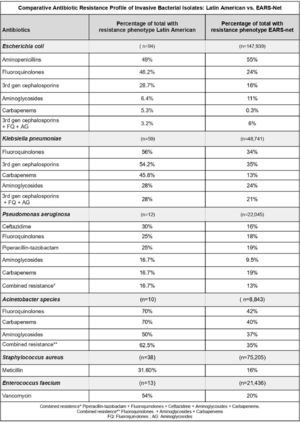
ResultsBetween December 2020 and May 2025, 908 bacterial isolates were collected from Argentina, Uruguay, Brazil, and Peru. Of these, 226 (25%) were obtained from invasive sites and correspond to predefined bacteria of epidemiological interest included in the analysis. Isolates were 39% nosocomial, 38% community-acquired, and 23% healthcare-associated. The main infections were spontaneous bacteremia (38%) and SBP (32%). Quinolone resistance was higher in Latin American vs. Europe for K. pneumoniae (56% vs. 34%) and E. coli (46% vs. 24%). Carbapenem resistance in K. pneumoniae was 46% (vs. 13%), and in E. coli, 5.3% (vs. 0.3%). Methicillin resistance among S. aureus was higher in Latin American (32%) than in Europe (16%). Other pathogens also showed higher resistance (Table).
ConclusionsThe elevated resistance rates observed in Latin American patients with cirrhosis demand attention. In a region where regulatory gaps at multiple levels may contribute to antibiotic misuse, these findings call for urgent action to strengthen rational antibiotic use and implement effective stewardship strategies.