



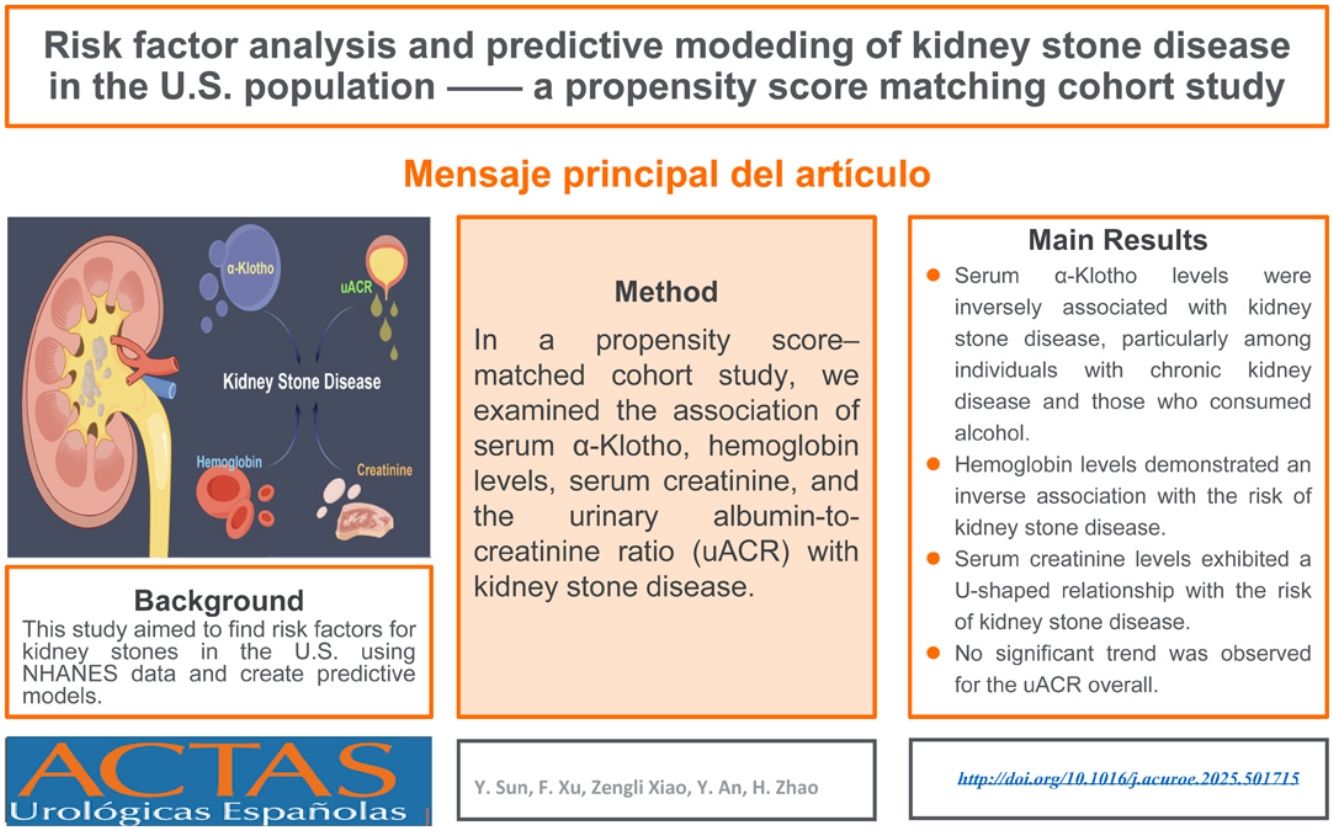
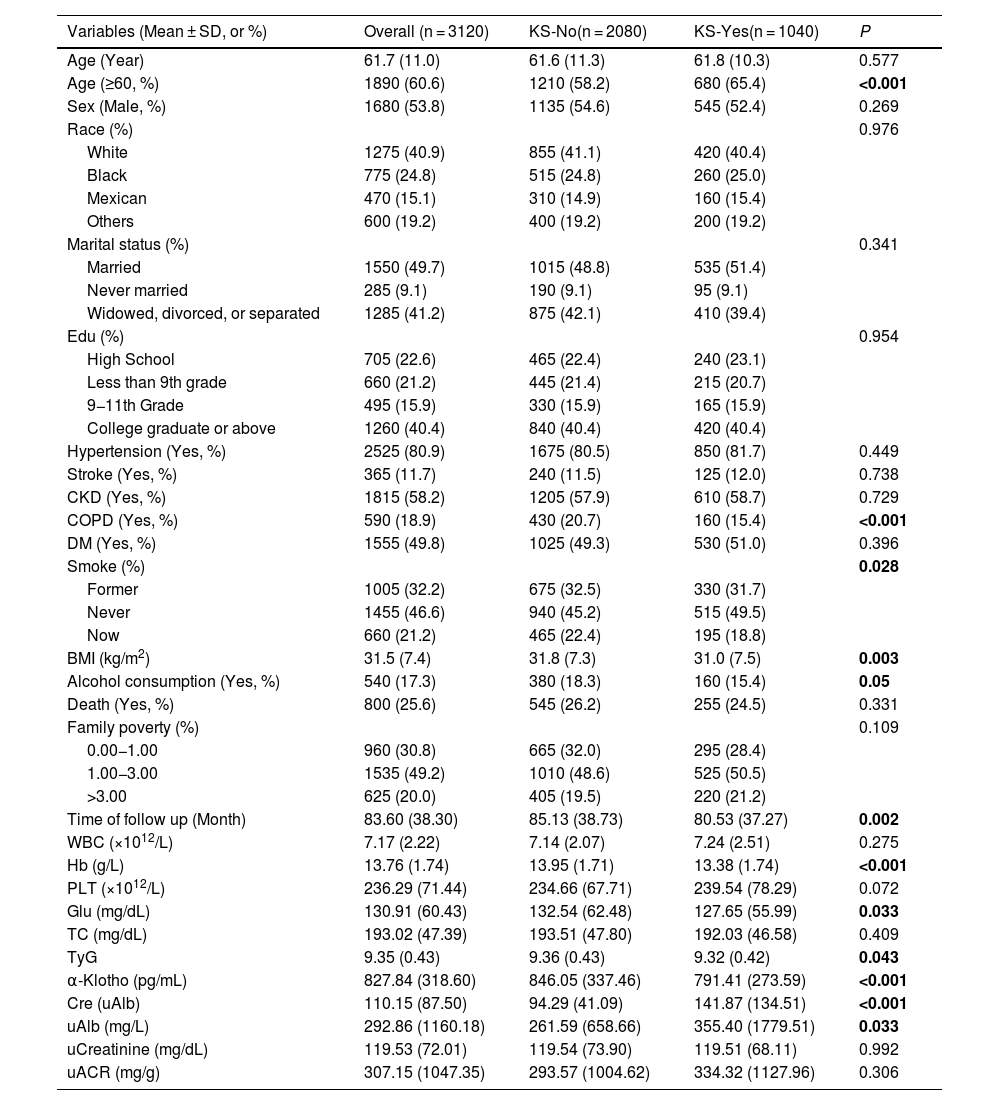
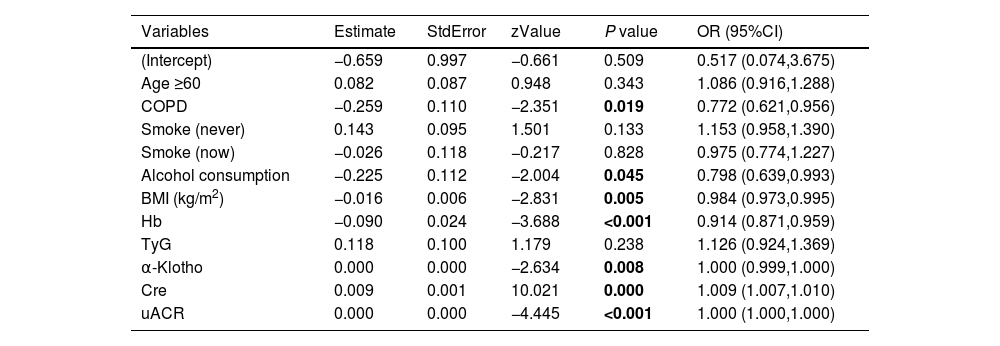
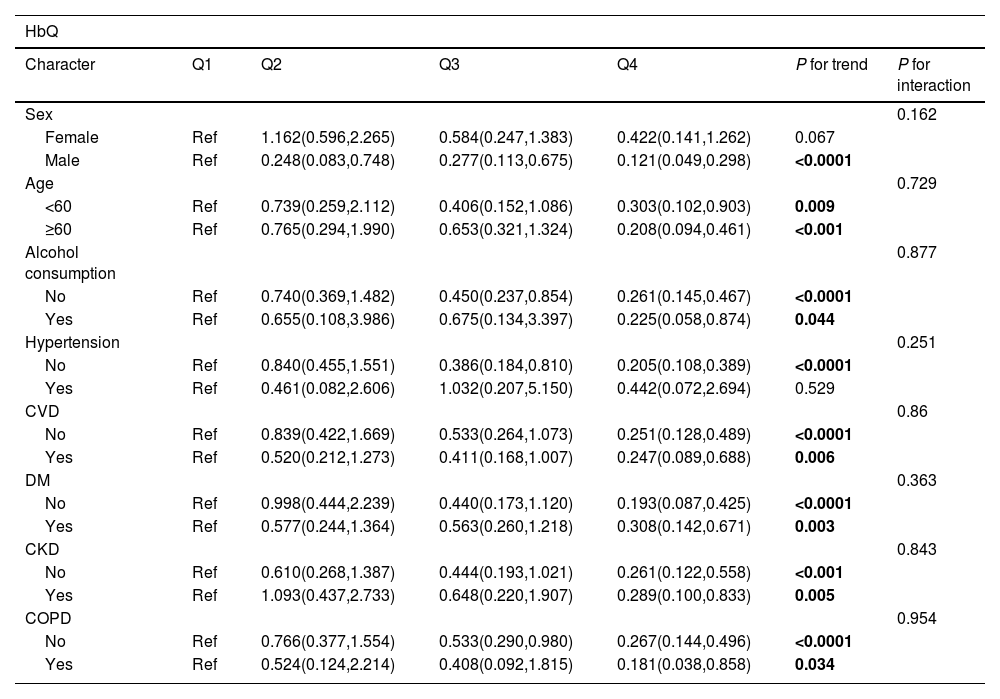
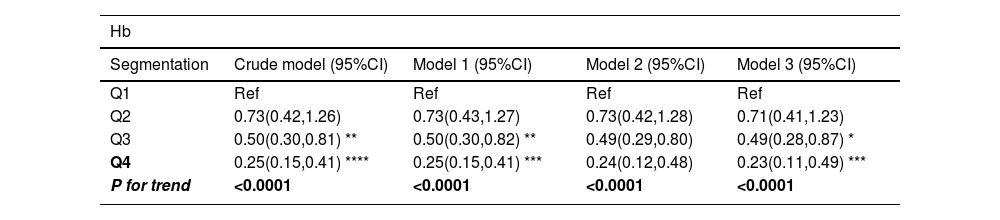
This study sought to identify risk factors and develop predictive models for kidney stone disease in the U.S. population using data from the National Health and Nutrition Examination Survey (NHANES).
MethodsIn a propensity score–matched cohort study, we examined the association of serum α-Klotho, hemoglobin levels, serum creatinine, and the urinary albumin-to-creatinine ratio (uACR) with kidney stone disease.
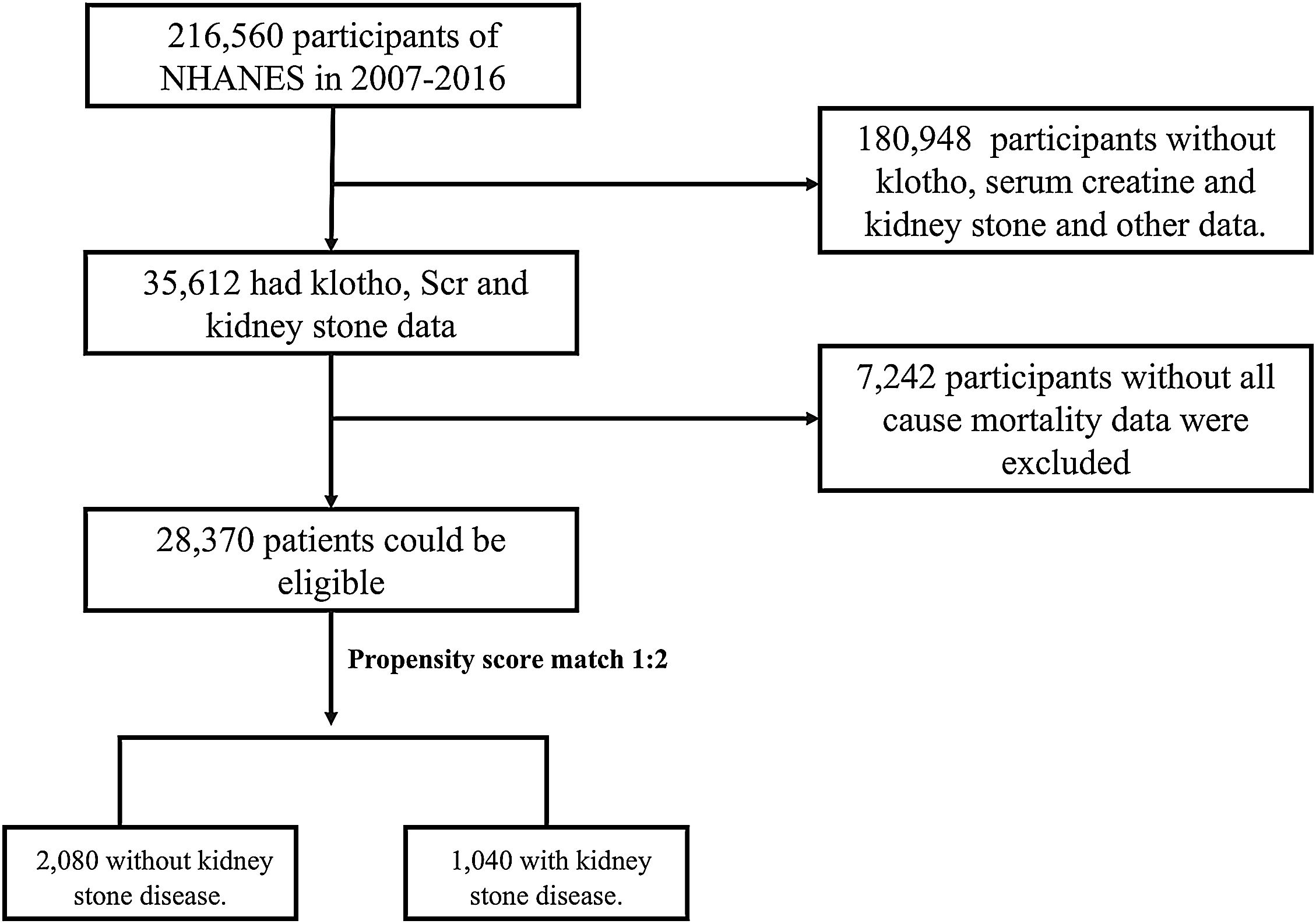
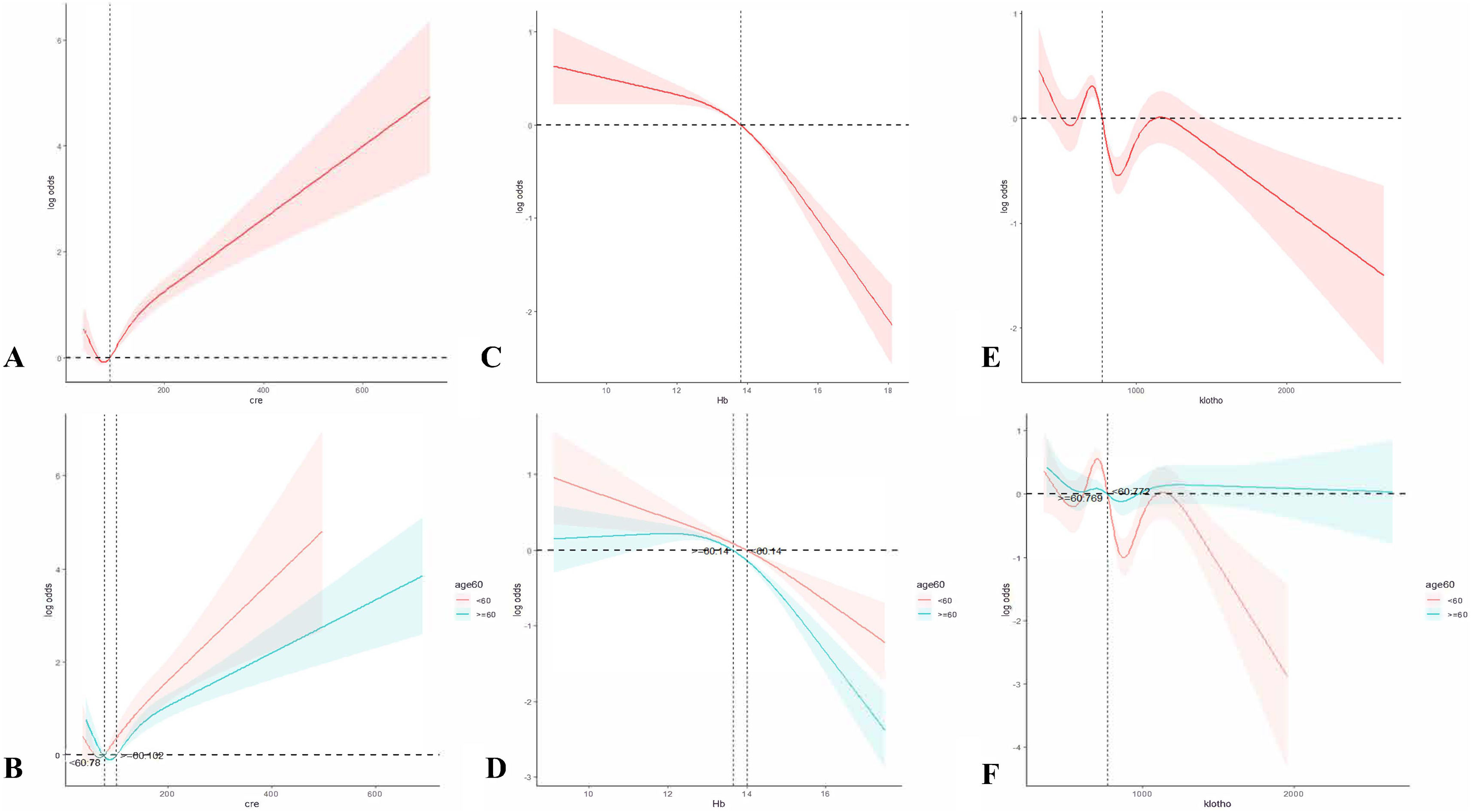
ResultsInitially, 216,560 participants were screened; following propensity matching, 28,370 adults aged 40–79 years were included in the final analysis. Serum α-Klotho levels were inversely associated with kidney stone disease, particularly among individuals with chronic kidney disease and those who consumed alcohol. Hemoglobin levels demonstrated an inverse association with kidney stone disease risk, whereas serum creatinine levels exhibited a U-shaped relationship. No significant trend was observed for uACR overall. Low hemoglobin and α-Klotho levels, as well as elevated serum creatinine and uACR, were significantly associated with increased all-cause mortality.
ConclusionOur findings underscore the significance of serum α-Klotho, hemoglobin, serum creatinine, and uACR levels in assessing the risk of kidney stone disease and all-cause mortality, suggesting these markers as potential targets for prevention and management strategies. Further research is warranted to clarify the mechanisms underlying these associations.
El objetivo de este estudio fue identificar los factores de riesgo y desarrollar modelos predictivos de la litiasis renal en la población estadounidense utilizando datos de la National Health and Nutrition Examination Survey (NHANES).
MétodoEn un estudio de cohortes emparejadas por puntuación de propensión, examinamos la relación de los niveles séricos de α-Klotho, hemoglobina, creatinina sérica y cociente albúmina-creatinina en orina (CACu) con la litiasis renal.
ResultadosInicialmente, se seleccionaron 216.560 participantes; tras el emparejamiento por propensión, el análisis final incluyó a 28.370 adultos de entre 40 y 79 años. Los niveles séricos de α-Klotho se asociaron inversamente con la litiasis renal, especialmente en los pacientes con enfermedad renal crónica y los consumidores de alcohol. Los niveles de hemoglobina mostraron una asociación inversa con el riesgo de litiasis renal, mientras que los niveles de creatinina sérica mostraron una relación en forma de U. No se observó ninguna tendencia generalizada significativa para la CACu. Los niveles bajos de hemoglobina y α-Klotho, así como los niveles elevados de creatinina sérica y CACu, se asociaron significativamente con el aumento de la mortalidad por cualquier causa.
ConclusionesNuestros hallazgos ponen de manifiesto el valor de los niveles séricos de α-Klotho, hemoglobina, creatinina sérica y CACu en el análisis del riesgo de litiasis renal y mortalidad por cualquier causa, lo que sugiere que estos marcadores son dianas potenciales para las estrategias de prevención y gestión. Se justifica la realización de nuevos estudios para esclarecer los mecanismos subyacentes a estas asociaciones.

