







Stress urinary incontinence (SUI) affects between 2.5% and 40% of patients after radical prostatectomy. Although the implantation of an artificial urinary sphincter (AUS) offers continence rates of 70%–80%, its failure rate reaches 25% in some series. This single-center retrospective study analyzed the survival of AUS and the factors associated with its failure.
Materials and methodsA total of 145 patients treated with the AMS 800 device (Boston Scientific®) between 2010 and 2023 were included. Kaplan-Meier analysis and the Cox proportional hazards model were used to evaluate device survival and identify predictive factors for failure.
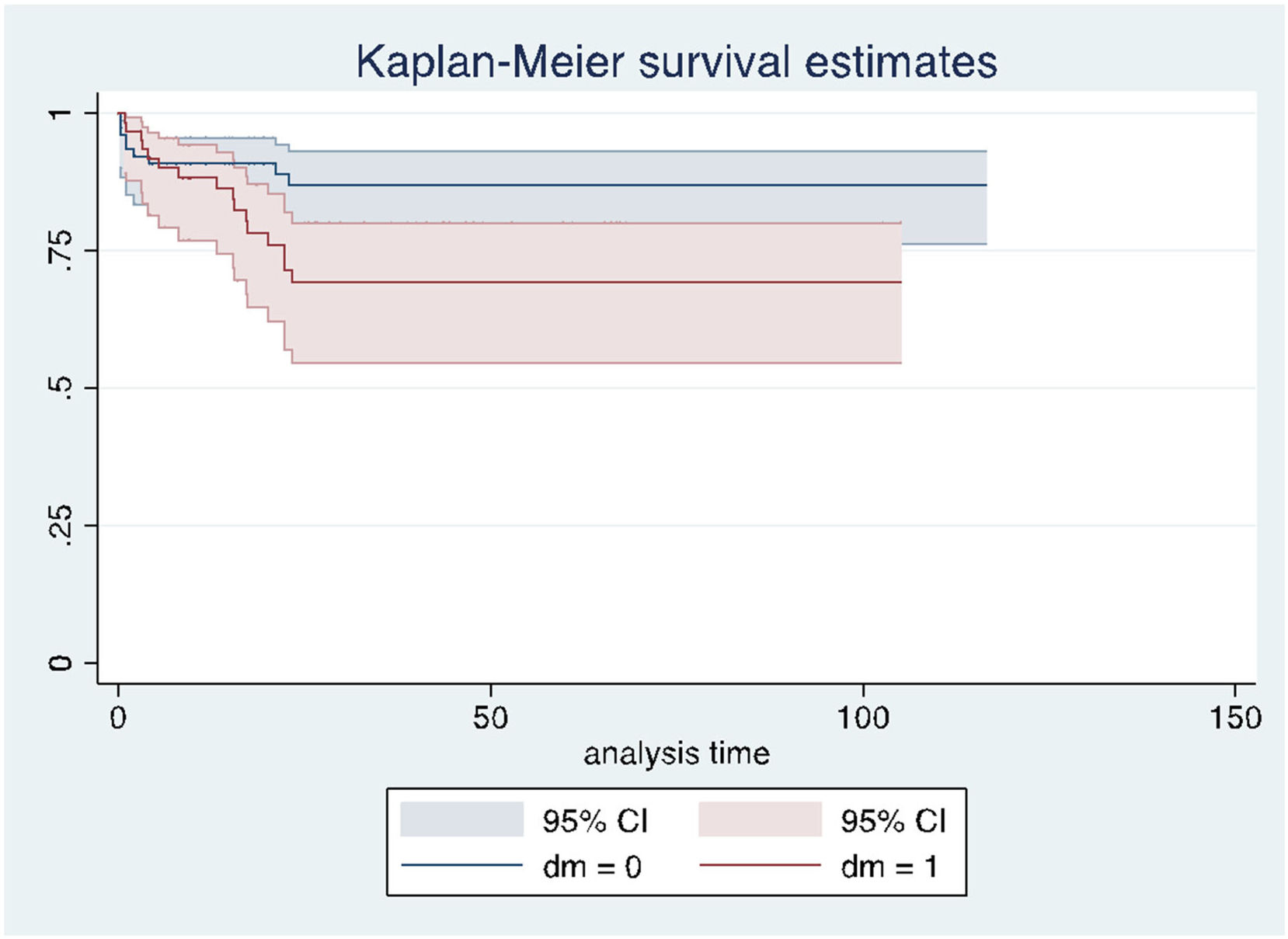
ResultsThe mean age was 68.6 years; 28% of patients were smokers, 43.7% had diabetes, and 26.2% had undergone prior radiation therapy. Radical prostatectomy was the main cause of SUI (86.9%). In the majority of cases (91.5%), the artificial urinary sphincter was implanted around the bulbar urethra. During follow-up, 25.5% of patients required revision surgery. The probability of functional sphincter survival was 89% at 1 year, 78% at 2 years, 64% at 5 years, and 51% at 10 years. On multivariate analysis, prior radiation therapy [HR 2.06; P = .029] and diabetes [HR 2.24; P = .04] were associated with poorer device survival.
ConclusionsThe AUS is an effective and safe treatment for severe SUI, although radiotherapy and diabetes may adversely affect its durability.
La incontinencia urinaria de esfuerzo (IUE) afecta entre al 2.5% y al 40% de los pacientes tras prostatectomía radical. Aunque el esfínter urinario artificial (EUA) ofrece tasas de continencia del 70%–80%, su tasa de fallo alcanza el 25% en algunas series. Este estudio retrospectivo unicéntrico analizó la supervivencia del EUA y los factores asociados con su fallo.
Material y métodosSe incluyeron 145 pacientes tratados con el dispositivo AMS 800 (Boston Scientific®) entre 2010 y 2023. Se emplearon análisis de Kaplan-Meier y el modelo de riesgos proporcionales de Cox para evaluar la supervivencia del dispositivo y sus factores predictivos.
ResultadosLa edad media fue de 68.6 años; el 28% eran fumadores, el 43.7% tenían diabetes y el 26.2% habían recibido radioterapia previa. La prostatectomía radical fue la principal causa de IUE (86.9%). La mayoría de los dispositivos (91.5%) se colocaron en posición bulbar. Durante el seguimiento, el 25.5% requirió revisión quirúrgica. La probabilidad de funcionamiento del esfínter fue del 89% al año, 78% a los 2 años, 64% a los 5 años y 51% a los 10 años. En el análisis multivariante, la radioterapia previa [HR 2.06; P = .029] y la diabetes [HR 2.24; P = .04] se asociaron con una menor supervivencia del dispositivo.
ConclusionesEl EUA es un tratamiento eficaz y seguro para la IUE severa, aunque la radioterapia y la diabetes pueden afectar negativamente su durabilidad.

