



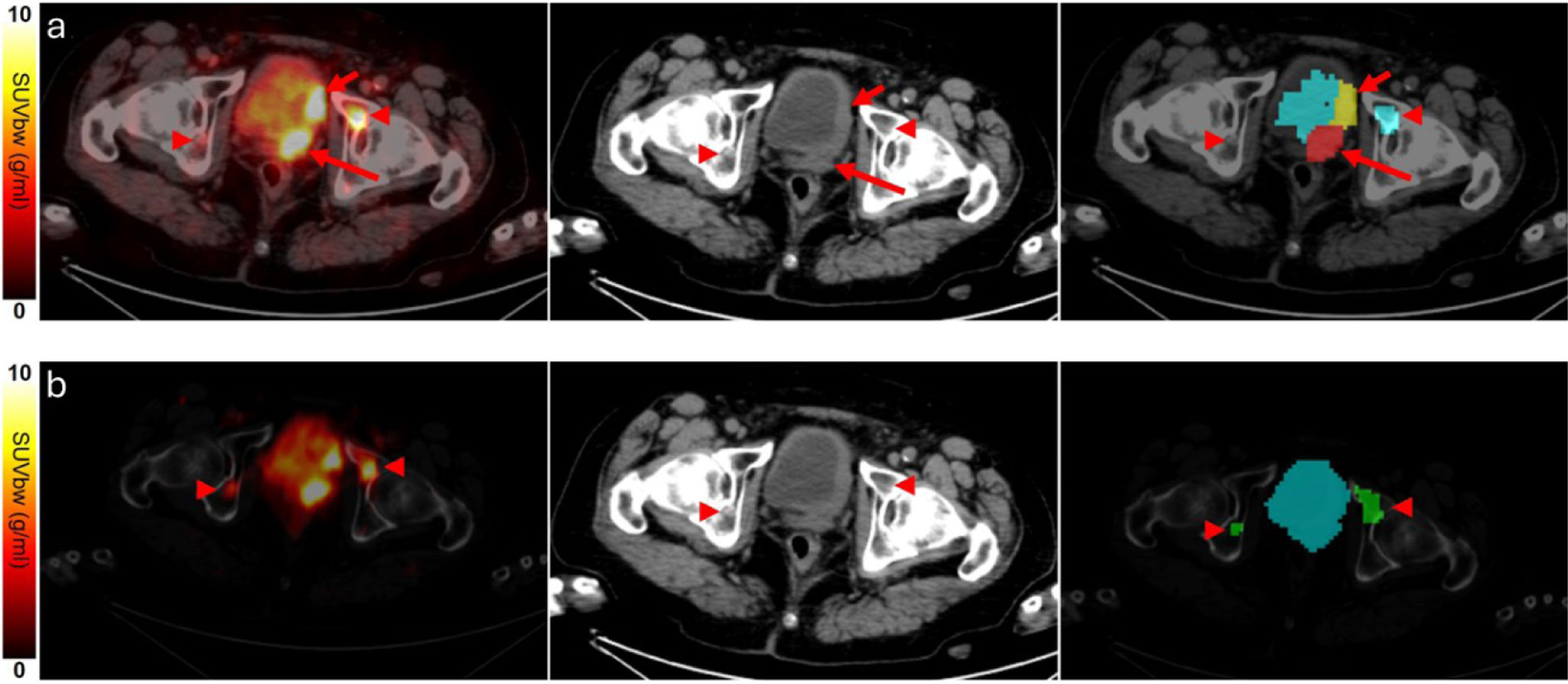
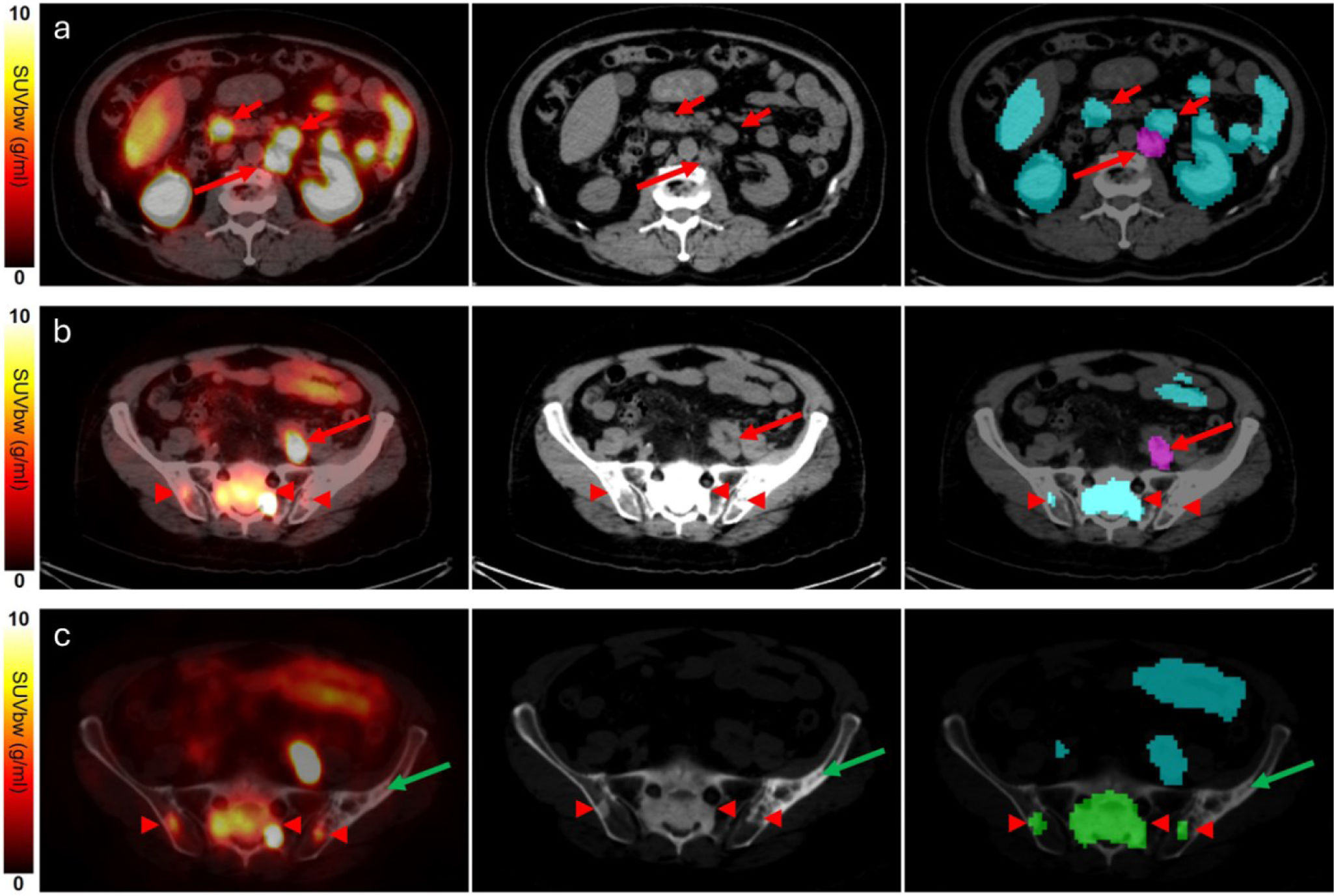
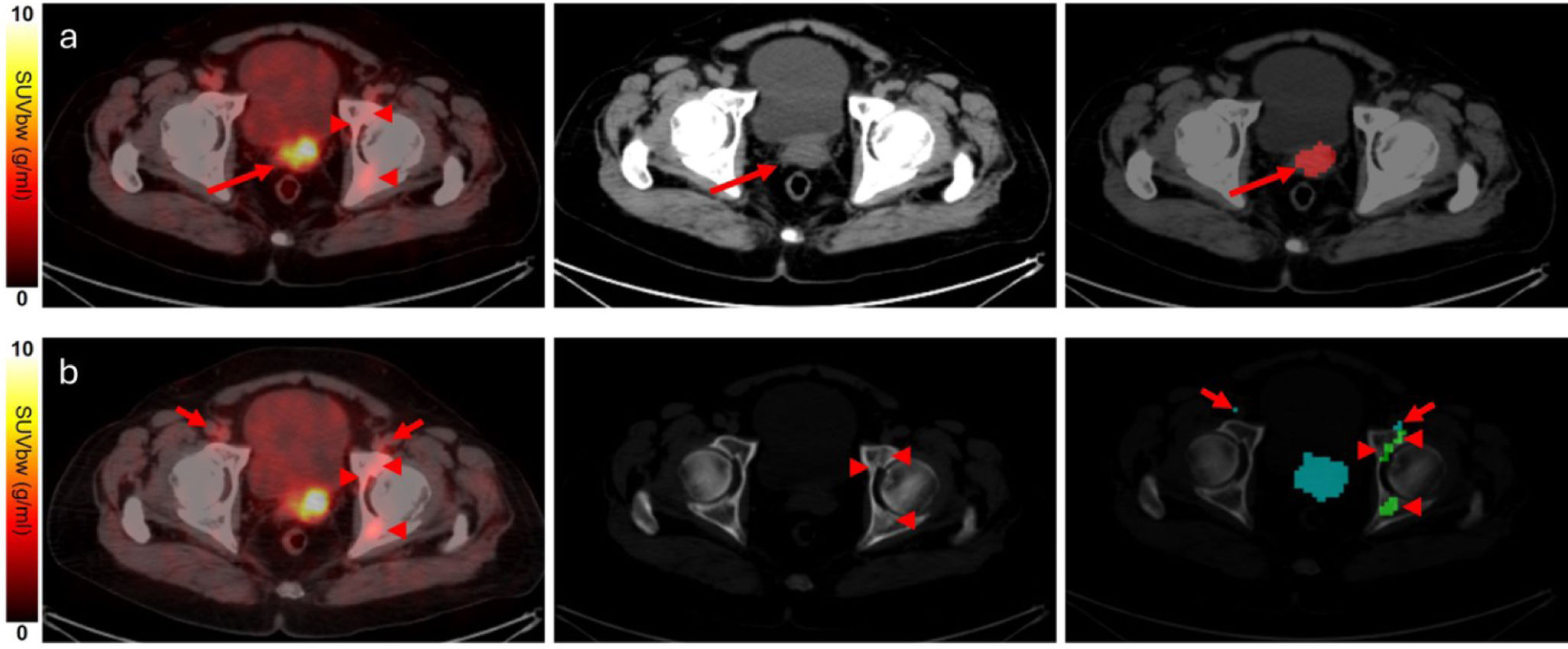
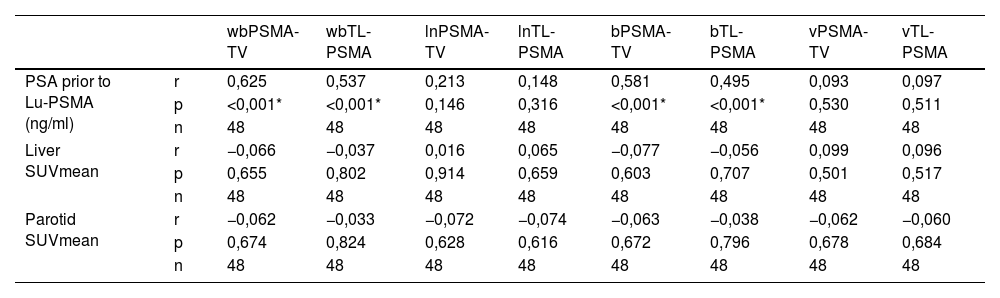
This study aimed to assess the predictive value of metastatic distribution patterns on 68Ga-PSMA-11 PET/CT in patients with chemotherapy- and castration-resistant prostate cancer undergoing ¹⁷⁷Lu-PSMA-617 radioligand therapy.
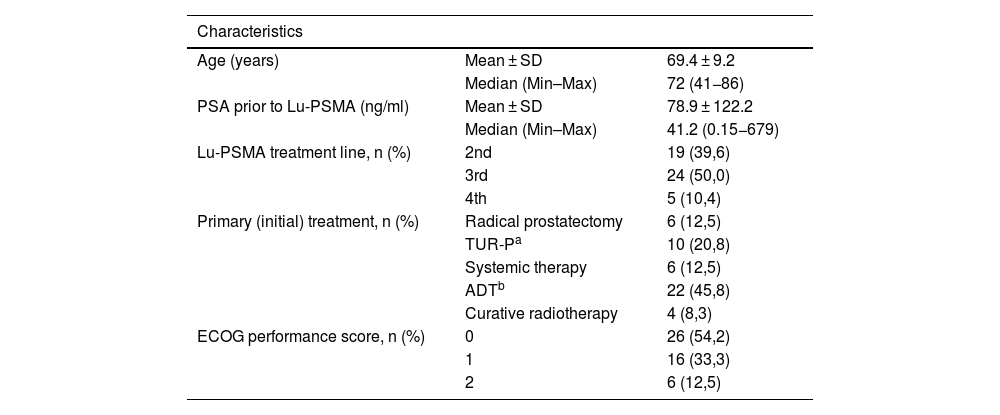
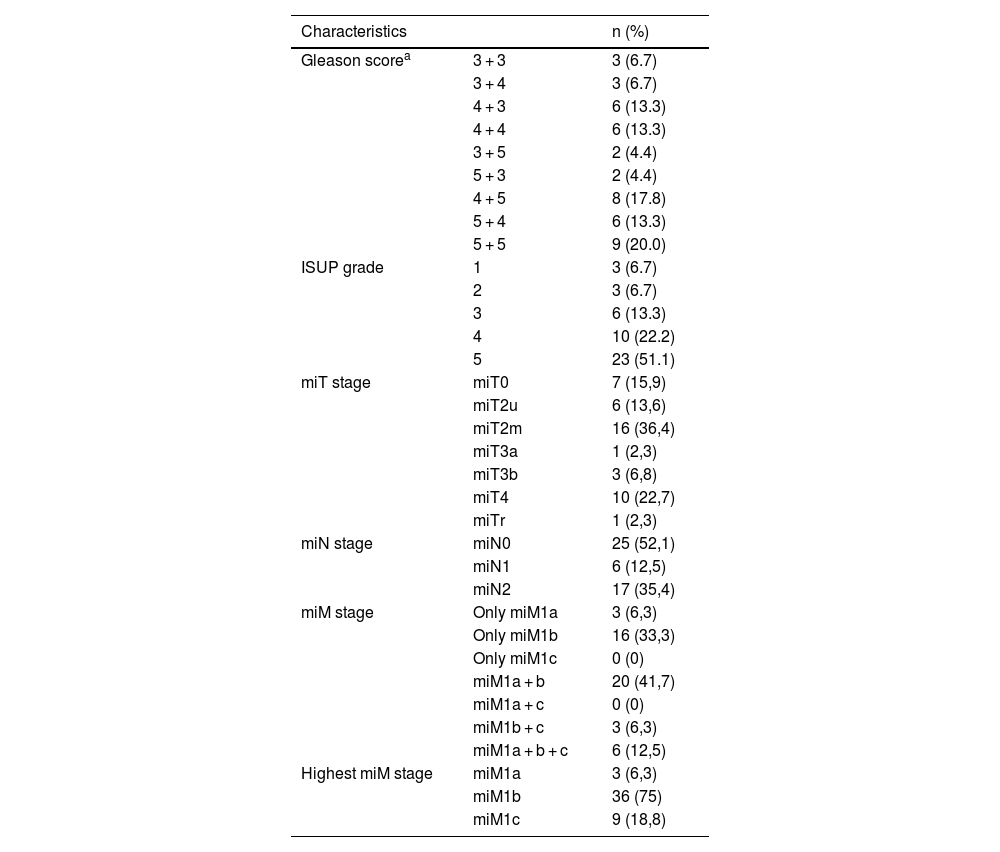
Materials and methodsA retrospective analysis was conducted on 48 patients who received ¹⁷⁷Lu-PSMA-617 therapy between April 2019 and August 2023. Demographic, clinical, and laboratory data, along with pre- and post-treatment 68Ga-PSMA-11 PET/CT images, were evaluated for associations with molecular response and progression. Whole-body PET/CT segmentation was performed using METAVOL software. Treatment response was classified using RECIP 1.0 criteria, and predictive values were analyzed using SPSS 22.0, with statistical significance set at p < 0.05.
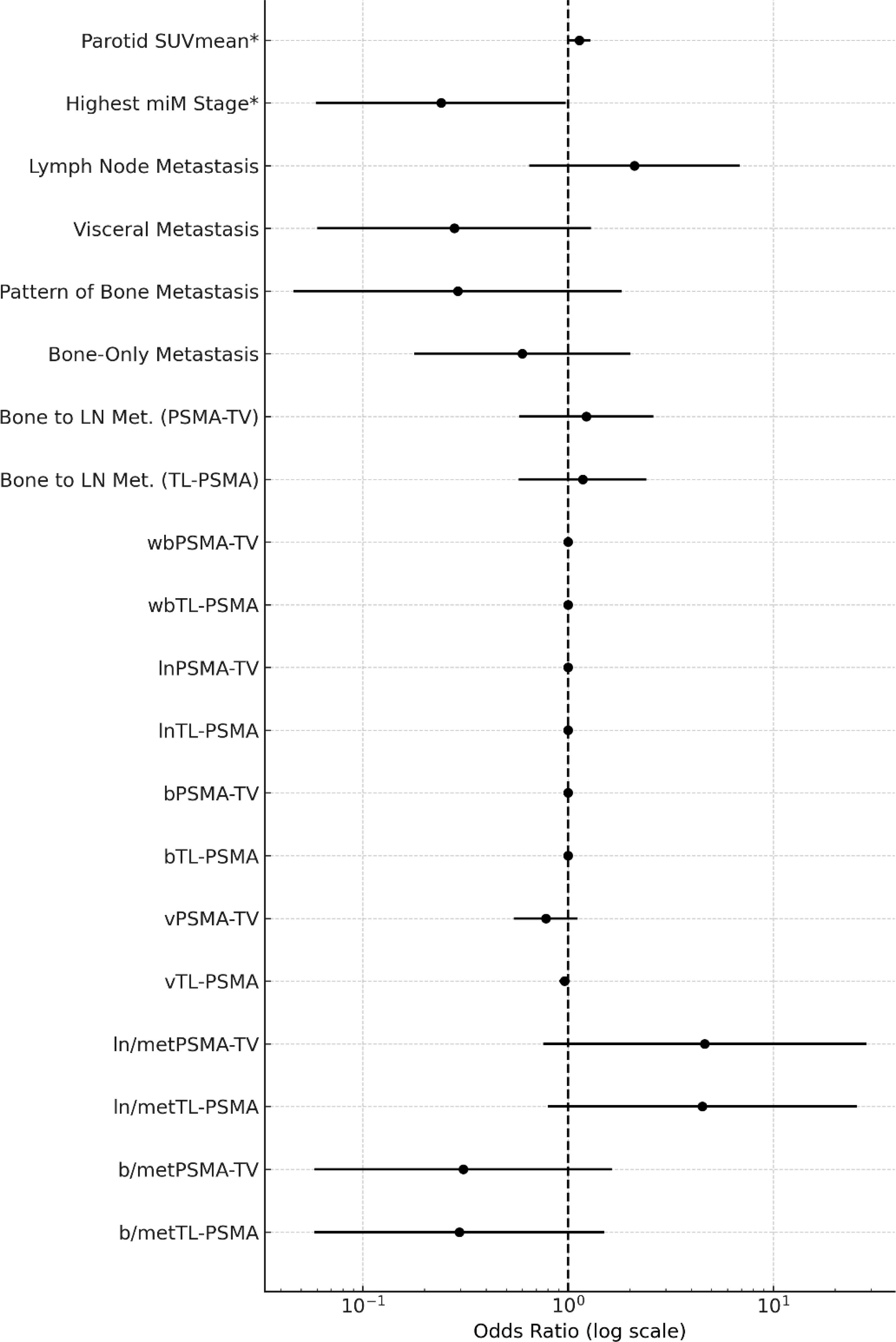
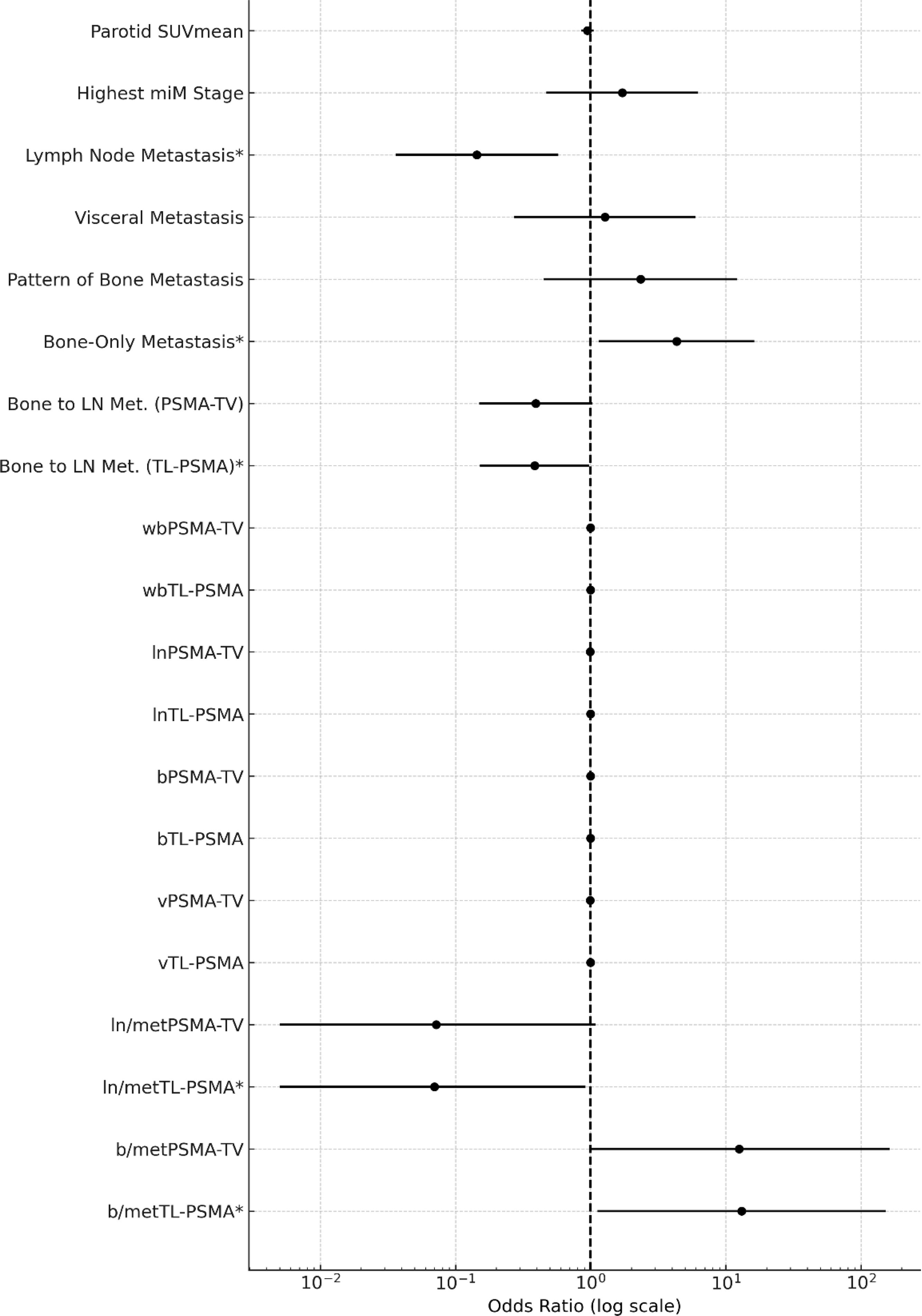
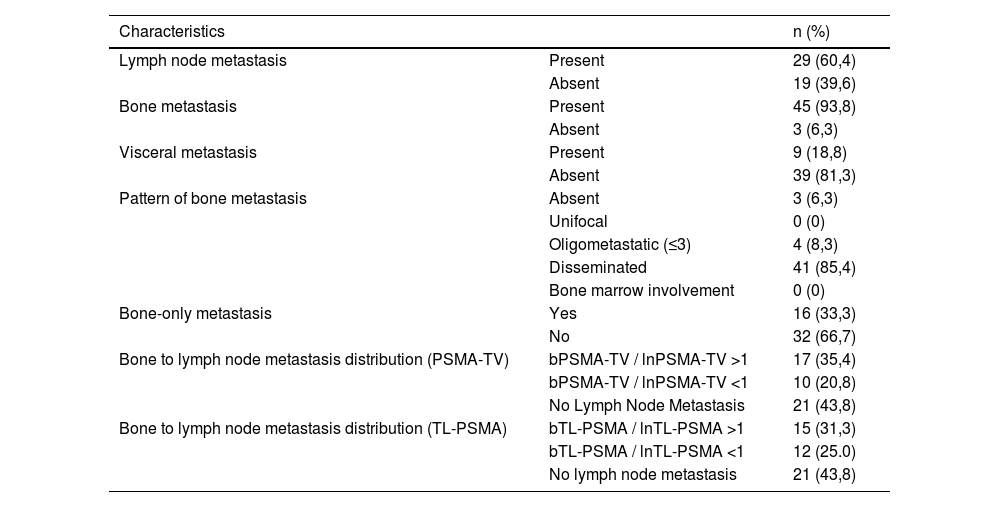
ResultsBased on RECIP 1.0 criteria, 58.3% (n = 28) responded to therapy, while 41.7% (n = 20) did not. Disease progression was observed in 29.2% (n = 14), and 70.8% (n = 34) showed no progression. Molecular response was significantly associated with parotid SUVmean (OR = 1.137, p = 0.047) and highest miM1 stage (OR = 0.241, p = 0.046). Molecular progression was significantly associated with lymph node metastasis (OR = 0.144, p = 0.006), bone-only metastasis (OR = 4.333, p = 0.030), ln/metTL-PSMA ratio (OR = 0.070, p = 0.042), b/metTL-PSMA ratio (OR = 13.085, p = 0.040), and TL-PSMA-based lymph node dominance over bone metastases (OR = 0.385, p = 0.044).
ConclusionThis study highlights the predictive value of metastatic burden distribution on 68Ga-PSMA PET/CT in determining treatment outcomes of ¹⁷⁷Lu-PSMA therapy.
El objetivo de este estudio fue evaluar el valor predictivo de los patrones de distribución metastásica de la PET/TC con [68Ga]Ga-PSMA-11 en pacientes con cáncer de próstata resistente a la quimioterapia y a la castración, sometidos a tratamiento con el radioligando [¹⁷⁷Lu]Lu-PSMA-617.
Materiales y métodosSe realizó un análisis retrospectivo con 48 pacientes que recibieron tratamiento con [¹⁷⁷Lu]Lu-PSMA-617 entre abril de 2019 y agosto de 2023. Se evaluaron los datos demográficos, clínicos y de laboratorio, junto con las imágenes de la PET/TC con [68Ga]Ga-PSMA-11 pre y post-tratamiento, para determinar su asociación con la respuesta o progresión moleculares. La segmentación de las imágenes PET/TC de cuerpo entero se llevó a cabo con el programa informático METAVOL. La respuesta al tratamiento se clasificó de acuerdo con los criterios RECIP 1.0 y se analizaron los valores predictivos mediante el paquete informático SPSS 22.0, estableciéndose la significación estadística con una p < 0,05.
ResultadosSegún los criterios RECIP 1.0, el 58,3% (n = 28) respondió al tratamiento, mientras que el 41,7% (n = 20) no lo hizo. En el 29,2% (n = 14) se observó progresión de la enfermedad, mientras que no se observó en el 70,8% (n = 34). La respuesta molecular se asoció significativamente con el valor de SUVmedio de la glándula parótida (OR = 1,137, p = 0,047) y con el estadio miM1 máximo alcanzado (OR = 0,241, p = 0,046). La progresión molecular se asoció significativamente a metástasis en los ganglios linfáticos (OR = 0,144, p = 0,006), a metástasis solamente óseas (OR = 4,333, p = 0,030), a la relación ln/metTL-PSMA (OR = 0,070, p = 0,042), a la relación b/metTL-PSMA (OR = 13,085, p = 0,040) y a la predominancia ganglionar sobre las metástasis óseas según el TL-PSMA (OR = 0,385, p = 0,044).
ConclusiónEste estudio destaca el valor predictivo de la distribución de la carga metastásica en la PET/TC con [68Ga]Ga-PSMA en la determinación del resultado del tratamiento con [¹⁷⁷Lu]Lu-PSMA.
Article
If you experience access problems, you can contact the SEMNIM Technical Secretariat by email at secretaria.tecnica@semnim.es or by phone at +34 619 594 780.
Revista Española de Medicina Nuclear e Imagen Molecular (English Edition)

