



To evaluate the prognostic value of initial direct radionuclide cystography (DRC) for spontaneous resolution of vesicoureteral reflux (VUR).
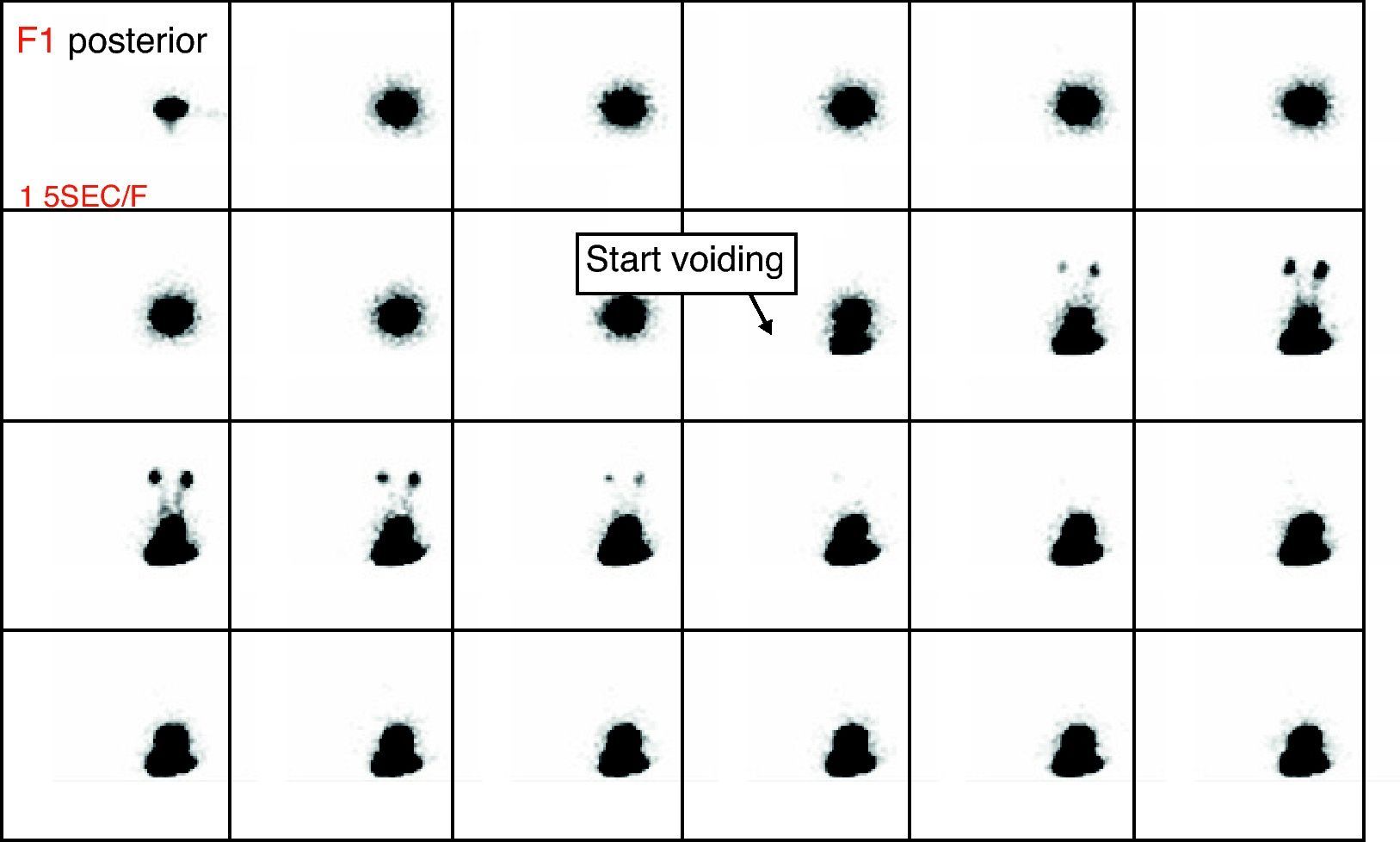
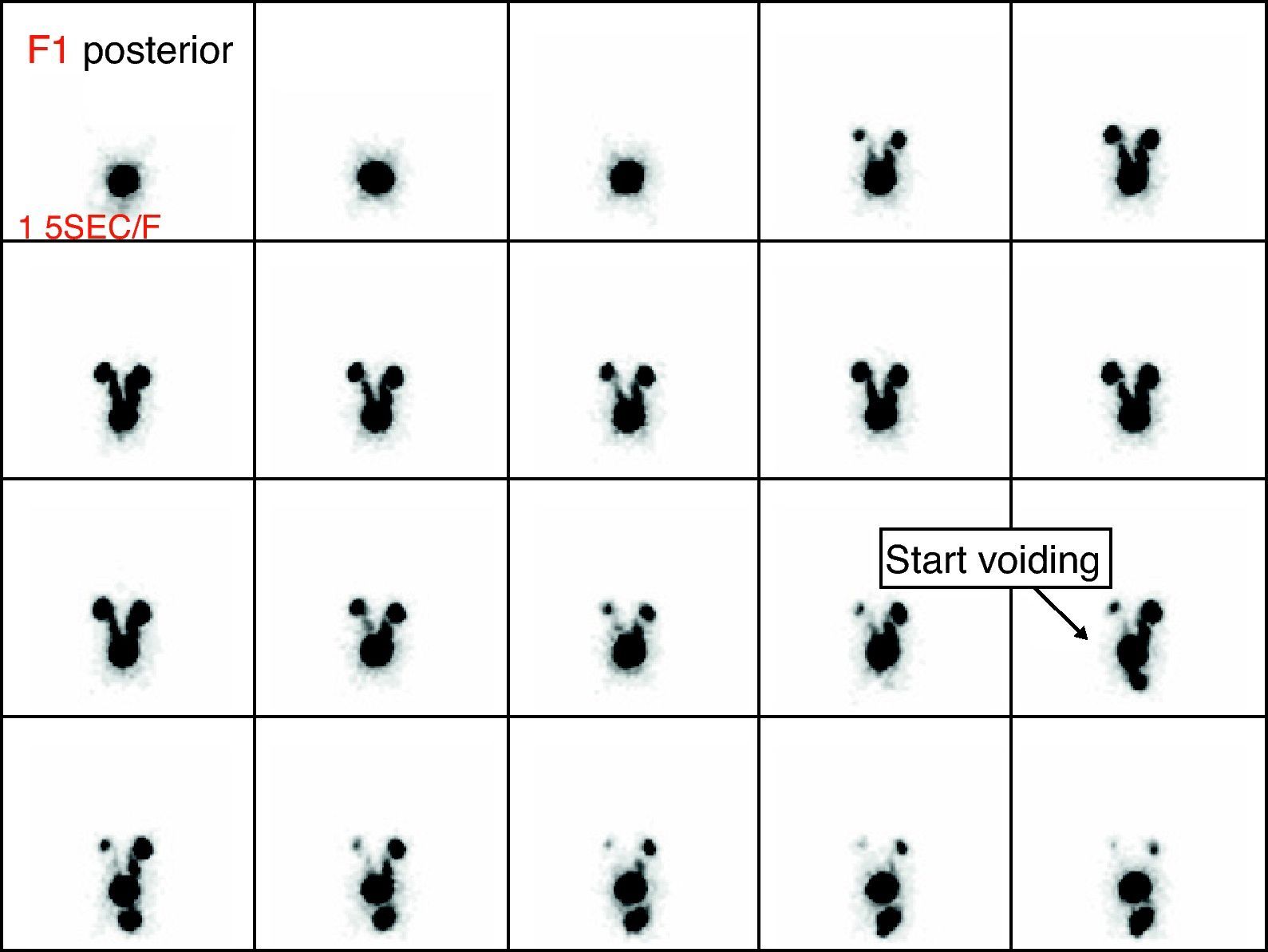
MethodsFifty-one children with initial diagnosis and 1–6 years’ follow-up of VUR by DRC were enrolled in this study. VUR was graded according to the anatomic grading as (1) mild reflux corresponding to tracer just in ureter, (2) moderate reflux with accumulation of activity in a non-dilated collecting system and ureter, and (3) severe reflux equated with a dilated ureter and collecting system. The severity of VUR was also expressed according to the functional classification as (1) transient reflux, which occurred at filling or voiding phase only and (2) persistent reflux, present in both filling and voiding phases.
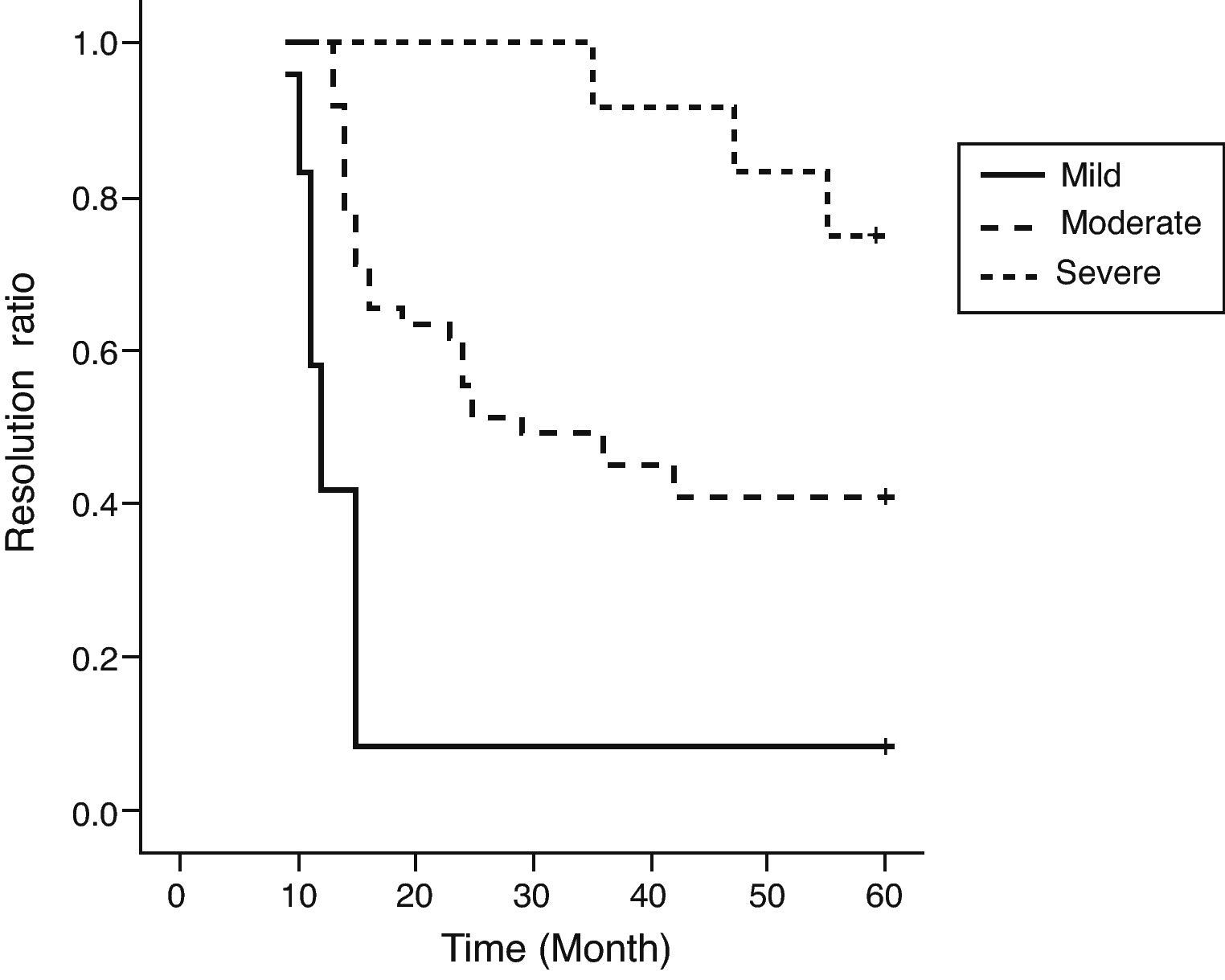
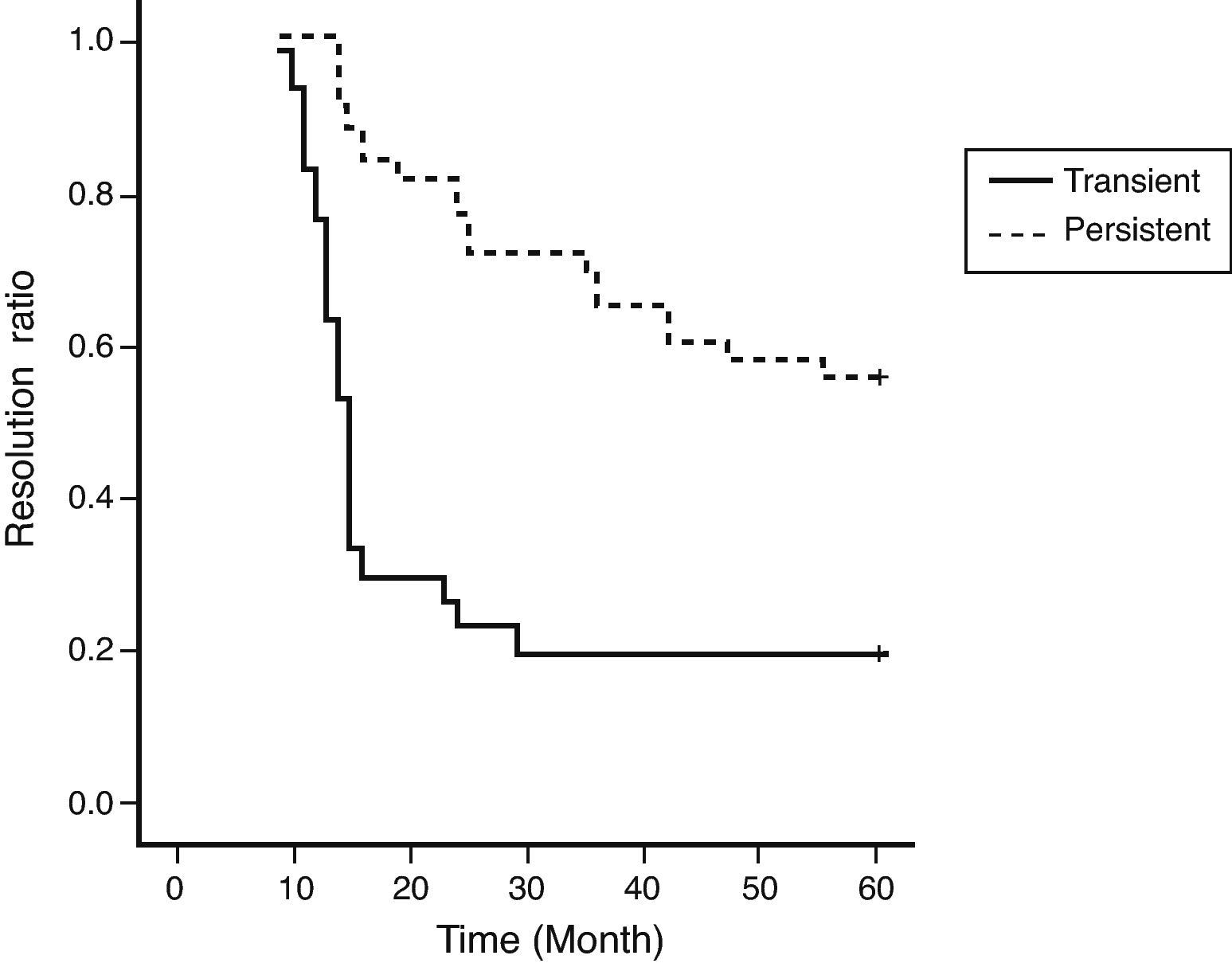
ResultsTwenty-nine of the 51 children had unilateral VUR, and the other 22 had bilateral VUR. In the total of 73 refluxing ureters, there were 12 mild, 49 moderate and 12 severe VUR according to anatomic grading, and 30 transient and 43 persistent VUR according to the functional grading. After follow-up, resolution of VUR was found in 92% (11/12) of mild, 59% (29/49) of moderate and 25% (3/12) of severe VUR (P=.04, mild vs. moderate; P=.003, mild vs. severe). Eighty percent (24/30) of transient and 44% (19/43) of persistent reflux showed spontaneous resolution (P=.003).
ConclusionsDRC allows anatomic and functional classification of VUR. It is an ideal method for the diagnosis, staging and follow-up of VUR, and provides valuable information to predict the patient's outcome.
Evaluar el valor pronóstico de una cistografía isotópica directa (CID) inicial para la resolución espontánea de reflujo vesicoureteral (RVU).
MétodosSe incluyeron 51 niños con un diagnóstico inicial y con 1 a 6 años de seguimiento de RVU mediante CID. Los RVU fueron clasificados según los grados anatómicos de la manera siguiente: (1) reflujo leve que corresponde a trazador solamente en el uréter, (2) reflujo moderado con acumulación de actividad en un sistema colector sin dilatar y uréter, y (3) reflejo severo con un uréter y sistema colector dilatados. La severidad del RVU también se expresó según la clasificación funcional como: (1) reflujo transitorio, que ocurre solo en la fase de llenado o vaciado, y (2) reflujo persistente, presente tanto en las fases de llenado como de vaciado.
ResultadosVeintinueve de los 51 niños presentaron RVU unilateral y los otros 22 tuvieron RVU bilateral. De los 73 uréteres con reflujo, hubo 12 con RVU leves, 49 moderados y 12 severos, según la clasificación anatómica, y 30 transitorios y 43 persistentes según la clasificación funcional. Después del seguimiento, se observó resolución de RVU en el 92% (11/12) de los leves, en el 59% (29/49) de los moderados y en el 25% (3/12) de los severos (p=0,04, leve vs moderado; p=0,003, leve vs severo). El 80% (24/30) de los reflujos transitorios y el 44% (19/43) de los persistente demostraron resolución espontánea (p=0,003).
ConclusionesUna CID hace posible la clasificación anatómica y funcional del RVU. Es un método idóneo para el diagnóstico, estadificación y seguimiento de RVU, y proporciona información valiosa para predecir el resultado del paciente.
Article
If you experience access problems, you can contact the SEMNIM Technical Secretariat by email at secretaria.tecnica@semnim.es or by phone at +34 619 594 780.
Revista Española de Medicina Nuclear e Imagen Molecular (English Edition)

