




metricas
covid
Revista Española de Medicina Nuclear e Imagen Molecular (English Edition) Peritoneal scintigraphy and SPECT/TC in the diagnosis of leaks in patients on pe...
Journal Information
Vol. 44. Issue 1.
(January - February 2025)
Visits
4
Vol. 44. Issue 1.
(January - February 2025)
Original Article
Peritoneal scintigraphy and SPECT/TC in the diagnosis of leaks in patients on peritoneal dialysis
Gammagrafía peritoneal y SPECT/TC en el diagnóstico de fugas en pacientes en diálisis peritoneal
Visits
4
D. Tercero Garridoa,b,
Corresponding author
, M.V. Guiote Morenoa,b, C. Rodelo-Haadb,c, P.I. Contreras Puertasa, S. Soriano Cabrerab,c, M.D. Albalá Gonzáleza,b
a Unidad de Gestión Clínica de Medicina Nuclear, Hospital Universitario Reina Sofía, 14004, Córdoba, Spain
b Instituto Maimónides de Investigación Biomédica (IMIBIC), Universidad de Córdoba, 14004, Córdoba, Spain
c Unidad de Gestión Clínica de Nefrología, Hospital Universitario Reina Sofía, 14004, Córdoba, Spain
This item has received
Article information
Abstract
Full Text
Bibliography
Download PDF
Statistics
Figures (4)
Show moreShow less
Tables (3)
Table 1. Sociodemographic and general characteristics of the study population.
Tables
Table 2. Results of peritoneal cavity scintigraphy in the present descriptive case series. Total N = 11.
Tables
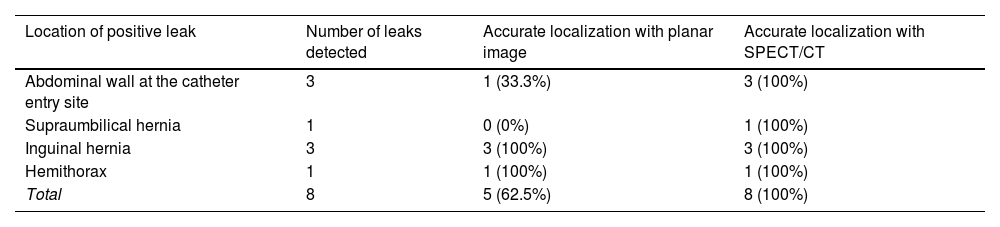
Table 3. Contribution of SPECT/CT as a complementary study to planar scintigraphy in the localization of peritoneal leakages.
Tables
Show moreShow less
Abstract
Objective

To assess the usefulness of peritoneal cavity scintigraphy and the contribution of SPECT/CT in patients on peritoneal dialysis with suspected leak.

Methodology

An observational case series study is carried out. It consists of a longitudinal, retrospective and descriptive study. 11 patients on peritoneal dialysis were studied and it was realiced a peritoneal cavity scintigraphy test and SPECT/CT to evaluate a peritoneal leak.

Results

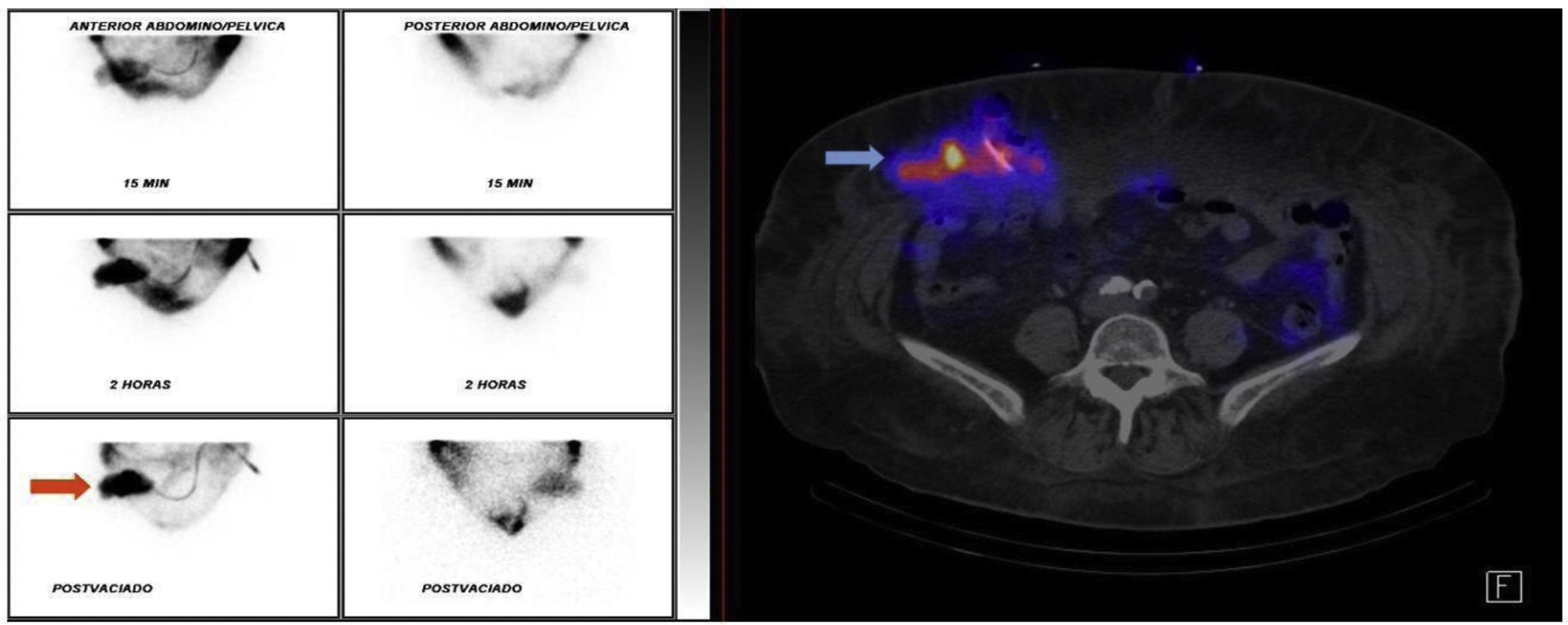
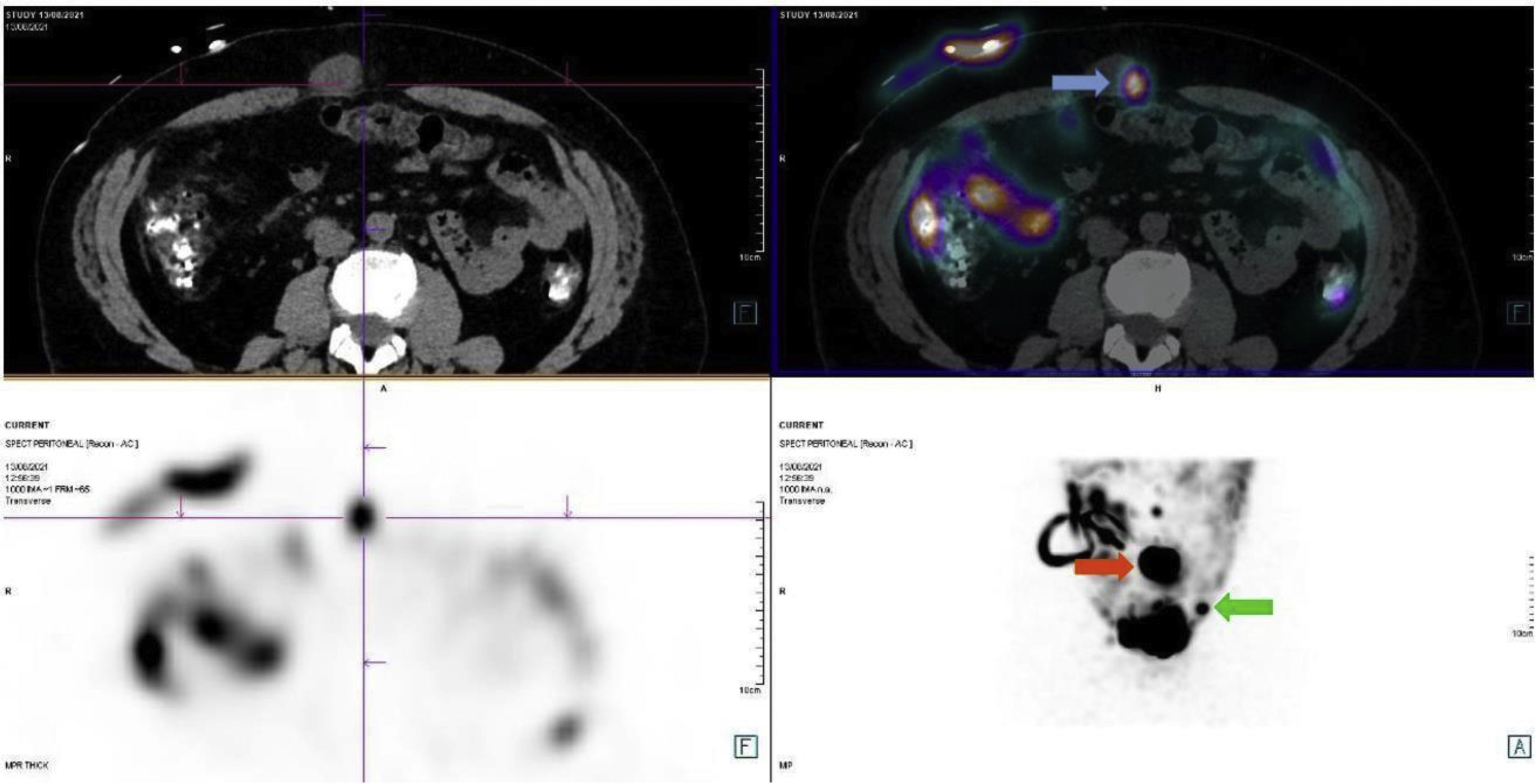
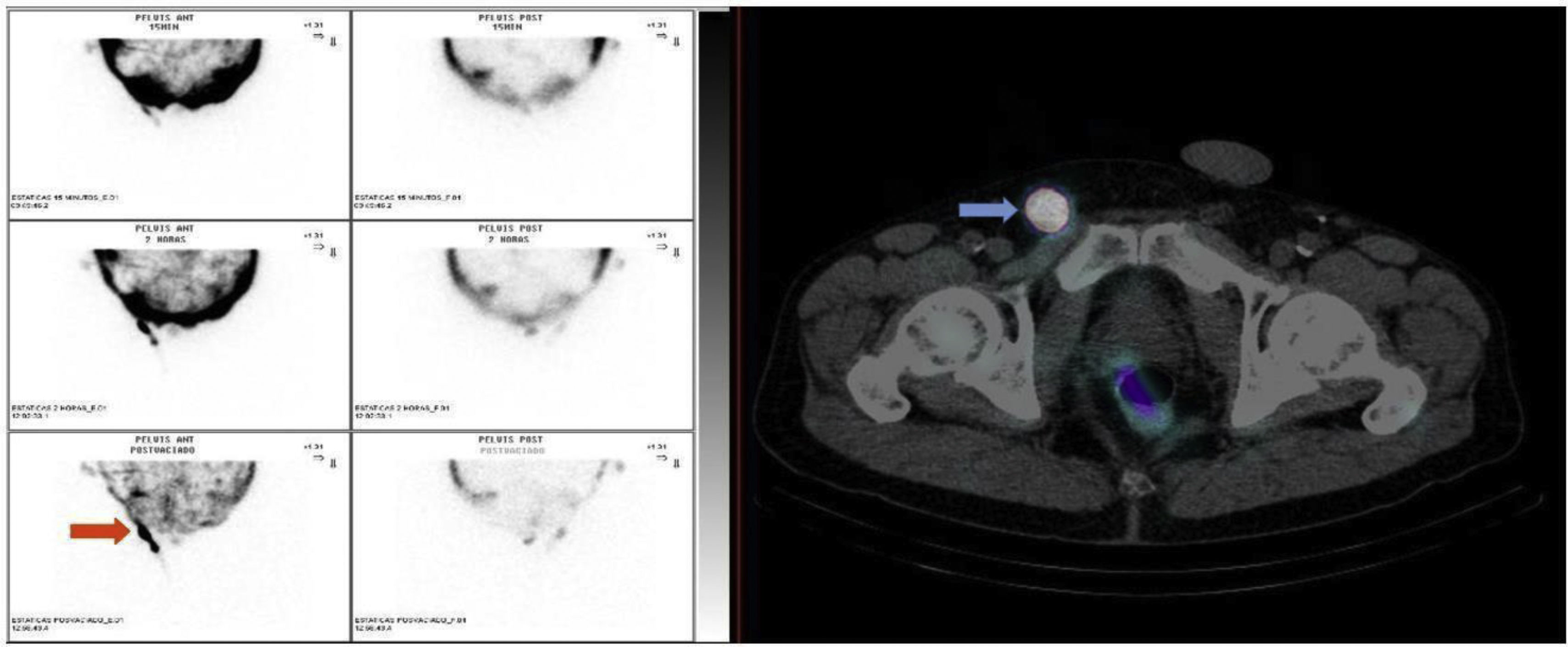
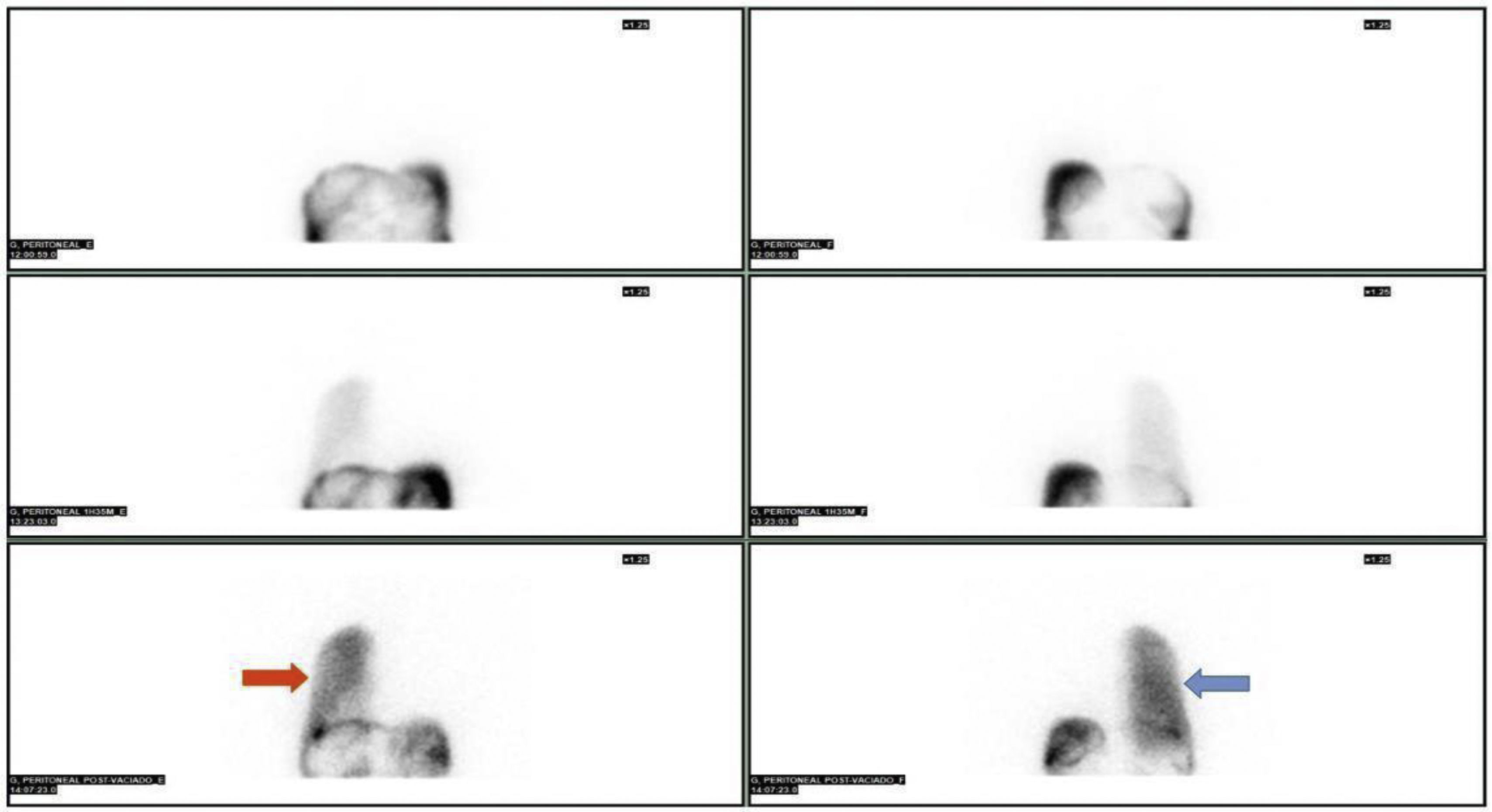
In 54,5% of the patients, a positive study of peritoneal leak was obtained. The most frequent localitations were in the abdominal wall at the catheter entry level and the inguinal hernia. In the cases with sintomatology like pain and celullitis of the subcutaneous tract of the cateter the frequent of leak was 100%. There was a change in therapeutic management in patients with a positive study. There was not relevant changes in initial dialysis regimen in patients with a negative study. In this cases, except for one patient who required hemodialysis, all patients experienced clinical improvement.

Conclusions

Peritoneal scintigraphy and SPECT/CT study are non-invasive techniques that allow an adequate diagnosis and subsequent management of peritoneal leak.

Keywords:
Scintigraphy
CT SPECT
Peritoneal leak
Peritoneal dialysis
[99mTc] Tc-albumin nanocolloids
Resumen
Objetivo

Valorar la utilidad de la gammagrafía de cavidad peritoneal y la aportación del SPECT/CT en pacientes en diálisis peritoneal con sospecha de fuga.

Metodología

Se realiza un estudio observacional serie de casos. Consiste en un estudio longitudinal, retrospectivo y descriptivo en el cual se estudian 11 pacientes en diálisis peritoneal, que se realizaron gammagrafía de cavidad peritoneal y SPECT/CT por sospecha de fuga.

Resultados

En el 54,5% de los pacientes se obtuvo estudio positivo de fuga peritoneal, cuyas localizaciones más frecuentes se encuentran en pared abdominal a nivel de entrada de catéter y en hernia inguinal. En los pacientes con dolor y celulitis del trayecto subcutáneo del catéter se visualizó con más frecuencia fuga en la gammagrafía.

En los pacientes con estudio positivo hubo un cambio en el manejo terapéutico. En los pacientes con estudio negativo no se hicieron cambios relevantes en la pauta de diálisis inicial, con mejoría clínica en todos ellos, salvo un caso que requirió hemodiálisis.

Conclusiones

La gammagrafía peritoneal y el estudio SPECT/CT son técnicas no invasivas que permiten un adecuado diagnóstico y posterior manejo de fuga peritoneal.

Palabras clave:
Gammagrafía
SPECT-CT
Fuga peritoneal
Diálisis peritoneal
[99mTc] Tc-nanocoloides de albúmina

Article

These are the options to access the full texts of the publication Revista Española de Medicina Nuclear e Imagen Molecular (English Edition)
Member
If you are a member of the Spanish Society of Nuclear Medicine and Molecular Imaging (SEMNIM), you can access the full text of the contents of the Revista Española de Medicina Nuclear e Imagen Molecular through the journal links published on the SEMNIM website (link: http://socios.semnim.es/?ir-a=remnim), after logging in as a member.

If you experience access problems, you can contact the SEMNIM Technical Secretariat by email at secretaria.tecnica@semnim.es or by phone at +34 619 594 780.
Subscriber
Subscriber

If you already have your login data, please click here .

If you have forgotten your password you can you can recover it by clicking here and selecting the option “I have forgotten my password”
Subscribe
Subscribe to

Revista Española de Medicina Nuclear e Imagen Molecular (English Edition)

Purchase
Purchase article

Purchasing article the PDF version will be downloaded

Purchase now
Contact
Phone for subscriptions and reporting of errors
From Monday to Friday from 9 a.m. to 6 p.m. (GMT + 1) except for the months of July and August which will be from 9 a.m. to 3 p.m.
Calls from Spain
932 415 960
Calls from outside Spain
+34 932 415 960
E-mail
Article options
Tools
