



To assess the diagnostic feasibility of transperineal biopsy guided by fusion of PET/MRI with [18F]F-PSMA-1007 and real-time transrectal ultrasound (BP PET/MR PSMA + TRUS) in patients with PIRADS 3 lesions.
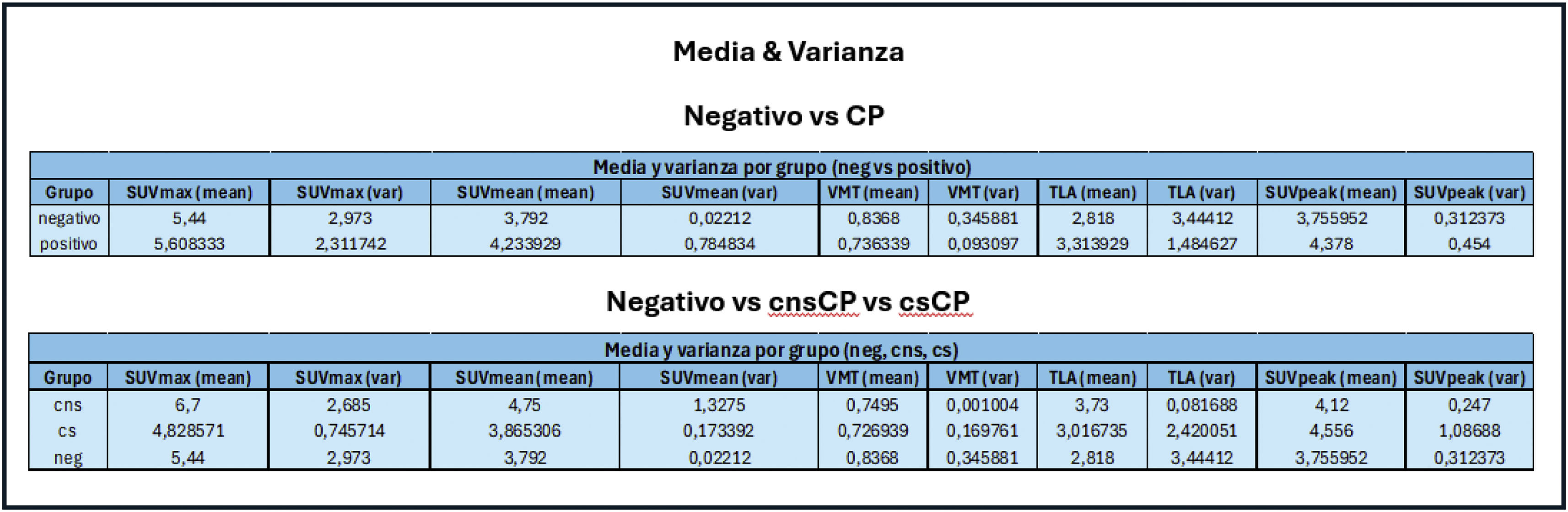
To analyze imaging biomarkers and radiomic features for differentiating between patients with negative biopsy, clinically non-significant prostate cancer (cnsPCa), and clinically significant prostate cancer (csPCa).
MethodsA prospective study was conducted in 20 patients with PIRADS 3 lesions and PSA ≥ 4 ng/mL, with no concurrent suspicious lesions.
All patients underwent a PET/MRI with [18F]F-PSMA-1007, followed by targeted biopsy using real-time ultrasound fusion.
Diagnostic accuracy for prostate cancer (PCa) and the proportion of csPCa and cnsPCa diagnoses were calculated.
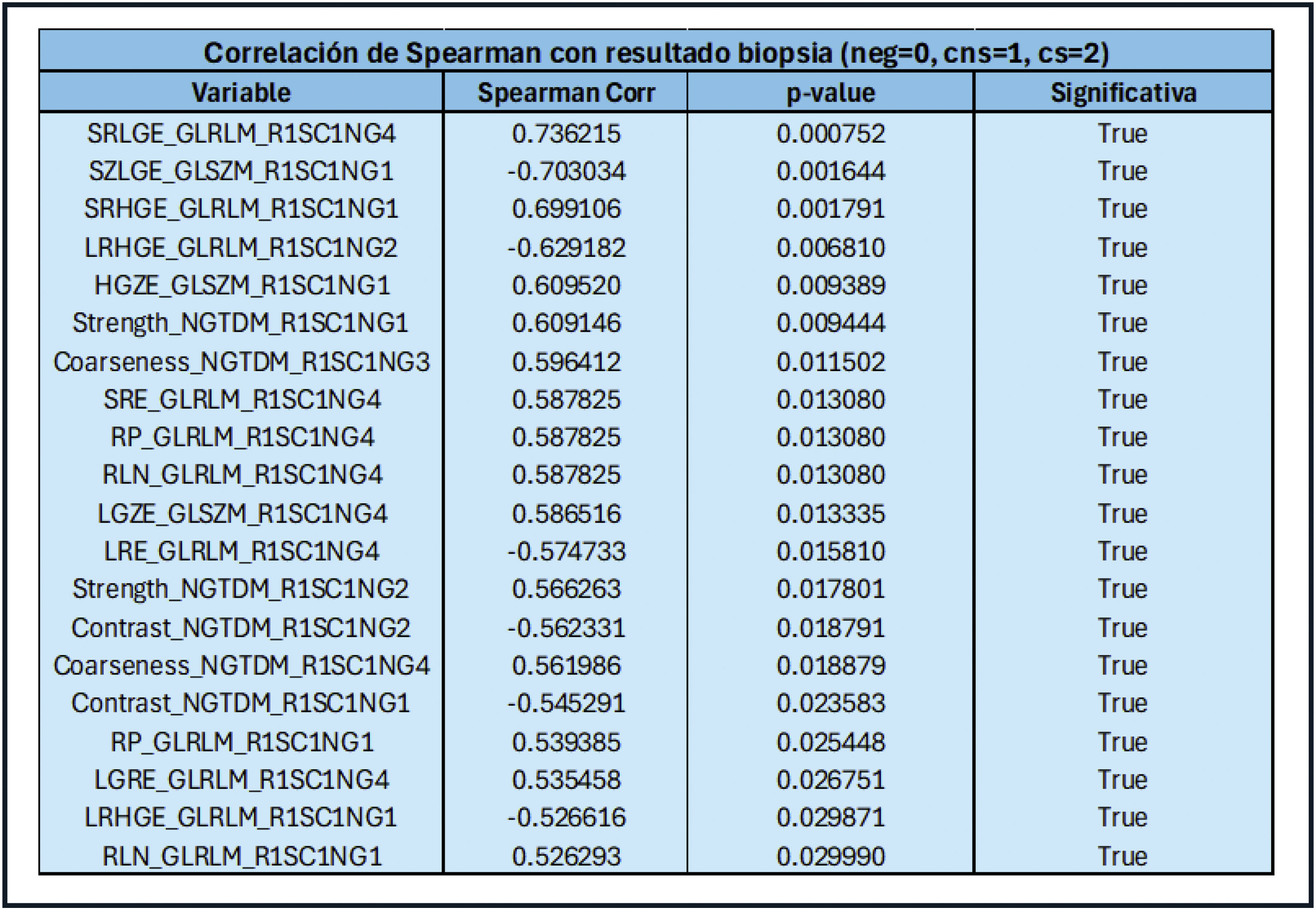
Imaging biomarkers and machine learning models based on radiomic features were analyzed.
ResultsThe technique was feasible in 100% of cases.
The overall detection rate of PCa was 80%, with 100% sensitivity and 36% specificity for csPCa.
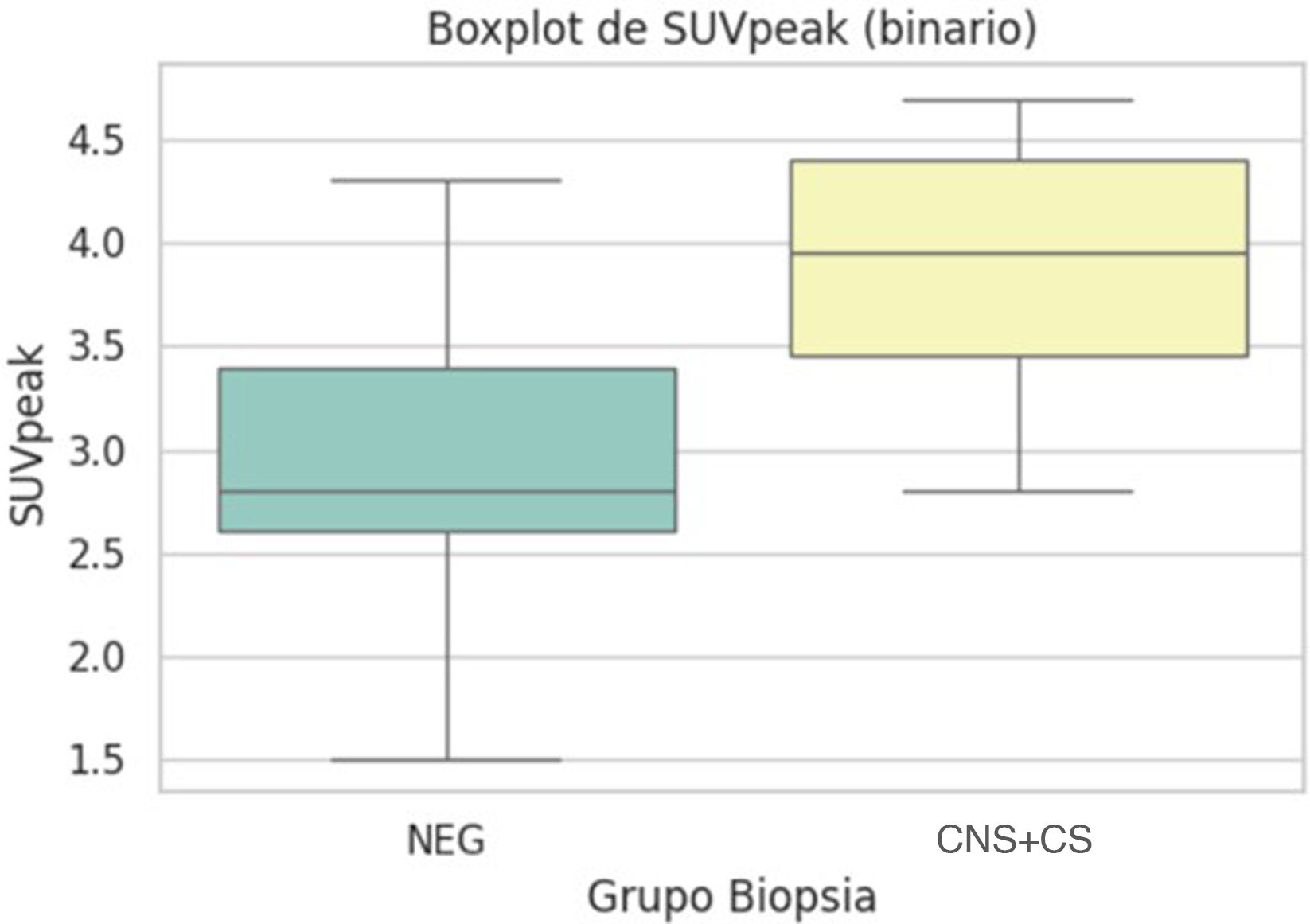
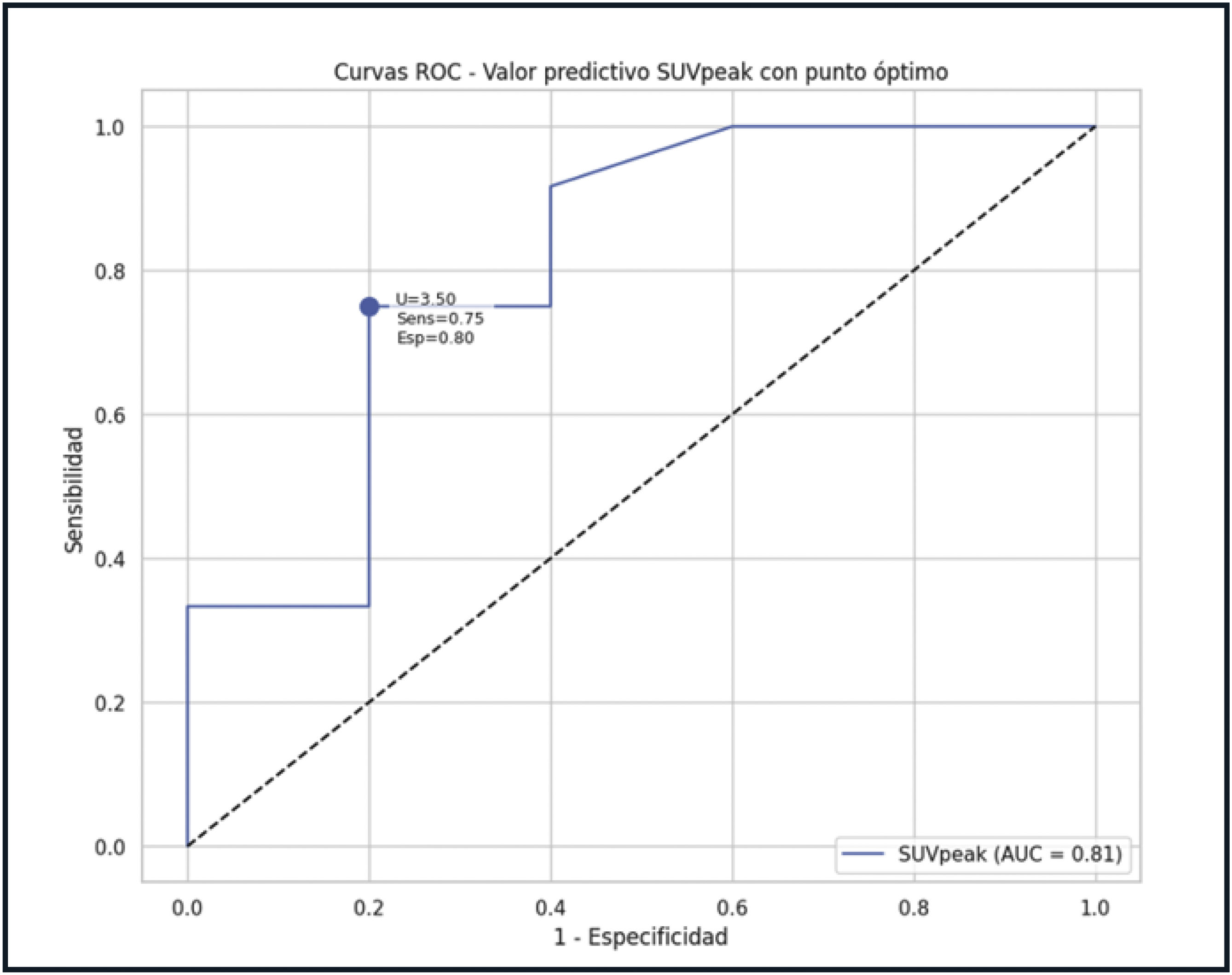
SUVpeak was the only biomarker that showed significant differences between patients with negative histology and PCa (AUC 0.81; sensitivity 75%; specificity 80%; cutoff value 3.5).
No biomarker successfully differentiated between csPCa and cnsPCa.
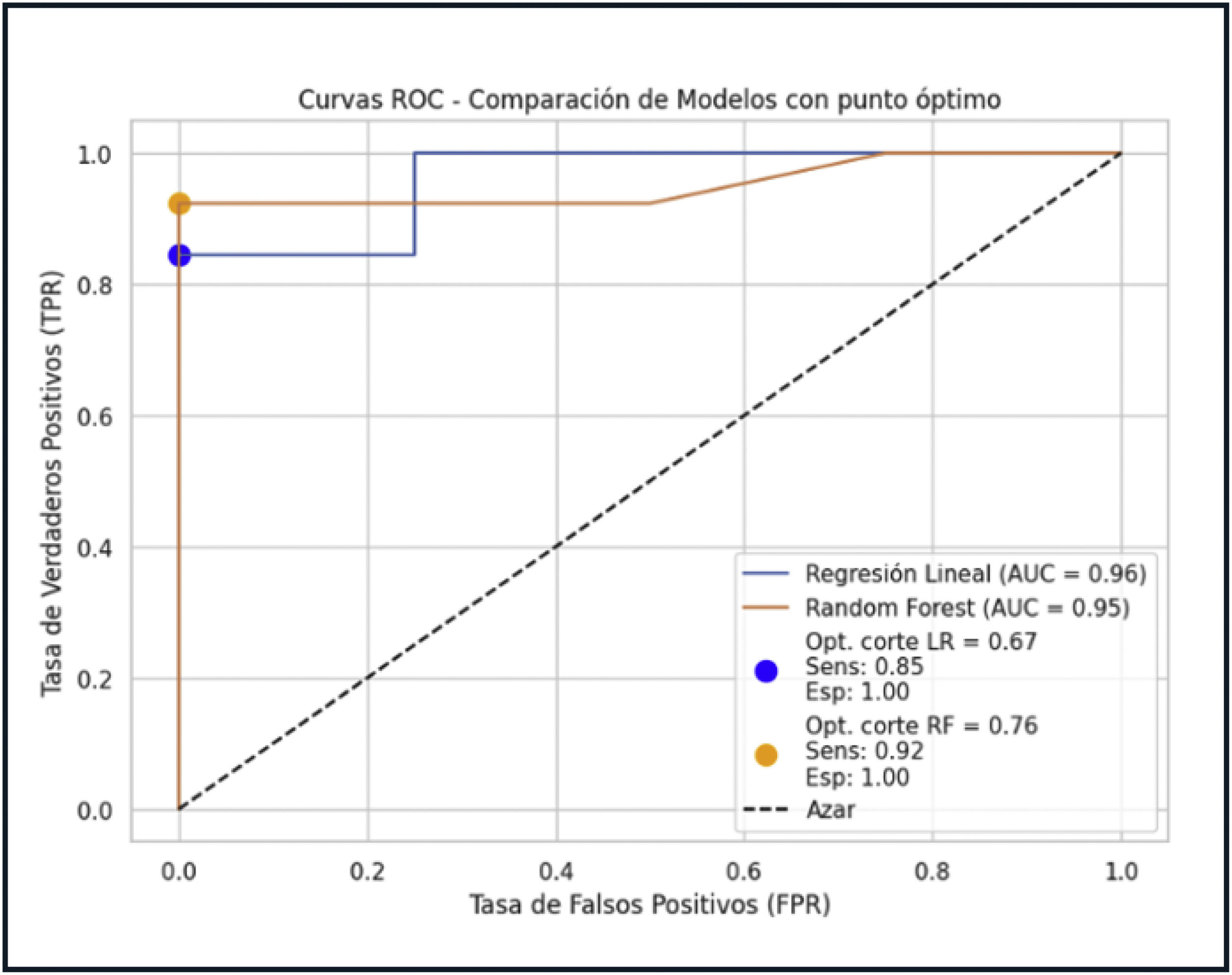
Both supervised classification models demonstrated high diagnostic performance (AUC > 0.95): Multimodal regression performed slightly better for binary classification (negative vs. PCa). Random Forest outperformed in three-class classification (negative vs. cnsPCa vs. csPCa).
ConclusionsBP PET/MRI PSMA + TRUS is a feasible, safe, and potentially superior technique compared to MRI-only targeted biopsy, especially in PIRADS 3 lesions.
Radiomic analysis improves discriminative ability over conventional imaging biomarkers, particularly for distinguishing between cnsPCa and csPCa.
Evaluar la viabilidad diagnóstica de la biopsia transperineal guiada por fusión de PET/RM con [18F]F-PSMA-1007 y ecografía transrectal (BP PET/RM PSMA + ETR) en pacientes con lesiones PIRADS 3.
Analizar los biomarcadores de imagen y radiómica para la diferenciación entre pacientes con biopsia negativa/cnsCP/csCP.
MétodoEstudio prospectivo en 20 pacientes con lesiones PIRADS 3 y PSA ≥ 4 ng/mL, sin otras lesiones concurrentes.
Se realizó un PET/RM con [18F]F-PSMA-1007 y posterior biopsia dirigida mediante fusión con ecografía en tiempo real.
Se calculó la precisión de la técnica en la detección del CP y la proporción de diagnósticos de csCP y cnsCP
Se analizaron biomarcadores de imagen y modelos de aprendizaje automático basados en la radiómica.
ResultadosLa técnica fue factible en el 100% de los casos.
La tasa de detección de CP fue del 80%, con sensibilidad del 100% y especificidad del 36% para csCP.
El SUVpeak fue el único biomarcador que mostró diferencias significativas entre pacientes con histología negativa y CP (AUC 0,81; sensibilidad 75%; especificidad 80%, punto corte 3,5). Ningún biomarcador discriminó entre csCP y cnsCP.
Ambos modelos de clasificación supervisada mostraron buen desempeño diagnóstico (AUC > 0,95). La regresión multimodal fue ligeramente superior en clasificación negativo/CP, mientras que Random Forest fue superior para clasificación negativo/cnCP/csCP.
ConclusionesLa BP PET/RM PSMA + ETR es una técnica viable, segura y potencialmente superior a la biopsia guiada únicamente por RMmp, especialmente en lesiones PIRADS 3.
El análisis radiómico mejora la capacidad discriminativa frente a los biomarcadores convencionales, en especial entre cnsCP/csCP.
Article
If you experience access problems, you can contact the SEMNIM Technical Secretariat by email at secretaria.tecnica@semnim.es or by phone at +34 619 594 780.
Revista Española de Medicina Nuclear e Imagen Molecular (English Edition)

