




The assessment of activities of daily living (ADL) is considered essential in the evaluation of mild cognitive impairment (MCI), dementia and for its correct differential diagnosis. There are many scales for the functional assessment of these entities, although they are not exempt from drawbacks. The Barcelona Test ADL scale was published in 2019 with the aim of having a retrogenetic instrument that could overcome most of the problems encountered by its predecessors.
MethodA study was carried out to evaluate the properties of this scale. A total sample of 68 subjects (healthy controls, patients with amnestic-type MCI, and patients with Alzheimer's-type dementia) stratified according to the Global Cognitive Impairment Scale -Global Deterioration Scale- completed with the Functional Assessment Staging- Scale (GDS-FAST). The scores of each group on the scale, as well as on other cognitive tests, were studied to obtain the descriptive and internal consistency, concurrent validity, and discriminative capacity indices.
ResultsThe scale means differed significantly between all stratification groups. A high internal consistency index was obtained (Cronbach’s α 0.975), excellent concurrent validity (Spearman’s ρ of 0.95) and very good discriminative capacity, especially between the GDS-FAST 3 and 4 groups, and the GDS-FAST 4 and 5 groups.
ConclusionsThe Barcelona Test ADL scale allows adequately evaluating the retrogenetic functional level of patients and discriminating between the different phases of the GDS-FAST, positioning itself as a very complete and useful scale in our sociocultural environment.
La valoración de las actividades de la vida diaria (AVD) se considera esencial en la evaluación del deterioro cognitivo leve (DCL), la demencia y para su correcto diagnóstico diferencial. Existen muchas escalas para la valoración funcional de estas entidades, aunque no están exentas de inconvenientes. La escala de las AVD del Test Barcelona, fue publicada en el 2019 con el objetivo de disponer de un instrumento retrogenético que pudiera sortear la mayoría de los problemas con los que se encuentran sus antecesoras.
MétodoSe realizó un estudio para evaluar las propiedades de esta escala. Se evaluó una muestra total de 68 sujetos (controles sanos, pacientes con DCL tipo amnésico y pacientes con demencia tipo Alzheimer) estratificados según la Escala de Deterioro Cognitivo Global -Global Deterioration Scale- completada con la Escala del Estado Funcional -Functional Assessment Staging- (GDS-FAST). Se estudiaron las puntuaciones de cada grupo en la escala, así como en otras pruebas cognitivas, para obtener los descriptivos y los índices de consistencia interna, validez concurrente y capacidad discriminativa.
ResultadosLas medias de la escala diferían significativamente entre todos los grupos de estratificación. Se obtuvo un alto índice de consistencia interna (α de Cronbach 0,975), excelente validez concurrente (ρ de Spearman de 0,95) y muy buena capacidad discriminativa especialmente entre los grupos GDS-FAST 3 y 4, y los grupos GDS-FAST 4 y 5.
ConclusionesLa escala de AVD del Test Barcelona permite evaluar adecuadamente el nivel funcional retrogenético de los pacientes y discriminar entre las diferentes fases del GDS-FAST, situándose como una escala muy completa y útil en nuestro medio sociocultural.
Dementia can be defined as the clinical condition of cognitive impairment, which affects emotions and behaviour in addition to cognition. This impairment is progressive, and interferes with the patient’s activities of daily living (ADL).1,2
The most prevalent form of dementia among the population older than 65 years is Alzheimer disease (AD).3 AD is currently diagnosed according to biological criteria.4–6 Deficits in ADLs are considered an intrinsic component of dementia, with ADL performance representing one of the most robust markers of the clinical course of AD.7
Though mild cognitive impairment (MCI) is a heterogeneous entity, the amnestic subtype (aMCI) is widely recognised as a prodrome of AD. Cognitive and functional difficulties in patients with MCI are subtle,8 with more complex tasks generally being affected to a greater degree.
The retrogenetic model or retrogenesis of AD, first proposed decades ago by Ajuriaguerra and his group,9 refers to the process by which degenerative mechanisms reverse the order of acquisition of abilities observed in normal development; this model received considerable attention in the study of dementias in general and AD in particular,10 especially with respect to disease progression, treatment, and non-pharmacological care. AD is the paradigmatic retrogenetic disease; however, the process is also applicable to a greater or lesser extent in many other diseases that progress with dementia.11,12
As noted above, the evaluation of ADLs is considered essential in the clinical assessment of dementia.13 Numerous scales have been developed to assess functional skills in dementia,14–16 all of which place more or less emphasis on advanced (eg, sport, leisure), instrumental (eg, shopping, cooking, using money), or basic ADLs (eg, eating, walking). Some of the scales used have difficulty differentiating healthy individuals from patients with MCI: examples include the Lawton-Brody Scale, also known as the Philadelphia Geriatric Center-Instrumental Activities of Daily Living scale17; the Blessed Dementia Rating Scale (BDRS),18 which assesses basic and instrumental ADLs as well as behavioural and personality changes; the Interview for Deterioration in Daily life in Dementia, which evaluates personal care and complex activities, as well as distinguishing between the initiative to carry out an action and the actual performance of the action19; and the Alzheimer’s Disease Functional Assessment and Change Scale, which evaluates basic and instrumental ADLs.15,16 Another problem is the inclusion of items that are strongly influenced by sex, and even the assessment of activities that the patient has never performed.20
Changes in ADLs are considered to be multicausal, with cognitive deficits considered to account for only one-third of variance21; thus, ADL assessment is essential and has become increasingly relevant in clinical trials.22
With a view to advancing the assessment of ADLs, overcoming the difficulties of current scales, and attempting to optimise this evaluation, the second edition of the Barcelona Test (BT2) includes a new ADL scale (BT-ADL).23
The BT-ADL scale was constructed through a retrogenetic approach, with the objective of relating functional status with cognitive performance in subjects from across the spectrum of AD. The scale was originally developed and trialled between 2012 and 2018, after a review of the scales described in the literature. We attempted to better define items in order to organise them within the retrogenetic model, enabling classification of patients in all phases of the Global Deterioration Scale (GDS),15,16,24 with key items that enable clear differentiation between disease stages, in a relatively brief test.7
This study aims to evaluate the applicability, internal consistency, and concurrent and discriminant validity of the BT-ADL scale in a sample of Spanish adults older than 65 years, including healthy volunteers, patients with aMCI, and patients with dementia of the Alzheimer type (DAT).
Material and methodsPatientsThe study was conducted at the neuropsychology department of Fundación Sociosanitaria y Social de Santa Tecla (Tarragona, Spain) and at the Association of Alzheimer Disease and Other Neurocognitive Disorders of Reus and Baix Camp (Reus, Spain), and was performed in accordance with international recommendations on research and clinical trials involving human participants (1964 Declaration of Helsinki and its subsequent modifications). The study was approved by the medications research ethics committee of the Institute of Health Research Pere Virgili (project reference 185/2017). All participants were informed about the study and gave written informed consent to participate.
Study participants were recruited from the following sources: a) consultations at the neuropsychology department of Fundación Sociosanitaria y Social de Santa Tecla, with convenience sampling of consecutive patients attending first visits and follow-up visits; b) patients attending stimulation workshops at the Lerin Neurocognitive Institute of the Association of Alzheimer Disease and Other Neurocognitive Disorders of Reus and Baix Camp; and c) spouses of recruited patients and acquaintances of the raters. Participants were divided into 5 groups according to stage on the GDS scale25: GDS 1-2, GDS 3 (aMCI), GDS 4 (mild DAT), GDS 5 (moderate DAT), and GDS 6 (moderate-severe DAT). All participants were white and educated in Spain, regardless of their first language (for bilingual individuals). A total of 68 participants were included.
Participants were selected according to the following inclusion and exclusion criteria:
Inclusion criteria: 1) signing the informed consent form; 2) aged 65 years or older (this also applied to the GDS 3 group, despite the fact that many cases are diagnosed at younger ages, as we wished to avoid age differences between groups); 3) adequate hearing, sight, and physical condition to complete the assessments; 4) basic literacy; 5) Mini–Mental State Examination score (with application of the NORMACODEM26 correction criteria) of 25 or higher for the GDS 1-2 group, higher than 24 for the GDS 3 group, and 27 or lower for the GDS 4-6 groups; 6) stable medical and pharmacological status over the 3 months prior to study onset; 7) absence of clinically relevant abnormalities in the clinical history interview and, in the GDS 4-6 groups, presence of a family member or caregiver at the time of the assessment visit; and 8) for the GDS 3 group, diagnosis of aMCI in accordance with the IPA-WHO criteria,27 and for the GDS 4-6 groups, diagnosis of probable AD according to the DSM-IV13 and NINCDS-ADRDA criteria.28
For all groups, the following factors were considered exclusion criteria: 1) unwillingness or inability to participate adequately in the study; 2) any nervous system disorder that may affect cognition, other than MCI (in the GDS 3 group) or DAT (in the GDS 4-6 groups), and absence of anosognosia in the GDS 3 group; 3) major depressive episode or dysthymic disorder according to the DSM-IV criteria13; 4) hypothyroidism; 5) vitamin B12 deficiency in the 12 months prior to the study; 6) significant or unstable cardiovascular disorder; 7) type 1 diabetes; 8) kidney disease or kidney failure; 9) liver disease or liver failure; 10) known HIV infection; and 11) past or present misuse of alcohol or other drugs in the 24 months prior to the study.
Neuropsychological and functional assessmentThe selection measurements used included clinical (medical) diagnoses by the referring neurologists, and the following tests:
- •
MMSE: the MMSE is a screening test for the assessment of different cognitive functions (orientation, memory, attention, language, and praxis).29 In this study, we used the Spanish-language version validated by Blesa et al.26 We considered the total score (ranging from 0 to 30), as well as sociodemographically adjusted scores calculated according to the recommendations of the validation study26 (after adjustment for age and level of schooling, a cut-off point of 25 increased the specificity of the instrument without decreasing its sensitivity).
- •
GDS25: the GDS is a scale that retrogenetically classifies different phases of deterioration in DAT, from normal cognition to the most severe dementia. For this study, the GDS was considered the gold standard for classification and stratification of the sample.
- •
Functional Assessment Staging Tool (FAST)30: the FAST is used to complement the GDS, providing critical data on each stage in this study.
The Barcelona Test Activities of Daily Living scale (BT-ADL)23 is applied by a healthcare professional, and evaluates advanced and complex instrumental ADLs (part I), on the one hand, and basic and semi-complex instrumental ADLs (part II), on the other. Each item is scored from 0 to 4 (0: normal, no problems; 1: sometimes has difficulties; 2: often or frequently has difficulties; 3: always has difficulties; and 4: does not perform the activity, completely unable). Furthermore, items can be scored as “has never performed the activity” or “I don’t know”; in these cases, the score is numerically transformed by calculating the arithmetic mean of the remaining items and rounding up to the next integer.
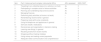
Part I includes 15 items, which are essentially related to GDS stages 1 to 4, with total scores ranging from 0 to 60 (lower scores indicate greater independence). Part II includes 10 items related to GDS stages 5 to 7, and is scored from 0 to 40 (Table 1).23 The present study analysed total BT-ADL score and subscores for parts I and II.
Activities assessed in the Barcelona Test Activities of Daily Living scale.
| Item | Part I. Advanced and complex instrumental ADLs | ADL assessed | GDS-FAST |
|---|---|---|---|
| 1 | Travelling to an unfamiliar place (in a vehicle or on foot) | Av | 3 |
| 2 | Participating in complex social or leisure activities | Av | 3 |
| 3 | Planning and undertaking trips and excursions | Av | 3 |
| 4 | Managing finances | Av | 4 |
| 5 | Performing daily activities (at home or at work) | I | 4 |
| 6 | Remembering recent events in general | I | 3 |
| 7 | Preparing meals with some complexity | I | 4 |
| 8 | Using the telephone and appliances in general | I | 4 |
| 9 | Self-care (health, medication) | I | 4 |
| 10 | Decisiveness and organisation in decision-making | I | 4 |
| 11 | Learning new things, in general | I | 4 |
| 12 | Recalling events from recent months | I | 4 |
| 13 | Shopping without making mistakes | I | 4 |
| 14 | Using money and making correct payments | I | 4 |
| 15 | Adequate verbal communication and comprehension | I | 4 |
| Item | Part II. Basic and semi-complex instrumental ADLs | ||
|---|---|---|---|
| 1 | Choosing appropriate clothes | I | 5 |
| 2 | Orientation at home | B | 6 |
| 3 | Appropriately dressing or undressing without assistance | B | 6a |
| 4 | Bathing alone | B | 6b |
| 5 | Personal hygiene (washing, brushing hair, etc) | B | 6c |
| 6 | Using the toilet | B | 6c |
| 7 | Eating appropriately with cutlery | B | 6d |
| 8 | Controlling urination | B | 6d |
| 9 | Controlling defecation | B | 6e |
| 10 | Walking and moving from one place to another | B | 7 |
ADL: activity of daily living; Av: advanced ADL; B: basic ADL; GDS-FAST: Global Deterioration Scale-Functional Assessment Staging; I: instrumental ADL.
The following instruments were administered for concurrent validation:
Functional instruments:
- •
BDRS.18,31 The BDRS assesses the functional capacity of patients with dementia. It includes 3 sections, assessing changes in the performance of ADLs (scored from 0 to 8), changes in habits (scored from 0 to 9), and changes in personality, interests, and drive (scored from 0 to 11). We considered scores for each section as well as the overall score.
Cognitive instruments:
- •
Memory Impairment Screen (MIS). The MIS32 is a brief test of verbal memory based on the controlled learning principle postulated by its author.33,34 The MIS was validated in the Spanish population in 2005.35 Our analysis took into account the total score (ranging from 0 to 8), as well as an age- and education-adjusted score.35
- •
Verbal digit span. This task consists of repeating progressively longer sequences of digits in forward and then backward order. We used the Spanish-language version of the test, included in the BT2; in this version, a second attempt is only made for each span if an error is committed in the first.23 Scores were assigned according to the last completed item, known as the span. Scores ranged from 0 to 9 for forward digit spans, and from 0 to 8 for backward digit spans.
- •
Orientation to time, space, and person on the BT2.23 The BT2 scores orientation to time on a scale from 0 to 70, and orientation to space and orientation to person from 0 to 25 points each. For the present study, we took into account the final score for each orientation score.
- •
Semantic fluency (animals in 60 s). The semantic fluency test evaluates the patient’s ability to produce words within a semantic category assigned by the rater.36 Subjects were given 60 seconds to respond, and patients were given instructions according to the directions included in the BT2 manual. We only scored the number of correct responses; intrusions and repetitions were not taken into account.37
- •
Phonemic or formal fluency (words beginning with “p” in 60 s). Phonemic or formal fluency evaluates patients’ ability to produce words beginning with a specific sound.23 Participants were given 60 seconds to respond; instructions were given according to the directions included in the BT2 manual. We only scored the number of correct responses; intrusions and repetitions were not taken into account.37
With a view to obtaining uniform results for all evaluations, we followed certain procedures and methods, and used the same diagnostic criteria. Both raters were psychologists with experience in the administration of neuropsychological diagnostic tests, who received common training on the administration of the assessment method. Tests were administered according to the standard procedures described in their manuals. Participants were evaluated at a single session of approximately 30 minutes’ duration, in the following order: signing of informed consent forms, collection of sociodemographic data, and administration of the neuropsychological/functional tests. Tests were always administered in the same order: BDRS; BT-ADL; MMSE; BT2 orientation to time, space, and person; MIS; verbal digit span (as interference in the MIS); and semantic and phonemic fluency. The same raters were responsible for scoring all the tests administered.
Statistical analysisWe performed a descriptive, cross-sectional study of a control group and several patient groups with different levels of cognitive impairment. We calculated the sample size (minimum of 11 individuals per group) required to detect a difference in means of 10 points, assuming a standard deviation of 8 points in each group and a maximum of 1% losses, for a significance level of 5% and a statistical power of 80%.
In the statistical analysis, we extracted data on sociodemographic variables for the total sample and on each study variable for each group. Normality of data distribution was tested with the Shapiro-Wilk test. For parametric variables, we tested for differences between groups with analysis of variance (ANOVA) and used the post hoc Tukey test to identify which groups presented differences. Specific tests were used to analyse non-parametric variables: to test for differences, we used the Kruskal-Wallis test, and to identify which groups presented differences, we used the Mann-Whitney U test with the Bonferroni correction, depending on the number of comparisons made in each case. We also calculated Spearman correlation coefficients to explore the potential influence of sex on BT-ADL item scores. The threshold for significance was set at P < .05. We calculated the Cronbach index to analyse internal consistency, and the Spearman correlation coefficient to calculate concurrent validity between the BT-ADL and the MMSE, BDRS, MIS, verbal digit span, orientation, and semantic and phonemic fluency. To determine diagnostic values, we calculated sensitivity, specificity, and receiver operating characteristic (ROC) curves. We calculated the optimal cut-off points (Youden index) between controls and patients with aMCI (GSD 1-2 and GDS 3 groups), between aMCI and mild DAT (GDS 3 and GDS 4 groups), between mild DAT and moderate DAT (GDS 4 and GDS 5 groups), and between moderate DAT and moderate-severe DAT (GDS 5 and GDS 6 groups). Statistical analysis was conducted using the SPSS statistics package, version 15.0.
ResultsThe mean age and years of schooling for the total sample and the different subgroups are shown in Table 2.
Sociodemographic characteristics of the total sample and subgroups.
| Total | GDS 1-2 | GDS 3 | GDS 4 | GDS 5 | GDS 6 | |
|---|---|---|---|---|---|---|
| Age (years) | 78 (7.35) | 73.7 (5.7)a | 76.4 (8.5)ab | 78.9 (4.5)ab | 82.3 (7.2)b | 81.4 (7.7)b |
| Education (years) | 8.53 (5.21) | 11.1 (4.4) | 11.1 (5.2) | 6.5 (4.1) | 5.9 (6.1) | 7.0 (4.4) |
| N (sample/group size) | 68 | 16 | 14 | 13 | 11 | 14 |
Group data are shown as mean (standard deviation).
Groups not sharing a superscript letter (a,b) differ significantly for the variable in question (P < .05, Tukey test). GDS: Global Deterioration Scale.
The BT-ADL scale, including all items, presented a Cronbach index of 0.975.
Table 3 shows the mean scores (standard deviation) in the tests and scales administered as a function of GDS stage. The statistically significant differences detected between groups are also shown in Table 3.
Test/scale scores in each subgroup.
| GDS 1-2 | GDS 3 | GDS 4 | GDS 5 | GDS 6 | |
|---|---|---|---|---|---|
| MMSE | 27.8 (2.1)a | 25.5 (3.5)a | 19.6 (2.7)bc | 16.6 (3.8)cd | 11.8 (5.8)d |
| MMSE, NEURONORMA adjustment26 | 28.5 (2.2)a | 26.4 (3.0)b | 21.2 (2.7)cd | 18.0 (3.9)de | 13.4 (5.7)e |
| BT-ADL part I | 1.8 (4.2)a | 10.8 (8.6)b | 43.6 (6.2)c | 51.9 (5.3)cd | 56.4 (5.8)d |
| BT-ADL part II | 0 (0)a | 0 (0)a | 1.4 (1.7)b | 8.7 (4.3)c | 15.9 (5.8)d |
| BT-ADL (total) | 1.8 (4.2)a | 10.8 (8.6)b | 45.0 (7.2)c | 60.6 (6.9)d | 72.3 (9.9)e |
| BDRS part A | 0.1 (0.2)a | 1.1 (0.5)b | 3.9 (0.9)cd | 5.1 (1.1)de | 5.7 (1.3)e |
| BDRS part B | 0 (0)a | 0 (0)a | 0.2 (0.4)a | 1.2 (1.5)a | 3.1 (1.3)b |
| BDRS part C | 0.2 (0.5)a | 0.8 (0.9)ab | 2.7 (2.4)bcd | 3.2 (2.0)cd | 4.0 (1.8)d |
| BDRS (total) | 0.2 (0.8)a | 1.9 (1.3)b | 6.0 (2.1)c | 9.5 (1.9)de | 12.8 (1.3)e |
| MIS | 5.8 (1.9)a | 3.0 (2.7)ab | 1.2 (1.8)bc | 0.8 (1.2)cd | 0 (0)d |
| MIS, NEURONORMA adjustment35 | 6.3 (1.8)a | 3.5 (2.5)ab | 1.9 (1.9)bc | 1.6 (1.4)cd | 0.8 (0.4)d |
| Verbal digit span forward | 5.2 (0.9)ab | 4.8 (1.3)ab | 4.5 (0.9)b | 4.1 (0.9)ab | 3.9 (1.4)b |
| Verbal digit span backward | 3.5 (0.8)a | 3.5 (1.2)a | 2.0 (1.3)b | 1.6 (1.4)b | 1.3 (1.5)b |
| BT2 orientation to time | 65.2 (1.8)a | 61.5 (15.2)a | 32.2 (18.4)bc | 27.1 (19.5)c | 8.6 (9.3)d |
| BT2 orientation to space | 25.0 (0)a | 23.7 (1.8)ab | 20.8 (3.6)b | 19.18 (6.0)bc | 10.1 (8.4)c |
| BT2 orientation to person | 25.0 (0)a | 24.9 (0.3)ab | 22.8 (2.1)b | 19.9 (3.5)bc | 17.5 (4.4)c |
| Semantic fluency (animals) | 17.1 (5.8)a | 14.8 (5.3)ab | 7.7 (3.4)bc | 6.4 (4.2)cd | 3.9 (3.1)d |
| Phonemic fluency (“p” words) | 11.1 (4.5)a | 10.2 (5.7)ab | 6.1 (4.9)bc | 4.0 (2.8)c | 3.1 (2.8)c |
BDRS: Blessed Dementia Rating Scale; BT-ADL: Barcelona Test Activities of Daily Living scale; GDS: Global Deterioration Scale; MIS: Memory Impairment Screen; MMSE: Mini–Mental State Examination.
Group data are shown as mean (standard deviation).
All variables presented significant differences between groups (P < .001, ANOVA or Kruskal-Wallis test).
Groups not sharing a superscript letter (a,b,c,d,e) differ significantly for the variable in question (P < .05; Tukey test or Mann-Whitney U test with Bonferroni correction for multiple comparisons).
Table 4 shows the correlations between BT-ADL scores (total, part I, and part II) and the other tests/scales administered. All correlations were statistically significant. The variable sex was significantly correlated with 2 items on part II of the BT-ADL: difficulty eating (ρ = –0.255; α = 0.036) and problems controlling defecation (ρ = –0.242; α = 0.047).
Correlations between the Barcelona Test Activities of Daily Living scale and the other tests and scales administered.
| BT-ADL part I | BT-ADL part II | BT-ADL (total) | |
|---|---|---|---|
| MMSE | –0.852** | –0.800** | –0.853** |
| MMSE, NEURONORMA adjustment26 | –0.847** | –0.807** | –0.850** |
| BDRS part A | 0.947** | 0.852** | 0.943** |
| BDRS part B | 0.712** | 0.842** | 0.764** |
| BDRS part C | 0.754** | 0.636** | 0.739** |
| BDRS (total) | 0.940** | 0.860** | 0.945** |
| MIS | –0.770** | –0.689** | –0.766** |
| MIS, NEURONORMA adjustment35 | –0.720** | –0.650** | –0.715** |
| Verbal digit span forward | –0.394* | –0.365* | –0.417** |
| Verbal digit span backward | –0.646** | –0.571** | –0.642** |
| BT2 orientation to time | –0.831** | –0.750** | –0.828** |
| BT2 orientation to space | –0.781** | –0.705** | –0.789** |
| BT2 orientation to person | –0.795** | –0.788** | –0.802** |
| Semantic fluency (animals) | –0.816** | –0.727** | –0.793** |
| Phonemic fluency (“p” words) | –0.707** | –0.638** | –0.705** |
BDRS: Blessed Dementia Rating Scale18,31; BT-ADL: Barcelona Test Activities of Daily Living scale; MIS: Memory Impairment Screen; MMSE: Mini–Mental State Examination.
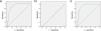
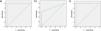
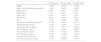
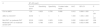
The area under the curve (AUC) for differentiating cognitively healthy individuals (GDS 1-2) from patients with aMCI (GDS 3) was 0.912 for part I, 0.5 for part II, and 0.912 for the total BT-ADL score (Fig. 1). The AUC for differentiating patients with aMCI (GDS 3) from patients with mild DAT (GDS 4) was 1 for part I, 0.808 for part II, and 1 for the total BT-ADL score (Fig. 2). The AUC for differentiating patients with mild DAT (GDS 4) from those with moderate DAT (GDS 5) was 0.832 for part I, 0.979 for part II, and 0.934 for the total BT-ADL score. The AUC for differentiating patients with moderate DAT (GDS 5) from patients with moderate-severe DAT (GDS 6) was 0.825 for part I, 0.831 for part II, and 0.893 for the total BT-ADL score.


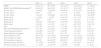
Table 5 shows the optimal BT-ADL cut-off points (parts I and II and total score) for discriminating between controls and patients with aMCI, between aMCI and mild DAT, between mild DAT and moderate DAT, and between moderate DAT and moderate-severe DAT, calculated with the Youden index, together with the corresponding sensitivity and specificity values.
Cut-off points for the Barcelona Test Activities of Daily Living scale. A) Part I. B) Part II. C) Total score.
| A | BT-ADL part I | ||||||||
|---|---|---|---|---|---|---|---|---|---|
| Cut-off point | Sensitivity | Specificity | Youden index value | AUC | 95% CI | P | |||
| CHI vs aMCI | 1.50 | 0.923 | 0.765 | 0.688 | 0.912 | 0.806−1.000 | < .001 | ||
| aMCI vs mild DAT | 30.50 | 1 | 1 | 1 | 1.000 | 1.000−1.000 | < .001 | ||
| Mild DAT vs moderate DAT | 52.00 | 0.636 | 0.923 | 0.559 | 0.832 | 0.668−0.997 | .006 | ||
| Moderate DAT vs moderate-severe DAT | 55.50 | 0.786 | 0.818 | 0.604 | 0.825 | 0.652−0.998 | .006 | ||
| B | BT-ADL part II | ||||||||
|---|---|---|---|---|---|---|---|---|---|
| Cut-off point | Sensitivity | Specificity | Youden index | AUC | 95% CI | P | |||
| CHI vs aMCI | – | – | – | – | 0.500 | 0.288−0.712 | 1 | ||
| aMCI vs mild DAT | 0.50 | 0.615 | 1 | 0.615 | 0.808 | 0.629−0.986 | .008 | ||
| Mild DAT vs moderate DAT | 3.50 | 1 | 0.923 | 0.923 | 0.979 | 0.931−1.000 | < .001 | ||
| Moderate DAT vs moderate-severe DAT | 10.50 | 0.786 | 0.818 | 0.604 | 0.831 | 0.670−0.993 | .005 | ||
| C | BT-ADL (total) | ||||||||
|---|---|---|---|---|---|---|---|---|---|
| Cut-off point | Sensitivity | Specificity | Youden index value | AUC | 95% CI | P | |||
| CHI vs aMCI | 1.50 | 0.923 | 0.765 | 0.688 | 0.912 | 0.806−1.000 | < .001 | ||
| aMCI vs mild DAT | 30.50 | 1 | 1 | 1 | 1.000 | 1.000−1.000 | < .001 | ||
| Mild DAT vs moderate DAT | 55.00 | 0.818 | 0.923 | 0.741 | 0.934 | 0.838−1.000 | < .001 | ||
| Moderate DAT vs moderate-severe DAT | 65.50 | 0.857 | 0.818 | 0.675 | 0.893 | 0.749−1.000 | .001 | ||
95% CI: 95% confidence interval; aMCI: amnestic mild cognitive impairment (GSD 3); AUC: area under the curve; BT-ADL: Barcelona Test Activities of Daily Living Scale; CHI: cognitively healthy individuals (GDS 1-2); GDS: Global Deterioration Scale; mild DAT: mild dementia of the Alzheimer type (GDS 4); moderate DAT: moderate dementia of the Alzheimer type (GDS 5); moderate-severe DAT: moderate-severe dementia of the Alzheimer type (GDS 6).
The BT-ADL scale was initially conceived in 2012, due to the need for a specific scale, created according to the retrogenetic model, with which patients’ functional status could be classified and correlated with their cognitive performance.23 With a view to studying the internal consistency and concurrent validity of this new scale, we administered it to a sample of volunteers.
The sample, which was stratified according to GDS rating, showed no significant differences in any of the sociodemographic variables studied, with the exception of age (which showed a difference between the GDS 1-2 group and the GDS 5 and GDS 6 groups). As expected, GDS stage increased in line with age; this finding is not reflected in many of the studies using GDS to stratify groups (typically because this analysis is not reported). However, some studies with larger samples do report this relationship (older age in participants with higher GDS stages)15,38; this is logical, given the fact that dementias progress over time.
No relationship was observed between sex and BT-ADL part I scores, with an apparent lack of sex-dependent items, at least in the assessment of advanced and complex instrumental ADLs. In this regard, this instrument avoids one of the disadvantages of the majority of scales.20,39 This was achieved by providing sufficient examples of the different activities typically performed by both sexes (eg, “hobbies” includes “dancing, playing cards, cinema, gardening”); for activities for which equivalent activities are not available for the opposite sex, the option “has never performed the activity” can be selected, with the score computed as the mean of the remaining items.
The internal consistency value (Cronbach α) for the scale was 0.975, indicating a high degree of internal consistency between scale items (> 0.95)40; this is higher than the values reported for other scales validated in our setting, such as the Activities of Daily Living Questionnaire, Spanish Version (ADLQ-SV), with a value of 0.88,41 or the Spanish version of the Alzheimer’s Disease Functional Assessment and Change Scale (ADFACS), with 0.95,16 although it is slightly lower than the value reported for the Bayer-Activities of Daily Living Scale (B-ADL), with 0.984.24
The control and aMCI groups differed significantly in adjusted MMSE scores, BDRS score (part A and total score), and BT-ADL score. These results indicate that there is a difference in BT-ADL scores between healthy individuals and patients with aMCI, particularly in part I of the scale, which assesses advanced and complex instrumental ADLs. In this regard, our results are consistent with the findings of other authors, as they suggest that patients with MCI do present alterations in some instrumental ADLs, but not in basic ADLs42; the BT-ADL is sensitive in detecting these differences. Though they are functionally independent, patients with MCI experience greater difficulty performing more complex tasks; for instance, they may require more time or greater effort to perform such tasks as managing finances or planning travel. Differences were also observed between the aMCI and mild DAT groups for the BDRS (part A and total score), MMSE, orientation to time, semantic fluency, and BT-ADL (parts I and II and total score). The only differences observed between the mild DAT and moderate DAT groups were BDRS total score and BT-ADL part II and total scores. Therefore, the BT-ADL (total score) was the only test that was able to differentiate between all groups. The BT-ADL, as a whole, is useful for all stages of the disease, unlike the majority of functional scales, which tend only to be sensitive in early or in advanced stages.16
Statistically significant correlations were observed between the BT-ADL and all the other tests/scales administered (Table 4). Therefore, in terms of concurrent validity, the BT-ADL scale presents strong correlations (> 0.9) with the most widely used functional scale in our setting, the BDRS, as well as a close correlation with the MMSE. These data confirm that the BT-ADL scale achieves the objective for which it was created: reliable assessment of subjects’ cognitive and functional status.23 The BDRS has been used in a broad range of studies, and has been shown to be a capable screening and (to some extent) rating tool.31 The MMSE is the most widely used brief instrument for assessing cognitive impairment; despite its now being an old tool, it continues to be used today and is essential for comparing patients with similar levels of involvement.14 The strong correlations observed between the BT-ADL scale and the MMSE cognitive test supports Gold’s43 assertion that correct performance of instrumental ADLs requires a broad range of integrated cognitive processes.
The cut-off point on the BT-ADL (total score) for distinguishing between healthy individuals and patients with aMCI was 1.50 (sensitivity: 0.92; specificity: 0.76), indicating modest discriminative capacity. This result may be due to the difficulty of detecting subtle alterations that appear in MCI, even with part I of the BT-ADL scale. These patients may remain independent, and the difficulty or normality of performing complex tasks may be a subjective impression. BT-ADL values observed in the control and aMCI groups are similar; furthermore, the mean scores in these groups present a large standard deviation. This heterogeneity within each of these groups may conceal differences between them in scale performance. In this regard, future studies should use larger samples to explore these results with a view to confirming this hypothesis. However, this result was expected, with validation studies of other functional scales reporting similar difficulties.16
The cut-off point for distinguishing between aMCI and mild DAT was 30.50 (sensitivity: 1; specificity: 1). This cut-off point presents excellent discriminative capacity for these 2 groups, with part I playing a key role. Finally, part II of the scale is more useful for distinguishing between mild and moderate DAT, with a cut-off point of 3.5 on part II enabling discrimination with high sensitivity and specificity (1 and 0.92, respectively). For differentiating between moderate and moderate-severe DAT, the best Youden index value was observed for a cut-off point of 65.50 for the total score (sensitivity: 0.857; specificity: 0.818).
These cut-off points enable detection of mild cases of DAT,15,24 despite the scale being much briefer than instruments with similar characteristics developed through the retrogenetic model.7
This study presents certain limitations, including the sample size, the fact that patient diagnoses were fundamentally based on clinical results without confirmatory biological data, and the lack of test-retest or inter-rater reliability analyses; these limitations should be addressed in future studies.
ConclusionsAssessment of functional status in patients with dementia is crucial, as results may indirectly inform us about cognitive and physical aspects of the disease.44 Functional scales are often administered after cognitive deficits have been detected and the diagnosis of DAT is established, although some authors have found that cognitive and particularly memory deficits may appear after functional limitations45; this demonstrates the great importance of functional status and the availability of validated functional assessment instruments.
The BT-ADL scale showed good classificatory reliability, enabling differentiation between aMCI and mild DAT with a cut-off score of 30.50; this is highly valuable for clinical practice. Part II of the BT-ADL scale is able to differentiate mild from moderate DAT with a cut-off point of 3.50. The BT-ADL scale presents high internal consistency and concurrent validity, with strong correlations with other functional and cognitive scales; therefore, it constitutes a good tool for functional assessment, improving our understanding of DAT for its assessment and treatment.
FundingThis study has received no specific funding from any public, commercial, or non-profit organisation.
None.
The authors thank Neus Rivera for providing logistical support, Gonzalo Sánchez-Benavides for offering advice on the statistical analysis, and all volunteers for their selfless participation.

