






Based on industry use cases, we identify six distinct types of digital transformation (DT), each grounded in a specific concept or enabling technology. These DT types can be implemented individually or combined to drive transformation initiatives. While deploying a single DT type often focuses on improving operational efficiency or streamlining existing workflows, initiatives that combine multiple DT types tend to pursue more ambitious goals, such as the creation of new products, services, or business models. However, the complexity increases significantly with the integration of multiple DT types, as organizations must not only address behavioral changes but also overcome technical challenges involving systems integration, data architecture, and interoperability.
If you knew a project was statistically likely to fail, would you pursue it? This question is particularly important to organizations exploring opportunities to engage in digital transformation (DT) in light of the 87.5 % aggregate failure rate of DT projects (Wade and Shan, 2020). A McKinsey & Company survey (2018) found that only 16 % of respondents reported sustained results that improved firm performance, and less than 30 % of DT projects reported success. By 2021, 31 % of the respondents attested to improved, sustained DT project performance, but the success rate remained consistently low (McKinsey & Company, 2021).
Given such evidence, how can a firm ensure the success of its projects? Would a better understanding of digital technologies and concepts that form the foundational base of DT projects help? Existing frameworks highlight areas ripe for DT initiatives, such as business models, customer experiences, operations, employee experiences, and digital platforms (Bonnet and Westerman, 2021; Lóska and Uotila, 2024). However, while these frameworks offer a good schema of business functions subject to DT, they provide limited insights into the underlying technologies or concepts that organizations can leverage to execute initiatives within these business functions (Jiao et al., 2025). Furthermore, the scope of studies is limited to a single or a limited number of case studies focused on understanding implementation challenges and outcomes related to a DT (Jiao et al., 2025; Soto-Acosta, 2023; Correani et al., 2020). We expand the scope of inquiry to offer unique insights into the structure of DT projects, their implementation challenges, and their outcomes through a review of 123 unique DT use cases.
The study addresses three questions. After the pandemic accelerated the DT process, many firms are managing their business digitally (Di Gangi et al., 2022), creating organizational challenges and opportunities (Saeedikiya et al., 2025; Soto-Acosta, 2023). To be successful, organizations must first understand DT-related technologies/concepts and how they can be used to construct DT initiatives. In other words, they need to develop “digital mindsets” to embrace the notion that digital technologies offer opportunities for sustainable competitive advantage (Solberg et al., 2020). A digital mindset requires a clear understanding of digital technologies and how they can be utilized to develop DT initiatives visible to competitors but difficult to replicate. Bonnet and Westerman (2021) provide an expanded DT framework that outlines specific business functions that may be open to such initiatives, such as customer experience, business model innovation, employee experience, and digital platforms. Saeedikiya et al. (2025) proposed a multi-level framework for understanding the interplay between DT and innovation through the lens of optimization, proposing a meta framework for DT and change management (Westerman et al., 2014; Wessel et al., 2021; Gong and Ribiere, 2021; Jiao et al., 2025). However, note that these studies, despite providing an extensive list of digital technologies, offer limited insights into how these technologies translate into sustainable innovation.
Second, effective implementation is important for project success (Correani et al., 2020). It starts with gaining deeper insights into the likely implementation challenges and how to tackle them. Good implementation practices make or break the project. Bonnet and Westerman (2021) pointed out reskilling at scale, managing the cultural shift, and aligning technology with strategy as the key challenges facing organizations pursuing DT initiatives. This scope can be expanded to include structural and resource-related challenges (Vail, 2019). From a technical standpoint, the skills gap in emerging technologies, integration across systems, data interoperability, and standardization have been put forward (Nunez-Merino et al., 2020). Operational bottlenecks and misalignment between technologies and work practices can also negatively impact DT initiatives (Wessel et al., 2021). We built on these insights by summarizing the challenges into behavioral, operational, and technical, and reviewed them in practice. Behavioral challenges deal with user experience, customer acceptance, and adapting to how things are done. Operational challenges include roadblocks during or after the implementation phase. Technical challenges are generally system-related and include system integration issues, technical performance challenges, and privacy and security, as many firms collect personal data.
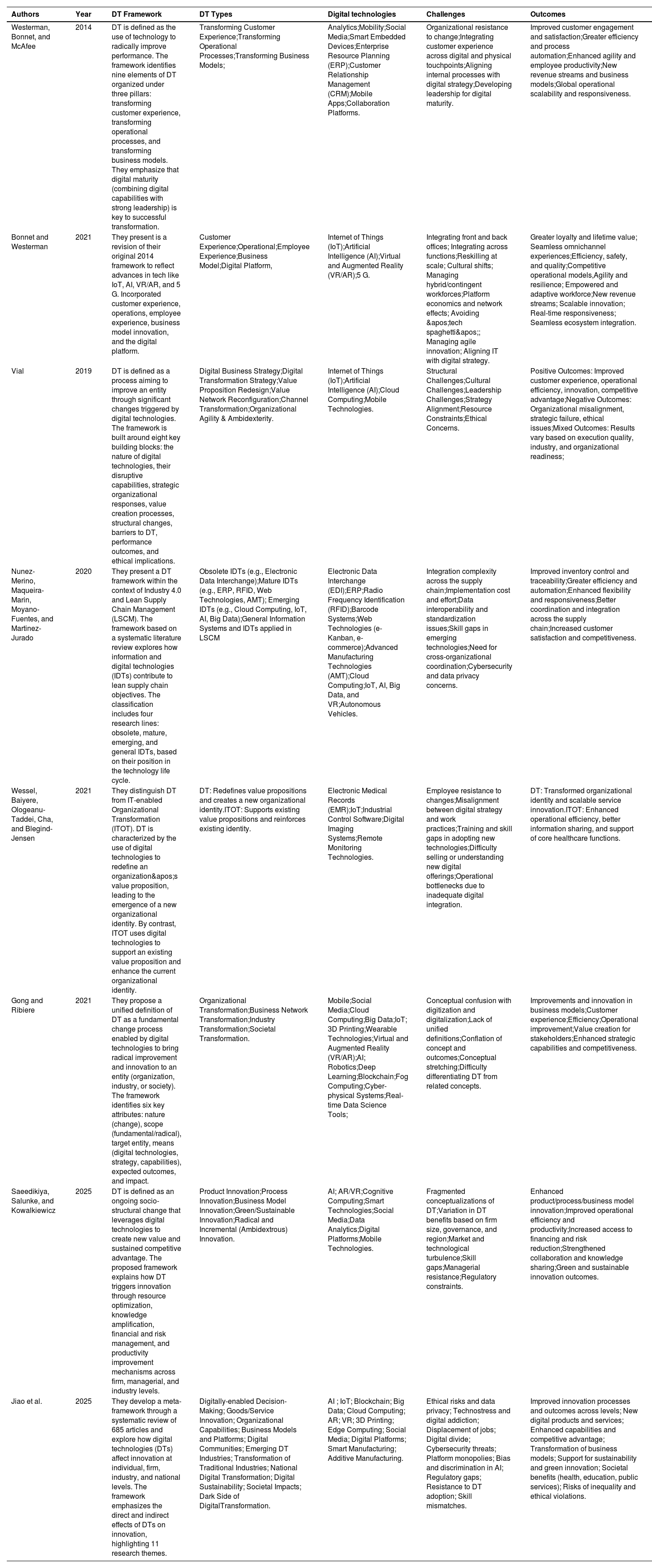
Finally, clarity about expected outcomes allows firms to channel their efforts. Do organizations focus on revenue growth through DT initiatives, or would they consider other performance outcomes as well? Prior studies highlight outcomes such as revenue growth, customer experience, business expansion, operational efficiencies, innovation, new product/service development, and responsiveness (Vail, 2019; Saeedikiya et al., 2025; Jiao et al., 2025). We aggregate the performance outcomes outlined in these studies into operational efficiency, new product/service development, new business development, and financial performance. Although prior studies outlined these outcomes (see Table 1), limited empirical evidence exists to support their link with various types of DT initiatives.
Literature review.
Next, we provide a detailed review and insights into digital technologies, with the subsequent sections addressing the key questions, based on an assessment of 123 unique DT industry use cases (Appendix A provides the list of companies).
Review of digital technologiesDigital transformation has been defined as “a process that aims to improve an entity by triggering significant changes to its properties through combinations of information, computing, communication, and connectivity technologies” (Vial, 2019). By another definition, DT is “a fundamental change process, enabled by the innovative use of digital technologies accompanied by the strategic leverage of key resources and capabilities, aiming to radically improve an entity and redefine its value proposition for its stakeholders.” An entity could be “an organization, a business network, an industry, or society" (Gong and Ribiere, 2021). As these definitions converge on the criticality of digital technologies as central to transformation, it is important to delve deep into these technologies.
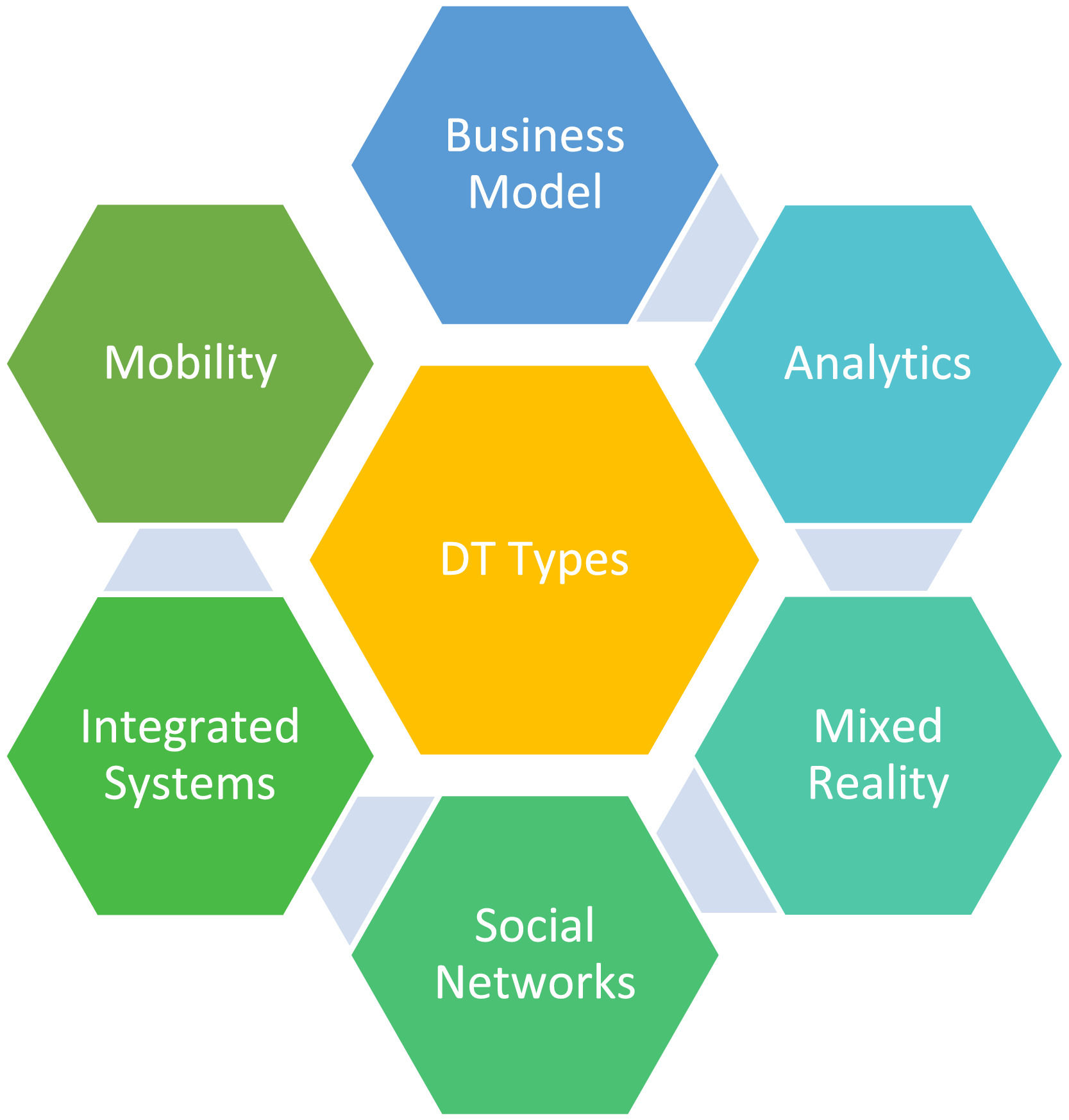
Emerging technologies include cloud computing, the Internet of Things (IoT), artificial intelligence (AI), virtual reality, autonomous vehicles, and big data (Jiao et al., 2025; Sumbal et al., 2024; Núñez-Merino et al., 2020; Clohessy et al., 2017; Richter et al., 2017). This list can be expanded to include analytics, mobility, social media, and embedded devices (Bonnet and Westerman, 2021; Gunther et al., 2017; Glaser, 2017). Fig. 1 outlines the key DT types identified through a broad external literature review (Table 1) and an examination of the industry use cases collected for this study (Appendix A). These digital technologies can create disruptions and offer alternative paths to value creation (Vial, 2019). However, recent studies have called for better clarity on what constitutes digital transformation (Piccoli et al., 2022; Wessel et al., 2021).

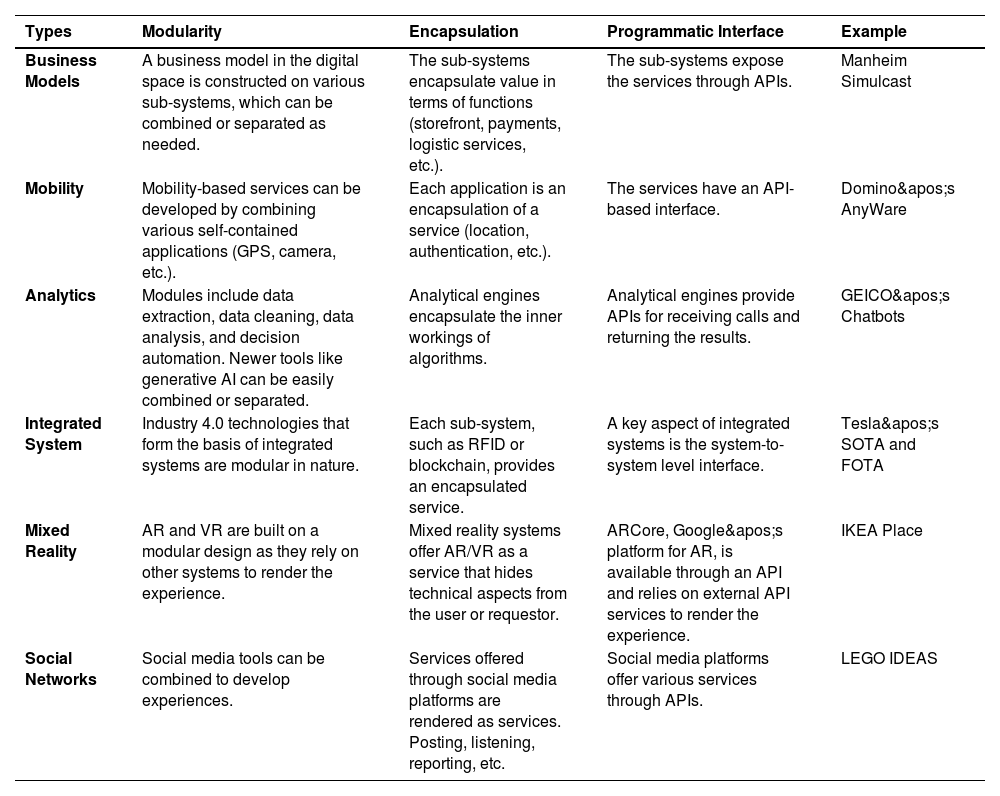
Perspectives on distinguishing DT from traditional IT resources, assets, and capabilities suggest that IT resources are transformed into digital resources through modularity, encapsulation, and a programmatic interface (Piccoli et al., 2022). Modularity represents the degree to which a system's components can be separated and recombined. Encapsulation captures the objectification of functionality, facilitating its service delivery. Finally, the service must be available through an application programming interface (API). These aspects can be used to qualify whether the initiative falls within the strategic digital initiative domain.
Therefore, to ascertain if the DT types outlined are traditional IT resources or fall within the realm of strategic digital initiatives, we mapped the key characteristics of strategic digital initiatives to the DT types (see Table 2). DT types combine various underlying technologies, objectify their services, and deliver them through an API. Table 2 shows that the DT types offer greater alignment with the concept of strategic digital initiatives through modularity, encapsulation, and programmatic interface. In the following sections, we elaborate on the research design and each DT type.
Mapping of DTs on strategic digital initiatives criteria.
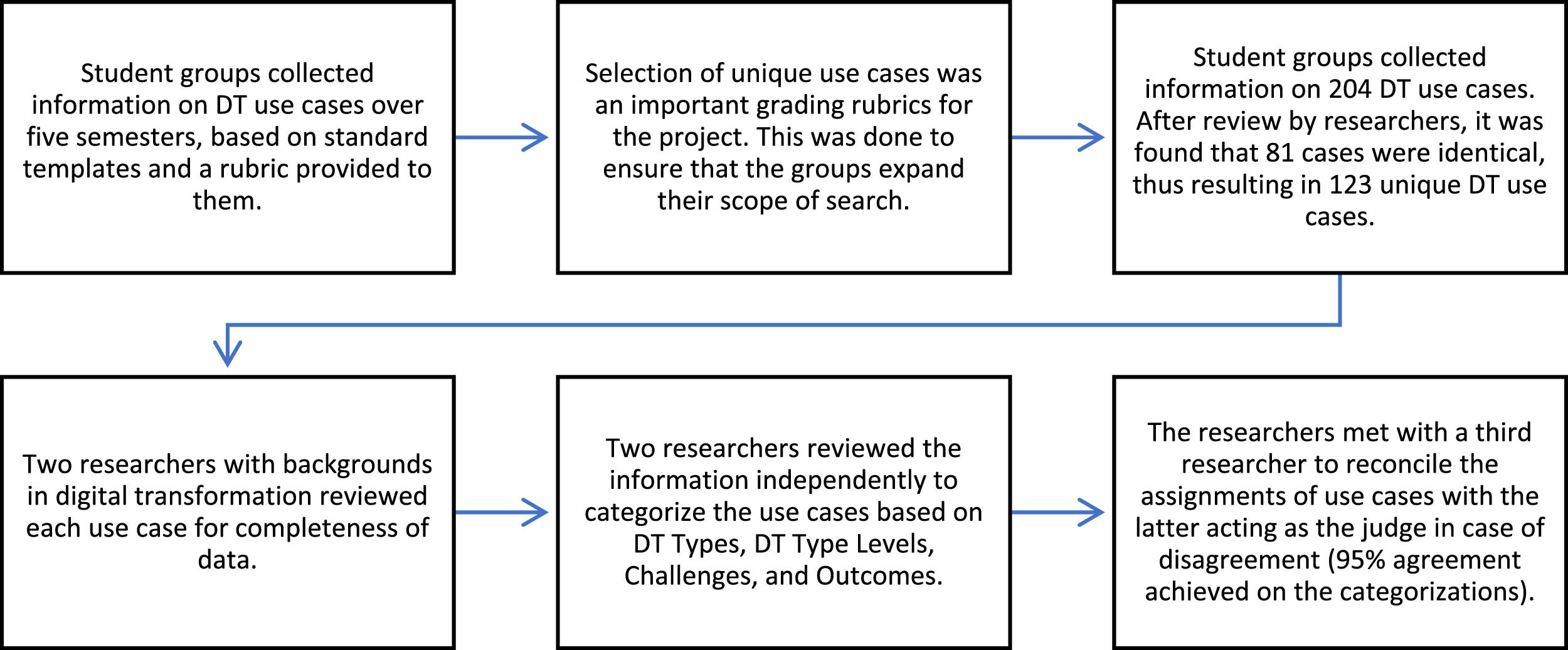
Graduate students collected data over five semesters in an MBA class. Thirty-four (34) groups provided detailed information on 204 DT use cases. Upon review, 81 DT use cases were found to overlap, meaning they were the same transformation at the same firm (40 % of the total DT cases collected). We aggregated these examples into a single use case, resulting in 123 unique use cases. The significant overlap visible in the 81 use cases shows that the search process had reached saturation, and identification of new cases was slowing.
The student groups drove the selection of the use cases over a two-and-a-half-year period (five semesters). This has the potential to create biases in the selection process. We provided the groups with explicit instructions to select unique use cases, which were also shared as a grading rubric to encourage casting a broader net. However, our ability to control the overlap across groups was rather limited, and we recognize this as a limitation of the study. While the list of companies in Appendix A shows significant industry diversity, suggesting that selection bias may not be a major concern, the student groups being free to select the cases introduced the risk of selection bias, which was unavoidable because of the study design.
Fig. 2 presents the data collection and validation process. The class covered extensive information on the concept of DT, and after the students had covered the content, they initiated work on the project. The information the students were required to compile on the DT projects included the name of the organization that implemented the DT, a detailed description that included business purpose and specific technologies deployed, details of the implementation challenges, key performance outcomes, and references (online links). The templates provided for data collection and reporting are available in Appendix B. The initial assessment of the use cases was done to ensure that data collection for each use case was comprehensive and complete. Two researchers independently examined the use cases and mapped them to the DT types. They classified the cases in terms of the main challenge (behavioral, operational, or technical) faced by the firm and the key performance outcome they achieved (operational efficiency, new product development, new business development, and financial improvement). They conducted the review process independently and resolved any lack of consensus by referring those cases to a third researcher to reach an agreement. Next, we elaborate on the DT types.
Digital transformation typesBusiness model
Digital transformation of the business model involves creating new value propositions for customers by introducing or modifying the digital delivery of a product or service. A typical example of this is the restaurants introducing digital purchase and delivery mechanisms to survive the pandemic. An organization that proactively embraced business model transformation is Manheim, an automobile auction firm that allowed dealers and wholesalers to purchase vehicles online through simulcast without physically attending the auction every week. A typical Manheim auction has 12 or more lanes, each with several cameras. When a vehicle rolls up to the block, streaming video and still photos allow users to inspect it. Users also have online access to the vehicle and reports on its condition to assist in decision-making. Simulcast's click-to-bid function facilitates bidding and shows the evolution of the business model to the digital space through the digital delivery of core services.
Firms already operating in the digital space can transform their business model by adopting new practices to enhance customer value or opening new markets. For example, Snap Inc., a US social media company, launched Spectacles, “smart glasses” that can record and sync video with a smartphone to its messaging app to engage users. Snap has partnered with locations, such as Disney World and concert venues, to create sponsored and on-demand geofilters (Deyo, 2022). Facebook initiated Facebook Marketplace to support peer-to-peer shopping; it integrates with other functions, such as Messenger and localization, to provide value-added service to the users.
MobilityMobility-based transformation focuses on liberating users from time and space constraints. Firms leverage it to support work on the go. Mobile banking has revolutionized client access by eliminating the need to go to the bank or an ATM to check balances, deposit checks, or transfer money via computer. Smartphones and security features allow users to use various applications and operating system platforms to log into their accounts and conduct transactions from anywhere, anytime, on any device.
Domino's AnyWare is unique in embracing mobility to transform customer interaction. Partnerships with device manufacturers ensure that Domino's ordering app is accessible from tablets, smartphones, smartwatches, smart TVs, cars (Ford Sync), social media (Slack, Facebook Messenger, X [formerly Twitter]), and voice-activated devices (Amazon's Alexa, Google's Home) (https://anyware.dominos.com/). Consumers have preferred brands that allow seamless engagement, and Domino's AnyWare mobility initiative allowed for a robust competitive advantage. Another example of mobility-based transformation is airline apps that enhance the travel experience by providing instant access to flight status, luggage tracking, gate changes, digital boarding passes, and connectivity with inflight entertainment.
AnalyticsDT can be achieved by applying analytics in two areas. First, live reporting tools can aid in monitoring. Firms connect to real-time data sources to create dashboards that display key performance indicators. Second, in data-driven decision-making, systems learn from exposure to various data models. Many firms already use AI-driven chatbots to provide customer service. These intelligent systems use natural language processing (NLP) to interpret and comprehend customer questions. Based on past data from customer interactions, they have developed solutions to many everyday problems. New versions of these systems are built on large language models that mimic human conversation and decision-making skills. For example, GEICO has implemented AI-based chatbots in their first-level customer service.1 By combining data with internal knowledge of business processes in an open-source Hadoop environment, Sprint developed algorithms that produce actionable tactics to guide customer interactions and reduce churn in a high-risk segment.2
Integrated systemsDT based on integrated systems is reflected in a global network of machines and devices. However, the scope of integrated systems is broader than IoT and includes two elements that provide better information flow. First, information collection uses new technologies (Industry 4.0, sensing, radio-frequency identification [RFID] tags) to track inventory and improve supply chain visibility; their use is set to explode. The second element is system-to-system-level interactions, although cybersecurity is a significant concern, and authentication is critical to infrastructure design. Distributed ledger technologies (DLT) and platforms with intelligent contract capabilities are used to verify and record transactions across the network and execute system-to-system level contracts. For example, Cargill uses blockchain to track their Honeysuckle turkey brand's complete farm-to-customer supply chain,3 ensuring the maintenance of immutable records for traceability. New DLT platforms with smart contract functionalities can execute transactions automatically when certain agreed-upon conditions are met. For example, the insurer AXA's blockchain experiment, Fizzy, employed smart contract technologies that automatically offered flight-delay insurance claim management based on real-time monitoring of global flight databases.4
Mixed realityDT can use virtual or augmented reality interfaces to enhance task experiences and print digitized objects into physical form. Virtual reality (VR) systems immerse users in a simulated environment, while augmented reality (AR) experiences use technology to interface with the physical environment. AR systems seamlessly link virtual and physical spaces to enhance interactions with real-world objects and transform task experiences. Swedish retail conglomerate IKEA is at the forefront of mixed reality systems, offering a VR showroom that enables customers to experience products in 3D, explore and configure furniture, and manipulate light and wall color to experiment with different fabrics.5 They also offer an AR application, IKEA Place, that lets users place preferred items in a virtual space, replicating their room dimensions to scale. Overall, VR and AR systems provide enriched and engaging task experiences.
Another perspective on mixed reality is additive manufacturing, which enables users to convert digital items into physical items. Early attempts focused on rapid prototyping, then morphed into printing parts for classic or rare items. Recently, the focus has shifted to core manufacturing processes. Firms are experimenting with distributed manufacturing, where design libraries can produce items on demand at locations close to customers.
Social networkFirms utilize network platforms to facilitate unique interactions and engage stakeholders, ranging from interest-based interactions to professional networking. For example, some firms are capitalizing on stakeholders and customers to develop innovative product ideas or identify areas for improvement. Facebook, X, Instagram, TikTok, and Snapchat focus on social engagement and sharing content. Danish toy manufacturer LEGO identified and developed social media campaigns structured around building together, pride in creation, and creation sharing.6 Its YouTube channel has 17.2 million subscribers, and its Facebook page has 14 million likes and 15 million followers. Fans have generated 1.2 million pieces of content, submitted proposals for new sets through LEGO IDEAS, given feedback, and shared ideas with friends.
Although firms have had mixed results in driving DT through social networks, Finnair offers a successful case. It deployed various social media tools and tactics to improve brand image and engage customers in co-creating services aligned with their needs. The social network concept works in any area where a firm can engage with individuals interested in sharing or collaborating. Some firms have built full-scale operations based on social networks.
Advanced DT typesVenkatraman (1990) proposed the concept of “patterns of interaction” in strategic management. He argued that although the building blocks of a strategy can be identified, combining them as a coherent whole is complex. Firms that make internally consistent decisions are more likely to be effective (Lamare et al., 2023). Effective alignment between internal resources and external opportunities involves a deeper understanding of how to mix the strategic components best to form an overarching strategy. Note that this process requires not only crafting strategic objectives but, more importantly, a mindful approach toward executing a stream of decisions that are internally consistent and lead to successful outcomes. The “patterns of interaction” concept is applicable to DT types because a DT type can be combined with other DT types to form unique initiatives (Jiao et al., 2025; Gunther et al., 2017; Gray et al., 2013). Thus, when DT types are co-aligned to complement each other, their combination opens the door for crafting an advanced DT initiative that is difficult to replicate as opposed to implementing a single DT type. The co-alignment between DT types can be framed in the context of complementariness or interdependencies. The notion of coherence or internal consistency in transformative combinations requires that firms have not only a grasp of each DT type but also the complementariness or interdependencies among them. For example, DT initiatives related to social media may be combined with mobility initiatives to realize their full potential.
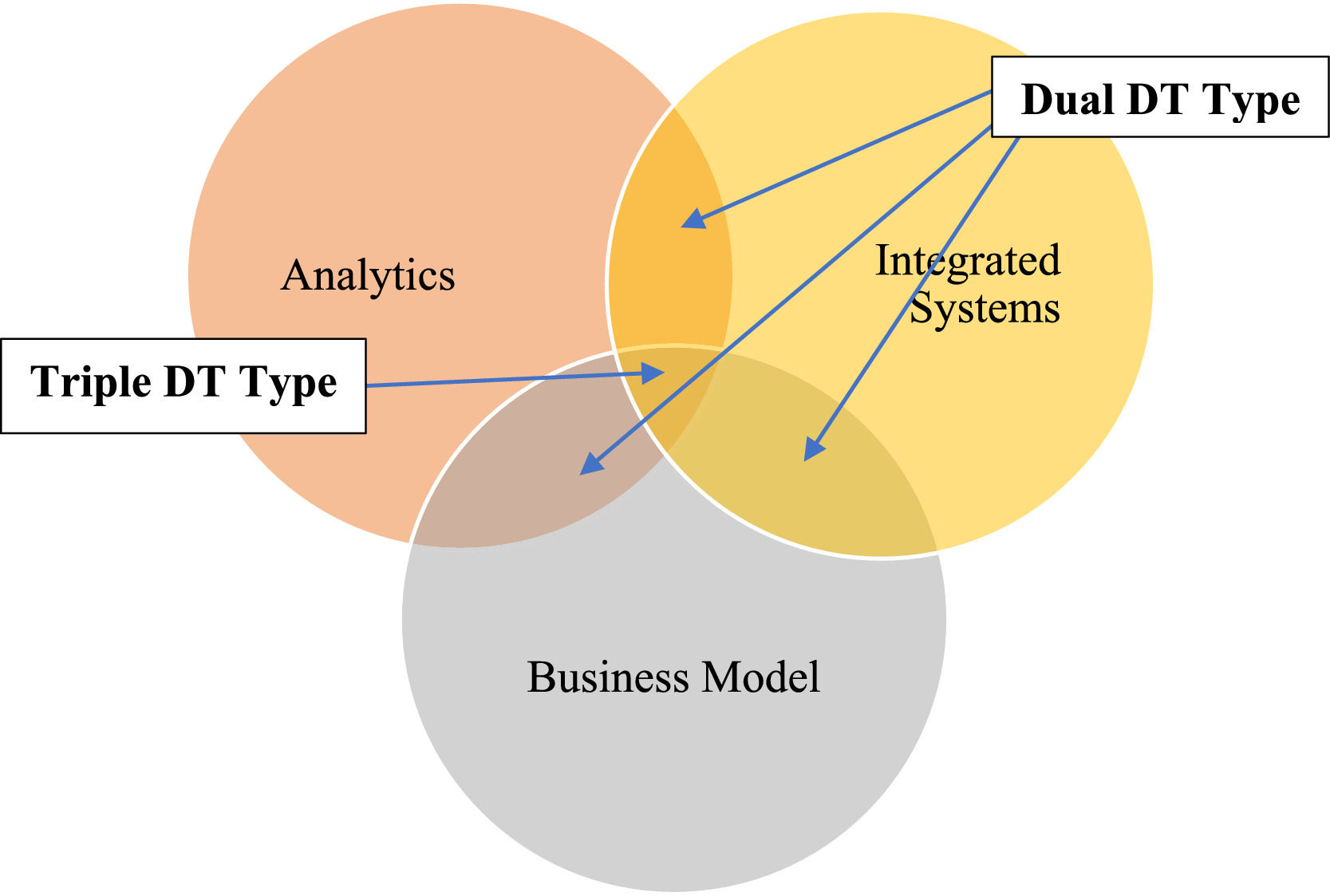
DT types can also be combined to leverage their complementary strengths—for example, DT initiatives in integrated systems strongly complement those in the analytics space. Coates and McDermott (2002) show the importance of linking various competencies. The concepts of extension and expansion can help provide better insights. Firms implementing a single DT initiative may be able to extend its value—say, the life cycle of its online offerings—by introducing minor updates such as quick ordering or pre-populated shopping carts. However, expansion can be achieved only by combining two or more complementary DT types. Fig. 3 shows how companies build their digital strategy using multiple transformation types. The following section elaborates on dual and triple DT types.
Dual DT typesBusiness model and mobility
Various colleges and universities have developed new value propositions for students by offering hybrid and online structures. Students take courses online at their convenience, liberating them from time and space constraints. Companies such as Coursera and edX collaborate with colleges and universities to enhance content coverage and make learning experiences accessible from any location, anytime, through any suitable device. By increasing digital learning efforts, educational institutions can meet students’ diverse needs through a flexible business model.
Business model and integrated systemsUsing data from sensors on gas turbines, jet engines, and other machines connected to the cloud, GE provides software products that help analyze the data to identify improvements. The resulting IoT platform, Predix, resulted in GE opening a new revenue stream, contributing to the firm's revenue and growth.7 Through expansion, GE created new value propositions by utilizing Industry 4.0 and transforming its business model.
Analytics and integrated systemsBy seamlessly integrating all applications into Google Cloud, StubHub can access databases, serverless computing, and developer tools previously inaccessible.8 Using machine learning and real-time analytics, it utilizes its ticket marketplace data to predict when and how best to serve its customers. By co-aligning initiatives in analytics and integrated systems, StubHub focuses on improving customer experience.
Triple DT typesMobility, analytics, and integrated systemsAmazon Go uses integrated systems for DT, in which an automated brick-and-mortar grocery shop utilizes cameras, sensors, and/or RFID readers to identify shoppers and items in their shopping cart. Customers need only an Amazon account, a supported smartphone, and a free app. As they take products off the shelves, the products are added to a virtual cart linked to the customer's Amazon account.9 This walk-out technology provides contactless convenience for customers and supplies Amazon with consumer shopping behavior insights.
Mobility, analytics, and social networkStarbucks launched “My Starbucks Idea” in 2008 to secure loyalty to its brand and engage customers.10 In this online community, customers were encouraged to share, discuss, and vote on new ideas for enhancing the Starbucks experience, while Starbucks shared the customers’ ideas that were being reviewed, tested, and launched. Starbucks retired this platform after almost a decade but still encourages customers to submit suggestions via social media. It now focuses on gamification through Starbucks Rewards, a loyalty system where customers earn stars to achieve rewards. The real-time mobile app provides convenience by allowing customers to order ahead and use contactless payment while allowing Starbucks to track spending and preferences to give each customer a personalized experience. Through these DT types, Starbucks drives growth and provides an interactive platform for its on-the-go customers while gaining a better understanding of the buying behavior of its consumers.
Business model, analytics, and integrated systemsTesla's electric vehicles utilize emerging technologies, such as AI, autonomous vehicles, and big data, and integrate systems to provide customers with a complete car health and control system. The connected system has enabled it to transform service maintenance in the automobile industry. Tesla uses vehicle data to provide service maintenance via software over-the-air (SOTA) and firmware over-the-air (FOTA) updates, which have become the industry standard.11
Practical and theoretical insightsBy thoroughly assessing the data from use cases, we offer practical insights to organizations and outline propositions for further research.
DT for competitive edgeWe found that 41 % of DTs were based on a single type, and the top three were based on integrated systems (28 %), business model (26 %), or mobility (16 %). Firms also devised more complex structures employing two or more DT types, offering a high-risk, high-reward approach. Next, 43 % of projects involved two DT types, and the most frequently paired were business model and mobility (23 %), analytics and integrated systems (13 %), and mobility and integrated systems (13 %). About 16 % combined three or more DT types; the most frequently used were business model, analytics, and integrated systems (25 %), followed by analytics, integrated systems, and VR/AR/additive manufacturing (20 %).
While initially advancing a competitive edge, DT quickly becomes necessary to keep pace with competing firms. Thus, deploying two or three transformation types concurrently creates replication barriers, increasing and sustaining competitive advantage (Vial., 2019). A DT project that combines business model and integrated systems, such as the See and Spray Model by John Deere, poses significant replication challenges and offers a more sustainable edge in the marketplace. John Deere's use of ML (analytics) and monitoring equipment, such as cameras and sensors (integrated systems), created a new service for maximizing yield, reducing farming costs, and minimizing herbicide use. The See and Spray Model is built on proprietary technologies that the company perfected over seven years of data collection (videos and images) and ML based on neural networks (Wilson, 2023). The cameras are designed to operate efficiently under various weather conditions, and the algorithms are trained to target weeds in the crops. Use cases in this category strongly argue for exploring higher-order DT initiatives to pursue sustainable performance outcomes, albeit with the caveat that advanced DT initiatives require a much larger allocation of resources, and project failure poses a significant downside risk to overall performance and long-term sustainability.
Proposition 1 Successful execution of advanced DT initiatives through combining two or more DT types is positively related to sustainable performance outcomes.
The failure to realize the value of DT initiatives often results from a disconnect between strategy and implementation or is due to unanticipated implementation challenges (Saeedikiya et al., 2025; Vial, 2019; Svahn et al., 2017). To assist organizations in gaining a better understanding of risks, we mapped each use case in our sample to a specific challenge type (behavioral, operational, or technical). Overall, we categorized 46 % of the challenges in our sample as behavioral, 31 % as operational, and the remaining 23 % as technical, which organizations in our sample either had to tackle or were addressing. The relationship between DT types and challenges offers interesting insights (see Table 3). More than 80 % of behavioral challenges and 65 % of operational challenges were attributed to transformations involving the business model, mobility, and social networks. By contrast, technical challenges most commonly arose with transformations related to integrated systems, analytics, and mixed reality.
Association among DT types and challenges.
A case in point is Taco Bell's attempt to introduce mobile ordering, which shows the prevalence of behavioral challenges with mobility-based DT initiatives. The app's initial release was met with excitement, but customers were reluctant to embrace it, especially those who experienced significant discrepancies between what they ordered and what was delivered. Limited features prevented them from adjusting their orders; they could not track the order or access rewards without setting up an account. The company quickly addressed these problems, adding new features such as a map tool, rapid reorder, order tracking, and a tool to save item customizations and preferences. These steps enabled it to overcome the initial behavioral and operational challenges. The popularity of the mobile strategy resulted in the transformation of Taco Bell Go Mobile's service delivery. These restaurants are built for drive-thru and mobile customers and have no indoor dining capacity. Pre-orders (online/mobile) and drive-thru orders are filled in separate locations so that mobile orders do not hold up the drive-thru line. This differentiation encouraged mobile app adoption because it substantially improved the speed of service (Lamarre et al., 2023).
The real-estate company Zillow offers an example of technical challenges related to analytics-based DT type. Its iBuying business relied on Zestimate, the algorithm it developed to estimate property prices and quickly buy and flip promising properties. However, housing market fluctuations tilted the margin of error. The algorithm did not support good decisions, and substantial losses to the firm led to the closure of the iBuying program.12
Note that behavioral challenges were most common across all three transformation types (single, dual, and triple), but highest (at 51 %) for single transformation types. Of firms taking on triple transformation-type projects, 45 % had to tackle behavioral challenges, while 35 % had to manage technical challenges. Strategies to optimize user experience and project management can improve project implementation, but organizations should also invest in internal skills development or solicit external consultation to beef up the technical expertise required in such domains as IoT, mixed reality, and analytics (Carroll and Maher, 2023). Advanced system architecture and integration skills may also be needed to ensure the successful implementation of a triple DT-type initiative.
Table 3 presents a framework managers can use to address challenges in materializing the benefits their firms hope to achieve through DT projects, followed by propositions related to DT challenges. The numbers reported in Table 3 are mutually exclusive, meaning we only selected one dominant challenge per use case. The high percentage of unique challenges is indicated by an X. In most situations, organizations must deal with multiple challenges, especially with projects built on combining multiple DT types. To increase the chances of success, it should allocate sufficient time to developing a risk and change management plan that explores challenges holistically, which will enable firms to identify high-risk areas and implement risk mitigation strategies.
Proposition 2 Behavioral challenges are persistent across all DT Types.
Proposition 3 Organizations that manage behavioral and technical challenges when pursuing advanced DT initiatives show better implementation outcomes.
Proposition 4 Organizations that manage operational and technical challenges when pursuing DT initiatives that involve integrated systems show better implementation outcomes.
Several key policy interventions are proposed to help mitigate the challenges associated with DT. To address behavioral challenges, governments and regulators should establish ethical guidelines for AI development and deployment, focusing on fairness, transparency, and accountability. Singapore's National AI Strategy aims to equip individuals, businesses, and communities with the skills and confidence to use AI responsibly and effectively, enabling rapid and effective adoption of new technologies and providing a model for other states.
Operational interventions involve creating regulatory sandboxes and frameworks that shape AI-driven and platform-based DT strategies. Sandboxes play a crucial role in balancing innovation with regulatory compliance, providing a pathway for new technologies to enter the market safely and efficiently. Existing and emerging regulatory frameworks, such as the European Union (EU) Artificial Intelligence Act and the Organization for Economic Cooperation and Development (OECD) AI Principles, aim to balance innovation with ethical considerations, ensuring that DT strategies are both effective and responsible. With emerging technologies maturing quickly, disrupting traditional business models, and creating new ways for consumers to interact, regulations need to be flexible and adaptable.
Governments can address technical challenges by prioritizing investments in robust digital infrastructure, such as high-speed internet and 5 G networks, to provide firms with the essential foundation for DT. They must ensure that the new technologies comply with established standards to ensure interoperability. Standardization facilitates seamless integration and communication between different systems and technologies, reducing compatibility issues, streamlining operations, and enhancing efficiency.
Combining managerial strategies with policy interventions is essential to effectively addressing DT challenges. Proactive planning and collaboration between regulators, businesses, and other stakeholders can ensure that DT strategies are effective and responsible.
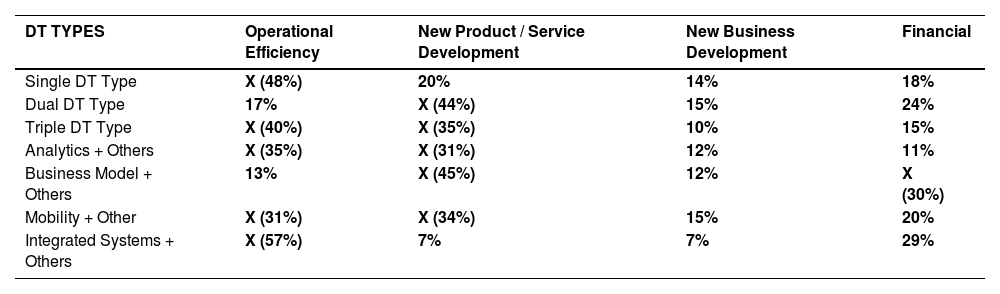
DT-related performance outcomesThe key aim of DT initiatives is performance outcomes, and organizations must understand what to expect (Jiao et al., 2025; Neumeier et al., 2017; Svahn et al., 2017; Newell and Marabelli, 2015). The two dominant performance outcomes organizations in our sample were aimed for: operational efficiency (33 %) and new product/service development (33 %). These results align with prior research highlighting the transformation of internal processes and upstream services (Plattfaut & Borghoff, 2023). Notably, 48 % of cases that aimed for operational improvement were single DT-type initiatives, while 79 % that focused on new product/service development were dual or triple DT-type initiatives.
Orangetheory Fitness offers a good illustration of new service development through integrating mobility and analytics. The company developed a unique service experience using a data-driven approach that relies on extensive mobile tracking and analytics. Various devices capture data when members are in and outside the studio. The OTbeat fitness app provides feedback using a “splat points” system that lets members track their progress and sign up for classes.13 During the pandemic, the company had to transform its service quickly. The new AtHome video product maintained its ability to track data and offer a personalized experience that is core to the company's strategy. It was delivered through mobile devices and over the web and scaled up to service more than 1 million members.
Assessment of performance outcomes for specific DT types shows that integrated systems, analytics, and mobility, combined with other DT types, were used for operational improvement. On the Border introduced QR-code payments across its 109 restaurants. Customers scan the code presented to them after their meal, and their payment is processed without the need to set up an account or use their app. The new process responds to customer needs and reduces the number of trips servers must make to finalize the payment.
When combined with other DT types, business model transformation allowed organizations to aim for new product/service development and financial improvement outcomes. Adobe built its business on a standard model, charging a licensing fee for the lifetime use of its software suite. To capitalize on the increasing acceptance of online delivery of software and services, it decided to change to a subscription model, offering the software as a service and shifting its delivery to a cloud architecture. The new model enabled Adobe to open new markets, accelerate software upgrades continuously, and substantially improve revenues and profitability. Table 4 offers managers a framework to envision performance outcomes attainable through DT initiatives, followed by related propositions for future research.
Association among DT Types and outcomes.
Proposition 5 Single DT-type initiatives positively impact operational efficiency.
Proposition 6 Advanced DT-type initiatives positively impact operational efficiency and new product/service development.
We provide an in-depth review of six DT types: business model, mobility, analytics, integrated systems, mixed reality, and social networks. We elaborate on how these six DT types and concepts can be leveraged on their own or combined to implement DT initiatives. Based on a study of 123 cases, we provide insights to help organizations and managers implement DT projects effectively, ensuring they meet specific outcomes and manage challenges through proper skill sourcing and change management strategies. Furthermore, we offer propositions that future studies can examine.
Firms that combine two or three DT types take higher risks but create replication challenges, and if successfully executed, such initiatives can lead to sustaining competitive advantage. The study shows that the two DT types paired most frequently involve mobility and business model transformation types. Interestingly, most triple DT initiatives combined two DT types with integrated systems, but performance expectations varied—in some cases, it focused on operational efficiency, and in other cases, new product/service development.
The analysis shows that behavioral challenges plague most DT initiatives. However, when it comes to higher-order transformation-type projects, technical issues can also become challenging due to the configuration and integration of multiple system types. Researchers can build on the results by examining the research propositions to develop and test research models that examine DT-related performance outcomes.
CRediT authorship contribution statementKhawaja Asjad Saeed: Writing – review & editing, Writing – original draft, Methodology, Formal analysis, Data curation, Conceptualization. Andrew William Green: Writing – review & editing, Methodology, Formal analysis. Alison Brooke Hedrick: Writing – review & editing, Methodology, Formal analysis.
The group project provides you with the opportunity to explore the concept of digital transformation in more detail. A key aspect we discussed in the materials related to digital transformation was digital business concepts, illustrated as follows:
- •
Digitization of a traditional business model: Shift a traditional business to the digital space (Walmart).
- •
Digitization of product and service maintenance: Using smart devices that are connected to simplify maintenance (Samsung).
- •
Pay per use/rent: Provide flexibility in the use and consumption of services. Pay for what you use or need (Car2go).
- •
Digital Customer lock–In: Using digital services to make consumers more dependent on the company's products and services (Apple).
- •
Crowdsourcing: Engage a large crowd through a digital channel to generate new ideas or solve complex problems (Starbucks).
- •
User-generated content: Encourage the users to become the main content creators (Facebook).
- •
Become a digital broker: Connect parties that were not able to connect or communicate with each other (Airbnb).
- •
Generative AI: Using artificial intelligence to complete knowledge-based tasks. Generate human-like responses to prompts (ChatGPT).
This is not an exhaustive list. Many other digital business concepts that organizations are implementing to gain the benefits of digital transformation exist. The group project challenge is to identify and evaluate six unique digital business concepts. The key activity is to identify the six unique digital business concepts. The group will be required to complete a standard template available in this document and submit it for assessment.
For each digital business concept identified in Step 1, please complete the following template. The completed submission will have six tables, one for each digital business concept.
470-578-5224
470-578-4352
470-578-7664
https://www.geico.com/web-and-mobile/mobile-apps/virtual-assistant/
https://www.forbes.com/sites/blakemorgan/2019/05/15/sprints-digital-transformation-with-chief-digital-officer-rob-roy/
https://www.cargill.com/2018/honeysuckle-white-expands-thanksgiving-traceable-turkey-program
https://www.propertycasualty360.com/2020/01/24/how-blockchain-and-smart-contracts-will-disrupt-insurance/?slreturn=20241205174423
https://www.ikea.com/us/en/newsroom/corporate-news/ikea-launches-new-ai-powered-digital-experience-empowering-customers-to-create-lifelike-room-designs-pub58c94890/
https://keyhole.co/blog/lego-social-media-strategy/
https://www.businessinsider.com/ge-predix-6-billion-business-2016-11
https://cloud.google.com/customers/stubhub
https://www.forbes.com/sites/christopherwalton/2022/03/01/5-reasons-why-amazon-go-is-already-the-greatest-retail-innovation-of-the-next-30-years/
https://www.braineet.com/blog/my-starbucks-idea-case-study

articles