


Edited by: Dr. Sergi Bermúdez i Badia
(University of Madeira, Funchal, , Portugal)
Dr. Alice Chirico
(No Organisation - Home based - 0595549)
Dr. Andrea Gaggioli
(Catholic University of the Sacred Heart, Milano,Italy)
Prof. Dr. Ana Lúcia Faria
(University of Madeira, Funchal, Portugal)
Last update: December 2025
More infoSexual dysfunctions are highly prevalent, affecting up to one-third of the adult population and significantly impacting mental well-being and intimate relationships. Virtual reality (VR) offers a promising and ecologically valid tool for studying psychological disorders; however, its application to research on sexual functioning remains underdeveloped. Sexual disgust is positively associated with sexual dysfunction symptoms, yet existing research remains scarce and has relied primarily on retrospective questionnaires and computer-based 2D erotic stimuli. This experimental study investigates whether low sexual functioning (i.e., low interest/arousal, lubrication/erection difficulties, orgasmic difficulties, and sexual pain) is linked to disgust toward virtual sexual cues. Seventy individuals completed self-reported measures of sexual functioning and disgust propensity. After completing a VR relaxation task, they participated in two VR-Behavior Avoidance Tests (VR-BAT): one sexual and one non-sexual. Disgust and sexual arousal were measured after the relaxation task and each VR-BAT. Participants also completed a sexual presence questionnaire post-immersion. Bivariate correlations and repeated-measures ANCOVAs were conducted. Results indicate that sexual disgust propensity is positively correlated with disgust ratings in the sexual VR-BAT, while sexual presence is positively associated with sexual arousal. Significant condition × sexual difficulties interaction effects show that reduced sexual interest/arousal and increased sexual pain are linked to heightened disgust exclusively in the sexual VR-BAT condition. These findings provide additional evidence that sexual disgust is associated with impaired sexual interest/arousal and sexual pain. This research highlights the value of VR sexual stimuli in studying sexual functioning and underscores the need for future studies to explore the potential of VR-based interventions in addressing the mechanisms underlying sexual dysfunctions and distress, including sexual disgust.
Disgust is a universal emotion characterized by feelings of revulsion and a tendency to avoid disgust-eliciting stimuli (de Jong et al., 2013; Sawchuk, 2009). The evolutionary model proposed by Tybur and colleagues (2009) identified three categories of disgust: pathogen, moral, and sexual disgust. Pathogen disgust is associated with the avoidance of infectious agents and functions to protect against the transmission of infectious diseases by prompting withdrawal responses from potential pathogens (Curtis et al., 2011; Nelson & Williams, 2014; Oaten et al., 2009; Rozin et al., 1995). Moral disgust is triggered by violations of internalized socio-moral norms and conditioning, such as cheating or premarital sex (Tybur et al., 2009; Giner-Sorolla et al., 2012). Lastly, sexual disgust leads individuals to abstain from intimate engagements with inappropriate partners—for instance, those with high genetic similarity—to guard against negative reproductive outcomes such as unhealthy offspring (de Jong et al., 2013; Tybur et al., 2009). It has been hypothesized that disgust may play a significant role in sexual (dys)functioning (Borg et al., 2010; de Jong et al., 2013). Yet, the empirical research exploring the relationship between disgust and sexual functioning remains sparse.
Disgust and sexual functioningDe Jong and colleagues’ (2013) dual model of disgust and sexual functioning proposes that sexual arousal reduces disgust and increases approach behavior toward sexual stimuli. Specifically, sexual arousal diminishes the disgust typically elicited by sex-related cues, such as saliva, sweat, and semen, which would otherwise provoke disgust in non-sexual contexts. Conversely, disgust toward sexual activities may suppress arousal and induce avoidance behaviors (de Jong et al., 2013). In turn, disgust and its anticipation, along with repeated avoidance and low arousal, may lead to low sexual interest and arousal (de Jong et al., 2010).
Therefore, sexual response may depend on a balance between excitatory (e.g., increased sexual arousal) and inhibitory mechanisms (e.g., reduced disgust; van Overveld & Borg, 2015). This bidirectional relationship is supported by research showing disgust’s inhibitory effect on sexual response and functioning in both clinical and non-clinical populations (e.g., women with Sexual Interest/Arousal Disorder; Andrews et al., 2015; Borg & de Jong, 2012; DePesa et al., 2017; Fleischman et al., 2015; Lee et al., 2014; Stevenson et al., 2011; van Overveld et al., 2013; Wen et al., 2023).
Previous research also suggests connections between disgust and pain-related sexual difficulties, such as vaginismus and dyspareunia, theorizing sexual pain as a disgust-driven defense mechanism against sexual activity. In vaginismus, this is exemplified by involuntary pelvic floor muscle contractions in response to penetration, which may be perceived as a potential pathway for pathogen transfer through bodily fluids (Borg et al., 2010; van der Velde & Everaerd, 2001; Yartz & Hawk, 2002). Support for this notion comes from empirical evidence suggesting that women who experience pain during sex exhibit a higher propensity for disgust (Borg et al., 2010, 2014; de Jong et al., 2009; van Overveld et al., 2013). For instance, Borg and colleagues (2010, 2014) demonstrated that women with Genito-Pelvic Pain/Penetration Disorder (dyspareunia or vaginismus) have more automatic and implicit disgust reactions to images of penile-vaginal penetration than healthy controls.
Taken together, conceptual frameworks and research findings suggest that disgust may interfere with sexual activity by reducing sexual interest, arousal, and enjoyment in sexual contexts (Andrews et al., 2015; Borg & de Jong, 2012; de Jong et al., 2013; Fleischman et al., 2015), or by triggering defense mechanisms to avoid anticipated contamination-related risks (i.e., in pain-related sexual difficulties; van Overveld et al., 2013; Yartz & Hawk, 2002).
Other sexual issues, such as delayed orgasm and difficulties with erection or vaginal lubrication, have not been as thoroughly investigated. While two studies have linked disgust sensitivity and propensity to orgasmic difficulties in women (Andrews et al., 2015; Grauvogl et al., 2015), no significant association was found between disgust and erectile or lubrication issues (Grauvogl et al., 2015). Nevertheless, theoretical models of sexual disgust and arousal suggest that disgust may also contribute to lubrication and erectile difficulties (Crosby et al., 2019; de Jong et al., 2013).
Despite increasing evidence, empirical research on the link between sexual functioning and disgust remains limited, particularly in domains beyond sexual interest/arousal and genital pain in women (e.g., Borg et al., 2014; DePesa et al., 2017). This gap is particularly noteworthy considering the high prevalence of sexual dysfunctions in both men and women (e.g., female sexual interest/arousal disorder, erectile disorder, female orgasmic disorder, and delayed ejaculation), which affect up to one-third of individuals and significantly impact their intimate relationships and psychological well-being (e.g., mood, self-esteem, partner satisfaction; Brotto et al., 2016; Hendrickx et al., 2016; Lewis, 2010; Mitchell et al., 2013; Nappi et al., 2016).
Investigating links between disgust and sexual functioning through virtual realityVirtual reality (VR) immerses users in computer-generated environments that mimic real-life stimuli, such as visual, haptic, or olfactory experiences (Kardong-Edgren et al., 2019; Pratt et al., 1995; Slater, 2018). VR environments offer a reliable, controllable, and ecologically valid method to elicit cognitions and emotions similar to those experienced in the real world (Bell et al., 2022). Consequently, a growing body of research in psychology utilizes VR to study disgust in the general population and in clinically specific contexts, including arachnophobia and contamination-related compulsions (e.g., Ammann et al., 2020; Belloch et al., 2014; Dozio et al., 2022; Inozu et al., 2020, 2021; Olatunji et al., 2009; Somarathna et al., 2022).
VR can generate realistic cues and scenarios related to sexual disgust, such as bodily fluids, genital contact, or perceived sexual interest from others, providing strong experimental control to safely and gradually expose individuals to specific stimuli, including sexual characters or environments (Lafortune et al., 2025). VR simulations can also be repeatedly experienced and tailored to diverse levels of sexual explicitness and behavioral involvement that would be impossible to ethically recreate or control in a laboratory setting or with real-life sexual stimuli (Lafortune, 2024). Therefore, emerging research is evaluating the efficacy of VR exposure therapy in addressing sexual problems, including vaginismus, orgasmic disorder, sexual aversion, and erectile disorder (Brown & Brotto, 2023; Lafortune et al., 2025; Rodríguez Martínez et al., 2024; Vila et al., 2024). These protocols involve the gradual exposure to virtual representations of apprehended sexual cues (e.g., flirtation, a partner’s sexual response, genital touch, oral sex, or penetration attempts) to elicit aversive emotional responses (e.g., fear, disgust) and challenge maladaptive beliefs, with preliminary findings suggesting promising effects on symptom reduction and sexual distress improvement.
Furthermore, VR could help overcome methodological limitations of previous non-VR research on sexual disgust, which has primarily relied on retrospective self-report questionnaires about imagined or past sexual activities and on experimental designs using 2D erotica presented on a computer (e.g., Borg et al., 2010, 2014; Borg & de Jong, 2012; DePesa et al., 2017; Grauvogl et al., 2015; van Overveld et al., 2013; Wen et al., 2023). Such approaches are susceptible to recall biases and reduced ecological validity, and they may fail to capture the responses of individuals without a sexual partner or those avoiding sexual relationships due to fear of judgment about their difficulties. By contrast, VR allows for the real-time assessment of affective responses to sexual cues, providing more reliable indices of emotional processes than retrospective questionnaires and thereby improving measurement precision and construct validity (Lafortune, 2024; Roberts et al., 2019). Additionally, recent experimental studies revealed that VR sexual stimuli elicit stronger sexual arousal and a heightened sense of presence compared to 2D explicit videos displayed on a computer monitor (Dekker et al., 2021; Elsey et al., 2019; Milani et al., 2022; Simon & Greitemeyer, 2019). In particular, sexual presence refers to the technologically mediated experience of sexual arousal that closely resembles the sensations felt in a real-life sexual situation, creating an immersive and engaging perception of intimacy (Fontanesi & Renaud, 2014; Renaud et al., 2016). Previous research indicated that higher sexual presence scores are linked to increased subjective and genital sexual arousal in virtual sexual scenarios (Renaud et al., 2016; Simon & Greitemeyer, 2019). These findings support the superiority of VR over non-immersive research tools and underscore its potential to enhance the validity of data on the relationship between disgust, sexual arousal, and sexual difficulties.
The current studyThis quasi-experimental study investigated the relationships between sexual functioning, sexual disgust, and sexual arousal using both sexual and non-sexual VR stimuli. As manipulation checks, the following hypotheses were tested to confirm that the VR stimuli elicited the expected response patterns and thereby support the validity of the design: (1) sexual disgust propensity would positively correlate with disgust toward the VR sexual stimulus but not with the non-sexual stimulus (Hypothesis 1); (2) sexual presence would positively correlate with sexual arousal toward the VR sexual stimulus but not with the non-sexual stimulus (Hypothesis 2). Based on prior research (see Section 1.1), our main hypothesis was that individuals with difficulties in sexual functioning—particularly those reporting lower sexual interest/arousal and greater sexual pain—would report stronger disgust and lower sexual arousal in response to the sexual stimulus condition (Hypothesis 3).
MethodsParticipantsIn this within-subjects design, 70 individuals completed self-report questionnaires on sexual functioning and sexual disgust propensity before undergoing a baseline relaxation exercise, followed by two VR behavioral tests—one sexual and one non-sexual (See Section 2.4 for details on the procedure). An a priori power analysis conducted in G*Power 3.1 (Faul et al., 2007) for repeated-measures ANCOVAs with three within-subject conditions (f = 0.25; α = 0.05; 1–β = 0.95; r = 0.20) indicated a required minimum sample size of 68 participants.
Participants were initially recruited between May and August 2022 through social media platforms (Instagram and Facebook) using targeted advertising strategies implemented via Meta Ads Manager that announced a study on sexual health, as well as from respondent pools from the first author’s previous studies. The inclusion criteria were: (a) being ≥18 years old; (b) having sufficient knowledge of French to complete the questionnaires and protocol; (c) being able to come to the laboratory. The exclusion criteria were: (a) completing < 80 % of the pre-experimental questionnaire; (b) reporting cyber-sickness during VR immersion; (c) taking psychoactive substances on the day of the laboratory visit. See Table 1 for the characteristics of the sample.
Demographic characteristics of the sample (N = 70).
Sociodemographic characteristics. Data were collected on participants’ age, sex/gender, sexual orientation, employment status, education level, and relationship status.
Sexual disgust propensity. A 16-item questionnaire, based on the six-item disgustingness subscale of the Sexual Disgust Questionnaire (SDQ; van Overveld et al., 2013; α = 0.85), was used to assess the degree of disgust response to sexual cues using a nine-point Likert scale ranging from 0 (No disgust at all) to 8 (Extreme disgust). Given that the original SDQ mostly includes items related to sexual fluids (e.g., “Use a towel for your face after it has been used to wipe off vaginal fluids from yourself after sexual intercourse and smells accordingly”), ten additional items were created to assess broader sexual contexts associated with sexual disgust in past studies (e.g., performing oral sex, touching a partner’s sweaty body during sexual activity, or smelling a partner’s breath during sex; Crosby et al., 2019; de Jong et al., 2013; Tybur et al., 2009). Higher scores on the adapted SDQ indicate a greater tendency to experience disgust toward sexual cues, with total scores ranging from 0 to 128. In this study, the scale demonstrated excellent internal consistency (α = 0.93).
Sexual presence. The 10-item Subjective Sexual Presence questionnaire (SSP; Renaud et al., 2016) was used to assess sexual presence using a seven-point Likert scale ranging from 1 (Not at all) to 7 (Completely). This measure included items such as “To what degree did you feel a sexual arousal similar to one felt in a real sexual situation?” or “To what extent did the visual quality of the sexual scenes appear realistic to you?” Higher SSP scores indicate greater sexual presence, with total scores ranging from 10 to 70. In this sample, the scale demonstrated good internal consistency (α = 0.82).
Sexual functioning. The widely used five-item Arizona Sexual Experience Scale (ASEX; McGahuey et al., 2000; α = 0.91) was administered to assess sexual functioning difficulties across key components of the sexual response (e.g., sexual desire, sexual arousal, erection/lubrication, ability to reach orgasm, orgasm satisfaction) using a six-point Likert scale ranging from 1 (e.g., Extremely strong) to 6 (e.g., No sex drive). This measure includes items such as “How easy is it for you to feel sexually aroused?” and “How easily can you reach orgasm with a partner?” To assess genital pain during sexual activity, an additional item—“Do you experience pain during sexual activity?”—was included in this study, using the same Likert scale format. Because some ASEX items are sex-specific (e.g., vaginal lubrication, penile erection), participants completed the version of the scale corresponding to their assigned sex rather than their gender (i.e., five core items plus the additional sexual pain item). Higher ASEX scores indicate lower sexual functioning, with total scores ranging from 6 to 36. In this study, the scale demonstrated excellent internal consistency (α = 0.91).
Disgust and sexual arousal during the experiment. Disgust was measured using the Subjective Units of Discomfort Scale (SUDS; Wolpe, 1990), a one-item scale ranging from 0 (Not disgusted at all) to 10 (Extremely disgusted). The SUDS is widely used to assess dose-effect emotional responses in research and clinical settings (e.g., Owens & Beidel, 2015; Reger et al., 2019; Takac et al., 2019). Sexual arousal was measured using a one-item scale ranging from 0 (Not aroused at all) to 10 (Extremely aroused), which is commonly used in experimental research to measure subjective sexual responses to sexual stimuli (e.g., Chivers et al., 2007; Heiman & Rowland, 1983; Milani et al., 2022; Suschinsky et al., 2009).
Cybersickness. Cybersickness was evaluated using two items. The first, adapted from the Fast Motion Sickness Scale (Keshavarz & Hecht, 2011), measured the intensity of light-headedness or nausea on a scale from 0 (No sickness at all) to 10 (Severe sickness). The second item assessed whether participants felt comfortable enough to continue the protocol, using a Yes/No response format.
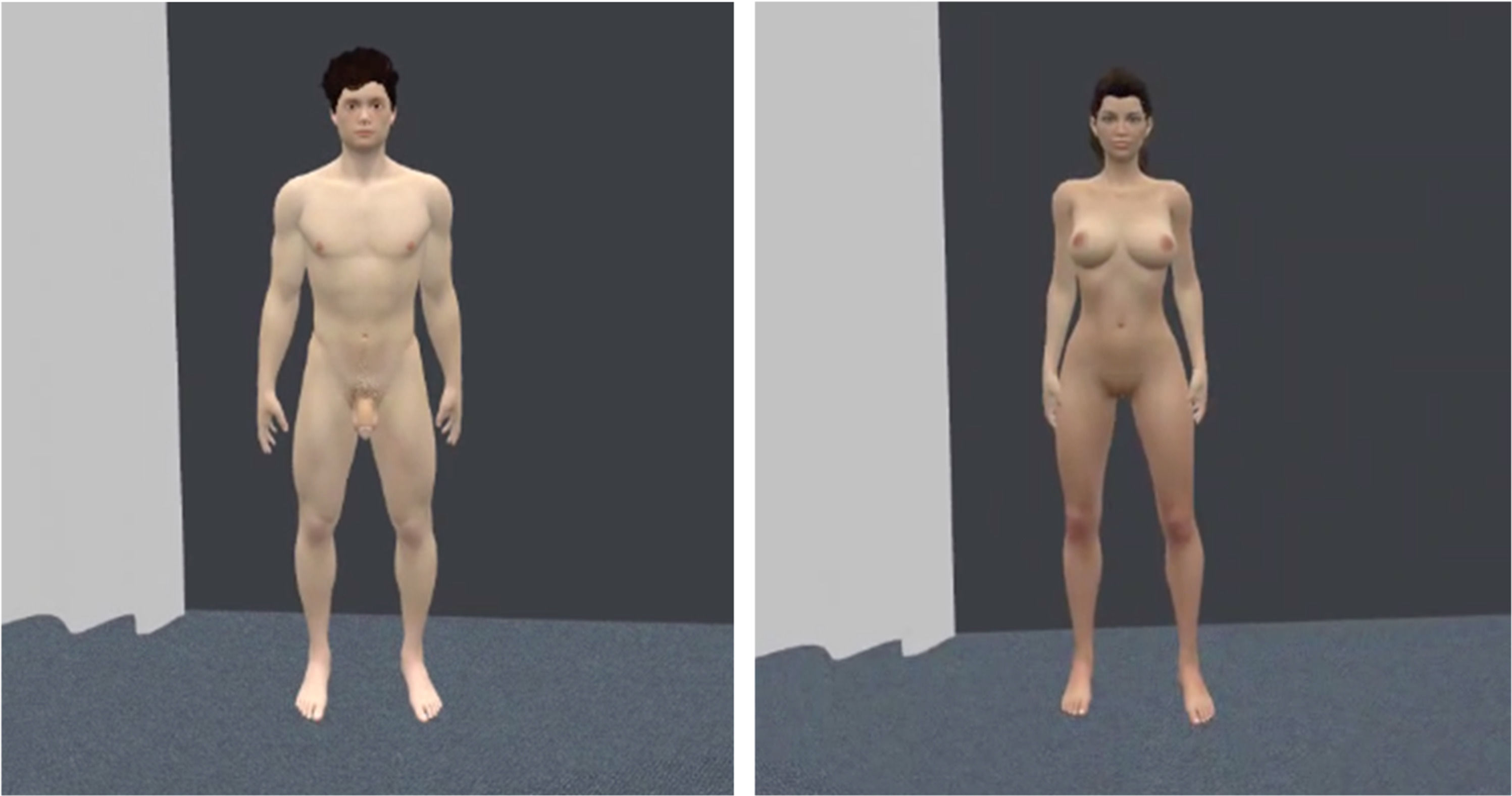
Virtual reality equipment and stimuliThe wireless Pico Neo 3 Pro VR headset was used for immersion, and the simulation was developed using the Unity game engine. Assets, including characters, objects, and textures, were sourced from Daz3D (e.g., Genesis 8 model), the Unity Asset Store (e.g., room, furniture), and commercially available 3D anatomical models representing normative adult genital morphologies. The simulation consisted of the following four phases: (1) a VR familiarization period, during which participants were situated alone in a virtual living room to facilitate acclimation to VR (no time limit); (2) a relaxation exercise derived from the Heart-Focused Breathing technique, presented as an animation of a black screen with blue dots arranged in a circular pattern (three minutes; McCraty & Zayas, 2014); and two VR-Behavior Avoidance Tests (VR-BAT; Dibbets & Fonteyne, 2015; Mühlberger et al., 2008) featuring a (3) sexual stimulus and a (4) non-sexual stimulus, presented in a randomized order to control for order effects (each VR-BAT lasted four minutes). The sexual stimulus consisted of a virtual male or female character displaying sexual dimorphism with Caucasian features, positioned six meters away from the participant, naked, gazing at the participant, and occasionally touching their genitals (see Fig. 1). The selection of the character’s sex (female or male) was based on each participant’s expressed preference during the familiarization task (see Section 2.4 for the procedure). The non-sexual stimulus was a virtual apple placed at the same distance, selected to eliminate any sexual connotations (e.g., as opposed to using a fully clothed character), and serving as a simple, easily recognizable object within the virtual space.
Procedure
Interested participants accessed an online survey via Qualtrics, beginning with a consent form outlining the aims and procedure of the study. After providing electronic consent, they completed a questionnaire that included sociodemographic questions, the SDQ, and the ASEX. Eligible participants were then contacted by phone to schedule a 60-minute laboratory session.
Upon arrival at the laboratory, an experimenter installed and calibrated the VR headset before initiating the four-phase stimulation, during which participants remained in a standing position. During the familiarization phase, participants were invited to physically explore a virtual living room that matched the dimensions of the laboratory and to walk to a designated location to select between two virtual buttons determining the virtual character’s sex in the sexual VR-BAT. The experimenter verbally informed participants of each button’s corresponding sex (green = female, orange = male), and participants pressed the button based on their sexual preference. After completing the familiarization task, a 30-second blue transition screen appeared. During this period, each participant was assessed for cybersickness. No reports of cybersickness were recorded, and all participants confirmed their consent to continue the simulation. Next, each participant engaged in a VR-based relaxation task to establish a reliable emotional baseline (McCraty & Zayas, 2014). The experimenter instructed participants to focus on the center of their chest and consciously regulate their breathing at an eight-second rhythm while synchronizing their breathing with the movements of a circle displayed in the VR environment (procedure detailed in Lafortune et al., 2024). Once the relaxation exercise concluded, participants rated their levels of disgust and sexual arousal during a one-minute blue transition screen (baseline), during which they were also informed that the next task would take place in a virtual bedroom. Participants then performed the two VR-BATs, in which they were instructed to walk as close as possible to the target and touch it: the genitals of the naked character for the sexual VR-BAT and the apple for the non-sexual VR-BAT. After each VR-BAT, participants verbally reported their levels of disgust and sexual arousal during a one-minute blue transition screen. Once the immersion ended and the equipment was removed, participants completed the SSP questionnaire on an iPad in the laboratory and received a CAD $20 gift card as compensation.
The Institutional Research Ethics Board of the Université du Québec à Montréal approved this study (certification number: 2022–4540).
Data analysisTo test Hypotheses 1 and 2, Pearson bivariate correlation analyses were conducted. To test Hypothesis 3, within-subjects repeated measures analyses of covariance (ANCOVAs) were performed, with three conditions as the within-subjects factor (i.e., baseline, sexual VR-BAT, non-sexual VR-BAT), for each of the four covariates (i.e., ASEX scores on sexual interest/arousal, ability to obtain an erection/experience lubrication, sexual pain, and ability to reach orgasm), with the following outcomes: disgust and sexual arousal scores. When Mauchly’s test indicated a violation of the sphericity assumption, the appropriate correction (e.g., Greenhouse-Geisser) was applied for each estimated effect. For significant condition effects, Bonferroni-adjusted post hoc contrasts were conducted to compare disgust and sexual arousal scores between conditions, while parameter estimates were analyzed for significant condition × sexual difficulties interaction effects to assess the influence of covariates. Effect sizes were reported for all analyses (i.e., Pearson’s r, ηp2, B). All statistical analyses were conducted using SPSS (version 29).
Assumptions were examined for the repeated-measures ANCOVAs. Multicollinearity among the four ASEX covariates was assessed using Variance Inflation Factors (VIFs), which all indicated weak collinearity (maximum VIF < 1.66). Normality of residuals was evaluated with Shapiro–Wilk tests, histograms, and Q–Q plots. No substantial deviations were observed for disgust scores. However, for sexual arousal in the sexual VR-BAT condition the Shapiro–Wilk test indicated non-normality (p = .001), although visual inspection suggested only modest departures. Given the robustness of ANCOVA to such minor deviations, particularly with the present sample size (N = 70), no corrective action was deemed necessary.
Both ASEX items assessing sexual interest and sexual arousal difficulties were merged into a single variable, in accordance with the DSM-5 classification, which considers these symptoms together (American Psychiatric Association, 2022). Additionally, because penile erection and vaginal lubrication correspond to distinct anatomical processes occurring in the same phase of the sexual response, and participants completed only one version of the sex-specific questionnaire, their responses were combined into a single variable in the ANCOVAs. For analyses related to Hypotheses 1 and 2, disgust and sexual arousal scores were adjusted by subtracting baseline ratings from those recorded during the two VR conditions, thereby accounting for potential pre-VR emotional states.
Transparency and opennessOf the 70 participants, 55 were initially recruited between May and August 2022 for a study on the potential of VR to assess the emotional, behavioral, and physiological manifestations of Sexual Aversion Disorder (Lafortune et al., 2024). The primary study included individuals who met the criteria for Sexual Aversion Disorder (n = 27) and participants without this condition (n = 28). An additional 15 participants were recruited between August and September 2023 to enhance the theoretical relevance of the sample and to increase its statistical power for the secondary analyses reported in this article. Scores on sexual functioning, as measured by the ASEX, were comparable between the initial sample (males: M = 15.96, SD = 3.80; females: M = 17.38, SD = 4.70) and the additional participants (males: M = 13.73, SD = 4.45; females: M = 14.20, SD = 3.80), with means reflecting moderate levels of sexual functioning and distributions showing no substantial deviations from normality (skewness = 0.41/0.24; kurtosis = 0.06/-0.54). These additional participants were recruited using the same strategies, underwent the same protocol, and completed the same measures as those in the primary study.
ResultsHypothesis 1: sexual disgust propensity will be positively associated with disgust scores during the sexual VR-BAT but not during the non-sexual VR-BAT (supported)Mean disgust ratings were 0.19 (SD = 0.67) in the non-sexual VR-BAT and 1.33 (SD = 2.00) in the sexual VR-BAT. Higher sexual disgust propensity scores were significantly associated with disgust reported during the sexual VR-BAT (r = 0.48, p < .001) but not during the non-sexual VR-BAT (r = −0.07, p = .564; see Table 2 for the correlation matrix of all variables included in the study).
Correlations between sexual disgust propensity, sexual presence, sexual functioning, and disgust and arousal in the sexual and non-sexual VR-BATs.
Note. *p < .05, **p < .01. SDQ: adapted disgustingness subscale of the Sexual Disgust Questionnaire; SSP: Subjective Sexual Presence scale.
Mean arousal ratings were 0.56 (SD = 1.69) in the non-sexual VR-BAT and 2.06 (SD = 2.63) in the sexual VR-BAT. Sexual presence scores were significantly associated with sexual arousal reported during the sexual VR-BAT (r = 0.41, p < .001) but not during the non-sexual VR-BAT (r = −0.06, p = .602; see Table 2).
Hypothesis 3: sexual functioning would moderate sexual disgust and arousal in the sexual VR-BAT (partially supported)A significant main effect of condition on disgust scores was found, F(1.24, 85.86) = 18.77, p = .031, ηp² = 0.21. Post hoc contrasts revealed that disgust scores were significantly higher during the sexual VR-BAT compared to both baseline (p < .001) and the non-sexual VR-BAT (p < .001) conditions, with no significant difference between baseline and the non-sexual VR-BAT (p = .723). A significant condition × sexual interest/arousal interaction effect was observed for disgust scores, F(1.29, 87.98) = 12.50, p < .001, ηp² = 0.16. Parameter estimates revealed that lower sexual interest/arousal was significantly associated with increased disgust in the sexual VR-BAT (B = 0.77, p < .001, 95 % CI [0.37, 1.17]), but not in the baseline (p = .945) or non-sexual VR-BAT (p = .725) conditions. A significant condition × sexual pain interaction effect was also found for disgust scores, F(1.22, 72.46) = 18.13, p < .001, ηp² = 0.24. Higher sexual pain was significantly associated with increased disgust in the sexual VR-BAT (B = 0.76, p < .001, 95 % CI [0.47, 1.05]), but not in the baseline (p = .086) or the non-sexual VR-BAT (p = .457) conditions. No significant interaction effects were found for the ability to reach orgasm, F(1.25, 85.19) = 2.21, p = .135, ηp² = 0.03, or to obtain an erection/experience lubrication, F(1.25, 82.42) = 1.39, p = .248, ηp² = 0.02.
A significant main effect of condition on sexual arousal scores was also found, F(1.07, 73.99) = 38.39, p < .001, ηp² = 0.36. Post hoc contrasts showed that sexual arousal scores were significantly higher during the sexual VR-BAT compared to both baseline (p < .001) and the non-sexual VR-BAT (p < .001) conditions, with no significant difference between baseline and the non-sexual VR-BAT (p = .865). A significant condition × sexual interest/arousal interaction effect was observed for sexual arousal scores, F(1.08, 73.12) = 4.51, p = .034, ηp² = 0.06. Parameter estimates revealed that lower sexual interest/arousal was significantly associated with lower sexual arousal in the sexual VR-BAT (B = - 0.76, p = .007, 95 % CI [- 1.31, - 0.21]), but not in the baseline (p = .148) or the non-sexual VR-BAT (p = .085) conditions. No significant interaction effects were observed for sexual pain, F(1.10, 64.75) = 3.30, p = .070, ηp² = 0.05, ability to reach orgasm, F(1.07, 72.86) = 2.40, p = .124, ηp² = 0.03, or to obtain an erection/experience lubrication, F(1.07, 70.79) = 0.30, p = .601, ηp² = 0.01.
DiscussionAlthough disgust has been hypothesized to play a significant role in sexual dysfunctions, empirical research on this relationship remains limited. Using a VR paradigm, the present study examined the associations between sexual disgust, sexual arousal, and four key indicators of sexual functioning: sexual interest/arousal, ability to obtain an erection or experience lubrication, pain during sex, and ability to reach orgasm. The findings partly supported our hypotheses. Notably, the results indicate that two factors—lower sexual interest/arousal and greater sexual pain—moderated disgust responses in the sexual VR-BAT. Specifically, reduced sexual interest/arousal and increased sexual pain were associated with heightened disgust exclusively in the sexual VR-BAT condition. While lower sexual interest/arousal was linked to reduced sexual arousal during the sexual VR-BAT, no such moderating effect was observed for sexual pain. Neither the ability to achieve lubrication/erection nor the ability to reach orgasm was significantly associated with disgust or sexual arousal in the sexual VR-BAT condition.
These results align with prior research on sexual disgust, which used erotic images and 2D videos to examine emotional responses among women with sexual interest/arousal and genito-pelvic pain/penetration disorders (Borg et al., 2010, 2014; DePesa et al., 2017), revealing that individuals experiencing these difficulties exhibit heightened disgust compared to healthy controls. Furthermore, the absence of significant associations between disgust and delayed orgasm or erectile/lubrication difficulties contributes to the ongoing debate and mixed findings regarding the role of sexual disgust in these domains of sexual functioning (Borg et al., 2010, 2014; DePesa et al., 2017; Grauvogl et al., 2015). One possible explanation is that, as an emotional state, disgust may be less disruptive to orgasm latency, erectile response, and vaginal lubrication than to sexual desire and genito-pelvic pain (Andrews et al., 2015; Borg & de Jong, 2012; van Overveld et al., 2013). Taken together, this earlier work and our findings—showing that reduced sexual interest/arousal and increased sexual pain were linked to heightened disgust, and that sexual arousal was moderately negatively associated with disgust in the sexual VR-BAT—support de Jong et al.’s (2013) dual model. It emphasizes that sexual dysfunctions may arise from an imbalance between excitatory processes (e.g., sexual arousal) and inhibitory processes (e.g., disgust) when individuals are exposed to sexual cues. On another note, the moderate positive correlation between SDQ scores and disgust ratings in the sexual VR-BAT further supports the validity of the SDQ and reinforces its value as a practical tool for assessing sexual disgust in research settings.
Limitations and strengthsThis study has several limitations. First, its generalizability is constrained by a relatively small sample predominantly composed of cisgender women and Caucasian individuals. Caution is therefore warranted in generalizing these findings to more diverse populations, as gender and sociocultural factors can influence both the expression of sexual disgust and the perception of sexual cues (de Jong et al., 2013; Rupp & Wallen, 2008; Tybur et al., 2009). For instance, future research with adequately powered samples should stratify analyses by sex/gender to directly assess potential between-subject differences in the relationships between sexual functioning and sexual disgust. Additionally, for analytical purposes, items related to sexual responsiveness were combined despite their association with distinct anatomical processes (i.e., lubrication and erection; see Section 2.5). This limitation precluded the independent examination of disgust and arousal responses specific to lubrication and erection. Future studies should recruit samples balanced across sexual dysfunction clusters to enhance generalizability and clinical relevance, thereby allowing more precise examination of how disgust and other emotional processes uniquely relate to specific sexual health conditions. Another limitation concerns the use of an apple as the non-sexual control stimulus, as its specific characteristics may have biased the magnitude of the emotional contrast between sexual and non-sexual conditions. Furthermore, the non-significant trend for the moderating effect of sexual pain on sexual arousal may also reflect limited statistical power and the VR-BAT’s moderate level of sexual explicitness and engagement, as well as its limited capacity to capture the full range of elements involved in partnered or solo sexual activities (e.g., penetration, masturbation, bodily fluids, intimate sexual touch) and other sexually salient cues (e.g., dirty talk, cuddling, kissing) that have been identified as other disgust elicitors in individuals with sexual pain (Borg et al., 2010, 2014; de Jong et al., 2013).
Nonetheless, this study is the first to utilize immersive VR environments to investigate the relationship between disgust and multiple facets of sexual functioning. The findings contribute novel insights into the potential specificity of the associations between sexual (dys)functioning and sexual disgust—particularly in relation to low sexual interest/arousal and heightened pain during sex—while also providing valuable data, such as effect sizes, to inform future replication studies.
ConclusionFurther research on sexual functioning using technology-based approaches is needed, particularly studies incorporating VR stimuli that vary in both sexual explicitness and salience, and that include multisensory stimulations beyond purely visual cues (e.g., haptic, auditory, and olfactory cues replicating sensual touch, erotic vocalizations, or genital scents). Larger sample sizes will also be necessary to determine whether VR technologies offer greater ecological validity and realism compared to other non-immersive mediums (e.g., 2D erotic videos). Given the broad range of control stimuli employed in VR research on sexual experiences (e.g., a grey sphere or a sunset at the beach; Renaud et al., 2002; Simon & Greitemeyer, 2019)—including the present study’s use of an apple—future research should work toward identifying standardized control stimuli to enhance methodological consistency in studies on human sexuality. Future experimental designs should examine the mediating role of sexual arousal in the relationship between disgust and sexual functioning using immersive technologies, while also exploring other individual and social factors—such as age, gender, or a history of sexual victimization—as potential influences on sexual disgust beyond low sexual functioning (Adams et al., 2014; Brake et al., 2021). Moreover, VR’s ability to elicit sexual disgust in individuals with low sexual functioning offers a promising avenue for developing novel treatment approaches for sexual dysfunctions, such as exposure therapy or counter-conditioning (Mason & Richardson, 2012; Meunier & Tolin, 2009). Given the prevalence of sexual dysfunctions, researchers and clinicians should continue to develop and refine methodological tools to advance the study of human sexuality and promote sexual well-being. VR represents a promising avenue that, when strategically implemented, has the potential to revolutionize both research and clinical interventions in sex therapy (Lafortune et al., 2023). However, further studies are needed to fully harness its capabilities.
Declaration of generative AI and AI-assisted technologies in the writing processDuring the preparation of this work, the authors used ChatGPT-5 to enhance linguistic accuracy, readability, and overall clarity of the manuscript, as they are non-native English speakers. After using this tool, the authors reviewed and edited the content as needed and take full responsibility for the content of the published article.
Ethical statement regarding sexual stimuliThe sexual stimuli employed in this study were consistent with the procedures reviewed and approved by the Research Ethics Committee of the Université du Québec à Montréal. None of the materials involved illegal, exploitative, or otherwise ethically problematic content.
Data availabilityThe dataset generated and analyzed during the current study is available in the Open Science Framework repository: https://osf.io/3765z
FundingThis work was supported by the Fonds de Recherche du Québec – Société et Culture [grant numbers 2022-NP296263].
The authors declare that they have no known competing financial interests or personal relationships that could have appeared to influence the work reported in this paper.
The authors would like to thank the research participants.

articles