
metricas
Enfermería Intensiva (English Edition) Nursing care in the postoperative period after Glenn surgery. A case report
Journal Information
Visits
570
Vol. 35. Issue 2.
Pages e1-e22 Pages 77-158 (April - June 2024)
Case report
Full text access

Nursing care in the postoperative period after Glenn surgery. A case report

Cuidados enfermeros en el postoperatorio de la cirugía de Glenn. A propósito de un caso
Visits
570
Ester Álvaro-Sánchez
Unidad de Cuidados Intensivos Pediátricos, Hospital Universitario Reina Sofía, Córdoba, Spain
This item has received
Article information
Abstract
Full Text
Bibliography
Download PDF
Statistics
Figures (1)
fig0005
Tables (2)
Table 1. Assessment based on the health functional patterns and diagnoses according to the NANDA-I taxonomy.5
Tables
Table 2. Nursing diagnoses, outcomes and interventions.
Tables
Abstract

Glenn surgery is used as a palliative procedure in children with Hypoplastic Left Heart Syndrome (HLHS) and its objective is to partially redirect the systemic venous return.

An individualized care plan is presented for a 7-month-old infant, admitted to the Pediatric Intensive Care Unit (PICU), after undergoing Glenn procedure. And is shown her evolution during admission.

Marjorie Gordon's 11 functional health patterns are used for the nursing assessment, highlighting among the altered patterns, the nutritional-metabolic and the activity-exercise, due to their implication in hemodynamic changes derived from the surgery.

Due to their association with the most common postoperative complications in this type of surgery, 8 diagnoses were prioritised according to NANDA-I taxonomy: risk for infection, excess fluid volume, risk for shock, risk for bleeding, risk for decreased cardiac output, impaired gas exchange, ineffective airway clearance and risk for ineffective cerebral tissue perfusion.

In each of them, expected patient outcomes and nursing interventions, were selected using the NOC and NIC taxonomies, respectively.

Outcome criteria scores showed a favourable evolution after 7 days from admission, only 3 of the diagnoses selected at the beginning remain active.

The development and reassessment of the nursing care plan has made it possible to make an effective monitoring of patient’s postoperative evolution and to standardize nursing care, ensuring safe and quality health care.

The lack of similar case reports in available bibliography has prevented us from comparing actions, therefore it has been necessary to disclose these scientific articles to guarantee best evidence-based practice.

Keywords:
Bidirectional Glenn procedure
Congenital heart defect
Nursing care
Postoperative period
Infant
Critical care
Resumen

La cirugía de Glenn se emplea como procedimiento paliativo en los niños con ventrículo izquierdo hipoplásico y su objetivo es redirigir parcialmente el retorno venoso sistémico.

Se presenta un plan de cuidados individualizado de una lactante de siete meses de edad, que ingresa en la Unidad de Cuidados Intensivos (UCI) Pediátricos, tras ser intervenida del procedimiento de Glenn. Y se muestra su evolución durante el ingreso.

Para la valoración enfermera se utilizaron los 11 patrones funcionales de Marjory Gordon, destacando entre los patrones alterados, el nutricional-metabólico y el de actividad-ejercicio, por su relación con las alteraciones hemodinámicas derivadas de la cirugía.

Por su asociación con las complicaciones posquirúrgicas que ocurren con mayor frecuencia en este tipo de intervención, se priorizaron ocho diagnósticos según la taxonomía NANDA-I: el riesgo de infección, el exceso de volumen de líquidos, el riesgo de shock, el de sangrado, la probabilidad de disminución del gasto cardíaco, el deterioro del intercambio de gases, la limpieza ineficaz de las vías aéreas y el riesgo de perfusión tisular cerebral ineficaz.

Se seleccionaron para cada uno de ellos los resultados esperados y las intervenciones enfermeras específicas que se implementaron para su consecución, empleando las taxonomías NOC y NIC, respectivamente. Los criterios de resultados mostraron una evolución favorable transcurridos los siete días que duró el ingreso, manteniéndose activos solo tres de los diagnósticos iniciales.

La elaboración y progresión del plan de cuidados ha permitido realizar el seguimiento de la evolución postoperatoria de la paciente y homogeneizar los cuidados enfermeros, logrando una atención sanitaria segura y de calidad.

La escasez de casos clínicos similares en la bibliografía disponible nos ha impedido comparar actuaciones, por ello, se hace necesario dar a conocer este tipo de artículos científicos para garantizar la prestación de cuidados con base en la mejor evidencia.

Palabras clave:
Procedimiento de Glenn
Cardiopatía congénita
Atención de enfermería
Postoperatorio
Infante
Cuidados críticos
Full Text
Introduction

Hypoplastic left heart syndrome (HLHS) is a rare congenital heart disease characterized by lack of development of the left ventricle, and as a consequence the right ventricle must pump blood both to the pulmonary and systemic circulations. It represents 1.4%–3.8% of all congenital heart diseases, with an incidence between .016%–.036% of live newborns.1

The current treatment strategy is surgical palliation in 3 stages, the second of which is Glenn’s surgery. The goal of this palliation stage is to reduce ventricular volume overload. For this, an anastomosis is performed between the superior vena cava and the pulmonary arteries, converting the pulmonary circulation into a passive circuit, where the pulmonary blood flow is based on the systemic venous return from the upper part of the body. Among the possible post-surgical complications we find, on the one hand, complications related to cardiac surgery in general (infections, thrombosis and arrhythmias) and, on the other, complications related to the Glenn procedure itself (phrenic paralysis, recurrence, chylothorax, decreased level of oxygen, neurological complications, risk of bleeding, pleural effusion and superior vena cava syndrome), the former being the ones that occur most frequently.2,3

Given the complexity of heart disease and the systemic repercussions of the intervention and of the cavopulmonary anastomosis itself, we present the individualized nursing care plan applied in the case of an infant who underwent surgery at our centre.

Case

Female patient, 7 months old, admitted to the PICU after surgery to correct univentricular physiology in Glenn’s stage.

With the following personal history:

  • -

    Prenatal diagnosis of complex heart disease: Hypoplastic left ventricle syndrome.

  • -

    First palliative surgery (Norwood) at 9 days of life. With ischemic brain injury associated with convulsive syndrome during his postoperative period. Under treatment with levetiracetam.

  • -

    Since then, she presented hypotonia and mild involvement of the left side of the body, which evolved satisfactorily with rehabilitation.

Initial assessment

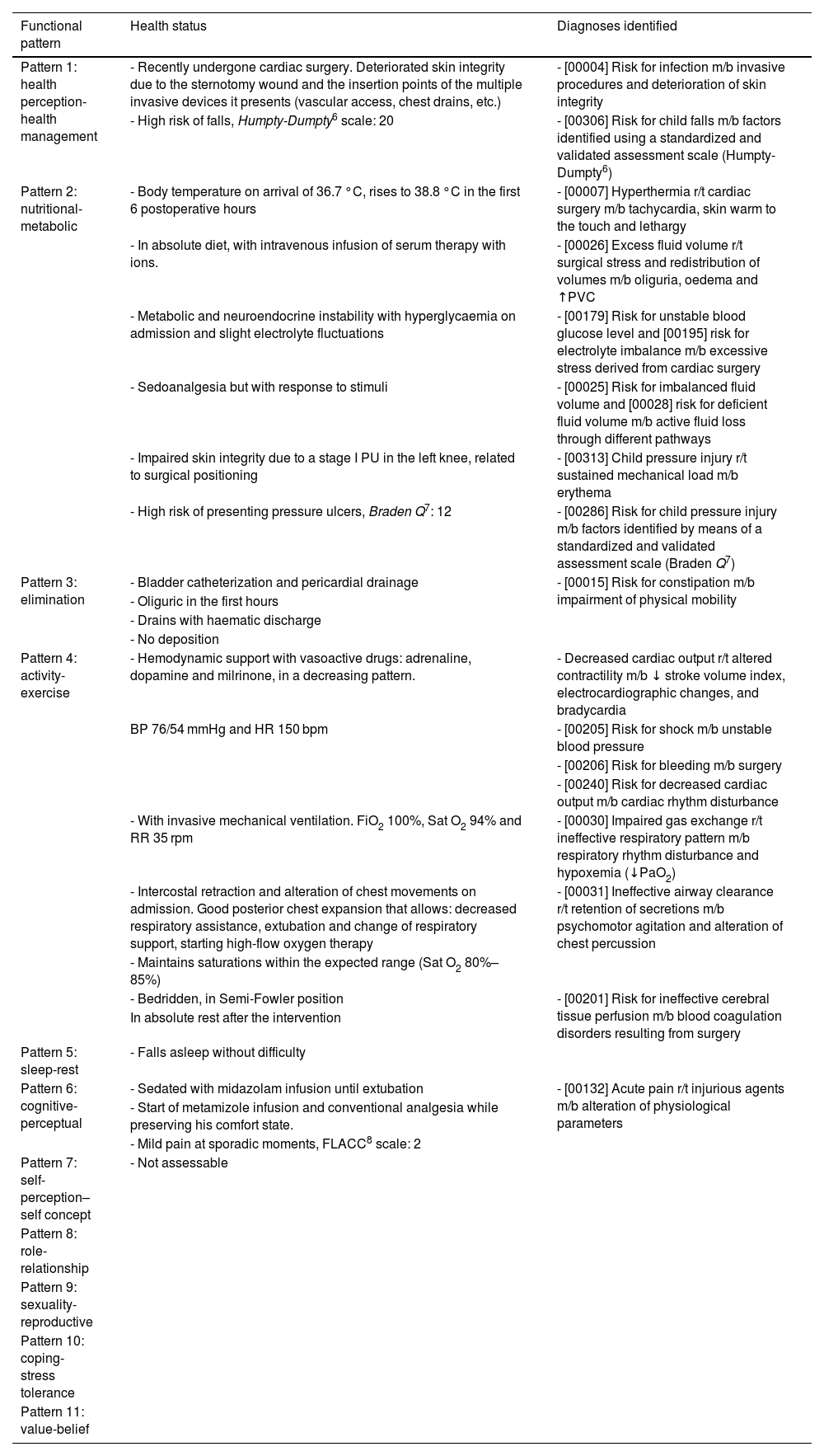
Upon arrival, the initial reception and stabilization of the patient was performed. Next, nursing assessment began, according to Gordon’s functional health patterns model.4

In the initial physical examination, it was observed that the infant was admitted with vasopressor support, intubated through the nasotracheal route, ventilated with a self-inflating bag until the moment mechanical ventilation was started, and with clean sternotomy wound dressings. The invasive devices included: 2 pericardial drains connected to the collecting system (Pleur-evac® type), an external pacemaker with both atrial and ventricular electrodes, 3 vascular accesses (a peripheral venous line in the right arm, a right femoral arterial catheter, and a 3-lumen left femoral central venous catheter) and bladder catheter. Table 1 shows the data on the initial health status of the infant, organized by functional patterns.

Table 1.

Assessment based on the health functional patterns and diagnoses according to the NANDA-I taxonomy.5

Functional pattern  Health status  Diagnoses identified 
Pattern 1: health perception-health management- Recently undergone cardiac surgery. Deteriorated skin integrity due to the sternotomy wound and the insertion points of the multiple invasive devices it presents (vascular access, chest drains, etc.)  - [00004] Risk for infection m/b invasive procedures and deterioration of skin integrity 
- High risk of falls, Humpty-Dumpty6 scale: 20  - [00306] Risk for child falls m/b factors identified using a standardized and validated assessment scale (Humpty-Dumpty6
Pattern 2: nutritional-metabolic- Body temperature on arrival of 36.7 °C, rises to 38.8 °C in the first 6 postoperative hours  - [00007] Hyperthermia r/t cardiac surgery m/b tachycardia, skin warm to the touch and lethargy 
- In absolute diet, with intravenous infusion of serum therapy with ions.  - [00026] Excess fluid volume r/t surgical stress and redistribution of volumes m/b oliguria, oedema and ↑PVC 
- Metabolic and neuroendocrine instability with hyperglycaemia on admission and slight electrolyte fluctuations  - [00179] Risk for unstable blood glucose level and [00195] risk for electrolyte imbalance m/b excessive stress derived from cardiac surgery 
- Sedoanalgesia but with response to stimuli  - [00025] Risk for imbalanced fluid volume and [00028] risk for deficient fluid volume m/b active fluid loss through different pathways 
- Impaired skin integrity due to a stage I PU in the left knee, related to surgical positioning  - [00313] Child pressure injury r/t sustained mechanical load m/b erythema 
- High risk of presenting pressure ulcers, Braden Q7: 12  - [00286] Risk for child pressure injury m/b factors identified by means of a standardized and validated assessment scale (Braden Q7
Pattern 3: elimination- Bladder catheterization and pericardial drainage  - [00015] Risk for constipation m/b impairment of physical mobility
- Oliguric in the first hours 
- Drains with haematic discharge 
- No deposition 
Pattern 4: activity-exercise- Hemodynamic support with vasoactive drugs: adrenaline, dopamine and milrinone, in a decreasing pattern.  - Decreased cardiac output r/t altered contractility m/b ↓ stroke volume index, electrocardiographic changes, and bradycardia 
BP 76/54 mmHg and HR 150 bpm- [00205] Risk for shock m/b unstable blood pressure 
- [00206] Risk for bleeding m/b surgery 
- [00240] Risk for decreased cardiac output m/b cardiac rhythm disturbance 
- With invasive mechanical ventilation. FiO2 100%, Sat O2 94% and RR 35 rpm  - [00030] Impaired gas exchange r/t ineffective respiratory pattern m/b respiratory rhythm disturbance and hypoxemia (↓PaO2
- Intercostal retraction and alteration of chest movements on admission. Good posterior chest expansion that allows: decreased respiratory assistance, extubation and change of respiratory support, starting high-flow oxygen therapy  - [00031] Ineffective airway clearance r/t retention of secretions m/b psychomotor agitation and alteration of chest percussion 
- Maintains saturations within the expected range (Sat O2 80%–85%)   
- Bedridden, in Semi-Fowler position  - [00201] Risk for ineffective cerebral tissue perfusion m/b blood coagulation disorders resulting from surgery
In absolute rest after the intervention 
Pattern 5: sleep-rest  - Falls asleep without difficulty   
Pattern 6: cognitive-perceptual- Sedated with midazolam infusion until extubation  - [00132] Acute pain r/t injurious agents m/b alteration of physiological parameters
- Start of metamizole infusion and conventional analgesia while preserving his comfort state. 
- Mild pain at sporadic moments, FLACC8 scale: 2 
Pattern 7: self-perception–self concept  - Not assessable   
Pattern 8: role-relationship     
Pattern 9: sexuality- reproductive     
Pattern 10: coping-stress tolerance     
Pattern 11: value-belief     
Selected diagnoses

Based on the data obtained in the assessment, 5 dysfunctional patterns were detected (health perception-health management, nutritional-metabolic, elimination, activity-exercise, and cognitive-perceptual) and 20 diagnoses susceptible to nursing intervention were identified.

Table 1 indicates, along with the data from the initial assessment, the identified nursing diagnoses and their corresponding numerical code, according to the NANDA-I5 taxonomy.

Care planning

In the present clinical case, 8 of the identified diagnoses were prioritized, due to their relationship with haemodynamic alterations and morbidity attributable to surgery.2,3

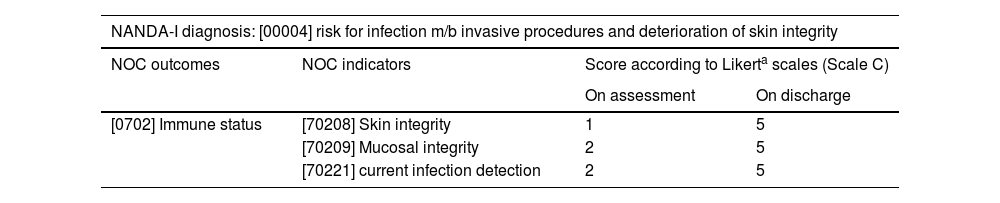
Table 2 presents the complete planning including, on the one hand, the diagnoses with the expected results and the outcome indicators that were assessed in each case, according to the NANDA-I5 and NOC9 taxonomies and, on the other, the nursing interventions together with the activities implemented throughout the admission, according to the NIC10 taxonomy.

Table 2.

Nursing diagnoses, outcomes and interventions.

NANDA-I diagnosis: [00004] risk for infection m/b invasive procedures and deterioration of skin integrity
NOC outcomes  NOC indicators  Score according to Likerta scales (Scale C)
    On assessment  On discharge 
[0702] Immune status[70208] Skin integrity 
[70209] Mucosal integrity 
[70221] current infection detection 
NIC interventions  NIC activities 
[6550] Protection against infections- Observe the signs and symptoms of systemic and localized infection 
- Inspect the status of any surgical incisions/wounds 
- Obtain samples for culture, if necessary 
[1872] Chest drain care- Observe for signs of systemic and local infection 
- Observe for signs of infection 
- Change the bandage around the chest tube every 48–72 h, if necessary 
[1876] Urinary catheter care- Maintain a closed, sterile and unobstructed urinary drainage system 
- Make sure that the drainage bag is placed below the level of the bladder. 
- Avoid tilting bags or urine measurement systems to empty or measure urine output (i.e. preventive measures to avoid upward contamination). 
- Perform routine care of the urethral meatus with soap and water during daily bathing 
- Use a catheter fixation system. 
- Empty the urinary drainage device regularly at the specified intervals 
- Make sure to remove the catheter as soon as indicated by the patient’s condition 
[3440] Incision site care- Clean the area around the incision with an appropriate antiseptic solution 
- Clean from the clean area to the less clean area 
- Change the bandage at appropriate intervals 
NANDA-I diagnosis: [00026] excess fluid volume r/t surgical stress and redistribution of volumes m/b oliguria, oedema and ↑PVC
NOC outcomes  NOC indicators  Score according to Likert scalesa (Scales B* and C)
    On assessment  On discharge 
[0601] Water balance[60103] Central venous pressure 
[60107] Balanced daily inputs and outputs 
[60127] Amount of urine 
[60112] Peripheral oedema  3*  5* 
[0603] Severity of liquid overload[60308] Generalized oedema  3*  5* 
[60309] Venous congestion  4*  5* 
NIC interventions  NIC activities 
[4170] Management of hypervolaemia- Monitor hemodynamic status, including CVP, MAP, PAP, and PECP, as available 
- Monitor peripheral oedema 
- Monitor inputs and outputs 
- Administer medications prescribed to reduce preload (e.g., furosemide, spironolactone, morphine, and nitroglycerin) 
- Make postural changes of the patient who presents oedema in sloping areas, as appropriate 
[2620] Neurological monitoring- Monitor the level of consciousness 
- Monitor vital signs (e.g., temperature, blood pressure, pulse, respirations) 
NANDA-I diagnosis: [00205] risk for shock m/b unstable blood pressure
NOC outcomes  NOC indicators  Score according to Likert scalesa (Scale A)
    On assessment  On discharge 
[2305] Surgical recovery: immediate postoperative period[230502] Systolic blood pressure 
[230507] Apical heart rhythm 
[0401] circulatory status[40104] Mean arterial pressure 
[40135] PaO2 (partial pressure of oxygen in arterial blood) 
NIC interventions  NIC activities 
[4260] Shock prevention- Check circulatory status: blood pressure, skin colour and temperature, heart sounds, heart rate and rhythm, presence and quality of peripheral pulses and capillary refill 
- Monitor invasive hemodynamic parameters (e.g., CVP, MAP, and central/mixed venous oxygen saturation), as appropriate 
- Administer antiarrhythmics, diuretics and/or vasopressors, as appropriate 
[4150] Hemodynamic regulation- Perform a comprehensive assessment of haemodynamic status (check blood pressure, heart rate, pulses, jugular venous pressure, central venous pressure, left and right atrial and ventricular pressures, and pulmonary artery pressure), as appropriate 
- Check and record blood pressure, heart rate and rhythm, and pulses 
- Administer positive inotropic/contractility drugs 
NANDA-I diagnosis: [00206] risk for bleeding m/b surgery
NOC outcomes  NOC indicators  Score according to Likert scalesa (Scales A and B*)
    On assessment  On discharge 
[2305] Surgical recovery: immediate postoperative period[230520] Draining wound drains/tubes 
[230523] Drainage in dressing  4*  5* 
NIC interventions  NIC activities 
[4010] Prevention of bleeding  - Monitor the patient closely for signs and symptoms of internal and external bleeding (e.g., distension or swelling of the affected body part, change in the type or amount of drainage from a surgical drain, blood on dressings, pooling of blood under the patient) 
NANDA-I diagnosis: [00240] risk for decreased cardiac output m/b cardiac rhythm disturbance
NOC outcomes  NOC indicators  Score according to Likert scalesa (Scale C)
    On assessment  On discharge 
[0400] Cardiac pump effectiveness  [40010] Arrhythmia 
NIC interventions  NIC activities 
[4090] Management of arrhythmia- Apply wired or wireless telemetry ECG electrodes and connect to cardiac monitor 
- Ensure proper lead placement and good signal quality 
- Adjust ECG monitor alarm parameters 
- Ensure continuous ECG monitoring at the patient’s bedside by qualified people 
- Monitor the hemodynamic response to arrhythmia 
- Manage Basic or Advanced Life Support, as appropriate 
- Administer prescribed IV fluids and vasoconstrictors, if indicated, to facilitate tissue perfusion 
- Assist with the insertion of a temporary intravenous or external pacemaker, as appropriate 
NANDA-I diagnosis: [00030] impaired gas exchange r/t ineffective breathing pattern m/b respiratory rhythm disturbance and hypoxemia (PaO2)
NOC outcomes  NOC indicators  Score according to Likert scalesa (Scale A)
    On assessment  On discharge 
[0402] Respiratory state: gas exchange[40208] Partial pressure of oxygen in arterial blood (PaO2
[40210] Arterial pH 
[0403] Respiratory status: ventilation  [40302] Respiratory rate 
NIC interventions  NIC activities 
[3350] Respiratory monitoring  - Apply continuous non-invasive oxygen sensors (e.g., finger, nose, or forehead devices), with appropriate alarm systems in patients with risk factors (e.g., morbidly obese, confirmed obstructive sleep apnoea, history of respiratory problems requiring oxygen therapy, extremes of age) following centre rules and as indicated 
[3300] Management of mechanical ventilation: invasive- Control activities that increase O2 consumption (fever, chills, seizures, pain, or basic nursing activities) that may overwhelm ventilatory support settings and cause O2 desaturation 
- Manage symptoms indicating increased work of breathing (e.g., increased heart or respiratory rate, hypertension, diaphoresis, mental status changes) 
- Provide care to alleviate patient discomfort (e.g., positioning, tracheobronchial clearance, bronchodilator therapy, sedation and/or analgesia, frequent equipment checks) 
- Perform aspiration, depending on the presence of adventitious sounds and/or increased pressures 
- Monitor patient progress with current ventilator settings and make appropriate changes per physician’s order 
- Encourage routine assessments for weaning criteria (e.g., hemodynamic, cerebral, metabolic stability, resolution of disorder that prompted intubation, ability to maintain a patent airway, ability to initiate respiratory effort) 
- Ensure the presence of the emergency team at the patient’s bedside at all times (e.g., manual resuscitation bag connected to oxygen, masks, suction equipment/supplies) including preparations if electrical voltage drops occur 
[3302] Management of mechanical ventilation: non-invasive- Consult with other healthcare professionals when selecting a type of non-invasive ventilator (e.g., pressure-limited [BiPAP], flow-regulated and volume-cycled, or CPAP) 
- Consult with other healthcare professionals and the patient to select a non-invasive device (e.g., nasal or face mask, nasal plugs, nasal pillows, helmet, mouthpiece) 
- Place the patient in a semi-Fowler position 
- Apply the device non-invasively ensuring a proper fit and avoiding large air leaks 
- Apply facial protection to avoid pressure damage to the skin, if necessary 
- Continuously observe the patient in the first hour after application to assess tolerance 
- Ensure that the ventilator alarms are connected 
- Routinely monitor ventilator parameters, including inspired air temperature and humidification 
- Control activities that increase O2 consumption (fever, chills, seizures, pain, or basic nursing activities) that can overwhelm ventilator support settings and cause O2 desaturation 
- Manage symptoms indicating increased work of breathing (e.g., increased heart or respiratory rate, hypertension, diaphoresis, mental status changes) 
- Monitor the evolution of the patient with the current settings of the ventilator and make appropriate changes, according to prescription 
- Monitor for adverse effects (e.g., eye irritation, skin breakdown, airway occlusion from jaw displacement with a mask, dyspnoea, anxiety, claustrophobia, gastric distension) 
- Perform chest physiotherapy, as appropriate 
- Enhance routine assessments for weaning criteria (e.g., resolution of disorder that promoted ventilation, ability to maintain adequate respiratory effort) 
[3320] Oxygenotherapy- Eliminate oral, nasal and tracheal secretions, as appropriate 
- Administer supplemental oxygen as ordered 
- Periodically check the oxygen supply device to ensure that the prescribed concentration is delivered 
- Control the effectiveness of oxygen therapy (pulse oximeter, arterial blood gases), as appropriate 
- Check the patient’s ability to tolerate the suspension of oxygen administration when eating 
NANDA-I diagnosis: [00031] ineffective airway clearance r/t retention of secretions m/b psychomotor agitation and altered chest percussion
NOC outcomes  NOC indicators  Score according to Likert scalesa (Scales A and B*)
    On assessment  On discharge 
[0410] Respiratory status: airway patency[41002] Anxiety  1*  5* 
[41007] Pathological breath sounds  2*  4* 
[41012] Ability to remove secretions 
NIC interventions  NIC activities 
[3140] Airway management- Eliminate secretions by encouraging coughing or by suction 
- Use fun techniques to stimulate deep breathing in children (make soap bubbles; blow a whistle, harmonica, balloons; have a contest blowing ping-pong balls, feathers, etc.) 
- Listen for breath sounds, observing areas of decreased or absent ventilation and the presence of adventitious sounds 
- Perform endotracheal or nasotracheal suctioning, as appropriate 
- Administer spray treatments, if indicated 
[3230] Chest physiotherapy- Monitor respiratory and cardiac status (e.g., rate, rhythm, breath sounds, and depth of respiration) 
- Monitor the amount and characteristics of secretions 
- Strike the chest rhythmically and in rapid succession using cupped hands over the area to be drained for 3−5 min, avoiding percussion on the spine, kidneys, female breasts, incisions, and fractured ribs 
NANDA-I diagnosis: [00201] risk for ineffective cerebral tissue perfusion m/b blood coagulation disorders resulting from surgery
NOC outcomes  NOC indicators  Score according to Likert scalesa (Scales B* and C)
    On assessment  On discharge 
[0401] Circulatory status  [40162] Dazed  2*  5* 
[0909] Neurological status[90901] Awareness 
[90903] Sensory/motor function of cranial nerves 
[90914] Election activity  2*  4* 
NIC interventions  NIC activities 
[4110] Embolism precautions- Start an appropriate thromboprophylaxis regimen immediately in patients at risk, according to centre policy and protocols 
- Administer low dose anticoagulant and/or antiplatelet drugs prophylactically (e.g., heparin, clopidogrel, warfarin, aspirin, dipyridamole, dextran) according to facility policy and protocols 
- Instruct the patient and/or family about all anticoagulant and/or antiplatelet medication in low doses 
[2620] Neurological monitoring- Monitor the level of consciousness 
- Monitor tracking the movement of an object in front of your eyes 
- Monitor muscle tone, motor movement, gait and proprioception, comparing both sides of the body simultaneously 
a

See the Fig. 1.

*

Scores using the Likert B scale.

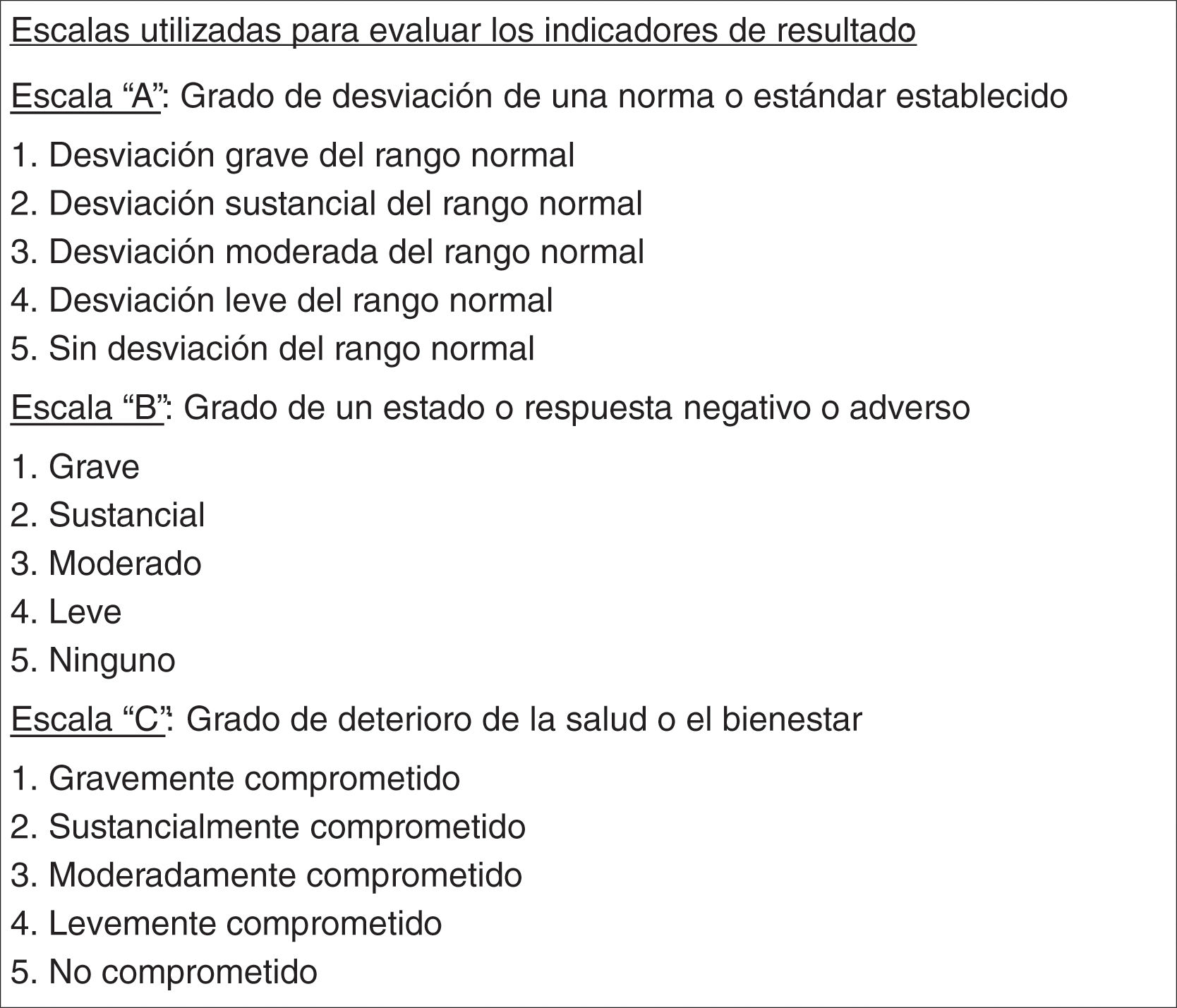
For each of the indicators, the score obtained in the initial assessment/discharge assessment is indicated, as well as the Likert scale used to evaluate said indicators. It should also be noted that, in all the selected outcome indicators, the expected score for our patient is 5.

Fig. 1 contains the different types of Likert scales used.

Figure 1.

Likert scales used to assess the outcome indicators of the care plan.9

Discussion

Nursing interventions in the immediate postoperative period were focused on the recovery of homeostasis after surgery, and achieved rapid stabilization of the patient, allowing the reduction of respiratory and haemodynamic support and the withdrawal of sedation.

In the days that followed, the precautions to avoid infections associated with invasive devices, the restoration of adequate fluid balance, for which diuretic treatment was necessary, and monitoring of possible complications, became especially relevant.

Finally, the patient was discharged afebrile, with a correct fluid balance (tolerating the oral route and with adequate diuresis), maintaining blood pressure in the appropriate range, with basal saturations within the target (SatO2: 80%–85%) and without having presented bleeding or neurological events.

The application of the proposed interventions facilitated the resolution of most of the diagnoses. However, and despite the improvement in the score of the outcome indicators, the interventions aimed at managing the arrhythmia, chest physiotherapy and neurological monitoring had to be kept active, since the target score had not been reached.

The preparation of the care plan based on a structured methodology, such as the nursing process (NP) in addition to the use of standardized languages (NANDA-I,5 NOC9 and NIC10 taxonomies), has allowed us to monitor the evolution postoperative care of our patient and direct our care based on the problems identified, ensuring comprehensive and effective care for the patient and standardizing the actions among nurses. This last aspect is key to increasing the quality and safety of care.

The selected nursing interventions were appropriate for achieving the outcome criteria, so they could serve as a reference to be included in care plans for other patients who undergo this same type of surgery, taking into account the importance of individualizing said care plans before implementing them in care practice.

In the review of the literature we found no similar studies in the paediatric field, so we were unable to compare our care planning.

Conclusions

The patient evolved satisfactorily during the 7 days that she was admitted to the unit. There was an improvement in the score of all the proposed outcome indicators and the expected score was achieved in most of them, with only 3 of the 8 prioritized diagnoses pending resolution.

The use of the NP and the standardized language in the preparation of the care plan contribute scientific rigor and quality to the care provided during our daily clinical practice and in turn facilitate the standardization of care among nurses.

Conflict of interest

The authors have no conflict of interests to declare.

Funding

The auhtors declare that no financial support was received for this research.

References
[1]
A. Rodríguez Ogando, F. Ballesteros Tejerizo.
Síndrome del corazón izquierdo hipoplásico.
Cardiología pediátrica y cardiopatías congénitas del niño y del adolescente: Volumen I, pp. 363-373
[2]
I. Salik, B. Mehta, S. Ambati.
Bidirectional Glenn procedure or hemi-Fontan. [Updated 26 September 2022].
StatPearls, StatPearls Publishing, (2023),
[3]
V. Becerra, G. Moreno, M. Althabe, A. Lenz, R. Magliola, A. Martín, et al.
Glenn bidireccional: resultados y análisis de factores de riesgo en una experiencia de 5 años.
Arch Cardiol Mex, 83 (2013), pp. 88-92
[4]
M. Gordon.
Manual of nursing diagnosis.
12a ed., Jones and Bartlett Publishers, (2014),
[5]
T. Heather Herdman, S. Kamitsuru, C. Takáo Lopes.
NANDA international: diagnósticos enfermeros. Definiciones y clasificación 2021–2023.
EDN 12ª ed., Elsevier, (2021),
[6]
Hospital Universitario Reina Sofía. Mar 2010 [updated 19 December 2022]. Manual de protocolos y procedimientos generales de enfermería. Valoración del riesgo de caídas en pediatría: Escala Humpty Dumpty [Accessed 30 December 2022]. Available from: https://www.sspa.juntadeandalucia.es/servicioandaluzdesalud/hrs3/fileadmin/user_upload/area_enfermeria/enfermeria/procedimientos/procedimientos_2012/h14_2_escala_hampty_dumpty.pdf.
[7]
P.L. Pancorbo Hidalgo, F.P. García Fernández, J.J. Soldevilla Ágreda, C. Blasco García.
Escalas e instrumentos de valoración del riesgo de desarrollar úlceras por presión.
[8]
G. Guerrero Márquez, M.C. Miguez Navarro, I. Sánchez García, M. Plana Fernández, M. Ramón Llácer.
Protocolos diagnósticos y terapéuticos en urgencias de pediatría.
[9]
S. Moorhead, E. Swanson, M. Johnson, M.L. Maas.
Clasificación de Resultados de Enfermería (NOC): Medición de Resultados en Salud.
6ª ed., Elsevier, (2018),
[10]
H.K. Butcher, G.M. Bulechek, J.M. Dochterman, C.M. Wagner.
Clasificación de Intervenciones de Enfermería (NIC).
7ª ed., Elsevier, (2018),
Copyright © 2023. Sociedad Española de Enfermería Intensiva y Unidades Coronarias (SEEIUC)
Article options
Tools