
Pediatric patients with cognitive dysfunction are at greater risk of pain than typically developing children. Pain assessment in these patients is complex and could generate uncertainty in health professionals about what the key aspects are.
AimTo determine the training needs perceived by nursing professionals regarding acute pain assessment in pediatric patients with cognitive dysfunction.
MethodsA descriptive, cross-sectional, and multicenter study was performed using a survey addressed to nursing professionals who work in pediatrics during the months of August and September 2022.
Results163 responses were obtained. Most of the professionals who responded were female (92.6%, n = 151), with a mean age of 38.98 ± 10.40 years. The most frequent work unit was the pediatric intensive care unit (PICU), in 36% (n = 58). Most of the participants reported not having previously received training on pain assessment in pediatric patients with cognitive disabilities (85.9%, n = 139). However, 70.4% (n = 114) considered it “very necessary” for the development of their work to receive specific training on this topic. Knowing how to assess acute pain in this population (85.3%, n = 139) and knowing the clinical and behavioral manifestations of pain in this type of patient (84.7%, n = 138) were the aspects that obtained higher scores.
ConclusionThis research notes more than 90% of participants consider “quite necessary” and “strong necessary” to be training in pediatric cognitive dysfunction patients pain assessment. Furthermore, work experience, academic education and to be pediatric specialist obtain statistical significance data.
Los pacientes pediátricos con disfunción cognitiva presentan mayor riesgo de padecer dolor que los menores con un desarrollo típico. La evaluación del dolor en estos pacientes es compleja y puede generar incertidumbre en los profesionales sanitarios acerca de cuáles son los aspectos clave.
ObjetivoDeterminar las necesidades formativas percibidas por los profesionales de enfermería respecto a la valoración del dolor agudo en los pacientes pediátricos con disfunción cognitiva.
MétodosSe llevó a cabo un estudio descriptivo transversal y multicéntrico empleando una encuesta dirigida a profesionales de enfermería con trabajo activo en pediatría durante los meses de agosto y septiembre de 2022.
ResultadosSe obtuvieron 163 respuestas. La mayoría de los profesionales que respondieron eran del sexo femenino (92,6%, n = 151), con una edad media de 38,98 ± 10,40 años. La unidad de trabajo más frecuente fue la de cuidados intensivos pediátricos (UCIP), en un 36% (n = 58). La mayoría de los participantes refirieron no haber recibido previamente una formación sobre la valoración del dolor en pacientes pediátricos con disfunción cognitiva (85,9%, n = 139). Sin embargo, el 70,4% (n = 114) consideraron «muy necesario» para el desarrollo de su trabajo recibir una formación específica sobre este tema. Saber cómo realizar la valoración del dolor agudo en esta población (85,3%, n = 139) y conocer las manifestaciones clínicas y conductuales ante el dolor en este tipo de pacientes (84,7%, n = 138) fueron los aspectos que obtuvieron mayores puntuaciones.
ConclusiónTras la presente investigación se constata como más del 90% de los participantes consideraron como «bastante necesario» y «muy necesario» el tener mayor formación entorno a la valoración del dolor en paciente pediátrico con disfunción cognitiva. Además, la experiencia laboral, la formación académica y el ser especialista en pediatría se correlaciona significativamente con mayores puntuaciones en algunos ítems de la encuesta.
Pain in paediatrics is still described as symptom that is under-recognised and under-treated, which is more present in paediatric patients with cognitive dysfunction due to the complexity of their assessment.
This work is a preliminary study that highlights the need for nursing professionals working in paediatrics to receive specific training on the assessment of pain in patients with cognitive dysfunction. Knowing how to assess acute pain in this population and knowing the clinical and behavioural manifestations of pain in this type of patient are the aspects that were considered a priority.
Implications of the studyThe present study reflects the need to increase education and training opportunities for nursing professionals in the assessment of pain in minors with cognitive dysfunction. This could lead to improved identification and clinical management of pain in these patients.
IntroductionThe definition of pain has changed over time. Traditionally, it was defined as “an unpleasant sensory and emotional experience associated with actual or potential tissue damage, or described in terms of such damage”.1 In later years, Amanda Williams and Kenneth Craig included cognitive and social aspects in defining it as “a distressing experience associated with actual or potential tissue damage, with sensory, emotional, cognitive and social components”.2
Currently, pain in paediatrics is still described as an under-recognised and under-treated symptom,3,4 more frequent in paediatric patients with cognitive dysfunction (CD) because of the difficulty in assessing it in these patients. Paediatric patients with CD are a heterogeneous group at higher risk for pain than typically developing children. In addition to the causes of pain that may be common in childhood and adolescence, sources of pain in children with CD include invasive medical procedures, surgeries, and symptoms related to an underlying condition.5–9
The Registered Nurses’ Association of Ontario (RNAO) state that untreated pain in infants and children places them “at risk of adverse effects and long-term health and wellness problems” (they also note that nurses play an important role in the detection of pain, as they have greater contact with the people receiving care.10 In terms of pain assessment, the RNAO lists the person’s illness or level of disability and ability to communicate among the determining factors.10
Along the same lines as the RNAO, the International Association for the Study of Pain (IASP) also points to the long-term negative effects of exposure to pain at an early age. Therefore, appropriate pain management in infants and children is considered imperative.11
In the case of paediatric patients with cognitive dysfunction, the IASP notes that they may be getting less pain relief than typically developing patients.12 This idea is reinforced by the results of several current reviews which also indicate that children and adolescents with CD often receive inadequate pain management.7,13,14 This is partly because pain assessment in this population can be difficult, especially in those with CD who do not communicate verbally. Possible causes include the lack of specific instruments to assess pain in these patients and the scarce scientific evidence supporting the assessment and management of pain in children with CD.8,13,15–18 It should be noted that although there are specific instruments to assess pain in paediatric patients with CD in other contexts, none have been found adapted and validated in Spanish. Likewise, we found no new instruments created in our context for this purpose.
Due to the lack of knowledge about the key aspects to consider in the assessment and management of pain in children and adolescents with cognitive dysfunction, health professionals may feel a lack of confidence in their skills and level of knowledge.19 This means that there is a need for further education and training in this area.19
Therefore, the aim of this study was to determine the training needs perceived by nurses to assess acute pain in paediatric patients with cognitive dysfunction, and its relationship with different socio-demographic and occupational variables.
MethodsDesign, context, and study periodA descriptive, cross-sectional, multi-centre study was conducted in seven Spanish Autonomous Communities in August and September 2022.
ParticipantsThe study population comprises nursing professionals actively working in paediatrics in any of the Autonomous Communities that met the established selection criteria. The inclusion criteria were established as follows: holding a degree or diploma in nursing, having work experience in the field of paediatric nursing (without requiring a minimum), or being in residency in paediatric nursing. No exclusion criteria were established. Non-probabilistic convenience sampling was used to select the participants.
To reach the maximum number of nurses who met the selection criteria, key informants from the various Autonomous Communities were used. These, together with the principal investigator, were sent the link to the ad hoc survey by various means (telephone messaging app. or e-mail). This way of obtaining the sample made it difficult to establish how many professionals received the questionnaire and how many answered it. At the same time, the fact that there is no official register of specialist paediatric nurses that meet the inclusion and exclusion criteria made it difficult to establish the study population and, therefore, the necessary sample size.
Data collection instrumentAn ad hoc questionnaire was designed using the Google Forms® platform, taking into account the various recommendations established in the literature for assessing and treating pain in paediatric patients with CD.6–10,20 The content was then validated with experts in the subject of the study, who qualitatively determined the need to include or eliminate the proposed items, suggesting, if necessary, the incorporation of new items. Two professionals with extensive experience in nursing research participated as experts. One is a specialist in paediatric nursing with more than 15 years of experience in the care of paediatric patients, including patients with cognitive dysfunction and critically ill paediatric patients. He is currently working as an investigator and university lecturer in mother and child nursing. Another expert member is the head of a multidisciplinary nursing research group with more than 5 years of experience in the position, including experience in questionnaire adaptation and validation. Both reviewed the questionnaire suggesting modifications to the wording of the proposed items, they did not propose eliminating any items, but they did suggest including the last item (“To know the functions, from the point of view of the autonomous nursing role, in the management of pain in the paediatric patient with cognitive dysfunction”) which had not been initially contemplated. Finally, a pilot study was conducted to assess its comprehension by sending it to 7 nursing professionals. No changes were necessary.
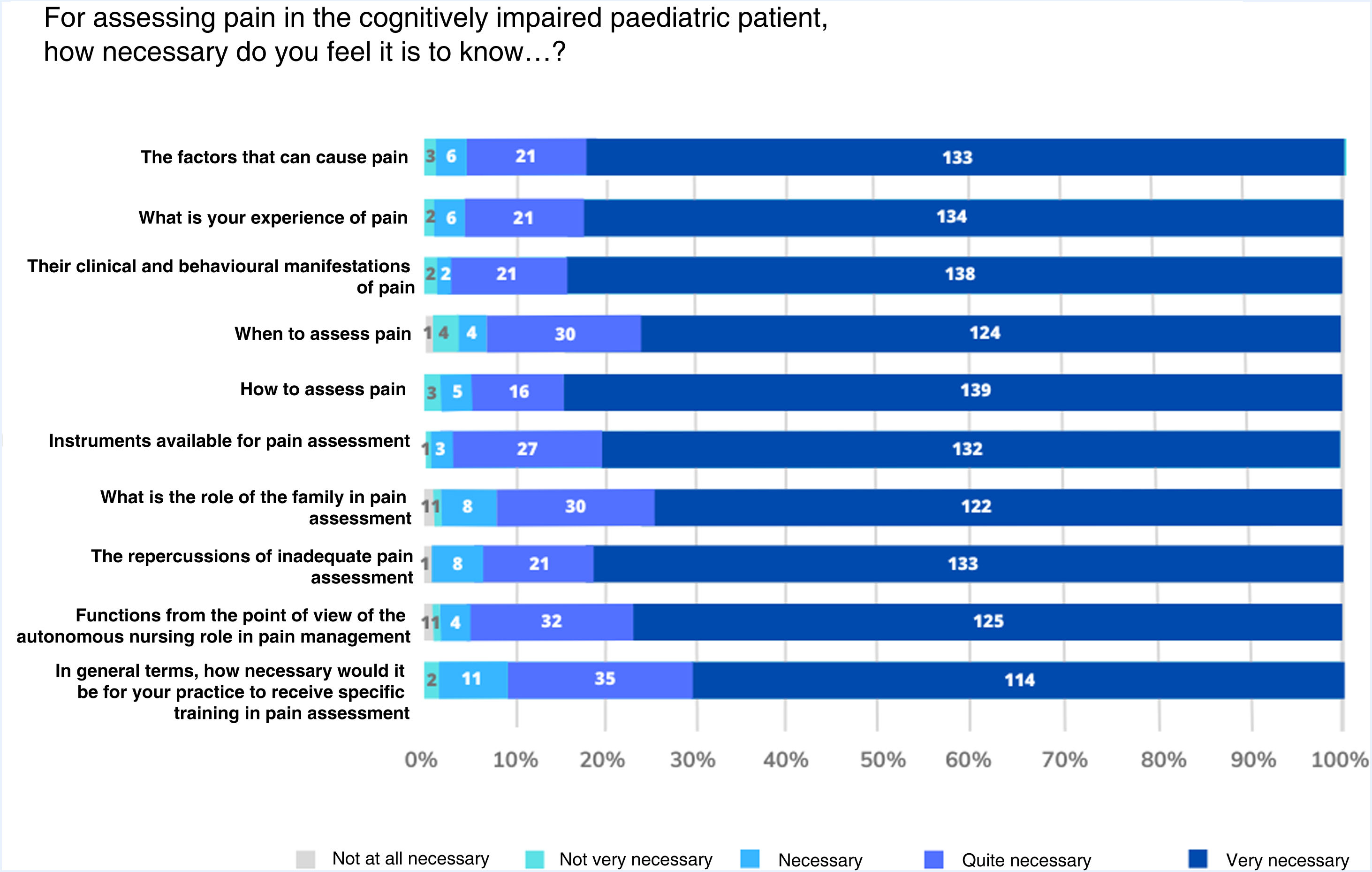
The survey was self-administered, voluntary, and anonymous, and was structured in 3 sections. The first section included a description of the study, the objectives, and request for informed consent. The second section included the various socio-demographic and occupational variables that we decided to record for the sample (sex, experience as a nurse, experience in paediatrics, level of academic training, possession of a specialist qualification, type of employment contract, unit and autonomous community of work) and, in the third section, the 10 questions related to perceived training needs (Fig. 1). The answers were scored from 1 to 5 on a Likert-type scale where 1 was “not at all necessary” and 5 “very necessary”. In addition, an open-ended question was included at the end of the third section in which participants could add other aspects on which they felt more training was needed and which were not included in the survey.
Data collection procedureA link with direct access to the survey was created with the collaboration of key nursing professionals and the principal investigator and was sent via telephone (messaging app) and email to the participants who agreed to take part in the study. The survey was also disseminated through working groups and paediatric nursing groups in the different Autonomous Communities. A period of one week was established for participants to respond to the survey, resolving any queries arising via the same means used to send the data collection document.
Data analysisThe data were analysed using IBM® SPSS v17.0 software. Quantitative variables were determined using mean and standard deviation or median and interquartile range, as appropriate, and qualitative variables using frequency tables and percentages. The variables age, type of contract, general professional experience, professional experience in paediatrics, and maximum academic training were reduced to two categories to operationalise these variables and the Mann Whitney U test was used to analyse their relationship with the perceived need for training in pain assessment in paediatric patients with CD. The Mann Whitney U test was also used to analyse the relationship between whether or not participants were paediatric nurse specialists and how they assessed their need for training in pain assessment in paediatric patients with CD. Data were considered statistically significant if they obtained a p < .05.
Ethical considerationsThe Ethics Committee on Investigation with Medicines (CEIM) of the hospital where the project PR(AMI)238/2022 is framed approved the present study. Survey responses were anonymous and considered regulation (EU) 2016/679 of the European Parliament and of the Council of 27 April 2016 on the protection of personal data and the free movement of data and Organic Law 3/2018 of 5 December on the Protection of Personal Data and Guarantee of Digital Rights. Participants were informed in writing of the objectives of the study and their consent to participate was sought.
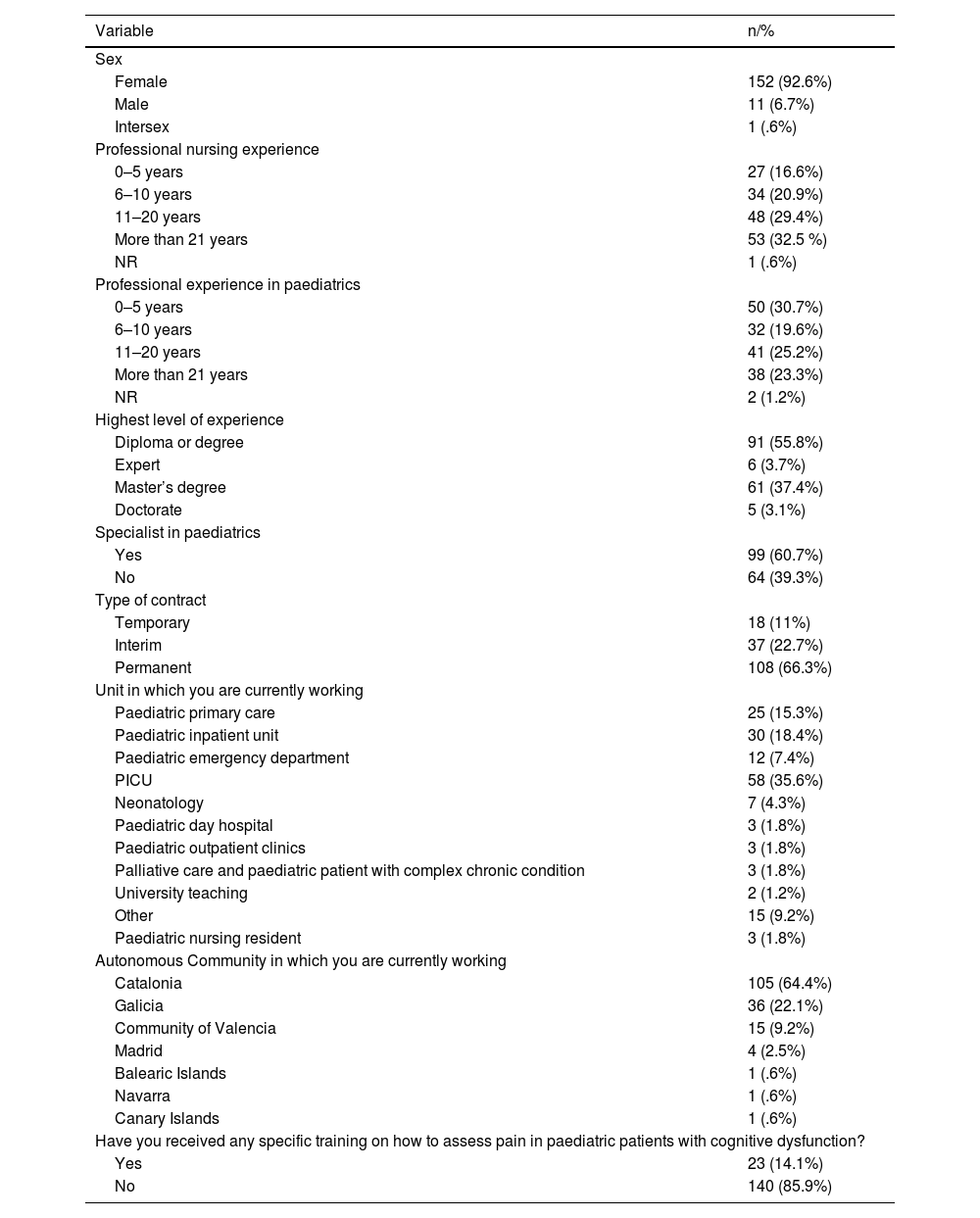
ResultsA total of 163 responses were obtained. Of the nurses who responded, 92.6% (n = 151) were female, with an average age of 38.98 ± 10.40 years. Of the participants, 30.7% (n = 50) had less than 5 years’ work experience in paediatrics and 66.3% (n = 108) had a permanent employment contract. The most frequent work unit was the paediatric intensive care unit (PICU), 36% (n = 58), followed by inpatient units 18.6% (n = 30). In terms of academic training, 55.8% (n = 91) of the respondents only had a diploma or graduate degree, and 37.4% (n = 61) also had a master’s degree. Most of the professionals surveyed (61.3%, n = 100) were specialists in paediatric nursing and the greatest distribution of responses by Autonomous Community was in Catalonia (64.4%, n = 105) and Galicia (22.1%, n = 36) (Table 1).
Sociodemographic and employment characteristics of the sample (n = 163).
| Variable | n/% |
|---|---|
| Sex | |
| Female | 152 (92.6%) |
| Male | 11 (6.7%) |
| Intersex | 1 (.6%) |
| Professional nursing experience | |
| 0–5 years | 27 (16.6%) |
| 6–10 years | 34 (20.9%) |
| 11–20 years | 48 (29.4%) |
| More than 21 years | 53 (32.5 %) |
| NR | 1 (.6%) |
| Professional experience in paediatrics | |
| 0–5 years | 50 (30.7%) |
| 6–10 years | 32 (19.6%) |
| 11–20 years | 41 (25.2%) |
| More than 21 years | 38 (23.3%) |
| NR | 2 (1.2%) |
| Highest level of experience | |
| Diploma or degree | 91 (55.8%) |
| Expert | 6 (3.7%) |
| Master’s degree | 61 (37.4%) |
| Doctorate | 5 (3.1%) |
| Specialist in paediatrics | |
| Yes | 99 (60.7%) |
| No | 64 (39.3%) |
| Type of contract | |
| Temporary | 18 (11%) |
| Interim | 37 (22.7%) |
| Permanent | 108 (66.3%) |
| Unit in which you are currently working | |
| Paediatric primary care | 25 (15.3%) |
| Paediatric inpatient unit | 30 (18.4%) |
| Paediatric emergency department | 12 (7.4%) |
| PICU | 58 (35.6%) |
| Neonatology | 7 (4.3%) |
| Paediatric day hospital | 3 (1.8%) |
| Paediatric outpatient clinics | 3 (1.8%) |
| Palliative care and paediatric patient with complex chronic condition | 3 (1.8%) |
| University teaching | 2 (1.2%) |
| Other | 15 (9.2%) |
| Paediatric nursing resident | 3 (1.8%) |
| Autonomous Community in which you are currently working | |
| Catalonia | 105 (64.4%) |
| Galicia | 36 (22.1%) |
| Community of Valencia | 15 (9.2%) |
| Madrid | 4 (2.5%) |
| Balearic Islands | 1 (.6%) |
| Navarra | 1 (.6%) |
| Canary Islands | 1 (.6%) |
| Have you received any specific training on how to assess pain in paediatric patients with cognitive dysfunction? | |
| Yes | 23 (14.1%) |
| No | 140 (85.9%) |
NR: no response.
Of the respondents, 85.9% (n = 140) reported not having received any specific training during their professional career on how to assess pain in paediatric patients with CD. However, 70.4% (n = 114) considered it “very necessary” for their nursing practice to receive specific training on this aspect.
Knowing how to assess acute pain in this population (85.3%, n = 139) and knowing the clinical and behavioural manifestations of pain in this type of patient (84.7%, n = 138) were the factors that obtained the highest scores and, therefore, were determined as the most necessary to include in a training activity.
In addition, as a whole the participants considered it “quite necessary” and “very necessary” to have more training in: knowing the factors that can generate pain in paediatric patients with CD (94.5%); knowing what their experience of pain is like (95.1%); knowing their clinical and behavioural manifestations of pain (97.6%); knowing when to assess pain in paediatric patients with CD (94.5%); how to assess acute pain in this population (95.1%); knowing the instruments or tools available in our context for the assessment of pain in these patients (97.6%); knowing the role of the family in the assessment of acute pain in the paediatric patient with CD (93.2%); identifying the clinical repercussions that an inadequate assessment of pain may have (94.5%), and knowing the functions, from the point of view of the autonomous nursing role, in the management of pain in these patients (96.3%).
Finally, the main aspects that the nurses added to consider when establishing training related to pain in paediatric patients with CD were: considering the cultural and religious aspects of the family in the perception, assessment, and management of pain; training related to how to improve communication between professionals and family members, and how to improve communication strategies with the child with CD, and training on how the child’s degree of disability can influence their experience of pain and its manifestations (Fig. 1).
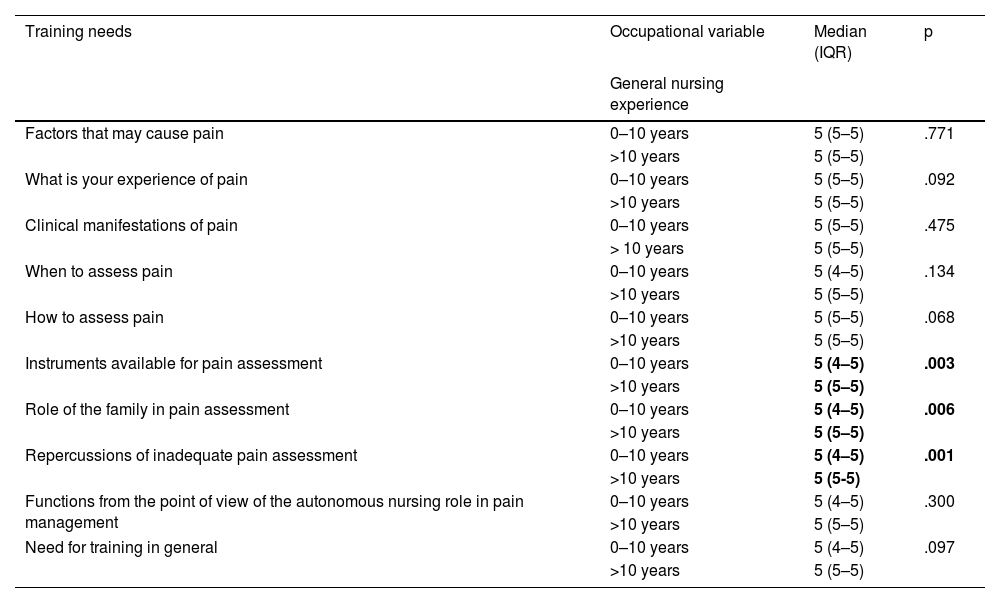
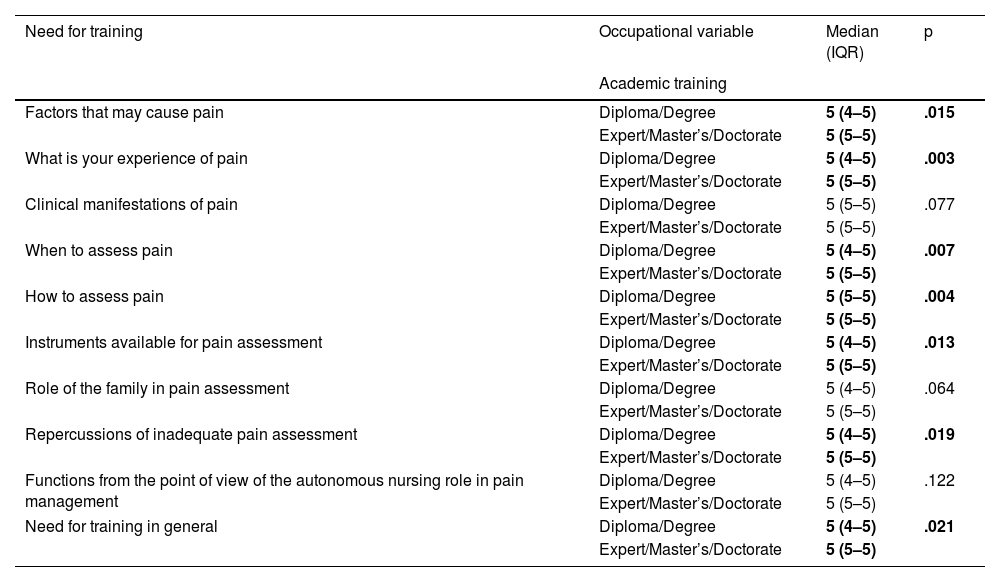
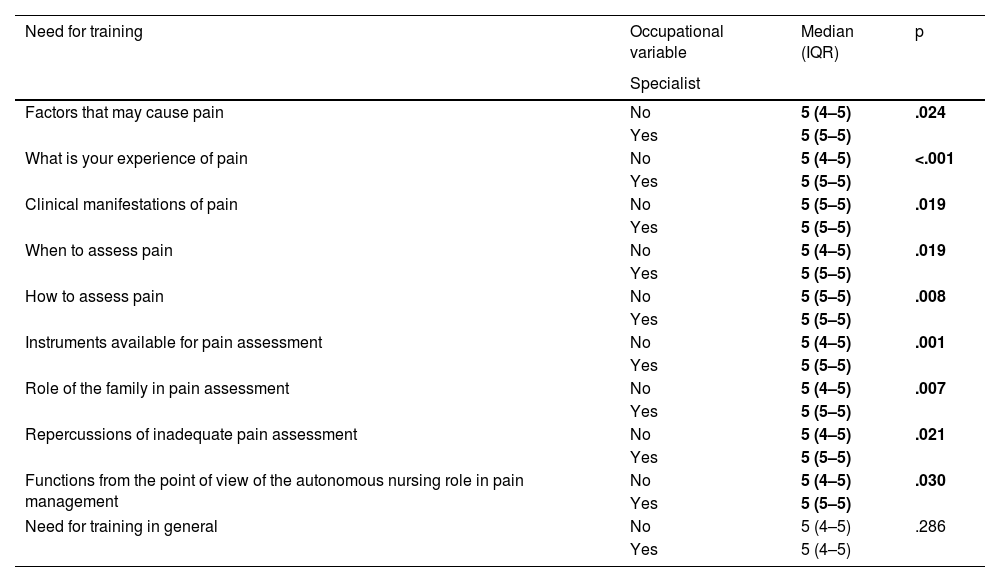
A statistically significant relationship was found when comparing the professional nursing experience in years variable and the survey items regarding knowledge of the tools available for pain assessment in paediatric patients with CD (p = .003) and the repercussions of inadequate pain assessment in this population (p = .001) and the role of the family in pain assessment (p = .006) (Table 2). The maximum academic training variable was statistically significantly related to most of the survey items (Table 3), as was the variable of being a paediatric nurse specialist or not, which was also significantly related to all the survey items except the need for training in pain assessment in paediatric patients with CD (p = .286) (Table 4). With regard to the other variables, a statistically significant relationship was only found between the survey items referring to the role of the family in pain assessment and the variable professional experience in paediatric nursing (p = .015) and the need for training in pain assessment in paediatric patients with CD and the type of contract (p = .041).
Perceived training needs and relationship to general experience of nurses (n = 163).
| Training needs | Occupational variable | Median (IQR) | p |
|---|---|---|---|
| General nursing experience | |||
| Factors that may cause pain | 0–10 years | 5 (5–5) | .771 |
| >10 years | 5 (5–5) | ||
| What is your experience of pain | 0–10 years | 5 (5–5) | .092 |
| >10 years | 5 (5–5) | ||
| Clinical manifestations of pain | 0–10 years | 5 (5–5) | .475 |
| > 10 years | 5 (5–5) | ||
| When to assess pain | 0–10 years | 5 (4–5) | .134 |
| >10 years | 5 (5–5) | ||
| How to assess pain | 0–10 years | 5 (5–5) | .068 |
| >10 years | 5 (5–5) | ||
| Instruments available for pain assessment | 0–10 years | 5 (4–5) | .003 |
| >10 years | 5 (5–5) | ||
| Role of the family in pain assessment | 0–10 years | 5 (4–5) | .006 |
| >10 years | 5 (5–5) | ||
| Repercussions of inadequate pain assessment | 0–10 years | 5 (4–5) | .001 |
| >10 years | 5 (5-5) | ||
| Functions from the point of view of the autonomous nursing role in pain management | 0–10 years | 5 (4–5) | .300 |
| >10 years | 5 (5–5) | ||
| Need for training in general | 0–10 years | 5 (4–5) | .097 |
| >10 years | 5 (5–5) |
IQR: interquartile range.
Statistically significant data in bold.
Perceived training needs and relationship with occupational training of nurses (n = 163).
| Need for training | Occupational variable | Median (IQR) | p |
|---|---|---|---|
| Academic training | |||
| Factors that may cause pain | Diploma/Degree | 5 (4–5) | .015 |
| Expert/Master’s/Doctorate | 5 (5–5) | ||
| What is your experience of pain | Diploma/Degree | 5 (4–5) | .003 |
| Expert/Master’s/Doctorate | 5 (5–5) | ||
| Clinical manifestations of pain | Diploma/Degree | 5 (5–5) | .077 |
| Expert/Master’s/Doctorate | 5 (5–5) | ||
| When to assess pain | Diploma/Degree | 5 (4–5) | .007 |
| Expert/Master’s/Doctorate | 5 (5–5) | ||
| How to assess pain | Diploma/Degree | 5 (5–5) | .004 |
| Expert/Master’s/Doctorate | 5 (5–5) | ||
| Instruments available for pain assessment | Diploma/Degree | 5 (4–5) | .013 |
| Expert/Master’s/Doctorate | 5 (5–5) | ||
| Role of the family in pain assessment | Diploma/Degree | 5 (4–5) | .064 |
| Expert/Master’s/Doctorate | 5 (5–5) | ||
| Repercussions of inadequate pain assessment | Diploma/Degree | 5 (4–5) | .019 |
| Expert/Master’s/Doctorate | 5 (5–5) | ||
| Functions from the point of view of the autonomous nursing role in pain management | Diploma/Degree | 5 (4–5) | .122 |
| Expert/Master’s/Doctorate | 5 (5–5) | ||
| Need for training in general | Diploma/Degree | 5 (4–5) | .021 |
| Expert/Master’s/Doctorate | 5 (5–5) |
IQR: interquartile range.
Statistically significant data in bold.
Perceived training needs and relationship with paediatric nursing specialty (n = 163).
| Need for training | Occupational variable | Median (IQR) | p |
|---|---|---|---|
| Specialist | |||
| Factors that may cause pain | No | 5 (4–5) | .024 |
| Yes | 5 (5–5) | ||
| What is your experience of pain | No | 5 (4–5) | <.001 |
| Yes | 5 (5–5) | ||
| Clinical manifestations of pain | No | 5 (5–5) | .019 |
| Yes | 5 (5–5) | ||
| When to assess pain | No | 5 (4–5) | .019 |
| Yes | 5 (5–5) | ||
| How to assess pain | No | 5 (5–5) | .008 |
| Yes | 5 (5–5) | ||
| Instruments available for pain assessment | No | 5 (4–5) | .001 |
| Yes | 5 (5–5) | ||
| Role of the family in pain assessment | No | 5 (4–5) | .007 |
| Yes | 5 (5–5) | ||
| Repercussions of inadequate pain assessment | No | 5 (4–5) | .021 |
| Yes | 5 (5–5) | ||
| Functions from the point of view of the autonomous nursing role in pain management | No | 5 (4–5) | .030 |
| Yes | 5 (5–5) | ||
| Need for training in general | No | 5 (4–5) | .286 |
| Yes | 5 (4–5) |
IQR: interquartile range.
Statistically significant data in bold.
On the other hand, no statistically significant relationship was found when relating the variables of age and having received previous training on the subject with the assessment of training needs in the assessment of pain in paediatric patients with CD.
DiscussionPain management in paediatrics is an area where there remains much room for improvement. The recent study by Mozo del Castillo et al.4 states that this symptom is often underdiagnosed and undertreated, highlighting the lack of knowledge of paediatricians as one of the main barriers to adequate management. Along the same lines, other studies focusing on the knowledge of nurses21,22 stress the need to increase training on paediatric pain for nurses caring for hospitalised children to improve its assessment and management.
If pain assessment in paediatrics is problematic for health professionals, in paediatric patients with CD it becomes more complex and is often complicated by the communication difficulties of these children and adolescents. Therefore, pain management in these patients is often inadequate, as it requires specific skills and knowledge on the part of professionals, and the ability to use appropriate pain assessment scales.6,13 This is confirmed in the present study as most of the items in the training needs survey are assessed as “very necessary”.
In this sense, Malviya et al.23 in 2005 revealed the lack of training and knowledge of healthcare professionals regarding pain in this population. In their study, a significant number of nurses and physicians felt that they knew very little about pain assessment and management in children with CD. In addition, 88% of the respondents believed that inadequate training prevented them from managing pain effectively in this population and reported that they would attend continuing education courses on paediatric pain. Other studies have recently provided similar results. In the study conducted by Petigas et al.24 in 2021, 90% of the paediatricians surveyed felt that pain in paediatric patients with CD is not adequately assessed and treated, highlighting as main barriers the lack of knowledge about children with disabilities and the lack of experience of professionals. Similarly, the results of our study show that 92% of the nursing professionals surveyed consider it “very necessary” (70.4%) or “quite necessary” (21.6%) for their professional practice to receive specific training on the assessment of acute pain in paediatric patients with CD.
Our results contrast with the opinion of authors such as Bussotti et al.25 who point out that inefficiency in clinical practice in terms of pain assessment in vulnerable populations is caused by the lack of qualified professionals interested in the subject. Analysing the above and the results obtained, it does not appear that inefficiency in the assessment of pain in paediatric patients with CD is due to a lack of interest in the subject on the part of professionals, since 70.4% (n = 114) of those surveyed considered it “very necessary” for their clinical practice to receive specific training on this aspect. What does point to a deficit in their training is that, in our research study, the majority of nursing professionals (85.9%) reported not having received any specific training on how to assess pain in paediatric patients with CD throughout their professional career.
Along the same lines as our results, where the nurses surveyed consider it desirable to receive more training on the subject, a study conducted by Carter et al.19 shows that the deficits in knowledge and skills about the assessment and management of pain in children with CD induce a feeling of uncertainty in the health professionals who work with them. This uncertainty about pain-related clinical decision-making in paediatric patients with CD tends to erode the confidence of health professionals working with this population.
The results of the present research study seem to suggest that the perceived need for training in pain assessment in paediatric patients with CD may be mainly related to variables such as professional experience, level of education, and specialisation in paediatric nursing. However, we found no other studies with which to compare these findings. We found only one study that analysed the knowledge of nursing professionals on pain in the general paediatric population and concluded that there were no significant differences in the level of knowledge according to age, length of professional experience, length of experience as a paediatric nurse and level of education and, therefore, there was a generalised training deficit in this area.21 Therefore, further research is needed to investigate this possible relationship between the socio-demographic and occupational variables of the professionals and the knowledge deficit in the assessment of pain in paediatric patients with CD.
Finally, it is important to stress that it seems essential to expand education and training opportunities for pain assessment in paediatric patients with CD to optimise their clinical management. Furthermore, as described in some studies26,27 to improve pain assessment and management in this patient group, a change in practice requires a process of education, auditing, and reinforcement to ensure sustainability.
A limitation of this study is that the scarcity of scientific literature on the subject of the study may have affected the identification of key aspects on pain assessment in CD patients included in the survey. In an attempt to overcome this problem, the last open-ended question was included in which respondents could suggest other aspects that had not been considered by the authors. We can also consider as limitations the fact that the questionnaire used in the survey is not a validated questionnaire, the heterogeneity of the population responding to the survey, contemplating different areas of work with paediatric patients, and that we could not establish the sample calculation, because it was not possible to determine the total number of surveys sent and answered.
ConclusionThe present research study confirms that more than 90% of the participants considered more training in the assessment of pain in paediatric patients with cognitive dysfunction “quite necessary” and “very necessary”. In addition, work experience, academic training, and being a paediatric specialist correlated significantly with higher scores on some items of the survey.
All these findings and the lack of scientific literature on the training of nursing professionals in the assessment of pain in paediatric patients with cognitive dysfunction demonstrate the need for further research in this area and in the adaptation and validation of instruments to assess pain in this group of patients.
Given that nursing professionals are motivated to broaden their knowledge of pain assessment in paediatric patients with CD, it is essential to increase training and capacity building opportunities in this area through the implementation of training activities and regularly repeating them within the healthcare centres themselves. This could lead to an improvement in the identification and clinical management of pain in paediatric patients with cognitive dysfunction.
FundingThis work has been totally or partially financed by the Fundación Enfermería y Sociedad of the Colegio Oficial de Enfermeros y Enfermeras de Barcelona in the framework of the Ayudas competitivas a la Investigación Enfermera (PR-536/2022).
Conflict of interestsThe authors have no conflict of interests to declare.
The authors would like to sincerely thank all the nurses and the Colegio Oficial de Enfermeros y Enfermeras de Barcelona for their collaboration.