
This study aims to describe the implementation of the standard methodology for information transfer in the labour ward and Intermediate Obstetric Care Unit and to identify the impact of this implementation on the factors that act as facilitators and barriers in the procedure.
MethodQuasi-experimental pretest-posttest study without a control group in an Intermediate Obstetric Care Unit and delivery room of the Maternal-Fetal Medicine Service of a tertiary hospital in Barcelona. Healthcare staff self-completed an ad hoc questionnaire before and after implementing the standardised IDEAS methodology in the service during 2019 and 2020. Personal self-perception in the information transfer procedure was assessed. The Wilcoxon pairwise test was used for comparison before and after.
ResultsThe use of a standardised methodology has shown an impact on improving the transmission of information. Significant differences were detected before and after the intervention in the following dimensions: location, people involved, time period of the procedure, structured, orderly and clear, and sufficient time for questions (p < 0.001); while no differences were observed in: transmission to the referring professional, well-defined actions, and completion of a summary.
ConclusionsThere are factors such as structural and organisational aspects and lack of time that hinder effective communication and therefore act as barriers to the transfer of information. The implementation of a methodology with the health professionals involved, the time and the appropriate space allows for the improvement of communication aspects in the multiprofessional team and, therefore, patient safety.
Este estudio tiene como objetivo describir la implementación de la metodología estandarizada en la transferencia de información en sala de partos y Unidad de Cuidados Obstétricos Intermedios en un hospital de tercer nivel de Barcelona e identificar el impacto de esta implementación en los factores que actúan como facilitadores y barreras en el procedimiento.
MétodoEstudio cuasi experimental tipo pretest-postest sin grupo control en la Unidad de Cuidados Obstétricos Intermedios y sala de partos del Servicio de Medicina Materno Fetal de un hospital de tercer nivel de Barcelona. El personal sanitario auto cumplimentó un cuestionario adhoc antes y después de implementar la metodología estandarizada IDEAS en el servicio durante 2019 y 2020. Se evaluó la autopercepción personal en el procedimiento de transferencia de información. El test de Wilcoxon por pares se utilizó para la comparación antes y después.
ResultadosEl uso de una metodología estandarizada ha mostrado un impacto en la mejora de la transmisión de la información. Se detectaron diferencias significativas antes y después de la intervención en las siguientes dimensiones: ubicación, personas implicadas, periodo de tiempo del procedimiento, estructurada ordenada y clara y tiempo suficiente para preguntas (p < 0.001); mientras que no se observaron diferencias en: transmisión al profesional referente, actuaciones bien definidas y realización de un resumen.
ConclusionesExisten factores como, aspectos estructurales, organizativos y falta de tiempo que dificultan la comunicación efectiva, por tanto, actúan como barreras en la transferencia de información. La implementación de una metodología con las personas implicadas, el tiempo y el espacio adecuado permite mejorar aspectos en la comunicación en el equipo multiprofesional y, por tanto, la seguridad del paciente.
Implications of the study
This study shows the opportunity for improvement in the definition of actions in interdisciplinary information transfer. In clinical practice, it is important to make standardisation more flexible so that it contains the structure with the important clinical information for the persons involved with the minimum necessary information.
What is known?
There are different methods of standardising the process for information transfer (SBAR, ISOBAR, I-PASS, and IDEAS). Standardisation of the procedure minimises the variability of the message and helps to reduce the number of care errors.
What it contributes?
The use of a standardised methodology in interdisciplinary information transfer helps healthcare professionals perceive that communication aspects are improving in the delivery room and intermediate obstetric care unit.
Information transfer (IT) is defined as the dynamic communication between healthcare professionals (HCP) in which relevant clinical information about a patient1 is transmitted and responsibility for care is passed on to another professional or healthcare group.1 It is a high-risk process because it takes place on multiple occasions throughout the continuum of care.2 Errors in communication between professionals are the most frequent factors resulting in adverse events.3 Several bodies3–7 state that, in patient-centred care, the development and implementation of an IT process is necessary for effective communication between HCP and to improve patient safety. Standardising the procedure will minimise variability of the message, and thus raise awareness among healthcare staff to the situation of the person and reduce the number of care errors or adverse events by up to 30%. Organisations should implement interventions to improve patient safety and report recommendations or changes to the professional team involved.
In the delivery room and intermediate obstetric care units (IOCU), IT must be structured to ensure that continuity of care and information is complete, accurate, and efficient.8 A number of methods have been developed to improve clinical safety (SBAR; ISOBAR, I-PASS, and IDEAS) which, by means of a methodical list of contents, make it possible to structure relevant clinical IT between HCP during hand-off processes,9 however, because the tools have not been validated we cannot recommend one over the others.10,11
In relation to the above, we chose to implement the IDEAS methodology in the delivery room and the IOCU of a tertiary care hospital in Barcelona because it presents a simple and easy-to-recall alternative to guarantee continuity of care in a logical and structured manner. A series of guidelines for correct communication are recommended.12
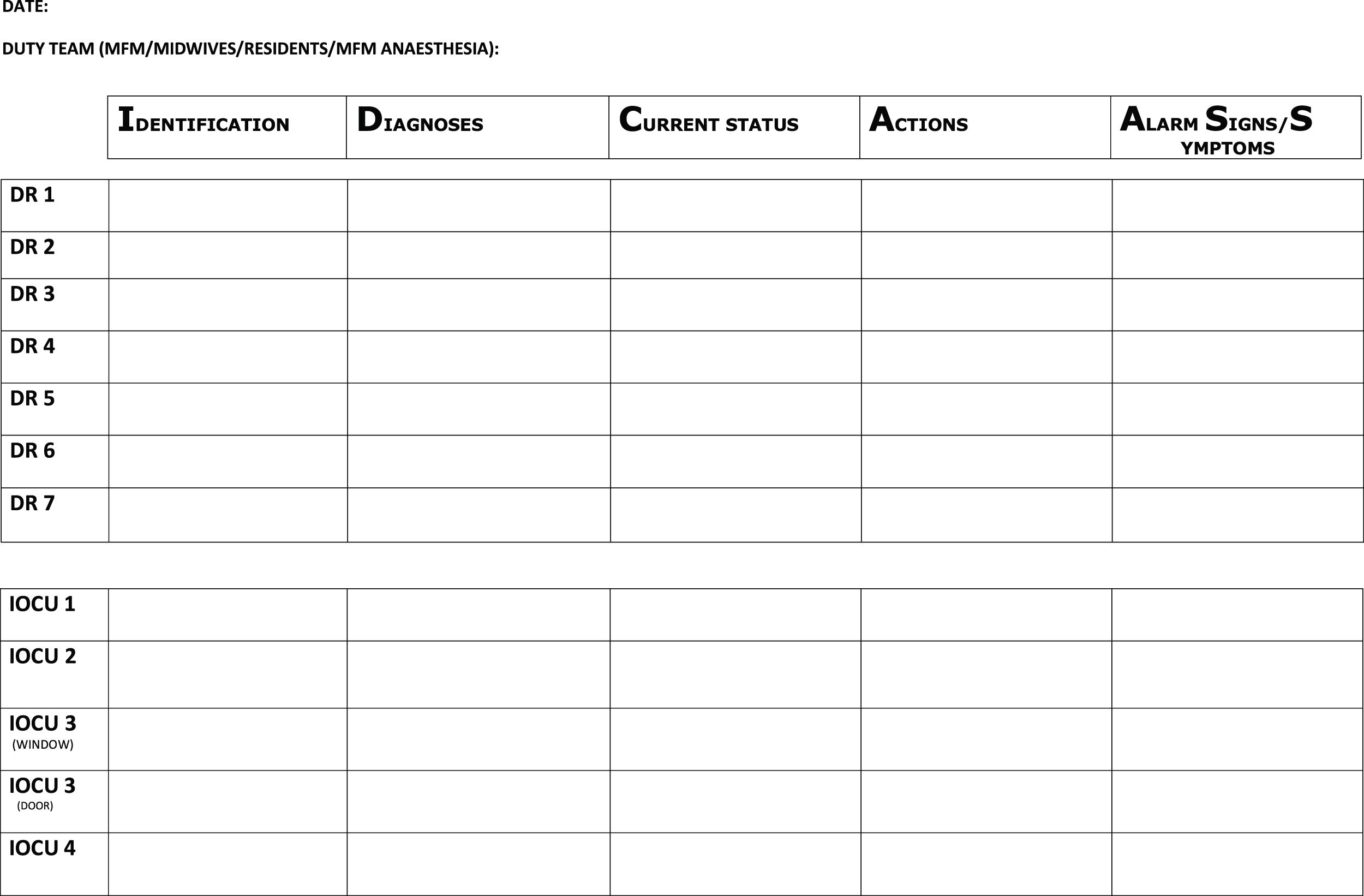
The following order in the IT procedure is important: (I) identification, identify the responsible HCP and the person; (D) diagnosis, define the problem and diagnosis; (E) current status, describe symptoms and signs, pain status, and emotional state; (A) actions, define therapeutic and diagnostic measures completed and pending, following an action plan; (S) alarm signs and symptoms, summarise the most important aspects, including allergies. Then check the care recipient's understanding of the key elements and record all information in writing.
There are few studies that evaluate the implementation of a standardised IT methodology in the delivery room and IOCU. The main objective of this study is to describe the implementation of a standardised IT methodology in the delivery room and IOCU and to identify the impact of this implementation on the factors perceived by the HCP as facilitators and barriers to the procedure.
MethodWe conducted a quasi-experimental pretest-post-test study without a control group.
The setting was the delivery room and IOCU of the maternal-foetal medicine service of a tertiary care hospital in Barcelona, which has 7 delivery rooms, two operating theatres, and 4 rooms for patients requiring intermediate obstetric care.
The study period was from October 2019 to December 2020.
The study population consisted of the HCP involved in the care of pregnant women and postpartum women in the delivery room and the IOCU, 161 people.
The study participants were selected by non-probabilistic convenience sampling according to selection criteria. The sample included HCP working in the delivery room and the IOCU in different work shifts.
The main study variables are:
- -
Socio-demographic variables: sex (female/male/not defined), age (<25, 25–30, 31–35, 36–40, 41–45, 46–50, >51 years).
- -
Variables related to professional data: professional category (midwife, IOCU nurse IOCU/obstetric unit, maternal-foetal medicine specialist (MFM), anaesthesiology specialist, auxiliary nursing care technician (TCAE), health care assistant, resident internal nurse (EIR)/student midwife, resident internal doctor in maternal-foetal medicine, resident internal doctor in anaesthesiology, others) and years of experience in delivery room/IOCU (<1 year, >1–2 years, >2–5 years, >5–10 years, >10 years).
- -
Variables related to personal perception of the IT procedure (location, people involved, time, message to the referring professional, structure, defined actions, summary, time for suggestions) determined using a scale: strongly agree, disagree, indifferent, agree, strongly agree.
Prior to the intervention, IT took place without a joint standardised methodology, without interdisciplinary communication in morning, afternoon, and night shifts and without an established location.
Ten trainers (people from the safety centre, delivery room referring professionals, and coordinators) were trained in the methodology with practical cases for 2 h, and they then trained the rest of the HCP after a dissemination session.
An IDEAS methodology document was developed and placed in a single location in the delivery room to standardise IT (Fig. 1). An office with greater privacy and less noise and interference was set up, with interdisciplinary participation.
Data collectionAn ad hoc anonymous questionnaire was designed and completed by the participants using Google Forms®. The study was disseminated via corporate e-mail. The questionnaire consisted of 12 items:
- -
Socio-demographic data: sex, age.
- -
Professional data: professional category, years of professional experience.
- -
Level of agreement/disagreement related to change of shift (strongly disagree/ disagree/ indifferent/ agree/ strongly agree):
▪IT takes place in an appropriate location
▪IT takes place with all the people involved
▪IT takes place in an appropriate time period
▪The message is transmitted to the professional responsible for continuity of care
▪Information transfer is structured, orderly, and clear
▪Actions are well defined
▪A summary is made
▪There is enough time
The questionnaire was sent to all the HCP involved in delivery room and IOCU care. The first period for sending out the questionnaires and collecting responses was the last quarter of 2019.
The IDEAS methodology for IT was implemented and the same questionnaire was sent out in the last quarter of 2020 to evaluate the intervention.
Data analysisDescriptive statistics were used to describe the sample. Frequencies and percentages were calculated for each of the categories to analyse the qualitative variables. For the analysis of quantitative variables, the measure of central tendency and dispersion was expressed as mean, standard deviation (SD), and range. The Wilcoxon pairwise test was used for the before-after comparison, with an estimated confidence interval of 95%, and a p-value <.05 was considered statistically significant.
We used Microsoft Excel for Mac v16.47.1. and SPSS Statistics v26.0.0.1. for the statistical analysis.
Ethical considerationsThe study was conducted with HCP in accordance with current regulations and the Declaration of Helsinki. Permission was sought from the head of the hospital’s maternal-foetal medicine service. The study met the criteria for describing operational improvement activities and no health data were collected, being exempt from ethical review. Data collection respected anonymity, the right to privacy of individuals, and the voluntary participation of the HCP. The study participants were informed and asked for their informed consent. The data were treated confidentially, complying with the Organic Law 3/2018, of 5 December, on Personal Data Protection and Guarantee of Digital Rights.13
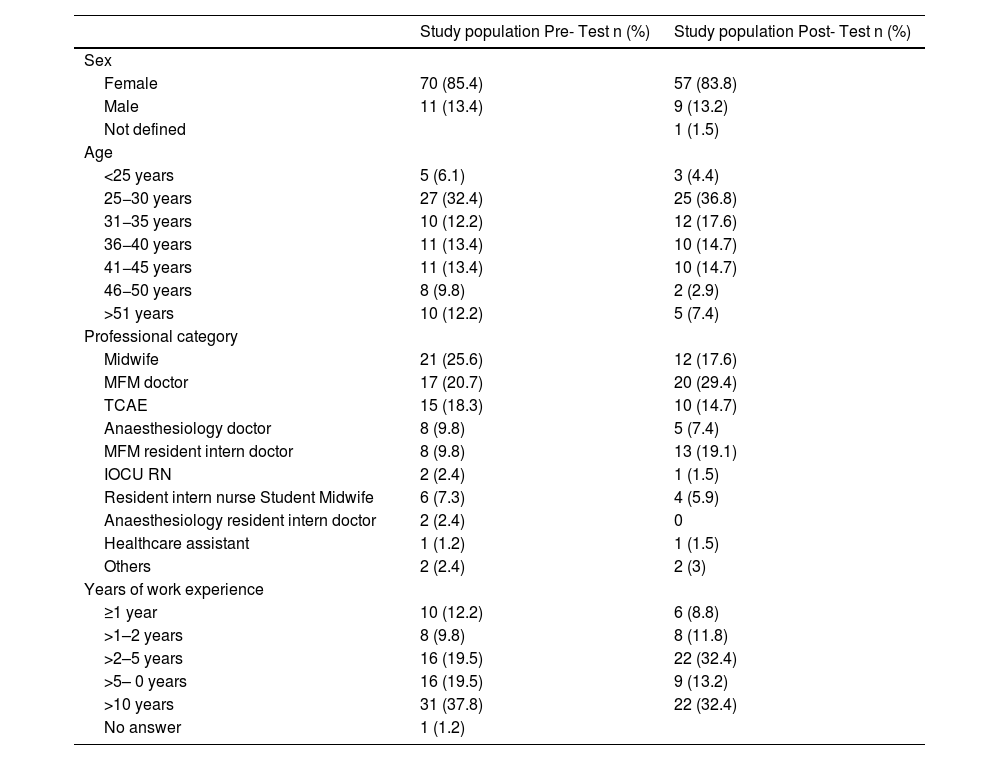
ResultsSelf-perception of healthcare workers pre-and post-implementation of the IDEAS methodologyMost of the study participants were women between the ages of 25 and 30. The socio-demographic characteristics, professional category, and length of work experience of the participants are described in Table 1.
Sociodemographic characteristics, professional category, and length of experience of healthcare personnel.
| Study population Pre- Test n (%) | Study population Post- Test n (%) | |
|---|---|---|
| Sex | ||
| Female | 70 (85.4) | 57 (83.8) |
| Male | 11 (13.4) | 9 (13.2) |
| Not defined | 1 (1.5) | |
| Age | ||
| <25 years | 5 (6.1) | 3 (4.4) |
| 25−30 years | 27 (32.4) | 25 (36.8) |
| 31−35 years | 10 (12.2) | 12 (17.6) |
| 36−40 years | 11 (13.4) | 10 (14.7) |
| 41−45 years | 11 (13.4) | 10 (14.7) |
| 46−50 years | 8 (9.8) | 2 (2.9) |
| >51 years | 10 (12.2) | 5 (7.4) |
| Professional category | ||
| Midwife | 21 (25.6) | 12 (17.6) |
| MFM doctor | 17 (20.7) | 20 (29.4) |
| TCAE | 15 (18.3) | 10 (14.7) |
| Anaesthesiology doctor | 8 (9.8) | 5 (7.4) |
| MFM resident intern doctor | 8 (9.8) | 13 (19.1) |
| IOCU RN | 2 (2.4) | 1 (1.5) |
| Resident intern nurse Student Midwife | 6 (7.3) | 4 (5.9) |
| Anaesthesiology resident intern doctor | 2 (2.4) | 0 |
| Healthcare assistant | 1 (1.2) | 1 (1.5) |
| Others | 2 (2.4) | 2 (3) |
| Years of work experience | ||
| ≥1 year | 10 (12.2) | 6 (8.8) |
| >1–2 years | 8 (9.8) | 8 (11.8) |
| >2–5 years | 16 (19.5) | 22 (32.4) |
| >5– 0 years | 16 (19.5) | 9 (13.2) |
| >10 years | 31 (37.8) | 22 (32.4) |
| No answer | 1 (1.2) |
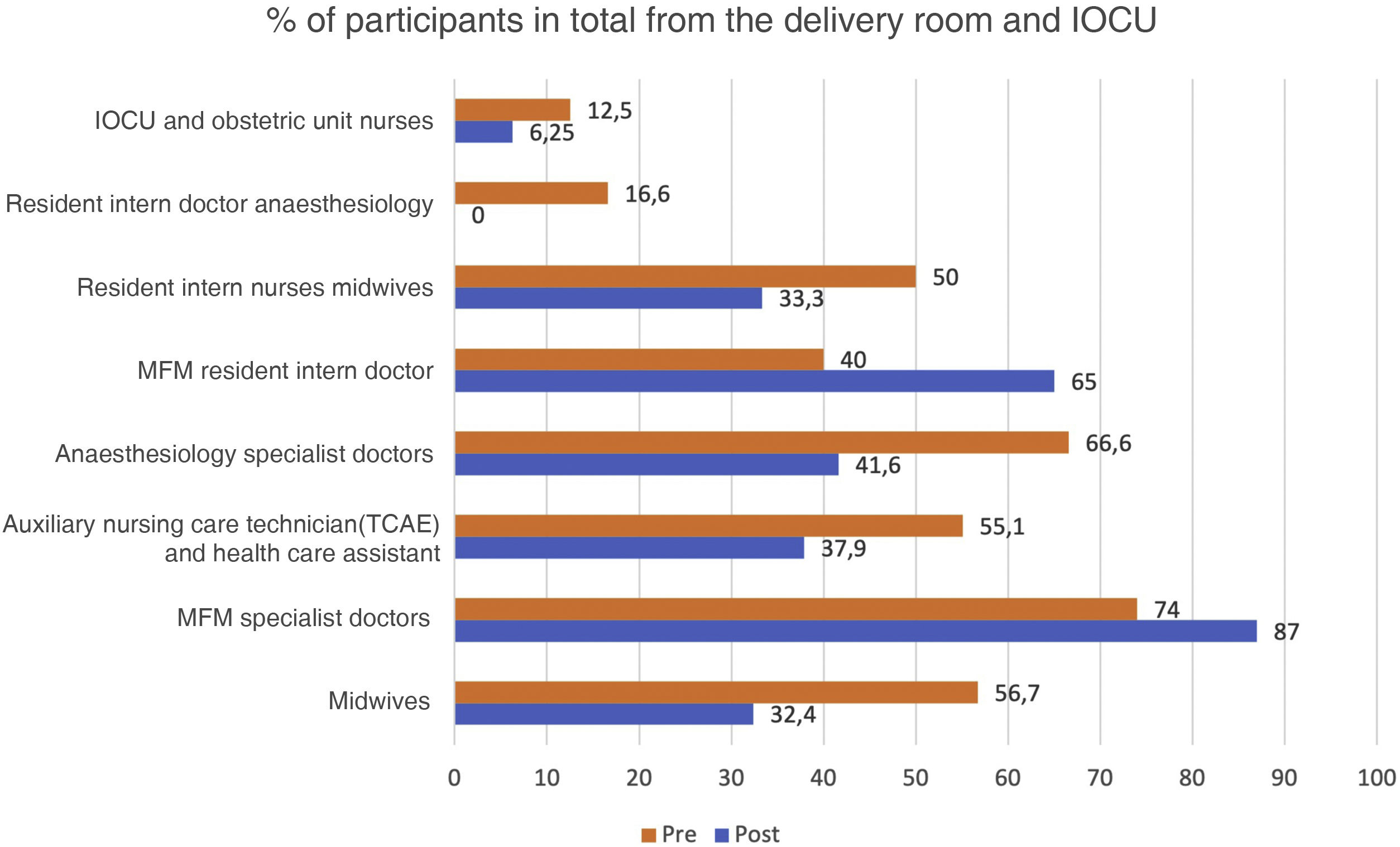
Before the intervention, 82 HCP (9 categories) participated: MFM doctors, anaesthesiology doctors, resident doctors of both specialties, midwives, obstetric unit nurses, resident nurses, TCAE, and others. After the intervention, 68 responses were obtained from the same MFM service (17% subject loss, n = 14).
Fig. 2 shows the percentage of participants before and after the intervention in relation to the total HCP in the delivery room and IOCU.
Implementation in interdisciplinary IT was 100% in all shifts.
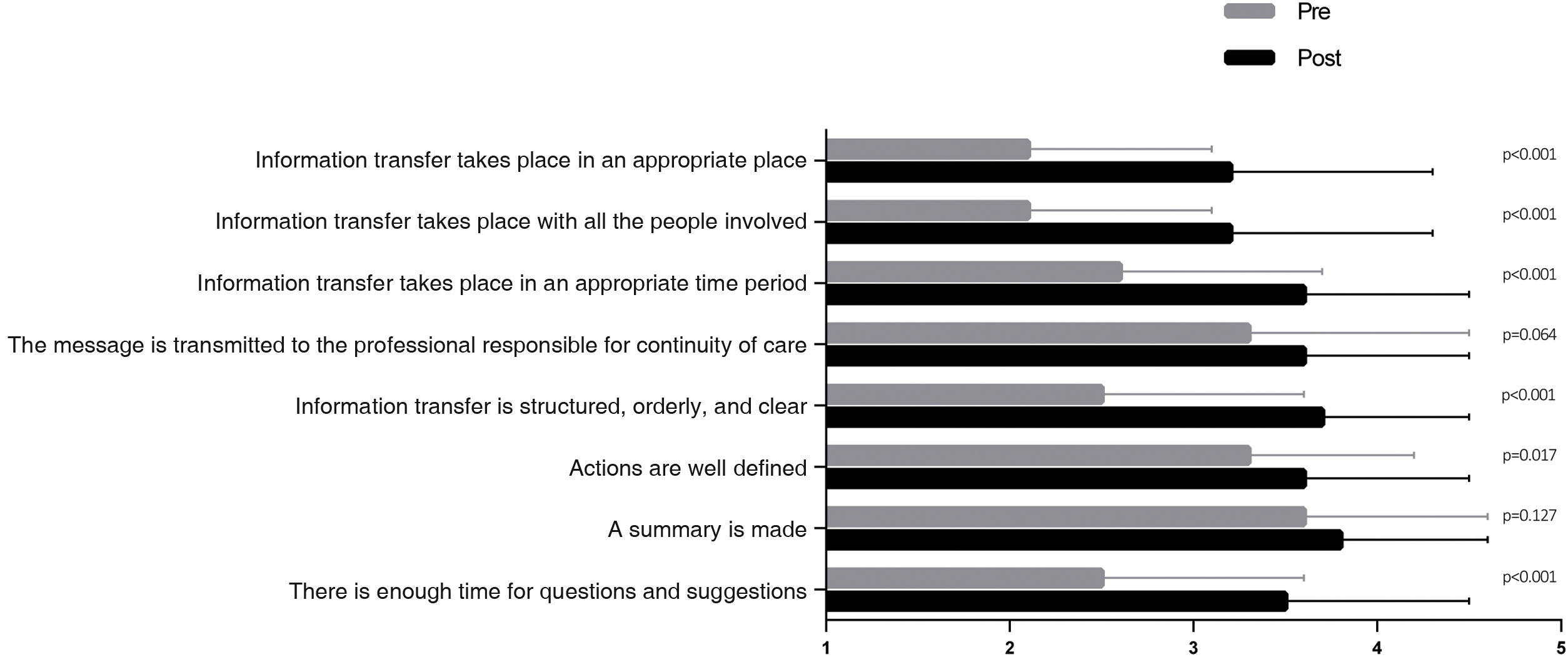
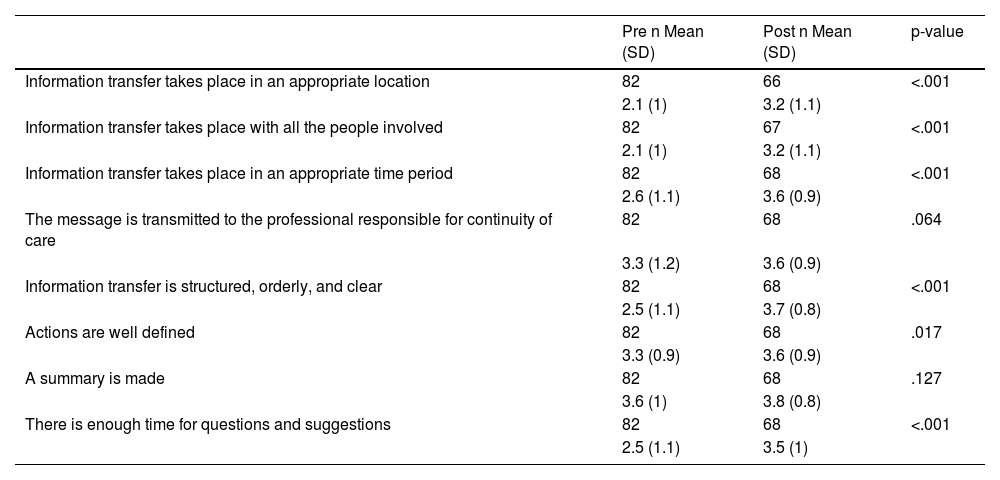
The assessment of the HCP of the IDEAS methodology before and after implementation is summarised in Table 2 and Fig. 3.
Changes in the perceptions of the HCP information transfer before and after standardisation.
| Pre n Mean (SD) | Post n Mean (SD) | p-value | |
|---|---|---|---|
| Information transfer takes place in an appropriate location | 82 | 66 | <.001 |
| 2.1 (1) | 3.2 (1.1) | ||
| Information transfer takes place with all the people involved | 82 | 67 | <.001 |
| 2.1 (1) | 3.2 (1.1) | ||
| Information transfer takes place in an appropriate time period | 82 | 68 | <.001 |
| 2.6 (1.1) | 3.6 (0.9) | ||
| The message is transmitted to the professional responsible for continuity of care | 82 | 68 | .064 |
| 3.3 (1.2) | 3.6 (0.9) | ||
| Information transfer is structured, orderly, and clear | 82 | 68 | <.001 |
| 2.5 (1.1) | 3.7 (0.8) | ||
| Actions are well defined | 82 | 68 | .017 |
| 3.3 (0.9) | 3.6 (0.9) | ||
| A summary is made | 82 | 68 | .127 |
| 3.6 (1) | 3.8 (0.8) | ||
| There is enough time for questions and suggestions | 82 | 68 | <.001 |
| 2.5 (1.1) | 3.5 (1) |
Significant differences were detected in the following dimensions: location where the information transfer takes place, carrying out the procedure with all persons involved and for an adequate period of time, the procedure is structured, orderly, and clear, and there is sufficient time for questions and suggestions.
In terms of the location where IT took place, the participants initially showed a high level of agreement that the space was not suitable (n = 64, 78%). Later, only one third disagreed (n = 22, 33.3%).
Prior to the intervention, the HCP expressed that the procedure was not performed with all the people involved in care (n = 65, 79.2%). After the intervention, 35.8% (n = 24) were of this opinion. Of the HCP, 55.3% (n = 37) answered that the hand-off took place with all the necessary people. The MFM specialists (n = 13) and the MFM resident internal doctors (n = 7) agreed the most strongly, whereas the resident internal nurses midwifery students mostly disagreed (n = 3).
For 58.5% of the participants (n = 48), the time spent in IT was not adequate. Subsequently, the majority (75%, n = 51) agreed with the time spent.
Sixty-one percent (n = 50) perceived that the information transfer was not structured, orderly, or clear. Subsequently, 77.9% (n = 53) stated that it was structured, orderly, and clear.
Initially, up to 59.8% of the HCP (n = 49) expressed that the time available for questions and suggestions was insufficient. After the intervention, 67.6% (n = 46) stated that there was sufficient time.
No statistically significant differences were detected in the other dimensions. Of the cases, 54.9% (n = 50) considered that during the IT the actions that had been performed and those still to be carried out were well defined (n = 50, 54.9%). After the intervention, this represented 75% of the respondents (n=51).
Initially, 62.2% (n = 51) perceived that the message was conveyed to the professional responsible for continuity of care. After the intervention, the percentage increased to 72.1%.
Of the respondents, 71.9% (n = 59) reported that a summary of issues requiring special attention was made, which increased to 82.3% (n = 56) after the intervention.
DiscussionThe use of a standardised methodology improved the perception of the interdisciplinary IT of the MFM service in the delivery room and IOCU in relation to the space where it is performed, the people involved, the time required, and the order in which it is performed. In contrast, interruptions and the quality of communication resulting from an inappropriate location and procedure time are factors perceived as barriers.
The perception of the HCP improved as soon as the space where the information transfer took place was changed. As described by other authors, it is important that IT takes place in a suitable environment close to the care location, with minimum interruptions, and adequate duration.2,10,12 Physical limitations affect information transfer.11,14
Initially, most of the HCP felt that IT was not conducted with all the people involved in care. We also observed that initially most of the professionals agreed that IT was performed with the professional responsible for care, although after the intervention the level of agreement increased. It was also observed that before and after the intervention, most of the respondents agreed that a summary of the aspects that required more attention was allowed, although these were not statistically significant changes. However, in relation to whether actions are well defined, while initially approximately 50% of respondents agreed, after the intervention there was a significant increase of 75% in the level of agreement. It was also observed that the time for questions and suggestions improved, and the time taken to perform IT was considered much more adequate. In addition, the perception of the quality with which information was conveyed had improved, was more orderly, clear, and structured.
Several authors describe improvements in the quality of communication and teamwork when standardised strategies are implemented as in the present study.7 Authors such as Troyer and Brady identify four main categories that act as barriers to effective IT: educational barriers (information loss, variation and lack of standardisation, lack of training, lack of feedback), operational barriers (environmental factors, redundancy, technological factors, conflicting goals and perspectives, delays), cultural barriers (lack of respect and disinterest, redundancy, conflicting goals and perspectives), and cognitive barriers (environmental factors, poor recall, information degradation and loss).15 They also identify three categories of interventions: technological, educational, and changes to cultural customs. Although studies on IT standardisation are heterogeneous in their methodology, with short follow-up periods, some authors claim that IT standardisation is the only intervention that has demonstrated significant improvements in communication.2,7,15 In the setting under study, it led to a change in the organisational culture of the service by improving interdisciplinary communication.
Authors such as Slade et al., 201614 state that in units with emergencies, such as the delivery room, it is difficult for the entire team to participate in IT. Improving interprofessional communication is essential to improve quality and patient safety.16 In particular, some studies show that IT between medical and nursing professionals is performed differently and separately according to organisational culture, and performing the procedure with a multi-professional team requires change.2 As in the present study prior to the intervention, the study by Morán-Pozo17 conducted with nurses from critical care units in Spain, shows that it is not common for other professionals such as assistant doctors or supervisors to participate in shift changes between nurses, and that the procedure varies in terms of standardisation and staff training.
The quality of oral and written communication also improved after the intervention in the case of Huth et al. (2016),18 implementing a standardised IT methodology in a clinical paediatric teaching unit in Canada. Differences were observed at the organisational level, reducing individual variability and the possibility of error.
To improve patient safety, a culture of safety needs to be developed in the centre and its professionals, creating strategies that develop leadership and teamwork to achieve safe care.19 There is moderate and high quality evidence on the importance and usefulness of applying safe practices and procedures, although there is little research on their implementation and evaluation.3 There is sufficient evidence to confirm that training HCP and encouraging the incorporation of human factor principles into the organisation, taking physical aspects (design, equipment), cognitive aspects (communication skills, teamwork), and organisational aspects (organisational culture) into account, improves patient safety.3
The main limitation of the study is that we used an anonymous ad hoc data collection instrument and were not able to extrapolate the results externally. However, as no instrument was found in the literature validated in the delivery room and ICU area, the present study opens the way for future lines of research. This study’s intervention coincided with the Covid-19 pandemic, when the HCP involved in IT was reduced to the minimum number of people according to the regulations in force at the time. This resulted in lower participation in the post-test study, a limitation that we believe may have affected interpretation of the results. A possible gender bias was also noted, with 85% of the participants being women in a department where 95% of the HCP are women.
In clinical practice, it is important to make standardisation more flexible so that it contains the structure with the important clinical information for the people involved with the minimum necessary information. The results show that there is room for improvement in the definition of actions and the identification of the referring professional. Poor communication between the team of professionals can contribute to errors, harm, discontinuity of care, inefficient use of resources, and patient dissatisfaction.6,7
ConclusionsThe HCP participating in the study highlight a number of factors (structural aspects such as space, time, organisation) that hinder effective communication. Overcoming these difficulties may favour better communication between professionals and minimise communication errors that may lead to adverse events.
The use of a standardised methodology has shown an impact on the perception of IT improvement. Its full implementation in the service helps improve aspects of communication between professionals and probably patient safety. Monitoring information transfer processes helps detect opportunities for improvement to ensure structured and effective communication.
FundingThis research did not receive any specific grant from funding agencies in the public, commercial, or not-for-profit sectors.
Conflict of interestThe authors have no conflict of interests to declare.
We would like to thank all the healthcare staff who participated in this study, because without their collaboration it would not have been possible.