
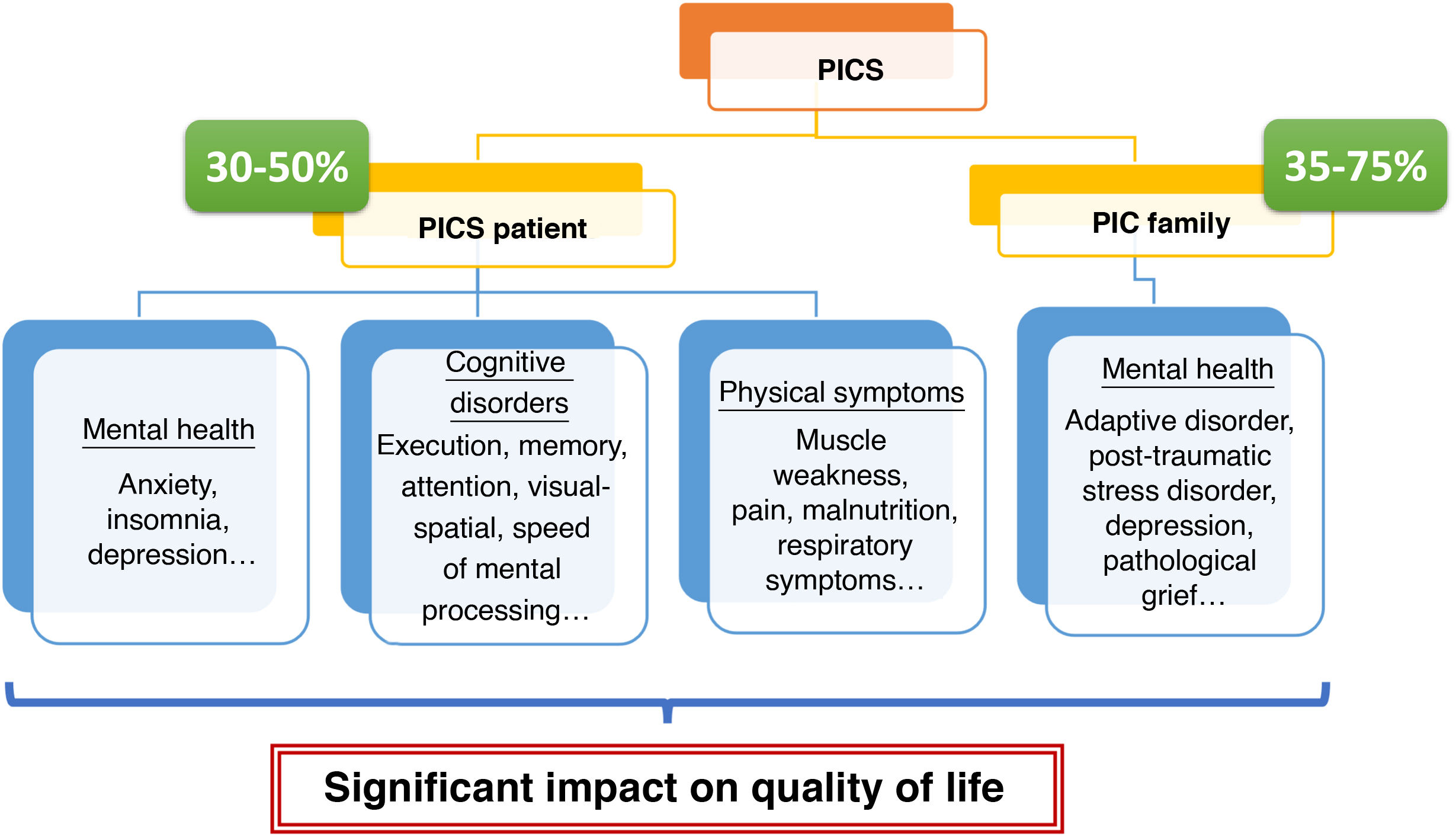

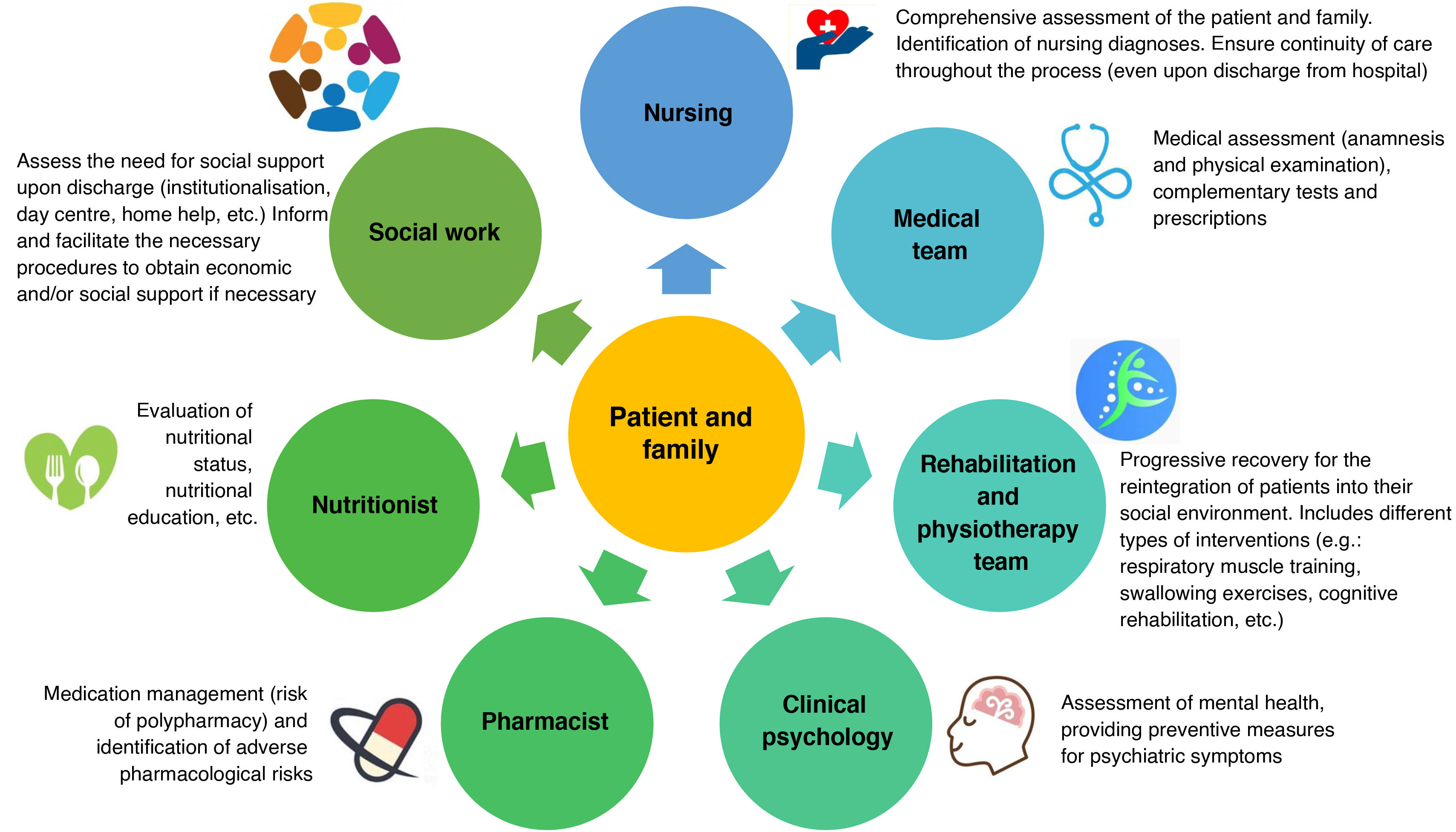

The follow-up of the critically ill patient at discharge is an essential process to ensure continuity of care and prevent complications after the stay in an intensive care unit (ICU). The nurse's role as coordinator of this follow-up is crucial because of her experience in managing complex care and her ability to act as a liaison between the patient, her family and the interprofessional health care team. The article highlights that the transition of the critically ill patient from the ICU to other inpatient units or home represents a vulnerable period, where the risk of readmission and complications is high. The nurse plays a central role in planning and executing a comprehensive discharge plan, which includes educating the patient and family about continuing care, communicating with other healthcare professionals, and recognising warning signs that require immediate medical attention. In addition, she addresses the emotional and psychological needs of the patient and family, providing support and resources to adjust to life post-ICU. The nurse acts as an advocate for the patient, ensuring that person-centred care is maintained, respecting the patient's preferences and values.
El seguimiento del paciente crítico al alta es un proceso esencial para garantizar la continuidad de los cuidados y prevenir complicaciones tras la estancia en una unidad de cuidados intensivos (UCI). La función de la enfermera como coordinadora de este seguimiento es crucial debido a su experiencia en la gestión de cuidados complejos y su capacidad para actuar como enlace entre el paciente, su familia y el equipo interprofesional de salud. En el artículo se destaca que la transición del paciente crítico desde la UCI a otras unidades de hospitalización o a su hogar representa un periodo vulnerable, donde el riesgo de reingreso y complicaciones es elevado. La enfermera desempeña un papel central en la planificación y ejecución de un plan de alta integral, que incluye la educación del paciente y su familia sobre los cuidados continuos, la comunicación con otros profesionales sanitarios y el reconocimiento de signos de alerta que requieran atención médica inmediata. Además, aborda las necesidades emocionales y psicológicas del paciente y su familia, proporcionando apoyo y recursos para adaptarse a la vida post-UCI. La enfermera asegura que se mantenga una atención centrada en la persona, que respete sus preferencias y valores.
Article
Diríjase al área de socios de la web de la SEEIUC, (https://seeiuc.org/mi-cuenta/iniciar-sesion/) y autentifíquese.