



This was a three-month-old female infant with lesions on her fingernails and toenails, associated with oral mucosa lesions, since she was 10 days old. She had been a vaginal birth and born at term. During the third trimester of pregnancy, the mother was diagnosed with genital candidiasis.
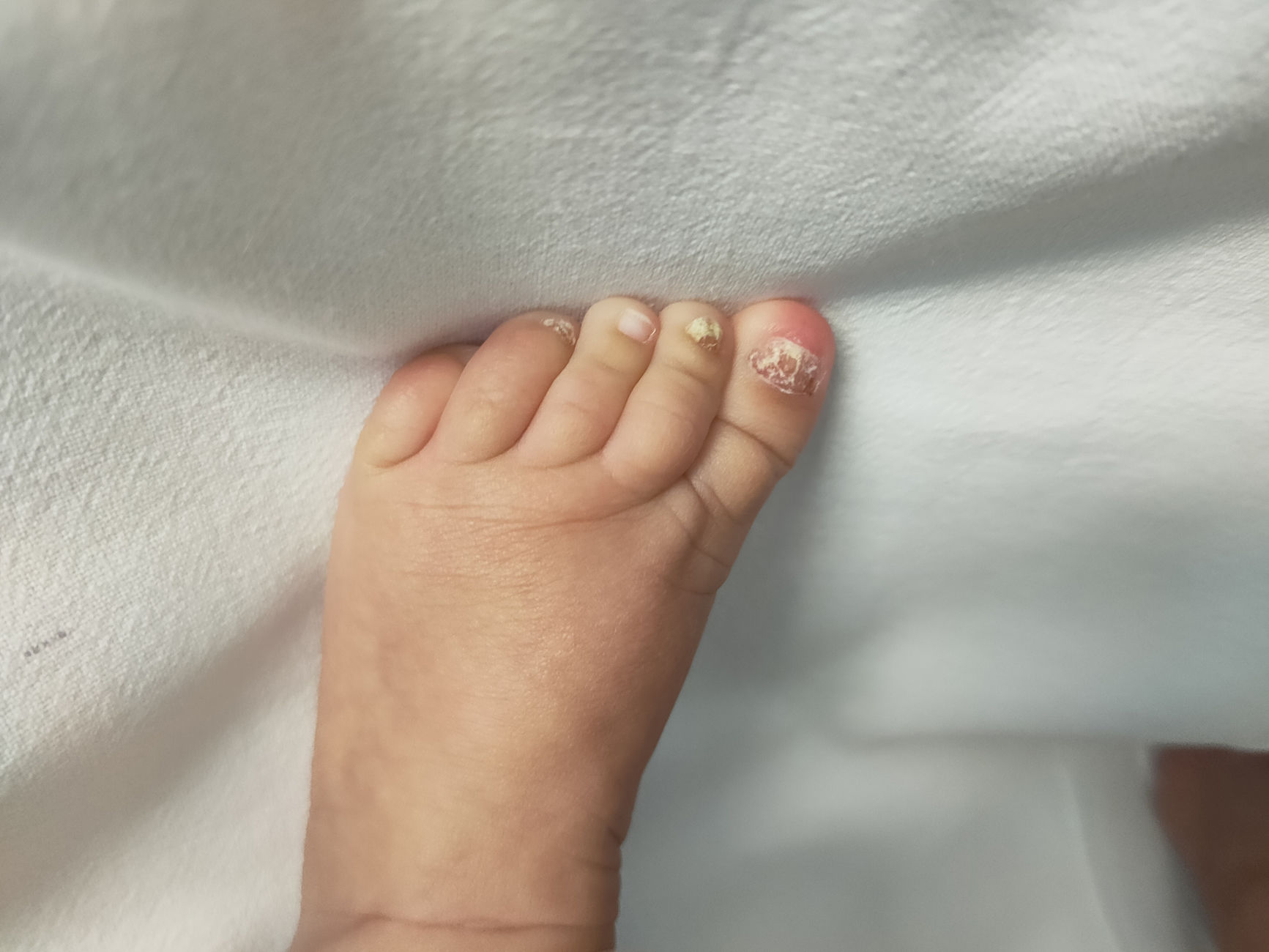
On physical examination, the infant was found to be of normal weight, in good general condition, afebrile, with marked hyperkeratosis, peeling and subungual yellowish discolouration of almost all of her fingernails and toenails (Fig. 1). Detachable whitish lumpy plaques could be seen in her oropharynx. No lesions were found in the rest of her integumentary system.
Clinical course and diagnosis
Among the mycology studies performed, nail plate biopsy revealed the presence of fungal hyphae highlighted with PAS and Grocott staining. The nail plate culture was positive for Candida albicans, but the oral mucosa culture was negative. No blood cultures were required.
The diagnosis of candidal onychomycosis is established in the context of a congenital cutaneous candidiasis with mucosal involvement. Treatment was started with oral nystatin 200,000 IU every 6 h for 4 weeks and topical clotrimazole (10 mg/g, 1 application every 12 h) on nail lesions. We carried out strict follow-up with check-ups every two months and after nine months the condition had completely resolved.
Closing remarksMicroorganisms of the genus Candida, and specifically the species Candida albicans, are the main cause of fungal disease in newborns.1 Congenital candidiasis (CC) generally manifests in the first week of life, as a result of vertical transmission. Candidal vulvovaginitis affects 25% of pregnant women, and transmission to the fetus, through chorioamnionitis, occurs in less than 1% of cases.2
CC can manifest in two main forms: congenital cutaneous candidiasis (CCC), a localised mucocutaneous form with a less aggressive course; and congenital systemic candidiasis, a form commonly observed in low-weight premature infants, with a worse prognosis.1–3
The typical clinical picture of CCC is a papulo-pustular erythematous rash, with lesions at different stages of development and post-inflammatory residual scaling. The areas most affected include the trunk, extremities and skin-fold areas, although in exceptional cases it can also manifest in the skin appendages. C. albicans invades the epithelium of the hyponychium, causing damage to the nail plate.2,3 However, nail abnormalities in CCC usually appear later, between the ages of two and six weeks. Its characteristic clinical features include thickening, changes in colour, pitting, paronychia and roughness.
Microbiological diagnosis can be performed with several techniques, including culture, which is the standard method.
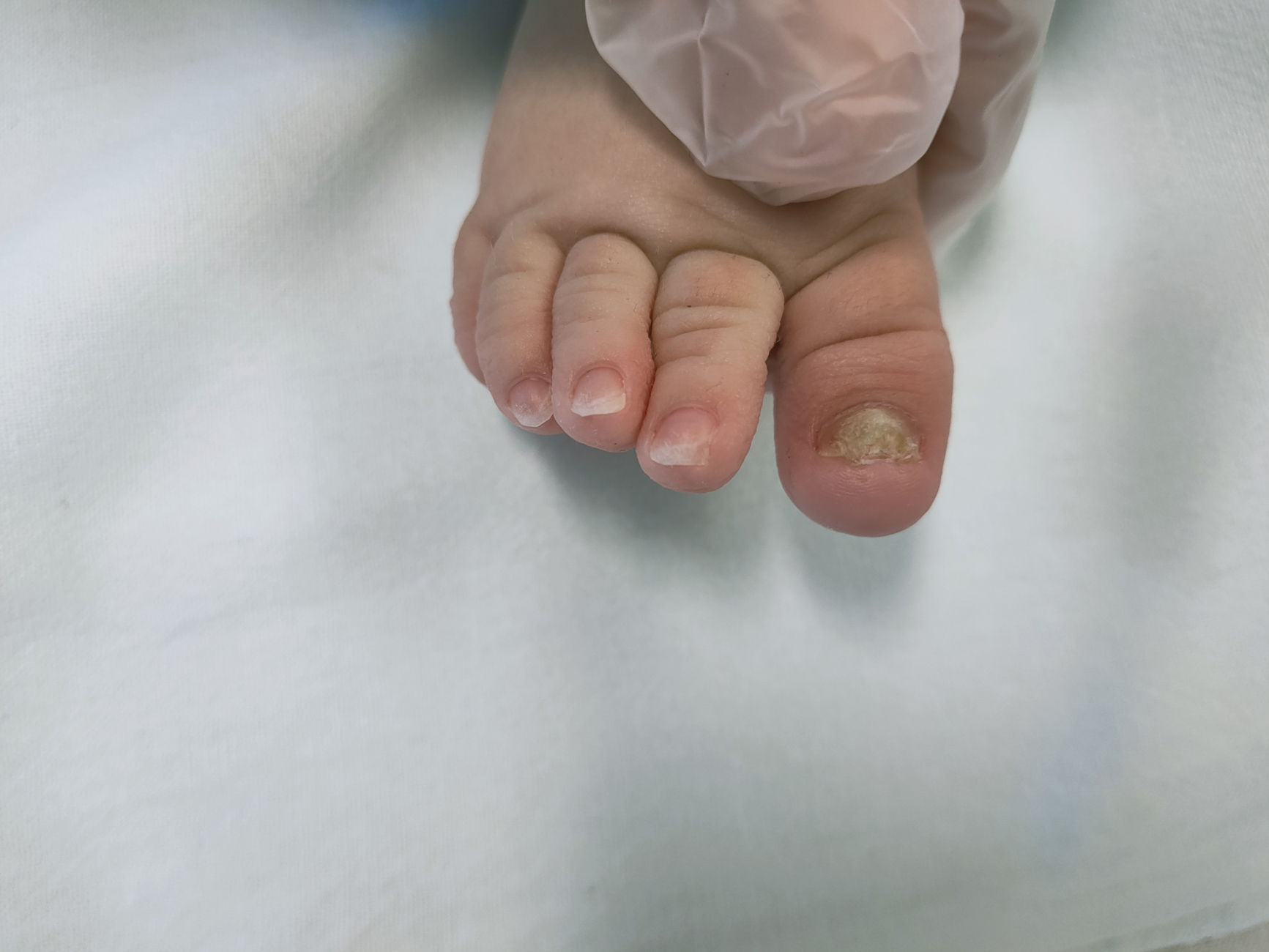
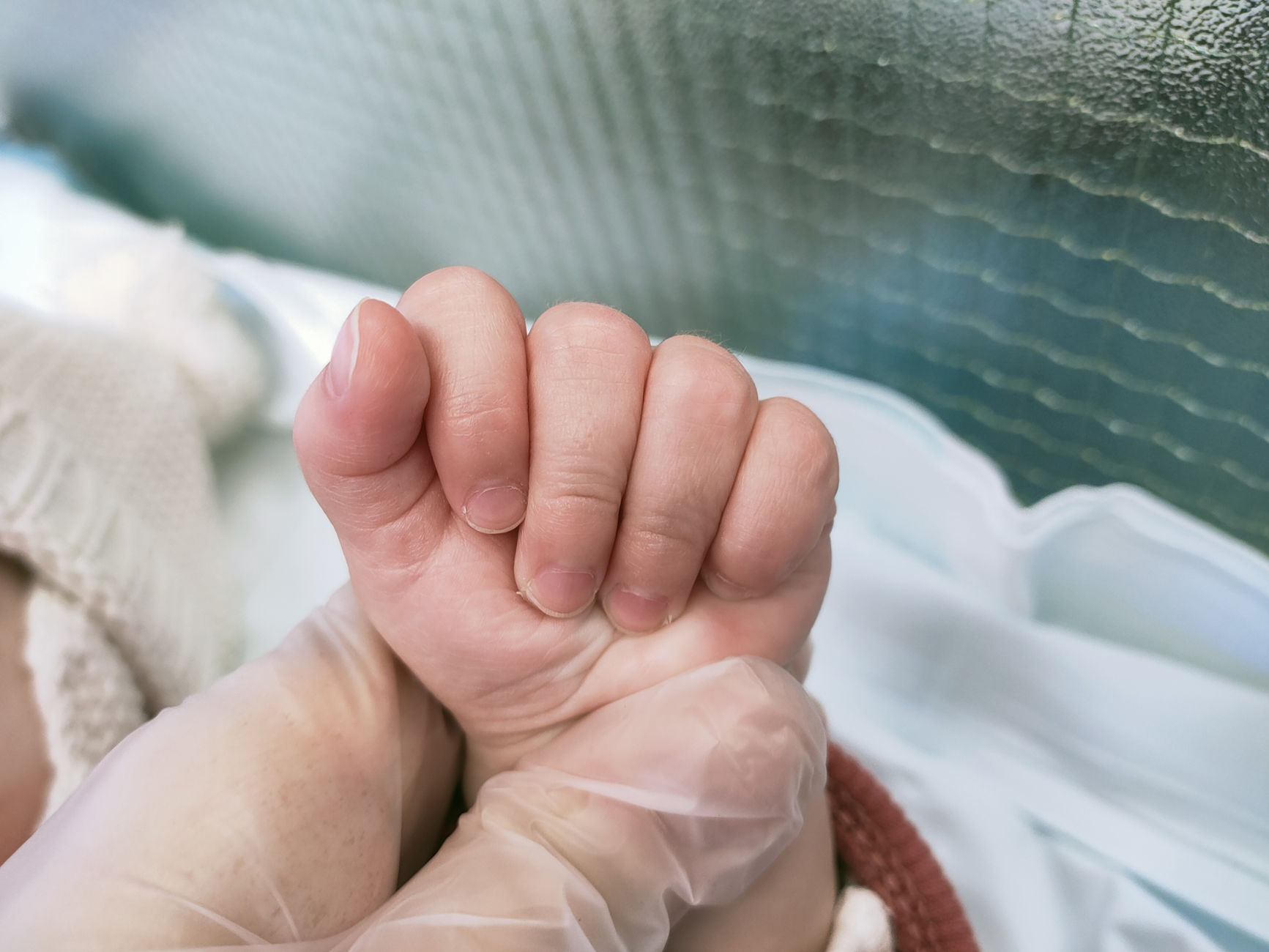
Topical antifungals are effective for treatment. Although there are reported cases of spontaneous resolution, it is advisable to start treatment in cases with microbiological confirmation and in premature infants.1 In our case, we decided to start oral and topical treatment due to the large extent of the lesions affecting the majority of the appendages and the time since onset. Figs. 2 and 3 show the changes after four and nine weeks of treatment.
Data confidentiality

Consent was obtained for the taking of images, although there is no identifying or personal data in either the case report or the figures.
FundingThis study received no specific funding from public, private or non-profit organisations.
Conflicts of interestThe authors declare that they have no conflicts of interest.

