


metricas
Cirugía Española (English Edition) Strategic management and outcomes of surgical repair for ruptured abdominal aort...
Journal Information
Visits
433
Vol. 103. Issue 5.
Pages 255-334 (May 2025)
Review article
Full text access

Strategic management and outcomes of surgical repair for ruptured abdominal aortic aneurysms in women: a systematic review and meta-analysis

Estrategias y resultados en la reparación quirúrgica de aneurismas abdominales rotos en mujeres: revisión sistemática y metaanálisis
Visits
433
M.ª Lourdes Del Río-Soláa,
Corresponding author
marialourdes.rio@uva.es

Corresponding author.
, Romero-Estrella M.ª Rosariob, Roedan-Oliver Joanb, Sergio Asensio-Rodriguezb, Pérez-Fernández Sandrab, Rial-Horcajo Rodrigoc
a Department of Surgery, Ophthalmology, Otorhinolaryngology, Physiotherapy. University of Valladolid. Vascular Surgery Department. University Clinical Hospital of Valladolid, Spain
b Vascular Surgery Department, University Clinical Hospital of Valladolid, Valladolid, Spain
c Vascular and Endovascular Surgery Department, University Hospital HM Madrid-Torrelodones, Madrid, Spain
This item has received
Article information
Abstract
Full Text
Bibliography
Download PDF
Statistics
Figures (3)
fig0005
fig0010
fig0015
Tables (3)
Table 1. Critical appraisal of studies included using the Newcastle-Ottawa Scale.
Tables
Table 2. Summary of study details and differences by sex in the presentation, management and outcomes of ruptured abdominal aortic aneurysm (R-AAA) repair.
Tables
Table 3. Postoperative outcomes.
Tables
Abstract
Introduction

The repair of ruptured abdominal aortic aneurysms (R-AAA) entails high mortality. This study aims to analyze differences in postoperative outcomes.

Methods

A meta-analysis was conducted of 8 studies involving 26 473 patients, evaluating 30-day mortality rates by comparing open surgical repair with endovascular repair and stratifying results by sex.

Results

The 30-day mortality rate was 23.0% in women versus 13.0% in men, with an odds ratio (OR) of 2.05. Women had higher rates of postoperative complications, such as stroke (6.0% vs. 4.0%) and renal failure (8.0% vs. 5.0%), as well as prolonged ICU stay (12.3 ± 6.4 days vs. 10.2 ± 5.7 days).

Conclusion

These findings highlight the importance of adjusting surgical approaches to improve outcomes in women with R-AAA. Continued prospective studies are recommended to optimize treatment protocols.

Keywords:
Ruptured abdominal aortic aneurysm (R-AAA)
Sex differences
Mortality
Surgical repair outcomes
Meta-analysis
Abbreviations:
R-AAA
OSR
EVAR
RR
CI
NOS
PRISMA
WMD
MOOSE
OR
M-H χ²
SPSS
Resumen
Introducción

La reparación de aneurismas abdominales rotos (R-AAA) implica alta mortalidad. El objetivo de este estudio es analizar las diferencias entre géneros en los resultados postoperatorios.

Métodos

Se realizó un metaanálisis de ocho estudios que incluyeron a 26,473 pacientes, evaluando las tasas de mortalidad a 30 días, comparando la reparación abierta con la endovascular y estratificando por género.

Resultados

La mortalidad a 30 días fue del 23.0% en mujeres frente al 13.0% en hombres, con una OR de 2.05. Las mujeres presentaron mayores tasas de complicaciones postoperatorias, como accidentes cerebrovasculares (6.0% vs. 4.0%) y fallos renales (8.0% vs. 5.0%), así como una estancia en UCI prolongada (12.3 ± 6.4 días vs. 10.2 ± 5.7 días).

Conclusión

Estos hallazgos subrayan la importancia de ajustar los enfoques quirúrgicos para mejorar los resultados en mujeres con R-AAA. Es recomendable seguir realizando estudios prospectivos para optimizar los protocolos de tratamiento.


Palabras clave:
Aneurisma de Aorta Abdominal Roto (R-AAA)
Diferencias de género
Mortalidad
Resultados de la reparación quirúrgica
Metaanálisis
Full Text
Introduction

Surgical repair of a ruptured abdominal aortic aneurysm (R-AAA) represents a critical emergency procedure characterized by high mortality and morbidity rates. Women appear to be at a greater risk of postoperative morbidity and mortality compared to men. This observed sex disparity in outcomes may be attributed to a combination of factors, including differences in vascular biology, clinical presentation, and treatment decisions. Despite the significant implications of these differences, current data remain limited and do not provide a comprehensive understanding of sex-specific variations in the context of R-AAA repair.

R-AAA is a life-threatening condition that requires prompt surgical intervention to prevent death. The overall mortality rate for untreated R-AAA approaches 90%; even with surgical intervention, mortality rates remain high, ranging from 30% to 50% in many series.1,2 Standard treatments for R-AAA include open surgical repair (OSR) and endovascular aneurysm repair (EVAR). While EVAR is less invasive and associated with lower perioperative morbidity and mortality, it may not be feasible for all patients due to anatomical constraints and hemodynamic instability at presentation.3

Sex differences in the outcomes of R-AAA repair have been noted in several studies. Women undergoing R-AAA repair often present at an older age and with more advanced disease compared to men.4 This advanced presentation may contribute to the increased perioperative risks observed in female patients. Additionally, anatomical differences, such as smaller aortic diameters and more complex aortic morphology in women, may limit the applicability of EVAR, leading to higher reliance on OSR, which carries higher procedural risks.5–7

Several studies have reported that women have worse perioperative outcomes following R-AAA repair. For instance, a study by Lo et al. found that women had higher in-hospital mortality rates compared to men following both OSR and EVAR for R-AAA.8 Similarly, a meta-analysis by Grootenboer et al. highlighted that women had significantly higher 30-day mortality rates after R-AAA repair compared to their male counterparts.9 These findings underscore the need for further investigation into the underlying causes of these disparities and the development of tailored strategies to improve outcomes for women.

One hypothesis for the poorer outcomes in women is related to delayed diagnosis and treatment. Women are less likely to undergo routine screening for abdominal aortic aneurysms (AAA), and when they do present with R-AAA, they often exhibit atypical symptoms, leading to delays in diagnosis and treatment.10 Additionally, women may have a higher prevalence of comorbid conditions, such as hypertension, which can exacerbate the severity of the aneurysm and complicate surgical management.11

The objective of this meta-analysis is to examine 30-day postoperative mortality rates for R-AAA stratified by sex, specifically excluding patients who died after 30 days and had remained hospitalized. We also intend to provide a comprehensive overview of sex-specific variations in presentation, treatment, and outcomes following surgical repair of R-AAA.

By synthesizing data from multiple studies, this analysis aims to elucidate the extent of these disparities and identify potential areas for intervention to improve clinical outcomes for women undergoing R-AAA repair.

MethodsData sources

A comprehensive search was undertaken of 3 major databases (Medline, Embase, and Cochrane Central) to identify all published data comparing 30-day mortality stratified by surgical repair of ruptured abdominal aortic aneurysms (R-AAA). Databases were evaluated from January 2008 to December 2022. Relative risk (RR), weighted mean differences, or standardized mean differences and their 95% confidence intervals (CI) were analyzed.

Ruptured abdominal aortic aneurysm was defined as any acute aortic lesion resulting in a breach of the aortic wall, leading to blood leakage outside the aorta. This condition included patients who survived the initial rupture and did not have a complete avulsion but rather a contained rupture.

Study selection

The inclusion criteria for this meta-analysis were as follows: (1) studies reported 30-day mortality rates after surgical repair of R-AAA; (2) studies provided data stratified by sex; (3) both open surgical repair (OSR) and endovascular aneurysm repair (EVAR) procedures were included; (4) only human studies published in English were considered; (5) studies had a cohort size sufficient to ensure the validity of the statistical analysis (studies with a sufficient cohort size were defined as those with at least 500 participants to ensure statistical validity and representativeness of results, based on statistical criteria used in similar meta-analyses and relevant prior studies).

Definitions

Ruptured Abdominal Aortic Aneurysm (R-AAA): Defined as any acute aortic lesion resulting in a breach of the aortic wall with blood leakage outside the aorta. This included cases where patients survived the initial rupture and presented a contained rupture rather than complete avulsion.

Reintervention was defined as the requirement for further procedural acts to treat complications related to the R-AAA.

PICO

The review question focuses on examining the strategic management and outcomes of surgical repair for ruptured abdominal aortic aneurysms (R-AAA) in women. Given the broad scope, the review question can be broken down into several specific questions framed using the PI(E)CO format:

  • 1

    Population (P): Women who had undergone surgical repair for R-AAA

  • 2

    Intervention (I): Different types of surgical repairs, specifically open surgical repair (OSR) and endovascular aneurysm repair (EVAR).

  • 3

    Comparison (C): Comparison between outcomes in women and men, as well as between the 2 types of surgical procedures (OSR and EVAR).

  • 4

    Outcome (O):

  • o

    30-day postoperative mortality rates

  • o

    Postoperative complication rates (eg, stroke, vascular complications, cardiac complications, renal failure)

  • o

    Length of hospital and intensive care stays

  • o

    Reintervention rates within one year

Search strategy

The search strategy involved using a combination of MeSH terms and keywords related to R-AAA, surgical repair, sex differences, 30-day mortality, OSR, and EVAR. The detailed search strategy for Medline included terms such as “ruptured abdominal aortic aneurysm”, “surgical repair”, “endovascular aneurysm repair”, “sex differences” and “mortality.”

Eligibility criteria

Following the database search, the titles and abstracts of all retrieved articles were screened independently by 2 reviewers to identify potentially eligible studies. Full texts of potentially relevant articles were then assessed for eligibility based on the predefined inclusion criteria. Disagreements between reviewers were resolved by discussion; if necessary, a third reviewer was consulted.

Data extraction and outcomes

Data extraction was performed independently by 2 reviewers using a standardized data extraction form. Extracted data included study characteristics (first author, year of publication, study design and sample size), patient demographics (age and sex), preoperative risk factors, intraoperative variables, and postoperative outcomes (30-day mortality, complications, and reintervention rates).

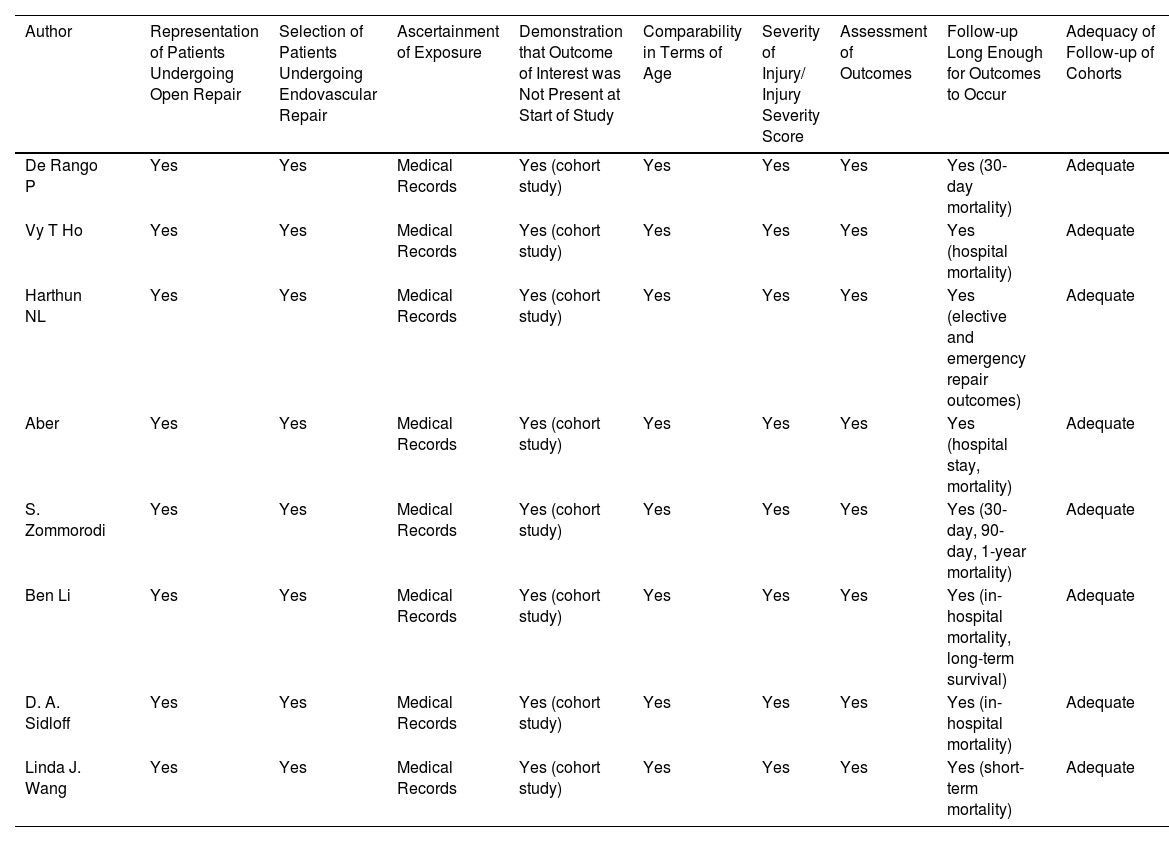
Risk of bias in individual studies was assessed using the Newcastle-Ottawa Scale (NOS) for observational studies. This scale evaluates studies based on 3 broad perspectives: selection of study groups, comparability of the groups, and ascertainment of the outcome of interest. Each study was scored out of a maximum of 9 stars, and studies with a score of 6 or more were considered to have a low risk of bias. Table 1 shows critical appraisal of included studies using the Newcastle-Ottawa Scale.

Table 1.

Critical appraisal of studies included using the Newcastle-Ottawa Scale.

Author  Representation of Patients Undergoing Open Repair  Selection of Patients Undergoing Endovascular Repair  Ascertainment of Exposure  Demonstration that Outcome of Interest was Not Present at Start of Study  Comparability in Terms of Age  Severity of Injury/ Injury Severity Score  Assessment of Outcomes  Follow-up Long Enough for Outcomes to Occur  Adequacy of Follow-up of Cohorts 
De Rango P  Yes  Yes  Medical Records  Yes (cohort study)  Yes  Yes  Yes  Yes (30-day mortality)  Adequate 
Vy T Ho  Yes  Yes  Medical Records  Yes (cohort study)  Yes  Yes  Yes  Yes (hospital mortality)  Adequate 
Harthun NL  Yes  Yes  Medical Records  Yes (cohort study)  Yes  Yes  Yes  Yes (elective and emergency repair outcomes)  Adequate 
Aber  Yes  Yes  Medical Records  Yes (cohort study)  Yes  Yes  Yes  Yes (hospital stay, mortality)  Adequate 
S. Zommorodi  Yes  Yes  Medical Records  Yes (cohort study)  Yes  Yes  Yes  Yes (30-day, 90-day, 1-year mortality)  Adequate 
Ben Li  Yes  Yes  Medical Records  Yes (cohort study)  Yes  Yes  Yes  Yes (in-hospital mortality, long-term survival)  Adequate 
D. A. Sidloff  Yes  Yes  Medical Records  Yes (cohort study)  Yes  Yes  Yes  Yes (in-hospital mortality)  Adequate 
Linda J. Wang  Yes  Yes  Medical Records  Yes (cohort study)  Yes  Yes  Yes  Yes (short-term mortality)  Adequate 
Statistical analysis

Meta-analysis was performed using a random-effects model to account for heterogeneity among studies. Heterogeneity was assessed using the I² statistic, with values of 25%, 50%, and 75% representing low, moderate and high heterogeneity, respectively. A sensitivity analysis was conducted to examine the robustness of the results by excluding studies with a high risk of bias. Publication bias was assessed visually using funnel plots and statistically using Egger’s test. All statistical analyses were performed using SPSS software, version 29.0, and statistical significance was set at P < .05.

This meta-analysis was performed in line with recommendations from the Meta-analysis of Observational Studies in Epidemiology (MOOSE) guidelines.12 Where appropriate, the effect measures estimated were either relative risk (RR) or odds ratio (OR) for dichotomous data, and weighted mean difference (WMD) for continuous data, both reported with 95% confidence intervals (CI). The point estimate of the RR or OR was considered statistically significant at the P < .05 level if the 95% CI did not include the value 1.

For continuous variables, the WMD was calculated with the Mantel-Haenszel χ² method using a random-effects meta-analytical technique. In reporting for continuous variables such as age or hospital stay duration, the statistical analysis was carried out using weighted mean difference as the summary statistic. The I² statistic was used to estimate the percentage of total variation across studies due to heterogeneity other than chance, with values greater than 50% considered indicative of substantial heterogeneity. Where appropriate for continuous variables and comparisons between sex groups, an unpaired Student t-test was conducted to identify the degree of significance between each variable. A Bonferroni correction test was performed to obtain the correct P-value from the statistical analyses conducted on the reported outcomes, specifically mortality rates, duration of hospital stay, postoperative complications and reintervention rates. This correction was implemented to reduce the chances of type I error across the multiple reported outcomes. If the corrected P-value was more significant than the result from each reported outcome, the corrected P-value was reported separately.

All statistical analyses were performed using SPSS version 29.0 software (IBM Corp, Armonk, NY).

Ethical issues

All authors contributed to formulating the study protocol, and it was then registered with the International Prospective Register of Systematic Reviews (PROSPERO) (560134). Local institutional ethical approval was not required. All authors declare having no conflicts of interest. This research received no external funding.

Results

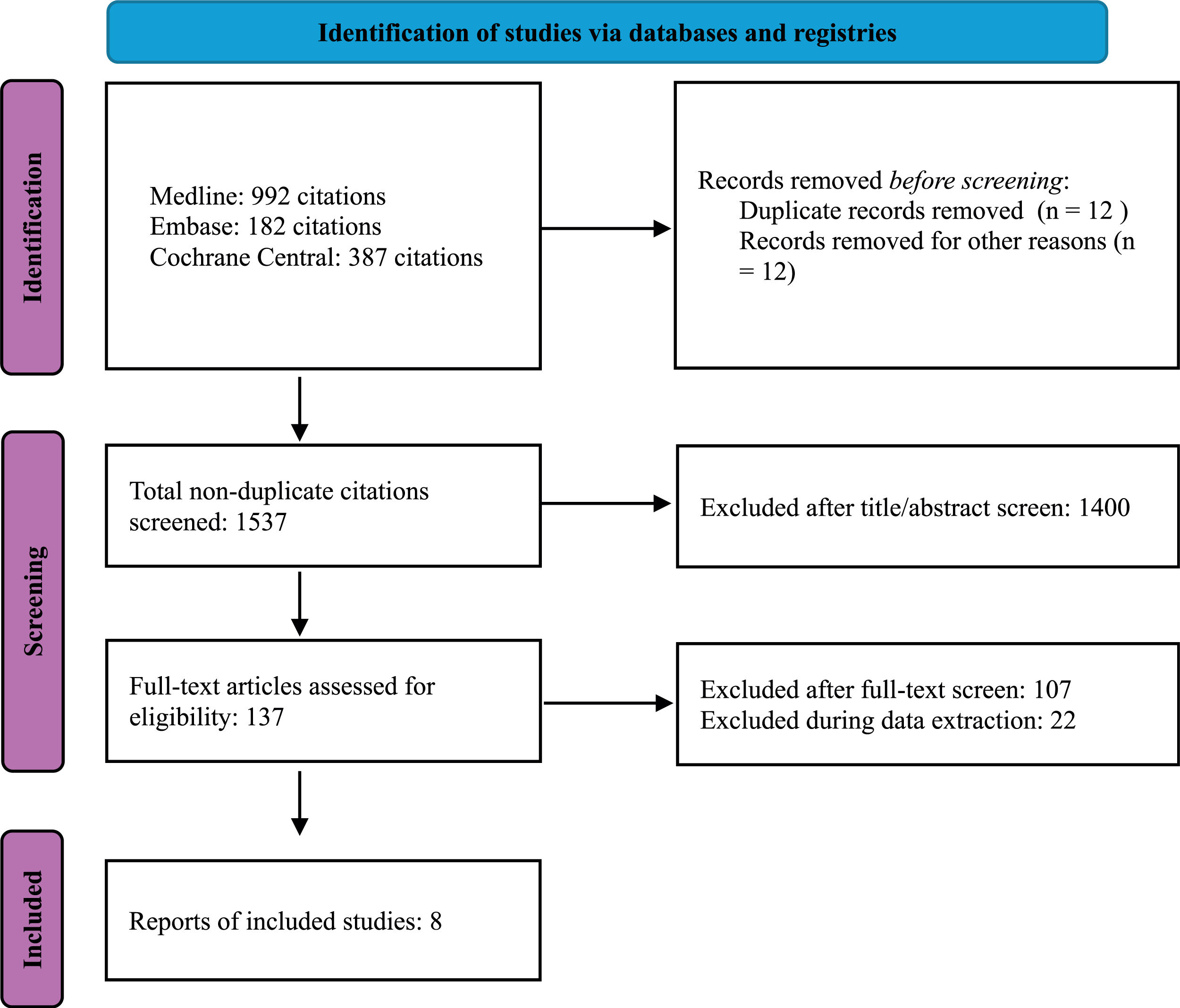
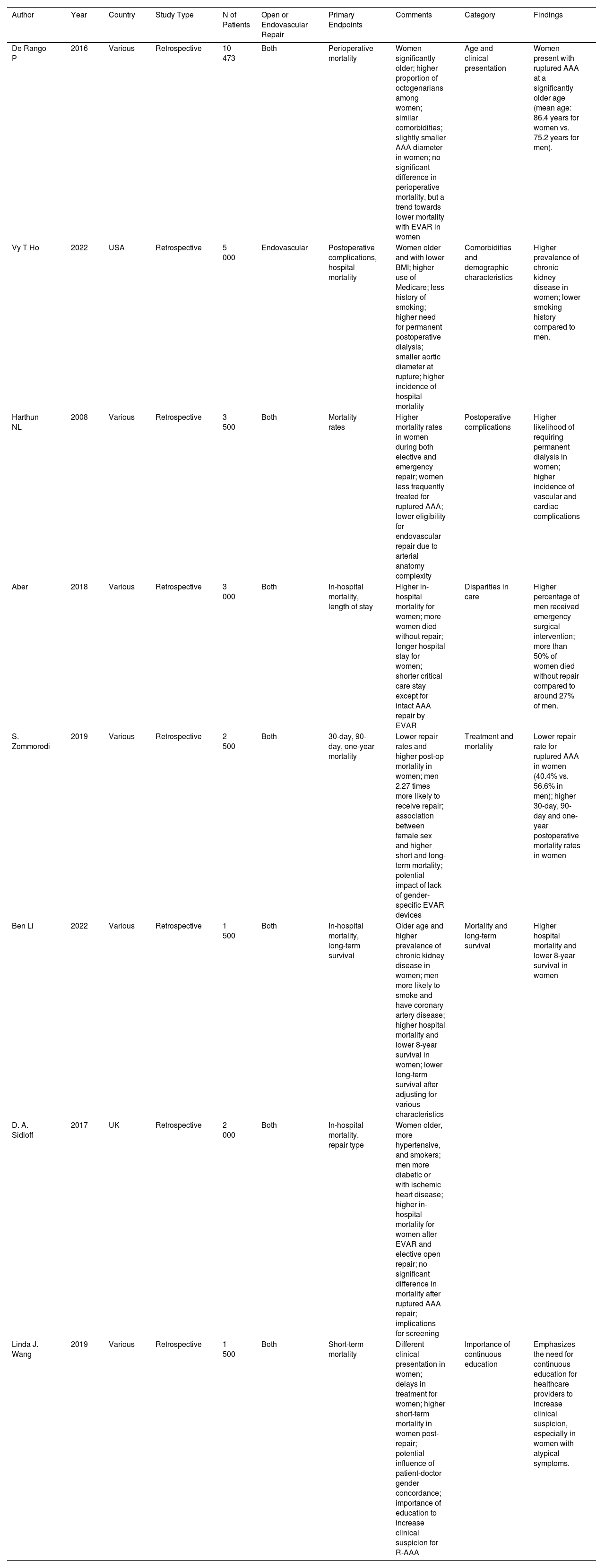
A total of 26 473 patients from 8 articles were included in our analysis.13–20 The search flow is summarized in the Preferred Reporting Items for Systematic Reviews and Meta-Analyses (PRISMA) chart (Fig. 1). The primary outcome was the 30-day mortality rate, and secondary outcomes included postoperative complications, as summarized in Table 2.

Fig. 1.

Diagram of Preferred Reporting Items for Systematic reviews and Meta-Analyses (PRISMA).

Table 2.

Summary of study details and differences by sex in the presentation, management and outcomes of ruptured abdominal aortic aneurysm (R-AAA) repair.

Author  Year  Country  Study Type  N of Patients  Open or Endovascular Repair  Primary Endpoints  Comments  Category  Findings 
De Rango P  2016  Various  Retrospective  10 473  Both  Perioperative mortality  Women significantly older; higher proportion of octogenarians among women; similar comorbidities; slightly smaller AAA diameter in women; no significant difference in perioperative mortality, but a trend towards lower mortality with EVAR in women  Age and clinical presentation  Women present with ruptured AAA at a significantly older age (mean age: 86.4 years for women vs. 75.2 years for men). 
Vy T Ho  2022  USA  Retrospective  5 000  Endovascular  Postoperative complications, hospital mortality  Women older and with lower BMI; higher use of Medicare; less history of smoking; higher need for permanent postoperative dialysis; smaller aortic diameter at rupture; higher incidence of hospital mortality  Comorbidities and demographic characteristics  Higher prevalence of chronic kidney disease in women; lower smoking history compared to men. 
Harthun NL  2008  Various  Retrospective  3 500  Both  Mortality rates  Higher mortality rates in women during both elective and emergency repair; women less frequently treated for ruptured AAA; lower eligibility for endovascular repair due to arterial anatomy complexity  Postoperative complications  Higher likelihood of requiring permanent dialysis in women; higher incidence of vascular and cardiac complications 
Aber  2018  Various  Retrospective  3 000  Both  In-hospital mortality, length of stay  Higher in-hospital mortality for women; more women died without repair; longer hospital stay for women; shorter critical care stay except for intact AAA repair by EVAR  Disparities in care  Higher percentage of men received emergency surgical intervention; more than 50% of women died without repair compared to around 27% of men. 
S. Zommorodi  2019  Various  Retrospective  2 500  Both  30-day, 90-day, one-year mortality  Lower repair rates and higher post-op mortality in women; men 2.27 times more likely to receive repair; association between female sex and higher short and long-term mortality; potential impact of lack of gender-specific EVAR devices  Treatment and mortality  Lower repair rate for ruptured AAA in women (40.4% vs. 56.6% in men); higher 30-day, 90-day and one-year postoperative mortality rates in women 
Ben Li  2022  Various  Retrospective  1 500  Both  In-hospital mortality, long-term survival  Older age and higher prevalence of chronic kidney disease in women; men more likely to smoke and have coronary artery disease; higher hospital mortality and lower 8-year survival in women; lower long-term survival after adjusting for various characteristics  Mortality and long-term survival  Higher hospital mortality and lower 8-year survival in women 
D. A. Sidloff  2017  UK  Retrospective  2 000  Both  In-hospital mortality, repair type  Women older, more hypertensive, and smokers; men more diabetic or with ischemic heart disease; higher in-hospital mortality for women after EVAR and elective open repair; no significant difference in mortality after ruptured AAA repair; implications for screening     
Linda J. Wang  2019  Various  Retrospective  1 500  Both  Short-term mortality  Different clinical presentation in women; delays in treatment for women; higher short-term mortality in women post-repair; potential influence of patient-doctor gender concordance; importance of education to increase clinical suspicion for R-AAA  Importance of continuous education  Emphasizes the need for continuous education for healthcare providers to increase clinical suspicion, especially in women with atypical symptoms. 
Demographics and preoperative characteristics

The mean age of patients who underwent open repair was 75.2 ± 9.3 years, while the mean age of those who were treated with EVAR was 78.4 ± 8.7 years. Men represented 82.8% of the cohort, while 17.2% were women. These patients presented various comorbidities, with a lower rate of smoking history and a higher likelihood of postoperative hemodialysis among women.

Results of individual studies

The outcomes of the studies are described in Table 2. Our systematic review reveals significant differences between the sexes in the presentation, management and outcomes of ruptured abdominal aortic aneurysm (R-AAA) repair. Women present with R-AAA at a significantly older age compared to men, with a mean age of 86.4 years versus 75.2 years. Additionally, women have a higher prevalence of chronic kidney disease and a lower rate of smoking history. The percentage of R-AAA cases treated with surgical repair is lower in women (40.4%) than in men (56.6%), and women exhibited higher 30-day, 90-day and one-year postoperative mortality rates. Postoperative complications are more common in women, who are more likely to require permanent dialysis and experience higher incidences of vascular and cardiac complications. Furthermore, women have longer hospital mortality and lower long-term survival rates. We noted disparities in care and evidence of a higher percentage of men undergoing emergency surgery, while more than 50% of women died in hospital with no surgical repair versus some 27% of men.

Open repair vs. endovascular repair

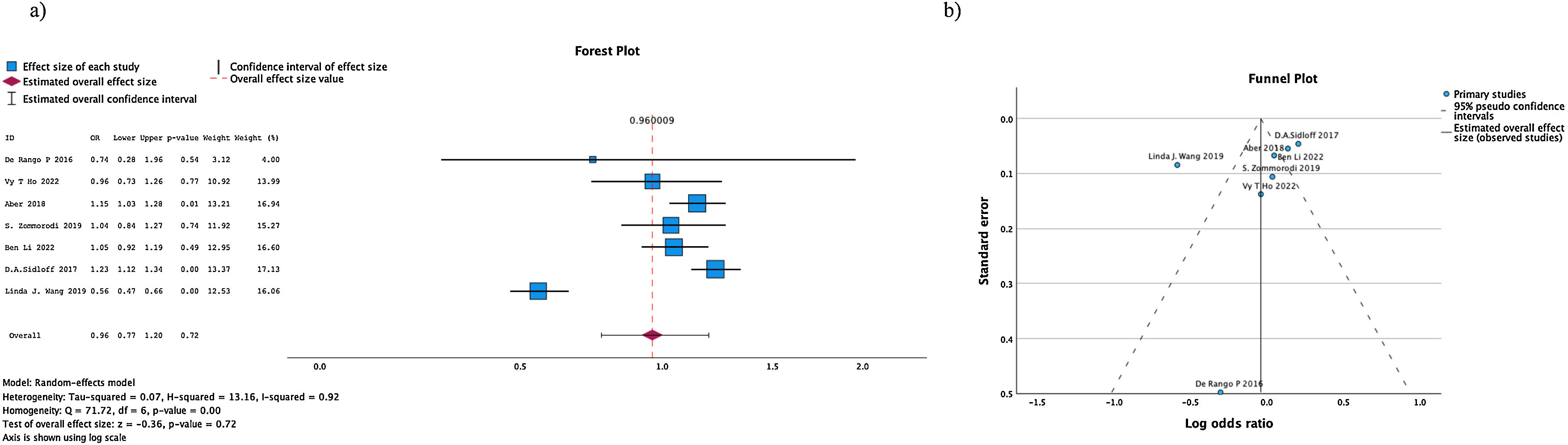
Open repair was performed in 43.4% (n = 11 487) of the sample, while endovascular repair (EVAR) was performed in 56.6% (n = 14 986). The overall effect size (represented by the diamond in Fig. 2a) is 0.96 (95% CI, 0.72–1.20), indicating no significant difference in the type of surgical procedures performed according to sex in the combined studies. The studies are relatively symmetrically distributed around the overall effect size (vertical line), suggesting minimal publication bias. Most studies fall within the pseudo-confidence intervals (dashed lines), reinforcing the consistency and reliability of the meta-analysis findings (Fig. 2b).

Fig. 2.

(a) Forest plot for open vs. endovascular surgery rate for females vs. males.

CI: confidence interval; M-H: Mantel-Haenszel. (b) Funnel plot of studies included, assessing the types of surgical procedures by sex.

Mortality

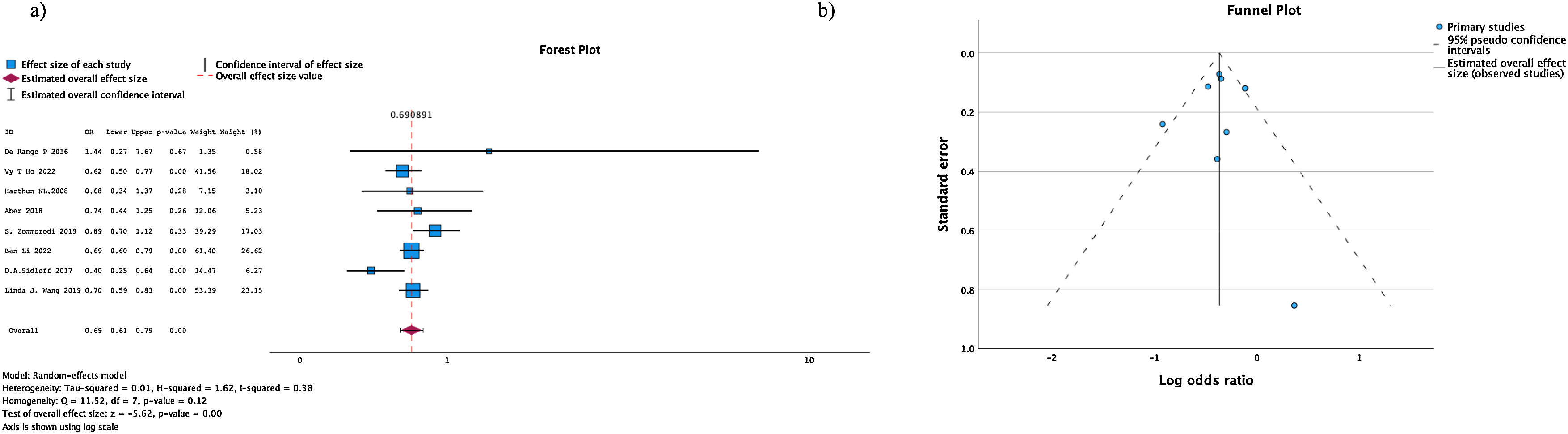
The 30-day mortality rate was significantly higher in women compared to men (23.0% vs. 13.0%; OR, 2.05; 95% CI, 1.85–2.28; P < .00001. The funnel plot illustrates the distribution of the included studies in our meta-analysis that assessed 30-day mortality rates following surgical repair of ruptured abdominal aortic aneurysms (R-AAA) stratified by sex. The visual inspection of this funnel plot shows a relatively symmetrical distribution, suggesting minimal publication bias in the included studies (Fig. 3a and b).

Fig. 3.

(a) Forest plot for 30-day mortality rate for females vs. males.

CI: confidence interval; M-H: Mantel-Haenszel. (b) Funnel plot of studies included, assessing 30-day mortality rates.

Morbidity and length of stay

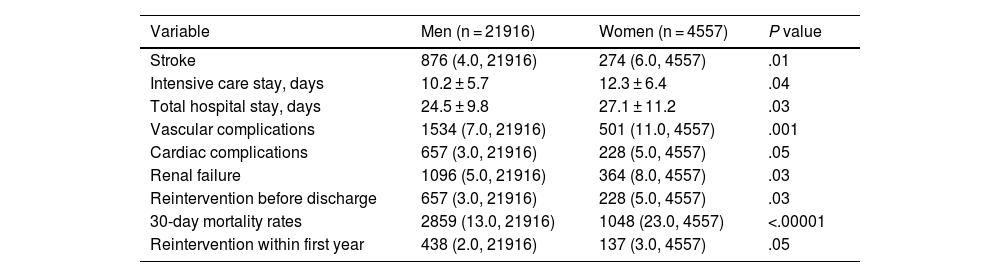
The incidence of stroke was higher in women (6.0% vs. 4.0%; OR, 1.50; 95% CI, 1.15–1.95; P = .01). Women also had a longer intensive care stay (12.3 ± 6.4 days vs. 10.2 ± 5.7 days; P = .04) and total hospital stay (27.1 ± 11.2 days vs. 24.5 ± 9.8 days; P = .03).

Complications

Vascular complications were more common in women than in men (11.0% vs. 7.0%; OR, 1.57; 95% CI, 1.22–2.02; P = .001). Cardiac complications were also higher in women (5.0% vs. 3.0%; OR, 1.67; 95% CI, 1.02–2.72; P = .05). Additionally, renal failure was more prevalent in women (8.0% vs. 5.0%; OR, 1.62; 95% CI, 1.28–2.06; P = .03). The reintervention rate before discharge was higher in women (5.0% vs. 3.0%; OR, 1.68; 95% CI, 1.28–2.22; P = .03).

Reintervention

There was no significant difference in the incidence of reintervention in the first year between women and men (3.0% vs. 2.0%; OR, 1.50; 95% CI, 0.98–2.29; P = .05). However, the reintervention rate due to endoleaks was higher in women (6.3% vs. 0%; OR, 0.17; 95% CI, 0.03−0.96; P = .04). After applying the Bonferroni correction, the significance threshold was set to .004, rendering the statistical significance of the reintervention rate not significant (P > .004). Table 3 shows the postoperative outcomes

Table 3.

Postoperative outcomes.

Variable  Men (n = 21916)  Women (n = 4557)  P value 
Stroke  876 (4.0, 21916)  274 (6.0, 4557)  .01 
Intensive care stay, days  10.2 ± 5.7  12.3 ± 6.4  .04 
Total hospital stay, days  24.5 ± 9.8  27.1 ± 11.2  .03 
Vascular complications  1534 (7.0, 21916)  501 (11.0, 4557)  .001 
Cardiac complications  657 (3.0, 21916)  228 (5.0, 4557)  .05 
Renal failure  1096 (5.0, 21916)  364 (8.0, 4557)  .03 
Reintervention before discharge  657 (3.0, 21916)  228 (5.0, 4557)  .03 
30-day mortality rates  2859 (13.0, 21916)  1048 (23.0, 4557)  <.00001 
Reintervention within first year  438 (2.0, 21916)  137 (3.0, 4557)  .05 
Subanalysis

A subanalysis comparing postoperative outcomes between the major studies by De Rango et al.13 and Vy T Ho et al.14 versus the outcomes reported by the remaining studies revealed no significant differences in terms of postoperative neurological deficits and mortality rates. This indicates minimal bias from these 2 articles on the overall reported outcomes.

Discussion

Ruptured abdominal aortic aneurysm (R-AAA) repair is a condition associated with high immediate mortality and considerable perioperative morbidities. The limitations of open interventions include large incisions, long operation times, systemic heparinization, and application of an aortic cross-clamp, which can add significant systemic insult to patients who often have other significant comorbidities.21,22

In seeking less invasive treatments, endovascular interventions (EVAR) have been explored as an alternative to maximally invasive surgery. EVAR is known to have its own limitations, including endoleak and higher reintervention events.5,23 Given the severity of R-AAA and its relative infrequency, data comparing the 2 interventions are limited. The literature predominantly consists of small, single-center, retrospective studies. There have been no randomized controlled studies evaluating the 2 interventions because of the emergent nature of the condition, which reflects the level of evidence C in the 2014 European guidelines, stating that “if the anatomy is favorable and the expertise available, endovascular repair should be preferred over open surgery”.24

This meta-analysis seeks to maximize the information available from the literature and provide clinicians with a comprehensive overview of the available data. The data suggest significant differences in outcomes based on sex following R-AAA repair.

The percentage of R-AAA cases undergoing surgical repair was lower in women (40.4%) than in men (56.6%) due to factors such as advanced age, significant comorbidities, and unstable hemodynamic status at presentation.

The 30-day mortality rate was significantly higher in women compared to men (23.0% vs. 13.0%; OR, 2.05; 95% CI, 1.85–2.28; P < .00001). This suggests that women have poorer immediate outcomes after surgery that could be attributed to various factors, including age, comorbidities, and lower likelihood of receiving EVAR. Previous studies have also reported higher mortality rates in women after R-AAA repair.15,23 Although not all studies detailed the specific causes of death, those that did frequently identified heart failure and hemorrhagic complications as the primary reasons. These findings emphasize the complexity of managing ruptured abdominal aortic aneurysms, particularly in the context of pre-existing comorbidities and intraoperative challenges.

The analysis of surgical procedures for ruptured abdominal aortic aneurysms (R-AAA) revealed that open repair was performed in 43.4% (n = 11 487) of the sample, while endovascular repair (EVAR) accounted for 56.6% (n = 14 986). The overall effect size is 0.96 (95% CI, 0.72–1.20). This indicates no significant sex-related difference in mortality outcomes between open repair and EVAR in the combined studies. These results imply that both open repair and EVAR are comparably effective in managing R-AAA in both men and women. The lack of significant difference in outcomes between the 2 methods underscores the importance of considering patient-specific factors and anatomical suitability when choosing the surgical approach. The symmetrical distribution of studies and the minimal publication bias further validate the robustness of these findings, indicating that the conclusions drawn are well supported by the available evidence.

Women experienced higher rates of stroke (6.0% vs. 4.0%; OR, 1.50; 95% CI, 1.15–1.95; P = .01) and vascular complications (11.0% vs. 7.0%; OR, 1.57; 95% CI, 1.22–2.02; P = .001). Additionally, renal failure was more prevalent in women (8.0% vs. 5.0%; OR, 1.62; 95% CI, 1.28–2.06; P = .03). These findings highlight the increased risk women face regarding postoperative complications, which might be due to anatomical and physiological differences between sex.5,20

The mean length of stay in the intensive care unit and total hospital stay were both longer for women (12.3 ± 6.4 days vs. 10.2 ± 5.7 days; P = .04 and 27.1 ± 11.2 days vs. 24.5 ± 9.8 days; P = .03, respectively). The rate of reintervention before discharge was also higher in women (5.0% vs. 3.0%; OR, 1.68; 95% CI, 1.28–2.22; P = .03). Furthermore, women had a higher rate of reintervention due to endoleaks (6.3% vs. 0%; OR, 0.17; 95% CI, 0.03−0.96; P = .04). After applying the Bonferroni correction, this significance was no longer observed, indicating a need for cautious interpretation of these findings.25,26

A subanalysis comparing postoperative outcomes between the major studies by De Rango et al.13 and Vy T Ho et al.14 against the outcomes reported by the rest of the studies revealed no significant differences in terms of postoperative neurologic deficits or mortality rates. This indicates minimal bias from these 2 articles on the overall reported outcomes.16 Other studies have similarly found that women tend to have worse outcomes after R-AAA repair compared to men, supporting our findings.15,23 The data suggest that EVAR is associated with fewer complications and shorter hospital stays compared to open repair. However, the higher reintervention rate in women undergoing EVAR highlights the need for careful patient selection and follow-up. These findings support the expanding role of EVAR in the treatment of R-AAA, particularly in women who are at higher risk of complications with open surgery.23,25

The heterogeneity among the included studies was evaluated using the I² statistic, with values of 0.92 and 0.38 observed in the analyses, indicating low heterogeneity. The consistency of the results, as seen through the overlapping confidence intervals in the forest plots, suggests that the differences among studies were minimal. This low heterogeneity supports the robustness of our findings, indicating that the conclusions drawn from this meta-analysis are reliable across the included studies. Nevertheless, it is important to acknowledge that some variability may still exist due to differences in study populations, surgical techniques, and perioperative management protocols.

One of the key limitations in our analysis is the lack of full demographic data; most of the articles included did not report demographic details, which could impact patient selection and outcomes. The literature consists predominantly of small, single-center, retrospective reviews. Consequently, the studies frequently had small sample sizes, and patients often received varied preoperative, perioperative and postoperative care, leading to a lack of standardization. Additionally, the open operations were analyzed over a substantial period with differing levels of familiarity with end-organ protection strategies. The dependence on these studies likely increases the effect of selection bias on our analysis. We also reviewed the studies included for aneurysm size; however, most did not provide this information.

Continuous education for healthcare providers is emphasized as crucial in order to increase clinical suspicion and reduce treatment delays, especially in women presenting with atypical symptoms.

Conclusions

Women undergoing surgical repair for R-AAA have higher 30-day mortality rates compared to men. EVAR offers a less invasive alternative with fewer immediate complications and shorter hospital stays, though it is associated with a higher reintervention rate. Further large, prospective, multicenter studies are needed to confirm these findings and refine treatment protocols for R-AAA.

Article highlights

Type of Research: This study is a systematic review and meta-analysis that focuses on the strategic management and outcomes of surgical repair for ruptured abdominal aortic aneurysms (R-AAA) in women.

Key Findings

  • Women have significantly higher 30-day mortality rates post-R-AAA repair compared to men (23.0% vs. 13.0%).

  • Women also experience longer intensive care and total hospital stays, higher rates of postoperative complications such as stroke and vascular complications, and a higher likelihood of requiring permanent dialysis.

  • No significant difference was found between the effectiveness of open surgical repair (OSR) and endovascular aneurysm repair (EVAR) according to sex.

Take-Home Message: Women undergoing surgical repair for R-AAA have poorer outcomes compared to men, highlighting the need for personalized surgical approaches and further large-scale studies to refine treatment protocols.

Table of Contents Summary

This systematic review and meta-analysis examines sex-specific outcomes in surgical repair for ruptured abdominal aortic aneurysms (R-AAA). Women face higher 30-day mortality, longer hospital stays, and more complications compared to men. The findings stress the need for personalized surgical approaches and further research to improve outcomes for women in R-AAA repair.

Funding

None.

Disclosures

There are no relationships with industry.

The work has not received funding for its realization, but the publication costs may be supported by the University of Valladolid (Spain).

References
[1]
M.J. Bown, M.J. Sweeting, L.C. Brown, J.T. Powell.
The mortality benefits of immediate repair of asymptomatic, small abdominal aortic aneurysms: current evidence is not robust enough for general support.
Eur J Vasc Endovasc Surg., 45 (2013), pp. 121-126
[2]
N. Sakalihasan, R. Limet, O.D. Defawe.
Abdominal aortic aneurysm.
Lancet., 365 (2005), pp. 1577-1589
[3]
M.L. Schermerhorn, D.B. Buck, A.J. O’Malley, T. Curran, J.C. McCallum, J. Darling, et al.
Long-term outcomes of abdominal aortic aneurysm in the Medicare population.
N Engl J Med., 373 (2015), pp. 328-338
[4]
E.L. Chaikof, D.C. Brewster, R.L. Dalman, M.S. Makaroun, K.A. Illig, G.A. Sicard, et al.
The care of patients with an abdominal aortic aneurysm: the Society for Vascular Surgery practice guidelines.
J Vasc Surg., 50 (2009),
[5]
N. Grootenboer, M.G. Hunink, M.R. van Sambeek, T.J. van Mesdag, J.M. Hendriks.
Women fare worse after endovascular repair of abdominal aortic aneurysms.
J Vasc Surg., 52 (2010), pp. 1385-1391
[6]
B.W. Starnes, C.A. Andersen, J.A. Ronsivalle.
Differences in abdominal aortic aneurysm presentation, repair, and mortality in the Vascular Study Group of New England.
J Vasc Surg., 55 (2002), pp. 928-935
[7]
G. Filardo, J.T. Powell, M.A. Martinez, D.J. Ballard.
Surgery for small asymptomatic abdominal aortic aneurysms.
Cochrane Database Syst Rev., (2015),
[8]
R.C. Lo, R.P. Bensley, A.D. Hamdan, M. Wyers, J.E. Adams, M.L. Schermerhorn, et al.
Differences in abdominal aortic aneurysm presentation, repair, and mortality in the Vascular Study Group of New England.
J Vasc Surg., 57 (2013), pp. 1261-1268
[9]
N. Grootenboer, M.R. van Sambeek, L.R. Arends, J.M. Hendriks, M.G. Hunink.
Systematic review and meta-analysis of sex differences in outcome after intervention for abdominal aortic aneurysm.
Br J Surg., 97 (2010), pp. 1169-1179
[10]
F.A. Lederle, G.R. Johnson, S.E. Wilson, E.P. Chute, F.N. Littooy, D. Bandyk, et al.
The aneurysm detection and management study screening program: validation cohort and final results.
Arch Intern Med., 160 (2000), pp. 1425-1430
[11]
K.C. Kent, R.M. Zwolak, N.N. Egorova, T.S. Riles, A. Manganaro, A.J. Moskowitz, et al.
Analysis of risk factors for abdominal aortic aneurysm in a cohort of more than 3 million individuals.
J Vasc Surg., 52 (2010), pp. 539-548
[12]
D.F. Stroup, J.A. Berlin, S.C. Morton, I. Olkin, G.D. Williamson, D. Rennie, et al.
Meta-analysis of observational studies in epidemiology: a proposal for reporting.
JAMA., 283 (2000), pp. 2008-2012
[13]
P. De Rango, G. Simonte, A. Manzone, L. Farchioni, E. Cieri, F. Verzini, et al.
Mortality risk for ruptured abdominal aortic aneurysm in women.
Ann Vasc Surg., 39 (2017), pp. 143-151
[14]
V.T. Ho, K.A. Rothenberg, E.L. George, J.T. Lee, J.R. Stern.
Female sex is independently associated with in-hospital mortality after endovascular aortic repair for ruptured aortic aneurysm.
Ann Vasc Surg., 81 (2022), pp. 148-153
[15]
N.L. Harthun.
Current issues in the treatment of women with abdominal aortic aneurysm.
[16]
A. Aber, T.S. Tong, J. Chilcott, P. Thokala, R. Maheswaran, S.M. Thomas, et al.
Sex differences in national rates of repair of emergency abdominal aortic aneurysm.
Br J Surg., 106 (2019), pp. 82-89
[17]
S. Zommorodi, M. Bottai, R. Hultgren.
Sex differences in repair rates and outcomes of patients with ruptured abdominal aortic aneurysm.
Br J Surg., 106 (2019), pp. 1480-1487
[18]
B. Li, N. Eisenberg, M. Witheford, T.F. Lindsay, T.L. Forbes, G. Roche-Nagle.
Sex differences in outcomes following ruptured abdominal aortic aneurysm repair.
JAMA Netw Open., 5 (2022),
[19]
D.A. Sidloff, A. Saratzis, M.J. Sweeting, J. Michaels, J.T. Powell, S.G. Thompson, et al.
Sex differences in mortality after abdominal aortic aneurysm repair in the UK.
Br J Surg., 104 (2017), pp. 1656-1664
[20]
L.J. Wang, S. Locham, H. Dakour-Aridi, K.D. Lillemoe, B. Clary, M.B. Malas.
Sex disparity in outcomes of ruptured abdominal aortic aneurysm repair driven by in-hospital treatment delays.
Ann Surg., 270 (2019), pp. 630-638
[21]
F.A. Lederle, J.A. Freischlag, T.C. Kyriakides, J.S. Matsumura, F.T. Padberg, T.R. Kohler, et al.
Long-term comparison of endovascular and open repair of abdominal aortic aneurysm.
N Engl J Med., 367 (2012), pp. 1988-1997
[22]
M. Mehta, Y. Sternbach, J.B. Taggert, S.P. Roddy, P.B. Kreienberg, P.S. Paty, et al.
Long-term outcomes of secondary procedures after endovascular aneurysm repair.
J Vasc Surg., 52 (2010), pp. 1442-1449
[23]
J.T. Powell, L.C. Brown.
The natural history of abdominal aortic aneurysms and their risk of rupture.
Acta Chir Belg., 104 (2004), pp. 141-147
[24]
A. Wanhainen, F. Verzini, I. Van Herzeele, E. Allaire, M. Bown, T. Cohnert, et al.
Editor’s Choice - European Society for Vascular Surgery (ESVS) 2019 clinical practice guidelines on the management of abdominal aorto-iliac artery aneurysms.
Eur J Vasc Endovasc Surg, 57 (2019), pp. 8-93
[25]
S.G. Thompson, H.A. Ashton, L. Gao, M.J. Buxton, R.A. Scott, Multicentre Aneurysm Screening Study Group.
Screening men for abdominal aortic aneurysm: 10-year mortality and cost-effectiveness results from the randomised Multicentre Aneurysm Screening Study.
BMJ, (2009), pp. 338
Copyright © 2025. AEC
Article options
Tools