





Corneal crosslinking is considered a safe procedure even if sight-threatening side effects have been reported. Other han our case report, few reports of herpetic keratitis (HK) after crosslinking have been published. We report a new onset HK after corneal crosslinking for keratoconus.
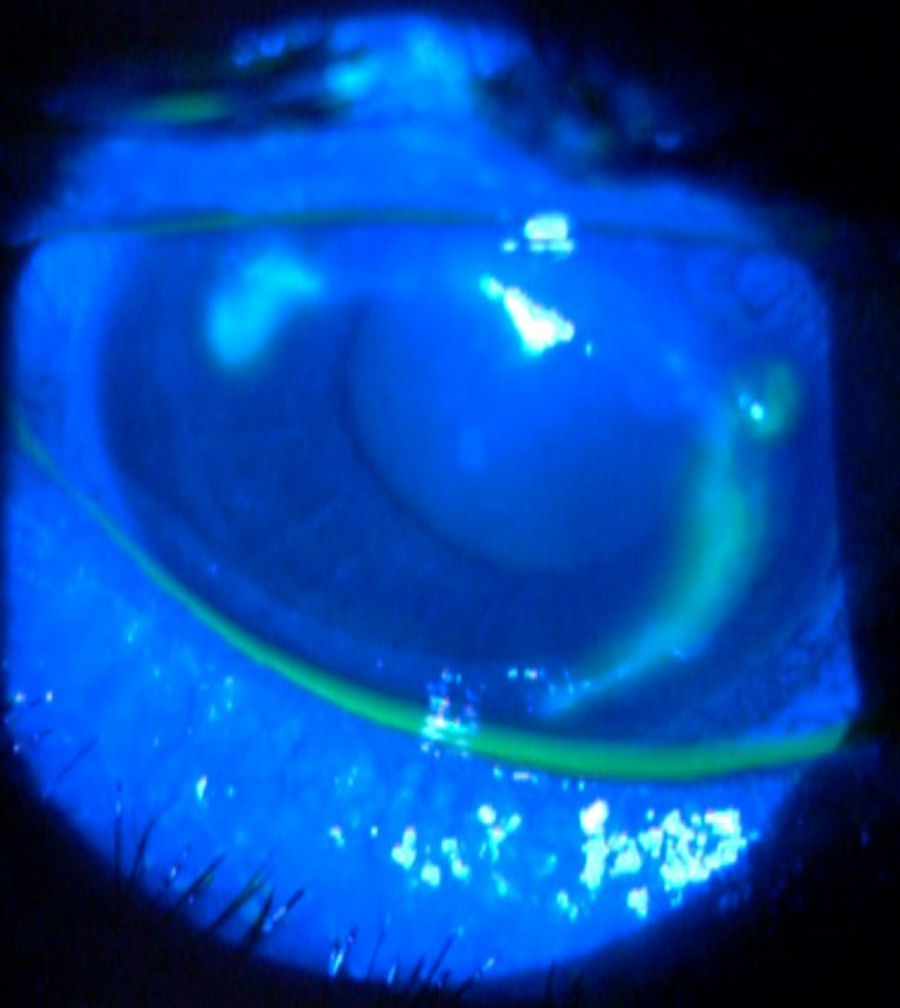
A 40-year-old woman underwent corneal collagen crosslinking in her right eye for progressive keratoconus. The patient returned with pain and photophobia. Infiltration in the corneal stroma was observed. Fluorescein staining specified epithelial defects overlying the corneal infiltrates.
The diagnostic of HK was confirmed with polymerase chain reaction for DNA detection of HSV type 1 of corneal swab. The epithelial defect healed with oral valacyclovir treatment.
Topical corticosteroid drops and preservative-free lubricant eye drops were, also, added to the antiviral treatment. Afterwards, a decrease in stromal infiltrate was observed.
This case report highlights the risk of HK after crosslinking and elucidates the importance of timely diagnosis of this unusual but important complication. The ophthalmologist should be aware of the possibility of HK in eyes after crosslinking, even in patients without a past medical history of HSV infection.
El Crosslinkig corneal se considera un procedimiento seguro aunque se han informado efectos secundarios que amenazan la visión. Aparte de nuestro caso, se han publicado pocos informes de queratitis herpética después del crosslinkig. Informamos de un caso de queratitis herpética de nueva aparición después del crosslinkig corneal para el queratocono.
Una mujer de 40 años se sometió a un crosslinkig de colágeno corneal en el ojo derecho para el queratocono progresivo. La paciente regresó con dolor y fotofobia. Había una infiltración en el estroma corneal. La tinción con fluoresceína especificó defectos epiteliales que cubrían los infiltrados corneales.
El diagnóstico de queratitis herpética se confirmó con la reacción en cadena de la polimerasa para la detección de ADN del VHS tipo 1 en el frotis corneal. El defecto epitelial se curó con tratamiento oral con valaciclovir.
Se añadieron al tratamiento antiviral gotas tópicas de corticosteroides y gotas lubricantes para ojos sin conservantes. Se observó una disminución del infiltrado estromal.
Este caso destaca el riesgo de queratitis herpética después del crosslinkig y aclara la importancia del diagnóstico y el tratamiento oportunos de esta complicación inusual pero importante. El oftalmólogo debe ser consciente de la posibilidad de queratitis herpética en los ojos después del crosslinkig, incluso en pacientes sin antecedentes de infección por VHS.

