Abstracts of the 2025 Annual Meeting of the ALEH
More infoFat accumulation in the liver, recently redefined as metabolic dysfunction-associated steatotic liver disease (MASLD), has a high prevalence in Latin America, with projections indicating a continuous rise in cases with significant fibrosis. Weight loss through lifestyle modifications remains the cornerstone of treatment; however, long-term weight maintenance is often unsuccessful, with many patients regaining weight over time. Evidence suggests that sustained adherence to healthy dietary habits and regular physical activity is critical to maintaining weight loss, yet achieving long-term adherence remains a significant challenge.
To develop a simple and educational unit of measurement (lipounits) to translate the impact of lifestyle habits on liver fat content, using the Controlled Attenuation Parameter (CAP) as an objective reference.
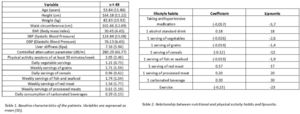
Patients and MethodsA cross-sectional study was conducted in patients with suspected MASLD referred for non-invasive staging. A structured weekly lifestyle questionnaire was administered, and liver fat content was assessed using CAP via FibroScan®. A univariate linear regression model was constructed to evaluate the association between lifestyle habits and CAP values. One lipounit was defined as equivalent to a 0.01 dB/m change in CAP.
ResultsForty-nine patients were included; 55% were female, and 89.8% had overweight or obesity. Hypertension and diabetes were present in 40.8% and 18.4% of patients, respectively. Consumption of vegetables, cereals, grains, seafood, adherence to antihypertensive therapy, and 30 minutes of exercise were associated with reduced lipounits. In contrast, intake of soft drinks, processed meats, alcohol, and red meat was associated with increased lipounits.
ConclusionsThis tool may enhance adherence to nutritional and physical activity recommendations in patients with MASLD.