



determinar si el nivel de alfabetización en salud y los eventos adversos posteriores a la vacunación (EAPV) contra la COVID-19 experimentados por los padres son barreras para la vacunación infantil en Ayacucho.
Métodosestudio transversal de nivel predictivo, realizado en 2022. El análisis se realizó mediante los modelos lineales generalizados (MLG) de Poisson, y se estimaron las razones de prevalencia crudas (RPc) y ajustadas (RPa).
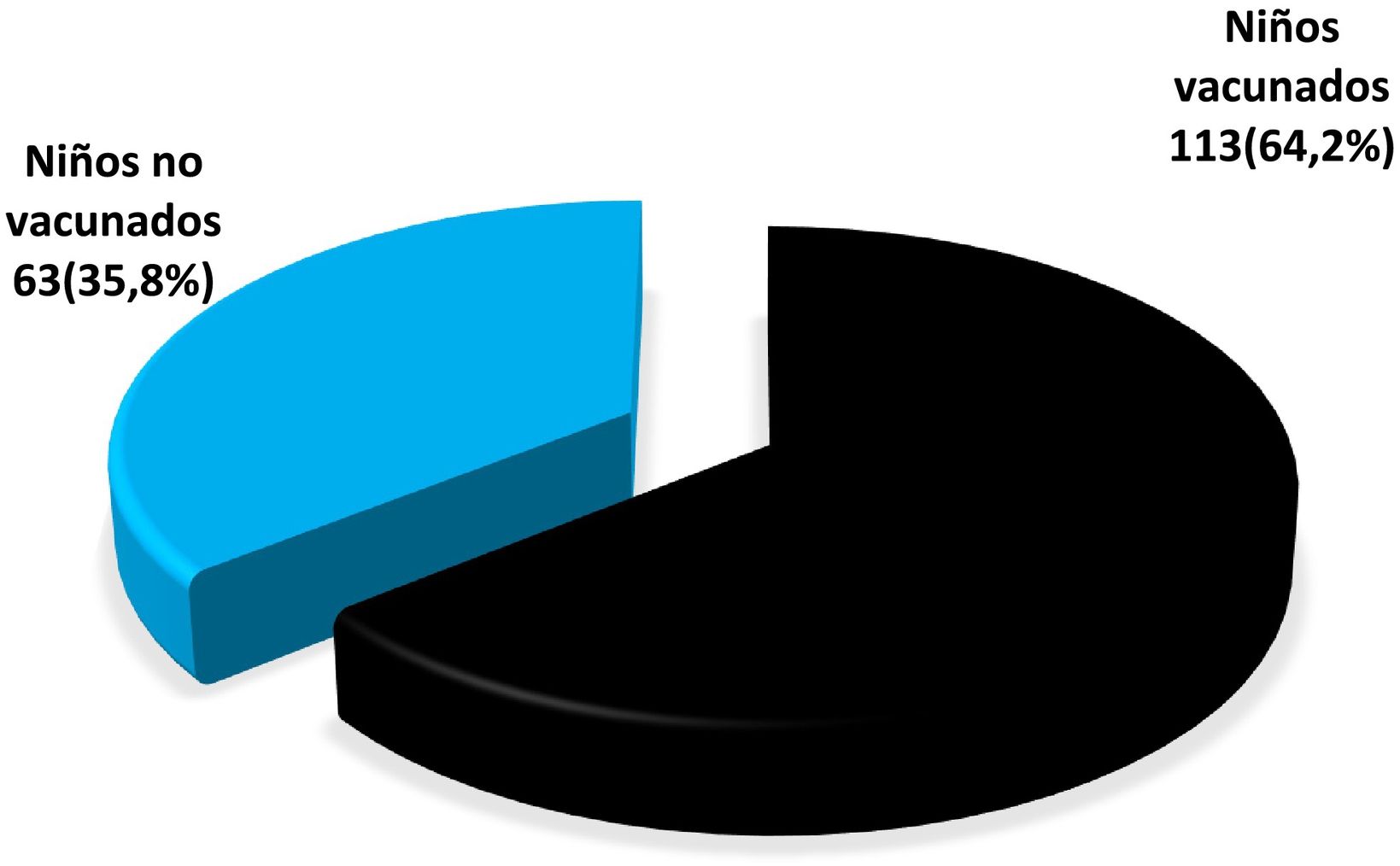
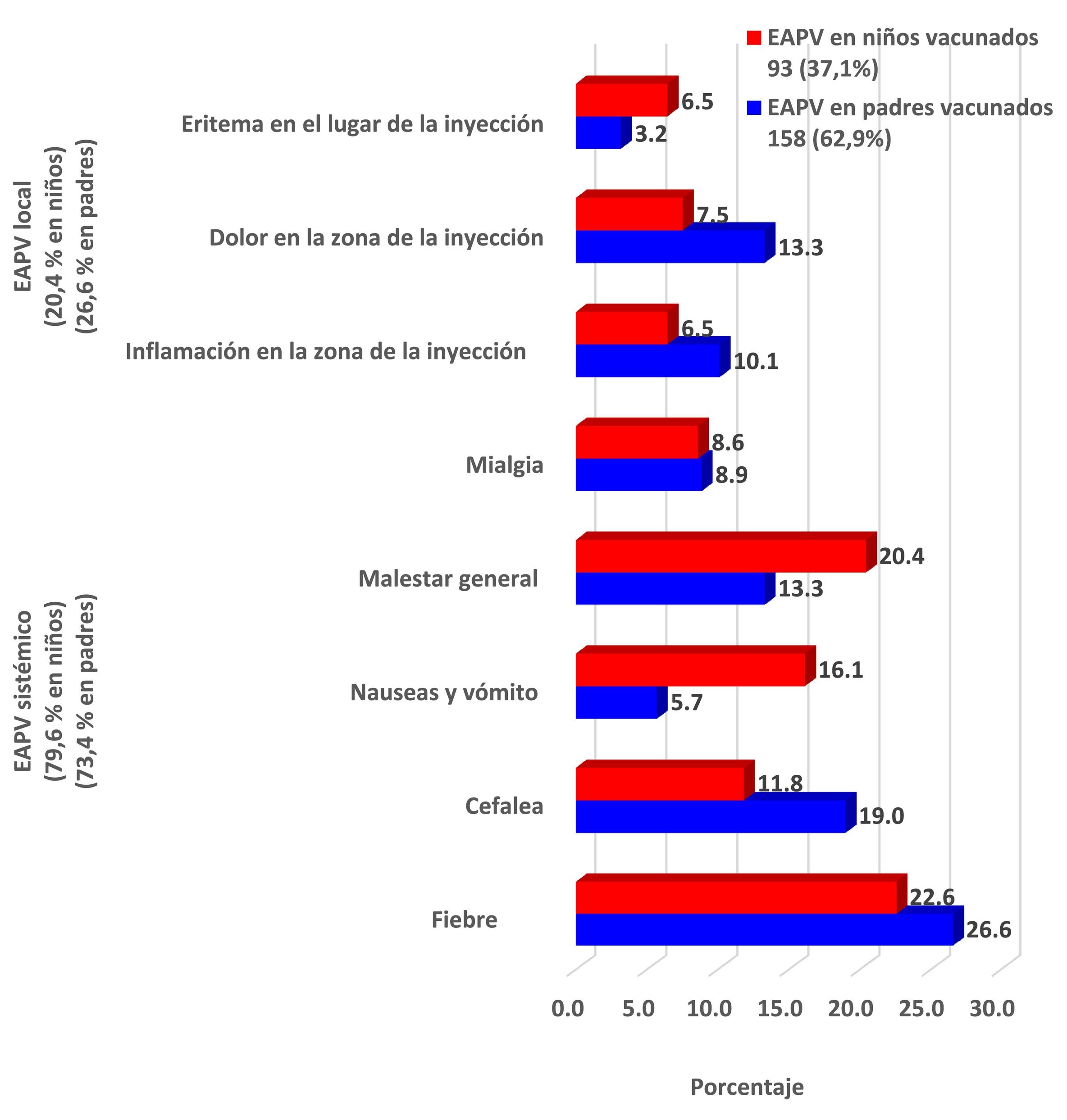
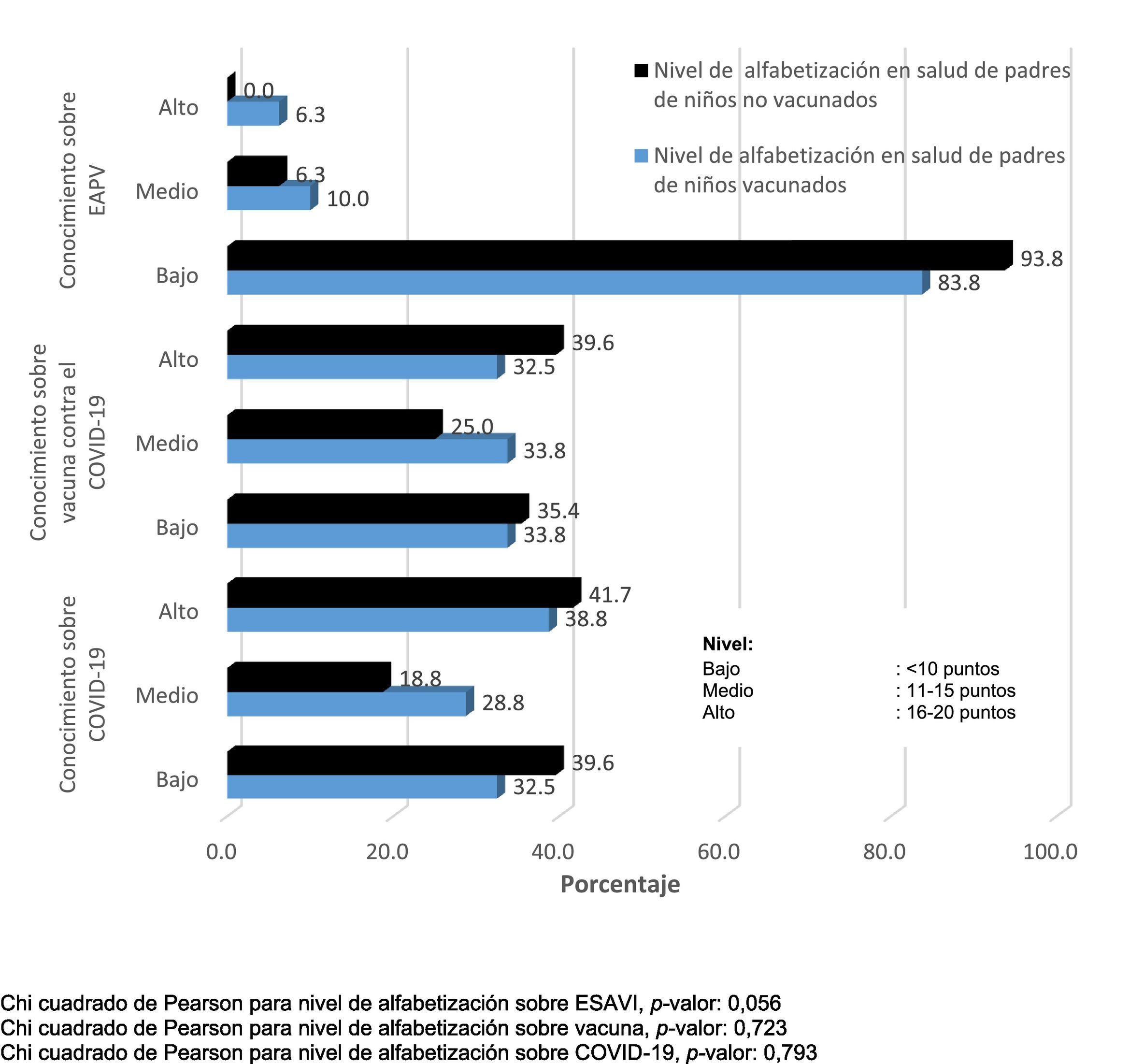
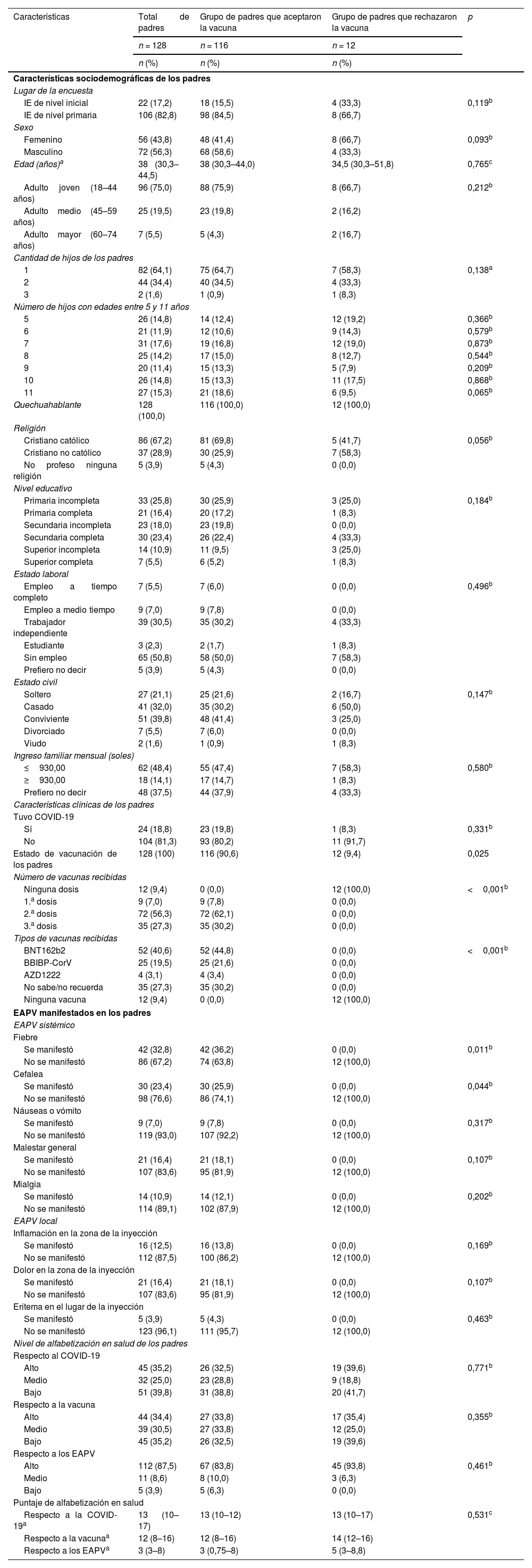
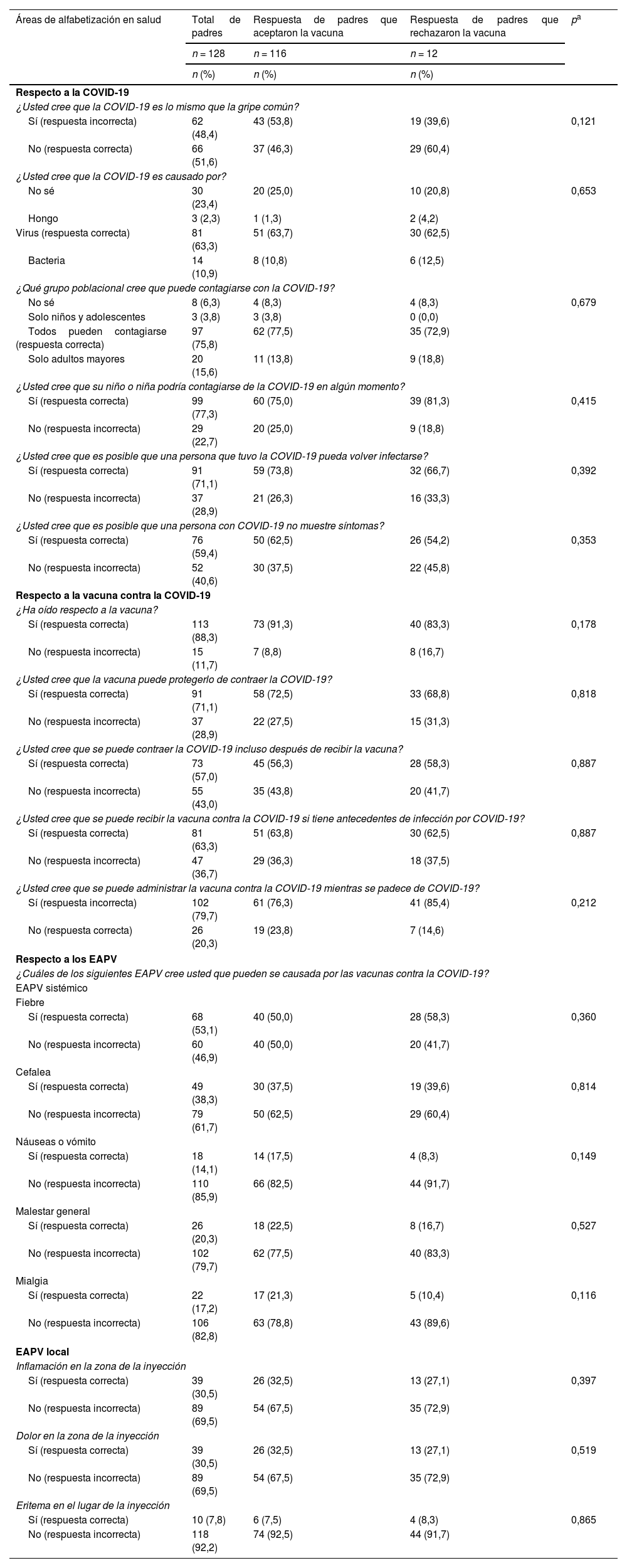
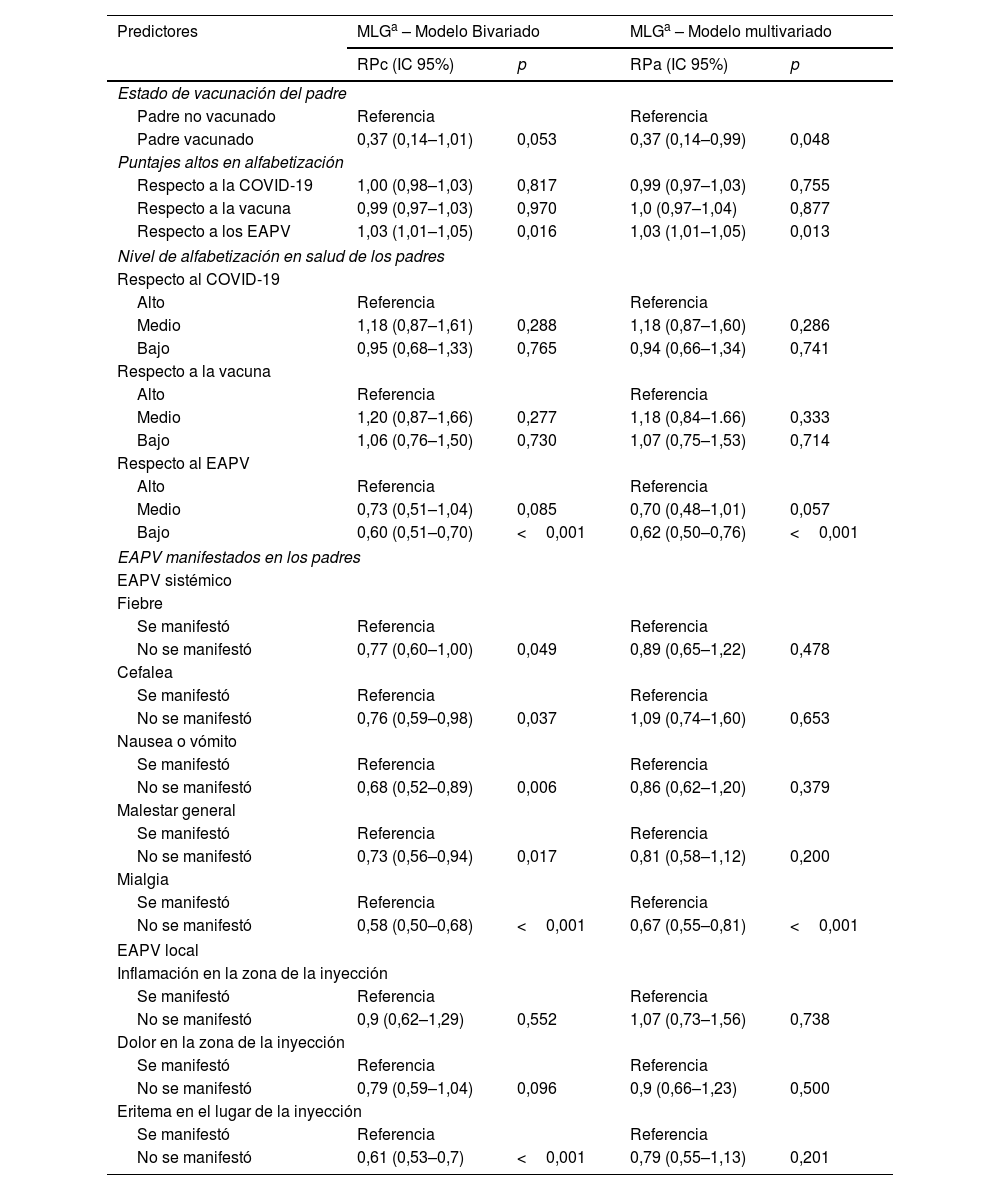
Resultadosla muestra incluyó a 128 progenitores de niños entre 5 y 11 años de edad. El 90,6% de los padres recibió la vacuna, frente al 64,2% de sus hijos. La incidencia de EAPV fue mayor en adultos (62,9%) que en niños (37,1%), siendo los más frecuentes el dolor en el sitio de inyección y la fiebre. Aunque el nivel de alfabetización sobre la COVID-19 y las vacunas fue adecuado, resultó deficiente respecto a los EAPV. El análisis multivariable estimó mayor reticencia a la vacunación infantil en padres previamente vacunados (RPa = 0,37; IC 95%: 0,14–0,99; p = 0,048), y en aquellos con bajo nivel de alfabetización sobre los EAPV (RPa = 0,62; IC 95%: 0,50–0,76; p < 0,001).
Conclusionesse identificó una brecha de vacunación de 26,4% entre padres e hijos. Además, los EAPV experimentados por los adultos y el bajo nivel de alfabetización en salud constituyen barreras significativas para la inmunización infantil, lo que reafirma la necesidad de fortalecer la educación sanitaria y reducir la reticencia vacunal.
To determine whether the level of health literacy and adverse post-vaccination events (AEFI) against COVID-19 experienced by parents are barriers to childhood vaccination in Ayacucho.
MethodsCross-sectional predictive level study, conducted in 2022. The analysis was performed using Poisson family generalized lineal models (GLM) and crude (cPR) and adjusted (aPR) prevalence ratios were estimated.
ResultsThe sample included 128 parents of children between 5 and 11 years of age. A total of 90.6% of the parents received the vaccine, compared to 64.2% of their children. The incidence of AEFI was higher in adults 62.9% than in children 37.1%, the most frequent being pain at the injection site and fever. Although the level of literacy about COVID-19 and vaccines was adequate, it was poor with respect to AEFI. Multivariable analysis estimated greater hesitancy to childhood vaccination in previously vaccinated parents (RPa = 0.37; 95% CI: 0.14–0.99; p-value = 0.048) and in those with low literacy about AEFI (RPa = 0.62; 95% CI = 0.50–0.76; p-value < 0.001).
ConclusionsIn addition, the AEFI experienced by adults and the low level of health literacy constitute significant barriers to childhood immunization, which reaffirms the need to strengthen health education and reduce vaccine hesitancy.
